
财政缺口

Search documents
纽约市长不但免费之说食言,还要加税
Sou Hu Cai Jing· 2026-02-20 22:50
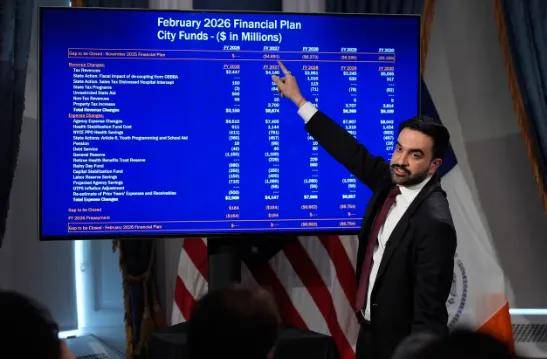
纽约市长马姆达尼新官上任50天,他许诺的免费公交地铁没有兑现,而且涨价了,服务质量也更差了, 当然,纽约州长不支持加税,作为纽约市长虽然风头比纽约州长大,但没有加税的权力,所以他对自己 的食言而肥可以推到州政府身上,谁让他们不配合呢! 当然,为了寻找新米,马姆达尼17日公布了纽约市1270亿美元的新一年度预算草案,预算中可谓 拆东 墙补西墙,草案假设未来两年房产税将上调9.5%,用于填补 54亿美元财政缺口。 纽约市估算,这一措施将影响超过 300万住宅业主,超过 10万商业地产持有者,作为终极应对方案,预 算还提出动用近10亿美元储备金,从市退休员工医疗福利基金提取 2.29亿美元,这算是砸锅卖铁翻箱 子,先把眼前的日子过了再说。 当然,因为加房产商和富人税的权力不再他本人而在纽约州,马姆达尼的预算草案中威胁: 如果纽约州政府不同意向富人或企业加税,纽约市可能被迫提高房产税,以填补数十亿美元的财政缺 口。 纽约市上一次大幅上调房产税,还是在2003年应对911之后的经济衰退。 在预算公布前,纽约州长霍楚已提前向媒体放风,她本人认为没有必要上调纽约市房产税。当然,一旦 上调纽约的房产税,最终还是转化到租客身上 ...

曼达尼市长新任要务:破解纽约民生负担危机
Xin Lang Cai Jing· 2026-01-02 15:51
Economic Challenges - New York City faces a significant cost of living crisis, with over half of ordinary families' income spent on rent and 100,000 people staying in homeless shelters each night [2][13] - The median rent for Manhattan apartments has surpassed $5,400 per month, contributing to a broader crisis affecting food, childcare, and daily living expenses [2][15] - Approximately 1.4 million people in New York City face food insecurity, representing 15% of the total population [2][15] Mayor's Initiatives - Mayor Zoran Mandani has pledged to implement a rent freeze policy and build more affordable housing, but many nonprofit organizations and developers are struggling with rising operational costs [4][15] - Mandani plans to provide free childcare services for children aged 6 weeks to 5 years and eliminate public transportation fares, but these initiatives require state approval and potential tax increases on high-income individuals and businesses [4][15] - The governor of New York has expressed opposition to Mandani's proposal for free public transit, which could result in a $1 billion loss in fare revenue for the Metropolitan Transportation Authority [4][15] Economic Indicators - Despite the severe cost of living issues, New York City's economy remains strong, with employment numbers and labor force participation rates at historic highs, and tax revenues reaching record levels [5][16] - However, signs of economic slowdown are emerging, with a projected decrease of 78,000 new jobs in 2025 compared to the previous year, primarily in low-wage home care sectors [6][17] Housing Market Pressures - Housing costs are the largest expense for most New Yorkers, which was a key factor in Mandani's election victory [7][18] - The operational costs for rent-controlled apartments have increased by 22% since 2020, while rents have only risen by about 11%, leading to potential deterioration of building facilities [8][19] - Mandani's plan to create 200,000 units of affordable housing is also facing challenges, with some developers at risk of loan defaults due to rising costs and shrinking revenues [8][19] Federal Government Impact - Mandani's administration is navigating a challenging environment due to federal budget cuts affecting social welfare programs, which could have severe implications for New York City [9][20] - The Republican-controlled federal government has reduced funding for essential programs, impacting healthcare and food assistance for many residents [9][20] - Future economic trends in New York City will largely depend on federal policy decisions, as indicated by the city's auditor [9][20]

英国秋季预算案考验里夫斯“平衡术”,加税风暴或将来袭!
Jin Shi Shu Ju· 2025-11-26 02:42
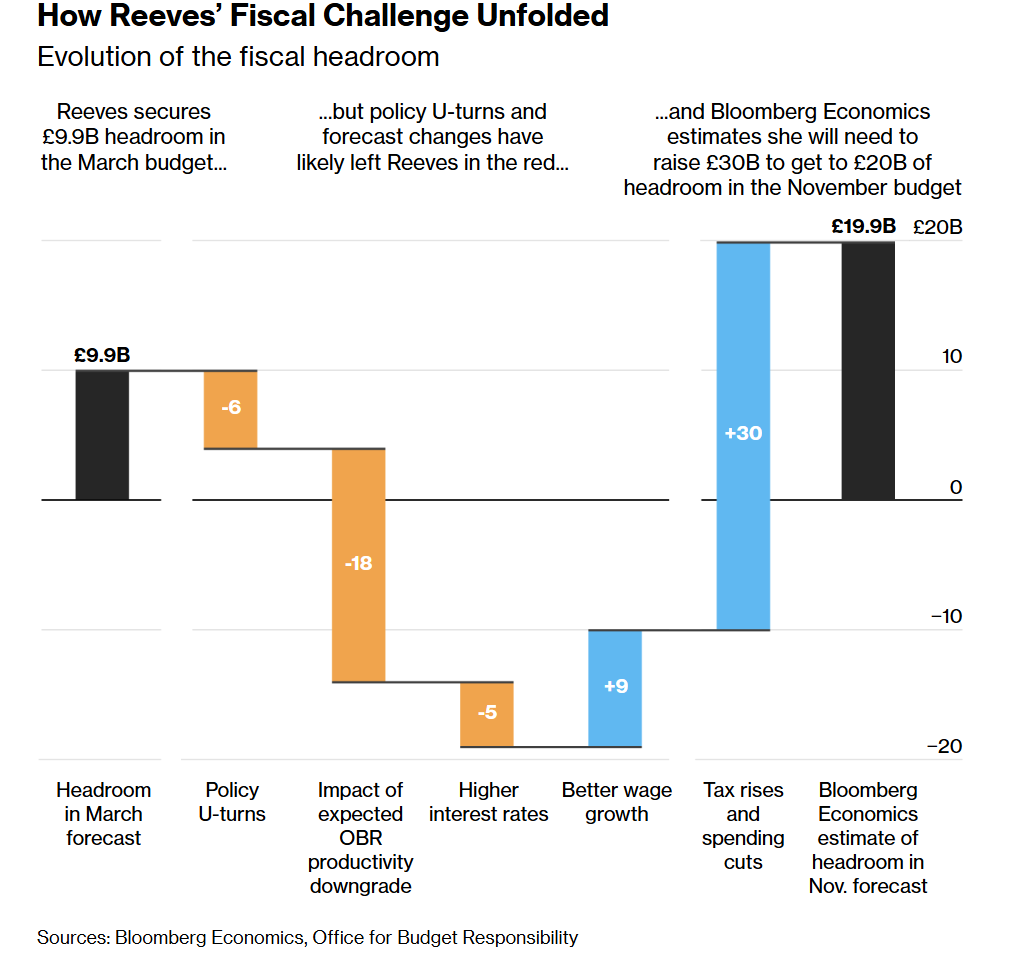
Core Viewpoint - The UK Chancellor Rachel Reeves is preparing a budget that aims to balance the demands of bond market investors and Labour Party backbenchers, amidst challenges to Prime Minister Keir Starmer's leadership [2][3] Group 1: Budget Challenges - Reeves faces a £20 billion fiscal gap due to high costs of policy shifts, global trade tensions, and downward revisions in productivity forecasts by the Office for Budget Responsibility (OBR) [3][4] - The government has achieved the fastest economic growth in the G7, but this growth is not sustainable, limiting Reeves' policy options [2][3] Group 2: Taxation and Spending Plans - Proposed measures may include freezing the income tax threshold for two years starting in 2028, introducing a "mansion tax" on properties over £2 million, and increasing taxes on alcohol, gambling, and dividends [5][8] - Reeves aims to create a fiscal buffer of £15-20 billion to reduce the likelihood of further tax increases in the coming years [4][8] Group 3: Economic Growth and Public Support - The budget will focus on addressing the cost of living crisis, with plans to raise the national minimum wage, freeze train fares, and lower energy bills [11] - Emphasizing the affordability of these measures is crucial for gaining voter support amid heightened public concern over upcoming policies [11]
宏观经济周报-20251110
工银国际· 2025-11-10 07:03
Group 1: China Macroeconomic Indicators - The ICHI Composite Economic Index has returned to the expansion zone, indicating sustained economic resilience and accumulating structural recovery momentum[1] - The Consumer Sentiment Index has also risen to the expansion zone, reflecting active service consumption in travel, dining, and entertainment post-holiday[1] - The Investment Sentiment Index has slightly declined but remains in a mild contraction zone, primarily due to base effects from previous project launches[1] - The Production Sentiment Index has returned to the expansion zone, with a notable increase in enterprise operating rates and gradual recovery in manufacturing production[1] Group 2: Trade and Export Performance - In the first ten months of 2025, China's total goods trade value increased by 3.6% year-on-year, with exports growing by 6.2% and imports remaining nearly flat[2] - General trade and processing trade have expanded simultaneously, accounting for over 80% of total trade, indicating stable foreign trade structure and enhanced endogenous momentum[2] - Trade with ASEAN countries grew by 9.1%, and trade with Belt and Road countries increased by 5.9%, highlighting a shift towards emerging markets[2] - The export structure shows that electromechanical products account for over 60%, with integrated circuits and automobile exports growing by 24.7% and 14.3% respectively, showcasing the impact of high-end manufacturing and technological innovation[2]
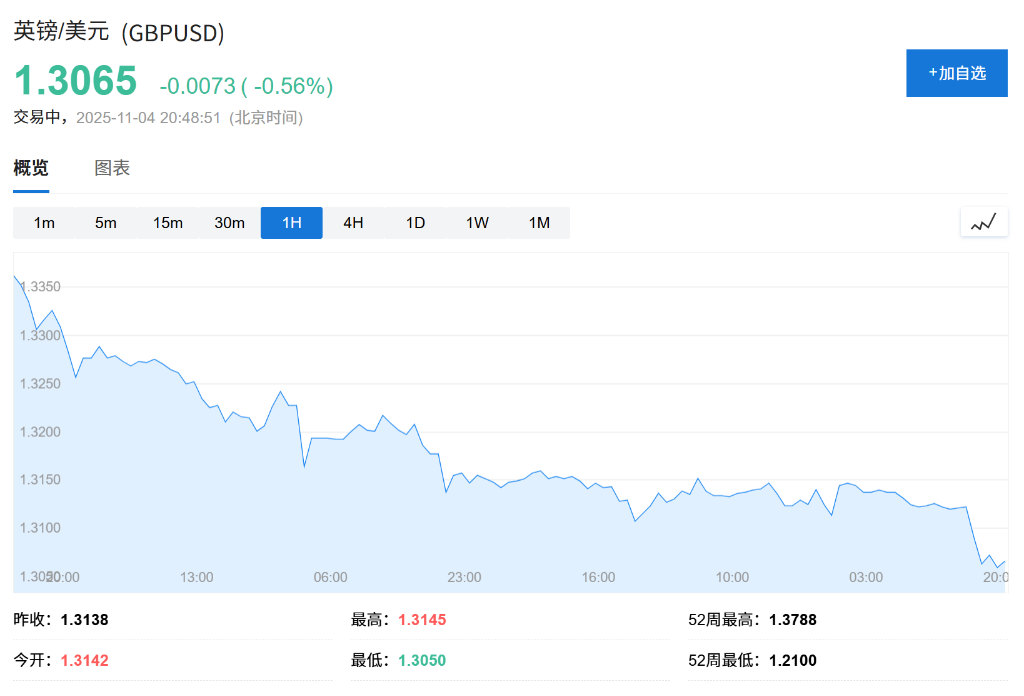
英镑跌至七个月低点!英国财政大臣里夫斯承诺削减债务,为加税铺路
Hua Er Jie Jian Wen· 2025-11-04 13:07
Core Viewpoint - The UK Chancellor of the Exchequer, Rachel Reeves, is paving the way for a significant policy shift, indicating that the Labour government may abandon its core campaign promise of not raising taxes to address increasing fiscal challenges [1][4]. Group 1: Fiscal Challenges - The UK government faces a fiscal gap estimated at £35 billion, driven by high borrowing costs, costly policy reversals, and a significant downgrade in economic growth forecasts by the Office for Budget Responsibility (OBR) [5]. - Reeves reiterated her commitment to the UK's "ironclad" fiscal rules, countering calls within her party to relax these rules for increased public spending [5]. - The core issue lies in the Labour Party's flagship tax promise during the campaign, which was to avoid raising personal income tax, National Insurance (NI), or Value Added Tax (VAT), collectively contributing to about two-thirds of government tax revenue [5]. Group 2: Political Strategy - Reeves' speech broke traditional norms, as Chancellors typically remain silent before formally presenting the budget, indicating a strategic move to garner support for a politically contentious fiscal plan [4][7]. - The speech aimed to prepare the public for potential widespread tax increases in the upcoming budget, with Reeves emphasizing the need for everyone to contribute to the country's future [6][8]. - Opposition parties criticized Reeves' address, with the Liberal Democrats and Conservatives dismissing it as ineffective and accusing the Labour Party of abandoning its commitments [6].
德国财长确认至2029年将面临逾1400亿欧元财政缺口
Xin Hua Cai Jing· 2025-10-23 12:33
Core Insights - Germany's finance minister confirmed a fiscal gap exceeding €140 billion by 2029, despite an upward revision of tax revenue expectations by €33.6 billion, indicating that structural deficits remain challenging to address [1] - The German economy has contracted for two consecutive years, prompting the government to rely on spending to stimulate recovery, yet the fiscal gap for 2028-2029 is still projected to exceed €60 billion, leading to potential cuts across various departments [1]
英财政大臣里夫斯表示将减支增税以填补财政缺口
Shang Wu Bu Wang Zhan· 2025-10-18 02:59
Core Points - The UK Chancellor of the Exchequer, Reeves, has indicated plans to cut public spending and increase taxes in the upcoming November budget to address a fiscal gap partly caused by Brexit [1][2] - Reeves emphasized the need for spending control to achieve fiscal balance, acknowledging the ongoing challenges in convincing Labour MPs to accept welfare cuts [1] - The Office for Budget Responsibility (OBR) has downgraded the UK's productivity growth forecast, which is expected to exacerbate the fiscal shortfall exceeding £30 billion [1] Group 1 - Reeves highlighted that fiscal tightening, Brexit, and the impact of the Truss mini-budget are putting pressure on the UK economy, with a consensus that Brexit has reduced the UK's economic size by 4% [2] - The Chancellor aims to create a "buffer" in the fiscal plan to avoid the annual cycle of tax increases and spending cuts, expressing a desire to end this cycle through economic growth [2] - Last year's budget included £40 billion in tax increases, but Reeves now faces significant fiscal repair tasks again [2] Group 2 - Shadow Chancellor Stride countered that Reeves should focus on controlling government spending, particularly welfare expenditures, rather than increasing taxes [2]
英国政府:8月借款超预期,11月预算或增税
Sou Hu Cai Jing· 2025-09-19 14:38
Core Viewpoint - The UK government is expected to increase taxes in the upcoming autumn budget on November 26 due to worse-than-expected public sector borrowing data from August [1] Summary by Relevant Sections Public Sector Borrowing - In August, public sector borrowing reached £18 billion, exceeding the Office for Budget Responsibility's forecast of £12.5 billion and the general expert prediction of £13.5 billion [1]
财政数据点评:财政缺口扩大,国债需否增发?
Huafu Securities· 2025-07-27 06:01
Revenue and Fiscal Performance - In June, general public budget revenue was 1.89 trillion, with a year-on-year growth rate of -0.3%, marking a decline of 0.4 percentage points from the previous month[3] - Non-tax revenue in June fell by 3.7% year-on-year, with the decline widening by 1.5 percentage points compared to May, primarily due to a high base from the previous year[3] - Tax revenue in June showed a slight year-on-year increase of 1.0%, recovering by 0.4 percentage points from May but still below April levels[3] Expenditure and Budget Deficit - June fiscal expenditure grew by only 0.4% year-on-year, a significant drop of 2.2 percentage points from May, continuing a downward trend for the second consecutive month[4] - Cumulative fiscal expenditure for the first half of the year increased by 3.4% year-on-year, significantly outpacing revenue growth by 3.7 percentage points, indicating stable support for total consumption and investment demand[4] - The budget deficit for the first half of the year reached 2.57 trillion, an increase of 0.5 trillion year-on-year, raising the need for government bond financing[4] Government Fund and Debt Issuance - Government fund budget revenue in June rebounded sharply by 28.9% year-on-year, with land transfer fees contributing significantly to this increase, rising by 36.5 percentage points from May[5] - Government fund expenditure surged by 79.2% year-on-year in June, driven by accelerated issuance of special government bonds, with total expenditure growth for the first half of the year reaching 30%[5] - The overall budget deficit for government funds in the first half of the year reached 2.68 trillion, a substantial increase of 1.1 trillion year-on-year[5] Future Outlook and Risks - The fiscal revenue shortfall is expected to widen further, potentially triggering the issuance of special government bonds if three conditions are met, including low inflation and continued pressure on tax revenue[6] - The financing progress for government bonds has already reached 55.2% of the annual plan, significantly higher than the same period in 2024 and 2023[6] - Risks include the possibility of fiscal expansion being lower than expected, which could impact the effectiveness of consumption and investment stimulus measures[6]
IMF警告里夫斯面临重大挑战,敦促其调整财政规则
news flash· 2025-07-25 11:57
Core Viewpoint - The International Monetary Fund (IMF) warns that UK Chancellor Reeves faces significant challenges in advancing government policy while adhering to self-imposed fiscal rules [1] Group 1: IMF Recommendations - IMF urges Reeves to "optimize" the budget framework to enhance fiscal flexibility [1] - The IMF's annual economic report highlights that while the government's proposed reforms are on the right track, fiscal maneuverability is limited [1] Group 2: Economic Context - The impact of the Trump trade war is noted as a factor that complicates the implementation of proposed reforms [1] - As of March, the estimated fiscal space under the main fiscal rules was £9.9 billion, but weak economic growth has forced Reeves to adjust planned public spending cuts [1] Group 3: Fiscal Challenges - Some economists predict that by the autumn budget, Reeves may face a fiscal gap exceeding £20 billion [1]