
贸易逆差

Search documents
U.S. Trade Deficit Falls in January
Nytimes· 2026-03-12 12:35
Core Viewpoint - The data indicates a decline in imports and an increase in exports prior to the Supreme Court's decision to overturn most of the president's tariffs [1] Group 1 - Imports experienced a dip in the month leading up to the Supreme Court ruling [1] - Exports saw a rise during the same period [1]


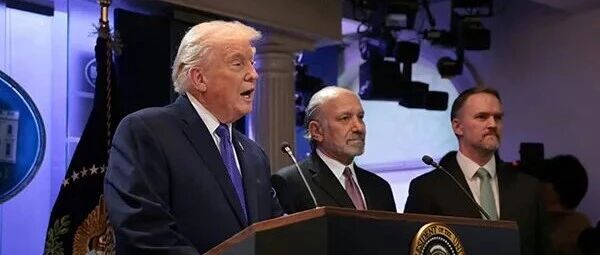
美国将调查中日欧等的“产能过剩”,探讨制裁
日经中文网· 2026-03-12 07:40
Core Viewpoint - The U.S. government, under the Trump administration, is initiating an investigation into "overcapacity" affecting 16 countries and regions, including Japan, China, and the EU, under Section 301 of the Trade Act, with potential sanctions and export controls being considered [2][4]. Group 1: Investigation Details - The investigation will assess various products for overcapacity and explore the imposition of punitive tariffs and export controls based on the findings [2][5]. - The U.S. Trade Representative (USTR) aims to conclude the investigation by late July, with public comments being collected until April 15 and hearings scheduled for May [5]. Group 2: Context and Implications - The Section 301 of the Trade Act allows for punitive measures against countries using unfair trade practices, previously utilized against China for intellectual property violations [4]. - The current investigation is seen as a replacement for the previously deemed unconstitutional "reciprocal tariffs," with a temporary 10% additional tariff imposed for 150 days under Section 122 of the Trade Act [4]. Group 3: Broader Trade Issues - The concept of overcapacity is being framed as a new justification for tariffs, replacing the previous focus on trade deficits, with various trade issues being interpreted as signs of overcapacity [6]. - The USTR has indicated that investigations into "forced labor" will also be initiated, potentially involving around 60 countries and regions, alongside other themes like digital regulation [7].
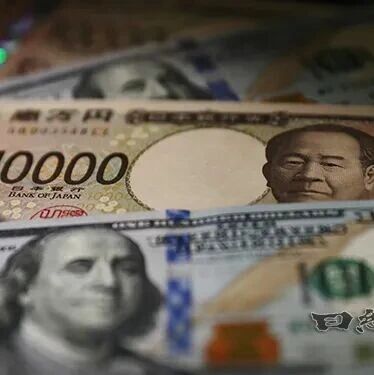
日元在中东紧张局面下缘何未获买入?
日经中文网· 2026-03-04 02:35
Core Viewpoint - The traditional notion of "buying yen in times of crisis" has diminished, with the yen depreciating due to geopolitical tensions and rising oil prices, leading to concerns over Japan's trade deficit [2][5]. Group 1: Yen Depreciation and Market Sentiment - The yen has recently depreciated against multiple currencies, with the USD/JPY exchange rate reaching 157.90 yen per dollar, the lowest since February 9 [4]. - The yen's status as a "safe currency" has weakened since the 2008 financial crisis, as Japan's trade surplus has turned into a significant trade deficit, exacerbated by rising oil prices [4][5]. - The perception of the yen as a safe haven has shifted, with market participants now favoring the dollar during crises, particularly in light of the ongoing geopolitical risks [7]. Group 2: Impact of Oil Prices on Japan's Economy - The ongoing conflict in the Middle East and potential oil price increases pose a significant risk to Japan's trade balance, with estimates suggesting a trade deficit could approach 10 trillion yen if oil prices rise to the $90-$100 range [9]. - The rising oil prices are expected to contribute to inflation in Japan, complicating the Bank of Japan's monetary policy and making it difficult to initiate interest rate hikes [9]. - Market analysts express concerns that without substantial intervention, the yen could breach the 160 yen per dollar mark, indicating a potential for further depreciation [9].
IMF就美债问题发出警告:对美国和全球经济稳定构成日益严峻的风险
凤凰网财经· 2026-02-27 12:16
Core Viewpoint - The International Monetary Fund (IMF) warns that U.S. national debt will rise to 140% of GDP within the next five years, urging the U.S. government to reduce fiscal deficits to address excessive trade and current account deficits [1][2]. Group 1: U.S. National Debt and Fiscal Deficits - U.S. national debt has exceeded $38 trillion, with a fiscal gap continuing to widen, increasing by $2.25 trillion over the past year and expected to surpass $39 trillion by April [1]. - The federal budget deficit has risen from approximately $1.4 trillion in FY 2022 to about $1.8 trillion last year [1]. - The IMF projects that, under current policies, U.S. public debt will reach 140% of GDP by 2031, posing significant risks to both U.S. and global economic stability [1]. Group 2: Recommendations and Economic Outlook - The IMF emphasizes the need for a clear fiscal consolidation plan to ensure sustainable debt reduction [1]. - The organization encourages constructive cooperation with trade partners to address concerns over unfair trade practices and to coordinate efforts to reduce trade restrictions and industrial policy distortions [1]. - The U.S. economy is expected to maintain a resilient growth rate of 2.4% in 2026, but inflation is projected to only return to the Federal Reserve's 2% target by early 2027 amid uncertainties [1]. Group 3: Trade Policies and Economic Impact - The IMF report was drafted prior to the U.S. Supreme Court ruling that invalidated several tariffs imposed by former President Trump, with the IMF planning to assess the ruling's impact [3]. - Following the Supreme Court's decision, the U.S. government has implemented alternative tariffs under the Trade Act of 1974 to improve the balance of payments [4]. - The IMF's Western Hemisphere Director stated that reducing the current account deficit is best achieved by cutting the U.S. fiscal deficit, as rising debt levels could increase borrowing costs and inflationary pressures, threatening economic stability [5].

英国2025年货物贸易逆差创历史新高
Shang Wu Bu Wang Zhan· 2026-02-26 16:44
Group 1 - The core point of the article highlights the significant shift in the UK economy from manufacturing to services, with a record trade deficit in goods and a substantial surplus in services for 2025 [1][2] Group 2 - The UK's goods trade deficit is projected to reach £248.3 billion in 2025, an increase of £30.5 billion from the previous year, marking the largest deficit since records began in 1997 [1] - Service exports exceeded imports by £191.8 billion, with an increase of £16.4 billion compared to the previous year, indicating a strong performance in the services sector [1] - Overall, the total trade deficit expanded by £14.1 billion to £56 billion, driven by a 3.4% increase in imports, which rose by £32 billion to £959.2 billion, while exports grew by £17.9 billion, a 2% increase, reaching £902.8 billion [1] - The economist from Make UK attributes the goods trade deficit to a long-term decline in industrial production, influenced by the strong performance of the pound and lower energy and production costs in other countries [1] - The data from the service sector reflects the UK's long-term advantage, as global service trade growth has outpaced goods trade, benefiting the UK as the second-largest service exporter after the US [2]
经济学家称:美国民众承担了特朗普关税成本的“最大份额”
Sou Hu Cai Jing· 2026-02-26 11:48
Core Viewpoint - The U.S. Supreme Court's decision to overturn tariffs imposed during Donald Trump's presidency has intensified scrutiny of this policy, which has long faced legal challenges and was deemed flawed by experts [2]. Group 1: Economic Impact of Tariffs - Charles N. Steele, an economist, stated that the American public bore the majority of the costs associated with Trump's tariffs, describing the strategy as a "non-essential blunder" and a "major mistake" [2]. - Research from institutions like the New York Federal Reserve Bank and JPMorgan indicates that approximately 90% of the economic burden from Trump's tariffs fell on American consumers rather than foreign exporters [2]. - Steele highlighted that prior studies suggested Trump could have adjusted his tariff policy to avoid harming American households, noting that unilateral tariffs on China would primarily impact U.S. citizens, while coordinated tariffs with the EU could shift the burden to China [6]. Group 2: Legal and Political Ramifications - The Supreme Court's ruling emphasized that the power to levy tariffs belongs to Congress, not the President, thereby limiting presidential trade authority [3]. - The ruling did not address whether businesses and states could receive refunds for tariffs already paid, leaving this issue to be resolved in lower courts [4]. - Following the ruling, Trump responded by increasing global tariffs from 10% to 15%, claiming this action was immediately effective despite ongoing pressure from businesses and government for refunds on approximately $133 billion in tariffs [7]. Group 3: Ongoing Legal Challenges and Political Reactions - The use of Section 122 of the Trade Act of 1974 by Trump to impose new tariffs is expected to face legal challenges, as this section limits such tariffs to 150 days unless Congress approves an extension [8]. - A wave of lawsuits has emerged, with over a thousand cases filed by U.S. importers seeking refunds for tariffs, reflecting the policy's disruptive impact on existing trade agreements and increasing political costs domestically [9]. - Trump's critics, including California Governor Gavin Newsom, have accused him of disregarding the financial burdens placed on American citizens due to his tariff policies [10].

特朗普谋划了40多年,是想要像当年的日本一样,逼中国自废武功吗?
Sou Hu Cai Jing· 2026-02-25 20:51
Group 1 - The U.S. Supreme Court ruled that President Trump's large-scale import tariffs under the International Emergency Economic Powers Act exceeded legal authority, leading to a rollback of additional tariffs on Chinese goods [2] - Following the ruling, the White House announced a temporary 10% tariff on global imports starting February 24, with a potential adjustment to 15% [2] - Trump's long-standing trade strategy aims to pressure trade partners to reduce the U.S. trade deficit, a tactic that has evolved from targeting Japan to focusing on China [2][4] Group 2 - The historical context of the Plaza Accord in 1985, which led to a significant appreciation of the yen and a subsequent economic downturn in Japan, is frequently referenced by Trump to justify his trade policies against China [4][6] - Unlike Japan, China maintains an independent foreign policy, a robust foreign exchange reserve, and a diversified trade network, which enhances its resilience against external pressures [6] - China's response to U.S. tariffs includes reciprocal tariffs on U.S. liquefied natural gas and agricultural products, impacting the stability of U.S. downstream supply chains [6][8] Group 3 - As of February 24, the newly implemented 10% temporary tariff is in effect, with China monitoring the situation and reserving the right to adjust countermeasures [8] - The trade relationship between the U.S. and China is characterized by ongoing negotiations and adjustments, with both sides seeking to balance their positions amid rising tensions [8][9] - The effectiveness of Trump's tariff strategy in achieving its intended goals remains uncertain, as both parties are adjusting their stances in preparation for upcoming high-level interactions [9]
贸易逆差9015亿美元,一年过去,特朗普的关税成功了吗?
Sou Hu Cai Jing· 2026-02-25 20:51
Group 1 - The core point of the article highlights that while Trump's trade policies aimed at reducing the trade deficit have not succeeded, they have significantly increased tariff revenues for the U.S. government, reaching a historic high of $264 billion in 2025, a year-on-year increase of over 234% [1][6][12] - The U.S. trade deficit in goods and services was $901.5 billion in 2025, only slightly down from $903.5 billion in 2024, indicating that the U.S. remains a net importer despite the tariff changes [5][6] - The trade deficit with China narrowed significantly to $202 billion in 2025, the lowest in 20 years, while deficits with Mexico and Vietnam increased, reflecting a strategic shift in supply chains [7][9] Group 2 - The increase in tariff revenues has contributed to a reduction in the U.S. budget deficit, which fell to $1.67 trillion in 2025, the smallest in three years, largely due to the record growth in tariff income [12] - Capital gains tax revenue also rose to $260.6 billion in 2025, benefiting from strong stock market performance, indicating a complementary relationship between tariff revenues and capital gains taxes for U.S. fiscal health [12][13] - Trump's tariff strategy has provided the U.S. with strategic negotiation leverage, leading to significant investment commitments from trade partners, which could potentially support U.S. manufacturing and economic growth [13][15]
每经热评|关税政策被推翻又出新招 白宫“关税强国”的路走不通
Mei Ri Jing Ji Xin Wen· 2026-02-25 13:50
Group 1 - The U.S. Supreme Court ruled that the International Emergency Economic Powers Act (IEEPA) does not authorize the president to impose large-scale tariffs, declaring previous tariffs by the Trump administration illegal [1] - Following the ruling, the Trump administration announced new tariffs, initially planning a 10% tariff on all goods, which was later increased to 15%, based on the Trade Act of 1974 [1] - The ruling poses significant financial implications, with potential tariff refunds exceeding $175 billion, as over 1,000 companies have joined lawsuits against the government [1] Group 2 - The Supreme Court's decision undermines the Trump administration's strategy of using tariffs as leverage in trade negotiations, creating uncertainty about the validity of previous agreements [2] - The new 15% tariff will have varying impacts on different countries, with the UK facing a 2.1 percentage point increase in tariffs on goods exported to the U.S., while the EU will see an increase of 0.8 percentage points [2] - The ruling may shift the balance of power in future trade negotiations, reducing the effectiveness of unilateral pressure from the U.S. [2] Group 3 - The Trump administration's focus on tariffs to address trade deficits and revive the economy contradicts economic principles and has faced significant opposition from various states and businesses [3] - A survey indicated that by 2025, about one-third of price increases for U.S. businesses could be attributed to tariffs, with inflation potentially reaching the Federal Reserve's target of 2% without tariff impacts [3] - The new tariff measures, increasing by 5 percentage points, are likely to exacerbate inflationary pressures and provoke further public dissent [3] Group 4 - The hollowing out of the U.S. economy is attributed to internal structural issues rather than external competition, with tariffs failing to address the root causes of trade imbalances [4] - The U.S. has comparative advantages in technology, finance, and advanced services, but low personal savings rates and expansive fiscal policies contribute to trade deficits [4] - Tariffs are seen as a superficial solution that may worsen trade deficits rather than resolve underlying economic issues [4]
波黑2025年外贸总额增长约21亿马克
Shang Wu Bu Wang Zhan· 2026-02-25 13:28
Core Insights - Bosnia and Herzegovina's total exports in 2025 are projected to reach 17.42 billion marks, an increase of 0.882 billion marks compared to 2024, while total imports are expected to be 30.43 billion marks, up by 1.21 billion marks from the previous year, resulting in a trade deficit of 13 billion marks, which is an increase of 0.359 billion marks year-on-year [1] Trade Structure - The trade structure remains stable, with the metal industry holding the largest share, while the wood industry contributes positively to foreign trade balance [1] - The European Union is the most significant trading partner for Bosnia and Herzegovina, accounting for over 73% of total exports and 66% of total imports [1] Export Growth - Exports to the EU increased by 5.57%, amounting to an additional 0.669 billion marks [1] - In the CEFTA region, Serbia is the largest trading partner, with Bosnia and Herzegovina exporting 1.88 billion marks and importing 4.1 billion marks [1] - The energy, electronics, and automotive industries are experiencing the fastest export growth, with electricity exports rising by 30%, highlighting the energy sector's critical role [1] - Automotive parts exports grew by 13%, indicating stable integration of local companies into the European supply chain [1] Import Dynamics - Despite a 7% decrease in oil and petroleum product imports, they remain the largest import category at 2.24 billion marks [2] - Automobile imports increased by 9%, and pharmaceutical imports rose by 8% [2] - Electricity imports surged by 101%, reaching 0.62896 billion marks, underscoring the need to strengthen domestic production capacity [2]