
逆周期调控

Search documents
有形之手(1):财政ABC之四本账:宏观经济深度报告
Guoxin Securities· 2026-02-03 05:09
Group 1: Fiscal Budget Framework - The fiscal budget system in China is structured as "four horizontal and five vertical," consisting of four independent budgets and five levels of government budgets[11] - The "four budgets" include the General Public Budget, Government Fund Budget, State Capital Operation Budget, and Social Insurance Fund Budget, which are interconnected and allow for cross-budget adjustments[11] - The General Public Budget is the core of the fiscal system, with 2024 revenues of CNY 21.97 trillion and expenditures of CNY 28.46 trillion, accounting for 53.8% and 57.5% of the total budget respectively[16] Group 2: Revenue and Expenditure Analysis - Tax revenue constitutes over 80% of the General Public Budget, with total revenue in 2024 reaching CNY 22.0 trillion, of which CNY 17.5 trillion is from taxes[31] - The Government Fund Budget, primarily funded by land use rights, had revenues of CNY 6.21 trillion and expenditures of CNY 10.15 trillion in 2024, representing 15.2% and 20.5% of the total budget respectively[16] - The Social Insurance Fund Budget, with revenues of CNY 12.01 trillion and expenditures of CNY 10.57 trillion in 2024, accounts for 29.4% and 21.4% of the total budget respectively[17] Group 3: Economic Implications and Risks - The overall scale of the "four budgets" is expanding, with total revenues of CNY 40.9 trillion and total expenditures of CNY 49.5 trillion in 2024, representing 30.3% and 36.7% of GDP respectively[19] - The mismatch between fiscal rights and responsibilities at the local level has led to increased central government transfer payments, which are projected to reach 47% of central public budget expenditures by 2025[49] - Risks include fluctuations in overseas economic policies, which could impact domestic fiscal stability[2]
如何看待当前市场显著分化行情?
ZHONGTAI SECURITIES· 2026-01-24 11:03
Group 1 - The A-share market is currently experiencing a significant divergence, with major indices showing mixed performance. The Wind All A Index increased by 1.81%, while the Shanghai Composite Index rose by 0.84%, and the CSI 300 Index slightly declined by 0.62%. The small-cap index, CSI 2000, outperformed with a rise of 4.04% [2][8] - Market liquidity remains robust despite a 19.22% decrease in average daily trading volume to approximately 2.80 trillion yuan, indicating that funds have not significantly withdrawn from the market [2][8] - The market's profitability effect has notably improved, with an average of 59.84% of stocks rising during the week, a significant increase compared to the previous week [2][8] Group 2 - The divergence in the A-share market has intensified, with small-cap stocks significantly outperforming large-cap stocks, and growth stocks outperforming value stocks. The preference for high-beta and high-elasticity assets is becoming more pronounced [3][9] - The current market dynamics are driven by changes in risk appetite, liquidity conditions, adjustments in funding structures under counter-cyclical regulation, and the timing of earnings disclosures [3][10] - The risk appetite has rebounded, supported by a relatively loose liquidity environment, which has strengthened support for high-elasticity sectors. The recent appreciation of the RMB against the USD has also improved the attractiveness of Chinese assets for cross-border capital [10][13] Group 3 - Short-term market divergence is expected to continue, supported by the ongoing profitability effect in high-elasticity sectors, while the overall liquidity environment remains relatively loose [4][10] - The market is currently in a signal vacuum regarding fundamentals, lacking substantial information shocks, which allows for potential valuation increases in high-growth sectors [4][10] - The geopolitical landscape and resource security issues are also influencing the A-share market, with rising global commodity prices benefiting cyclical sectors [14][10] Group 4 - Investment strategies should adopt a segmented and dynamic approach, focusing on high-elasticity sectors such as robotics in the short term, while shifting attention to the overseas computing power industry chain as earnings expectations improve post-Spring Festival [5][15] - After the Two Sessions, there should be a gradual increase in defensive allocations, particularly in undervalued, high-dividend sectors like banking [5][15] - It is recommended to adjust portfolio structures flexibly according to the core themes of different stages, while increasing the focus on earnings realization and valuation alignment [5][15]

【机构策略】A股市场向上的大方向有望延续
Zheng Quan Shi Bao Wang· 2026-01-22 01:15
Group 1 - The A-share market indices collectively rose on January 21, with the Shanghai Composite Index recovering its 5-day and 10-day moving averages in the morning session, but afternoon trading volume weakened, making it difficult for the index to break through effectively [1] - Regulatory new policies are expected to guide market sentiment back to rationality, which will benefit the gradual improvement of the market's inherent stability [1] - As the annual performance forecasts of listed companies enter a concentrated disclosure period, market speculation is expected to significantly increase, shifting the investment focus from macro liquidity to micro performance verification [1] Group 2 - The A-share major indices showed a mixed performance on January 21, with approximately 3/5 of stocks rising, indicating a relatively good market sentiment and profitability effect despite reduced trading volume [2] - The prices of precious metals continued to rise due to international geopolitical tensions, with the non-ferrous metals sector maintaining strength and showing upward movement [2] - The white wine sector experienced a downward trend influenced by the pre-disclosure of declining performance by some companies [2] Group 3 - The A-share market exhibited a shrinking and fluctuating trend on January 21, with structural differentiation continuing and accelerated rotation among sectors, reflecting a strong willingness for capital to switch between high and low [3] - The market is expected to continue its oscillation in the short term, with a broad rally still needing to wait, but maintaining a trading volume above 2.5 trillion yuan may present numerous structural opportunities [3] - Recent counter-cyclical regulatory measures have laid an important foundation for the stability of the index in the future, with a focus on "performance fundamentals" becoming more pronounced [3]
A股三大股指收涨:黄金股大幅上涨,3095股飘红,两市成交2.6万亿元
Sou Hu Cai Jing· 2026-01-21 07:37
Market Overview - A-shares experienced a collective low opening on January 21, followed by a rapid rise, with the Shenzhen Component Index and ChiNext Index both rising over 1% quickly. However, the Shanghai Composite Index turned negative in the afternoon [2] - The total trading volume in the Shanghai and Shenzhen markets was 26,006 billion yuan, a decrease of 1,771 billion yuan from the previous trading day [2] Sector Performance - The semiconductor and AI computing power sectors saw significant gains, with stocks related to GPU, advanced packaging, and CPO all rising. The non-ferrous metals sector was active, with gold stocks experiencing a surge, and lithium and copper mines showing strong performance [2] - Gold stocks surged significantly as international gold prices hit a new high, surpassing $4,800 per ounce, leading to over 10 stocks, including Xiaocheng Technology and Zhaojin Mining, hitting the daily limit or rising over 10% [4] - The coal sector led the declines, with major companies like Dayou Energy dropping over 8% [4][6] - The food and beverage sector also faced declines, with companies like Huanlejia and Guangming Meat Industry dropping over 10% and 6% respectively [5] Investor Sentiment and Market Trends - Short-term market sentiment remains mixed, with expectations of continued volatility, while the medium to long-term trend is still upward [7][9] - Financial institutions suggest that if the market can maintain trading volumes above 25 trillion yuan, there will be more opportunities. However, sectors that have risen excessively and detached from fundamentals may face pressure [8] - The market is currently in a phase of adjustment, with a focus on sectors with improved fundamentals as the year-end report preview period approaches [8] Future Outlook - The upcoming expiration of a significant amount of household and corporate deposits in 2026, estimated at 58.3 trillion yuan, is expected to provide incremental capital to the equity market, particularly in the first quarter [10] - The reallocation of these deposits may alleviate pressure on bank interest margins, potentially reducing costs by approximately 550 billion yuan [10]

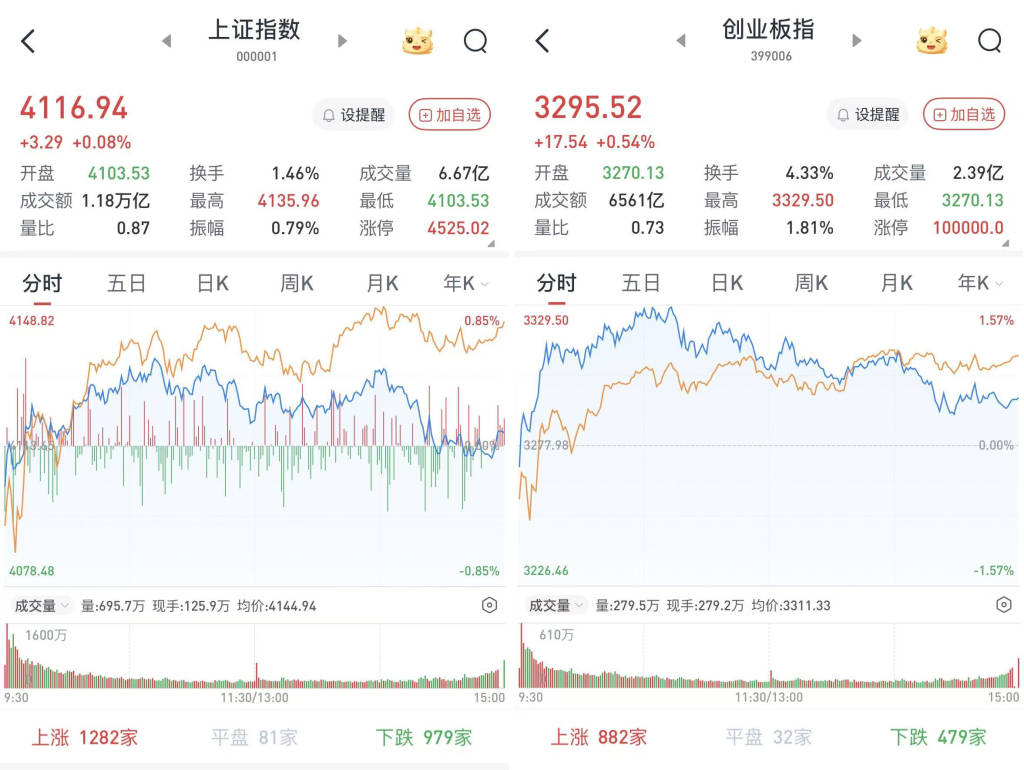
【机构策略】短期A股市场仍将震荡整理 中长期上行趋势仍在
Zheng Quan Shi Bao Wang· 2026-01-21 01:20
Group 1 - The A-share market is experiencing a significant style shift, indicating a strong willingness for funds to switch between high and low sectors amid adjustments in high-position themes and individual stocks [1] - The overall market trading volume remained stable compared to the previous trading day, with active trading levels not declining further; if the market can maintain above 2.5 trillion yuan, there will be more opportunities [1] - The market is likely to gradually shift towards a trend focused on fundamental improvements, especially during the annual report forecast period, suggesting investors should pay attention to sectors with good fundamentals that have lagged behind [1] Group 2 - The A-share major indices continued to adjust, with market volume remaining active, indicating a healthy adjustment process; approximately 60% of individual stocks experienced declines, particularly those that had previously seen significant gains [2] - Geopolitical tensions have led to rising precious metal prices, while the chemical sector is receiving ongoing attention due to recent oil price increases, with some stocks entering accelerated trends [2] - The A-share index is currently in a phase of oscillation and adjustment, with a long-term upward trend still in place; a reduction in high-risk preferences is more beneficial for a sustainable bull market [2]
稳一稳 | 谈股论金
Sou Hu Cai Jing· 2026-01-19 09:57
Core Viewpoint - The A-share market experienced significant fluctuations today, primarily influenced by large-scale sell-offs in broad-based ETFs, with the Shanghai Composite Index and Shenzhen Component Index both closing in positive territory despite pressures from heavyweight stocks [1][2]. Market Performance - The Shanghai Composite Index rose by 0.29%, while the Shenzhen Component Index increased by 0.09% [1]. - A total of 3,454 stocks advanced, compared to 1,693 that declined, with a market turnover of approximately 2.7 trillion yuan [1]. - Despite a net outflow of 42.4 billion yuan from major funds, the median increase in individual stocks was 0.84%, indicating a positive performance for many, especially small and mid-cap stocks [1]. Sector Analysis - The main pressure on the indices came from heavyweight stocks, particularly in the financial sector, which includes banks, insurance, and securities, negatively impacting the overall index performance [1]. - Notable sectors that performed well included precious metals, electric grid equipment, and the recovering commercial aerospace sector, which saw a net inflow of 2.2 billion yuan [2]. Regulatory Environment - Recent news indicates that excessive speculation in thematic and concept stocks has drawn regulatory scrutiny, particularly in the commercial aerospace sector [2][3]. - The China Securities Regulatory Commission (CSRC) has emphasized the need to crack down on excessive speculation and stock price manipulation, which may lead to increased regulatory focus on such activities [3][4]. Market Sentiment and Future Outlook - The CSRC introduced the concept of "counter-cyclical regulation," suggesting potential measures to cool down an overheated market or support a rapidly cooling one [4]. - The overall market sentiment reflects a balance between investor desires for quick profits and regulatory aims for stability and long-term growth, with a call for investors to adopt a more restrained, long-term investment approach [4].
稳一稳 | 谈股论金
水皮More· 2026-01-19 09:15
Market Overview - A-shares showed mixed performance today, with the Shanghai Composite Index rising by 0.29% to close at 4114.00 points, while the Shenzhen Component Index increased by 0.09% to 14294.05 points. The ChiNext Index, however, fell by 0.70% to 3337.61 points [3][4]. - The total trading volume in the Shanghai and Shenzhen markets was 27.325 billion, a significant decrease of 324.3 billion compared to the previous trading day [3]. Market Dynamics - The market experienced three significant dips during the day, closely linked to large sell-offs in broad-based ETFs, including the CSI 1000 ETF, CSI 500 ETF, and CSI 300 ETF, which played a regulatory role at critical points [4]. - Despite a net outflow of 42.4 billion from major funds, 3454 stocks rose while only 1693 fell, indicating a generally positive performance for individual stocks, particularly among small and mid-cap stocks, with a median increase of 0.84% [4]. Sector Performance - Financial stocks, including banks, insurance, and securities, continued to exert downward pressure on the indices, while sectors such as precious metals, electric grid equipment, and the recovering commercial aerospace sector saw notable gains [5]. - The commercial aerospace sector attracted 2.2 billion in net inflows, although this amount was significantly lower than previous highs, indicating a short-term operation by major funds within the sector [6]. Regulatory Environment - Recent news indicated that excessive speculation in thematic and concept stocks has drawn regulatory attention, with the commercial aerospace sector specifically mentioned by the media. This has led to a notable rebound in the sector despite the scrutiny [6]. - The China Securities Regulatory Commission (CSRC) has emphasized the need to crack down on excessive speculation and stock price manipulation, suggesting that future regulatory focus may target disruptive trading behaviors [6][7]. Investment Sentiment - The CSRC introduced the concept of "counter-cyclical regulation," implying that if the market shows signs of overheating, measures may be taken to cool it down, while also indicating potential support if the market cools too quickly [7]. - Overall, the market is expected to maintain a stable upward trajectory, with no fundamental adjustments anticipated. Investors are encouraged to adopt a long-term investment perspective while being mindful of short-term trading opportunities [7].

融资保证金比例回归100%,释放什么信号?
Guo Ji Jin Rong Bao· 2026-01-15 14:15
Core Viewpoint - The recent increase in the financing margin ratio from 80% to 100% aims to moderate market sentiment, curb excessive speculation, and reduce overall market volatility, while not affecting existing financing contracts [1][4][5] Group 1: Financing Margin Adjustment - The financing margin ratio has undergone three adjustments since 2015, with the latest change returning it to 100% [2] - The adjustment is expected to decrease the maximum financing amount from 125,000 to 100,000 for every 100,000 in margin, indicating a 25% reduction in leverage [3] - The adjustment is seen as a proactive measure to prevent credit risks associated with concentrated margin calls [3] Group 2: Market Impact and Fund Flow - The increase in the financing margin ratio is anticipated to lead to a shift in fund flows, with a contraction in new financing scale and a decrease in speculative demand due to higher costs [6] - Funds are likely to move from speculative stocks to those with stable performance and reasonable valuations, promoting a more sustainable market environment [6] - The adjustment may enhance international investors' confidence in the A-share market, signaling a commitment to stable market development [6] Group 3: Regulatory Perspective - The adjustment is part of a broader strategy to manage market risks and ensure the healthy operation of the capital market, especially in light of recent trading activity and liquidity [4][5] - Future regulatory measures may include enhanced risk monitoring, differentiated margin requirements based on risk levels, and incentives for long-term funds to participate in margin trading [9]
大震荡 | 谈股论金
水皮More· 2026-01-14 09:43
Market Overview - The A-share market showed mixed performance today, with the Shanghai Composite Index closing down 0.31% at 4126.09 points, while the Shenzhen Component Index rose 0.56% to 14248.60 points, and the ChiNext Index increased by 0.82% to 3349.14 points [3] - The trading volume in the Shanghai and Shenzhen markets approached 40 trillion, reaching 39.872 billion, an increase of 2.881 billion from the previous day, setting a new historical record for trading volume [3] Market Volatility - The Shanghai Composite Index experienced significant volatility, reaching a high of 4190 points in the morning before dropping to a low of 4109 points, with an intraday fluctuation of 90 points, representing a 2% change [4] - The large trading volume of 3.93 trillion is noteworthy, and its sustainability is questioned, as historical instances of trading volumes exceeding 3 trillion have often preceded market peaks [5][6] Regulatory Impact - The market's sharp fluctuations were triggered by regulatory signals from management, specifically the announcement of new financing rules that raised the margin requirement from 80% to 100% [4] - This measure is seen as a conventional tool for counter-cyclical regulation, aimed at cooling down the currently heated market, where the scale of financing has accumulated to approximately 2.6 trillion [4] Market Sentiment - Despite the significant fluctuations, the market's overall sentiment remains strong, with a median increase of 0.13% among individual stocks, indicating that the market is not easily cooled down by a single policy signal [6] - The current market dynamics serve as a test for the quality of individual stocks and investment logic, emphasizing the need for cautious investment strategies during periods of high volatility [7]

朱光耀:看懂宏观经济政策的“积极有为” 推动物价合理温和回升极具战略意义
Zhong Guo Jing Ji Wang· 2025-12-18 06:46
Group 1 - The core viewpoint of the article emphasizes the need for a more proactive macroeconomic policy to address current economic challenges, highlighting the importance of both fiscal and monetary policies in achieving stability and growth [1][2] - The fiscal policy is set to include a deficit rate of around 4% by 2025, with local special bond issuance of 4.4 trillion yuan, along with 1.3 trillion yuan in ultra-long special government bonds and 500 billion yuan in special bonds, providing a solid foundation for effective policy implementation [1] - The monetary policy aims to address price stability, with a focus on guiding inflation towards a reasonable range of around 2%, as current CPI is slightly above 0 and PPI has been negative for 38 consecutive months, negatively impacting macroeconomic operations and corporate profits [2] Group 2 - The article discusses the strategic significance of promoting a moderate recovery in prices as a key task of current monetary policy, which is crucial for stabilizing economic growth and fiscal revenues [2] - The concept of "counter-cyclical" and "cross-cyclical" regulation is introduced, emphasizing the need for a combination of short-term and long-term strategies to address immediate issues while planning for future development [2]