
钢材供需平衡

Search documents
逻辑或向现实切换,外部扰动因素加剧:中辉期货钢材周报-20260316
Zhong Hui Qi Huo· 2026-03-16 05:52
1. Report Industry Investment Rating - No relevant information provided 2. Core Viewpoints - Currently, the overall inventory level of the five major steel products is normal, and the supply and demand are relatively balanced. The production of rebar has recovered rapidly, with high inventory in East China and rising warehouse receipts. The demand for hot-rolled coils has recovered slowly, with a high overall inventory level, and the warehouse receipts have reached the highest level in the same period, facing de-stocking pressure. Although the molten iron production has decreased, after the Two Sessions, the resumption of production is expected, and the overall supply and demand of steel are balanced and slightly loose [2]. - The raw material end and external disturbances are significant. The sharp rise in crude oil has promoted the expectation of rising energy prices, and there is news that some varieties of BHP iron ore are restricted, further reducing the volume of tradable resources, with strong cost support [2]. - In terms of driving factors, the basis of rebar is bullish, but that of hot-rolled coils is bearish. The overall profit of steel mills is acceptable, and the expectation of resuming production is strong, with the supply side expected to increase marginally in the later stage. The inventory/warehouse receipts in East China are generally high. On the demand side, the de-stocking slope driven by the recovery speed of construction steel in the later stage is the key. The raw material end is greatly affected by non-supply and demand disturbances and is generally strong. Currently, the black market still lacks strong driving forces. Under the static assumption of external factors such as crude oil, the state of the steel market being trapped in a range may be difficult to break, and the later trading logic may switch to actual supply and demand. Spot goods are advisable to be sold at high prices or hedged opportunistically [2]. 3. Summary by Relevant Catalogs Steel Production - In December 2025, the monthly production of pig iron was 60.72 million tons, a year-on-year decrease of 9.9%; the cumulative production was 836.04 million tons, a year-on-year decrease of 3%. The monthly production of crude steel was 68.18 million tons, a year-on-year decrease of 10.3%; the cumulative production was 960.81 million tons, a year-on-year decrease of 4.4%. The monthly production of steel was 115.31 million tons, a year-on-year decrease of 3.8%; the cumulative production was 1.44612 billion tons, a year-on-year increase of 3.1% [5]. - As of March 13, 2026, the weekly production of rebar was 1.953 million tons, an increase of 219,900 tons, with a cumulative year-on-year decrease of 7%; the weekly consumption was 1.7681 million tons, an increase of 785,800 tons, with a cumulative year-on-year decrease of 9%; the inventory was 8.9417 million tons, an increase of 184,900 tons, a year-on-year increase of 4.73%. The weekly production of wire rod was 775,700 tons, an increase of 27,000 tons, with a cumulative year-on-year decrease of 1%; the weekly consumption was 690,000 tons, an increase of 89,100 tons, with a cumulative year-on-year decrease of 1%; the inventory was 1.9695 million tons, an increase of 84,700 tons, a year-on-year increase of 7%. The weekly production of hot-rolled coils was 2.9526 million tons, a decrease of 58,500 tons, with a cumulative year-on-year decrease of 5%; the weekly consumption was 2.9536 million tons, an increase of 137,900 tons, with a cumulative year-on-year decrease of 5%; the inventory was 4.7159 million tons, a decrease of 1,000 tons, a year-on-year increase of 13%. The weekly production of cold-rolled coils was 882,700 tons, a decrease of 2,400 tons, with a cumulative year-on-year increase of 2.15%; the weekly consumption was 912,000 tons, an increase of 62,400 tons, with a cumulative year-on-year increase of 2.62%; the inventory was 1.8884 million tons, a decrease of 29,300 tons, a year-on-year increase of 15.01%. The weekly production of medium and heavy plates was 1.6457 million tons, an increase of 51,300 tons, with a cumulative year-on-year increase of 3.57%; the weekly consumption was 1.6561 million tons, a decrease of 7,900 tons, with a cumulative year-on-year increase of 3.66%; the inventory was 2.2334 million tons, a decrease of 10,400 tons, a year-on-year increase of 6%. The total weekly production of the five major steel products was 8.2097 million tons, an increase of 237,300 tons, with a cumulative year-on-year decrease of 2.82%; the total weekly consumption was 7.98 million tons, an increase of 1.07 million tons, with a cumulative year-on-year decrease of 2.86%; the total inventory was 19.75 million tons, an increase of 228,900 tons, a year-on-year increase of 7.94% [6]. Steel Demand - Since the beginning of this year, the cumulative year-on-year decrease in the commercial housing transaction area of 30 large and medium-sized cities compared with the same period last year is 20%. The cumulative year-on-year decrease in the land transaction area of 100 cities is 5% [29]. - In 2025, China's steel exports to Iran were only 270,000 tons, which can be ignored, but the exports to the seven Gulf countries were about 14 million tons, accounting for about 11.7% of China's total steel exports. Due to the de facto closure of the Strait of Hormuz, China's steel export orders and shipments to this region have been affected. Therefore, the war has a negative impact on China's steel exports in the short term, but if the war continues, the local steel shortage may need to be filled by China, which will form an indirect benefit. From January to February this year, steel exports decreased by 8% year-on-year [37]. Steel Inventory - The rebar basis continued to decline this week and is still slightly higher year-on-year. Currently, the production profit of rebar is generally better than that of hot-rolled coils, which is also reflected in the month-on-month increase in rebar production. According to past rules, the basis is expected to narrow. From a lunar perspective, the inventory in Hangzhou has reached the highest level in the same period, and there is still room for further decline [50]. - The hot-rolled coil basis weakened this week, falling below -20, with a recent decline of about 50 yuan/ton. The high inventory of hot-rolled coils and the warehouse receipts reaching the high level in the same period put pressure on the basis. However, from historical data, the current basis has dropped to the low level in the same period, and the room for further weakening may be limited [54]. - The 5 - 10 month spread of rebar fluctuated little this week. During the de-stocking period, the month spread is likely to weaken. At the same time, the high inventory level in Hangzhou may lead to a weakening of the month spread in the later stage [60]. - The 5 - 10 month spread of hot-rolled coils strengthened slightly, but the room for further strengthening is limited under the pressure of warehouse receipts and de-stocking [62].
钢矿周报:市场情绪反复,盘面延续震荡走势-20260118
Hua Lian Qi Huo· 2026-01-18 14:29
1. Report Industry Investment Rating - No relevant information provided. 2. Core Viewpoints of the Report 2.1. Steel (Rebar) - Inventory: The latest inventory of the five major steel products decreased slightly week - on - week. Rebar inventory decreased slightly, while wire rod inventory increased slightly. Under the influence of the off - season, the pressure of inventory accumulation increased [7]. - Supply: Affected by environmental protection in the north, the hot metal output of blast furnace steel mills decreased slightly. However, with the recovery of steel profits, steel mills are willing to resume production, and there is room for an increase in steel supply [7]. - Demand: The total apparent demand of the five major steel products rebounded week - on - week. Although the expectation of a decline in steel demand remains unchanged, the weakening pace is slow, and demand has a certain degree of resilience [7]. - View: Recently, the pace of steel mill resumption has been erratic, and rebar production has been relatively stable. However, with acceptable profitability of steel mills and low inventory levels, there is room for a marginal increase in supply. As the off - season deepens, demand gradually weakens, and the pressure of inventory accumulation increases. The industrial supply - demand contradiction will gradually accumulate. Currently, the expectation of increasing supply and weakening demand in the steel market exerts pressure, but in the short term, steel prices show a range - bound trend due to macro expectations and cost support [7]. - Strategy: The 2605 contract is expected to fluctuate in the range of 3100 - 3200 [7]. 2.2. Iron Ore - Supply: In the latest period (January 5 - January 11, 2026), the global iron ore shipment volume decreased, while the arrival volume in China increased. The total global iron ore shipment volume was 31.809 million tons, a week - on - week decrease of 32,800 tons. The total shipment volume from 19 ports in Australia and Brazil was 25.332 million tons, a week - on - week decrease of 1.333 million tons. Australia's shipment volume was 18.689 million tons, a week - on - week decrease of 5100 tons, and Brazil's shipment volume was 6.643 million tons, a week - on - week decrease of 1.282 million tons. The arrival volume at 47 ports in China was 30.15 million tons, a week - on - week increase of 1.903 million tons; the arrival volume at 45 ports was 29.204 million tons, a week - on - week increase of 1.64 million tons; the arrival volume at six northern ports was 14.692 million tons, a week - on - week decrease of 437,000 tons [9]. - Demand: As of January 16, 2026, the blast furnace operating rate of 247 steel mills was 78.84%, a week - on - week decrease of 0.47 percentage points; the blast furnace iron - making capacity utilization rate was 85.48%, a week - on - week decrease of 0.56 percentage points; the steel mill profitability rate was 39.83%, a week - on - week increase of 2.17 percentage points; the daily average hot metal output was 2.2801 million tons, a week - on - week decrease of 14,900 tons. Affected by environmental protection, the blast furnace operating rate of steel mills decreased slightly, and the hot metal output decreased slightly week - on - week [9]. - Inventory: As of January 16, 2026, the total inventory of imported iron ore at 47 ports in China was 172.887 million tons, a week - on - week increase of 2.4426 million tons; the daily average port clearance volume was 3.3502 million tons, a decrease of 19,400 tons. The total inventory of imported iron ore in national steel mills was 92.6222 million tons, a week - on - week increase of 2.7263 million tons; the daily consumption of imported ore by the current sample steel mills was 2.8184 million tons, a week - on - week decrease of 14,300 tons; the inventory - to - consumption ratio was 32.86 days, a week - on - week increase of 1.13 days. The iron ore port inventory continued to reach a new high, and the steel mill inventory increased week - on - week [9]. - View: In terms of the industry, overseas iron ore shipments continued to decline, and the expectation of tightened overseas shipments under the influence of seasonal factors was strong. The arrival volume in China remained at a high level, and the port inventory continued to reach a new high. On the demand side, in the short term, affected by environmental protection, the steel mill hot metal output decreased slightly again, but the steel mill profitability was acceptable, and the hot metal output still increased year - on - year. Overall, the supply - demand pattern of iron ore is relatively loose, but the expectation of supply - demand improvement provides certain support for ore prices [9]. - Strategy: The iron ore 2605 contract is expected to operate in the range of 800 - 850 [9]. 3. Summary by Relevant Catalogs 3.1. Weekly Supply and Demand Data of Steel - Supply: The blast furnace operating rate of 247 steel mills was 78.84%, a week - on - week decrease of 0.47 percentage points; the capacity utilization rate was 85.48%, a week - on - week decrease of 0.56 percentage points; the profitability rate was 39.83%, a week - on - week increase of 2.17 percentage points; the daily average hot metal output was 228.01 tons, a week - on - week decrease of 1.49 tons. The operating rate of 94 independent electric furnaces was 72.97%, with no week - on - week change; the capacity utilization rate was 57.99%, a week - on - week increase of 1.09 percentage points; the scrap consumption was 244.24 tons, a week - on - week decrease of 3.06 tons. The total output of the five major steel products was 819.21 tons, a week - on - week increase of 0.62 tons [10]. - Demand: The average daily trading volume of traders (MA5) was 8.84 tons, a week - on - week decrease of 1.04 tons; the procurement volume of wire rods and rebars in Shanghai was 17,850 tons, a week - on - week decrease of 4650 tons; the apparent demand for rebar was 190.34 tons, a week - on - week increase of 14.44 tons; the apparent demand for hot - rolled coils was 314.16 tons, a week - on - week increase of 5.55 tons; the apparent demand for wire rods was 71.54 tons, a week - on - week increase of 4.90 tons; the apparent demand for cold - rolled coils was 91.93 tons, a week - on - week increase of 3.09 tons; the apparent demand for medium - thick plates was 158.15 tons, a week - on - week decrease of 0.47 tons [10]. - Inventory: The total inventory of the five major steel products was 1247.01 tons, a week - on - week decrease of 6.91 tons; the rebar inventory was 438.07 tons, a week - on - week decrease of 0.04 tons; the hot - rolled coil inventory was 362.33 tons, a week - on - week decrease of 5.80 tons; the wire rod inventory was 91.76 tons, a week - on - week increase of 1.95 tons; the cold - rolled coil inventory was 158.49 tons, a week - on - week decrease of 3.26 tons; the medium - thick plate inventory was 196.36 tons, a week - on - week increase of 0.24 tons [10]. 3.2. Weekly Supply and Demand Data of Iron Ore - Shipment Volume: The global iron ore shipment volume was 31.809 million tons, a week - on - week decrease of 32,800 tons; the shipment volume from 19 ports in Australia was 18.689 million tons, a week - on - week decrease of 5100 tons; the shipment volume from 19 ports in Brazil was 6.643 million tons, a week - on - week decrease of 1.282 million tons [11]. - Arrival Volume: The arrival volume at 45 ports in China was 29.204 million tons, a week - on - week increase of 1.64 million tons; the arrival volume at six northern ports was 14.692 million tons, a week - on - week decrease of 437,000 tons [11]. - Inventory: The inventory at 47 ports was 172.887 million tons, a week - on - week increase of 2.4426 million tons; the inventory of 247 steel mills was 92.6222 million tons, a week - on - week increase of 2.7263 million tons [11]. - Demand: The port clearance volume at 47 ports was 3.3502 million tons, a week - on - week decrease of 19,400 tons; the daily consumption of steel mills was 2.8184 million tons, a week - on - week decrease of 14,300 tons [11]. 3.3. Futures - Spot Market - As of January 16, 2026, the closing price of the RB2605 contract was 3163 yuan/ton; the closing price of the HC2605 contract was 3315 yuan/ton; the closing price of the I2605 contract was 812 yuan/ton. The basis of Shanghai rebar's main contract was 137 yuan/ton; the basis of Shanghai hot - rolled coil's main contract was - 15 yuan/ton. The spot screw - coil spread in Shanghai was 0 yuan/ton, and the screw - coil spread of the main contract was - 152 yuan/ton [21]. 3.4. Demand Side - The report mainly presents the apparent consumption volume of various types of steel products (such as rebar, hot - rolled coils, wire rods, cold - rolled coils, medium - thick plates), trading volume, procurement volume, cement outbound volume, and concrete production capacity utilization rate through charts, but no specific numerical analysis is provided in the text [57][63][65]. 3.5. Inventory Side - The report mainly shows the inventory of various types of steel products (such as rebar, hot - rolled coils, wire rods, cold - rolled coils, medium - thick plates) and the inventory - to - sales ratio through charts, but no specific numerical analysis is provided in the text [78][89][98]. 3.6. Supply Side - Steel Production: The report shows the production volume of various types of steel products (such as rebar, hot - rolled coils, medium - thick plates, wire rods, cold - rolled coils) and the total production volume of the five major steel products through charts, but no specific numerical analysis is provided in the text [109][114][116]. - Steel Mill Operation: The report shows the operating rate and capacity utilization rate of 247 blast furnace steel mills and independent electric furnace steel mills through charts, but no specific numerical analysis is provided in the text [123]. - Hot Metal and Scrap: The report shows the hot metal production volume and scrap consumption through charts, but no specific numerical analysis is provided in the text [125]. - Steel Mill Profit: The report shows the steel mill profitability rate and steel profit through charts, but no specific numerical analysis is provided in the text [130]. 3.7. Raw Material - Iron Ore - Global Shipment: From January 5 - January 11, 2026, the total global iron ore shipment volume was 31.809 million tons, a week - on - week decrease of 32,800 tons [136]. - Australia - Brazil Shipment: The total iron ore shipment volume from 19 ports in Australia and Brazil was 25.332 million tons, a week - on - week decrease of 1.333 million tons. Australia's shipment volume was 18.689 million tons, a week - on - week decrease of 5100 tons, and the volume shipped from Australia to China was 15.933 million tons, a week - on - week increase of 395,000 tons. Brazil's shipment volume was 6.643 million tons, a week - on - week decrease of 1.282 million tons [140]. - Arrival Volume: From January 5 - January 11, 2026, the arrival volume at 47 ports in China was 30.15 million tons, a week - on - week increase of 1.903 million tons; the arrival volume at 45 ports was 29.204 million tons, a week - on - week increase of 1.64 million tons; the arrival volume at six northern ports was 14.692 million tons, a week - on - week decrease of 437,000 tons [153]. - Port Inventory: As of January 16, 2026, the total inventory of imported iron ore at 47 ports in China was 172.887 million tons, a week - on - week increase of 2.4426 million tons; the daily average port clearance volume was 3.3502 million tons, a decrease of 19,400 tons. In terms of components, the Australian ore inventory was 75.8221 million tons, an increase of 1.5887 million tons; the Brazilian ore inventory was 61.6914 million tons, an increase of 612,400 tons; the trading ore inventory was 113.5285 million tons, an increase of 1.8404 million tons; the coarse powder inventory was 131.6586 million tons, an increase of 923,600 tons; the lump ore inventory was 21.6713 million tons, an increase of 387,500 tons; the iron concentrate powder inventory was 15.5271 million tons, an increase of 699,400 tons; the pellet inventory was 4.03 million tons, an increase of 432,100 tons [157][161]. - Steel Mill Inventory: The total inventory of imported iron ore in national steel mills was 92.6222 million tons, a week - on - week increase of 2.7263 million tons; the daily consumption of imported ore by the current sample steel mills was 2.8184 million tons, a week - on - week decrease of 14,300 tons; the inventory - to - consumption ratio was 32.86 days, a week - on - week increase of 1.13 days [173].
钢材:矛盾决定故事 故事决定驱动
Qi Huo Ri Bao· 2025-12-30 02:07
Core Viewpoint - The black commodity market is currently experiencing a weak and volatile pattern, with a decline in overall market volatility and an increase in cautious sentiment as the focus shifts from strong policy expectations to the realities of a weak off-season [1] Group 1: Market Dynamics - The volatility of steel prices has significantly narrowed due to a lack of strong supply-demand contradictions that could support a trend in the market [1] - On the supply side, the industry lacks strong top-down policies to counteract internal competition, leading to production adjustments primarily driven by market profit and loss [1] - The apparent consumption of rebar continues to decline, and the demand for hot-rolled coils is also weak, maintaining a just-in-time purchasing rhythm in the spot market [1] Group 2: Macro Economic Environment - The macroeconomic policy remains stable, with expectations for large-scale stimulus cooling down, leading the market to focus more on the actual implementation of policies and marginal improvements in micro data [4] - Trading behavior based solely on macro optimism or pessimism has decreased, with the current focus shifting to immediate responses to inventory and spot transactions [4] Group 3: Cost and Supply Factors - The cost side is unstable, with increasing supply pressures on carbon and iron elements, particularly due to significant increases in imported coal from Mongolia and Russia, which have alleviated previous regional supply tensions [4][5] - The supply of iron elements is becoming more relaxed, with increased shipments from overseas mines and high port arrival volumes, leading to a cautious demand outlook [5] - The current low profitability of steel mills and pessimistic winter storage expectations have resulted in a lack of motivation for replenishing iron ore inventories, maintaining a low inventory production strategy [5] Group 4: Policy Impact on Exports - Recent discussions regarding steel export licensing management have not led to significant price fluctuations, as the core intention of the policy is to regulate export order and avoid chaotic low-price competition among domestic enterprises [10] - The policy aims to shift the market focus from quantity to quality and efficiency, becoming a continuous variable affecting the internal and external trade landscape of steel [10] Group 5: Future Outlook - The current steel market is in a narrow range with a ceiling supported by high visible inventories and limited terminal consumption capacity [8] - Breaking this high inventory, low volatility, and tight balance pattern will require more policy support, with a focus on either constraints on steel production or improvements in terminal demand [8] - The recommended trading strategy is to adopt a range-bound approach, with rebar prices expected to be between 3050 and 3200 yuan/ton and hot-rolled coil prices between 3200 and 3350 yuan/ton, closely monitoring inventory depletion rates and cost sustainability [8]

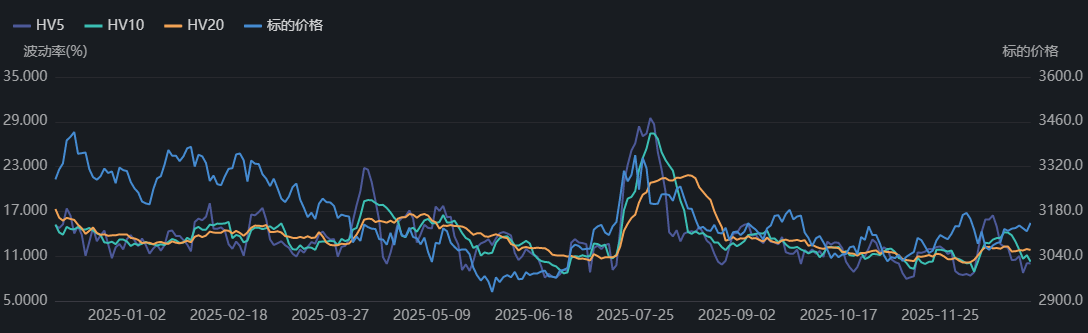
南华期货钢材产业周报:原料端让利,关注宏观扰动,下方空间有限-20251207
Nan Hua Qi Huo· 2025-12-07 13:27
Group 1: Report Industry Investment Rating - Not provided Group 2: Core Views of the Report - The overall finished steel is supported by raw material costs and policy expectations. With raw material price concessions, profits are gradually improving, and the market may pre - trade market expectations. Steel prices are expected to fluctuate within a range. The operating range for rebar may be between 3000 - 3300, and for hot - rolled coils between 3200 - 3500. Attention should be paid to the de - stocking speed of steel, downstream consumption, and whether there are any super - expected policies regarding steel in the upcoming Central Economic Work Conference [2]. - The supply - demand balance of steel products is marginally improving, but there are still negative factors such as weakening basis, poor peak - season performance of steel, high inventory of coil and plate products, and re - accumulation of port iron ore inventory [14][16]. Group 3: Summary by Relevant Catalogs 3.1 Chapter 1: Core Contradictions and Strategy Recommendations 3.1.1 Core Contradictions - Last week, steel prices fluctuated strongly. The macro - sentiment in the market was positive due to the upcoming Fed interest - rate decision meeting and domestic macro - meetings. However, the continuous inventory accumulation at iron ore ports, high iron ore valuation, increased supply surplus of coking coal under the production - cut logic, and the expected price cut of coke limited the upward space of finished steel [1]. - Last week, the supply and demand of the five major steel products both decreased, and the inventory continued to be slowly de - stocked. The supply - demand balance is marginally improving. The profits of blast furnaces and electric furnaces are gradually improving, mainly due to the concessions from the furnace - charge end. The production - cut intensity of steel may gradually weaken [2]. 3.1.2 Trading - Type Strategy Recommendations - Trend judgment: Range - bound oscillation. The operating range for rebar may be between 3000 - 3300, and for hot - rolled coils between 3200 - 3500. - Month - spread strategy: With the marginal improvement of the supply - demand balance of finished steel, the profit - loss ratio of positive spreads is relatively high. - Hedging and arbitrage strategy: Narrow the spread between hot - rolled coils and rebar [9]. 3.1.3 Industrial Customer Operation Recommendations - Rebar and hot - rolled coil price range forecasts: The 01 - contract monthly range forecast for rebar is 2900 - 3300 with a current volatility of 9.26% and a volatility percentile of 7.0%; for hot - rolled coils, it is 3100 - 3500 with a current volatility of 7.39% and a volatility percentile of 0.10% [10]. - Rebar risk - management strategy recommendations: For inventory management, when the finished - product inventory is high and there are concerns about steel price declines, enterprises can short rebar or hot - rolled coil futures to lock in profits and make up for production costs, with a hedging ratio of 30%. They can also sell call options to reduce capital costs. For procurement management, when the regular inventory for procurement is low, enterprises can buy rebar or hot - rolled coil futures to lock in procurement costs in advance, with a hedging ratio of 30%, and sell put options to collect premiums [10]. 3.2 Chapter 2: Important Information and Next - Week Concerns 3.2.1 Important Information - **Positive information**: Market expectations for policies, marginal improvement in the supply - demand balance of finished steel, decline in coking coal prices benefiting finished steel, and gradual improvement in blast - furnace and electric - furnace profits [15]. - **Negative information**: Weakening basis, poor peak - season performance of steel, significant decline in steel - mill profit margins, re - accumulation of port iron ore inventory, and high inventory of coil and plate products [14][16]. - **Spot - trading information**: Market policy expectations, marginal improvement in the supply - demand balance of finished steel, coking coal price decline benefiting finished steel, and gradual improvement in blast - furnace and electric - furnace profits [15]. 3.2.2 Next - Week Important Events to Watch - The Central Economic Work Conference will be held on December 11 - 12. - The Fed interest - rate decision meeting will be held next Thursday [24]. 3.3 Chapter 3: Disk Interpretation - **Basis**: The basis of rebar and hot - rolled coils shows certain seasonal characteristics. - **Coil - rebar spread**: The spot coil - rebar spread continues to narrow, and the futures coil - rebar spread may also continue to narrow. - **Term structure**: The term structure of rebar changes little and remains in a deep Contango (C) structure. The term structure of hot - rolled coils may change back to the previous B structure from the newly - formed C structure. - **Month - spread structure**: The month - spread of rebar and hot - rolled coils also shows seasonal characteristics [23][30]. 3.4 Chapter 4: Valuation and Profit Analysis 3.4.1 Up - and Down - Stream Profit Tracking in the Industrial Chain - The profitability rate of steel mills has dropped significantly, falling below 40%. However, the profits of blast furnaces and electric furnaces are marginally improving, and the motivation for the five major steel products to cut production may gradually weaken [43]. - Various steel products' profits, such as the immediate profits of long - process large - scale rebar and hot - rolled coils, and the profits with raw - material lags, show different trends over time [44]. 3.4.2 Export Profit Tracking - The export profit of hot - rolled coils leads the export volume by 2 months. There are also relationships between the export profit of hot - rolled coils and other factors such as the difference between overseas and Chinese hot - rolled coil prices and steel export orders [62]. 3.5 Chapter 5: Supply - Demand and Inventory Deduction 3.5.1 Supply - Demand Balance Sheet Deduction - In the week of December 5, 2025, the production of rebar and hot - rolled coils decreased compared to the previous week. The inventory of long - process steel mills' rebar decreased, while that of short - process steel mills increased slightly. The daily average molten - iron output of 247 steel mills and the daily consumption of scrap steel by 255 steel mills also decreased [86][87]. 3.5.2 Supply - Side and Deduction - The estimated amount of molten iron plus scrap steel shows a downward trend. The production of rebar and hot - rolled coils is affected by factors such as maintenance of blast furnaces and the profit of long - process large - scale rebar [93][96]. 3.5.3 Demand - Side and Deduction - The consumption of steel products shows certain seasonal characteristics. The consumption forecasts of rebar, hot - rolled coils, and other steel products are provided, and the inventory of various steel products and their inventory - to - sales ratios also show different trends [116][131].
【钢材周报】铁水下滑空间有限,钢价底部支撑偏强
Xin Lang Cai Jing· 2025-12-07 04:18
Group 1: Steel Market Summary and Outlook - The production of major steel products has decreased, with rebar production declining faster than hot-rolled steel, and iron output continuing to fall [6][71] - Total steel inventory is rapidly decreasing, with social inventory reducing faster than factory inventory; seasonal demand for steel is also declining, particularly for rebar [6][71] - Environmental inspections have intensified, leading to a further decline in iron output, although profits from blast furnaces are recovering, limiting the drive for active production cuts [6][71] Group 2: Supply and Demand Data - Rebar small sample production is 1.8931 million tons, down 167,700 tons; hot-rolled small sample production is 3.1431 million tons, down 47,000 tons [8][69] - Daily average iron output from 247 steel mills is 2.323 million tons, down 23,800 tons; the capacity utilization rate of independent electric arc furnace steel mills is 33.1%, down 0.4% [8][69] - Demand for rebar is 2.1698 million tons, down 109,600 tons; demand for hot-rolled steel is 3.1486 million tons, down 53,600 tons [8][69] Group 3: Macro Data and Economic Indicators - China's fixed asset investment growth rate has declined, with a year-on-year decrease of 1.7% for the first ten months of 2025; real estate investment has dropped by 14.7% [34] - The official manufacturing PMI for November is 49.2%, indicating a slight recovery in manufacturing, while the U.S. manufacturing PMI is at 52.2, showing continued recovery [34][30] - The unemployment claims in the U.S. are at 191,000, lower than the expected 220,000, indicating some stability in the labor market [30][34] Group 4: Inventory Situation - Rebar inventory has decreased by 40,500 tons in factories and 236,200 tons in social inventory, totaling a reduction of 276,700 tons; hot-rolled inventory has increased by 19,000 tons in factories but decreased by 24,500 tons in social inventory [8][69] - Overall inventory for five major materials has decreased by 35,220 tons, with factory inventory down by 64,400 tons and social inventory down by 287,800 tons [8][69] Group 5: Price and Profit Review - The average price for rebar in Shanghai is 3,220 yuan, up 30 yuan; the average price for hot-rolled steel is 3,280 yuan, up 20 yuan [12][80] - The profit for electric arc furnaces in East China is -54.51 yuan per ton, while the profit for using valley electricity is 110 yuan per ton [90][69] - The cash profit for rebar in East China is around 1,200 yuan per ton, indicating a slight profitability for long-process steel mills [23][86]

钢材:板材压力大,原料端支撑仍存
Yin He Qi Huo· 2025-10-19 03:13
Group 1: Report Industry Investment Rating - No relevant content provided Group 2: Core Viewpoints of the Report - This week, steel mills continued to cut production. After the holiday, steel demand improved, but hot - rolled coil production was high with inventory accumulation (though at a slower pace), while rebar shifted to destocking. The black - related sectors were under pressure, but steel prices had low valuations and there was some support below. The "14th Five - Year Plan" and other factors would affect the market. Suggestions included holding long positions in the hot - rolled coil to rebar spread, and taking a wait - and - see approach for single - side trading and options [4][6][8] Group 3: Summary by Chapters Chapter 1: Steel Market Summary and Outlook Summary - **Supply**: This week, rebar small - sample production was 201.16 tons (-3.62), hot - rolled coil small - sample production was 321.84 tons (-1.45). 247 steel mills' average daily hot metal was 240.95 tons (-0.59), and the capacity utilization rate of 49 independent electric arc furnace steel mills was 33.2% (+4.8). Short - process profits declined, long - process steel profits continued to shrink and turned to losses. Overall, steel production enthusiasm was still strong [4] - **Demand**: Rebar apparent demand was 217.43 tons (+64.25), hot - rolled coil apparent demand was 316.34 tons (+21.33). After the holiday, steel destocking accelerated, but downstream construction sites had difficulties in receiving payments. Real estate demand was weak, the manufacturing PMI was still below the boom - bust line, the auto industry maintained positive growth but with shrinking profits, and the white - goods production schedule declined. Overseas, the US manufacturing was recovering, while the eurozone's manufacturing was weak [4] - **Inventory**: Rebar inventory decreased by 18.59 tons, hot - rolled coil inventory increased by 6.29 tons, and the total inventory of five major steel products decreased by 18.46 tons [4] - **Outlook**: After the holiday, steel demand improved with the temperature drop, but the black - related sectors were under pressure. Steel prices had low valuations and there was some support below. Future attention should be paid to coal mine safety inspections, overseas tariffs, and domestic macro and industrial policies [6] - **Trading Strategies**: Suggest a wait - and - see approach for single - side trading and options, and continue to hold long positions in the hot - rolled coil to rebar spread [8] Chapter 2: Price and Profit Review Summary - **Spot Prices**: In Shanghai, the rebar summary price was 3290 yuan (-30), and the hot - rolled coil price was 3290 yuan (-100). In Beijing, the rebar summary price was 3190 yuan (-60), and in Tianjin, the hot - rolled coil price was 3190 yuan (-100) [12] - **Profit**: Long - process steel profits continued to shrink and turned to losses. Short - process steel profits declined, with the East China flat - rate electric furnace profit at - 262.61 yuan (-54.8) and the valley - rate electric furnace profit at - 98 yuan (-55) [4][26] Chapter 3: Important Domestic and Overseas Macroeconomic Data Summary - **Trade and Policy**: China announced counter - measures against the US 301 investigation on the shipbuilding industry, and would charge special port fees on US - related ships starting from October 14. In September 2025, China exported 1046.5 tons of steel, a 10.0% increase from the previous month, and the cumulative export from January to September was 8795.5 tons, a 9.2% increase year - on - year [28] - **Macroeconomic Indicators**: In September 2025, China's CPI decreased by 0.3% year - on - year and increased by 0.1% month - on - month. The new social financing in September was 3.53 trillion yuan, with a year - on - year decrease of 6.21%. From January to August 2025, China's fixed - asset investment growth rate continued to decline, with real estate investment being a drag on domestic demand, and insufficient new infrastructure investment projects [28][33] - **Real Estate Data**: In 2025, the real estate market continued to be weak, with continuous declines in new construction, completion, and sales areas [4][33] Chapter 4: Steel Supply, Demand, and Inventory Situation Summary - **Supply**: 247 steel mills' average daily hot metal production was 240.95 tons (-0.59), and the capacity utilization rate of 49 independent electric arc furnace steel mills was 33.2% (+4.8). Rebar small - sample production was 201.16 tons (-3.62), and hot - rolled coil small - sample production was 321.84 tons (-1.45) [53][57] - **Demand**: Rebar apparent demand was 217.43 tons (+64.25), hot - rolled coil apparent demand was 316.34 tons (+21.33). Construction site funds were tight, and downstream demand was under pressure. The steel export in September was strong, and it was expected to maintain strong resilience in the future [60][72] - **Inventory**: Rebar inventory decreased by 18.59 tons, hot - rolled coil inventory increased by 6.29 tons, and the total inventory of five major steel products decreased by 18.46 tons [4]
钢材:热卷累库较多 关注节后需求恢复情况
Jin Tou Wang· 2025-10-15 02:14
Core Viewpoint - The steel market is experiencing a decline in spot prices, with rebar and hot-rolled coil showing different trends in demand and supply dynamics [1][6]. Supply - Iron and steel production remains high, but there is a slight reduction due to environmental factors during the National Day holiday. The output of the five major steel products remains stable year-on-year, with a total output of 8.63 million tons as of October 8, showing a decrease of 40,000 tons month-on-month [3]. - Rebar production is at 2.03 million tons, down 36,000 tons from the previous month, while hot-rolled coil production is at 3.23 million tons, maintaining a high level [3]. Demand - Rebar demand has decreased year-on-year but shows seasonal improvement month-on-month. The holiday effect has led to a drop in demand by 950,000 tons to 1.46 million tons [4]. - Hot-rolled coil demand has increased year-on-year but remained stable month-on-month, with a holiday-related decline of 340,000 tons to 2.91 million tons [4]. Inventory - Inventory levels for the five major steel products have increased by 1.28 million tons to 16 million tons, with rebar inventory rising by 570,000 tons to 6.6 million tons and hot-rolled coil inventory increasing by 320,000 tons to 4.12 million tons [5]. - Despite the increase in inventory, production levels are expected to remain above demand, leading to a projected year-on-year increase in inventory but a month-on-month decline [5]. Cost and Profit - The cost side shows a slight decline in coal mine operating rates and daily output due to the National Day holiday, with current production levels at historically low levels. Steel profits have significantly decreased from their high levels, with the profit ranking from high to low being billet, hot-rolled coil, rebar, and cold-rolled coil [2]. Market Outlook - Although steel demand is weak, there is cost support in the market. The focus for January contracts for rebar and hot-rolled coil is on support levels around 3,000 and 3,200 respectively [6].
广发期货《黑色》日报-20251013
Guang Fa Qi Huo· 2025-10-13 06:20
Group 1: Report Summary - The report includes three industry period - spot daily reports on steel, iron ore, and coke & coking coal, dated October 10 - 13, 2025 [1][5][10] Group 2: Steel Industry Investment Rating - Not provided Core View - Short - term macro sentiment is bearish due to escalating Sino - US friction; industry supply - demand is balanced with low inventory pressure, but poor peak - season demand expectations suppress valuation; there is no trending market in the real - world industry; short - term weak macro sentiment will push black metals down; focus on the support levels of 3000 for rebar and 3200 for hot - rolled coils in the January contract [2] Section Summaries - **Prices and Spreads**: Rebar and hot - rolled coil spot prices mostly declined; some contract prices had small changes; steel billet prices decreased, while slab prices were stable; production costs and profits varied by region and production method [2] - **Production**: Daily average pig iron output decreased by 0.1% to 241.5 tons; five major steel product output decreased by 0.4% to 863.3 tons; rebar output decreased by 1.7% to 203.4 tons; hot - rolled coil output decreased by 0.4% to 323.3 tons [2] - **Inventory**: Five major steel product inventory increased by 8.7% to 1600.7 tons; rebar inventory increased by 9.5% to 659.6 tons; hot - rolled coil inventory increased by 8.5% to 412.9 tons [2] - **Trading and Demand**: Building material trading volume decreased by 7.1% to 9.1 tons; five major steel product apparent demand decreased by 17.0% to 751.4 tons; rebar apparent demand decreased by 36.5% to 153.2 tons; hot - rolled coil apparent demand decreased by 9.1% to 295.0 tons [2] Group 3: Iron Ore Industry Investment Rating - Not provided Core View - Last week, iron ore futures fluctuated upwards; supply concerns have weakened; demand from steel mills is weakening; the market will fluctuate within a range due to weak steel prices and falling mill profitability; pay attention to production control policies, Sino - Australian negotiations, and Sino - US tariff wars; consider going long on the 2601 contract at low prices and the spread trade of long iron ore and short hot - rolled coils [5][6] Section Summaries - **Prices and Spreads**: Warehouse receipt costs of various iron ore types increased slightly; spot prices at Rizhao Port rose slightly; price indices also increased; some spreads changed [5] - **Supply**: 45 - port weekly arrivals increased by 10.5% to 2608.7 tons; global weekly shipments decreased by 5.7% to 3279.0 tons; monthly national imports increased by 0.6% to 10522.5 tons [5] - **Demand**: 247 steel mills' weekly average pig iron output decreased by 0.1% to 241.5 tons; 45 - port weekly average ore - removal volume decreased by 2.8% to 327.0 tons; monthly national pig iron output decreased by 1.4% to 6979.3 tons; monthly national crude steel output decreased by 2.9% to 7736.9 tons [5] - **Inventory**: 45 - port inventory increased by 0.3% to 14024.5 tons; 247 steel mills' imported ore inventory decreased by 9.9% to 9046.2 tons; 64 steel mills' available inventory days decreased by 16.0% to 21.0 days [5] Group 4: Coke and Coking Coal Industry Investment Rating - Not provided Core View Coke - Last week, coke futures rebounded; spot prices are showing signs of weakness; there is a possibility of the coke futures price falling again; pay attention to production reduction policies in Shanxi and the steel market; consider shorting the 2601 contract at high prices and the spread trade of long iron ore and short coke [10] Coking Coal - Last week, coking coal futures rebounded; spot prices are weakening; the futures price may fall after rising; consider shorting the 2601 contract at high prices and the spread trade of long iron ore and short coking coal [10] Section Summaries Coke - **Prices and Spreads**: Some coke spot prices decreased; contract prices increased slightly; basis and spreads changed [10] - **Supply**: Total coke output was stable, with a slight decrease in 247 steel mills' output [10] - **Demand**: 247 steel mills' pig iron output decreased slightly [10] - **Inventory**: Total coke inventory decreased slightly; coking plants' inventory increased, while steel mills' and port inventories decreased [10] Coking Coal - **Prices and Spreads**: Some coking coal spot prices changed; contract prices decreased slightly; basis and spreads changed [10] - **Supply**: Coal mine output decreased after the holiday and will gradually recover; imported Mongolian coal prices weakened [10] - **Demand**: Pig iron output and coking plant operation decreased slightly; downstream replenishment demand weakened [10] - **Inventory**: Coal mines' inventory increased, while other sectors' inventories decreased [10]
广发期货《黑色》日报-20251010
Guang Fa Qi Huo· 2025-10-10 05:51
Report Industry Investment Rating - Not provided in the content Core Viewpoints - For the steel industry, after the holiday, steel prices rebounded slightly. Steel production decreased slightly during the holiday, and inventory increased significantly due to stagnant demand. The supply - demand gap narrowed at the end of September. In October, demand is expected to recover seasonally, and inventory is expected to decline seasonally. The short - term supply and demand are basically balanced, and inventory pressure is not large. Pay attention to the support levels of 3050 and 3200 for rebar and hot - rolled coil January contracts respectively. The unilateral drive is not obvious. For arbitrage, reverse arbitrage on the monthly spread at high levels and convergence of the hot - rolled coil to rebar spread are recommended [3]. - For the iron ore industry, on the first trading day after the holiday, iron ore showed an oscillating upward trend. There are many disturbances on the supply side, but the external iron ore swap still follows the domestic price trend. Iron ore has a rebound drive, but the upward space depends on steel prices to give steel mills profits. Short - term, buy iron ore 2601 at low prices, with a price range of 760 - 830, go long on iron ore and short on hot - rolled coil, and buy out - of - the - money call options on iron ore 2601 [5]. - For the coke and coking coal industries, after the holiday, coke and coking coal futures rebounded from the bottom, showing a divergence between futures and spot. The coke market is expected to have another round of price increase, but may face downward pressure due to compressed steel mill profits. The coking coal market is expected to be weak but the futures have a rebound expectation. For coke, buy coking coal 2601 at low prices in the price range of 1550 - 1750, conduct 1 - 5 reverse arbitrage on coke, and buy out - of - the - money call options on coke 2601. For coking coal, buy at low prices in the price range of 1080 - 1180, conduct 1 - 5 reverse arbitrage, and buy out - of - the - money call options on coking coal 2601 [8][9]. Summary by Relevant Catalogs Steel Industry Prices and Spreads - Rebar spot prices in East, North, and South China are 3240, 3210, and 3320 yuan/ton respectively. Rebar 01, 05, and 10 contracts are at 3096, 3159, and 3020 yuan/ton respectively. Hot - rolled coil spot prices in East, North, and South China are 3350, 3290, and 3320 yuan/ton respectively. Hot - rolled coil 01, 05, and 10 contracts are at 3293, 3259, and 3370 yuan/ton respectively [2][4]. Cost and Profit - Steel billet price is 2960 yuan/ton, up 10 yuan. Plate billet price is 3730 yuan/ton, unchanged. Profits of East, North, and South China hot - rolled coils are 66, 16, and 46 yuan/ton respectively, all decreasing [3]. Supply and Inventory - Daily average pig iron output is 241.5, down 0.3 (- 0.1%). Five - major steel products output is 863.3 (down 3.8, - 0.4%) million tons. Rebar output is 203.4, down 3.6 (- 1.7%). Five - major steel products inventory is 1600.7 (up 127.9, 8.7%) million tons, rebar inventory is 659.6 (up 57.4, 9.5%), and hot - rolled coil inventory is 412.9 (up 32.3, 8.5%) [3]. Demand - Building materials trading volume is 12.0, up 3.9 (49.0%). Five - major steel products apparent demand is 751.4, down 153.4 (- 17.0%) [3]. Iron Ore Industry Prices and Spreads - Warehouse receipt costs of various iron ore powders and spot prices at Rizhao Port have different changes. The 5 - 9 spread is 20.5, up 1.5 (7.9%); the 9 - 1 spread is - 40.0, unchanged; the 1 - 5 spread is 19.5, down 1.5 (- 7.1%) [5]. Supply - 45 - port weekly arrivals are 2608.7, up 248.2 (10.5%) million tons. Global weekly shipments are 3279.0, down 196.4 (- 5.7%) million tons. National monthly import volume is 10522.5, up 61.5 (0.6%) [5]. Demand - 247 steel mills' weekly average daily pig iron output is 241.5, down 0.3 (- 0.1%). 45 - port weekly average daily port clearance is 0.0, down 336.4 (- 100.0%) million tons. National monthly pig iron and crude steel outputs are 6979.3 and 7736.9 respectively, both decreasing [5]. Inventory - 45 - port inventory decreased by 22.5 (- 0.2%) million tons compared to Monday. 247 steel mills' imported iron ore inventory increased by 300.4 (3.1%). 64 steel mills' inventory available days decreased by 4.0 (- 16.0%) [5]. Coke and Coking Coal Industries Prices and Spreads - Coke and coking coal contract prices and basis have different changes. For example, coke 01 contract is 1654, up 31 (1.9%); coking coal 01 contract is 1164, up 38 (3.4%) [9]. Supply - Coke production: The daily average output of all - sample coking plants is 66.1, unchanged; 247 steel mills' daily average output is 241.8, down 0.6 (- 0.2%) million tons. Coking coal production: Raw coal output is 836.7, down 31.3 (- 3.6%); refined coal product is 426.3, down 19.8 (- 4.4%) million tons [9]. Demand - 247 steel mills' pig iron output is 241.5, down 0.3 (- 0.1%) million tons. The daily average output of all - sample coking plants for coke demand is 66.1, unchanged [9]. Inventory - Coke total inventory is 909.8, down 10.1 (- 1.1%). Coking coal inventory: Fenwei coal mine refined coal inventory increased by 14.1 (14.5%), and other inventories had different changes [9].
《黑色》日报-20251009
Guang Fa Qi Huo· 2025-10-09 03:20
Group 1: Steel Industry Report Industry Investment Rating - Not provided Core View - After the holiday, the demand for steel is expected to seasonally recover, and the inventory is expected to maintain a seasonal destocking trend. The short - term supply and demand are basically balanced, and the inventory pressure is not large. The steel price is expected to stabilize. For trading strategies, the unilateral driving force is not obvious. In terms of arbitrage, the monthly spread should be mainly reverse arbitrage at high levels, and the spread between hot - rolled coils and rebar should converge. [1] Summary by Directory - **Steel Prices and Spreads**: The prices of rebar and hot - rolled coil spot and futures contracts generally declined. For example, the rebar 05 contract decreased from 3155 to 3128 yuan/ton, and the hot - rolled coil 01 contract decreased from 3289 to 3253 yuan/ton. [1] - **Cost and Profit**: The steel billet price decreased by 20 yuan/ton, and the profits of various steel products generally declined. For example, the East China hot - rolled coil profit decreased by 35. [1] - **Production**: The daily average pig iron output increased by 0.4% to 242.0 tons, and the output of five major steel products increased by 0.2% to 867.1 tons. The electric - furnace output of rebar increased by 13.6%, while the converter output decreased by 1.4%. [1] - **Inventory**: The inventory of five major steel products decreased by 2.5% to 1472.9 tons, and the rebar inventory decreased by 5.4% to 602.3 tons. [1] - **Transaction and Demand**: The building materials transaction volume decreased by 26.5% to 8.0 tons, while the apparent demand for five major steel products increased by 3.5% to 904.8 tons, and the apparent demand for rebar increased by 9.4% to 241.1 tons. [1] Group 2: Iron Ore Industry Report Industry Investment Rating - Not provided Core View - There are many disturbances on the supply side of iron ore, but the upward space is limited. It is necessary to pay attention to the actual arrival situation of BHP's shipments. The trading strategies include short - term long - position trading of iron ore 2601 in the price range of 760 - 830, long - iron - ore and short - hot - rolled coil, and buying out - of - the - money call options of iron ore 2601. [4] Summary by Directory - **Prices and Spreads**: The basis of some iron ore varieties for the 01 contract increased, such as the 01 contract basis of PB powder increased from 40.9 to 44.4 yuan/ton. The 5 - 9 spread decreased by 2.6% to 19.0. [4] - **Supply**: The 45 - port arrival volume increased by 10.5% to 2608.7 tons, the global shipment volume decreased by 5.7% to 3279.0 tons, and the national monthly import volume increased by 0.6% to 10522.5 tons. [4] - **Demand**: The daily average pig iron output of 247 steel mills decreased by 0.2% to 241.8 tons, the 45 - port daily average unloading volume decreased by 100.0% to 0.0 tons, the national monthly pig iron output decreased by 1.4% to 6979.3 tons, and the national monthly crude steel output decreased by 2.9% to 7736.9 tons. [4] - **Inventory**: The 45 - port inventory decreased by 0.2% to 13977.79 tons, the imported ore inventory of 247 steel mills increased by 3.1% to 10036.8 tons, and the inventory available days of 64 steel mills increased by 4.2% to 25.0 days. [4] Group 3: Coke and Coking Coal Industry Report Industry Investment Rating - Not provided Core View - For coke, after the festival, there is still an expectation of a price increase, but it may face downward pressure due to the decline in steel prices. The downward space is limited, and it is regarded as a volatile market. For coking coal, due to the impact of imports and the pre - holiday market, it is also regarded as a volatile market. [8] Summary by Directory - **Prices and Spreads**: The prices of coke and coking coal futures contracts generally declined. For example, the coke 01 contract decreased from 1647 to 1623 yuan/ton, and the coking coal 01 contract decreased from 1154 to 1126 yuan/ton. [8] - **Supply**: The daily average output of all - sample coking plants decreased by 0.4% to 66.1 tons, and the daily average output of 247 steel mills decreased by 0.2% to 241.8 tons. The raw coal output of Fenwei sample coal mines increased by 0.5% to 876.6 tons. [8] - **Demand**: The pig iron output of 247 steel mills decreased by 0.2% to 241.8 tons, and the daily average output of all - sample coking plants decreased by 0.4% to 66.1 tons. [8] - **Inventory**: The total coke inventory decreased by 0.1% to 919.8 tons, the coking coal inventory of all - sample coking plants increased by 3.9% to 1037.7 tons, and the coking coal inventory of 247 steel mills decreased by 1.0% to 788.1 tons. [8] - **Supply - Demand Gap**: The calculated supply - demand gap of coke increased slightly from - 4.6 to - 4.5 tons. [8]