
原始创新

Search documents
【人民日报】金属“降维”与观念突围
Ren Min Ri Bao· 2025-11-04 03:02
Core Insights - The research team from the Institute of Physics, Chinese Academy of Sciences, has successfully developed a single atomic layer of metal, marking the first large-scale production of two-dimensional metal materials globally. This breakthrough fills a significant gap in the field of two-dimensional materials and reveals properties such as lightweight, high conductivity, transparency, and quantum effects, which are expected to advance scientific research in related areas [1][2]. Group 1: Breakthrough in Two-Dimensional Metals - The newly developed two-dimensional metal has a thickness of only one two-hundred-thousandth of a human hair, representing a significant advancement in material science [1]. - The achievement is anticipated to have broad applications in ultra-micro low-power transistors and ultra-sensitive detectors, potentially driving a revolution in material innovation [1]. Group 2: Historical Context and Challenges - The concept of two-dimensional metals has been a challenging pursuit since the successful creation of single-layer graphene in 2004, which initiated a new era in two-dimensional material research [2]. - Unlike graphene's layered structure, metals have tightly bonded atoms, making the transition to a two-dimensional form particularly difficult and previously considered nearly impossible [2][3]. Group 3: Innovation and Perseverance - The research team overcame significant obstacles by adopting unconventional methods, inspired by an industrial heating and pressing technique seen online, which led to the successful creation of single atomic layers of metal [3]. - The journey involved numerous failures and required a steadfast commitment to experimentation, demonstrating that many perceived impossibilities in science are often based on limited knowledge and frameworks [3][4]. Group 4: Broader Implications for Innovation - The success in developing two-dimensional metals is part of a larger narrative of innovation in China, emphasizing the need for original and disruptive technological advancements as outlined in national development plans [4]. - The spirit of questioning established norms and pursuing breakthroughs is crucial for fostering continuous innovation and achieving significant scientific milestones [4].
中信证券:科技产业投资建议重点关注六大前沿方向
Zheng Quan Shi Bao Wang· 2025-11-04 00:33
Core Viewpoint - The "14th Five-Year Plan" draft emphasizes significantly enhancing the level of technological self-reliance and self-improvement as a major goal for economic and social development during this period, highlighting the importance of technological advancement [1] Group 1: Strategic Focus Areas - The plan outlines a strategic mission to accelerate high-level technological self-reliance and self-improvement, leading to the development of new quality productivity [1] - It emphasizes the construction of a modern industrial system centered on advanced manufacturing, focusing on the development of new quality productivity and taking extraordinary measures to strengthen original innovation and tackle key core technologies [1] Group 2: Investment Recommendations - Investors are advised to pay close attention to six frontier areas: upstream semiconductor advanced manufacturing and equipment, new energy system construction, accelerated development of quantum technology, deepening self-control while promoting AI+, expanding domestic demand in consumer electronics, and AI+ cultural content creation [1]

金属“降维”与观念突围(新知)
Ren Min Ri Bao· 2025-11-03 22:20
Core Viewpoint - The successful development of a single-atom-thick metallic layer by the team at the Institute of Physics, Chinese Academy of Sciences, marks the first large-scale production of two-dimensional metallic materials, filling a significant gap in the field of two-dimensional materials and potentially revolutionizing material innovation industries [1][2]. Group 1: Breakthrough in Two-Dimensional Materials - The newly developed two-dimensional metal exhibits properties such as lightweight, high conductivity, transparency, and quantum effects, which can significantly advance scientific research in various applications [1]. - The challenge of creating two-dimensional metals was previously considered nearly impossible due to the structural differences between metals and graphene, which required innovative thinking and unconventional approaches [1][2]. Group 2: Innovation Process and Challenges - The research team overcame a bottleneck by drawing inspiration from an industrial method of heating and pressing metals, leading to the idea of applying extreme pressure to achieve a single-atom layer [2]. - The journey involved numerous failures and required perseverance, with team members emphasizing the importance of continuous experimentation and the willingness to challenge existing knowledge frameworks [2][3]. Group 3: Importance of Original Innovation - The development of two-dimensional metals is part of a broader trend in China’s push for original innovation and tackling key technological challenges, as highlighted in the national economic and social development plans [3]. - The spirit of innovation, characterized by questioning established theories and pursuing new solutions, is crucial for achieving groundbreaking results in technology [3].
对话经济学家姚洋:科技发展进入“无人区”,更需要“原始创新” | 新京报访谈
Sou Hu Cai Jing· 2025-11-03 10:41
Core Insights - The "15th Five-Year Plan" outlines a blueprint for China's development, emphasizing the importance of building a modern industrial system and achieving technological self-reliance [3][4][5] Economic Development - The plan highlights the need for a strong domestic market and expanding domestic demand as strategic priorities for modernization [14][15] - The current economic situation is characterized by a slowdown in growth but an improvement in quality, indicating a phase of accumulation and potential [5][18] Technological Innovation - The emphasis on "original innovation" marks a significant shift, as China aims to lead in technology rather than follow [9][10] - China has entered "unmanned zones" in various technological fields, such as solar energy and electric vehicles, necessitating self-reliance in innovation [9][10] Domestic Demand - The plan identifies boosting domestic demand as a key task, addressing the issue of oversupply in relation to demand [14][19] - Stabilizing the real estate market is crucial for overall economic stability, as it significantly impacts consumer demand [15][16][18] Education and Workforce Development - The plan proposes extending compulsory education and enhancing vocational training to meet the demands of an evolving industrial landscape [21][24] - There is a call for educational reforms to align with technological advancements and industry needs, ensuring a skilled workforce for the future [22][24]


对话经济学家姚洋:科技发展进入“无人区”,更需要“原始创新”
Xin Jing Bao· 2025-11-03 02:09
Group 1 - The core focus of the "15th Five-Year Plan" emphasizes the construction of a modern industrial system and technological self-reliance, indicating a significant shift in China's economic strategy [3][4] - The Chinese economy is currently in a state of accumulation and is poised for a breakthrough, with improvements in growth quality despite a slowdown in growth rate [3][4] - The importance of original innovation is highlighted, as China has entered "unmanned zones" in various technological fields, necessitating self-reliance in innovation [5][6] Group 2 - The plan stresses the need to strengthen domestic demand, addressing the issue of oversupply in the economy, with a focus on expanding the domestic market as a strategic foundation for modernization [9][10] - The real estate market's stability is crucial for overall economic demand, as it significantly impacts consumption and local government spending [11][12] - The government is encouraged to implement stronger measures to stabilize the real estate market, which is vital for ensuring sustained domestic demand [10][11] Group 3 - Education reform is necessary to keep pace with technological and industrial advancements, with proposals to extend compulsory education and enhance vocational training [14][15] - The need for a skilled workforce is emphasized, as industries increasingly require higher educational qualifications for workers [14][15]

王一鸣谈“十五五”规划建议:持续增强高质量发展动力
Zheng Quan Shi Bao· 2025-11-01 02:35
Core Viewpoint - High-quality development is the primary task for building a modern socialist country and is the theme for the 14th Five-Year Plan period [1] Group 1: High-Quality Development - The focus should be on accelerating high-level technological self-reliance and developing new productive forces, achieving substantial breakthroughs in technological innovation and economic structure optimization [1] - A strong domestic market should be built to promote a consumption-driven economic model, ensuring a dynamic balance between supply and demand at a higher level [1] Group 2: Supply-Side Insights - Emphasis on leading the construction of a modern industrial system through technological innovation, capturing opportunities from the new round of technological revolution [2] - The manufacturing sector's reasonable proportion is crucial, with China's manufacturing share currently around 25%, which is still about 10 percentage points higher than the global average [2] Group 3: Demand-Side Strategies - Building a strong domestic market is essential, with a focus on combining investments in physical assets and human capital [3] - Increasing public service spending and enhancing human resource development are necessary to adapt to demographic changes and ensure sustainable economic growth [3] Group 4: Consumer Spending - Improving the resident consumption rate is linked to increasing resident income, which can be achieved through urban and rural income growth plans and reallocating investment funds to public services [4]
复杂多变的全球环境下,青年企业家如何创新创业?联合国前副秘书长这么说
Di Yi Cai Jing· 2025-10-31 09:10
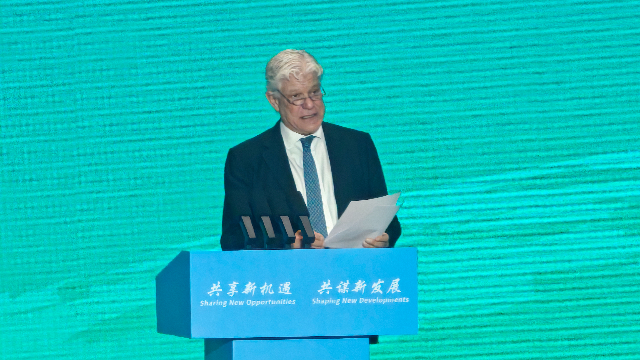
Group 1 - Entrepreneurs need to rethink strategies beyond traditional export models, embracing digital connections and creating a value-driven ecosystem in the face of rising tariffs and geopolitical tensions [1][4] - The current entrepreneurial environment is markedly different from a decade ago, with opportunities for global expansion becoming rarer [1][4] - The Chinese entrepreneurial ecosystem is expected to grow by nearly 50% by 2025, ranking 13th globally with over 9,000 startups and total funding exceeding $38 billion [3] Group 2 - The shift in the entrepreneurial landscape presents new opportunities and inspires fresh thinking among global entrepreneurs [4][6] - Collaboration between foreign enterprises and the Chinese market should transcend mere transactional relationships, focusing on co-creating new ecosystems from technological innovation to supply chain integration [4][5] - The demand from the Chinese market may become a source of global product innovation, necessitating a shift from a one-way output model to a co-creation mindset [4][5] Group 3 - The global active entrepreneur population is projected to exceed 665 million by 2025, reflecting a 21% increase from 2021, driven by advancements in fields like artificial intelligence and biosciences [6] - Young entrepreneurs are leveraging the Chinese market to discover new business opportunities, acting as bridges between China and their home countries [7] - The International Youth Entrepreneur Development Fund was launched to support young innovators, offering up to 5 million yuan for projects scoring above 80 points through a quarterly review mechanism [8][9]

学习笔记|推动科技自立自强 提升产业链安全性和竞争力
2 1 Shi Ji Jing Ji Bao Dao· 2025-10-30 15:45
Core Viewpoint - The 15th Five-Year Plan emphasizes the importance of technological self-reliance and innovation as key drivers for China's economic and social development, aiming to enhance the overall effectiveness of the national innovation system and promote high-quality development [2][4]. Group 1: Technological Innovation - The 15th Five-Year Plan aims to significantly improve the level of technological self-reliance and innovation, focusing on breakthroughs in key core technologies such as integrated circuits, advanced materials, and biomanufacturing [3][5]. - There is a strong emphasis on the integration of technological innovation and industrial innovation, with a call for a new type of national system to support decisive breakthroughs in critical areas [3][6]. - The plan highlights the need for a coordinated approach to education, technology, and talent development, fostering a robust ecosystem for innovation [4][6]. Group 2: Future Industries - The plan outlines the necessity to cultivate and expand emerging and future industries, including renewable energy, aerospace, and quantum technology, to drive economic growth [5][6]. - It advocates for the implementation of large-scale application demonstration actions for new technologies and products, aiming to accelerate the development of emerging industries [5]. - The exploration of diverse technological routes and viable business models is essential for positioning future industries as new economic growth points [5][6]. Group 3: Talent Development - The 15th Five-Year Plan emphasizes the importance of nurturing top-tier innovative talent and establishing a global influence in education and scientific research [4]. - It calls for a comprehensive mechanism to promote the development of education, technology, and talent, ensuring a synergistic relationship between technological innovation and talent cultivation [4]. - The plan aims to optimize the talent structure and promote regional coordination in talent development, addressing the need for strategic scientists and skilled professionals [4].
路维光电三季度净利润同比增长69.08% 先进制程突破打开业绩增长空间
Zheng Quan Shi Bao Wang· 2025-10-30 14:07
Core Viewpoint - Luvi Optoelectronics (688401.SH) reported strong performance in Q3 2025, with revenue of 827 million yuan, a year-on-year increase of 37.25%, and net profit of 172 million yuan, up 41.88% [1] Group 1: Financial Performance - In Q3 2025, the company achieved revenue of 283 million yuan, a 36.80% increase year-on-year, and net profit of 65.32 million yuan, reflecting a significant growth of 69.08% [1] - For the first three quarters, the company’s total revenue reached 827 million yuan, with a net profit attributable to shareholders of 172 million yuan [1] Group 2: Market Position and Strategy - The company is positioned as a key player in the domestic semiconductor and display industry, leveraging its "screen-to-chip" strategy to deepen its market presence [1] - Luvi Optoelectronics is the only domestic company capable of supporting G2.5-G11 generation production lines for mask plates, having achieved breakthroughs in G11 high-precision mask plate technology [2] Group 3: Capacity Expansion - The company is investing 2 billion yuan in a new production base in Xiamen, which will include 11 high-end mask plate production lines, focusing on G8.6 and below AMOLED/LTPO/LTPS/FMM high-precision mask plates [2] - The first phase of the project will establish 5 G8.6 AMOLED high-precision mask plate production lines, with equipment procurement already underway [2] Group 4: Technological Advancements - Luvi Optoelectronics has achieved mass production of 180nm process node semiconductor mask plates, with plans to start trial production of 40nm mask plates in the second half of 2025 [3] - The company is also developing a range of products for various applications, including MCU, SiPh, CIS, DDIC, and NOR/NAND Flash, enhancing its supply chain capabilities [3] Group 5: Research and Development - The company has made significant investments in R&D, completing reliability studies for IC mask plates and developing new products for G8.6 AMOLED and advanced packaging technologies [4] - Ongoing projects include the development of halftone mask plates and high-precision IC mask plates to meet downstream demand [5]

今年中国医药对外授权合作破千亿美元,但基础研究薄弱问题还未扭转|“十五五”产业前瞻
Di Yi Cai Jing· 2025-10-30 10:43
Core Insights - The Chinese pharmaceutical industry has made significant progress in innovation, with total licensing amounts for innovative drugs exceeding $100 billion in 2023, marking a historical high for a single year [1] - Despite these achievements, the fundamental research capabilities remain weak, necessitating urgent attention to enhance original innovation and core technology development [1][2] Group 1: Challenges in Innovation - Six major challenges facing Chinese innovative drugs include urgent medication needs for major chronic and infectious diseases, imbalance in disease spectrum matching, weak original innovation capacity, concentrated R&D efforts, lack of international clinical research layout, and the need for improved collaboration among national strategic scientific forces [2] - The proportion of potential first-in-class drugs in the pipeline for the top 20 multinational pharmaceutical companies globally is 38%, while for the top 20 Chinese companies, it is only 13% [2] - Current core technologies in biomedicine, such as antibody technology and CAR-T, are not originally developed in China, indicating a lack of sustainable, source-based technological output [2][6] Group 2: Evolution of Clinical Research - Over the past decade, there has been a significant transformation in China's oncology field, with Chinese doctors now becoming principal investigators in large international studies, a scenario unimaginable two decades ago [3][5] - Previously, Chinese doctors had limited participation in international clinical trials, often relegated to minor roles without decision-making power [4][6] Group 3: Need for Fundamental Research - To achieve self-reliance and strength in innovative drugs, China must enhance foundational research, which should primarily be driven by universities and research institutions rather than clinical doctors or small pharmaceutical companies [7] - Current collaboration between industry, academia, and research is often ineffective, leading to a disconnect between basic research and clinical needs [7] Group 4: Strategic Initiatives for Improvement - The new round of the "National Major Special Project for Innovative Drugs" will focus on four key transformations: shifting from product-oriented to capability-oriented development, emphasizing upstream innovation chains, prioritizing original drug development over generics, and focusing on unmet clinical needs [8]
