
实体经济

Search documents
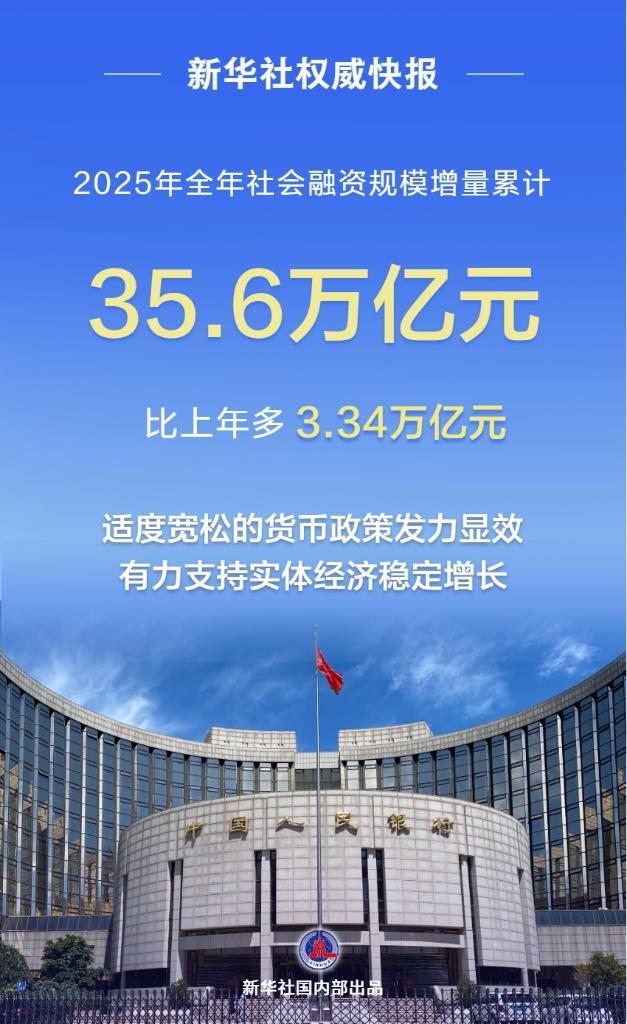
新华社权威快报丨2025年我国社融规模增量超35万亿元
Xin Hua Wang· 2026-01-15 07:10
Core Insights - The total social financing scale increment for the year 2025 reached 35.6 trillion yuan, an increase of 3.34 trillion yuan compared to the previous year, indicating effective monetary policy support for economic stability [2][4] - As of the end of December 2025, the broad money supply (M2) stood at 340.29 trillion yuan, reflecting a year-on-year growth of 8.5% [4] - The balance of RMB loans was 271.91 trillion yuan, with a year-on-year increase of 6.4%, further demonstrating the impact of a moderately loose monetary policy on supporting the real economy [4]

中诚信托以金融活水助力交通强国建设
Jin Rong Jie Zi Xun· 2026-01-15 06:21
Core Viewpoint - The company is actively supporting the construction of modern transportation infrastructure in line with the central government's directive to accelerate the development of a strong transportation nation through financial initiatives [1][3]. Group 1: Project Overview - The "启程20号" trust plan has a newly added trust scale of 1.76 million, bringing the total established scale to approximately 5.82 million [1]. - The total scale of the "启程20号" project is capped at 20.05 million, focusing on equity asset management for qualified investors [1]. - The project collaborates with China Railway Capital Co., Ltd. to fund the PPP project of the Wuzhou-Yulin-Qinzhou Highway (Yulin to Pubei section), which has an estimated total investment of 178.57 million and spans 116.9 kilometers [1][3]. Group 2: Economic Impact - The development of the Yulin-Pubei section of the highway is a significant initiative for the company to serve the real economy and promote high-quality regional economic development [3]. - The highway is a crucial part of the regional highway planning network, enhancing connectivity between Wuzhou, Yulin, and Qinzhou, and is expected to improve the road network structure in the Beibu Gulf Economic Zone [3]. - Upon completion, the highway will strengthen the internal connectivity of the Beibu Gulf urban agglomeration and facilitate the flow of resources with the Guangdong-Hong Kong-Macao Greater Bay Area, supporting Guangxi's development strategy [3]. Group 3: Strategic Collaboration - The "启程20号" project marks a significant milestone in the deep collaboration between the company and China Railway Capital in infrastructure investment [3]. - The company aims to leverage this opportunity to drive business innovation and enhance its capacity to serve the real economy, contributing to the construction of a modern comprehensive transportation system [3].

人民日报钟才文:深刻把握“五个必须”,推动“十五五”良好开局
Xin Lang Cai Jing· 2026-01-12 23:09
Core Viewpoint - The article emphasizes the importance of leveraging China's economic advantages to achieve a strong start in the "14th Five-Year Plan" by enhancing the real economy and building a modern industrial system [1] Group 1: Economic Development Strategies - Strengthening and optimizing the real economy while addressing structural contradictions through digital transformation [1] - Promoting the development of emerging and future industries through classified planning and large-scale application demonstrations of new technologies and products [1] - Enhancing the quality and efficiency of the service industry to uncover new economic growth points [1] Group 2: Innovation and Technology - Increasing self-innovation capabilities and accelerating high-level technological independence [1] - Implementing extraordinary measures to overcome reliance on critical core technologies [1] - Strengthening the role of enterprises in innovation and facilitating the aggregation of innovation resources [1] Group 3: Market and Investment - Building a strong domestic market and ensuring smooth domestic and international dual circulation [1] - Breaking down barriers to establish a unified national market and improving supporting systems such as statistics and taxation [1] - Promoting balanced development of imports and exports while diversifying export markets [1]
福建出台23条措施确保一季度良好开局
Zhong Guo Fa Zhan Wang· 2026-01-12 09:25
Core Viewpoint - The Fujian Provincial Government has issued a set of measures aimed at achieving a strong economic and social development start in the first quarter of 2026, focusing on boosting consumption, expanding effective investment, and supporting the real economy among other areas [1]. Group 1: Boosting Consumption - The measures emphasize the dual engines of consumption and investment to stimulate domestic demand, with specific policies to enhance spring consumption, upgrade service consumption, and promote trade-in programs for consumer goods [2]. - A budget of 15 million yuan is allocated for key consumption promotion activities, and 30 million yuan is designated for subsidies on new passenger vehicle purchases [2]. - Initiatives include cultural and sports events to drive consumer engagement, alongside simplifying subsidy application processes to ensure efficient delivery of benefits to businesses and consumers [2]. Group 2: Expanding Effective Investment - The measures outline goals for the first quarter, including completing 300 billion yuan in investments and starting over 500 key projects, with encouragement for continuous work during the Spring Festival [3]. - Plans include promoting over 600 projects with a total investment exceeding 600 billion yuan, focusing on infrastructure, modern industries, and public services [3]. - The government aims to enhance land use guarantees and streamline the approval process for key projects and public welfare initiatives [3]. Group 3: Supporting the Real Economy - The measures aim to stabilize and strengthen the industrial sector, with incentives for manufacturing enterprises that increase electricity consumption by over 6% year-on-year [4]. - Financial rewards are set for companies participating in supply-demand matching activities, and support is provided for the real estate sector to enhance housing quality and service [4]. Group 4: Enhancing Trade and Investment - The measures include strategies to support foreign trade enterprises in expanding markets and attracting foreign investment, with initiatives like full subsidies for exhibition fees for outbound trade groups [7]. - The government plans to conduct joint investment promotion activities during the Spring Festival, targeting overseas Chinese and business communities [8]. - Policies are also in place to stabilize agricultural production and ensure social welfare, with specific projects aimed at boosting employment and supporting rural communities [8].
金观平:坚持把实体经济作为发展着力点
Jing Ji Ri Bao· 2026-01-12 02:00
Group 1 - The core viewpoint emphasizes the importance of the real economy as the foundation of national competitiveness and economic development, highlighting the need to focus on optimizing traditional industries and fostering emerging and future industries [1] - By 2024, China's manufacturing sector is expected to maintain its position as the largest in the world for 15 consecutive years, providing a solid foundation for economic stability and creating millions of jobs [1] - The real economy serves as a practical ground for technological innovation, facilitating the transition of innovations from laboratories to production lines and addressing critical technological challenges [1] Group 2 - The development of the real economy faces significant challenges, including pressure for traditional industries to upgrade, environmental constraints, and a lag in high-end and intelligent manufacturing sectors [2] - There is a notable gap in research and development investment intensity compared to developed countries, and issues such as financing difficulties for small and medium-sized enterprises and rising costs are squeezing profit margins [2] - To strengthen the foundation of the real economy, it is essential to optimize traditional industries through technological innovation, digital transformation, and a focus on green and low-carbon development [2] Group 3 - Strengthening the real economy also involves the cultivation of emerging and future industries, which can drive collaborative upgrades across the industrial chain and create new demand for high-quality economic development [3] - The service sector is a crucial component of the real economy, and its efficient development can enhance manufacturing transformation, reduce costs, and increase employment opportunities [3] - Ultimately, the goal is to establish a modern industrial system centered on advanced manufacturing, balancing domestic and international markets while promoting a shift from "Made in China" to "Created in China" [3]
瞭望·第一学习丨坚持把发展经济的着力点放在实体经济上
Xin Hua Wang· 2026-01-12 01:23
Core Viewpoint - The development of the real economy is essential for national strength and people's happiness, as emphasized by the Communist Party of China in its strategic planning for the 14th Five-Year Plan [3][4]. Group 1: Importance of the Real Economy - The real economy is the foundation of a country's economic strength and social productivity, and it is crucial for achieving high-quality economic development during the 14th Five-Year Plan period [3][4]. - The emphasis on the real economy reflects its fundamental role in addressing complex economic challenges and ensuring stable and rapid economic growth [4][6]. Group 2: Modern Industrial System - The construction of a modern industrial system supported by the real economy is necessary for gaining strategic advantages in future development and international competition [6][7]. - The manufacturing sector, as the backbone of the modern industrial system, has seen significant growth, with total industrial added value increasing from 31.3 trillion yuan to 40.5 trillion yuan, and manufacturing added value rising from 26.6 trillion yuan to 33.6 trillion yuan over recent years [7]. Group 3: Market Economy System - A high-level socialist market economy system is essential for optimizing resource allocation and enhancing the vitality of the real economy [8][9]. - The integration of various market elements, such as land, capital, labor, and technology, is crucial for establishing a unified national market that supports the real economy [9]. Group 4: Domestic Demand and Economic Growth - The development of the real economy is a key strategy for addressing insufficient domestic demand and stimulating economic growth through increased consumption and investment [11][12]. - The interaction between the real economy and domestic demand is mutually beneficial, with the real economy relying on a robust domestic market while also driving demand through improved supply [12]. Group 5: Challenges and Solutions for Enterprises - Enterprises face numerous challenges, including rising operational costs and uncertainties in the global economy, making the development of the real economy a vital means to alleviate these difficulties [14][15]. - Technological innovation is identified as a core driver for revitalizing enterprises, with investments in advanced technologies expected to enhance competitiveness and market positioning [15]. Group 6: Employment and Income Growth - The real economy plays a significant role in job creation and income growth, with traditional industries and emerging sectors providing diverse employment opportunities [16][17]. - The growth of the real economy is closely linked to increases in residents' income, with projections indicating substantial growth in wage and net operating income as the economy stabilizes [16].
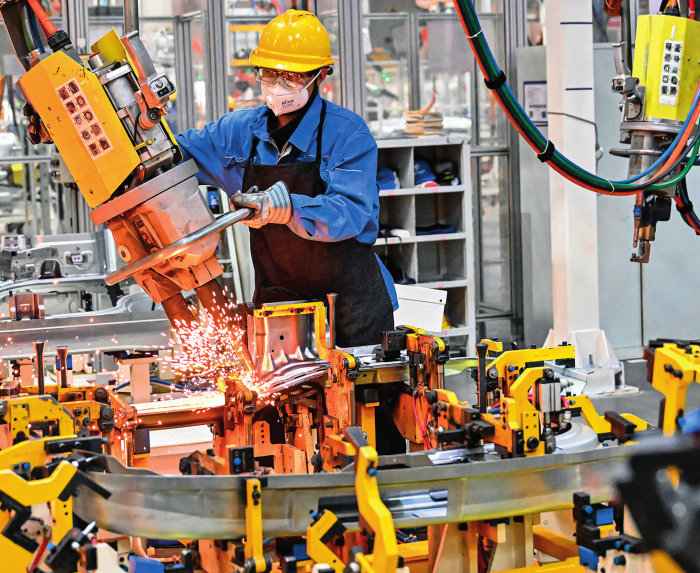
坚持把实体经济作为发展着力点
Xin Lang Cai Jing· 2026-01-11 22:25
Core Viewpoint - The article emphasizes the importance of the real economy as the foundation of national competitiveness and economic stability, highlighting the need to focus on developing the real economy, optimizing traditional industries, and fostering emerging and future industries [1]. Group 1: Current State of the Real Economy - As of 2024, China's manufacturing sector has maintained its position as the largest in the world for 15 consecutive years, providing a solid foundation for economic stability [1]. - The real economy serves as a major channel for job creation, offering millions of jobs and reinforcing social stability [1]. - The real economy is also a practical ground for technological innovation, facilitating the transition of innovations from laboratories to production lines and addressing critical technological challenges [1]. Group 2: Challenges Facing the Real Economy - The development of the real economy faces significant challenges, including pressure for traditional industries to upgrade, increasing resource and environmental constraints, and lagging in high-end and intelligent manufacturing [2]. - Key core technologies remain constrained, with weak foundational research and low patent conversion rates, leading to a gap in R&D investment intensity compared to developed countries [2]. - Small and medium-sized enterprises are particularly pressured by financing difficulties and rising costs of raw materials, labor, and rent, which compress profit margins [2]. - Insufficient domestic demand and fluctuating external demand have led to supply-demand imbalances in certain industries, exacerbating homogeneous competition [2]. Group 3: Strategies for Strengthening the Real Economy - To consolidate and strengthen the foundation of the real economy, it is essential to optimize and upgrade traditional industries, leveraging technological innovation as a driving force [2]. - There is a need to promote digital and intelligent transformations, applying new technologies such as industrial internet and intelligent manufacturing to enhance industry quality and efficiency [2]. - The focus should also be on green and low-carbon directions, phasing out outdated capacities, promoting energy-saving and carbon-reducing technologies, and developing a circular economy [2]. - Cultivating and expanding emerging and future industries is crucial for driving collaborative upgrades across the industrial chain and creating new demand, thereby injecting new momentum into high-quality economic development [3]. - The development of high-quality services is vital, as it can promote manufacturing transformation, reduce production and circulation costs, and enhance employment opportunities [3]. - Ultimately, the goal is to establish a modern industrial system centered on advanced manufacturing, balancing domestic and international markets and resources while promoting a shift from "Made in China" to "Created in China" [3].
溧水区:主要经济指标增幅稳居全市前列
Xin Hua Ri Bao· 2026-01-11 20:42
Economic Growth Projections - In 2025, Lishui District is expected to achieve a GDP growth of around 6% [1] - General public budget revenue is projected at 7.261 billion, with a growth of 2.7% [1] - Industrial output value for large-scale industries is forecasted to reach 127.7 billion, growing by 7% [1] - Retail trade volume is anticipated to be 97 billion, increasing by 13% [1] - Revenue from the service industry is expected to be 10.57 billion, with a significant growth of 19.6% [1] Industrial Development - The new energy vehicle industry in Lishui achieved an output value of 65 billion, growing by 8.3% [1] - The new pharmaceutical and life health industry, intelligent manufacturing equipment, and smart agriculture industries reported output values of 10.2 billion, 18.1 billion, and 2.42 billion respectively [1] - The numerical control machine tool functional components industry cluster has been recognized as a "national-level" cluster [1] - The precision transmission and electromechanical equipment industry cluster has been selected as a provincial-level characteristic industry cluster for small and medium-sized enterprises [1] Investment and Market Development - Lishui has initiated market-oriented investment promotion and established a district-level investment company [1] - A 3 billion industrial development fund has been set up, leading to the attraction of 100 projects with investments exceeding 100 million and 5 high-energy projects [1] Innovation and Technology Growth - The number of high-tech enterprises is expected to increase by 39, with 1,451 technology-based small and medium-sized enterprises registered [2] - Four national-level specialized and innovative "little giant" enterprises and 83 provincial-level specialized and innovative small and medium-sized enterprises are anticipated to be added [2] - One national-level excellent intelligent factory and ten provincial-level advanced intelligent factories are expected to be recognized, along with eight provincial-level green factories [2] Service Optimization - Continuous improvement of government services is being implemented, including a service commissioner work mechanism [2] - An operational complaint supervision center for the business environment has been established, achieving a satisfaction rate of 96.3% for handling enterprise requests [2]
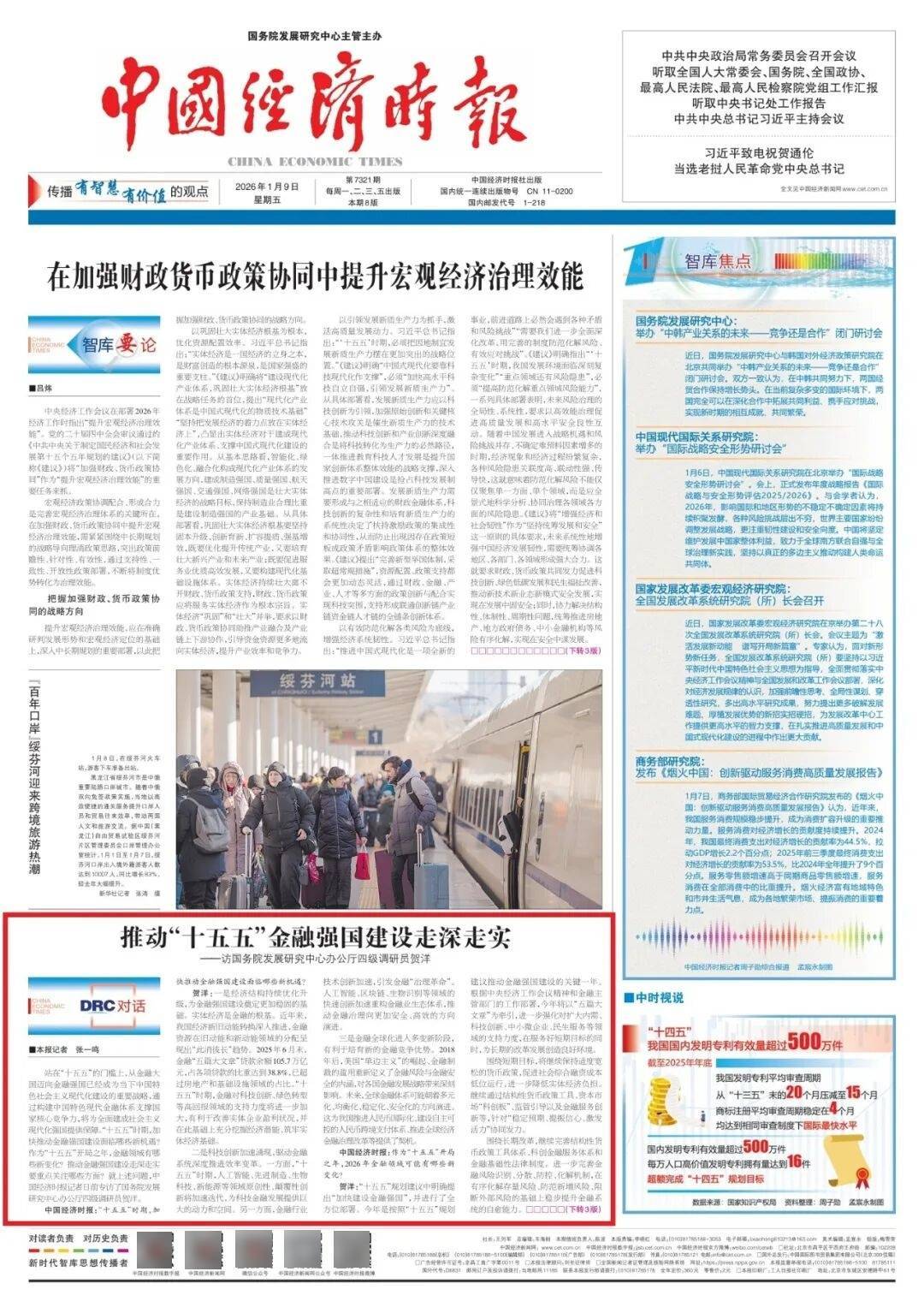
DRC对话丨贺洋:推动“十五五”金融强国建设走深走实
Sou Hu Cai Jing· 2026-01-09 04:16
Group 1 - The core viewpoint emphasizes the transition from a financial power to a financial strong nation as a crucial strategy for modernizing China's economy during the "14th Five-Year Plan" period [2][12] - The continuous optimization and upgrading of the economic structure provide a solid foundation for building a financial strong nation, with financial resources increasingly supporting high-return sectors like technology innovation and green transformation [2][3][12] - By mid-2025, the loan balance for the "Five Major Articles" in finance is projected to reach 105.7 trillion yuan, accounting for 38.8% of total loans, surpassing real estate and infrastructure sectors [2][12] Group 2 - The "14th Five-Year Plan" outlines new opportunities for financial development, including a focus on expanding domestic demand, supporting technology innovation, and enhancing services for small and medium enterprises [4][5] - The financial sector is expected to maintain a moderately loose monetary policy to lower financing costs and support the real economy, while also utilizing structural monetary policy tools and innovations in financial services [4][5][12] - Key areas of focus for deepening the construction of a financial strong nation include building a modern financial service system, enhancing cross-border financial services, deepening financial reform and opening up, and promoting global financial governance reform [5][6][12] Group 3 - The global financial landscape is entering a new phase characterized by diversification and stability, which presents opportunities for China to promote the internationalization of the renminbi and establish a self-controlled cross-border payment system [3][6] - The financial sector is expected to adapt to new characteristics and challenges of enterprises going global, improving the overseas investment and financing service system [5][6] - The emphasis on enhancing China's role in the international financial system aligns with the trend of diversifying the international monetary system and optimizing foreign exchange reserve allocation [6][12]
宁波银行:公司聚焦民营小微企业、制造业企业、进出口企业、民生消费等重点领域
Zheng Quan Ri Bao Wang· 2026-01-08 13:43
Core Viewpoint - Ningbo Bank is committed to enhancing financial services and supporting the real economy by focusing on key sectors such as private small and micro enterprises, manufacturing, import and export businesses, and consumer spending [1] Group 1: Company Strategy - The company has been implementing government and regulatory decisions to increase resource allocation and support for targeted sectors [1] - There is a continuous improvement in financial service standards to assist in the quality and efficiency of the real economy [1] Group 2: Financial Growth - The loan scale of the company has been steadily increasing, reflecting its commitment to supporting the real economy [1] - Future policies aimed at expanding domestic demand and promoting consumption are expected to further enhance the company's financial service coverage [1] Group 3: Economic Support - The company aims to effectively meet the financing needs of the real economy while maintaining reasonable credit growth [1] - There is a focus on fostering new productive forces to align with the evolving economic landscape [1]
