
TACO交易

Search documents
“TACO交易”再现,把握恒生科技机遇,恒生科技指数ETF(513180)近5日合计“吸金”超10亿元
Mei Ri Jing Ji Xin Wen· 2025-10-14 01:48
Group 1 - The Hong Kong stock market opened higher on October 14, with the Hang Seng Tech Index rising by 0.56%, while the largest ETF tracking this index experienced fluctuations, with leading stocks like Kingsoft, NetEase, and Trip.com declining, while NIO, JD.com, Alibaba, and Xpeng saw gains [1] - Long-term impacts of tariff-related news on Hong Kong stocks are considered limited, with potential for a market pullback providing an opportunity for increased allocation in technology sectors [1] - Despite recent external disturbances, there is active capital inflow into Hong Kong's technology sector, with the largest ETF for the Hang Seng Tech Index seeing a net inflow of approximately 697 million yuan on October 13, and a total net inflow of about 1.008 billion yuan over the past five trading days [1] Group 2 - Current valuations of Hong Kong stocks are at historical medians, with the tech sector showing significant undervaluation compared to A-shares and U.S. stocks; as of October 13, the latest valuation (PETTM) for the Hang Seng Tech Index ETF was 23.36 times, placing it in the lower relative valuation range historically [2] - The technology sector in Hong Kong is expected to benefit from current trends in AI, with potential for foreign capital to return exceeding expectations, alongside continuous increases in southbound capital; a revaluation of the Hang Seng Tech Index is anticipated in the fourth quarter [2] - Investors without access to the Hong Kong Stock Connect may consider the Hang Seng Tech Index ETF for exposure to core Chinese AI assets [2]
中国股票突传重磅!外资巨头最新发声
Zheng Quan Shi Bao Wang· 2025-10-14 00:31
Group 1 - The core viewpoint is that despite short-term volatility due to rising trade tensions, the long-term outlook for Chinese assets remains positive, with opportunities for investors to buy on dips [1][3][6] - The Nasdaq Golden Dragon China Index rose by 3.21%, with significant gains in various Chinese ETFs, indicating a strong rebound in Chinese stocks [2][6] - UBS reports that the MSCI China Index may find strong support around the 74 level, suggesting that investors are likely to buy on dips [6][7] Group 2 - Analysts from multiple firms believe that the current market environment differs from April, with a clearer "loose monetary + loose fiscal" policy, which may provide support for the market [3][4] - The long-term trend for A-shares is expected to remain bullish, driven by structural recovery in earnings and credit [4][7] - Foreign capital inflows into the Chinese stock market have rebounded significantly, with $4.6 billion net inflow in September, indicating renewed confidence from global investors [7][8] Group 3 - Goldman Sachs has raised its capital expenditure forecast for Tencent to 350 billion yuan, citing AI's positive impact on its business lines [8] - Alibaba's capital expenditure forecast has also been significantly increased to 460 billion yuan, with a positive outlook on its cloud revenue growth [8] - The overall sentiment among foreign investment firms is optimistic regarding the Chinese market, with many viewing recent stock price corrections as buying opportunities [6][7][8]



关键时刻!中国股票突传重磅,外资巨头最新发声
Zheng Quan Shi Bao· 2025-10-13 23:56
Group 1: Market Performance - The Nasdaq China Golden Dragon Index surged over 3% on October 13, with significant gains in various ETFs, including an 8.71% increase in the three-times leveraged FTSE China ETF [1][2] - Chinese stocks showed a rebound in the Asian trading session, with the ChiNext Index and Hang Seng Tech Index recovering from earlier declines, closing down only 1.11% and 1.82% respectively [1][2] Group 2: Analyst Insights - Analysts from Huaxi Securities and GF Securities suggest that the current market volatility due to trade tensions may not have as severe an impact as in April, with a potential for buying opportunities [3][4] - UBS indicated that the MSCI China Index could find strong support around the 74 level, with a 36% increase since April's lows, suggesting that investors may buy on dips [6] Group 3: Foreign Investment Trends - In September, foreign capital inflows into the Chinese stock market rebounded to $4.6 billion, the highest monthly figure since November 2024, indicating a restoration of global investor confidence [7] - Goldman Sachs raised its capital expenditure forecasts for Tencent and Alibaba, reflecting optimism about their growth potential, particularly in AI and cloud services [8]
刚刚!中国股票,突传重磅!
Zheng Quan Shi Bao Wang· 2025-10-13 23:48
Core Viewpoint - The recent surge in Chinese stocks, particularly in the U.S. market, indicates a potential buying opportunity for investors amid rising trade policy uncertainties and market volatility [1][2][3]. Group 1: Market Performance - The Nasdaq Golden Dragon China Index rose by 3.21%, with significant gains in various ETFs, including an 8.71% increase in the three-times leveraged FTSE China ETF [2][6]. - Major Chinese stocks such as Alibaba and JD.com saw increases of over 4%, while other companies like NIO and Pinduoduo also performed well [2][6]. - In the Asian trading session, A-shares and Hong Kong stocks initially faced declines but later rebounded, with the ChiNext Index and Hang Seng Tech Index reducing their losses significantly by the end of the trading day [1][2]. Group 2: Analyst Insights - Analysts from Huaxi Securities and GF Securities suggest that the current market volatility is manageable and that the core drivers of the market remain unchanged, indicating a potential for a "slow bull" trend in the long term [3][4]. - UBS forecasts that the MSCI China Index may find strong support around the 74 level, with expectations of increased buying interest if the index declines further [6]. - The report from Morgan Stanley highlights a significant inflow of foreign capital into the Chinese stock market, indicating a recovery in global investor confidence [7]. Group 3: Sector and Company Focus - UBS maintains a "barbell strategy," favoring sectors such as AI, brokerage firms, and high-dividend stocks, while also highlighting opportunities in solar energy, chemicals, and lithium [6]. - Goldman Sachs has raised its capital expenditure forecasts for Tencent and Alibaba, reflecting optimism about their growth potential, particularly in AI and cloud services [7][8]. - The upward revisions in target prices for Tencent and Alibaba suggest a bullish outlook, with Alibaba's cloud revenue growth projected to be robust in the coming quarters [8].
刚刚!中国股票,突传重磅!
券商中国· 2025-10-13 23:38
Core Viewpoint - The article discusses the recent rebound of Chinese assets, particularly in the context of external uncertainties and trade tensions, suggesting that this may present buying opportunities for investors [2][5][10]. Market Performance - On October 13, U.S. stocks saw a significant rise, with the Nasdaq Golden Dragon China Index increasing by over 3%, and various ETFs related to Chinese stocks also showing substantial gains, such as the three-times leveraged FTSE China ETF rising by over 8% [2][4]. - In the Asian trading session, A-shares and Hong Kong stocks initially faced declines but later recovered, with the ChiNext Index and Hang Seng Tech Index narrowing their losses significantly by the end of the trading day [2][4]. Analyst Insights - Analysts from various securities firms indicate that while short-term volatility may increase due to rising trade tensions, the impact of this shock is expected to be less severe than in April of this year, thanks to improved market mechanisms and investor experience [5][6]. - The "TACO trading" strategy is highlighted, suggesting that short-term declines may provide buying opportunities, with historical data indicating strong support levels for the Wind All A Index [5][6]. Foreign Investment Sentiment - UBS reports that if the MSCI China Index drops to 74, it may find strong support, with investors likely to buy on dips, as the index has already risen by 36% since the lows in April [9][10]. - The report emphasizes that the current market conditions differ from April, with a clearer "loose monetary + loose fiscal" policy stance, which is expected to support the market [5][10]. Sector Focus - UBS maintains a "barbell strategy," favoring AI themes, A-share brokers, and high-dividend stocks, while also looking at sectors like photovoltaic, chemicals, and lithium as part of the "anti-involution" theme [11]. - Goldman Sachs has raised its capital expenditure forecasts for Tencent and Alibaba, reflecting confidence in their growth potential, particularly in AI and cloud services [12]. Foreign Capital Inflows - In September, foreign capital inflows into the Chinese stock market rebounded to $4.6 billion, marking the highest monthly inflow since November 2024, indicating a recovery in global investor confidence towards Chinese assets [11].



揭秘特朗普交易:一场精心策划的割韭菜游戏
Sou Hu Cai Jing· 2025-10-13 19:42
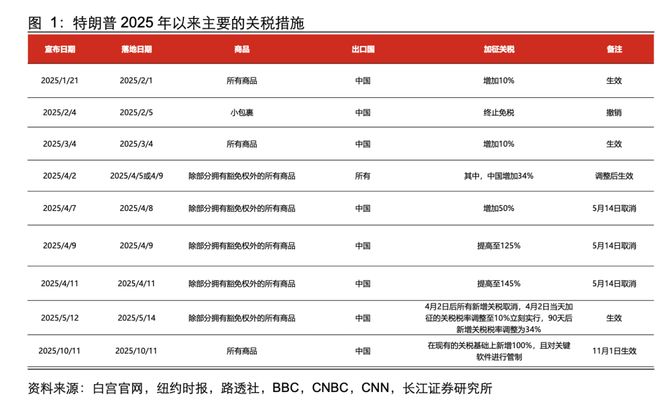
一夜之间,全球市场暴跌,百万账户爆仓,而神秘账户却精准做空,30分钟净赚近2亿美元。 10月10日,特朗普在社交媒体上威胁对中国商品加征 华创证券研报明确解释了这一概念:" 是2025年特朗普上台以来华尔街流行的一种投资策略。 这种策略的核心在于:特朗普执政期间往往采取"强硬态度获得谈判筹码、最终让步达成协议"的外交行为。 更犀利的解读是,TACO可以理解为特朗普谈判策略的四步曲: 这个看似简单的四步曲,每一次都让市场经历从恐慌到修复的完整周期,也让无数盲目跟风的投资者成为被收割的"韭菜"。 广发证券分析得更为直白:"今年4月中美关税升级已经证明,美方威胁的100%关税水平其很难承担且失去了经济学意义,此举更像是谈判前的极限施压。" 回顾特朗普今年上任以来的行为,可清晰地看到 ,瞬间引爆全球市场恐慌。 美股遭遇"黑色星期五",纳指单日暴跌3.56%,七大科技巨头一夜蒸发5.5万亿元市值,中国金龙指数暴跌6.1%,数字货币市场更是一片惨象。 然而短短三天后,美国副总统万斯却在电视采访中语气缓和地表示:"特朗普愿意与中国进行理性谈判。" 市场应声反弹,比特币大涨超2%,以太坊涨超7%。 ,甚至已成为一种割韭菜的" ...

'Buy the dip' gets its biggest test yet as tariff turmoil meets earnings season
Yahoo Finance· 2025-10-13 19:25
Stocks staged a relief rally Monday after President Trump softened his tone on China, easing fears of a full-blown trade war that sparked a $2 trillion sell-off last week. The rebound followed Trump's weekend post on Truth Social, where he assured followers that "it will all be fine," just days after threatening to impose 100% tariffs on Chinese goods starting Nov. 1. But while those comments helped calm investor jitters, strategists warn this could be the biggest test yet for Wall Street's favorite refl ...
【长江策略戴清团队】“TACO 交易”再现,把握港股科技机遇
Xin Lang Cai Jing· 2025-10-13 14:44
Core Insights - The current trade friction between the US and China is expected to have a lesser impact compared to April, with a smaller scope and lower degree of surprise, indicating a more resilient market [1] - The US plans to implement a new fee policy on Chinese shipping companies and restrict funding for Chinese biotech firms, while China will impose export controls on rare earth materials and additional port fees on US vessels [1] - Trump's announcement of a 100% tariff on Chinese goods is seen as having a limited unexpected impact, with room for negotiation remaining [1] Group 1: Market Impact - Short-term pressure on major asset classes is anticipated due to tariff impacts, but long-term trends remain unchanged [1] - The market has developed a certain level of policy adaptability since the trade war began in 2018, which is expected to mitigate volatility compared to previous tariff announcements [1] - A potential stabilization and technical rebound in the market may occur as policy uncertainties are digested, with a possibility of returning to negotiations [1] Group 2: Hong Kong Market - The impact of tariff escalation on the Hong Kong stock market is expected to be limited, with potential for increased allocation opportunities during any pullbacks [2] - The current valuation of Hong Kong's major indices is slightly higher than in April, but the structural exposure to US exports is limited due to the composition of key sectors [2] - The semiconductor and software service industries in China may benefit from US export controls on critical software, aligning with the trend towards self-sufficiency [2] Group 3: Long-term Trends - Long-term impacts of tariffs are expected to diminish, allowing major assets to revert to their fundamental drivers, with a focus on technology sectors such as AI, cloud computing, and semiconductors driving US stock market growth [1] - The US dollar index and USD/CNY exchange rate may face pressure due to rising expectations of Fed rate cuts, while gold prices are likely to continue an upward trend amid central bank purchases and geopolitical tensions [1]

押注A股“TACO交易”,资金都去了哪些板块
第一财经· 2025-10-13 14:02
不少业内人士接受第一财经记者采访时表示,市场"学习效应"、资金趁低吸纳等原因,导致此次冲 击比今年4月的关税风波要小。经历调整之后,部分个股会出现吸纳机会,不过也要警惕涨幅较大个 股融资金额较高的风险。预计三季报超预期的上市公司四季度会有更突出的表现。具体方向上,热点 依然会在人工智能、固态电池、国产软件等板块。 A股慢牛趋势不变 2025.10. 13 本文字数:2357,阅读时长大约4分钟 作者 | 第一财经 李隽 A股拒绝"黑色星期一",不少市场人士判断,这又将是一次典型的"TACO交易"。 所谓"TACO交易"(Trump Always Chickens Out),是指市场在美国总统特朗普的政策威胁下出 现大跌时,投资者便押注他最终会退缩,随后股市将反弹,投资者可以通过逢低买入获利。 10月13日,A股不惧特朗普加征100%关税的"威胁",在资金"趁低吸纳"的主导下低开高走,上证 指数最终微跌0.19%,报收3889.5点;在华虹公司(688347.SH)20%涨停带动下,科创板上涨 1.4%,报收1473点。A股整体成交量达2.35万亿元。 A股的硬气也缘于美国副总统万斯释放的缓和信号。根据媒体报道 ...
押注A股“TACO交易” 资金都去了哪些板块
Di Yi Cai Jing· 2025-10-13 12:33
A股拒绝"黑色星期一",不少市场人士判断,这又将是一次典型的"TACO交易"。 广发证券首席经济学家郭磊认为,2018年以来,特朗普多次对华加征关税。事后来看,经济和资本市场 还是有一些共同的经验规律的:一是关税从事后来看都是扰动,中国制造的全球竞争力很难被围堵和替 代;二是面对外生冲击时,资本市场一般会先后经历一次性"计提",再经历事件缓和带来的"冲回"和政 策升温带来的"对冲";三是相对于外部扰动,资产本身的安全边际是更重要的定价因素。 所谓"TACO交易"(Trump Always Chickens Out),是指市场在美国总统特朗普的政策威胁下出现大跌 时,投资者便押注他最终会退缩,随后股市将反弹,投资者可以通过逢低买入获利。 10月13日,A股不惧特朗普加征100%关税的"威胁",在资金"趁低吸纳"的主导下低开高走,上证指数最 终微跌0.19%,报收3889.5点;在华虹公司(688347.SH)20%涨停带动下,科创板上涨1.4%,报收 1473点。A股整体成交量达2.35万亿元。 A股的硬气也缘于美国副总统万斯释放的缓和信号。根据媒体报道,10月12日晚间,万斯在接受采访时 表示:"特朗普愿意与 ...