碳中和

Search documents
特朗普为何反复对华让步?日媒:美国远赶不上中国,不足中国一半
Sou Hu Cai Jing· 2025-12-09 05:09
Group 1 - The trade war initiated by the US against China during Trump's first term involved significant tariff increases, but the US made concessions during negotiations, including suspending tariffs on $160 billion worth of goods and reducing some existing tariffs [1][3] - The US military shifted its strategy from global intervention to domestic defense, acknowledging its inability to compete with China in the Asia-Pacific region, which forced the US to make compromises [3] - By 2025, China's GDP is projected to reach $24 trillion, surpassing the US's $20 trillion, indicating a significant shift in economic power [3] Group 2 - China's manufacturing output is $4 trillion, compared to the US's $1.8 trillion, with China holding 28% of global manufacturing value while the US holds only 11% [3] - In the technology sector, China leads in 89% of 57 key technologies, while the US only retains 11%, highlighting a widening gap in technological capabilities [3] - The US's infrastructure is aging, leading to a 10% efficiency loss, while China has developed extensive high-speed rail networks, totaling 38,000 kilometers [3][4] Group 3 - The US's debt-to-GDP ratio exceeds 120%, while China's is around 70%, indicating a more stable economic position for China [4] - The trade war has resulted in the loss of 42,000 manufacturing jobs in the US and an increase in inflation to 3%, surpassing the Federal Reserve's target [4] - Despite attempts to decouple from China, US companies remain heavily reliant on the Chinese market, with significant revenue contributions from operations in China [4]

新型负碳建筑材料制成
Ke Ji Ri Bao· 2025-12-09 02:10
美国伍斯特理工学院研究团队开发出一种新型负碳建筑材料——酶结构材料(ESM)。该材料通过低 能耗仿生工艺制成,能主动吸收二氧化碳(CO2),不仅坚固耐用,还可回收利用,有望推动建筑行业 向可持续发展转型。相关研究成果发表于新一期《物质》杂志。 ESM具有快速固化、强度可调、可回收利用等特性,不仅适用于经济适用房和气候适应性建筑,还能 服务于救灾重建等领域,其轻质、快干的特性将加速灾后恢复进程。其良好的修复性能也有助于降低长 期维护成本,并大幅减少每年进入垃圾填埋场的建筑废料。ESM以低能耗和可再生生物原料为基础生 产,也符合全球碳中和基础设施与循环制造的发展目标。 团队利用特定酶将CO2转化为固态矿物颗粒,随后在温和条件下将这些颗粒结合并固化,使材料能在数 小时内成型。与传统混凝土相比,ESM无需高温养护,也不需要长达数周的硬化时间,不仅生产速度 更快,对环境的负面影响也显著降低。 (文章来源:科技日报) 团队表示,混凝土作为全球使用最广泛的建筑材料,其生产过程产生的CO2约占全球总排放量的8%。 而ESM作为一种实用、可规模化应用的替代材料,不仅能减少碳排放,还可主动固碳。生产1立方米 ESM可吸收超过6公 ...
大越期货沪铝早报-20251209
Da Yue Qi Huo· 2025-12-09 01:24
沪铝早报- 交易咨询业务资格:证监许可【2012】1091号 大越期货投资咨询部 :祝森林 从业资格证号:F3023048 投资咨询证号:Z0013626 联系方式:0575-85226759 重要提示:本报告非期货交易咨询业务项下服务,其中的观点和信息仅作参考之用,不构成对任何人的投资建议。 我司不会因为关注、收到或阅读本报告内容而视相关人员为客户;市场有风险,投资需谨慎。 每日观点 铝: 1、基本面:碳中和控制产能扩张,下游需求不强劲,房地产延续疲软,宏观短期情绪多变;中性。 2、基差:现货21910,基差-365,贴水期货,偏空。 3、库存:上期所铝库存较上周涨8353吨至123630吨;中性。 4、盘面:收盘价收于20均线上,20均线向上运行;偏多。 5、主力持仓:主力净持仓多,多增;偏多。 6、预期:碳中和催发铝行业变革,长期利多铝价,宏观情绪多变,铝价震荡向上运行 近期利多利空分析 降息和需求疲软博弈 利多: 利空: 1、碳中和控制产能扩张。 2、俄乌地缘政治扰动,影响俄铝供应。 3、降息 1、全球经济并不乐观,高铝价会压制下游消费。 2、铝材出口退税取消 每日汇总 | 现货 | 地方 地方 上海 ...
安利交出外企“模范生”答卷
Qi Lu Wan Bao· 2025-12-08 21:49
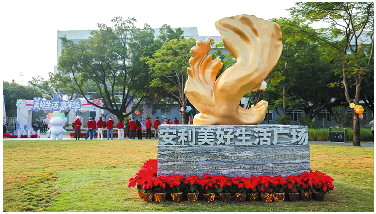
Group 1: Core Insights - Amway (China) celebrated its 30th anniversary and the opening of the "Amway Beautiful Life Square" in Guangzhou, marking a significant milestone in its development in China [2][3] - Michael Nelson, Amway's Global President and CEO, praised Amway (China) for its achievements over the past 30 years, stating that the company will continue to invest in China, with a five-year investment plan totaling 2.1 billion RMB [2][5] Group 2: Investment and Development - Amway has initiated a five-year investment plan of 2.1 billion RMB, which includes 700 million RMB for upgrading its Guangzhou production base, 400 million RMB for digital infrastructure, 500 million RMB for enhancing experience centers, and 500 million RMB for research and development [5] - The "Amway Beautiful Life Square" is a key project under the partnership with Guangzhou as a "City Partner," focusing on health industry development and urban modernization [3][4] Group 3: Innovation and R&D - Amway (China) has established a new R&D center and health-sharing laboratory in the Guangzhou Development Zone, which spans 5,100 square meters and includes 12 specialized laboratories and 7 pilot production lines [6] - The R&D center aims to create a complete closed loop from basic research to industrialization, enhancing the connection between R&D and mass production [6] Group 4: Contribution to Society - Amway has distributed over 140 billion RMB in marketing personnel compensation and paid over 100 billion RMB in taxes in China, aligning its corporate strategy with national development goals [7] - The company has embraced the "Health China" strategy and has implemented community-based health initiatives, supporting a diverse entrepreneurial culture with a significant representation of female entrepreneurs [7] Group 5: Sustainability Efforts - Amway is committed to achieving carbon neutrality by 2038 and has made progress, including carbon neutrality for its Nutrilite protein powder line and solar energy integration at its Hubei factory [8]
G20峰会重申《巴黎协定》温控目标丨碳中和周报
2 1 Shi Ji Jing Ji Bao Dao· 2025-12-08 10:28
Group 1: G20 Summit and Climate Goals - The G20 summit reaffirmed the commitment to the Paris Agreement's temperature control goals, aiming to limit global temperature rise to within 2 degrees Celsius above pre-industrial levels, with efforts to restrict it to 1.5 degrees Celsius [2] - The summit highlighted the significant gap in global climate financing and emphasized the importance of aligning actual actions with commitments to effectively implement the Paris Agreement [2] Group 2: Hydrogen Energy Initiatives - The National Energy Administration of China announced the first batch of hydrogen energy pilot projects, including 41 projects and 9 regions, to explore innovative management models and diverse development paths in the hydrogen sector [3] - This initiative marks a transition from planning to large-scale demonstration in the hydrogen industry, focusing on various applications to enhance technological and economic viability [3] Group 3: Investment in Renewable Energy in Zhejiang - Zhejiang Province is promoting private investment in key energy projects, setting a minimum participation ratio of 10% for private investments in offshore wind, hydropower, and nuclear power projects, with offshore wind projects requiring at least 15% [4] - The province aims to optimize its energy structure and support the construction of a new energy system through financial incentives and the establishment of green low-carbon industrial parks [4] Group 4: Low-Carbon Product Launch by Tencent - Tencent launched six low-carbon products through its CarbonXmade platform, utilizing carbon capture technology to create everyday items from industrial CO2 emissions [5][6] - The initiative aims to make green materials accessible at comparable prices to traditional products, enhancing consumer experience without compromising on sustainability [6] - The use of carbon capture fibers in products like the "Gorilla T-shirt" demonstrates a full-chain reduction in emissions, showcasing the potential for market-driven carbon reduction solutions [6]
【协办单位---中信期货有限公司 】2025中国新能源·新材料产业大会
中国有色金属工业协会硅业分会· 2025-12-08 09:46
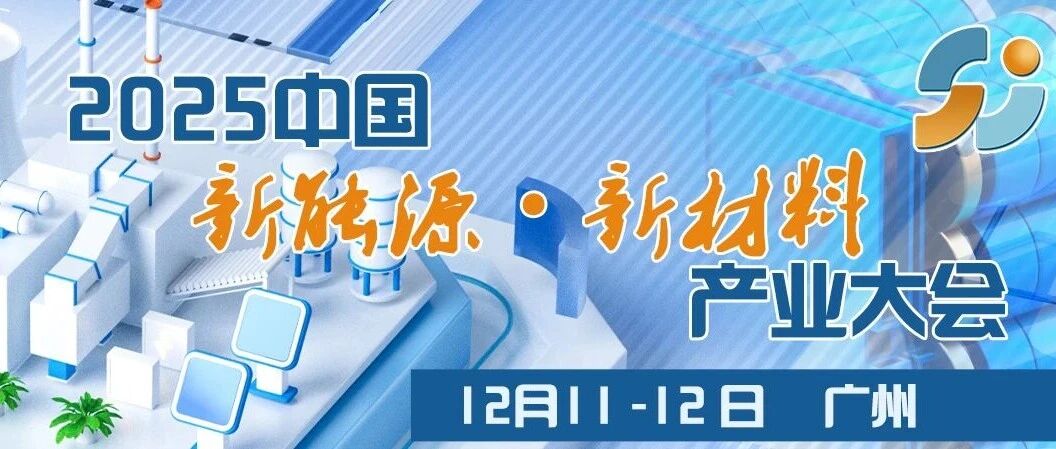
Group 1 - The article emphasizes the importance of materials such as silicon, lithium, and platinum-palladium in the context of energy transition and global carbon neutrality goals, highlighting their role as the foundation for strategic emerging industries like new energy generation and high-end equipment manufacturing [2] - The China Nonferrous Metals Industry Association is organizing the 2025 China New Energy and New Materials Industry Conference on December 11-12 in Guangzhou, Guangdong Province, to promote the integration and collaborative innovation of new production forces in the new energy and new materials sectors [2]
安利(中国)总裁余放:用三个“不变”总结安利在华30年
Jing Ji Wang· 2025-12-08 09:10
Core Viewpoint - Amway (China) celebrates its 30th anniversary and the opening of the "Amway Beautiful Life Square" in Guangzhou, marking a significant milestone in its development and commitment to the local community [1][2]. Group 1: Investment and Development - Amway has initiated a five-year investment plan totaling 2.1 billion RMB, with allocations for upgrading its Guangzhou production base, enhancing digital infrastructure, and expanding its experience centers across China [2][8]. - The investment includes 700 million RMB for upgrading the Guangzhou production base, 400 million RMB for digital infrastructure, and 500 million RMB for enhancing over 100 experience centers [8]. Group 2: Community Engagement and Health Initiatives - The "Amway Beautiful Life Square" serves as a vibrant outdoor space promoting health and wellness, featuring facilities like the Amway Dock and fitness trails [2]. - Amway actively participates in community initiatives, including the "2025 Guangzhou International Sports Carnival" and the establishment of a volunteer service park, demonstrating its commitment to public health and community support [5]. Group 3: Strategic Partnerships and Urban Development - Amway has been recognized as a "Strategic Partner" in Guangzhou's "City Partner" initiative, focusing on health industry development and enhancing the quality of life for residents [3]. - The partnership aims to promote a healthy ecosystem in Guangzhou, aligning with national strategies such as "Healthy China" and "Beautiful Life" [3][11]. Group 4: Innovation and R&D - Amway has established a localized R&D system in China, with a new research center and health-sharing laboratory aimed at fostering innovation and collaboration in the health sector [12]. - The company has developed a significant plant variety resource library and has engaged in partnerships with leading Chinese research institutions to advance its product development [13]. Group 5: Long-term Commitment to China - Amway views China as a market of immense potential, having consistently increased its investment even during challenging times, such as post-SARS and post-pandemic [8][17]. - The company emphasizes its long-term commitment to the Chinese market, focusing on sustainable practices and contributing to the country's economic development [16][17].
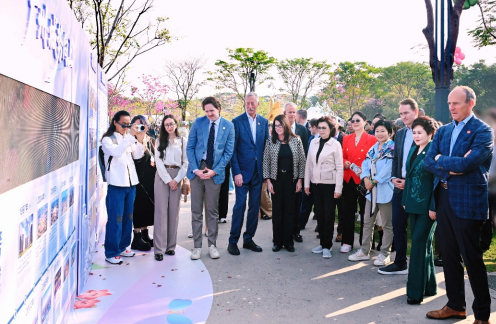
美俄谈判推进,降息预期升温,本周油价震荡运行:能源周报(20251201-20251207)-20251208
Huachuang Securities· 2025-12-08 08:43
Investment Strategy - Crude oil supply is limited while demand remains resilient, leading to expectations of fluctuating prices in the future [9][10] - The global oil and gas capital expenditure trend is declining, with a significant reduction of nearly 22% from the 2014 peak to 2021 [9][10] - Major energy companies are cautious with capital expenditures due to long-term low oil prices and increasing decarbonization pressures [9][10] - OPEC+ has announced no further production increases for the next year, indicating limited supply growth [9][10] Crude Oil - Brent crude oil spot price is $64.58 per barrel, up 0.87% week-on-week, while WTI crude oil spot price is $59.33 per barrel, up 1.23% week-on-week [10][32] - The market is responding to geopolitical risks and expectations of interest rate cuts by the Federal Reserve, which have contributed to price fluctuations [10][32] Coal - The average market price for Qinhuangdao port thermal coal (Q5500) is 802.7 yuan per ton, down 3.32% week-on-week, indicating weak demand and rising inventories [11][12] - Total coal inventory at major ports in the Bohai Rim reached 27.61 million tons, up 3.77% week-on-week, while southern ports reported 6.426 million tons, up 2.57% [11][12] - Domestic key power plants reported a daily coal consumption of 4.77 million tons, down 3.44% week-on-week, with coal inventory at 13.01 million tons, up 2.09% [11][12] Coking Coal - Coking coal prices are declining due to weak supply and demand dynamics, with the price of main coking coal at 1,630 yuan per ton, down 2.40% week-on-week [13][14] - Steel mills are showing cautious purchasing behavior due to lower profitability, impacting coking coal demand [13][14] Natural Gas - The EU has reached an agreement to phase out Russian gas imports by 2027, which may impact global gas supply dynamics [15][16] - The average price of NYMEX natural gas is $4.95 per million British thermal units, up 7.7% week-on-week, while European gas prices have decreased [15][16] Oilfield Services - The oilfield services sector is expected to maintain its growth due to government policies supporting energy security and capital expenditures [17][18] - The number of active drilling rigs globally is reported at 1,800, with a slight decrease in the Middle East and Asia-Pacific regions [17][18]






2026年中国再生铝市场分析:随着对低碳铝产品需求旺盛,产量同比增长9.3%[图]
Sou Hu Cai Jing· 2025-12-08 08:08
Core Insights - The report titled "2026-2032 China Recycled Aluminum Market In-Depth Investigation and Investment Prospects Analysis" provides essential reference for decision-makers and investors in the recycled aluminum sector [1][14]. Group 1: Market Overview - The recycled aluminum industry is experiencing continuous capacity expansion, with regions like Guangyuan forming large-scale production clusters, achieving a capacity of 1.6 million tons and processing capacity exceeding 2.2 million tons [7]. - The demand for recycled aluminum is expected to grow, particularly driven by the lightweight trend in the electric vehicle sector, with a projected production increase of 9.3% year-on-year by 2026 [7]. Group 2: Industry Analysis - The report utilizes various data sources, including annual reports from listed companies, manufacturer surveys, and expert validations, to ensure data accuracy and reference value [3]. - The recycled aluminum market is characterized by a competitive landscape, with increasing international competition and a growing strategic importance of aluminum waste resources [11][19]. Group 3: Application and Trends - Recycled aluminum is widely used in various fields, including traditional casting aluminum alloys and increasingly in deformed aluminum alloys and high-end aluminum alloys, providing more development opportunities [10]. - The report outlines the development trends and investment forecasts for the recycled aluminum industry from 2026 to 2032, indicating a broad market outlook and technological advancements [21].
中汽新能新签2GWh储能订单
鑫椤锂电· 2025-12-08 08:06
Core Viewpoint - The article highlights the strategic partnership between China Automotive New Energy (中汽新能) and Belgian company AVESTA, focusing on a 2GWh energy storage system agreement, which signifies a significant step in the renewable energy storage sector and reflects AVESTA's commitment to the Chinese market [1]. Group 1 - A strategic cooperation agreement was signed between 中汽新能 and AVESTA for a 2GWh energy storage project [1]. - AVESTA is recognized as a leading player in the European battery manufacturing sector, with a comprehensive "R&D-manufacturing-recycling" ecosystem [1]. - The establishment of AVESTA's operations in Changzhou, Jiangsu Province, is a crucial move for its expansion into the Asian market [1]. Group 2 - The partnership emphasizes mutual trust and recognition of 中汽新能's capabilities in technology development, product reliability, and market service [1]. - Both parties aim to build a long-term, stable, and mutually beneficial strategic partnership to explore new opportunities in the international energy storage market [1]. - The collaboration contributes to the global carbon neutrality goals by enhancing the energy storage industry's capabilities [1].