通胀预期

Search documents
巨富金业:关税升级叠加制裁风险,黄金亚盘突破3360关口
Sou Hu Cai Jing· 2025-07-14 06:16
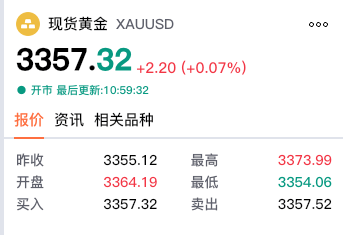
Core Viewpoint - The recent surge in gold prices is driven by increased trade uncertainties due to new tariffs imposed by the Trump administration, alongside escalating geopolitical risks related to Russia and Ukraine, and diverging expectations regarding Federal Reserve monetary policy [3][4][6]. Group 1: Trade Uncertainty and Tariffs - The Trump administration has announced significant tariffs on imports from Mexico, the EU, Canada, and Brazil, with rates ranging from 15% to 50%, effective August 1 [3]. - Historical data indicates that during periods of escalating trade tensions, gold prices typically rise, as seen in the current market response to these tariff announcements [3]. Group 2: Geopolitical Risks - The U.S. Congress is advancing a bill imposing punitive tariffs of 500% on countries purchasing Russian energy, targeting major clients like India and China, which could exacerbate geopolitical tensions [4]. - The ongoing conflict between Russia and Ukraine, coupled with U.S. military support for Ukraine, has heightened geopolitical risk, further driving demand for gold as a safe-haven asset [4]. Group 3: Federal Reserve Policy Expectations - There is a divergence among Federal Reserve officials regarding the impact of tariffs on inflation, with some fearing prolonged inflationary pressures, while others see it as a temporary spike [6]. - Market expectations for potential interest rate cuts are influencing gold prices, with indications that the Fed may lower rates twice in 2025, aligning with a 60% probability of a rate cut in September [6]. Group 4: Technical Analysis - Gold has broken through the resistance level of $3,350 per ounce, indicating a strong bullish trend, with technical indicators suggesting further upward potential [7]. - The price is currently consolidating within a range of $3,353 to $3,374 per ounce, with a key support level at $3,343 per ounce [7].

日本央行将考虑上调通胀预期
news flash· 2025-07-14 04:30
Core Viewpoint - The Bank of Japan is considering raising its inflation expectations [1] Group 1 - The potential adjustment in inflation expectations may indicate a shift in monetary policy [1] - This consideration comes amid ongoing economic assessments and inflation trends in Japan [1]
日本国债期货短线走低,日元兑美元走高,此前报道称日本央行考虑上调通胀预期。
news flash· 2025-07-14 04:03
Group 1 - Japanese government bond futures have declined in the short term [1] - The Japanese yen has appreciated against the US dollar [1] - Reports indicate that the Bank of Japan is considering raising its inflation expectations [1]
大越期货贵金属早报-20250714
Da Yue Qi Huo· 2025-07-14 03:53
Report Summary 1. Report Industry Investment Rating No information provided in the report. 2. Core Viewpoints - Market speculation about Trump's plan to sanction Russian crude oil led to a recovery in gold prices and a significant increase in silver prices, with Shanghai silver hitting a new record high. The tariff concerns resurfaced, but the gold price fluctuations were limited. The increase in silver price was driven by gold price recovery and recent capital inflows, and the upward trend of silver price remained unchanged [4][6]. - After Trump took office, the world entered a period of extreme turmoil and change. The inflation expectation shifted to the economic recession expectation, making it difficult for the gold price to decline. The gold price sentiment was high and it was still prone to rise rather than fall. The silver price mainly followed the gold price, and the tariff concerns had a stronger impact on the silver price, which was prone to an enlarged increase [10][13]. 3. Summary by Directory 3.1. Previous Day's Review - **Gold**: The US three major stock indexes closed slightly lower, and the European three major stock indexes fell across the board. The US bond yields rose across the board, with the 10 - year US bond yield rising 6.15 basis points to 4.409%. The US dollar index rose 0.10% to 97.59, and the offshore RMB against the US dollar appreciated slightly to 7.1783. COMEX gold futures rose 1.34% to $3370.30 per ounce. The basis was - 4.01, with the spot at a discount to the futures. The gold futures warehouse receipts increased by 27 kilograms to 21,585 kilograms. The 20 - day moving average was downward, and the K - line was below the 20 - day moving average. The main net position was long, and the main long position increased [4][5]. - **Silver**: Similar to gold in terms of stock indexes, bond yields, and the US dollar index performance. COMEX silver futures rose 4.74% to $39.08 per ounce. The basis was - 29, with the spot at a discount to the futures. The Shanghai silver futures warehouse receipts increased by 6,435 kilograms to 1,303,593 kilograms. The 20 - day moving average was upward, and the K - line was above the 20 - day moving average. The main net position was long, but the main long position decreased [6]. 3.2. Daily Tips - **Gold**: The market speculated that Trump planned to sanction Russian crude oil, and the tariff concerns resurfaced, causing the gold price to recover. The premium of Shanghai gold converged to 1.18 yuan/gram. Trump's change in attitude towards Russia drove up the gold price due to the hedging demand, but the reaction was limited [4]. - **Silver**: The market speculation about Trump's plan to sanction Russian crude oil, combined with recent capital inflows, led to a significant increase in the silver price. Shanghai silver continued to hit a new record high, and the ratio of silver to gold continued to decline. The premium of Shanghai silver converged to about 330 yuan/kilogram. The tariff fluctuations resurfaced, and the capital support remained, so the upward trend of the silver price remained unchanged [6]. 3.3. Today's Focus - 07:50 Japan's May core machinery orders [15] - 10:00 The State Council Information Office held a press conference to introduce the import and export situation in the first half of 2025 [16] - 15:00 The State Council Information Office held a press conference on the financial statistics in the first half of 2025 [16] - 20:30 Canada's May wholesale sales [16] 3.4. Fundamental Data - **Gold**: The basis was - 4.01, with the spot at a discount to the futures; the gold futures warehouse receipts increased by 27 kilograms to 21,585 kilograms [5]. - **Silver**: The basis was - 29, with the spot at a discount to the futures; the Shanghai silver futures warehouse receipts increased by 6,435 kilograms to 1,303,593 kilograms [6]. 3.5. Position Data - **Gold**: The main net position was long, and the main long position increased. For the top 20 positions in Shanghai gold, on July 11, 2025, the long position volume was 190,529, a decrease of 1,296 or - 0.68% compared with July 10; the short position volume was 60,067, a decrease of 2,596 or - 4.14%; the net position was 130,462, an increase of 1,300 or 1.01% [5][31]. - **Silver**: The main net position was long, but the main long position decreased. For the top 20 positions in Shanghai silver, on July 11, 2025, the long position volume was 451,592, an increase of 60,922 or 15.59% compared with July 10; the short position volume was 345,222, an increase of 31,598 or 10.08%; the net position was 106,370, an increase of 29,324 or 38.06% [6][33].
国泰海通证券:特朗普关税博弈再起,全球资产短期扰动
Ge Long Hui· 2025-07-14 01:48
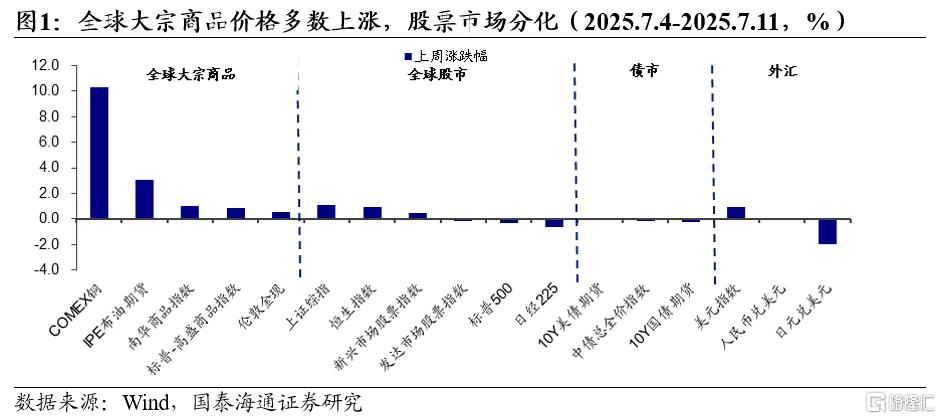
本文来自格隆汇专栏:梁中华宏观研究 作者:汪浩、梁中华 ·概 要 · 特朗普关税博弈再起,扰动全球资产价格,本周全球大宗商品价格基本都上涨,全球股市分化,新兴市场优于发达市场。美国经济依然具有韧性,特朗普 不断督促鲍威尔降息,但是新一轮关税对通胀的压力下,美联储降息仍有掣肘,同时关税冲击经济,欧央行保留进一步降息稳经济的选项,日本央行加息 可能延迟至2026年。 全球大类资产表现。本周(2025.7.4-2025.7.11),全球大类资产价格中,大宗商品价格基本都上涨,全球股市分化。上证综指上涨1.09%,恒生指数上涨 0.93%,新兴市场股票指数上涨0.45%,发达市场股票指数下跌0.13%,标普500下跌0.31%,日经225下跌0.61%。 大宗商品价格基本都上涨,其中, COMEX铜上涨10.30%,IPE布油期货上涨3.09%,南华商品指数上涨1.01%,标普-高盛商品指数上涨0.87%,伦敦金现上涨0.53%。债市方面,国内10Y国 债期货价格下跌0.25%,中债总全价指数下跌0.19%,10年期美债收益率较前一周上升8BP至4.43%,10年期美债期货持平前一周。外汇市场方面,美元指 数较前一周 ...

7月宏观月报:关税效应进入“数据验证期”-20250713
Shenwan Hongyuan Securities· 2025-07-13 06:42
Group 1: Macro Overview - In June, the overseas market saw a resurgence of the "Goldilocks" trade, while domestic market sentiment was buoyed by a mild economic recovery[1] - The "Goldilocks" trade was driven by three factors: successful implementation of the "Beautiful America Act," lower-than-expected inflation data in May, and resilient employment data despite a mild economic slowdown[2] - The S&P 500 index experienced a slight decline of 0.3% since July 7, while the US dollar rebounded by 0.9%[5] Group 2: Domestic Market Focus - Domestic economic recovery was supported by effective consumption policies, with retail sales growth in May reaching a new high since 2024[3] - The core CPI in June rose by 0.3 percentage points to 0.6%, indicating sustained domestic demand release[3] - Manufacturing PMI in June exceeded expectations, with domestic orders recovering faster than new export orders[3] Group 3: Key Concerns for July - Overseas, the focus shifted to potential inflation risks, with rising retail prices and manufacturing price indices indicating upward inflation pressure in the US[4] - Domestic attention remains on "anti-involution" policies aimed at balancing supply and demand, with a focus on structural upgrades in industries[4] - The US announced tariff increases on 14 countries effective August 1, with rates including 25% on Japan and South Korea, and 30% on South Africa[5] Group 4: Economic Indicators - The US unemployment rate fell to 4.1%, with non-farm payrolls in June adding 147,000 jobs, primarily supported by government sectors[3][4] - The US fiscal deficit for 2025 is projected to reach $804.4 billion, indicating a significant increase compared to previous years[5]
凯德北京投资基金管理有限公司:美联储年内两次降息仍是主剧本
Sou Hu Cai Jing· 2025-07-12 11:50
Group 1 - San Francisco Fed President Daly emphasized that two rate cuts this year remain the most likely choice for the Fed, as the impact of new tariffs on consumer prices may be milder than expected [1][3] - Daly noted that many companies are actively sharing the burden of tariff costs through supply chain negotiations rather than passing the costs directly to consumers, which could prevent significant inflation spikes [3] - The internal consensus at the Fed is not aligned, with most officials worried about persistent inflation pressures from tariffs, while a minority believes it is a one-time price disturbance [3][5] Group 2 - St. Louis Fed President Bullard expressed caution, stating that the effects of tariffs are still uncertain and may take time to permeate the economy, with key data from June to September being critical for observation [5] - Market anxiety is rising due to policy ambiguity, with traders indicating that clarity on the final scope of tariffs before their implementation on August 1 is unlikely, making a July rate cut nearly impossible [5][6] - The Fed's rate strategy is becoming more complex as the observation period highlighted by Bullard coincides with the new tariff list being considered by Trump [6]