关税战

Search documents
“中国股市处在质变前夜” 私募机构4月调研频次环比大增118%
Zheng Quan Shi Bao· 2025-05-11 18:22
4月,受美国所谓"对等关税"的影响,尽管A股不少个股明显回撤,但私募机构的调研热情依然不减, 部分上市公司甚至获得了机构的扎堆调研。 私募排排网数据显示,4月共有1189家私募证券管理人调研了639只个股,合计调研频次达7647次,较3 月增长117.68%。其中,电子和医药生物广受青睐。 近日,多家百亿私募还发布了最新月度观点。有私募旗帜鲜明地指出,关税冲击最大的阶段已经过去, 当前中国股市处在质变的前夜。 私募调研频次环比大增 4月是上市公司年报和一季报披露的最后期限,一批私募机构的密集调研也适时跟上。 私募排排网数据显示,截至4月30日,当月共有1189家私募证券管理人参与了A股上市公司调研,覆盖 27个申万一级行业中的639只个股,合计调研频次达7647次,较3月的3513次环比大增117.68%。 从调研热度来看,4月共有117只个股获得私募机构的高度关注,调研频次均超过20次。调研热度前十的 个股,则都获得了不少于64次的调研。其中,立讯精密(002475)、澜起科技、珀莱雅(603605)排名 前三,分别获得186次、109次、95次调研,成为机构眼中的"香饽饽"。 以立讯精密为例,机构调研的焦 ...
欧洲做出选择,特朗普紧急对华换策略,中方同意在瑞士对美接触
Sou Hu Cai Jing· 2025-05-11 14:41
而在这个时候,中国外交部宣布,对美国主动释放的接触信息,中方经过评估后,同意在瑞士与美方进行接触。中国副总理何立峰将作为中方 代表,在5月9日前往瑞士,与美国财长贝森特进行对话。有意思的是,在参加福克斯新闻的节目时,贝森特声称他原本是去瑞士谈判,但"碰 巧"看到中国团队正在欧洲,也要去瑞士,因此促成了本周的会晤。但有美国网友指出,瑞士一直都是零关税政策,美国要跟他们谈什么?而 且对"谁先打电话"的问题,贝森特表示"中方没有打第一个电话",还强调"随着时间推移,双方有很多接触点"。这番话,证明美国一直在主动 对华传递信息,想要进行接触。 那么,为何在这个时候,中美恢复了接触?对这个情况,有分析认为,促成这个局面的关键因素,是美国各大企业的库存。比如美国零售业巨 头家得宝在关税战开启前,就全力从中国抢运货物。但从总量的情况看,家得宝的这批货只能坚持45-60天左右,因此5月9日前后会成为一个 关键节点。而在4月26日,沃尔玛、家得宝等零售巨头的CEO与特朗普会谈,明确表示他们找不到其他供应方来替代中国,并亮出了自己所剩 不多的库存。紧接着,沃尔玛就告知中国供应方恢复出口,美国客户将承担全部关税。恐怕到了这个时候, ...

公布近千亿欧元反制清单 欧盟施压美国
Bei Jing Shang Bao· 2025-05-11 13:59
Group 1 - The EU is preparing to take retaliatory measures against the US, including a list of products worth €95 billion that may face tariffs, which includes wine, bourbon, aircraft, cars, and healthcare products [2][3][4] - The EU has initiated a public consultation regarding the proposed list of products, which will end on June 10, and aims to finalize the list by late June or early July [5][6] - The EU's response reflects its desire for a compromise with the US, indicating a willingness to increase imports of US products, including agricultural goods and energy, to meet US industrial policy goals [3][4] Group 2 - The EU has been affected by US tariffs, with €379 billion worth of goods exported to the US facing new tariffs since the new US administration took office, impacting 70% of EU exports to the US [5][6] - The ongoing trade tensions could lead to significant declines in US exports to the EU, estimated to drop between 8% to 66%, while EU exports to the US may only decrease by 0.6% to 1.1% [5] - The EU's response to US tariffs is part of a broader context where the US is also negotiating with other countries, including China, India, South Korea, and Japan, indicating a complex global trade environment [7][8]
静待破局
Tebon Securities· 2025-05-11 13:54
[Table_Main] 海外市场周报 证券分析师 薛威 资格编号:S0120523080002 邮箱:xuewei@tebon.com.cn 谭诗吟 资格编号:S0120523070007 邮箱:tansy@tebon.com.cn 证券研究报告 | 海外市场周报 2025 年 05 月 11 日 静待破局 [Table_Summary] 投资要点: 请务必阅读正文之后的信息披露和法律声明 上周全球股市涨跌参半。越南 VN30 指数领涨全球主要市场。美股三大指数集体回 调,道指、纳指和标普 500 涨跌幅分别为-0.2%、-0.3%和-0.5%;欧洲市场三大主 要指数表现分化,德国 DAX 指数上涨 1.8%,法国 CAC40 和英国富时 100 指数 小幅回调;亚太地区涨多跌少,仅恒生科技和印度 SENSEX30 指数回调。 美英协议的标杆作用大于实际意义。北京时间 5 月 8 日晚间,特朗普公布了美英 经贸谈判达成的协议一般条款,英国也成为了 4 月初全球"关税战"后首个与美国 达成经贸协议的国家。从大体内容上看,有三点值得重视:第一,基础关税 10% 得到保留,这也是 4 月初美国公布的对各国加征关税 ...
老郑说汇︱市场情绪显著改善 美元周线三连阳
Mei Ri Jing Ji Xin Wen· 2025-05-11 12:24
每经记者|郑步春 每经编辑|贾运可 本周,美元延续涨势,美元指数一周累计升值0.39%,收于100.41点,实现周线三连阳,呈现先抑后扬 的走势。美元上涨动能主要源于关税战趋向缓和,同时美联储利率会议释放的略微强硬信号也起到了助 推作用。 美联储会议同样对美元走势产生重要影响。本周三,美联储利率会议宣布维持基准利率不变,符合市场 预期。然而,政策声明及会后新闻发布会释放出中性略偏鹰派的信号。美联储强调"独立性",这使得市 场对其未来降息的预期有所延后。目前,市场预计美联储年内仍可能降息两至三次,首次降息时间或在 7月份,此前部分市场人士猜测的6月降息基本无望,这进一步增强了对美元的支撑。 在经济基本面层面,数据表现较为复杂。4月30日公布的美国今年第一季度GDP年化季率下降0.3%,为 2022年以来首次负增长。不过,这一疲弱数据受到美国进口商在高关税实施前"抢进口"因素的影响,实 际利空程度相对有限。 5月2日公布的4月新增非农就业岗位达17.7万,显著优于预期的13.0万;4月失业率为4.2%,符合预期; 但4月时薪年率增长3.8%,略低于预期的3.9%。 总体而言,美国经济数据表现中性,叠加关税前景的不 ...
粤开宏观:本轮物价低迷与前两轮有何不同:特征、原因和应对
Yuekai Securities· 2025-05-11 11:24
Group 1: Current Price Trends - The GDP deflator index has been negative for 8 consecutive quarters, marking a historical high duration[16] - The Producer Price Index (PPI) has been in negative territory for 31 months, with a monthly average decline of 1.34 percentage points from coal, black metal, and non-metal industries[19] - The Consumer Price Index (CPI) has dropped to a growth center of 0.1%, significantly lower than the average growth of 2.6% from 2010 to 2019[30] Group 2: Contributing Factors to Price Decline - The real estate market has seen a significant change in supply-demand dynamics, with real estate investment growth negative for three consecutive years, impacting related industries[42] - Insufficient consumer demand has led to a decline in CPI, with the average consumption propensity dropping to 63.1% in Q1 2025, down from 65.2% in 2019[47] - "Involution" competition in emerging industries has caused prices to drop beyond reasonable levels, with lithium battery prices falling by 39.5% and solar module prices by 29.7% in 2024[52] Group 3: Impact of External Factors - The "tariff war" initiated by the U.S. has negatively impacted export demand, leading to increased domestic supply-demand imbalances and downward pressure on prices[63] - The average monthly increase in pork prices from April 2024 to April 2025 was only 11.3%, significantly lower than previous cycles, reducing its support for overall CPI[36] Group 4: Recommendations for Policy Action - There is a need for stronger macroeconomic regulation to promote reasonable price recovery, including policies to stimulate consumption and stabilize asset prices[63] - Supply-side reforms should focus on eliminating outdated production capacity and encouraging mergers and acquisitions to restore price levels[10]
又变!关税战都快结束了,特朗普语出惊人:美国根本不需要签协议!
Sou Hu Cai Jing· 2025-05-10 21:12
据智通财经官方媒体报道,《交易的艺术》作者、美国总统特朗普语出惊人地表示,美国"不需要"与贸易伙伴签署协议。这与白宫高级官员近几周来的说法 形成鲜明对比,他们声称签署贸易协议是政府首要任务。特朗普周二在白宫会晤了加拿大总理马克·卡尼,他抱怨称:"大家都在问,'你们什么时候签协 议?'""我们不需要签协议,是他们得跟我们签。他们想要进入我们的市场,我们可不想进入他们的市场,"特朗普表示。 贝森特表示,美国政府正在与17个主要贸易伙伴进行谈判。他表示,许多贸易伙伴已经提出了非常不错的提议,特朗普官员正在就这些提议进行"重新谈 判"。"我预计,我们在被征收的关税、非关税壁垒、汇率操纵以及劳动力和资本投资补贴等方面面临的不利情况将大幅减少。" 贝森特对众议院拨款委员会 表示。贝森特表示,美国97%或98%的贸易逆差发生在与约15个国家的贸易中,其中大多数是美国的主要贸易伙伴,目前美国与许多国家的谈判进展顺利。 特朗普(资料图) 美国总统特朗普告诉记者:"美国将与中国签署贸易协议,在未来3周或4周内。"他还表示,"美国对华关税可能不会进一步提高,相反甚至可能会降低。"不 过,尽管特朗普强调关税过渡期会有困难,但他随即又 ...
新华时评:中方决不会牺牲原则立场与国际公平正义与美达成协议
news flash· 2025-05-10 14:46
Core Viewpoint - The article emphasizes China's unwavering stance in maintaining international economic and trade order, highlighting the negative impacts of the U.S. unilateral tariff war on its own economy and global supply chains [1] Group 1: Impact of U.S. Tariff War - The U.S. initiated tariff war has caused significant economic repercussions for itself and has adversely affected the stability of global industrial and supply chains [1] - Dialogue between the two parties is seen as a positive step towards resolving differences and preventing escalation of conflicts [1] Group 2: Conditions for Dialogue - The effectiveness of any dialogue is contingent upon the sincerity and efforts of both parties, particularly the U.S. demonstrating rationality and pragmatism [1] - China insists that any negotiations must be based on mutual respect, equal consultation, and mutual benefit [1] Group 3: U.S. Responsibilities - The U.S. must acknowledge the severe negative impacts of its unilateral tariff measures on both the world and its own economy [1] - There is a call for the U.S. to recognize international economic rules, fairness, and rational voices from various sectors, and to show genuine willingness to negotiate [1] Group 4: Stance on Coercion - China firmly states that it will not compromise its principles or sacrifice international fairness and justice for any agreement if the U.S. continues to use coercion and intimidation under the guise of negotiation [1]
深夜,一场债务上限警报与关税大棒的双重绞杀,悄然上演
凤凰网财经· 2025-05-10 14:21
Group 1 - The U.S. Treasury Secretary Bessent warned that unconventional measures to avoid a debt default may run out as early as August, urging Congress to act before the mid-July recess to raise or suspend the debt ceiling to protect the government's credit rating and repayment ability [1] - The U.S. government reached its statutory debt limit of $36.1 trillion in early January and has since implemented a series of unconventional measures to manage cash flow, which are now nearly exhausted as of April 30 [1] - The cash flow situation of the federal government is more severe than expected, emphasizing the urgency for Congress to address the debt ceiling issue to prevent a catastrophic debt crisis in August [1] Group 2 - The U.S. government's decision to escalate the global tariff war, particularly the 145% tariff on China, has led to significant cost increases across various sectors, ultimately impacting American consumers [2][3] - The implementation of the new tariffs has resulted in price surges for products such as bicycle parts, baby products, and automotive repairs, with some items seeing price increases of $50 to $300 [4][5] - The automotive aftermarket is projected to see a 20%-30% increase in the price of imported parts, with specific examples showing substantial cost hikes for repairs [6] Group 3 - There is growing opposition to the tariff policies among Trump's traditional supporter base, particularly among younger consumers aged 18-35, who report significant price increases for fast fashion and electronics [7] - Financial institutions are beginning to question the efficacy of Trump's tariff policies, with reports indicating that some investors are withdrawing from the U.S. market and reallocating funds to Asia and Europe [8][9] - The uncertainty surrounding U.S. policies and potential economic recession risks has prompted family offices and investment advisors to adjust their strategies, reducing exposure to U.S. equities and bonds [9]
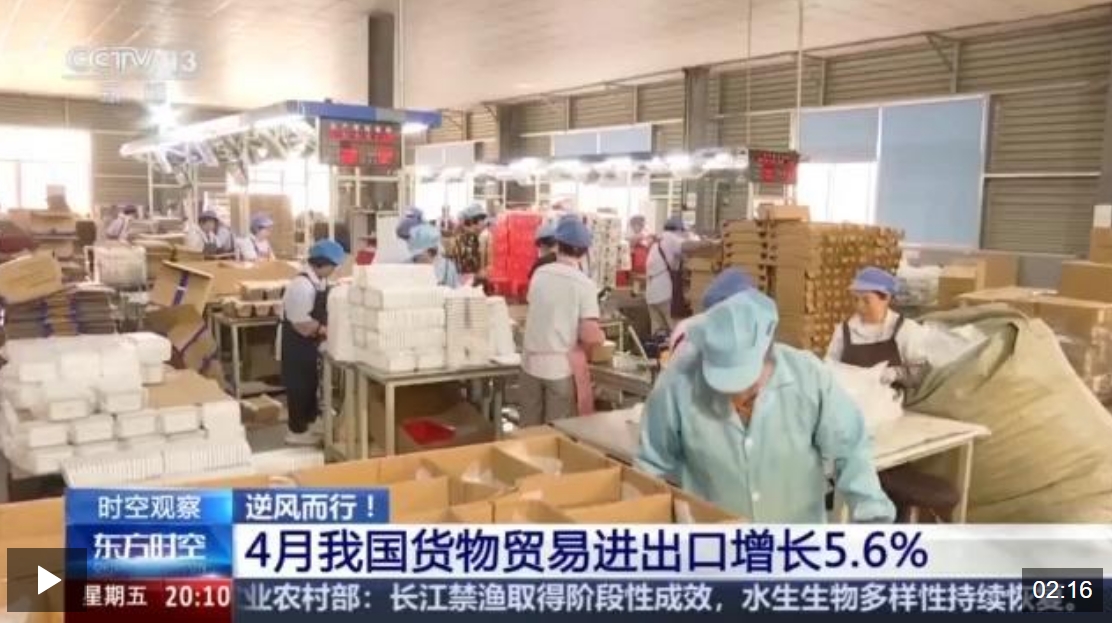
关税战下 中国外贸进出口表现亮眼背后的底气
Yang Shi Xin Wen Ke Hu Duan· 2025-05-10 06:59
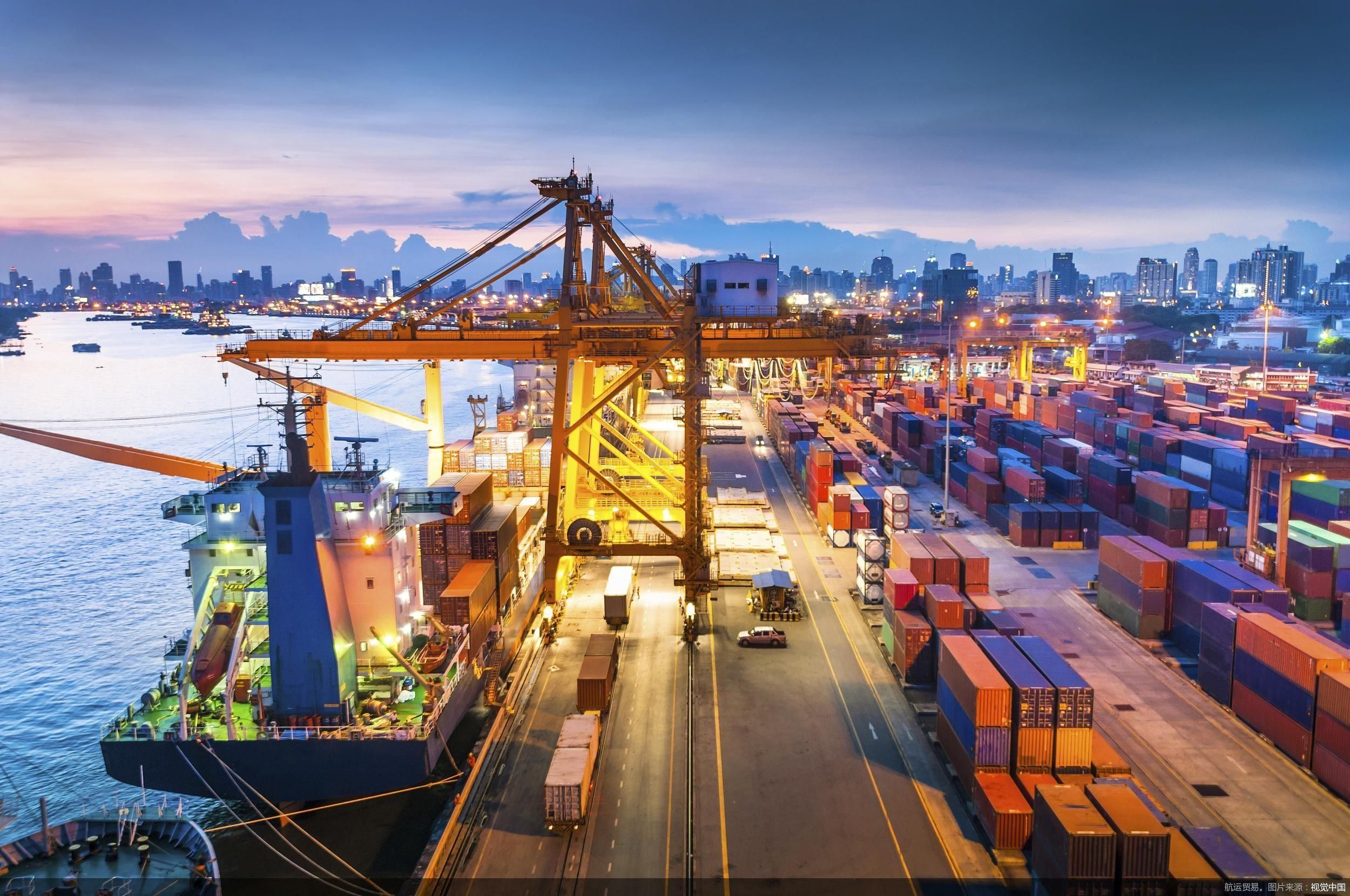
Core Viewpoint - China's foreign trade showed resilience and growth despite the challenges posed by the US tariff war, with significant increases in both exports and imports in April 2023, indicating a strong economic recovery and adaptability of Chinese enterprises [2][14][28]. Trade Performance - In April 2023, China's total goods trade reached 3.84 trillion yuan, growing by 5.6%, with exports at 2.27 trillion yuan (up 9.3%) and imports at 1.57 trillion yuan (up 0.8%) [2]. - The growth rate of imports turned positive after a decline, reflecting a recovery in domestic demand [14][28]. Key Factors Driving Growth - High-tech product exports were a significant driver, with 1.52 trillion yuan in exports (up 7.4%), accounting for 18.1% of total exports [14]. - The export of marine engineering equipment and industrial robots saw substantial growth, with increases of 16.4% and 58.3% respectively [14]. - The rise in the number of private enterprises participating in foreign trade, which accounted for 56.9% of total trade, also contributed to the growth [25][27]. Market Diversification - Companies are diversifying their markets to mitigate the impact of tariffs, with exports to ASEAN, Latin America, and Africa increasing significantly [29]. - The share of exports to the US has dropped below 15%, indicating a strategic shift towards emerging markets [29]. Technological Advancements - The transition from low-value to high-value products is evident, with significant growth in exports of machinery and electronics, particularly integrated circuits and automobiles [30]. - Private enterprises are increasingly becoming the backbone of foreign trade, showcasing strong innovation capabilities [30]. Policy Support - The Chinese government is implementing supportive policies to reduce burdens on foreign trade enterprises, enhancing efficiency and competitiveness [33]. - The combination of policy measures and institutional reforms is expected to continue benefiting the foreign trade sector [31][33]. Long-term Implications - The ongoing tariff war is accelerating China's restructuring within the global supply chain, pushing for a transition from cost advantages to technological and brand strength [34].