
生成式AI

Search documents
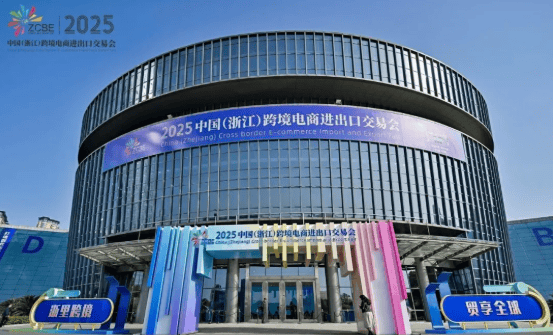
首日爆场!2025中国(浙江)跨境电商进出口交易会盛大开幕!
Sou Hu Cai Jing· 2025-11-27 07:08
Core Insights - The 2025 China (Zhejiang) Cross-Border E-commerce Import and Export Trade Fair has officially commenced, attracting global cross-border sellers, buyers, industry experts, and service providers to explore new opportunities in cross-border e-commerce [1][2] Group 1: Event Overview - The trade fair covers an exhibition area of 50,000 square meters, featuring over a thousand well-known domestic and international e-commerce platforms, service providers, and source factories [2] - The event includes five distinctive exhibition areas: Overseas Factory Area, Quality Industrial Belt and Supply Chain Area, Future Business Technology Ecosystem Area, Full-Chain Service Ecosystem Area, and Boutique Imported Goods Area, creating a comprehensive platform for cross-border e-commerce [2] Group 2: Exhibition Highlights - The A1 Hall showcases major international cross-border platforms like Shopee, Ozon, Walmart, and Trendyol, serving as a vital resource hub for merchants seeking to expand into overseas markets [4][6] - The B1 Hall integrates flagship platforms such as Alibaba International Station and AliExpress, providing a full-service ecosystem that includes financial payment, e-commerce training, and operational support for cross-border sellers [7][9] - The C1 Hall features cutting-edge technology applications, including generative AI and digital marketing, with innovative companies like Yushutech demonstrating significant advancements in automation [10][12] - The D1 Hall focuses on full-chain services for cross-border e-commerce, showcasing platforms like Amazon and logistics service providers, while also highlighting local industrial strengths [14][16] - The E1 Hall serves as a key display area for imported goods, featuring products like pet supplies and new energy vehicles, emphasizing the quality and appeal of imported items [16] Group 3: Conference and Discussions - The Global Cross-Border E-commerce Ecosystem Conference, held concurrently, featured discussions on the future of digital trade and cross-border e-commerce, with participation from industry leaders and experts [17][19] - The conference included thematic discussions on emerging markets and strategies for leveraging platforms like TikTok Shop to enhance sales during major promotional events [21]

谷歌概念股爆发!谷歌利好不断,直逼英伟达!A股受益公司名单曝光!
私募排排网· 2025-11-27 07:00
Core Insights - The article highlights the strong performance of Google-related stocks in the A-share market, particularly those linked to Google's TPU chip supply chain and AI applications, with several stocks reaching historical highs [2] - Google's parent company, Alphabet, recently launched its new AI models, Gemini3 and NanoBananaPro, which are expected to significantly impact various industries [6][9] - Berkshire Hathaway, led by Warren Buffett, has acquired approximately 17.85 million shares of Alphabet, indicating confidence in the company's future [3] Group 1: Google AI Models and Market Impact - Google officially released the Gemini3 model, which includes advanced capabilities across multiple data types and significantly outperforms competitors in benchmark tests [6][7] - The Gemini3 model can handle long contexts of up to one million tokens, enhancing its ability to process complex information [6] - The NanoBananaPro model, built on Gemini3, is set to elevate AI image generation and editing, pushing applications into professional design fields [9] Group 2: TPU Chip Developments - Google has introduced its seventh-generation TPU chip, Ironwood, which boasts a performance increase of approximately four times compared to its predecessor [14] - The integration of Optical Circuit Switching (OCS) technology in TPU architecture is expected to alleviate data bottlenecks during AI model training and inference [17] - The market for OCS technology is projected to grow at a compound annual growth rate (CAGR) of 28% from 2024 to 2029, driven by demand from major tech companies [18] Group 3: Financial Performance and Projections - Alphabet's revenue surpassed $100 billion in Q3 2025, marking a 16% year-over-year increase, with AI contributing significantly to this growth [23] - The company is expected to double its AI computing power every six months, aiming for a thousandfold increase in the next four to five years to meet rising demand [22] - The total shipment of AISC chips is projected to reach approximately 5.7 million units by 2026, with Google expected to account for over half of the market share [21] Group 4: Beneficiaries of Google's AI Ecosystem - Companies within Google's hardware and software supply chain are likely to benefit from the growth of its AI ecosystem, including those providing servers, OCS, and other related technologies [24] - The article lists several companies that have seen significant stock price increases due to their association with Google's AI initiatives, highlighting the potential for continued growth in this sector [24][25]


刚刚 涨停潮来了!
Zhong Guo Ji Jin Bao· 2025-11-27 05:04
Market Overview - A-shares showed a collective increase with major indices rising, particularly the ChiNext Index which briefly surged over 2% before retreating slightly [1] - As of the midday close, the Shanghai Composite Index rose by 0.49%, the Shenzhen Component Index increased by 0.38%, and the ChiNext Index was up by 0.56% [1] Trading Volume and Stock Performance - The total trading volume across the market reached 1.1 trillion yuan, showing a slight decrease compared to the previous day [2] - Over 3,300 stocks in the market experienced gains, with strong performances in sectors such as electronics, beauty care, light manufacturing, and communications [2] Sector Performance - The electronics sector led the A-share market, with notable activity in consumer electronics, smart speakers, and semiconductors [5] - Key stocks in the electronics sector included Lian De Equipment and Yun Zhuang Technology, both hitting the daily limit up of 20% [6] - The optical module sector also saw significant gains, with stocks like Tongyu Communication and Cambridge Technology reaching their daily limit up [7] Notable Stock Movements - In the Hong Kong market, new consumption concept stocks generally rose, with Pop Mart's stock price peaking at 225 HKD, reflecting a nearly 10% increase [7] - The media sector experienced a pullback, with stocks like Huanyu Century and Shanghai Film seeing significant declines [9][11] Government Initiatives - Recent government initiatives aimed at enhancing the adaptability of consumer goods supply and demand were announced, promoting the integration of AI in consumer products [6]

刚刚,涨停潮来了!
中国基金报· 2025-11-27 04:52
Core Viewpoint - A-shares showed a collective rise in major indices, with strong performance in sectors like consumer electronics and optical modules, while some high-position stocks experienced significant declines [2][3]. Market Performance - As of the midday close, the Shanghai Composite Index rose by 0.49%, the Shenzhen Component Index increased by 0.38%, and the ChiNext Index gained 0.56% [2][3]. - The total market turnover was 1.1 trillion CNY, slightly lower than the previous day, with over 3,300 stocks rising [3]. Sector Performance - The electronic, beauty care, light industry manufacturing, and communication sectors performed well, with notable activity in consumer electronics, HBM, optical modules, and lithium battery concept stocks [3]. - The optical module sector continued to strengthen, with stocks like Tongyu Communication and Cambridge Technology hitting their daily limit [12][13]. Individual Stock Highlights - In the electronic sector, stocks such as Lian De Equipment and Saiwei Electronics reached their daily limit, with increases of 20.01% and 18.48% respectively [8][9]. - The new consumption concept stocks in the Hong Kong market also saw gains, with Pop Mart rising nearly 10% [10]. Policy Impact - A recent implementation plan from six departments, including the Ministry of Industry and Information Technology, aims to enhance the adaptability of supply and demand in consumer goods, promoting AI integration and smart product development [8].




Z Product|AI重塑销售增长:融资2亿+顶级VC加持,People.ai凭什么获AMD/CISCO等老牌公司实战验证
Z Potentials· 2025-11-27 02:55
Group 1 - The core issue in sales team management is low efficiency and disorganized data, with 70% of sales personnel spending most of their time on data organization rather than customer communication [3][5] - The Revenue Intelligence sector emerged to address these challenges by leveraging technology for precise data capture, reliable integration, and intelligent analysis [5][6] - People.ai, founded in 2016, has positioned itself as a key provider in this sector, enabling companies to create unified data sources and overcome growth barriers [5][6] Group 2 - People.ai's platform automatically captures customer interaction data across multiple channels with over 95% accuracy, significantly reducing manual data entry for sales teams [7][8] - The platform offers tailored solutions for different roles within sales, enhancing efficiency and performance tracking through real-time dashboards and AI-driven insights [8][9] - The core competitive advantage of People.ai lies in its technical precision, functional relevance, and a comprehensive service ecosystem that supports scalable growth [9][10] Group 3 - Case studies from AMD and Cisco demonstrate the effectiveness of People.ai in solving sales pain points, with AMD achieving a 40% increase in cross-regional opportunity identification and Cisco improving new sales attainment rates by 35% [13][18] - The core team of People.ai combines expertise in technology and industry knowledge, which is crucial for the precise implementation of their product [19][30] Group 4 - People.ai has completed eight funding rounds, raising a total of $200 million, with significant investments from 44 institutions, including top-tier venture capital firms [31][35] - The latest funding round in August 2021 raised $100 million, marking a record for the sector and aimed at technology upgrades and global expansion [31][33]

36氪研究院 | 2025年中国出海零售品牌调研报告
3 6 Ke· 2025-11-26 23:32
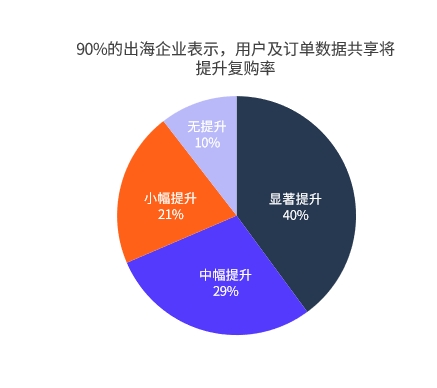
Core Insights - Chinese retail brands are undergoing two strategic transformations driven by globalization and digitalization: "Unified Commerce" and "Intelligent Commerce" [1][15][13] - The report is based on an in-depth survey of 500 Chinese outbound enterprises, outlining key challenges, opportunities, and future paths in the globalization process [1][15] Market Trends - Consumer demand is evolving towards multi-channel integration, making Unified Commerce a core competitive advantage [2][21] - Retail brands need to create seamless shopping experiences centered around consumers, integrating online and offline channels [2][21] - Despite many outbound enterprises having multi-channel layouts, data silos hinder effective channel collaboration and operational closure [2][26] Technological Changes - The rapid development of generative AI is catalyzing the rise of Intelligent Commerce, reshaping retail models and growth boundaries [4][16] - Intelligent Commerce is deeply integrated with Unified Commerce, enabling brands to deliver highly efficient and personalized seamless experiences [4][16] - Outbound enterprises are still in the exploratory phase regarding AI applications, with significant potential in marketing recommendations, supply chain optimization, and payment risk control yet to be fully realized [4][16] Core Foundations - Achieving full-channel data integration is crucial for advancing Unified and Intelligent Commerce [6][18] - Payment data serves as a key hub connecting transactions, users, and scenarios, essential for creating a unified and intelligent payment system [6][18] Payment Challenges and Solutions - Outbound enterprises face three main challenges in payments: optimizing payment experiences, ensuring security and compliance, and reducing operational costs [9][19] - Leveraging professional third-party payment services is seen as the most cost-effective solution for growing outbound enterprises [9][19] - Professional service providers enhance payment experiences through global payment integration and AI-driven personalized recommendations, significantly improving consumer satisfaction and payment success rates [9][19] Future Outlook - The report aims to provide insights and strategic references for Chinese outbound brands and industry practitioners, supporting their global journey towards increased performance and efficiency [11][20]
36所本科高校都开了AI专业江苏高等教育按下智能化“快进键”
Xin Hua Ri Bao· 2025-11-26 23:28
Core Insights - The integration of generative AI into daily life is accelerating, with "embodied intelligence" frequently trending, as the 20th National Congress of the Communist Party of China promotes the comprehensive implementation of the "AI+" initiative [1] - Jiangsu province is actively responding to national strategies to seize opportunities in "AI + higher education" [1] Group 1: AI Education Ecosystem - Jiangnan University has introduced an AI course that combines virtual and physical classroom experiences, allowing AI to assess student engagement and generate comprehensive analyses [2] - Over the past three years, Jiangsu's education department has issued several policies to create a new ecosystem for "AI + education," aiming for comprehensive integration across all educational stages [2] - A total of 36 undergraduate institutions in Jiangsu have established AI majors, with 7 universities offering "AI+" dual degree programs, and several new interdisciplinary undergraduate programs have been launched [2] Group 2: Vertical AI Models - Jiangnan University released the world's first food science-specific AI model, FoodSeek, while Southeast University introduced an ethical AI model, "Wendao," for vertical applications [3] - Nanjing University has built a high-standard intelligent computing center and a university-level data center to support AI applications, focusing on algorithms, computing power, and data [3] Group 3: Practical Learning Approaches - At Southeast University, students in the "Future Robotics" course learn by creating intelligent robots, with AI assisting in problem-solving [4] - Jiangsu universities have been early adopters of AI in education, with Nanjing University set to offer a core AI course to all incoming undergraduates starting in Fall 2024 [4] - Faculty members are encouraged to use AI tools to enhance teaching and engage students in problem-solving [4] Group 4: Industry Collaboration - Nanjing University is developing a practical education ecosystem through partnerships with local industries, addressing real-world challenges in AI [5] Group 5: Ethical and Responsible AI Use - The increasing use of generative AI among students raises questions about setting reasonable boundaries for its application in education [6] - Internationally, educational institutions are shifting from banning to guiding the use of generative AI tools, emphasizing ethical and responsible usage [6] - Jiangsu's education department highlights the need for a robust ethical framework and safety measures to support the high-quality development of AI-enabled education [6]
腾讯研究院AI速递 20251127
腾讯研究院· 2025-11-26 16:11
Group 1 - OpenAI integrates the "Voice Mode" into the main chat interface, allowing seamless voice and text interaction without mode switching [1] - The new version provides natural voice responses, real-time visual content generation, and automatic voice-to-text transcription [1] - Users can switch back to the old independent voice mode if they prefer an immersive audio experience [1] Group 2 - OpenAI is testing a new App Directory on the ChatGPT web platform, allowing developers to showcase third-party applications systematically [2] - The directory presents AI applications in a card format across various scenarios, enabling users to browse, search, and add applications easily [2] - With 400 million weekly active users and a processing capacity of 6 billion tokens per minute, the App Directory is set to transform AI application distribution [2] Group 3 - The FLUX.2 image generation model family has been released, capable of referencing up to 10 images for consistency in character, product, and style [3] - The open-source FLUX.2 [dev] model features 32 billion parameters and has gained popularity on Hugging Face [3] - The model excels in hyper-realistic image generation but currently does not support Chinese rendering [3] Group 4 - Character.AI introduces a new "Stories" feature for users under 18, shifting from open chat to structured interactions [4] - The CEO expressed concerns about the psychological risks of open chat for users under 18, leading to this decision [4] - California has become the first state to regulate AI companions, with federal proposals aiming to ban their use by minors [4] Group 5 - TRAE's domestic version launches the SOLO mode, introducing features like SOLO Coder, Plan mode, and multi-tasking capabilities [6] - The SOLO mode is designed as a "responsive programming agent," supporting retrieval of 100,000 code files for extensive context [6] - The core design philosophy is "All in One," allowing developers to focus on guiding AI rather than real-time pairing with AI programming assistants [6] Group 6 - Tencent's Hunyuan 3D creation engine launches an international site, with a model API now available for global users [7] - The latest Hunyuan3D 3.0 version introduces a 3D-DiT hierarchical sculpting model, improving modeling precision by three times [7] - Over 150 companies have integrated Tencent Cloud, significantly reducing traditional 3D production times from days to minutes [7] Group 7 - Skywork launches a "Professional Data" mode, connecting to 430 authoritative data sources across various fields [8] - The platform integrates data from key sources like the World Bank and NASA, enabling unified responses and data aggregation [8] - It ensures transparency and reliability in decision-making by providing traceable data sources for all answers [8] Group 8 - Ilya Sutskever discusses the transition from the "Scaling era" to the "Research era," emphasizing the limitations of current technology in achieving AGI [9] - He identifies model generalization as a core bottleneck, stating that even extensive training does not yield true problem-solving intuition [9] - Sutskever predicts the emergence of AI systems that can learn and surpass human capabilities within 5 to 20 years [9] Group 9 - NVIDIA acknowledges Google's successful development of TPU but asserts that its GPUs remain a generation ahead [10] - Google is promoting TPU solutions to major institutions like Meta, which plans to invest billions in TPU by 2027 [10] - NVIDIA emphasizes its unique position as the only hardware platform compatible with all AI models and scenarios [11]


英唐智控(300131) - 2025年11月26日投资者关系活动记录表
2025-11-26 14:40
Group 1: Company Overview - The company, Shenzhen Yingtang Intelligent Control Co., Ltd., focuses on electronic component distribution and has built a global multi-regional network covering various product categories including main chips, storage, RF, display drivers, power/amplifier devices, MEMS sensors, and passive components [2][3]. - The company has successfully introduced automotive display chip business into several leading screen manufacturers, with the first automotive-grade TDDI/DDIC entering mass production [2][3]. Group 2: Technology and R&D - The company is increasing R&D investment, with a 90.06% year-on-year growth in R&D expenses in the first three quarters, primarily focusing on display chip development [4]. - The company is preparing to acquire Guilin Guanglong Integrated and Shanghai Aojian Microelectronics to strengthen its layout in optical communication chips and analog integrated circuits [3]. Group 3: Product Development and Market Strategy - The company is developing laser scanning projection (LBS) technology, which offers advantages over traditional high-power light sources used in high-end vehicles, such as color, high resolution, and compact size [2][3]. - The OCS (Optical Circuit Switching) business is gradually increasing its revenue share, with plans to expand product series and ensure supply chain stability for larger-scale production [7][9]. Group 4: Production and Quality Assurance - The company has achieved mass production for OCS products with channel specifications of 32×32, 64×64, and 96×96, while preparing for the mass production of 128×128 channels expected in early to mid-2026 [10]. - The production yield for Guanglong Integrated's OCS chips is at a good industry level, with ongoing investments in process optimization and technology iteration to enhance competitiveness [8]. Group 5: Risks and Regulatory Compliance - There are risks associated with the asset purchase transaction, including potential delays or cancellations due to regulatory review processes [11]. - The company assures that the investor relations activities do not involve any undisclosed significant information [11].

资深模型专家解读谷歌 Gemini
2025-11-26 14:15
Summary of Key Points from the Conference Call Company and Industry Overview - The conference call primarily discusses **Google's Gemini 3 Pro**, a state-of-the-art multimodal AI model that showcases significant advancements in visual understanding and processing capabilities across various data types including text, images, audio, video, and code [1][2][4][5]. Core Insights and Arguments - **Performance and Innovation**: Gemini 3 Pro is recognized as the world's strongest visual understanding model, leading in 20 out of 21 evaluation dimensions. It introduces the **Deepseek mode** to reduce hallucination rates and employs the **Mamba principle** to optimize the relationship between Transformer inference power and sequence length, enhancing the processing of long series data [2][4][7]. - **Training Methodology**: The model is trained on **14TB of data** using a GPU-based adaptive intelligent optimization paradigm. It utilizes a segmented training approach combined with reinforcement learning and test-time strategies to improve abstract reasoning capabilities [4][5]. - **Multimodal Capabilities**: Gemini 3 Pro is designed as a native multimodal model, capable of unified encoding and processing of various data types. This design allows for powerful multimedia content generation and understanding, significantly enhancing user experience [5][6]. - **Comparative Performance**: While Gemini 3 Pro excels in humanities and emotional intelligence dimensions, it does not surpass competitors like Claude 4.5 in programming capabilities, where Claude scores **80.9** compared to Gemini's lower performance [2][7]. Additional Important Insights - **Challenges in Asian Markets**: Overseas models struggle with processing Chinese content due to a lack of focus on Eastern elements during development, leading to issues in accurately displaying Asian language characters. This presents a barrier for these models in the Chinese market [9][12]. - **Technological Advantages of TPU**: Google’s use of its proprietary TPU chips for large-scale model training offers advantages such as lower costs, higher energy efficiency, and greater memory capacity compared to competitors using NVIDIA GPUs [10][16]. - **Future Competitive Landscape**: The AI landscape is evolving into a three-way competition among Google, Grok, and OpenAI. While Google currently leads, it is anticipated that Grok may close the gap, with OpenAI also showing potential in multimodal capabilities [10][11]. - **Knowledge Graphs and AI Hallucination**: Knowledge graphs are being explored as a means to reduce AI hallucination rates by providing verified information, although widespread application remains a challenge due to data acquisition costs and industry-specific requirements [21]. Conclusion - Google’s Gemini 3 Pro sets a new standard in the AI industry with its comprehensive capabilities and innovative training methods. However, challenges remain in addressing language processing for Asian markets and maintaining competitive advantages against emerging rivals.