绿色低碳转型

Search documents
扛牢首要责任 “十四五”煤炭行业实现跃升发展
Zhong Guo Dian Li Bao· 2025-10-17 06:31
Core Viewpoint - The coal industry has made significant strides in ensuring energy security, promoting green and low-carbon transformation, and enhancing industrial competitiveness since the start of the 14th Five-Year Plan, with a focus on high-quality development and modernization of production methods [1][2][3]. Group 1: Supply and Production Capacity - The coal supply capacity has significantly improved, with national coal reserves increasing to 2,186 billion tons by the end of 2023, and coal production expected to reach 4.78 billion tons in 2024, an increase of 8.8 million tons compared to 2020 [2]. - The coal railway transportation volume has risen from 2.36 billion tons to 2.82 billion tons, enhancing the coal resource allocation capabilities across the country [2]. Group 2: Production Shift and Optimization - The focus of coal production is shifting towards the central and western regions, with raw coal output in the western region increasing from 2.32 billion tons to 3.04 billion tons, accounting for a 4.2 percentage point increase in national share [3]. - By 2024, eight provinces with over 1 billion tons of raw coal production are expected to account for 91.3% of national output, reflecting a significant optimization in production layout [3]. Group 3: Structural Optimization and Modernization - The number of coal mines has decreased to under 4,300, with an average production scale of around 1.7 million tons per mine, indicating a trend towards larger, more efficient operations [4]. - The establishment of 83 large-scale coal mines with an annual capacity of 136 million tons has been achieved, marking a 31 mine increase and a capacity increase of 54 million tons since 2020 [4]. Group 4: Clean and Efficient Utilization - The coal industry has made progress in green and low-carbon development, with comprehensive utilization rates for coal gangue and mine water reaching 74.1% and 74.2%, respectively [5]. - The comprehensive energy consumption for coal production has decreased to 7.9 kg of standard coal per ton, and the comprehensive electricity consumption has dropped to 23.7 kWh per ton [5]. Group 5: Technological Innovation - The coal industry has accelerated the integration of technology and innovation, with intelligent coal mines accounting for over 55% of total production capacity [6]. - The number of invention patents in the coal sector has increased by over 25% annually, reflecting a robust growth in research and development [6]. Group 6: Industry Reform and Safety - Significant reforms in the coal industry have been implemented, enhancing market stability and competitiveness, with 26 coal companies listed among China's top 500 enterprises in 2024 [7]. - Safety production capabilities have improved, with a focus on modernizing safety management systems and enhancing disaster prevention measures [8]. Group 7: Future Outlook - The 15th Five-Year Plan period is expected to see peak coal demand, with a focus on clean and efficient utilization, and the coal industry is set to play a crucial role in supporting national energy security and industrial stability [9].
2025中国国际化工展览会: 擘画产业绿色新图景
Zhong Guo Hua Gong Bao· 2025-10-17 02:25
Group 1: Industry Trends - The 2025 China International Chemical Exhibition highlighted the shift of the chemical industry towards "green and low-carbon" development, indicating a transformation across the entire industry chain [1] - Companies showcased green technologies and circular economy models, emphasizing resource conservation and environmentally friendly practices [1] Group 2: Technological Advancements - Lubei Group successfully broke foreign monopolies in the titanium dioxide sector by developing a chlorination process, becoming one of the few domestic companies to master this technology [2] - The company established a long-term strategic partnership with upstream suppliers to secure titanium slag resources, achieving a raw material cost that is 8% to 10% lower than the industry average [2] Group 3: Innovation in Hydrogen Production - Zhizhan New Energy introduced a high-activity methanol-to-hydrogen catalyst, which can increase hydrogen yield by approximately 20% due to its significantly enhanced surface area [3] - The catalyst is designed for various industries, including petrochemicals and pharmaceuticals, and can lower hydrogen production costs while reducing carbon emissions by 30% compared to natural gas reforming [3] Group 4: Pilot Testing and Industrialization - The pilot testing phase is evolving into a systematic and replicable process, with companies like China National Chemical Group providing engineering support to facilitate the industrial application of laboratory results [4] - Local industrial parks are also developing platforms to support technology testing and industrialization, enhancing the ecosystem for small and medium-sized enterprises [5] Group 5: Circular Economy Initiatives - Lubei Group's operations demonstrate a closed-loop system that maximizes product value while efficiently managing waste, showcasing a competitive advantage through resource recycling [6] - Guizhou Phosphate Group has developed a range of products from phosphogypsum, transforming waste into materials and achieving high utilization rates [7]
三季度宏观数据下周发布,政策适时加力必要性上升
Di Yi Cai Jing Zi Xun· 2025-10-17 01:15
Economic Growth and Forecasts - China's GDP growth in the first half of the year was 5.3%, exceeding expectations, with third-quarter GDP growth forecasted at 4.8% [1][2] - The International Monetary Fund (IMF) maintained its 4.8% growth forecast for China, despite global economic challenges [2] - Economic indicators suggest a potential slowdown in investment and consumption, with third-quarter GDP growth possibly declining to 4.9% [2] Industrial Production and Demand - Industrial production showed resilience in September, with a manufacturing PMI of 49.8%, indicating slight improvement [3] - Predictions for September's industrial value-added growth are around 5.1%, slightly lower than the previous month [3] - Some sectors, such as automotive, are experiencing production slowdowns, while others like coal consumption have shown declines [3] Consumer Spending Trends - The forecast for September's retail sales growth is 3.1%, down from 3.4% in the previous month, indicating a slowdown in consumer spending [4][5] - The "old-for-new" policy has positively impacted certain consumer goods, with significant sales growth in home appliances and smart home products [5][6] - The automotive sector remains a significant contributor to retail sales, with production and sales figures showing strong year-on-year growth [6] Investment and Infrastructure - Fixed asset investment growth is predicted to be flat at 0% for September, reflecting ongoing economic challenges [6] - Infrastructure investment remains supported by strong excavator sales, which increased by 25.4% year-on-year in September [7] - The government is expected to enhance fiscal policies to support infrastructure and manufacturing investments in the fourth quarter [8][10] Policy Measures and Economic Outlook - There is an increasing necessity for timely policy adjustments to sustain economic growth, particularly in light of rising risks in key economic indicators [8][9] - The government plans to issue more bonds and enhance fiscal support for various sectors, including technology and infrastructure [9][10] - The overall macroeconomic policy is expected to remain accommodative, with a focus on stabilizing expectations and boosting confidence in the economy [10]
筑牢能源安全与经济发展双重基石
Liao Ning Ri Bao· 2025-10-17 01:05
Core Insights - The China Datang Fuxin Coal-to-Natural Gas Project has resumed construction, marking a significant step in revitalizing the Northeast industrial base and enhancing energy security in China [3][4][9] - This project is the largest single investment in Fuxin's history and aims to produce 4 billion standard cubic meters of coal-derived natural gas annually, with the first phase expected to be operational by the end of 2026 [4][8] Project Overview - The project is a major initiative supported by the central government, recognized as the third large-scale coal-to-natural gas demonstration project approved by the National Development and Reform Commission [3] - It will utilize lignite from Inner Mongolia as raw material and is designed to supply clean energy to five cities, benefiting approximately 15.96 million people [4][8] Technological Advancements - The project employs self-developed technologies such as crushed coal pressurized gasification and high-efficiency methane catalysts, achieving over 98% localization of equipment [4][5] - Environmental measures include improved treatment of by-products like sulfur, which can now be recycled and sold, thus reducing pollution [5] Economic Impact - Upon completion, the first phase of the project is expected to generate over 4 billion yuan in annual output value and create more than 2,000 jobs [8] - The project will also stimulate the development of downstream coal chemical industry clusters, positioning Fuxin as a coal chemical industry base in Liaoning [8] Urban Transformation - Fuxin, as a pilot city for economic transformation from resource depletion, aims to leverage this project to enhance local living standards, optimize energy structure, and drive economic growth [8][9] - The project is anticipated to contribute over 100 million yuan in annual tax revenue and activate the coal chemical sector in the Fuxin New Qiao Economic Development Zone [8] Sustainable Development - The project aligns with China's dual carbon goals, promoting a transition from a coal-based economy to a greener, low-carbon model [9][10] - Plans are in place to integrate renewable energy resources with the coal chemical industry, ensuring sustainable development and economic viability [9]


华润电力光伏电站售电量增35.1% 预计年底可再生能源装机占逾50%
Chang Jiang Shang Bao· 2025-10-17 00:13
Core Viewpoint - China Resources Power (00836.HK) is focusing on achieving its "dual carbon" goals, with significant growth in electricity sales from its photovoltaic power stations [1][3]. Sales Performance - In the first nine months of 2025, the total electricity sales from China Resources Power's subsidiary power plants reached 161 million megawatt-hours, an increase of 4.2% year-on-year [2][3]. - The electricity sales from subsidiary photovoltaic power stations amounted to 7.0886 million megawatt-hours, reflecting a year-on-year increase of 35.1% [2][3]. - In September 2025, the electricity sales from subsidiary photovoltaic power stations were 0.9224 million megawatt-hours, showing a substantial increase of 49.7% year-on-year [2]. Installed Capacity - As of June 30, 2025, the total installed capacity of wind, water, and photovoltaic power generation rights reached 38,955 megawatts, accounting for approximately 49.9% of the total installed capacity [1][3]. - The company operates 50 coal-fired power plants, 209 wind farms, 205 photovoltaic power stations, 20 hydropower stations, and 6 gas-fired power plants [3]. Future Plans - China Resources Power plans to add 10,000 megawatts of new wind and photovoltaic projects by the end of 2025, with steady progress expected in the second half of the year [1][5]. - The company anticipates that by the end of the 14th Five-Year Plan (end of 2025), the proportion of renewable energy in its installed capacity will exceed 50% [1][5]. Financial Investment - The company expects a cash capital expenditure of approximately HKD 56.8 billion for 2025, with around HKD 42 billion allocated for the construction of wind and photovoltaic power stations [4][5]. - Research and development investment for 2024 is projected to be HKD 1.398 billion, representing a year-on-year increase of 89% [4].

“十四五”时期,美丽中国建设迈出重大步伐!
Yang Shi Wang· 2025-10-16 23:06
Group 1 - The core viewpoint emphasizes the importance of green and low-carbon development for achieving high-quality growth during the "14th Five-Year Plan" period, highlighting significant progress in building a beautiful China and transforming development methods towards sustainability [1][5] - The "14th Five-Year Plan" outlines goals for promoting green development and enhancing the harmony between humans and nature, with a focus on systematic governance of ecosystems [1] - Over the past five years, China has achieved a national land greening area of 5.49 million hectares, with a forest coverage rate exceeding 25%, contributing approximately 25% of the world's new greening area [1] Group 2 - Continuous improvement of environmental quality is a key goal, with significant reductions in PM2.5 concentration and improvements in water quality expected by 2024 [1] - The plan includes a comprehensive approach to pollution prevention and control, integrating efforts to reduce emissions and improve air and water quality [1][31] Group 3 - The transition from targeted pollution control to a comprehensive approach to building a beautiful China is highlighted as a major change during the "14th Five-Year Plan" [31][33] - The establishment of the world's largest renewable energy system and carbon market reflects the increasing contribution of green transformation to economic and social development [35] - The green technology industry is transitioning from an explosive growth phase to a high-speed growth phase, indicating a more mature support system for green low-carbon industries [37][39]

决胜“十四五” 打好收官战|共绘黄河壮美画卷——沿黄各省区加快推动黄河流域生态保护和高质量发展
Xin Hua She· 2025-10-16 14:18
Core Viewpoint - The article emphasizes the importance of ecological protection and high-quality development in the Yellow River basin, highlighting the collaborative efforts of various provinces to enhance environmental sustainability and community well-being [1]. Group 1: Ecological Protection Initiatives - Local communities, such as the volunteer river patrol team in Qinghai, are actively participating in the protection of the Yellow River, demonstrating a strong commitment to environmental stewardship [2]. - Mechanisms for environmental management, including waste management and pollution control, have been established in counties like Cungua to ensure effective river protection [2]. - The ecological restoration of areas like Dongping Lake showcases successful efforts to revive local ecosystems that had previously suffered from over-exploitation [4]. Group 2: Water Resource Management - New Asia Paper Group in Henan has significantly reduced water consumption in its production processes, decreasing water usage from 65 cubic meters to 25 cubic meters per ton of pulp through systematic upgrades [3]. - Provinces are promoting water-saving irrigation and transitioning to high-quality development in agriculture and aquaculture, contributing to sustainable resource management [4]. Group 3: Technological Advancements in Flood Management - The implementation of advanced technologies, such as drones and satellite monitoring, enhances the flood management capabilities along the Yellow River, providing real-time data for better decision-making [6]. - The construction of the "14th Five-Year" flood control project in the lower Yellow River aims to improve the flood defense infrastructure across 42 counties in Henan and Shandong [6]. Group 4: Collaborative Efforts for Quality Development - The nine provinces along the Yellow River have signed agreements to share experiences and promote quality infrastructure, indicating a unified approach to regional development [4]. - The shift from traditional high-energy industries to emerging sectors like renewable energy and biotechnology reflects a commitment to green and sustainable economic growth in the region [4].
300余家纺织企业集聚!第十四届江苏(盛泽)纺织品博览会暨2025苏州湾时尚周开幕
Yang Zi Wan Bao Wang· 2025-10-16 12:19
Group 1 - The 14th Jiangsu (Shengze) Textile Expo and the 2025 Suzhou Bay Fashion Week opened, showcasing the strategic upgrade of the Wujiang textile industry towards high-end, digital, green, international, and brand-oriented development [1] - Over 300 outstanding textile enterprises and more than 1,500 global buyers participated in a three-day supply-demand matching event, featuring nine fashion shows and three top industry competitions [1] - The event highlighted the launch of several key industrial parks and innovation platforms aimed at supporting the transformation of the textile industry, focusing on high-end textiles, new materials, intelligent equipment, and modern services [1] Group 2 - The "Yunfang City" digital platform was launched to facilitate deep integration of online and offline textile trade, providing comprehensive services from information to transactions [2] - A supply chain financial digital platform alliance was initiated, partnering with major banks to support textile enterprises with innovative financial solutions [2] - The 2025 Oriental Cup China Women's Wear Design Competition concluded with awards presented, showcasing designs that utilized high-quality fabrics from Shengze [2]
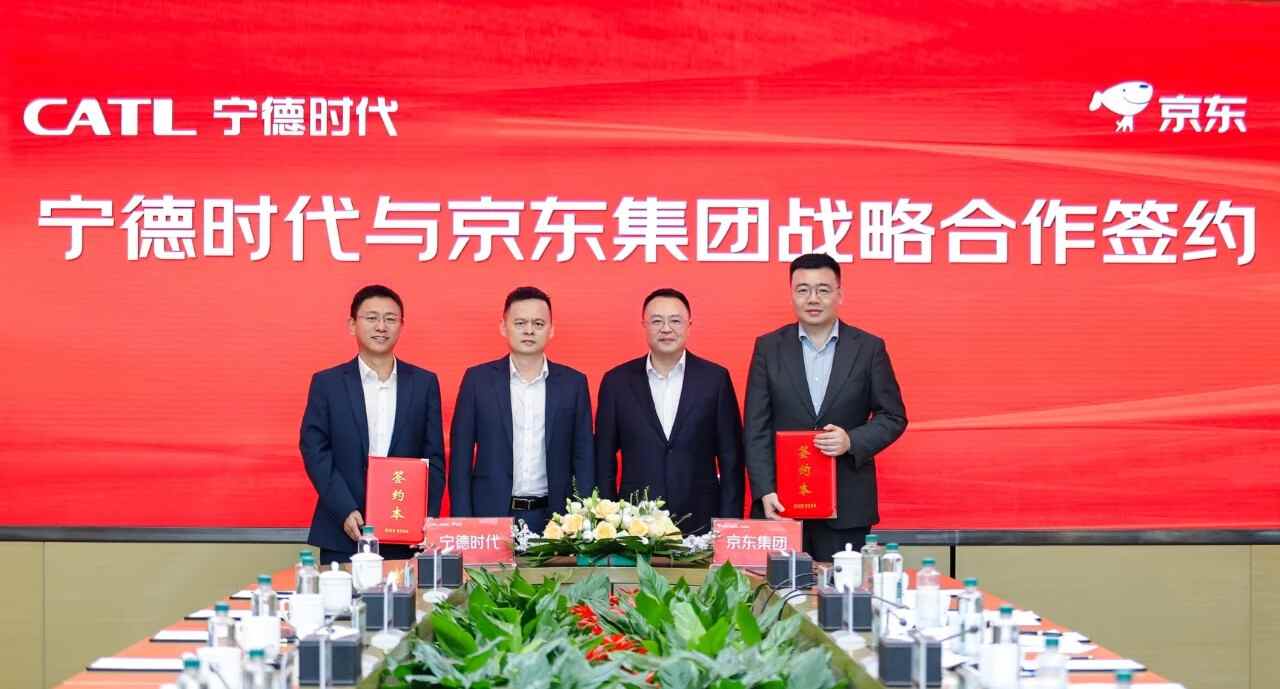
京东工业与宁德时代签署战略协议 深化供应链数智化和伴随式出海合作
智通财经网· 2025-10-16 09:11
Core Insights - JD Group and CATL have signed a strategic cooperation agreement to promote green low-carbon and digital transformation in the supply chain [1] - The collaboration aims to leverage JD's strengths in digital supply chain and omnichannel services alongside CATL's expertise in battery technology and green energy solutions [1][4] - The partnership will focus on sustainable development and cost efficiency in supply chain operations, enhancing procurement capabilities and expanding cooperation in overseas markets [1][5] Group 1: Strategic Cooperation - JD Industrial and CATL have been closely collaborating since 2022, evolving their cooperation model and expanding the scale of their partnership [3] - The collaboration has shifted from MRO procurement to BOM auxiliary materials, achieving significant cost reductions for CATL while ensuring stable supply [3] - Both companies are driving supply chain efficiency through technological innovation, implementing an "AR+AI" remote quality management system to enhance quality control processes [3][4] Group 2: Industry Positioning - CATL is recognized as a leading global player in the new energy sector, focusing on replacing fossil fuels and innovating in materials and manufacturing processes [4] - JD Industrial is a top provider of industrial supply chain technology and solutions in China, with a strong presence in the MRO market [4] - The new energy battery industry is characterized by global resource control, centralized manufacturing, and diversified applications, with Chinese companies holding advantages in the midstream sector [4] Group 3: Cost Reduction Initiatives - JD Industrial has launched the "Smart Empowerment of Thousands of Industries, Trillion Cost Reduction" initiative, targeting the energy battery sector with tailored solutions [5] - The solutions focus on real-time response, precise collaboration, and dynamic optimization to achieve optimal cost and efficiency [5] - JD Industrial provides comprehensive compliance assurance from suppliers to fulfillment, enhancing procurement management efficiency and reducing supply chain risks for energy battery companies [5][6]


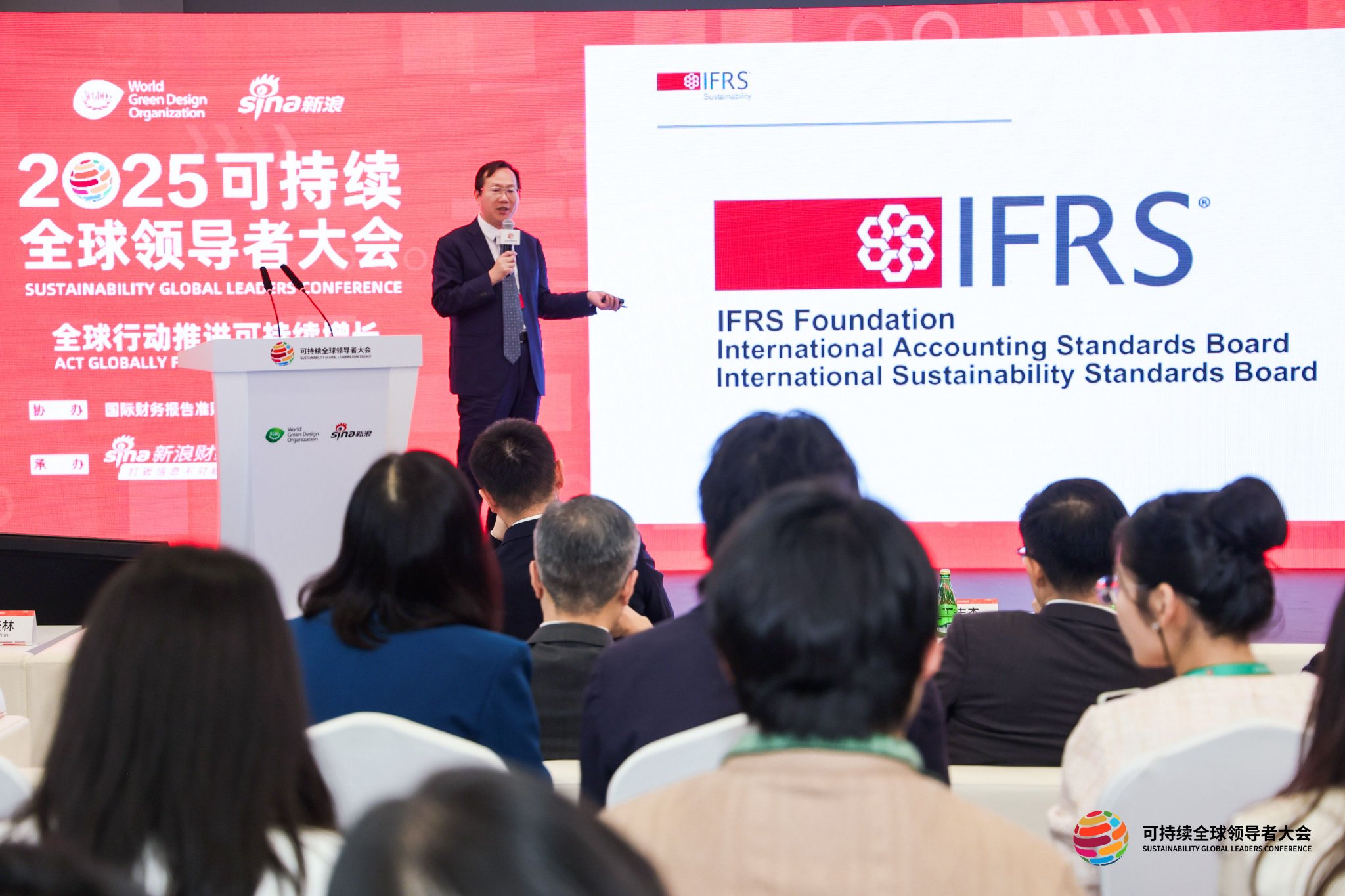
全文|国际可持续准则理事会(ISSB)张政伟:绿色低碳转型是历史必然趋势 呼吁企业成为可持续信息披露先行者
Xin Lang Zheng Quan· 2025-10-16 07:52
Core Viewpoint - The 2025 Sustainable Global Leaders Conference emphasizes the importance of sustainable information disclosure as a critical bridge connecting funds and projects in the context of global green transformation [1][3]. Group 1: Sustainable Information Disclosure - The ISSB aims to create a global unified language for sustainable information disclosure, drawing from the successful experience of international accounting standards [1][2]. - Current sustainable information disclosure faces three core challenges: high compliance costs, lack of comparability, and fragmented standards, which can lead to "greenwashing" [2][10]. - The ISSB's standards are characterized by high quality, verifiability, and enforceability, distinguishing them from previous voluntary standards [2][11]. Group 2: China's Commitment - China is actively participating in the global sustainable disclosure framework, with plans to establish a unified sustainable information disclosure system and verification business by 2030 [3][12]. - The upcoming 14th Five-Year Plan will introduce significant policy changes, including a comprehensive carbon management system that will impact all industries [3][12]. Group 3: Benefits for Enterprises - Adopting ISSB standards will provide enterprises with four key benefits: identifying risks and opportunities in their value chain, quantifying the impact on enterprise value, enhancing core competencies through compliance, and integrating sustainable disclosure into financial reporting [3][12]. Group 4: Collaborative Efforts - The transition to a green low-carbon economy is seen as an inevitable historical trend, requiring collaboration among financial institutions and enterprises to build a sustainable information disclosure ecosystem [4][13]. - The conference aims to gather global wisdom to explore new paths for sustainable development, highlighting the importance of collective action in addressing sustainability challenges [6].