绿色金融

Search documents
5亿元绿色贷款助力有色企业低碳转型
Da Zhong Ri Bao· 2025-12-10 01:50
Core Viewpoint - The article highlights the successful issuance of a 500 million yuan green loan by Industrial Bank's Jinan branch to a major non-ferrous metal smelting enterprise, supporting its project for the harmless treatment and resource utilization of industrial solid waste, aligning with the national "dual carbon" strategy [1] Group 1: Financial Support and Strategy - The green loan is part of a tailored financial service plan designed to meet the transformation needs of the enterprise, focusing on compliance with environmental regulations [1] - The bank implemented special policies for green loans, including interest rate subsidies and optimized risk asset allocation, to empower compliant environmental projects [1] Group 2: Environmental and Economic Impact - The project aims to significantly reduce environmental pollution while enhancing production efficiency through resource recycling, achieving a simultaneous increase in ecological and economic value [1] - The collaboration between the bank and the enterprise exemplifies the financial sector's role in promoting the national "dual carbon" strategy and demonstrates the bank's commitment to facilitating green economic transformation [1]

全球能源互联网边会亮相联合国环境大会 共商清洁电气化与可持续能源未来
Yang Shi Xin Wen· 2025-12-10 01:26
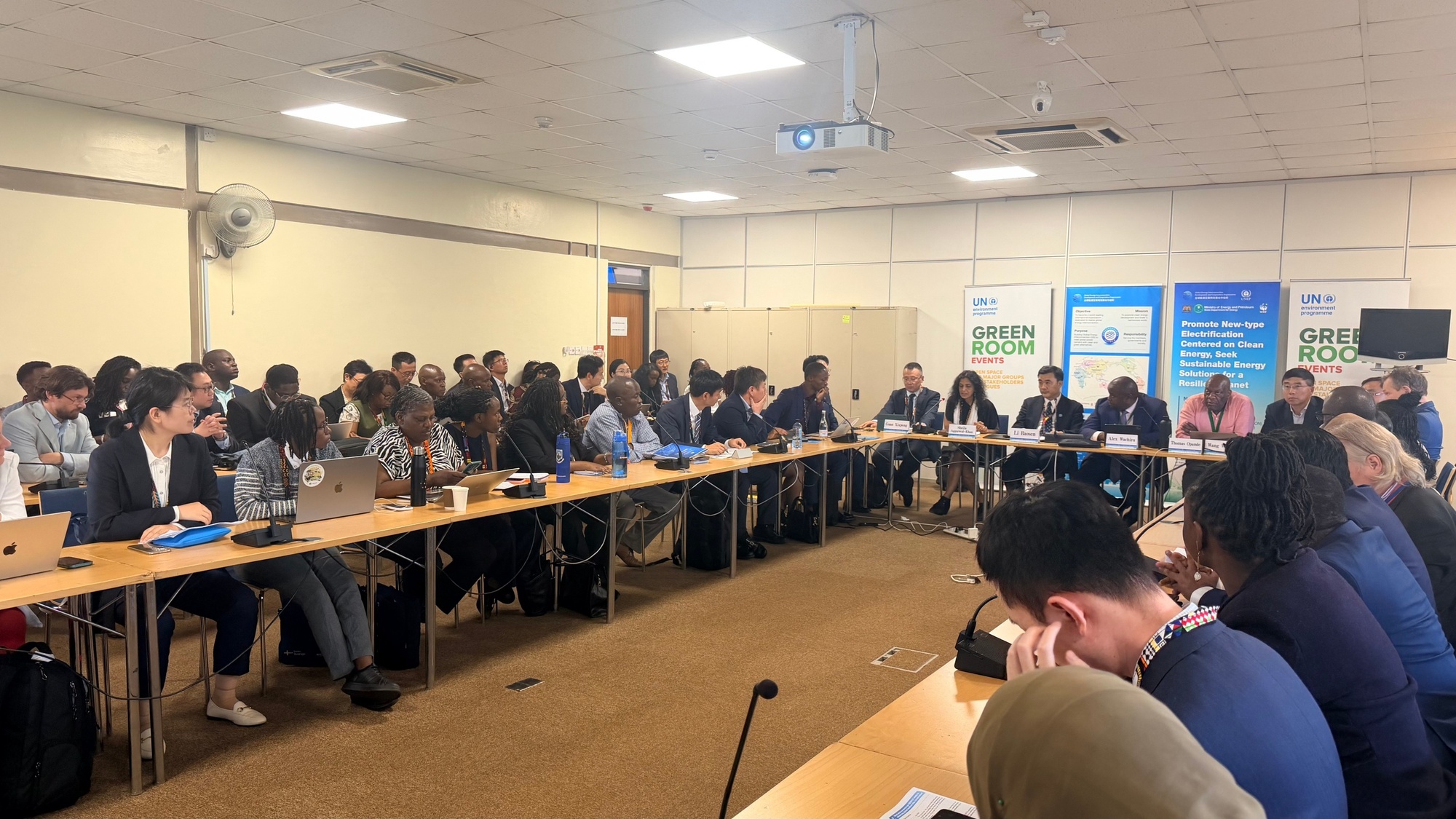
当地时间12月8日,第七届联合国环境大会在肯尼亚首都内罗毕开幕。当日举行的一场边会活动聚焦"推动以清洁能源为核心的新型电气化,为韧性地球 寻求可持续能源解决方案"主题,强调发挥全球能源互联网平台优势,为各国落实减排承诺、保护生态提供系统方案。 全球能源互联网主题边会在第七届联合国环境大会期间举行00:0003:21 活动由全球能源互联网发展合作组织(以下简称"合作组织")主办,联合国环境署、世界自然基金会、肯尼亚能源部等机构合办,吸引了来自联合国机 构、政府、国际组织负责人等全球30多家机构的100多名嘉宾现场参加。 活动期间,来自南方国家、国网浙江电力、远东智慧能源等机构的专家,围绕倡议十周年成效、绿色金融等议题分享见解,强调通过区域与全球合作推 进能源转型与可持续发展。 联合国环境大会作为全球环境领域最高级别决策机构,汇聚全部193个联合国会员国,每两年召开一次会议,负责制定全球环境议程、提供宏观政策指 引,并制定应对新兴环境挑战的政策对策。今年的大会聚焦探讨从应对野火到解决人工智能对环境影响等一系列问题,核心议程之一是审议通过《2026- 2029年中期战略》。 作为联合国环境大会观察员,全球能源互联网 ...

江南农商银行:以金融绿笔绘就高质量发展生态长卷
Xin Hua Ri Bao· 2025-12-09 20:57
Core Viewpoint - Jiangnan Rural Commercial Bank is pioneering green finance as a core strategy to support the national strategy of integrated development in the Yangtze River Delta, focusing on top-level design, innovative financial services, and low-carbon operations [1] Group 1: Strategic Foundation for Green Development - The bank has established a systematic green finance support system, forming a governance loop through top-level planning and departmental collaboration [2] - A green finance working leadership group was formed in 2017, with a dedicated committee in the board to review major strategies [2] - Green loans have seen a compound annual growth rate of 94% over the past three years, with a balance of 35.879 billion yuan as of September 2025, an increase of 10.087 billion yuan from the beginning of the year [2] Group 2: Innovative Solutions for Transformation Needs - Jiangnan Rural Commercial Bank addresses financing challenges in traditional industry transformation through product innovation, exemplified by a quick approval of a 20 million yuan loan for a chemical materials company to reduce energy consumption by over 10% [3] - The bank has developed a comprehensive financial support system for transformation, including innovative products like "Evergreen Loan" and "Smart Transformation Loan" that link environmental performance and financial services [3] Group 3: Building a Green Financial Ecosystem - The bank integrates green finance with technology and inclusive finance, providing 4.885 billion yuan in credit for 14 quality projects, expected to reduce carbon emissions by 1.0875 million tons annually [4] - The "Floating Forest" carbon-inclusive platform on mobile banking allows users to accumulate "carbon energy" through low-carbon behaviors, with 370,000 registered users and a daily peak of 25,000 active users [4] - Jiangnan Rural Commercial Bank's practices demonstrate its commitment to regional economic low-carbon transformation and aim to contribute more "Jiangnan experience" to the financial industry [4]
成都银行 书写“十四五”特色金融答卷
Si Chuan Ri Bao· 2025-12-09 20:35
业绩增长突飞猛进 万亿规模筑牢发展基石 "十四五"期间,成都银行始终以"稳健经营、高质量增长"为导向,交出一份亮眼的经营业绩答 卷,实现历史性跨越,资产规模从2020年末的6524.34亿元跃升至万亿级别,一举成为西部城商行 中首个迈入"万亿俱乐部"的成员。截至2025年9月末,该行总资产规模已达1.38万亿元,较年初增 长10.81%,继续保持稳健的增长步伐。 在资产规模稳步扩张的同时,成都银行的存贷款业务连续4年呈现千亿级增长态势。截至2024年 末,存款总额8859亿元,较上年末新增1054.38亿元,同比增幅13.51%;贷款总额达到7426亿元, 较上年末新增1168.26亿元,同比增幅18.67%,存贷比达到83.8%,资产结构进一步优化。该行持 续加大信贷投放力度,为区域实体经济注入强劲的金融动能。 □金宇杏 "十四五"以来,扎根巴蜀二十七载的成都银行,始终锚定国家战略与区域发展脉搏,坚守"服务地 方经济、服务小微企业、服务城乡居民"初心,深耕科技金融、绿色金融、普惠金融、养老金融、 数字金融"五篇大文章",实现规模、效益、质量三维跃升。其间,该行连续跻身英国《银行 家》"全球银行1000强"与 ...
三晋大地隆新脊——山西上市公司高质量发展核心驱动力观察
Shang Hai Zheng Quan Bao· 2025-12-09 18:54
Group 1 - The article highlights the transformation of Shanxi's economy from a coal-centric model to a more diversified and innovative landscape, driven by emerging technology companies [17][19][20] - Companies like Shanxi Securities, Keda Control, and Jinbo Biotech are leading this shift by focusing on niche markets and innovative solutions, contributing to the optimization of the industrial structure in Shanxi [17][24][40] - The article emphasizes the importance of capital market support for technology-driven enterprises, with initiatives aimed at enhancing the listing and financing opportunities for these companies [23][24][30] Group 2 - Shanxi Securities has established itself as a key player in the local financial market, focusing on serving the needs of regional enterprises and facilitating direct financing exceeding 110 billion yuan during the 14th Five-Year Plan period [33][35] - The company has adopted a differentiated strategy, expanding its service offerings beyond traditional brokerage to include asset management, public funds, and international business [32][34] - In 2024, Shanxi Securities reported a revenue of 3.152 billion yuan and a net profit of 712 million yuan, reflecting a year-on-year growth of 14.86% [35] Group 3 - Jinbo Biotech has achieved significant milestones in the field of recombinant human collagen, holding three class III medical device registration certificates, and is recognized as a leader in this niche market [40][42] - The company has developed a comprehensive product matrix, including freeze-dried fibers, solutions, and gels, and is focused on maintaining its competitive edge through continuous innovation [41][44] - Jinbo Biotech is actively involved in setting international standards for biomedical materials, enhancing its influence in the global market [43] Group 4 - Keda Control is transforming the mining industry through the integration of smart technologies and robotics, aiming to enhance safety and efficiency in coal mining operations [47][48] - The company has developed various robotic solutions for underground inspections and has established itself as a leader in the smart mining sector, being the first to list on the Beijing Stock Exchange [47][49] - Keda Control's revenue from its community charging business has seen exponential growth, indicating a successful diversification strategy beyond traditional mining operations [52][53]



南沙论“绿” 2025明珠湾气候投融资大会勾勒智汇未来新蓝图
Xin Hua Cai Jing· 2025-12-09 16:54
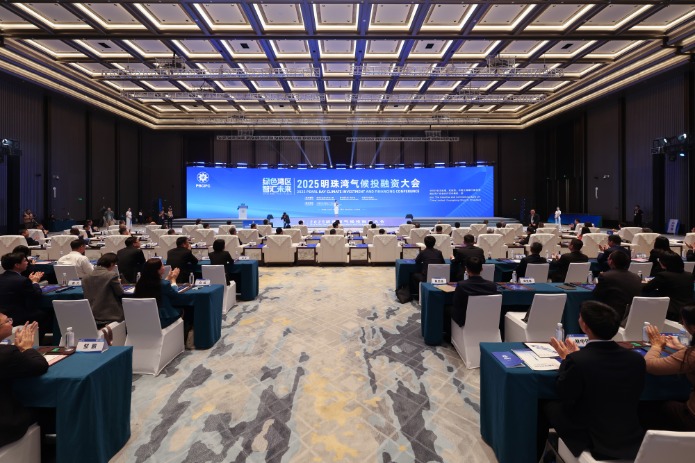
Group 1 - The 2025 Pearl Bay Climate Investment and Financing Conference opened in Nansha, Guangzhou, focusing on "Green Bay Area, Intelligent Future" and gathering global stakeholders to discuss opportunities and pathways for green development [1][2] - Climate financing is identified as a crucial "booster" for climate technology development, emphasizing the need for patient capital, public-private partnerships, and innovative financial products to support the entire lifecycle of climate tech enterprises [2][5] - The conference highlighted the importance of integrating green practices, such as providing electronic meeting materials and reusable document bags, to promote carbon reduction from the details [3][8] Group 2 - Guangdong aims to build an internationally leading beautiful bay area, with Nansha serving as a key financial hub for green finance innovation and linking global low-carbon resources [6][8] - The "Belt and Road" initiative is recognized as a pathway for both economic prosperity and green development, with a focus on enhancing the internal capacity for green development in participating countries [7] - The conference launched several initiatives, including the promotion of innovative financial mechanisms and the release of significant results related to climate change projects, showcasing the commitment to global cooperation in green finance [8]
ESG动态跟踪月报(2025年11月):碳市场新增行业配额方案落地,国际政策分化下绿色金融保持活跃-20251209
CMS· 2025-12-09 15:08
Quantitative Models and Construction Methods Model 1: Carbon Emission Intensity Deviation and Carbon Emission Intensity Coefficient - **Model Name**: Carbon Emission Intensity Deviation and Carbon Emission Intensity Coefficient - **Model Construction Idea**: The model aims to allocate carbon quotas based on the deviation of a company's carbon emission intensity from the industry average, incentivizing companies to reduce emissions. - **Model Construction Process**: - The carbon emission intensity deviation (X) is calculated as the difference between a company's unit product carbon emission and the industry average, divided by the industry average: $$ X = \frac{I - BP}{BP} $$ where \( I \) is the company's unit product carbon emission, and \( BP \) is the industry average. - The carbon emission intensity coefficient (α) is determined based on the deviation (X): $$ \alpha = \begin{cases} -3\% & \text{if } X \leq -20\% \\ 15\% \times X & \text{if } -20\% < X \leq 20\% \\ +3\% & \text{if } X > 20\% \end{cases} $$ - The quota amount (A) is calculated as: $$ A = E \times (1 + \alpha) $$ where \( E \) is the company's verified emissions for the year. - **Model Evaluation**: This model ensures that differences in emission control levels among companies are reflected in their quota allocations, providing positive incentives for emission reduction while maintaining overall quota stability.[8][9][11] Model Backtesting Results - **Carbon Emission Intensity Deviation and Carbon Emission Intensity Coefficient**: - The model's implementation is expected to significantly expand the coverage of the national carbon market, enhancing the price discovery function of carbon prices and reflecting marginal abatement costs more clearly.[12][13] Quantitative Factors and Construction Methods Factor 1: National Certified Voluntary Emission Reduction (CCER) Methodology - **Factor Name**: National Certified Voluntary Emission Reduction (CCER) Methodology - **Factor Construction Idea**: The factor aims to provide a quantifiable method for voluntary emission reduction projects, converting emission reductions into tradable environmental credits. - **Factor Construction Process**: - The methodology includes three key scenarios: offshore oilfield associated gas recovery, onshore gas field test gas recovery, and onshore oilfield low-gas-volume associated gas recovery. - Each scenario has specific mechanisms for emission reduction, monitoring, and accounting requirements. - For example, the offshore oilfield associated gas recovery scenario involves recovering gas that would otherwise be flared, converting it into usable products, and reducing methane emissions. - **Factor Evaluation**: This methodology provides clear technical specifications and market incentives for methane emission reduction projects in the oil and gas industry, supporting the achievement of methane control targets.[14][15] Factor Backtesting Results - **National Certified Voluntary Emission Reduction (CCER) Methodology**: - The implementation of this methodology is expected to lead to the initiation of more associated gas recovery projects, contributing to the achievement of China's dual carbon goals and supporting the green and low-carbon transition of the oil and gas industry.[14][15]






深耕绿色金融“责任田”江苏银行北京分行以创新实践守护绿水青山
Xin Jing Bao· 2025-12-09 14:52
Core Insights - Addressing climate change and promoting green and sustainable development are key societal concerns, with a focus on ecological civilization and green low-carbon development emphasized in national meetings [1] - Jiangsu Bank positions green finance as a core strategy for transformation and development, aiming to build an influential green finance brand [1] - The bank's Beijing branch actively engages in green finance, focusing on energy low-carbon transition, environmental protection, and urban-rural green development through product innovation and service upgrades [1] Group 1: Green Financial Products - The "Green Factory Loan" product allows companies to convert their green performance into lower financing costs, linking loan rates to ESG evaluations [3][4] - Jiangsu Bank's Beijing branch has provided over 1.3 billion yuan in credit support to more than 100 suppliers through its "Green + Supply Chain" financing model, which integrates ESG performance into financing costs [5][6] - The bank has developed customized financial solutions for various industries, including "Photovoltaic Loans" and "Soil Restoration Loans," to support specific green development needs [8] Group 2: Financial Impact and Achievements - As of September 2025, the green credit balance of Jiangsu Bank's Beijing branch reached 16.172 billion yuan, a 40.92% increase from the beginning of the year, serving over 300 green industry clients [9] - The bank has been recognized as a partner in green finance services in Chaoyang District and is the only financial institution to host the district's Energy Conservation Week [9] - Jiangsu Bank aims to guide more resources into the green low-carbon sector, contributing to high-quality development and the achievement of carbon neutrality goals [9]

昆仑信托与中国石油天然气股份有限公司天津销售分公司开展业务交流
Xin Lang Cai Jing· 2025-12-09 13:42
Core Viewpoint - The meeting between Kunlun Trust and the Tianjin Sales Branch of China National Petroleum Corporation (CNPC) focused on enhancing collaboration in project financing and equity investment within the natural gas industry [2][4]. Group 1: Meeting Overview - On November 27, 2025, Kunlun Trust's Vice President Liu Gang led a visit to the Tianjin Sales Branch of CNPC for discussions [2][4]. - The meeting included key representatives from both companies, including Yang Zhengguang, the Chief Financial Officer of the Tianjin Branch [2][4]. Group 2: Areas of Collaboration - Yang Zhengguang welcomed the visit and highlighted opportunities in project financing and equity investment within the natural gas supply chain [2][4]. - Liu Gang emphasized Kunlun Trust's commitment to industrial finance and green financial services, aiming to provide customized comprehensive financial solutions through innovative products and service models [2][4]. Group 3: Participants - Attendees included personnel from the financial asset department, investment department of the Tianjin Branch, as well as Kunlun Trust's New Energy and New Materials Division and Wealth Management Center [2][4].


专访黄杰夫:试水碳衍生品,让绿色金融“走出去”
2 1 Shi Ji Jing Ji Bao Dao· 2025-12-09 11:29
Group 1: Carbon Market Development - The establishment of the "Carbon Emission Trading Market Open Alliance" by China, the EU, and Brazil aims to create a unified global carbon market, enhancing compliance carbon markets and pricing policies to address climate change [1] - The Chinese carbon market has been expanding since its launch in 2021, with 16 brokerages approved by the China Securities Regulatory Commission to participate in spot trading [4] - The trading volume of carbon futures and options is crucial for price discovery and risk management in emission rights markets, as evidenced by successful implementations in the US and EU [2][3] Group 2: Role of Financial Institutions - Financial institutions are eager to participate in the mainland carbon market, indicating a robust interaction between domestic and international markets [1] - The role of brokers in the carbon market is to help companies manage carbon price volatility using regulated financial instruments [4] - The participation of offshore financial institutions in carbon trading through Hong Kong demonstrates a growing interest in Chinese carbon assets [6] Group 3: Green Certificate Market - China's green certificate market has seen rapid growth, with 4.7 billion certificates issued last year, surpassing the total of developed economies [7] - The demand for green certificates is driven by policy requirements, supply chain demands, and increasing corporate social responsibility [7] - Effective pricing and liquidity are essential for the green certificate market to realize its value, necessitating more trading institutions' involvement [7] Group 4: International Integration of Green Certificates - To promote the international recognition of Chinese green certificates, it is essential to enhance communication with foreign counterparts and understand their systems [8] - The matching of "hourly-level" green energy attributes is a future trend, allowing for more precise carbon emission tracking [9] - Successful pilot projects in Hong Kong demonstrate China's capability to align its green certificate system with international standards [10]