
十五五规划

Search documents
春季行情启幕,2025年市场有望完美收官
Sou Hu Cai Jing· 2025-12-29 03:25
Group 1: Policy and Economic Recovery - The macroeconomic policy for 2026 is focused on expanding domestic demand, with a core emphasis on creating a long-term mechanism to boost consumption through supply and demand coordination [2] - The central government aims to stabilize the real estate market by implementing differentiated credit policies and subsidies to support housing demand [2] - The National Development and Reform Commission (NDRC) will dynamically introduce incremental policy tools to stimulate consumption, stabilize investment, and cultivate new economic drivers [2] Group 2: Overseas Liquidity and Capital Flow - The improvement in the overseas liquidity environment is expected to support the A-share market, driven by the easing of global liquidity concerns and the improvement of the China-US interest rate differential [3] - The Federal Reserve's anticipated rate cuts in 2026 are expected to alleviate the pressure on the RMB exchange rate and attract cross-border capital back to China [3] - The valuation discount of RMB assets globally is expected to diminish as the Fed enters a monetary easing cycle, enhancing the attractiveness of Chinese assets to foreign investors [3] Group 3: Industry Transformation and Capital Support - The A-share market is currently experiencing a phase of industrial transformation and an influx of incremental capital, which is expected to optimize market profitability and valuation structures [4] - The "14th Five-Year Plan" emphasizes the construction of a modern industrial system and technological innovation, particularly in emerging sectors like new energy and aerospace [5] - The rapid development of new industries is reflected in the increasing number of new economy companies listed on the A-share market, indicating a shift in profit structures towards high-growth sectors [6] Group 4: Investment Opportunities in Key Sectors - The commercial aerospace sector is expected to lead the market in 2026, driven by policy support, technological advancements, and growing demand [11] - The non-ferrous metals sector is poised for growth due to an improving supply-demand balance, particularly for copper, which is seeing increased demand from AI infrastructure and electric vehicles [12] - The energy storage sector is gaining traction as a core support in the global energy transformation, with Chinese companies leading in global market share [13] Group 5: Market Stability and Investor Confidence - The ongoing reforms in the capital market have significantly improved transparency and investor protection, laying a solid foundation for long-term market health [8][9] - The continuous influx of long-term capital, including from insurance funds and foreign investments, is expected to provide liquidity support and stabilize market fluctuations [7] - The establishment of a robust framework for protecting small investors enhances market fairness and justice, further supporting healthy market development [9] Group 6: Conclusion on Market Outlook - The A-share market is expected to have a solid foundation to stabilize above the 4000-point mark, driven by the leading sectors of commercial aerospace, non-ferrous metals, and energy storage [14] - The anticipated market rally is expected to boost investor sentiment and initiate a new upward cycle in the market [14]
黄党贵:优化业务结构、推进跨境理财、提升投资能力 三措并举助力理财行业高质量发展
Xin Lang Cai Jing· 2025-12-29 03:23
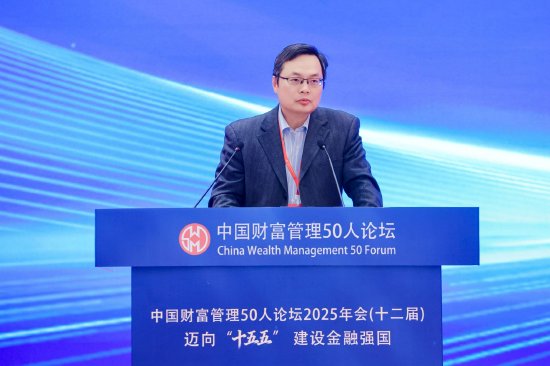
Core Viewpoint - The China Wealth Management 50 Forum 2025 Annual Meeting emphasizes the theme of "Building a Financial Power during the 14th Five-Year Plan" and discusses the restructuring and capability leap of the asset management industry [1][7]. Group 1: Industry Development Significance - Promoting high-quality development in the wealth management industry is a strong measure to meet the wealth preservation and appreciation needs of residents, aligning with the strategy to expand domestic demand [4][10]. - The wealth management industry is crucial for enhancing economic and financial adaptability, supporting the construction of a modern industrial system, and facilitating the coordination of direct and indirect financing [4][11]. - The opening up of the wealth management sector to international competition is necessary, with the 14th Five-Year Plan highlighting the need to improve the openness of the RMB capital account and attract foreign investment [4][11]. Group 2: Industry Transformation Needs - Wealth management companies need to accelerate their transformation towards specialization and marketization to better align with the high-quality development requirements of the 14th Five-Year Plan [5][12]. - The industry should act as a bridge linking investment and financing more closely, focusing on direct and equity investments, which are currently underrepresented in many firms' portfolios [5][12]. - There is a need to enhance the layout of medium- to long-term products and develop differentiated services to meet the stable return expectations of clients, which will help in controlling market volatility [6][12]. Group 3: Recommendations for High-Quality Development - Companies should optimize their business structures and encourage the development of medium- to long-term products [6][13]. - There should be an orderly promotion of cross-border wealth management business to support a high-level opening-up strategy [6][13]. - Companies need to enhance their investment capabilities and diversify their product offerings to better serve the market [6][13].

钢材年报:政策主导方向,需求决定空间
Fo Shan Jin Kong Qi Huo· 2025-12-29 02:53
Report Industry Investment Rating No relevant content provided. Core Viewpoints of the Report - The steel market in 2026 is expected to revolve around "demand structure change", "supply regulation", and "cost support". The market will show a weak and volatile trend with limited upside and downside space, restricted by demand increment on the upside and supported by cost and supply regulation on the downside [1][2]. - Policy will significantly influence the end - use flow of steel. Coil demand may maintain a certain growth rate, infrastructure will provide a cushion, while the real - estate construction sector will remain weak [1]. - Supply regulation aims to guide steel towards high - value - added products, and steel mills face the challenge of reducing production while maintaining profits in the over - capacity stage. Supply is expected to slightly decline [2]. - Cost support depends on the "anti - involution" trend in the coal industry and the price support of iron ore. Iron ore prices may decline in 2026 [2]. Summary by Directory 1. Market Review 1.1 Three Keywords - **Weak demand for finished products**: In 2025, real - estate construction demand was weak, and infrastructure's demand - increasing effect on building materials was limited. Although manufacturing and exports provided some support, they couldn't make up for the real - estate demand gap, restricting the upside of steel, iron ore, and coking coal prices [7]. - **Anti - involution policy**: It dominated the second - half trend of the black - sector market, especially in the coal sector. Policy changes led to significant price fluctuations in coking coal and coke [8]. - **Tariff trade war**: Sino - US trade frictions mainly affected the indirect export of coils, intensifying market fluctuations in the black sector [8]. 1.2 Policy Review - Steel - related policies in 2025 focused on "promoting upgrading + stabilizing growth + anti - involution", while coal - related policies emphasized "anti - involution + safety + supply guarantee + clean and efficient utilization". In 2026, steel policies will continue to promote high - end development and "anti - involution" implementation needs attention [11][12]. 1.3 Market Recap - **January - February**: Before and after the Spring Festival, demand was weak. Steel winter - storage willingness was low. After the festival, construction resumption was delayed, and steel prices were under pressure. Coal prices were lowered, while iron ore prices were firm due to shipping disruptions [14]. - **March - May**: The domestic demand peak season was below expectations, and export trade frictions intensified. Steel prices dropped, and coal prices declined significantly, while iron ore prices were relatively stable [15]. - **June - July**: Coal supply tightened, and the "anti - involution" policy pushed the black - sector market to rebound. Steel prices increased under cost support [16]. - **August - October**: The "anti - involution" policy expectations fluctuated, and the "Golden September and Silver October" expectations were disappointed. Steel continued to accumulate inventory, and steel mill profits were compressed [17]. - **November - December**: Coal prices fluctuated due to supply - side disturbances. Steel supply, demand, and inventory were all weak, with limited fundamental contradictions [18]. 2. Fundamental Analysis 2.1 Steel Terminal Demand - **Real estate**: In 2025, real - estate investment, sales, and other data continued to decline. Policies aimed at stabilizing the market, but property sales and investment are expected to decline in 2026, reducing steel demand in real - estate construction [20][28]. - **Infrastructure**: By October 2025, infrastructure investment turned negative year - on - year due to local fiscal constraints and the use of special bonds for debt repayment. In 2026, infrastructure investment is expected to have limited growth [29][39]. - **Manufacturing and indirect export**: Manufacturing's demand for steel increased, driven by the "Two New" policies. However, due to consumption front - loading, the growth rate of steel demand in manufacturing may slow down in 2026 [40][49]. - **Direct export**: As of November 2025, steel exports increased, mainly through "price - for - volume" strategy. In 2026, exports are expected to increase slightly, and exports will develop towards high - value - added and compliant products [54][58]. - **Steel demand forecast**: In 2026, the total demand for crude steel is expected to be 9.84 billion tons, a slight decrease from 2025. Different scenarios (optimistic, neutral, and pessimistic) have different demand forecasts [59][60]. 2.2 Steel Supply - In 2025, steel supply was in a situation of high capacity and weak demand. Crude steel and pig iron production decreased, while steel production increased. Supply is expected to be adjusted according to policy and profit changes in 2026 [62]. 2.3 Steel Inventory - In 2025, the inventory pressure of rebar was relatively low, with high - level inventory in winter - storage and then continuous de - stocking. The hot - rolled coil inventory increased in the second half of the year and had relatively high pressure [69][72]. 2.4 Steel Supply - Demand Summary - Supply is mainly affected by policy regulation and steel mill profits. In 2026, crude steel supply is expected to tighten, and different supply - demand scenarios are predicted [73]. 3. Outlook for 2026 3.1 Market Outlook - The steel market in 2026 will be influenced by demand structure change, supply regulation, and cost support. It is expected to show a weak and volatile trend [74][75]. 3.2 Strategy Recommendations - **Single - side trading**: Focus on short - selling at high points in the range [3]. - **Arbitrage**: Consider spread trading at the upper and lower limits of the rebar - hot - rolled coil spread, and pay attention to the opportunity of going long on rebar/hot - rolled coil and short on iron ore [3]. - **Options**: Sell call options at the upper limit of the price range [3].
十天七签!面向十五五,华夏银行扩容“朋友圈”
Jin Rong Jie Zi Xun· 2025-12-29 02:02
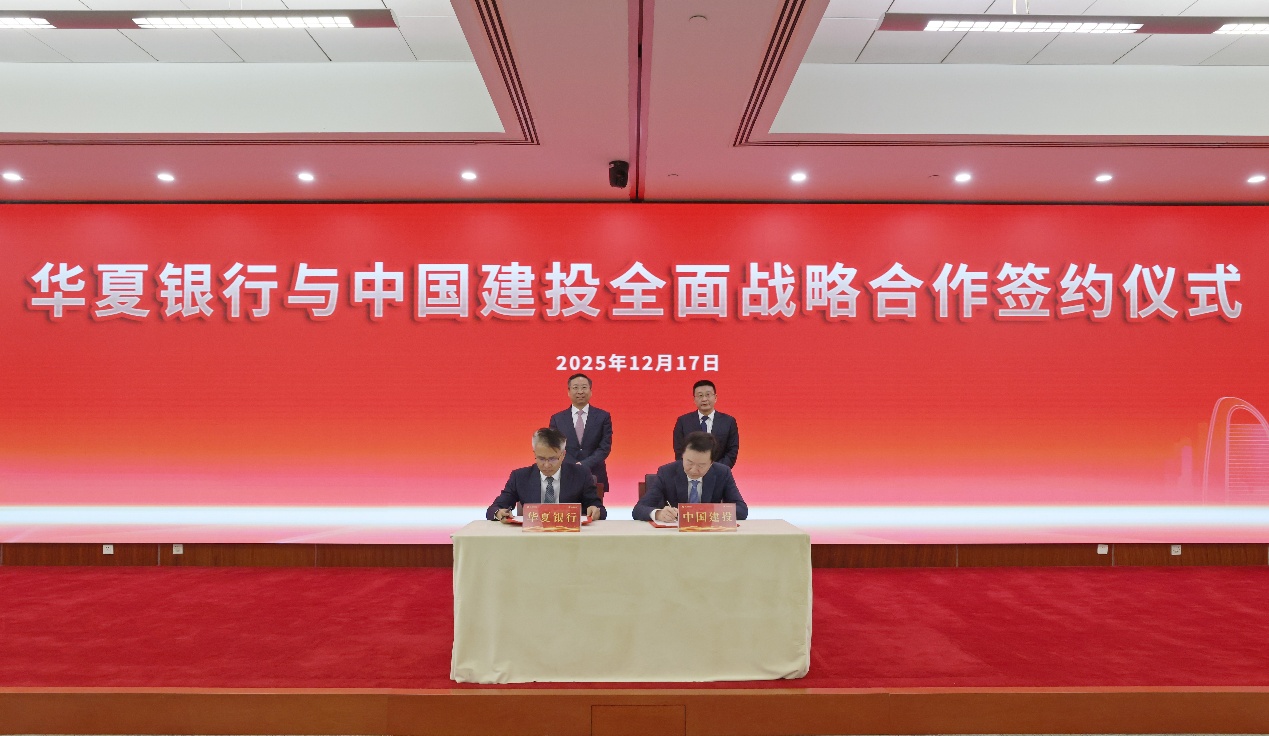
Core Insights - Huaxia Bank has signed strategic cooperation agreements with seven major enterprises in Beijing, indicating a strong commitment to its "15th Five-Year Plan" and the "Jinghua Action" initiative, aimed at enhancing financial services for national strategies and promoting high-quality development [1][12] Group 1: Strategic Partnerships - The seven signed enterprises span key sectors such as technological innovation, high-end manufacturing, infrastructure construction, and financial investment, reflecting Huaxia Bank's focus on future development directions [1] - Collaborations with China Electronics and Beijing Machinery & Electrical include support for the information industry and high-end equipment manufacturing, showcasing Huaxia Bank's commitment to developing a technology finance specialty [1][9] - Partnerships with Beijing Urban Construction Group and Capital Real Estate directly support urban renewal and the enhancement of Beijing's "four center" functions, while cooperation with Beijing Supply and Marketing Cooperative addresses urban-rural integration and livelihood security [1] Group 2: Strategic Logic - The first strategic logic is the "home court advantage," as four of the seven signed enterprises are key state-owned enterprises or important institutions in Beijing, emphasizing Huaxia Bank's role as a financial institution serving the capital's development [9] - The second logic is the "specialized finance" approach, with a focus on technology and green finance, evident in support for smart manufacturing upgrades and green building projects [9][10] - The third logic is the "ecosystem construction," with all collaborations emphasizing "ecological integration" and "deep integration," as Huaxia Bank aims to build a collaborative industrial financial ecosystem [10][11] Group 3: Future Outlook - The signing spree coincides with the recent Central Economic Work Conference and the initiation of the "15th Five-Year Plan," positioning Huaxia Bank as a proactive player in aligning with national strategies and carving out its development path [12] - The bank aims to transform from a simple fund provider to a resource connector and ecosystem builder, enhancing its role in supporting the real economy [11]

全市厅局级领导干部学习贯彻党的二十届四中全会精神集中轮训班开班:统一思想 振奋精神,努力把“十五五”发展蓝图变成生动实践,盛阅春作辅导报告 熊征宇主持
Chang Jiang Ri Bao· 2025-12-29 01:05
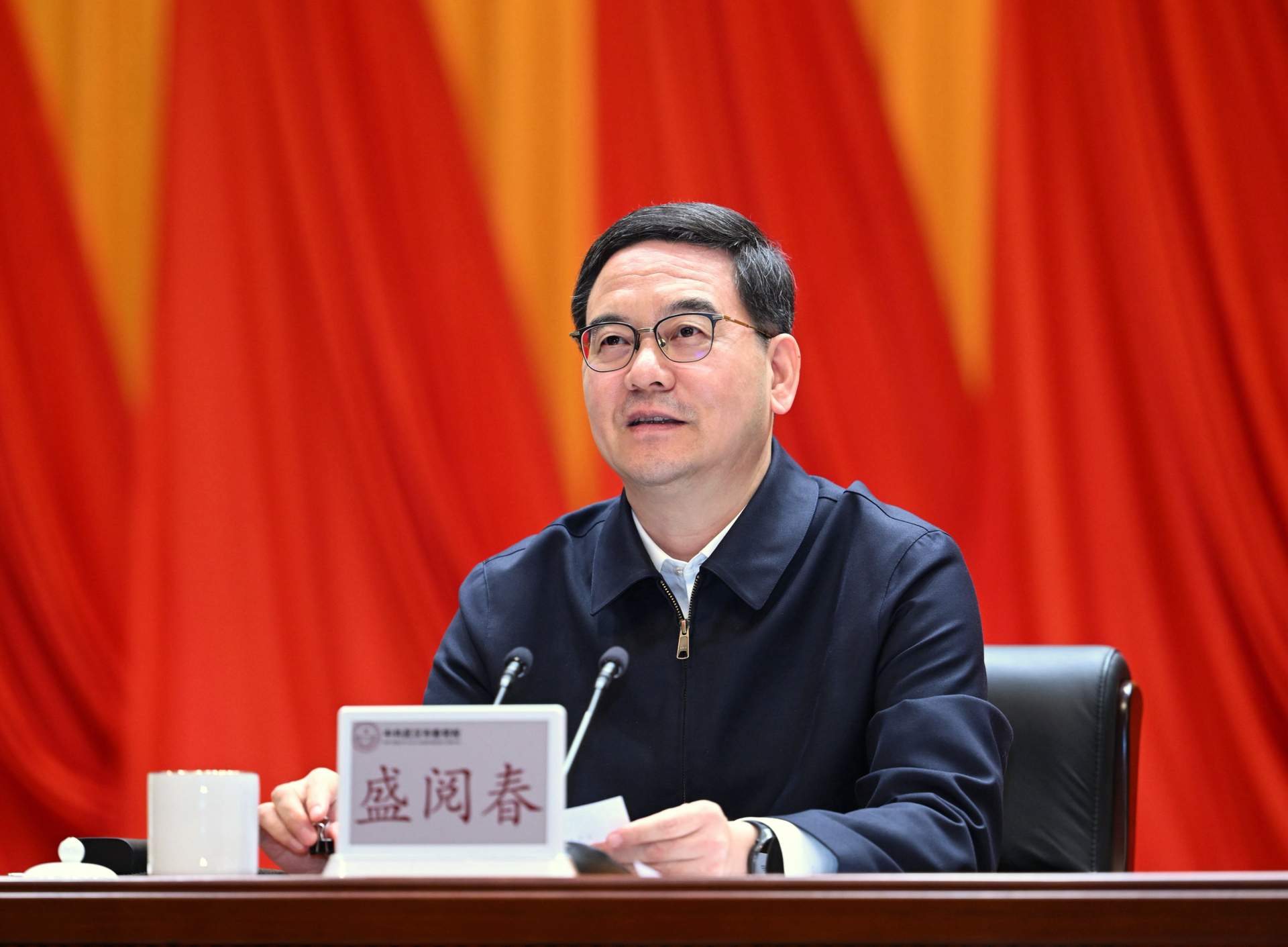
Core Viewpoint - The article emphasizes the importance of implementing the spirit of the 20th Central Committee of the Communist Party of China, focusing on the development blueprint for the "15th Five-Year Plan" and the goal of building a modernized Wuhan as a national central city [4][7]. Group 1: Key Objectives and Strategies - The 20th Central Committee has provided strategic guidance for advancing Chinese-style modernization, addressing fundamental, overall, and directional issues related to the "15th Five-Year Plan" [4]. - The city aims to accelerate the construction of a national central city and modernize Wuhan, with specific goals including the establishment of "five centers" to enhance its core functions [7]. - The focus is on high-quality development, regional support, industrial support, and enterprise support to elevate the city's development capabilities [8]. Group 2: Implementation and Governance - Emphasis is placed on transforming learning outcomes into practical solutions for development challenges, ensuring that the spirit of the 20th Central Committee is deeply understood and applied [5][9]. - The city plans to enhance urban renewal efforts and improve governance to promote high-quality development and ensure safety and stability [8]. - The leadership is tasked with fostering a proactive atmosphere for achieving the outlined goals, ensuring that efforts reach grassroots levels for effective implementation [9].
擘画“十五五”高质量发展新蓝图
Xin Lang Cai Jing· 2025-12-29 00:38
Core Viewpoint - The Nanning Municipal Committee held a press conference to introduce the recommendations for the 15th Five-Year Plan, emphasizing the importance of high-quality development and the need to address complex external environments and reform challenges [1][2]. Group 1: Recommendations Overview - The recommendations are guided by Xi Jinping's Thought on Socialism with Chinese Characteristics for a New Era and align with the strategic arrangements made at the 20th National Congress of the Communist Party of China [2]. - The document consists of 16 parts and 66 articles, divided into three main sections: general discussion, specific discussions, and guarantees [2]. - The first section highlights major achievements during the 14th Five-Year Plan and outlines the guiding ideology, main ideas, and objectives for the 15th Five-Year Plan [2][3]. Group 2: Strategic Focus Areas - The second section addresses key issues for long-term development, outlining strategic tasks and major initiatives for the 15th Five-Year Plan, including enhancing the capital's functions, expanding domestic demand, and promoting green development [2][3]. - Specific focus areas include transportation hubs, technological innovation, social welfare, artificial intelligence, urban construction, cultural development, rural revitalization, and economic system reforms [2][3]. Group 3: Implementation and Leadership - The third section emphasizes the importance of maintaining centralized leadership from the Party, promoting socialist democracy and rule of law, and fostering a sense of community among the Chinese nation [2][3]. - The recommendations aim to unify thoughts, build consensus, and mobilize the entire city to create a modernized people’s city, contributing significantly to the modernization of Guangxi [3].
支部建在“车轮上” 发展融入大循环
Xin Lang Cai Jing· 2025-12-28 23:34
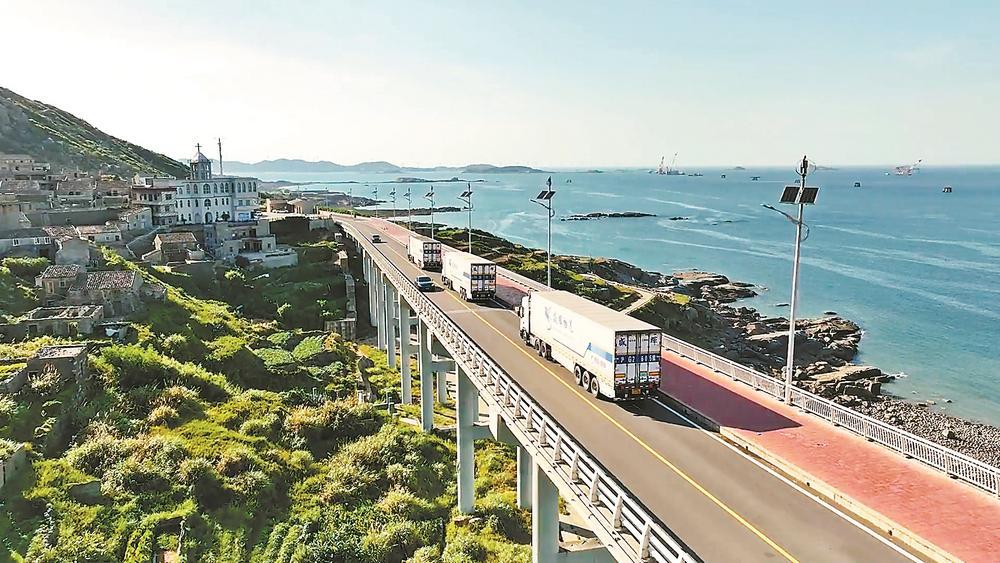
Core Viewpoint - The logistics industry is positioned as a crucial support for strengthening domestic circulation and enhancing the core competitiveness of the industry, with new development opportunities arising from the "14th Five-Year Plan" [4][10]. Group 1: Logistics Industry Development - The logistics sector is experiencing a peak in activity as the year-end approaches, with efficient operations being emphasized to ensure timely delivery of goods [2][3]. - The "14th Five-Year Plan" highlights the importance of logistics in promoting domestic circulation and calls for improvements in service capabilities and integration within the industry [4][8]. - The continuous enhancement of China's modern transportation and logistics system has significantly improved transportation efficiency, with time savings being described as "unimaginable" compared to previous years [4][9]. Group 2: Corporate Initiatives and Employee Welfare - The company has established "Driver's Homes" equipped with various facilities to support long-distance drivers, enhancing their working conditions and overall well-being [5][6]. - The company actively engages in social responsibility by caring for its employees, particularly truck drivers, and fostering a sense of community and respect within the workforce [7][8]. - The integration of party-building initiatives within the company aims to strengthen organizational cohesion and enhance operational effectiveness, with a focus on training and support for employees [8][10]. Group 3: Future Directions and Innovations - The company plans to expand its logistics network and capabilities, focusing on key operational areas and exploring cross-border logistics opportunities [8][9]. - There is a commitment to transitioning towards green and low-carbon logistics, with investments in clean energy vehicles and optimization of routes to reduce operational costs [9][10]. - The company aims to leverage digital platforms to enhance organizational participation and integrate party-building efforts into new business areas, ensuring that the party's influence extends alongside business growth [8][10].
在思想引领上下实功,在优化服务上出实招
Xin Lang Cai Jing· 2025-12-28 23:33
Group 1 - The meeting emphasized the need for the Xinjiang Federation of Industry and Commerce to promote the "two healthy" initiatives to a new level by strengthening ideological foundations and enhancing the development capabilities of enterprises [1][2] - The conference highlighted the importance of aligning with the central government's economic strategies and fostering confidence among private enterprises to seize market opportunities and innovate [1][2] - The meeting called for improved services to address challenges faced by enterprises, enhancing governance levels, and ensuring effective implementation of policies to support high-quality development of private enterprises [2] Group 2 - The conference approved personnel matters and included representatives from grassroots federations, chambers of commerce, and private enterprises for work exchange discussions [3]
全省发展和改革工作会议在宁召开
Xin Hua Ri Bao· 2025-12-28 23:32
会议强调,明年是"十五五"开局之年,要深刻领会"十五五"时期经济社会发展的主线和目标任务, 扎实做好明年发展改革重点工作。要编制实施好"十五五"规划《纲要》。要用足用好投资政策工具,抓 好重点领域投资,要深入挖掘消费潜能,要加快培育发展新动能,要推进深层次改革和高水平开放,要 以碳达峰碳中和为牵引,推动经济社会发展全面绿色转型,要深入实施区域协调发展重点任务,落实国 家重大战略,要加大保障和改善民生力度,多渠道促进就业增收,并更好统筹发展和安全。 12月26日,2025年全省发展和改革工作会议在南京召开。会议全面总结2025年全省发展改革工作的 进展成效,研究谋划2026年发展改革重点任务。 记者从会上获悉,今年以来,全省发展改革系统扎实推进发展改革各项工作,圆满完成了年度主要 目标任务。全省发展改革系统着力抓好政策落实,主动融入和服务构建新发展格局,超前推出稳外贸稳 就业、提振消费等政策措施,认真谋划"十五五"重大任务举措,加快重大项目建设,省重大项目预计完 成投资超7200亿元。同时,做大做强做优重点产业,加快发展新质生产力,优化提升传统产业,培育壮 大新兴产业,大力发展数字经济,加快服务业提质增效,推动 ...
长安期货:钢材价格下行空间有限,双焦价格或稳中有升
Qi Huo Ri Bao· 2025-12-28 23:21
Group 1 - The core viewpoint is that the dual焦 (coke and coking coal) prices are expected to steadily rise by 2026 due to policy support and supply constraints, while the steel market is transitioning to a dynamic balance, with price stability anticipated [1] Group 2 - The steel industry's main contradiction this year is that the decline in demand is greater than the decline in production, leading to a continuous decrease in crude steel apparent consumption for the fifth consecutive year [2] - The real estate sector is undergoing deep adjustments, with infrastructure investment growth turning negative and manufacturing investment growth dropping below 3%, which impacts overall steel demand [2] - Despite the pressure on demand, steel mill profits are expected to recover significantly in 2025 due to raw material cost reductions [2] - The demand structure for steel is expected to continue adjusting in 2026, with limited incremental demand from real estate policies focused on "digesting stock" and building "good houses" [2] - Manufacturing and exports are anticipated to support steel demand, with the "14th Five-Year Plan" emphasizing the construction of a strong manufacturing nation [2] - Although steel demand remains in a downward trend, the space for further decline is limited [2] Group 3 - The dual焦 market is currently in a "tight balance" state, with both coking enterprises and steel mills maintaining low inventory strategies [3] - Domestic coal prices have shown a downward trend, with a significant decrease in coking coal imports, which fell by 4.8% year-on-year [3] - The demand structure for coal is undergoing profound changes, with a slight increase in thermal coal consumption [3] - Coking coal and coke prices are expected to experience a "tight balance" in supply and demand, with prices likely to show strong fluctuations due to policy support and supply contraction [3] - The profitability of coking enterprises is constrained by excess capacity and limited bargaining power, leading to ongoing profit competition among steel enterprises [3]