经济增长

Search documents
不要再情绪化看待印度了
3 6 Ke· 2025-06-12 01:55
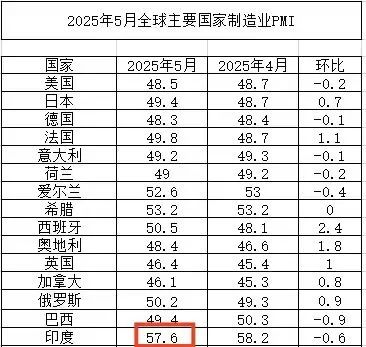
Economic Growth - India's economy grew by 7.4% in Q1 2023, marking the highest quarterly growth in a year, up from 6.2% in the previous quarter [1] - The country is positioned to benefit from supply chain shifts due to US-China trade tensions, with May's new export orders reaching a three-year high [1][3] Manufacturing Sector - India's manufacturing PMI in May was 57.6, indicating strong expansion despite a slight month-on-month decline [2] - The automotive sector is also thriving, with vehicle exports projected to reach 5.36 million in FY 2024/25, a 19.2% increase from the previous year [6] Technology Transfer and Innovation - Over the past decade, India has successfully captured technology transfers across various sectors, including smartphones and pharmaceuticals, leading to significant industrial upgrades [3][4] - The country has transitioned from merely assembling products to developing local manufacturing capabilities, as evidenced by a rise in smartphone exports from $2.1 billion in 2018 to $11 billion in 2022 [4] Government Initiatives - The Indian government has implemented policies like "Make in India" and the Production-Linked Incentive (PLI) scheme to encourage local manufacturing and technology adoption [9][10] - These initiatives have bolstered foreign investment confidence and facilitated local enterprise participation in high-tech sectors [10] Workforce and Infrastructure - India's large population provides a significant labor force and consumer market, but challenges remain in literacy and labor participation rates, which are below 50% [21][22] - Infrastructure issues, such as inadequate roads and power supply, continue to hinder manufacturing growth [21][22] Future Outlook - India's economic growth is currently concentrated in urban and IT sectors, necessitating broader structural improvements in income and consumption to sustain long-term growth [22][23] - The country is at a pivotal point in the global manufacturing landscape, with the potential to become a major economic power if it continues to reform and upgrade its technological and human resources [23]

法国央行:预计2026年的经济增长将为1.0%(此前预估为1.2%),2027年则为1.2%(此前预估为1.3%)。
news flash· 2025-06-11 18:08
法国央行:预计2026年的经济增长将为1.0%(此前预估为1.2%),2027年则为1.2%(此前预估为 1.3%)。 ...
债市基本面高频数据跟踪:钢材转向累库:2025年6月第1周
SINOLINK SECURITIES· 2025-06-11 13:53
1. Report Industry Investment Rating No relevant content provided. 2. Core Viewpoints of the Report - Economic growth shows that steel has shifted to inventory accumulation, with seasonal recovery in power plant daily consumption and mixed trends in various industries' production and demand [2][3]. - Inflation indicates that the agricultural product price index is stronger than the same period last year, with weak pig prices in CPI and a continuous rebound in oil prices in PPI [4]. 3. Summary by Relevant Catalogs 3.1 Economic Growth: Steel Shifts to Inventory Accumulation 3.1.1 Production: Seasonal Recovery in Power Plant Daily Consumption - Power plant daily consumption has a seasonal recovery. On June 10, the average daily consumption of 6 major power - generating groups was 736,000 tons, up 1.4% from June 3; on June 6, the daily consumption of power plants in eight southern provinces was 1.718 million tons, up 1.6% from May 29 [5][12]. - The blast furnace operating rate has a mild decline. On June 6, the national blast furnace operating rate was 83.5%, down 0.3 percentage points from May 30; the capacity utilization rate was 90.6%, down 0.1 percentage points from May 30. However, the blast furnace operating rate of Tangshan steel mills was 95.2% on June 6, up 1.7 percentage points from May 30 [5][18]. - The tire operating rate has a second decline. On June 5, the operating rate of truck all - steel tires was 63.5%, down 1.3 percentage points from May 29; the operating rate of car semi - steel tires was 73.9%, down 4.4 percentage points from May 29. The loom operating rate in Jiangsu and Zhejiang has declined for two consecutive weeks [5][21]. 3.1.2 Demand: Steel Shifts to Inventory Accumulation - The property market sales show a continuous improvement trend month - on - month. From June 1 - 10, the average daily sales area of commercial housing in 30 large and medium - sized cities was 208,000 square meters, up 13.0% from the same period in May, but down compared with the same periods in previous years [5][25]. - The auto market retail is stable and strong. In June, retail sales increased by 19% year - on - year, and wholesale sales increased by 10% year - on - year [5][29]. - Steel prices have a limited rebound. On June 10, the prices of rebar, wire rod, hot - rolled coil, and cold - rolled coil increased by 0.6%, 0.8%, 0.6%, and 0.1% respectively compared with June 3. Steel has shifted to inventory accumulation, with the inventory of five major steel products reaching 935,900 tons on June 6, up 3,400 tons from May 30 [5][35]. - Cement prices have a partial rebound. On June 10, the national cement price index increased by 0.6% compared with June 3, with prices in East China and the Yangtze River region rising by 2.1% and 2.3% respectively [5][36]. - Glass prices have a slight rebound. On June 10, the active glass futures contract price was 996.0 yuan/ton, up 3.3% from June 3 [5][41]. - The container shipping freight rate index has a continuous upward trend. On June 6, the CCFI index increased by 3.3% compared with May 30, and the SCFI index increased by 8.1% [5][44]. 3.2 Inflation: Agricultural Product Price Index Stronger than the Same Period Last Year 3.2.1 CPI: Weak Pig Prices - Pig prices are running weakly. On June 10, the average wholesale price of pork was 20.3 yuan/kg, down 1.4% from June 3. The month - on - month price has turned down [5][52]. - The agricultural product price index is stronger than the same period last year. On June 10, the agricultural product wholesale price index decreased by 0.6% compared with June 3. Different agricultural products have different price trends [5][57]. 3.2.2 PPI: Continuous Rebound in Oil Prices - Oil prices have a continuous rebound. On June 10, the spot prices of Brent and WTI crude oil were 69.9 and 65.0 dollars/barrel respectively, up 2.6% and 2.5% respectively from the previous week [5][60]. - Copper and aluminum prices have increased. On June 10, the LME 3 - month copper and aluminum prices increased by 1.9% and 1.2% respectively compared with June 3. The decline in the domestic commodity index month - on - month has narrowed [5][64]. - Industrial product prices have generally weakened. Since June, most industrial product prices have shown a year - on - year decline, with the decline in coking coal and coke prices being more prominent [66].
经济学家:CPI较预期温和上涨 进口食品价格涨幅明显
news flash· 2025-06-11 13:35
金十数据6月11日讯,Annex Wealth Management首席经济学家Brian Jacobsen表示,本次CPI数据远较预 期温和。部分进口食品价格涨幅明显,如香蕉价格上涨3.3%,玩具价格上涨2.2%,但鸡蛋价格却出现 2.7%价格下跌。贸易政策若能稍趋稳定,将极大有助于避免通胀失控。这也再次证明,为何美联储可 能将风险关注重点从通胀威胁转向经济增长威胁。 经济学家:CPI较预期温和上涨 进口食品价格涨幅明显 ...
欧洲央行管委马赫鲁夫:经济增长面临下行风险,通胀风险则呈现出混合态势;未来走势将高度取决于关税政策的最终安排,尤其是对报复措施的反应。
news flash· 2025-06-11 11:33
欧洲央行管委马赫鲁夫:经济增长面临下行风险,通胀风险则呈现出混合态势;未来走势将高度取决于 关税政策的最终安排,尤其是对报复措施的反应。 ...
摩洛哥2024年经济增长3.8%
Shang Wu Bu Wang Zhan· 2025-06-10 14:53
Economic Growth - Morocco's economy is projected to grow by 3.8% in 2024, slightly higher than the 3.7% growth in 2023, driven mainly by domestic demand while facing inflation and increased financing needs [1] - The GDP growth at current prices is expected to be 7.9% in 2024, down from 11% in 2023, indicating a reduction in inflationary pressures [1] Sector Performance - The primary sector is underperforming, with an overall value added decline of 4.5%, agricultural output shrinking by 4.8%, and fisheries growth slowing from 6.9% in 2023 to 2.6% in 2024 [1] - The secondary sector shows strong growth, with value added increasing by 4.2% in 2024 compared to only 0.8% in 2023, driven by mining (+13%), construction (+5%), manufacturing (+3.3%), and utilities (+2.6%) [1] - The tertiary sector remains active but experiences a slight slowdown, with growth rates decreasing from 5% in 2023 to 4.6% in 2024, although sectors like transportation and storage (+7.4%) and financial services (+7.3%) are accelerating [1] Income and Savings - National disposable income is expected to grow by 7.7% in 2024, down from 10.2% in 2023, while the national savings rate rises to 28.9% of GDP, compared to 28% in 2023 [2] - The investment rate is projected to be 30.1% of GDP in 2024, up from 29% in 2023, leading to an increase in the financing gap from 1% of GDP to 1.2% [2]
英国将加大政府投资推动经济增长
Xin Hua Cai Jing· 2025-06-10 06:42
Group 1: Government Investment Plans - The UK government plans to increase investment in various sectors to stimulate private investment and economic growth amid current hesitance and slow growth [1][3] - A total of £15.6 billion will be allocated over the next five years to improve urban transport infrastructure, marking the largest infrastructure investment in UK history [1][4] - An investment of £86 billion will be made to accelerate growth in strategic industries such as technology, life sciences, advanced manufacturing, and defense [2][4] Group 2: Education and Defense Investments - The UK government will invest £18.7 million in AI training for students, with £2.4 million designated for flagship projects to ensure every secondary school student can acquire new AI skills within three years [2] - Defense spending is set to increase from 2.3% to 2.5% of GDP by 2027, resulting in an annual increase of approximately £6 billion [2] Group 3: Economic Context and Political Response - The investment plan is a response to the current hesitance in private investment due to increased national insurance tax rates and minimum wage standards, which have dampened entrepreneurial enthusiasm [3][4] - The plan also addresses the dissatisfaction reflected in recent local elections, where the Reform Party gained traction against traditional parties, indicating public discontent with the current government's economic performance [4] Group 4: Regional Economic Balance - The investment strategy aims to reduce regional economic disparities, with specific funding directed to areas outside London, such as Greater Manchester and West Midlands, to promote balanced regional growth [5][6] - The focus on regional development is crucial as economic analysis suggests that living cost pressures will further exacerbate regional economic divides, with London remaining a key economic hub [4][5]
金属周报 | 关税与非农扰动,金铜冲高回落、白银大幅上行
对冲研投· 2025-06-09 12:05
Group 1 - The market sentiment was initially "risk on" due to a call between the highest leaders of China and the US, leading to a price rebound, but concerns over economic growth resurfaced after the non-farm payroll data, causing prices to retreat [1][3]. - Gold prices experienced fluctuations while silver saw a significant increase, with COMEX gold rising by 0.54% and silver by 9.24% last week [2][20]. - The COMEX copper price showed a rebound from Monday to Thursday, peaking on Thursday before a pullback on Friday, influenced by concerns over increased tariffs on steel and aluminum [3][5]. Group 2 - The geopolitical tensions from the Russia-Ukraine conflict supported precious metal prices, while the call between the US and China leaders eased macroeconomic sentiment, boosting market risk appetite [4][20]. - Following the release of non-farm payroll data that exceeded market expectations but had a significant downward revision of previous values, concerns about the US economy led to a rise in US Treasury yields, putting pressure on gold prices [4][20]. - The COMEX copper price curve shifted upward, indicating a contango structure, with copper inventories nearing 200,000 tons, suggesting potential for further accumulation in US copper stocks [5][6]. Group 3 - The copper concentrate TC weekly index was stable, with trade prices for clean copper concentrate remaining in a narrow range, indicating limited market activity [7]. - Domestic refined copper social inventory increased, reflecting a rise in imports and limited downstream consumption, with expectations of a decrease in inventory in the coming week [13][10]. - The processing fees for 8mm refined copper rods mostly declined, with a notable drop in East China, while the market for recycled copper rods showed signs of recovery [16]. Group 4 - The gold and silver markets showed divergence, with silver's gains outpacing gold's, leading to a significant drop in the gold-silver ratio [22]. - COMEX gold inventory decreased by approximately 670,000 ounces, while silver inventory fell by about 1,290,000 ounces, indicating a tightening supply in the precious metals market [36][41]. - The SPDR gold ETF holdings increased by 4 tons to 934 tons, while SLV silver ETF holdings rose by 406 tons to 14,709 tons, reflecting increased investor interest in precious metals [41].