消费升级

Search documents
增强供需适配性 进一步释放消费潜力
Zheng Quan Ri Bao· 2025-11-16 16:46
Core Insights - The State Council meeting on November 14 emphasized enhancing the adaptability of supply and demand as a means to unleash consumption potential and facilitate economic circulation [1][3] - The focus is on aligning supply with diverse and personalized consumer demands through high-quality offerings, creating a virtuous cycle of "demand driving supply and supply creating demand" [1][2] Group 1: Policy Measures - The meeting proposed leading industrial upgrades through consumption upgrades, aiming for a dynamic balance between supply and demand at a higher level [1] - There is a strong emphasis on innovation in new technologies and models, particularly the integration of artificial intelligence to develop new products and value-added services [1][2] - Support for enterprises to expand the supply of high-quality consumer goods, with an emphasis on updating safety, performance, and environmental standards [1][2] Group 2: Market Dynamics - The policies reflect a shift from "incremental pull" to "structural adaptation," focusing on precise matching of diverse consumer needs rather than broad-based support [3] - The current phase of consumption structure upgrade presents significant opportunities in sectors like cultural tourism and healthcare, with emerging trends such as the silver economy and first-time economy injecting new momentum into consumption [2] - The transformation aims to reposition consumers at the center of the production chain, allowing for personalized responses to consumer demands and enabling companies to achieve higher profits through premium pricing [2][3]
国常会部署“促消费稳投资” 财政及货币政策有望加力
Sou Hu Cai Jing· 2025-11-16 16:36
Economic Overview - The slowdown in external demand, weakened domestic momentum, and high base effects from the previous year have led to fluctuations in major economic indicators since the fourth quarter, necessitating an increase in macroeconomic policy support [1] - In October, the industrial added value above designated size grew by 4.9% year-on-year, a decrease of 1.6 percentage points from September; retail sales of consumer goods increased by 2.9%, slightly down by 0.1 percentage points from September; fixed asset investment (excluding rural households) totaled 408.914 billion yuan, down 1.7% year-on-year [1] Policy Measures - The State Council, led by Premier Li Qiang, held a meeting to discuss the implementation of "two major" constructions, focusing on enhancing the adaptability of supply and demand in consumer goods and promoting consumption policies [1][6] - The meeting emphasized the need to rationally arrange project construction and fund disbursement, strengthen project and fund matching, and encourage more private capital participation [1][6] Consumption Trends - Despite a decline in industrial, consumption, and investment data in October, there are structural highlights, particularly in service consumption, which has become an important growth point [3] - From January to October, retail sales of consumer goods increased by 4.3%, with service retail sales growing by 5.3% [3] Investment Insights - Fixed asset investment (excluding rural households) saw a year-on-year decline of 1.7%, with private fixed asset investment down by 4.5% [4] - The slowdown in investment growth is attributed to various factors, including a complex external environment, fierce domestic market competition, and weak corporate profitability [4][5] - Investment in infrastructure, manufacturing, and real estate has decelerated significantly, leading to a rare cumulative year-on-year negative value for two consecutive months [4][7] Emerging Consumption - Digital and green consumption are expanding, significantly contributing to consumption growth, with online retail sales increasing by 9.6% year-on-year [4] - The ongoing upgrade in consumption structure is creating new opportunities in sectors like cultural tourism and healthcare, alongside the rapid development of the silver economy and first-time economy [4] "Two Major" Construction - The "two major" construction initiative is positioned as a key driver for effective investment and the cultivation of new productive forces, with a planned investment of 800 billion yuan for 1,459 projects by 2025 [6][7] - This initiative aims to enhance strategic and safety capabilities in key areas, including ecological restoration and major infrastructure projects [6][7] Supply and Demand Adaptability - Enhancing supply and demand adaptability is crucial for releasing consumption potential and facilitating economic circulation [8] - The focus is shifting from merely stimulating consumption to achieving a dynamic balance and positive interaction between supply and demand [8][9]
国务院部署增强消费品供需适配性
Bei Jing Shang Bao· 2025-11-16 15:52
Core Viewpoint - The State Council meeting emphasizes enhancing the adaptability of supply and demand as an effective measure to unleash consumption potential and facilitate economic circulation [1] Group 1: Consumption and Economic Growth - Enhancing supply-demand adaptability is crucial for releasing consumption potential and promoting economic circulation [1] - Consumption upgrades are expected to lead industrial upgrades, with high-quality supply better meeting diverse demands [1] Group 2: Innovation and Technology - There is a focus on accelerating the application of new technologies and models, particularly through the integration of artificial intelligence [1] - Key industries and sectors will be targeted for the development of new products and value-added services to expand new consumption increments [1] Group 3: Quality and Standards - Support for enterprises to expand the supply of distinctive, high-quality consumer goods is a priority [1] - There will be an emphasis on updating safety, performance, and green standards, as well as improving the certification system [1] Group 4: Market Segmentation and Manufacturing - The strategy includes precise matching of different demographic needs in segmented markets [1] - Development of flexible manufacturing factories is encouraged to efficiently respond to personalized consumer demands [1] Group 5: New Consumption Scenarios - The cultivation of new consumption scenarios and business models is highlighted [1] - There is a plan to enrich consumer financial products and services to create a favorable consumption environment [1]
国常会部署“促消费稳投资”,新一轮降准降息有望实施
第一财经· 2025-11-16 15:48
Core Viewpoint - The article discusses the fluctuations in major economic indicators in China due to external demand slowdown, weakened domestic demand, and high base effects from the previous year, emphasizing the need for stronger macroeconomic policies to stabilize growth [3][4]. Economic Indicators - In October, the industrial added value for large-scale enterprises grew by 4.9% year-on-year, slowing down by 1.6 percentage points from September [3]. - The total retail sales of consumer goods increased by 2.9% year-on-year, a slight decline of 0.1 percentage points from September [3]. - From January to October, fixed asset investment (excluding rural households) reached 408,914 billion yuan, a year-on-year decrease of 1.7% [3]. Government Response - The State Council, led by Premier Li Qiang, held a meeting to discuss the implementation of "two major" constructions aimed at enhancing consumption and investment [3][4]. - The government plans to enhance the adaptability of supply and demand in consumer goods to stimulate consumption and achieve a dynamic balance [3][4]. Investment Trends - Despite a decline in overall investment, emerging industries such as digital manufacturing and smart equipment are showing significant growth, with the digital industry manufacturing value-added increasing by 9.5% year-on-year [7][8]. - The investment in fixed assets has seen a historical decline, particularly in infrastructure, manufacturing, and real estate sectors [9]. "Two Major" Construction - The "two major" construction initiative is set to allocate 800 billion yuan to support 1,459 projects, focusing on strategic areas such as ecological restoration and major infrastructure [11][12]. - This initiative aims to optimize project reviews and enhance the quality of investments, promoting new productive forces [11][12]. Consumer Trends - Service consumption is becoming a significant growth point, with retail sales in services growing by 5.3% year-on-year [7]. - Digital and green consumption are expanding, with online retail sales increasing by 9.6% year-on-year, indicating a shift towards a more diversified consumption structure [8][14]. Supply and Demand Adaptability - Enhancing supply and demand adaptability is crucial for releasing consumption potential and ensuring economic circulation [13][15]. - The article highlights the need for a balance between supply and demand, with a focus on quality and personalized consumption [14][15].


国务院勾勒未来消费蓝图 AI赋能、柔性制造,下一件商品或许将“为你而生”
Mei Ri Jing Ji Xin Wen· 2025-11-16 13:43
Group 1 - The State Council, led by Premier Li Qiang, is focusing on the implementation of the "Two Major" initiatives, which include national strategic implementation and key area security capability construction [1][2] - The "Two Major" initiatives are to be integrated into the overall planning of the 14th Five-Year Plan, emphasizing strategic, forward-looking, and holistic requirements [2][3] - The initiatives aim to enhance project review processes, prioritize innovation and intangible asset investments, and promote the development of new productive forces [2][3] Group 2 - The "Two Major" initiatives are expected to drive economic growth through government and enterprise investments while integrating new technologies to promote high-quality economic development [3][4] - Key strategies for advancing the "Two Major" initiatives include strengthening coordination among departments, focusing on both hard and soft infrastructure, and addressing gaps in key areas such as technology innovation [4] - Enhancing supply-demand adaptability is seen as a crucial measure to unleash consumption potential and facilitate economic circulation [5] Group 3 - The meeting emphasized the importance of consumer demand in driving economic growth, identifying two main issues: insufficient purchasing power among the general population and a lack of quality consumption projects for wealthier consumers [5] - The government aims to support the expansion of high-quality consumer goods and accelerate the updating of safety, performance, and green standards [5] - The meeting also discussed the establishment of a coordinated mechanism for education and talent development to meet national strategic needs [6] Group 4 - The meeting approved the draft amendment to the Trademark Law, aiming to strengthen trademark management and protection to promote economic and social development [7]
双11”收官 国货凭实力“圈粉
Zheng Quan Ri Bao Wang· 2025-11-16 10:45
Group 1 - The core observation is that during the 2025 "Double 11" shopping season, domestic brands dominated sales across multiple platforms, indicating a significant shift in consumer preference towards local products [1] - Data from Tmall shows that the Chinese brand Proya ranked first in beauty sales, while two out of the top three positions in apparel sales were also occupied by Chinese brands [1] - According to JD's data, Chinese brands held two of the top three positions in cumulative mobile phone sales, and Douyin reported that domestic brands topped the lists for trendy menswear and fashionable womenswear [1] Group 2 - The change in consumer preferences is supported by a report from Accenture, which indicates that around 60% of consumers now prefer domestic products, a significant increase from previous years [1] - In the home appliance category, the preference for domestic brands rose from 55% in 2021 to 69% in 2025, while in the beauty and skincare category, the preference increased from approximately 12% to 43% during the same period [1] - This trend reflects a broader shift in consumption patterns from international brand dominance to a comprehensive rise of domestic products, marking the "Double 11" event as a natural culmination of these changes [1] Group 3 - The performance of domestic brands during "Double 11" is attributed to changes in consumption structure and industrial upgrades, with consumers prioritizing quality and experience [2] - The success of domestic brands is also linked to continuous investments in brand enhancement and R&D, which have been ongoing for several years [2] - The growth in brand orders has stimulated demand for local components, materials, and manufacturing services, creating a positive cycle that enhances domestic economic momentum [2] Group 4 - Industry experts believe that domestic brands have transitioned from being "alternatives" to competing on equal footing with international brands, driven by sustained investments in quality, technology, and branding [3] - Future success for domestic brands will depend on continuous improvements in product strength, innovation, and global capabilities, rather than relying solely on promotional events [3]

农林牧渔行业周报:双十一宠物龙头表现亮眼,生猪超卖及寒潮降温对猪价形成支撑-20251116
KAIYUAN SECURITIES· 2025-11-16 09:46
Core Insights - The report maintains a positive investment rating for the agricultural sector, particularly highlighting the resilience and growth potential in the pet food market and the cyclical recovery in the pig farming industry [1] Group 1: Pet Industry Performance - The pet food sales during the 2025 Double Eleven shopping festival reached 9.4 billion yuan, showcasing significant growth in the pet sector [11][12] - Major brands like Mai Fudi and Frigat led sales on platforms such as JD and Tmall, indicating strong competitive advantages [11][12] - The trend towards high-end and refined pet products is evident, with new processing techniques gaining market share [11][12][16] Group 2: Pig Farming Market Dynamics - As of November 14, 2025, the average price of pigs was 11.66 yuan/kg, reflecting a week-on-week decrease of 0.22 yuan/kg and a year-on-year decline of 4.79% [4][15] - The supply side is expected to contract due to overproduction in October and a reduction in breeding stock, while demand may increase due to seasonal consumption patterns [4][15] - The report suggests that the pig farming sector may enter a favorable investment phase as losses accelerate and market conditions stabilize [5][26] Group 3: Market Performance Overview - From November 10 to November 14, the agricultural index outperformed the broader market by 2.87 percentage points, with a 2.70% increase in the agricultural index compared to a 0.18% decline in the Shanghai Composite Index [28][29] - Key stocks such as Yuegui Co. and ST Jiawo saw significant gains, indicating strong performance within the agricultural sector [28][33] Group 4: Feed Industry Insights - The domestic feed market is benefiting from the recovery in livestock numbers and strong overseas demand, with a projected increase in feed production [26] - The report highlights the growth in feed production from 162 million tons in 2010 to 315 million tons in 2024, with a compound annual growth rate (CAGR) of 4.86% [26]


薛鹤翔:新动能驱动 转型显韧性
Sou Hu Cai Jing· 2025-11-16 06:06
Group 1: Industrial Production - Industrial production in October continued to show steady growth, with the industrial added value of large-scale enterprises increasing by 4.9% year-on-year, and a cumulative growth of 6.1% from January to October, highlighting the characteristics of "new quality productivity leading and structural optimization upgrading" [1][6][18] - The equipment manufacturing and high-tech manufacturing sectors led the growth with rates exceeding 8% and 7% respectively, while new products like 3D printing equipment and electric vehicles maintained double-digit growth, becoming the core engines of industrial growth [1][6][18] - The industrial economy is accelerating its transition from scale expansion to quality and efficiency, but attention is needed on the insufficient vitality of small and medium-sized private enterprises, which requires targeted financing support and policy measures to unlock growth potential across the entire industrial chain [1][7][18] Group 2: Consumer Market - The consumer market in October continued to expand in scale and improve in quality, characterized by "service-led growth and structural optimization upgrading," with total retail sales increasing by 2.9% year-on-year and a cumulative growth of 4.3% from January to October [2][8][23] - The growth rate of service retail accelerated to 5.3%, with significant increases in experiential service consumption such as cultural, sports, and transportation services, indicating a shift in consumer demand from goods to services [2][8][23] - The rural market showed a notable growth rate higher than urban areas, supported by the improvement of the county commercial system and rural revitalization strategies, reflecting the continuous release of rural consumption potential [2][8][23] Group 3: Investment Structure - From January to October, fixed asset investment decreased by 1.7%, with the core characteristic of "real estate dragging down significantly while new momentum breaks through," indicating a structural change in investment dynamics [3][11][25] - Manufacturing investment continued to grow by 2.7%, becoming a key pillar for stabilizing investment, particularly in high-tech industries such as information services and aerospace equipment [3][11][25] - The residential market remains in deep adjustment, with both sales area and sales volume declining, but structural changes are noteworthy, such as the increasing proportion of existing home sales and the stabilization of housing prices in core urban areas [3][11][25] Group 4: Employment Market - The employment situation in 2025 is characterized by "overall stability with progress, prominent structural differentiation, and urgent quality improvement," with the urban survey unemployment rate averaging 5.2% from January to October [13] - Employment policies have effectively stabilized the job market, with significant reductions in costs for enterprises, but structural mismatches and low employment quality remain concerns [13] - The average weekly working hours for employees reached 48.4 hours, indicating hidden employment pressures as companies prefer to extend existing employees' hours rather than create new positions [13]

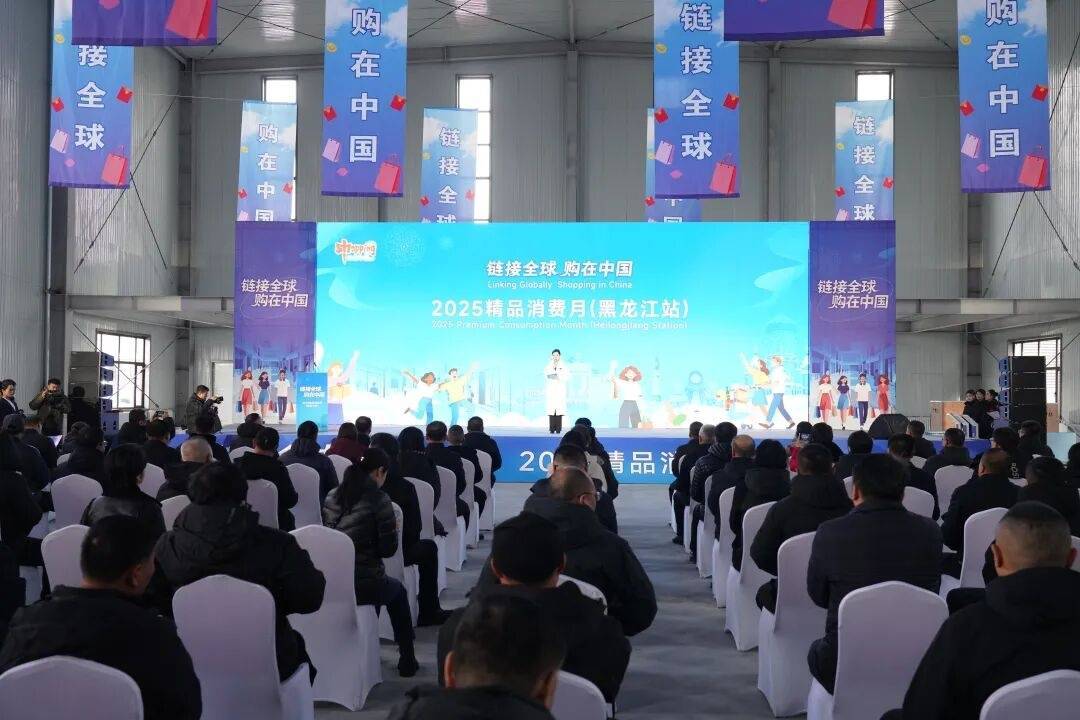
“购在中国·2025精品消费月(黑龙江站)”在北安市启幕
Sou Hu Cai Jing· 2025-11-16 01:07
Core Viewpoint - The "Buy in China · 2025 Boutique Consumption Month (Heilongjiang Station)" event aims to stimulate winter consumption and promote Heilongjiang products to national and global markets, leveraging the Black River as a hub [1][3]. Group 1: Event Overview - The event is organized by the Provincial Department of Commerce and the Heihe Municipal Government, with a focus on enhancing the "buy global, sell global" effect [3]. - The theme "Linking the World, Buy in China" will be emphasized, utilizing platforms like the Heihe Port and Beinan International Land Port to enrich consumer supply and optimize the consumption environment [3][5]. Group 2: Economic Impact - The event provides a valuable opportunity for Heihe to serve the new development pattern and enhance consumption quality and capacity [5]. - Heihe's consumption landscape has been innovating, with significant improvements in cross-border consumption capabilities and increasing influence of "Heihe Good Products" [5]. Group 3: Regional Development - Beinan, as a regional center city in northern Heilongjiang, is positioned to become a distribution center for various products, directly impacting 10 counties and 2 million people within a 150-kilometer radius [8]. - Future plans include establishing Beinan as a regional commercial hub with dedicated logistics parks and specialized markets to inject strong momentum into Heilongjiang's consumption market [8]. Group 4: Event Duration and Activities - The event will run until February 2026, featuring six themed sessions and various activities aimed at enhancing consumer engagement and promoting local products [8].
扩大服务消费:稳增长的幸福密码
Sou Hu Cai Jing· 2025-11-15 23:47
Core Insights - The article highlights a shift in Chinese consumer behavior from material purchases to experiential consumption, indicating a new economic engine focused on service consumption [4][6] - Service consumption in China has reached 46.8% of total consumption, showing significant growth potential compared to developed countries where it stands at around 60% [4][6] - Expanding service consumption is presented as a pragmatic approach to stabilize economic growth and improve people's livelihoods [4][6] Group 1: Strategies for Expanding Service Consumption - The first strategy involves relaxing entry barriers to allow more social capital into sectors like elderly care, childcare, cultural tourism, and housekeeping, as well as introducing international quality medical and educational models [5][6] - The second strategy focuses on integrating various business formats to enhance consumer experiences, utilizing digital technology, cultural content, and physical spaces to create immersive experiences [6][7] Group 2: Long-term Implications - Service consumption is characterized as a long-term benefit rather than a short-term stimulus, with the potential to contribute significantly to high-quality economic development as supply becomes richer and income stabilizes [7]