
关税

Search documents
39%关税逼急了,瑞士总统不请自来急飞美国,专家建议送块金表
Hua Er Jie Jian Wen· 2025-08-05 22:35
Group 1 - Swiss President Karin Keller-Sutter urgently traveled to Washington to negotiate with the Trump administration to lower the recently announced 39% tariff rate [1] - The U.S. President Trump signed an executive order imposing a 39% tariff on Switzerland, which caused significant concern in Switzerland [1][3] - Trump highlighted the substantial trade deficit between the U.S. and Switzerland, particularly criticizing the wealth generated by the Swiss pharmaceutical industry [3] Group 2 - Keller-Sutter and the Swiss Federal Council are facing political pressure regarding potential concessions in trade negotiations, particularly in agriculture and pharmaceuticals [4] - Any concessions in agricultural tariffs could provoke backlash from Swiss farmers, who have previously committed to opposing changes to the current system [4] - The trade deficit with the U.S. is significantly influenced by gold trade, with two-thirds of the deficit in the first quarter attributed to gold bar transportation [4] Group 3 - Former Swiss diplomat Thomas Borer suggested that Switzerland could make concessions in oil, weapons, and liquefied natural gas, while also pressuring Swiss pharmaceutical companies to lower prices [5] - Switzerland is currently negotiating the purchase of 36 F-35 fighter jets from Lockheed Martin, but there are disagreements over the contract price [5] Group 4 - Trade policy researcher Stefan Legge emphasized the need for Switzerland to be creative in negotiations, suggesting symbolic gestures could be effective [6]
美股三大指数集体收跌,大型科技股多数走低,中概股涨跌不一
Feng Huang Wang· 2025-08-05 22:13
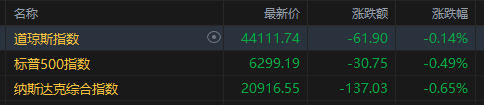
Market Overview - The US stock market experienced a collective decline on August 5, with the Dow Jones down 0.14% to 44,111.74 points, the S&P 500 down 0.49% to 6,299.19 points, and the Nasdaq Composite down 0.65% to 20,916.55 points [1][2]. Economic Indicators - The ISM reported that the US services PMI for July was 50.1, below market expectations of 51.5 and the previous month's 50.8, indicating near stagnation in service sector growth [2][3]. - Employment indicators fell from 47.2 to 46.4, marking a low point since the COVID-19 pandemic [2]. - The prices for materials and services rose to 69.9, the highest since October 2022 [2]. Policy and Regulatory Environment - The report highlighted challenges for the Federal Reserve, as rising price indices contrast with weakening activity and employment metrics [3]. - New tariff announcements from former President Trump, including a "small tariff" on imported drugs that could rise to 250%, are expected to impact market sentiment [3]. Company Performance - Major tech stocks mostly declined, with Nvidia down 0.97%, Microsoft down 1.47%, and Meta down 1.66%. Amazon was an exception, rising by 0.99% [4][5]. - Palantir's stock surged by 7.85%, reaching a market cap exceeding $400 billion, following a quarterly revenue report that surpassed $1 billion, a 48% year-over-year increase [5]. Chinese Stocks - The Nasdaq Golden Dragon China Index fell by 0.56%, with mixed performances among popular Chinese stocks [7]. Company News - OpenAI, Google, and Anthropic have been approved as AI suppliers for the US government, which is expected to accelerate the adoption of AI tools in federal operations [8][9]. - Coinbase announced plans to issue $2 billion in convertible bonds to raise funds for stock buybacks and debt repayment [10]. - AMD reported a second-quarter net profit of $781 million, a 31% year-over-year decline, with revenues of $7.69 billion, a 32% increase [11]. - Supermicro's fourth-quarter net sales were $5.76 billion, below analyst expectations, with a projected fiscal year 2026 net sales of at least $33 billion [12]. - Lucid reported a second-quarter adjusted loss of $632.1 million, with revenues of $259.4 million, a 29% increase year-over-year [13].

Advanced Energy(AEIS) - 2025 Q2 - Earnings Call Transcript
2025-08-05 21:32
Financial Data and Key Metrics Changes - Second quarter revenue reached $442 million, exceeding the high end of guidance, representing a 21% year-over-year growth and a 9% sequential increase [19][20] - Earnings per share (EPS) was $1.50, up 76% from the previous year, marking the highest level since 2022 [19] - Gross margin improved to 38.1%, up 20 basis points sequentially, despite increased tariff expenses [22][19] Business Line Data and Key Metrics Changes - Semiconductor revenue was $210 million, up 11% year-over-year but down 6% sequentially [20] - Data center computing revenue surged to $142 million, up 47% quarter-over-quarter and 94% year-over-year [21] - Industrial and medical revenue increased 7% sequentially to $69 million but was down 13% year-over-year [21] Market Data and Key Metrics Changes - The semiconductor market showed double-digit year-over-year growth, although it faced sequential declines due to customer delivery schedule shifts [10][20] - Data center computing market demand is expected to remain strong, with revenue growth projected to exceed 80% for 2025 [16][29] - Industrial and medical markets are showing signs of recovery, with total backlog growing for the first time since early 2023 [13][21] Company Strategy and Development Direction - The company is focused on a diversification strategy across three distinct target markets to mitigate cycle risk and enhance profitability [7][8] - Investments in technology and capacity are being made to support long-term growth, particularly in data center and semiconductor markets [8][18] - The closure of the last factory in China is expected to improve gross margins, targeting 40% by the end of 2025 [10][29] Management's Comments on Operating Environment and Future Outlook - Management expressed confidence in sustaining data center revenue growth into 2026, driven by high investment rates from hyperscalers [36] - The company anticipates overall revenue growth of approximately 17% for 2025, with specific growth expectations for data center and semiconductor markets [16][28] - Management highlighted the importance of mitigating tariff impacts through various strategies, including optimizing supply chains [10][27] Other Important Information - The company repurchased $23 million of its common stock during the quarter, reflecting a strong cash position with total cash and equivalents at $714 million [24][25] - Free cash flow grew 21% sequentially, indicating robust cash generation capabilities [25] Q&A Session Summary Question: Sustainability of data center demand - Management believes data center revenues are sustainable into 2026 due to continued high investment from hyperscalers [36] Question: Content per server for AI data centers - AI data centers have significantly higher power consumption, leading to increased revenue potential, although not on a linear basis [42][44] Question: Changes in semiconductor growth projections - The semiconductor growth projection was adjusted to mid-single digits for 2025 due to tariff impacts and market conditions [48][50] Question: Impact of new design wins in industrial and medical - New design wins are expected to contribute to revenue growth in the second half of the year, alongside market recovery [70] Question: Inventory levels and customer behavior - There is no significant overstocking observed in data center customers, with a cautious approach to inventory management in industrial and medical sectors [75]

Advanced Energy(AEIS) - 2025 Q2 - Earnings Call Transcript
2025-08-05 21:30
Financial Data and Key Metrics Changes - Second quarter revenue reached $442 million, exceeding guidance and reflecting a 21% year-over-year growth, marking the third consecutive quarter of growth [5][18][19] - Earnings per share (EPS) was $1.50, up 76% from the previous year, the highest level since 2022 [18][19] - Gross margin improved slightly to 38.1%, with operating margin increasing by 110 basis points sequentially [18][21] Business Line Data and Key Metrics Changes - Semiconductor revenue was $210 million, up 11% year-over-year but down 6% sequentially due to customer delivery schedule shifts [19][20] - Data center computing revenue surged to $142 million, up 47% quarter-over-quarter and nearly doubled year-over-year [20][11] - Industrial and medical revenue was $69 million, a 7% sequential increase but down 13% year-over-year [20][12] Market Data and Key Metrics Changes - The semiconductor market showed solid year-over-year growth despite a sequential decline, influenced by tariff impacts and customer inventory management [19][51] - Data center demand is expected to remain strong, with projections for over 80% growth in 2025 [15][28] - Industrial and medical markets are showing signs of recovery, with increased backlog and improved customer inventory levels [12][20] Company Strategy and Development Direction - The company is focused on a diversification strategy across three distinct markets to mitigate cycle risks and enhance profitability [6][15] - Investments in technology and capacity are being made to support long-term growth, particularly in data center and semiconductor markets [7][16] - The closure of the last China factory is expected to contribute to gross margin improvements, targeting 40% by the end of 2025 [9][28] Management Comments on Operating Environment and Future Outlook - Management expressed confidence in sustaining data center revenue growth into 2026, driven by high investment from hyperscalers [36] - The company anticipates modest sequential growth in industrial and medical markets, with a stronger order book driving higher revenue in the second half of the year [15][72] - Tariff impacts are being actively managed through various mitigation strategies, with expectations for continued operational improvements [25][26] Other Important Information - Total cash and cash equivalents at the end of Q2 were $714 million, with net cash of $147 million [22][24] - The company repurchased $23 million of common stock during the quarter [22][24] - Free cash flow grew 21% sequentially, indicating strong cash generation capabilities [24] Q&A Session Summary Question: Sustainability of data center demand - Management believes data center revenues are sustainable into 2026 due to continued high investment from hyperscalers [36] Question: Content per server for AI data centers - AI data centers have significantly higher power consumption, leading to increased revenue potential, though not on a linear basis [42][45] Question: Changes in semiconductor growth projections - The semiconductor growth projection was adjusted to mid-single digits for 2025 due to tariff impacts and market conditions [49][51] Question: Impact of tariffs on gross margin - Tariff costs are expected to remain at current levels, with mitigation strategies in place to offset impacts [53][55] Question: Design wins in industrial and medical - Recent design wins are expected to contribute to revenue growth in the second half, alongside market recovery [71][72]
39%关税逼急了,瑞士总统“不请自来”紧急飞美国,专家建议"送块金表"
Hua Er Jie Jian Wen· 2025-08-05 20:57
Core Points - Swiss President Karin Keller-Sutter urgently traveled to Washington to negotiate with the Trump administration to reduce the recently announced 39% tariff on Swiss goods [1] - The U.S. President Trump emphasized the significant trade deficit between the U.S. and Switzerland, particularly highlighting the wealth generated by the Swiss pharmaceutical industry [1] - The Swiss government is under pressure to respond to the tariffs, with potential negotiation focuses including gold, agriculture, aircraft, pharmaceuticals, and energy [2] Trade Negotiation Challenges - Keller-Sutter and Economic Minister Guy Parmelin face political risks in making concessions, which may not effectively address Trump's criticisms regarding the trade deficit [3] - Agriculture is the only sector where Switzerland retains tariffs, and any concessions in this area could provoke backlash from farmers [3] - The trade deficit in gold is significant, with two-thirds of the deficit in the first quarter attributed to gold bar transportation [3] Strategic Recommendations - Former Swiss diplomat Thomas Borer suggested purchasing oil, weapons, and liquefied natural gas, and making concessions in agriculture while pressuring Swiss pharmaceutical companies to lower prices [4] - Switzerland is currently negotiating the purchase of 36 F-35 fighter jets from Lockheed Martin, but there are disagreements over the contract price [4] - Trade policy researcher Stefan Legge proposed creative approaches, such as symbolic gifts to Trump, to improve diplomatic relations [5]
以太坊跌破3600美元,全场超12万人爆仓
2 1 Shi Ji Jing Ji Bao Dao· 2025-08-05 19:36
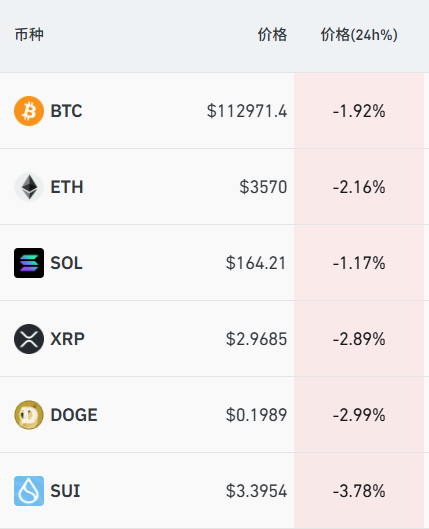
Group 1: Cryptocurrency Market Overview - The cryptocurrency market experienced a significant decline, with Bitcoin dropping nearly 2% and Ethereum falling below $3600, down 2.16% [1][2] - Over 120,000 traders were liquidated, resulting in a total liquidation amount of $339 million [1][2] - The liquidation amounts included $52.05 million in the last hour and $102 million in the last four hours, with a total of $218 million liquidated in the last 12 hours [2] Group 2: Market Data - Bitcoin (BTC) is priced at $112,971.4, reflecting a decrease of 1.92% [2] - Ethereum (ETH) is currently at $3,570, down 2.16% [2] - Other cryptocurrencies such as Solana (SOL) and Dogecoin (DOGE) also saw declines of 1.17% and 2.99% respectively [2]
今夜!跳水!
Zhong Guo Ji Jin Bao· 2025-08-05 16:17
Market Performance - US stock market experienced a significant drop after a disappointing services sector report, with the Dow Jones falling approximately 100 points and both the Nasdaq and S&P 500 declining about 0.5% [3][4] - The ISM services index for July showed almost zero growth, raising concerns about stagflation, which is characterized by high inflation and low employment [4][5] Economic Indicators - The ISM services index decreased to 50.1, below all economists' forecasts, indicating a slowdown in the services sector, which constitutes about 70% of the US economy [5] - The employment index fell to 46.4, marking the fourth contraction in five months and reaching one of the lowest levels since the pandemic [5] - The new orders index dropped to 50.3, nearing stagnation levels, reflecting a slowdown in business activity [6] Industry Insights - Despite some sectors like transportation, wholesale trade, and finance showing growth, seven industries contracted, with the accommodation and food services sector experiencing the largest decline [6] - Concerns over tariffs and rising prices were frequently mentioned by survey participants, indicating ongoing challenges for businesses [6] Investor Sentiment - Major Wall Street firms, including Morgan Stanley and Deutsche Bank, are warning investors to prepare for a market pullback due to high stock valuations and deteriorating economic data [8][9] - Predictions suggest that the S&P 500 could see a short-term decline of up to 10% to 15% in the coming weeks to months [9][10] - Historical data indicates that August and September are typically weak months for the S&P 500, with an average decline of 0.7% [10] Market Valuation - The S&P 500's 14-day Relative Strength Index (RSI) reached 76, indicating overbought conditions, as it surpassed the 70 threshold considered as a warning sign [10] - The cost of options to hedge against a 10% decline in the SPDR S&P 500 ETF (SPY) is nearing the highest level since the regional banking crisis in May 2023, reflecting increased concerns about potential market downturns [10]

高盛最新亚洲股票展望:有短暂下滑风险,为史上最强劲的Q4做好准备
Zhi Tong Cai Jing· 2025-08-05 14:02
最新的关税公告大体符合高盛的预期,有助于减少政策不确定性。再加上美联储可能于9月开始进一步 降息,这支持我们对亚洲股市持积极看法。 高盛预计MSCI亚太指数未来12个月以美元计价的价格回报率为9%,并继续看好北亚市场。然而,区域 股市已大幅反弹,且已消化了积极的宏观经济发展。估值偏高,8-9月通常是区域股市回报率最低的两 个月。因此,我们建议通过买入看跌期权或看跌期权价差来增加下行保护,以缓冲适度回调的风险。这 将帮助投资者保持参与度,并为历史上表现最强劲的第四季度做好准备。维持对北亚(中国、日本、韩 国)和部分周期性股票的增持评级,并看好能带来超额收益的关键主题。 全球宏观:特朗普宣布提高关税税率 亚洲股票展望:走势向好但存在短暂下滑风险 随着劳动力市场格局的变化,高盛预计市场将消化美联储更早、更深、更快降息的可能性。这对日元尤 为重要,日元将受益于衰退担忧加剧以及收益率曲线牛陡平时套期成本的变化,因此高盛现在建议投资 者做空美元/日元。尽管承认当前交易环境艰难,但高盛认为本周的价格和持仓调整为重新参与美元下 行论点提供了有吸引力的入场点,就业报告也支持这一观点。 上周五的就业报告公布后,美国市场对周三联邦 ...
Caterpillar(CAT) - 2025 Q2 - Earnings Call Transcript
2025-08-05 13:30
Financial Data and Key Metrics Changes - Sales and revenues decreased by 1% year-over-year to $16.6 billion, primarily due to unfavorable price realization, partially offset by higher sales volume and financial products revenue growth [26][8] - Adjusted operating profit was $2.9 billion, with an adjusted operating profit margin of 17.6%, both exceeding expectations [27][9] - Adjusted profit per share was $4.72, down from $5.99 in the previous year [27][9] Business Line Data and Key Metrics Changes - Construction Industries sales decreased by 7% to $6.2 billion, with a profit of $1.2 billion, a 29% decrease year-over-year [31][33] - Resource Industries sales decreased by 4% to $3.1 billion, with a profit of $537 million, a 25% decrease year-over-year [34] - Energy and Transportation sales increased by 7% to $7.8 billion, with a profit of $1.6 billion, a 4% increase year-over-year [36] Market Data and Key Metrics Changes - North America saw a 3% increase in sales to users, driven by growth in residential and nonresidential construction [10] - EAME region sales increased primarily due to growth in Africa and the Middle East, but overall growth was below expectations due to weakness in Europe [10] - Asia Pacific sales declined slightly, with China being flat compared to the prior year [11] Company Strategy and Development Direction - The company remains optimistic about top-line expectations, driven by strong order rates and backlog growth across all segments [14][42] - Caterpillar is considering various options to mitigate the impact of tariffs, including cost controls and dual sourcing [61][62] - The company plans to focus on long-term profitable growth and is preparing for an upcoming Investor Day to discuss strategic priorities [24][25] Management's Comments on Operating Environment and Future Outlook - Management noted that the environment remains dynamic, with tariffs expected to be a significant headwind to profitability in 2025 [7][14] - The company anticipates moderate sales growth in the third quarter, driven by higher volumes across all segments [15][47] - Full-year sales and revenues are expected to increase slightly compared to 2024, with services revenues anticipated to be flat [16][44] Other Important Information - The backlog increased by $2.5 billion to a record level of $37.5 billion, driven by strong order rates in all primary segments [7][13] - Free cash flow for the quarter was approximately $2.4 billion, with capital expenditures expected to be around $2.5 billion for the year [40][41] - The company deployed about $1.5 billion to shareholders through share repurchases and dividends during the quarter [41] Q&A Session Summary Question: How is the company planning to mitigate tariff headwinds in the medium to long term? - Management indicated that all options are on the table, including changing sourcing and pricing strategies, but more clarity is needed before making decisions [56][60] Question: Can the backlog be repriced to improve margins? - Management stated that there is flexibility on pricing in the backlog, and they will consider all levers to improve margins as they move into 2026 [68][70] Question: What is the impact of capacity additions on sales and margins in the Energy and Transportation segment? - Management noted that capacity investments are increasing throughput, and they expect to see more efficiency as capacity comes online [78][80] Question: Are orders being taken for expanded capacity in the solar segment? - Management confirmed that they are taking orders for solar capacity and are seeing strong interest in solar turbines [87][88] Question: What are the key tariff-related uncertainties to watch for? - Management highlighted that ongoing negotiations and investigations could impact tariffs, and the situation remains fluid [91][93]

美国贸易逆差缩至2023年以来最窄,进口下滑成主因
智通财经网· 2025-08-05 13:29
Group 1 - The trade deficit in the U.S. narrowed significantly in June, reaching the lowest level since September 2023, with a reduction of 16% to $60.2 billion [1] - Total imports decreased by 3.7%, primarily due to the value of imported goods falling to the lowest level since March 2024, while exports saw a relatively smaller contraction [1] - Consumer goods imports hit the lowest level since September 2020, with declines in industrial goods and automotive imports, although capital equipment imports increased [1] Group 2 - The report indicates that U.S. companies had previously stockpiled goods ahead of significant tariff increases announced by President Trump on April 2, which may now be subsiding [1] - The U.S. economy showed an annualized growth rate of 3% in the second quarter, with net exports contributing 5 percentage points to GDP, contrasting with a nearly 5 percentage point drag in the first quarter [1] - The White House announced adjusted tariffs for countries that do not reach trade agreements by the August 1 deadline, with potential future tariffs on pharmaceuticals, semiconductors, and critical minerals expected to disrupt international trade further [2]