
多边主义

Search documents
新华财经早报:10月8日
Xin Hua Cai Jing· 2025-10-08 00:56
Group 1 - The World Trade Organization has significantly lowered its global goods trade growth forecast for 2026 to 0.5%, down from the previous estimate of 1.8% in August, due to weak global economic recovery and U.S. tariff policies [4][5] - The international gold price has reached a historic high, with futures trading at $4000.05 per ounce and spot prices hitting $3977.45 per ounce on October 7, marking a significant milestone in the gold market [5][6] - Brazil's exports to the U.S. fell by 20.3% year-on-year in September, amounting to $2.58 billion, while imports increased by 14.3% to $4.35 billion, resulting in a trade deficit of $1.77 billion for the month [5] Group 2 - The Chinese government has reported an increase in foreign exchange reserves to $33,387 billion as of the end of September, reflecting a rise of $16.5 billion or 0.5% from the previous month [3] - China's gold reserves have increased to 7.406 million ounces, with a month-on-month rise of 40,000 ounces, marking the 11th consecutive month of gold accumulation [3] - The transportation sector has seen a 2.4% increase in cross-regional passenger flow, totaling approximately 298.19 million trips on October 6, with a year-on-year growth of 7% [3]


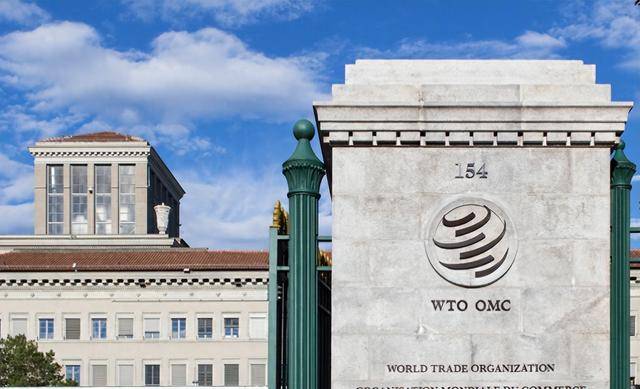
战场扩大,中国在世贸掀桌,美国遭公开处刑,印度也呼应中方行动
Sou Hu Cai Jing· 2025-10-06 14:29
Core Viewpoint - China openly criticized the United States' unilateral actions at the World Trade Organization (WTO), highlighting the negative impact of the U.S. "reciprocal tariff" policy on global service trade [3][9][13]. Group 1: U.S. Tariff Policies - On October 1, 2025, the U.S. imposed a 100% tariff on imported patented drugs unless companies establish manufacturing in the U.S., significantly impacting the global pharmaceutical supply chain, particularly affecting India [4][9]. - Additional tariffs include a 50% increase on kitchen cabinets and bathroom fixtures, a 30% increase on imported furniture, and a 25% tariff on heavy trucks, continuing the "America First" strategy [4][9]. - The U.S. Customs data indicated that tariff revenue reached $17.4 billion in May 2025, nearly double from the previous year, reshaping global trade dynamics [7]. Group 2: Impact on Global Trade - The WTO meeting on October 3, 2025, saw China presenting a document outlining three main harms of the U.S. tariff policy: undermining multilateral trade rules, negatively affecting service trade, and exacerbating challenges for developing countries [9][11]. - The global service trade growth is projected to decline by 0.3 percentage points due to the tariff war, affecting multinational companies' outsourcing strategies [11]. - Countries like India and Brazil reported significant economic impacts, with India's pharmaceutical exports dropping by 12% and Brazil's economic growth potentially decreasing by 0.5 percentage points if U.S. tariffs persist [15]. Group 3: Multilateral Response - The meeting prompted a united response from multiple countries condemning U.S. protectionism, contrasting sharply with the U.S.'s long-standing unilateralism [15][17]. - China's call for maintaining WTO rules and establishing a global trade order based on rules rather than power received increasing support from other nations [13][25]. - The concept of "shared responsibility" proposed by China is gaining recognition, emphasizing the need for an inclusive rule system for the healthy development of service trade [25]. Group 4: Long-term Implications - The ongoing trade situation represents a fundamental clash between multilateralism and unilateralism, with China advocating for reforms within the WTO framework [23][25]. - The restructuring of global supply chains is evident, with increased costs in intermediate goods trade by 12% in the first half of 2025, prompting companies to reassess their production capacities [19]. - The U.S. faces domestic repercussions from its tariff policies, with household expenses rising by $1,200 annually due to tariffs, ultimately affecting consumer prices [21].
中国经济发展具有开放共赢性
Xin Hua Wang· 2025-10-06 00:15
Core Points - China's commitment to high-level openness and sharing development opportunities with the world remains unchanged, emphasizing a win-win approach in economic globalization [2][3] - China has been a significant contributor to global economic growth, maintaining a contribution rate of around 30% [3] - The country has established itself as a leader in global supply chain stability, particularly during the COVID-19 pandemic, ensuring the resilience of its manufacturing sector [4] - The Belt and Road Initiative has evolved into the largest international cooperation platform, enhancing connectivity and economic collaboration across multiple regions [5] - China's market presents vast opportunities for global investment, with significant import and consumption figures, and a commitment to reducing trade barriers [6] Group 1 - China's role as a beneficiary and contributor to economic globalization is highlighted, with a focus on multilateralism and the importance of the WTO [3] - The country has maintained a stable supply chain during global disruptions, showcasing its manufacturing capabilities and commitment to global economic recovery [4] - The Belt and Road Initiative has led to the completion of major infrastructure projects, enhancing international trade and cooperation [5] Group 2 - China's market size and growth potential are emphasized, with substantial annual consumption and import figures, creating opportunities for international businesses [6] - The country has implemented zero-tariff policies for the least developed countries, promoting inclusive trade practices [6] - Continuous efforts to improve the business environment and expand foreign investment access are noted, particularly in manufacturing and service sectors [6]
中国经济发展具有开放共赢性(习近平经济思想指引下的中国经济专论)
Ren Min Ri Bao· 2025-10-05 21:52
Group 1 - The core viewpoint emphasizes China's unwavering commitment to high-level openness and sharing development opportunities with the world, promoting economic globalization towards a more open, inclusive, and balanced direction [1] Group 2 - China has been a significant contributor to global economic growth, maintaining a contribution rate of around 30% to world economic growth, especially during crises like the Asian financial crisis and the 2008 financial crisis [2] - The country stands as a defender and promoter of true multilateralism, supporting the multilateral trading system centered around the WTO and advocating for reforms in global economic governance [2] Group 3 - China has ensured the resilience and stability of global industrial and supply chains, particularly during the COVID-19 pandemic, significantly aiding global economic recovery [3] - Over the past decade, China has established the largest and most complete new energy industrial chain, leading to a more than 60% reduction in the average cost of wind power and over 80% for photovoltaic power generation [3] Group 4 - The Belt and Road Initiative has evolved into the largest international cooperation platform, with significant projects completed, including the China-Laos Railway and the Jakarta-Bandung High-Speed Railway [4] - The China-Europe Railway Express has operated over 110,000 trains, revitalizing trade routes and enhancing connectivity [4] Group 5 - China is committed to expanding high-level foreign openness, creating vast opportunities for global development, with nearly 50 trillion yuan in annual consumption and over 20 trillion yuan in imports [5] - The country has implemented zero-tariff treatment for 100% of products from the least developed countries that have diplomatic relations with China, and the China International Import Expo has seen a cumulative intended transaction amount exceeding 500 billion USD [5]
全球治理倡议是迈向建立更加公平国际体系的重要一步——访土耳其国际经济专家阿克布卢特
Xin Hua Wang· 2025-10-05 10:05
Core Insights - The global governance initiative proposed by China is seen as a significant step towards establishing a more equitable and balanced international system [1][2] - Emerging economies such as China, India, Brazil, and Turkey are now the core drivers of global growth, yet they still have limited representation in major international organizations [1] - There is a need for reforms in the global governance system to better address global challenges and balance the interests of developed and developing countries [1][2] Group 1 - The global governance initiative is closely linked to the Belt and Road Initiative, which provides the necessary infrastructure for connectivity, while the governance initiative establishes a framework for mutually beneficial relationships [1] - The post-World War II global governance architecture must adapt to the current multipolar reality, and reforming this system is crucial for rebuilding confidence in multilateralism [2] - A more representative and responsive global governance system will enhance international cooperation and improve the ability to address urgent issues such as climate change, terrorism, and global health security [2] Group 2 - Recent protectionist measures by the United States have significant impacts on countries with close trade ties, potentially forcing them to reduce production or shift exports to other markets [2] - The ongoing changes in U.S. tariff decisions create substantial uncertainty for producers, exporters, importers, and investors, undermining trust in institutions like the World Trade Organization [2] - Strengthening cooperation and reducing uncertainty in international trade are essential for ensuring sustainable global growth [2]
全球治理倡议对小岛屿发展中国家具有深远意义
Ren Min Ri Bao· 2025-10-05 04:38
Core Viewpoint - The article emphasizes the urgent need for a more just and equitable global governance system, particularly for small island developing countries like Jamaica, as a strategic choice for survival and development in a changing international landscape [1][3]. Group 1: Global Governance Initiative - The global governance initiative advocates for the principle of sovereign equality, which is crucial for small countries like Jamaica, as their interests are often marginalized in climate financing, debt restructuring, and trade negotiations [1][2]. - The initiative stresses adherence to international rule of law and the elimination of double standards, addressing the selective enforcement faced by developing countries in international affairs [2]. - The commitment to multilateralism is reaffirmed, rejecting unilateral actions, which is vital for third-world countries that rely on a multilateral consensus for development [2][3]. Group 2: Development Opportunities - China’s focus on renewable energy and artificial intelligence presents significant development opportunities for developing countries, including Jamaica, which has long depended on fossil fuel imports [3]. - Strengthening cooperation in photovoltaic and wind energy production can benefit Jamaica, while the introduction of digital economy platforms and AI technology can enhance key sectors such as education, agriculture, and healthcare [3]. - The call to narrow the development gap between the Global North and South aligns with the needs of Jamaica and its neighboring countries, which face challenges like economic inequality and climate vulnerability [2].
专访丨全球治理倡议是迈向建立更加公平国际体系的重要一步——访土耳其国际经济专家阿克布卢特
Xin Hua Wang· 2025-10-05 02:01
Core Insights - The global governance initiative proposed by China is seen as a significant step towards establishing a more equitable and balanced international system [1][2] - Emerging economies such as China, India, Brazil, and Turkey are now the core drivers of global growth, yet they still have limited representation in major international organizations [1] - There is a need for reforms in the global governance system to better address global challenges and balance the interests of developed and developing countries [1][2] Group 1 - The global governance initiative is closely linked to the Belt and Road Initiative, which provides the necessary infrastructure for connectivity, while the governance initiative establishes a framework for mutually beneficial relationships [1] - The post-World War II global governance structure must adapt to the current multipolar reality, and reforming this system is crucial for rebuilding confidence in multilateralism [2] - A more representative and responsive global governance system will enhance international cooperation and improve the ability to address urgent issues such as climate change, terrorism, and global health security [2] Group 2 - Recent protectionist measures by the United States have significant impacts on countries with close trade ties, potentially forcing them to reduce production or shift exports to other markets [2] - The ongoing changes in U.S. tariff policies create substantial uncertainty for producers, exporters, importers, and investors, undermining trust in institutions like the World Trade Organization [2] - Strengthening cooperation and reducing uncertainty in international trade are essential for ensuring sustainable global growth [2]
全球治理倡议对小岛屿发展中国家具有深远意义(国际论坛)
Ren Min Ri Bao· 2025-10-04 21:50
Core Viewpoint - The construction of a more just and reasonable global governance system is essential for small island developing countries like Jamaica, serving as both a diplomatic necessity and a critical strategy for survival and development [2][5]. Group 1: Global Governance Initiative - The global governance initiative emphasizes the principle of sovereign equality, which is crucial for small countries like Jamaica, as their interests are often marginalized in climate financing, debt restructuring, and trade negotiations [2][3]. - The initiative calls for enhancing the representation and voice of developing countries in the global governance system, aligning with the long-standing demands of Caribbean and Pacific island nations for substantive participation in international decision-making [2][3]. - The initiative stresses adherence to international rule of law and the elimination of double standards, addressing the selective enforcement faced by developing countries in international affairs [3]. Group 2: Multilateralism and Collective Action - The global governance initiative reaffirms the commitment to multilateralism and rejects unilateralism, which is significant for third-world countries, including Jamaica, as their development relies on a multilateral consensus [3]. - Strengthening the role of the United Nations and other multilateral institutions is seen as one of the most effective ways for small island developing countries to enhance their collective bargaining power [3]. - The initiative aims to turn the aspirations of people for a better life into reality, addressing the needs of countries facing economic inequality, climate vulnerability, and difficulties in accessing technology [3]. Group 3: Opportunities for Development - China emphasizes international cooperation in renewable energy and artificial intelligence, providing significant development opportunities for developing countries, including Jamaica [4]. - Jamaica, which has long relied on fossil fuel imports, can benefit from enhanced cooperation in photovoltaic and wind energy production [4]. - The introduction of digital economy platforms and AI technology is expected to improve key sectors such as education, agriculture, and healthcare in Jamaica [4].

中方呼吁:坚决遏止!
中国基金报· 2025-10-04 10:49
Core Viewpoint - The article emphasizes the urgent need for the immediate, unconditional, and complete cancellation of unilateral coercive measures, highlighting their detrimental impact on international order and development, particularly for developing countries [2][3][4]. Group 1: Unilateral Coercive Measures - The Chinese representative at the UN, Fu Cong, stated that unilateral coercive measures are a major cause of international chaos and disrupt global order, particularly affecting developing countries and their populations [2][3]. - These measures violate principles of sovereign equality and cooperation, interfere in domestic affairs, and contravene the purposes and principles of the UN Charter [2][3]. Group 2: Impact on Development and Human Rights - The 2030 Sustainable Development Agenda calls for equal access to development benefits, urging countries not to implement unilateral economic, financial, or trade measures that do not comply with international law [3]. - Unilateral coercive measures have severe humanitarian and economic consequences, threatening lives and exacerbating global challenges such as food, energy, and financial security [3][4]. - These measures infringe upon fundamental human rights, including the rights to life, health, development, and education, hindering affected countries' ability to achieve these rights [3][4]. Group 3: Call for International Cooperation - Fu Cong expressed concern that unilateral measures limit affected countries' access to foreign investment and technology, obstructing international cooperation in various sectors, including culture, sports, and transportation [4]. - The article welcomes the "Group of 77 and China" 2025 ministerial declaration, which reiterates that unilateral measures do not aid economic and social development [4]. - There is a strong call for a united international response to oppose unilateral coercive measures and to support affected nations in alleviating their difficulties [4].
和音:勇担大义 笃行大道
Ren Min Ri Bao· 2025-10-04 01:02
Group 1 - The core message emphasizes China's commitment to building a community with a shared future for mankind, advocating for multilateralism and global cooperation in response to contemporary challenges [1][2][3] - China's initiatives, including the Global Development Initiative, Global Security Initiative, Global Civilization Initiative, and Global Governance Initiative, are presented as systematic international public goods aimed at addressing global issues [3] - Over 130 countries and international organizations are participating in the implementation mechanisms of these initiatives, indicating broad international support and engagement [3] Group 2 - The speech by President Xi Jinping highlights China's role as a responsible major power, showcasing its dedication to peace, development, and international cooperation [1][2] - The recent activities, such as the establishment of international mediation institutions and the promotion of international law, reflect China's proactive approach to regional and global governance [2] - The initiatives are positioned as solutions to the global governance deficit, with a focus on sovereignty equality, adherence to international law, and action-oriented approaches [3]