大模型

Search documents
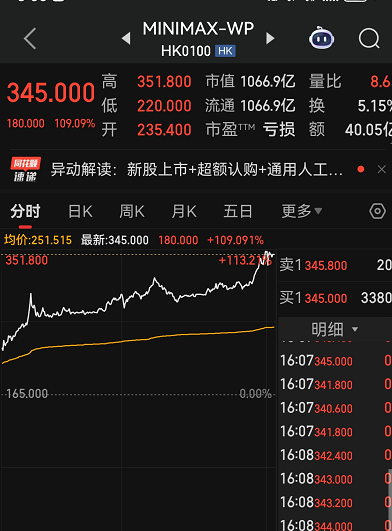
9点1氪:系统故障致机票低至0.4折,海航:已售机票均有效;最高法:以婚姻为目的给予的购车、购房款应视为彩礼;MiniMax总市值超千亿港元
36氪· 2026-01-10 01:19
Group 1 - Hainan Airlines experienced a temporary system failure that caused some flight ticket prices to display abnormally low rates, with prices as low as 70 yuan for a flight from Hangzhou to Shenzhen, equating to 0.4 of the original price [3] - The airline confirmed that all tickets sold during the incident remain valid and that the system has been restored to normal operations [3] Group 2 - Major banks in China have seen short-term large-denomination certificate of deposit (CD) rates drop below 1%, entering the "0" range, with rates for 1-month and 3-month CDs at 0.9% [5] - The decline in rates indicates a significant shift in the banking sector, aligning short-term CD rates closely with regular fixed-term deposit rates [5] Group 3 - The Supreme People's Court of China has clarified that funds given for purchasing cars or houses with the intent of marriage should be treated as bride price, impacting legal interpretations of such financial transactions [4] - This ruling may influence future disputes regarding financial gifts in the context of marriage, potentially leading to increased legal cases in this area [4] Group 4 - Apple is reportedly accelerating the selection process for a new CEO, with John Ternus, the current Senior Vice President of Hardware Engineering, emerging as a leading candidate [6] - The current CEO, Tim Cook, has expressed a desire to reduce his workload, indicating a potential transition in leadership within the company [6] Group 5 - Xiaomi has announced a price reduction for its Xiaomi 17 model and has eliminated the use of small print in its marketing materials, responding to criticism regarding transparency in advertising [8] - The company aims to enhance user experience by ensuring that key information is clearly presented [8] Group 6 - The number of corporate bankruptcies in Germany has reached a 20-year high, with 15,619 cases reported in 2025, reflecting ongoing structural pressures in the economy [20] - This trend indicates significant challenges for businesses in Germany, with a notable impact on employment as approximately 170,000 jobs were affected by these bankruptcies [20]




X @XQ
XQ· 2026-01-09 16:27
蓝色光标操作总结 1.9下面是我的操作流水账以及操作理由(非投资建议): 12.30:均价9.43建仓61万股,大部分是集合竞价进入的,我挂高了10%,一方面这是我对第一日的合理估价,另一方面也是确保能在集合竞价抢到筹码12.31:当天消息发酵拉涨停,+15%到+20%出掉半仓。理由是节中四天不交易,降仓规避消息面的风险。事实是确实发生了美国入侵委内瑞拉的事件。1.5 - 1.6:出掉30%,理由是新高压力位附近,我不想承担太多突破失败的风险(后验看市场很热成功突破,但是在左侧信息不足,我的交易风格偏保守,所以选择在突破位置出货),以及前一日龙虎榜显示中山和盟主两个游资清仓。1.6日决定剩余仓位等待本周四周五的智谱和 minimax ipo,作为全球大模型第一第二 ipo 的股票,如果表现超预期,则可能可以继续带动 ai的所有相关板块。1.8-1.9:出掉10%,智谱和 minimax 表现超预期,尤其是当日 minimax 拉到+100%,同步带动 a 股 ai 的全板块,符合我1.6的预期,因此兑现+出货。 目前整体仓位盈利30%+,本金已出,用利润格局。后续策略:目前可以确定的是,第一天买入时候的乐观预 ...

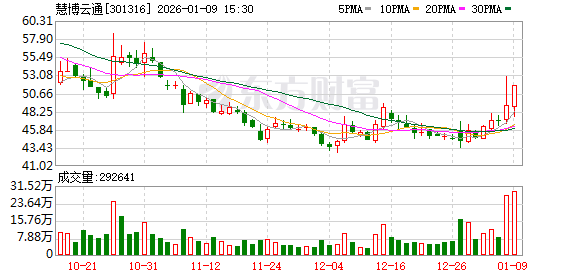
慧博云通:字节跳动系公司2024年度第一大客户,亦是公司2025年度的前五大客户之一
Mei Ri Jing Ji Xin Wen· 2026-01-09 14:45
每经AI快讯,有投资者在投资者互动平台提问:公司是否为豆包大模型提供服务,或者是否和豆包大 模型有合作? 慧博云通(301316.SZ)1月9日在投资者互动平台表示,字节跳动系公司2024年度第一大客户,亦是公 司2025年度的前五大客户之一;公司与其具体业务情况请详见公司在巨潮资讯网披露的定期报告及临时 公告。 (文章来源:每日经济新闻) ...
当虹科技参与设立的央视融媒体基金投资企业MiniMax于港交所上市
Zheng Quan Ri Bao Wang· 2026-01-09 14:13
Group 1 - The core point of the article is that Hangzhou Donghong Technology Co., Ltd. has participated in the establishment of the CCTV Integrated Media Fund, which has invested in Shanghai Xiyu Technology Co., Ltd. (MiniMax), set to be listed on the Hong Kong Stock Exchange on January 9, 2026 [1] - MiniMax, founded in 2021, focuses on advanced large model research and AI-native product development, and is among the few companies globally in the top tier of multimodal large model companies [1] - As of September 2025, MiniMax has served over 212 million users across more than 200 countries and regions [1] Group 2 - The CCTV Integrated Media Industry Investment Fund, established in 2021, is China's first national-level industrial fund themed on "media + technology," with a total scale of 10 billion yuan [1] - Donghong Technology is a key founding unit of this fund and is the only private listed company among the fund's limited partners [1] - Besides MiniMax, the CCTV Integrated Media Fund has successfully invested in other notable companies such as Muxi Integrated Circuit (Shanghai) Co., Ltd., Blue Arrow Aerospace Technology Co., Ltd., and Shanghai Yuanxin Satellite [1]

毕马威:金融业大模型应用建设将渐进收敛,智能体场景渗透进一步深化
Bei Jing Shang Bao· 2026-01-09 13:28
毕马威中国金融科技主管合伙人黄艾舟指出,复盘过去十年国内金融科技企业的发展脉络,地域分布上 呈现京、沪、深领跑的第一梯队格局,长三角、粤港澳和京津冀三大城市群发展格局强化;技术要素层 面,人工智能持续领跑,细分技术应用协同深化;细分赛道中,AI与大数据、数智赋能赛道近五年快 速增长,赛道分布趋多元化布局方向。 毕马威中国客户及业务发展主管合伙人江立勤指出,金融科技作为连接金融与产业生态的核心纽带,正 通过AI、区块链、量子计算等前沿技术的深度介入,重塑金融服务模式,推动金融资源更精准、高效 地注入科技创新领域。他指出,金融科技已从经营管理、业务创新、风险防范等环节为金融业提供新价 值锚点,并通过耐心资本与科技创新的深度融合,助力构建"科技-产业-金融"良性循环,进一步强化金 融回归本源、服务实体的战略定位。 北京商报讯(记者 马换换 李佳雪)1月9日,毕马威发布金融科技"双50"十周年报告,同时揭晓了"2025 年度第十届毕马威金融科技企业双50"榜单。 展望行业长期发展,黄艾舟提出三大核心趋势:其一,以支持科技创新和产业发展为导向,金融科技赋 能金融服务向科技企业全生命周期渗透;其二,金融业大模型应用建设渐 ...
上海大模型第一股上市 “AI天团”闪耀资本市场
Xin Lang Cai Jing· 2026-01-09 12:44
Core Viewpoint - Xiyu Technology, also known as MiniMax, successfully listed on the Hong Kong stock market, achieving a first-day increase of over 109%, reflecting strong market interest in AI companies [1][3]. Company Overview - Founded in December 2021, Xiyu Technology has become the largest IPO in the AI model sector and is recognized as the "first stock of Shanghai's large models" [9]. - The company has developed a series of multimodal general models capable of understanding, generating, and integrating various modalities including text, images, video, voice, and music [8]. Financial Performance - Xiyu Technology's revenue grew by over 170% year-on-year in the first nine months of 2025, with over 70% of its revenue coming from international markets [13]. - The company has over 200 million individual users and 130,000 enterprise clients, with products available in over 200 countries and regions [14]. Market Position and Recognition - The market's recognition of Xiyu Technology stems from its technological strength and the opportunity it provides to fill a structural gap in the AI sector, particularly in upstream model development [6]. - The company is part of the "global first tier" of multimodal model companies, with a focus on continuous iteration and technological breakthroughs [18]. Investment and Support - Xiyu Technology has received over 10.9 billion yuan in funding through seven rounds of financing, supported by strategic investments from state-owned funds and technology giants [22]. - The Shanghai government has implemented a multi-layered capital market approach to support the growth of technology companies, providing a comprehensive ecosystem for development [24][30]. Industry Trends - The recent listing of Xiyu Technology marks the fifth AI-related company from Shanghai to go public within a month, indicating a surge in the AI sector driven by a clear industrial logic and supportive policies [20][35]. - The AI industry in Shanghai is characterized by high intellectual density, resource density, and capital density, creating a robust ecosystem for innovation and investment [36].
三六零:公司依托360安全浏览器平均月活用户数近4亿的流量入口
Zheng Quan Ri Bao Wang· 2026-01-09 12:42
Core Viewpoint - The company leverages its 360 security browser with an average monthly active user base of nearly 400 million to reshape the entire chain of intelligent marketing through AI, enhancing customer conversion efficiency [1] Group 1: AI and Marketing Strategy - The company utilizes the "360 Smart Brain" and "360CV" large model capabilities to intelligently generate titles, copy, images, and video content, optimizing advertisement display formats and increasing click-through rates [1] - The self-developed user intent understanding model intelligently mines potential user needs, matching supply and demand, and works alongside "smart landing pages" and other intelligent conversion tools to automate the entire process from reach, interest guidance to conversion [1] Group 2: Advertising Efficiency - The comprehensive automation significantly enhances advertising conversion efficiency, helping clients achieve both precise marketing and improved performance goals [1]

智谱、MiniMax港股上市狂飙,谁在IPO中收割红利?
Sou Hu Cai Jing· 2026-01-09 12:08
Core Insights - The recent IPOs of Zhipu AI and MiniMax mark a significant milestone for the Hong Kong stock market, highlighting the entry of major AI players into the capital market [1] - Zhipu AI, as the first global large model company to go public, raised HKD 4.348 billion with a market capitalization of HKD 57.89 billion at IPO, while MiniMax saw a 109% increase in its stock price on the first day of trading [1] - Despite the excitement surrounding these IPOs, Zhipu AI faces challenges such as an imbalanced revenue structure, high computing costs, and a debt exceeding HKD 10 billion, raising questions about its future sustainability [1] IPO Performance - Zhipu AI's IPO was characterized by a strong demand, with a subscription rate of 910 times, indicating intense investor interest [6] - The stock opened at HKD 131.5, a 13.17% increase from its IPO price, and closed at HKD 158.6, with a market cap of HKD 698 billion [6] - Early investors in Zhipu AI, including major firms like Meituan and Ant Group, have seen substantial returns, with valuations skyrocketing from HKD 800 million in Series A to HKD 26 billion before the IPO [7][8] Financial Performance - Zhipu AI's revenue is projected to grow from HKD 57.41 million in 2022 to HKD 312 million in 2024, reflecting a compound annual growth rate of 130% [11] - However, the company is experiencing increasing adjusted net losses, projected to reach HKD 2.466 billion by 2024, primarily due to high R&D expenditures [11][12] - The company's gross margins are fluctuating, with 2022 at 54.6%, 2023 at 64.6%, and a drop to 56.3% in 2024, indicating potential profitability concerns [11] Revenue Structure - The majority of Zhipu AI's revenue comes from localized deployment, which accounted for 84.8% of total revenue in the first half of 2025, maintaining a gross margin of 59% [12] - In contrast, the cloud deployment segment is struggling with negative margins, attributed to aggressive pricing strategies to capture market share [13] - High customer concentration poses a risk, with the top five clients contributing 45.5% of revenue, indicating a need for diversification [13] Debt and Financial Health - Zhipu AI's debt has surged from HKD 542 million in 2022 to HKD 11.252 billion by mid-2025, resulting in a negative net asset position of HKD 6.151 billion [14] - The recent IPO proceeds of HKD 4.3 billion may alleviate short-term debt pressures, but long-term sustainability hinges on effective commercialization strategies [14] Industry Context - The IPO of Zhipu AI serves as a valuation benchmark for the large model industry, with a price-to-sales ratio of approximately 147 times based on 2024 revenue projections [15] - The Chinese large language model market is expected to grow significantly, from HKD 5.3 billion in 2024 to HKD 101.1 billion by 2030, with increasing market concentration favoring established players [15] - The future of Zhipu AI will be closely watched as it navigates the competitive landscape against global giants like OpenAI, emphasizing the importance of technological advancement and sustainable business models [16]
北京跑出“全球大模型第一股”,中国AI初创企业是否要迎来“上市潮”?
AI研究所· 2026-01-09 11:18
Core Viewpoint - Beijing Zhiyu Huazhang Technology Co., Ltd. (stock code: 02513.HK), known as "Zhiyu," has become the world's first publicly listed company focused on general artificial intelligence (AGI) models, marking a significant milestone for both the company and the Chinese AI industry [1][4]. Group 1: Company Overview - Zhiyu's stock price surged by a maximum of 16.18% after its debut, reaching a market capitalization of nearly 60 billion HKD [1]. - The company was established in 2019, leveraging technology from Tsinghua University's KEG laboratory, and aims to launch its GLM-4.7 model by the end of 2025, which is expected to surpass GPT-5.2 on global rankings [5][6]. Group 2: Business Model - Zhiyu's primary revenue model is based on "Model as a Service" (MaaS), allowing the company to monetize its large model capabilities through API interfaces and subscription services [8]. - In the first half of 2025, the MaaS business accounted for 84.8% of total revenue, with three main segments: localized deployment for high-security clients, API access for global developers, and a "model supermarket" for small and medium-sized clients [9]. Group 3: Financial Performance - Zhiyu's revenue grew from 57.4 million CNY in 2022 to 312 million CNY in 2024, with an average annual growth rate of 130%. In the first half of 2025, revenue reached 191 million CNY, a 325% increase year-over-year [12]. - The company's gross margin has remained stable at over 50%, and by June 2025, the model's token consumption reached 4.6 trillion times daily, indicating high-frequency usage in real production environments [12]. Group 4: Competitive Advantages - Zhiyu's core competitive advantage lies in its self-developed GLM series models, which utilize a unique "autoregressive fill-in-the-blank" pre-training method, enabling better information understanding and efficient content generation [14]. - The GLM-4.7 model has received recognition in global evaluations, outperforming GPT-5.2 in user blind tests and ranking first among open-source models in the AA Intelligence Index [15]. Group 5: Ecosystem Support - Zhiyu's growth is significantly supported by its location in Haidian, a hub for AI talent and resources, with a high concentration of universities and research institutions [17]. - The company has benefited from favorable policies and support from the Haidian district, which has facilitated its transition from laboratory technology to market products [19]. - In addition, the Zhangjiang area has provided capital and commercialization opportunities, with strategic investments and partnerships enhancing Zhiyu's market presence [23]. Group 6: Industry Implications - Zhiyu's successful IPO has opened the door for other Chinese AI companies to pursue capital markets, providing a reference model for future listings [26]. - The listing signifies a shift in the Chinese AI industry from pure technology competition to a comprehensive competition involving technology, capital, and ecosystem [27].

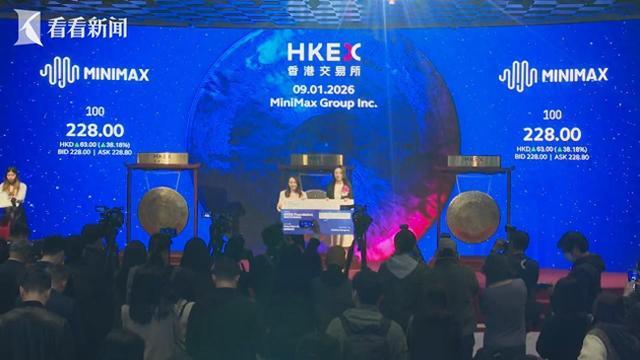
上市首日大涨近110%,在港交所上市MiniMax上演疯狂一幕!众多机构赚麻了,“小超人”李泽楷旗下盈科单日大赚6.5亿港元、游戏新贵米哈游亦浮盈甚丰
Jin Rong Jie· 2026-01-09 10:43
Core Viewpoint - MiniMax, a technology company specializing in AI, experienced a remarkable debut on the Hong Kong Stock Exchange, with its stock price soaring nearly 110% on the first day of trading, indicating strong market interest and investor confidence in AI applications [1][3]. Company Overview - MiniMax was founded in 2021 by former SenseTime Vice President Yan Junjie and has established a full-modal parallel technology route, developing a series of general large models such as MiniMax M2.1, Hailuo 2.3, Speech 2.6, and Music 2.0 [3]. - The company has launched various AI-native products globally, including Hailuo AI, Xingye, and Talkie, and as of September 2025, it has over 2.12 million personal users across more than 200 countries and regions, with a monthly active user count of approximately 27.62 million and around 1.77 million paying users [3]. Financial Performance - MiniMax's total revenue increased to $53.437 million as of September 30, 2025, compared to $19.455 million in the same period of 2024, reflecting a significant growth trajectory [4]. Market Impact - The strong performance of MiniMax has sparked a bullish sentiment in the AI and large model sectors, leading to a collective surge in A-share AI application concepts, with over twenty stocks hitting the daily limit [3]. - Analysts suggest that MiniMax's explosive debut may be a catalyst for broader AI application growth, with expectations that AI will penetrate multiple industry segments by 2026 [3]. Investment and Shareholder Insights - MiniMax is noted for being the fastest AI company to go public, having undergone seven rounds of financing with early investors including Yunqi Capital, miHoYo, IDG, Hillhouse Capital, and Mingshi Venture Capital [5]. - miHoYo, as an early angel investor, holds approximately 6.4% of MiniMax's shares, valued at over 6.8 billion HKD post-IPO, and has become a customer since 2023 [5]. - Alibaba holds a 13.66% stake, valued at over 14.5 billion HKD, while Tencent and IDG also have significant holdings, valued at approximately 2.7 billion HKD and 3 billion HKD, respectively [5][6]. Market Sentiment and Demand - Institutional investors showed strong interest in MiniMax, with a subscription rate exceeding 70 times for international placement shares, indicating robust demand from major investment firms [7]. - The company attracted 14 prominent cornerstone investors, including well-known domestic and international institutions, with a total subscription amount reaching approximately 3.5 billion USD [7]. Industry Trends - The large model market in China is projected to experience explosive growth, with daily usage expected to exceed 10 trillion tokens by mid-2025, marking a significant shift from pilot phases to large-scale implementation [8]. - The internet and financial sectors are identified as the most active application areas for large models, collectively accounting for over 90% of usage, with a trend towards open-source models reshaping the industry landscape [8].