数字化转型

Search documents
年终奖真相:为什么总感觉像在补发工资?
Xin Lang Cai Jing· 2026-01-07 10:07
Core Viewpoint - The year-end bonus system in state-owned enterprises (SOEs) creates a perception of "back pay" due to the fixed salary cap established at the beginning of the year, which is linked to the company's economic performance and profit targets [2][4][20]. Salary Cap Management - The total salary budget is predetermined annually, encompassing all forms of employee compensation, including salaries, bonuses, and allowances [2][18]. - The salary budget is linked to the company's economic performance; if profits decline, the salary budget must also decrease [4][20]. - This budgetary constraint leads to conservative monthly payouts, with significant adjustments made at year-end based on confirmed performance metrics [5][20]. Performance Pressure in 2025 - The major telecom operators are facing significant performance pressures, with emerging business revenue growth slowing down from 22.2% in 2023 to 9.9% in 2024, and further stagnation expected in 2025 [6][22]. - EBITDA for China Mobile and China Unicom has shown rare negative growth, while China Telecom's growth rate has also declined, indicating reduced profitability [6][22]. - Management salaries have been cut, with China Mobile's key management compensation decreasing from 10.1 million yuan in 2022 to 9.29 million yuan in 2024, a reduction of approximately 8% [6][22]. Year-End Bonus Disparities - There is a significant disparity in year-end bonuses among employees, with reported bonuses ranging from 6,000 yuan to 150,000 yuan depending on position and location [7][23]. - For example, a graduate from Hunan Mobile received a total of 100,000 yuan, while a master's degree holder from Anhui received around 30,000 yuan [7][23]. - The differences reflect the complex internal distribution logic within the operators [9][25]. Hierarchical Influence on Compensation - The fixed salary cap means that higher-ranking employees receive a larger share of the total compensation pool, leading to substantial differences in bonuses based on job level [10][26]. - For instance, an employee in a lower position may receive only a fraction of what a higher-ranking colleague earns for similar contributions [10][26]. Departmental Impact on Bonuses - Not all departments within the telecom operators are equally valued; R&D departments are prioritized, with significant increases in R&D budgets for AI and cloud computing [12][28]. - Conversely, traditional communication roles are under pressure, with bonuses likely to decrease as these services decline [12][28]. Year-End Bonus as a Management Tool - Year-end bonuses serve as a management tool rather than just a reward, with a portion of the total salary budget allocated to performance-based bonuses linked to company performance metrics [29][34]. - This system allows for differentiated bonuses to incentivize and manage employee performance effectively [29][34]. Future Trends in Year-End Bonuses - The trend of bonus disparities is expected to continue, with traditional communication roles facing further reductions while positions in AI and computing may see increases [15][31]. - The success of the operators' transformation into digital service providers will directly influence the potential for year-end bonuses to become genuine incentives rather than mere compensatory payments [33].





撑不住了!欧洲经济第一大国的制造业正加速迁移中国!
Sou Hu Cai Jing· 2026-01-07 09:21
Core Viewpoint - The German manufacturing industry is facing significant challenges due to energy supply disruptions and rising costs, leading to decreased production efficiency and a projected decline in output by approximately 2% by 2025 [3][5]. Group 1: Energy Supply and Costs - Geopolitical factors since 2022 have impacted energy transition in Germany, with a more than doubling of industrial electricity prices following reduced natural gas supplies from Russia [1]. - The share of energy costs in manufacturing has increased from 10% to over 20%, significantly affecting the automotive and machinery sectors [3]. Group 2: Manufacturing Migration to China - German companies are increasingly relocating production to China, driven by the need for stable supply chains and lower energy costs, with over half of German firms planning to increase investments in advanced manufacturing in China [5][9]. - By 2025, direct investment from Germany to China is expected to exceed 5 billion euros, reflecting a strategic adjustment rather than a short-term response [7]. Group 3: Trade and Investment Dynamics - Despite a projected decline in exports to the EU from Germany by 2025, there is a shift of orders towards Asian markets, particularly China, which supports local production of German products [5]. - The restructuring of global supply chains is leading to a situation where Germany imports more capital goods from China than it exports, indicating a significant shift in trade dynamics [14]. Group 4: Technological Collaboration and Sustainability - German companies are not only transferring production to China but also engaging in technology collaborations, such as BMW's hydrogen fuel facility in Shenyang, which reduces costs by 30% compared to domestic operations [9]. - The migration of manufacturing is also aligned with sustainability goals, as companies like BASF are reducing local production in favor of integrated bases in China, achieving lower costs while meeting environmental standards [16]. Group 5: Economic Impact and Future Outlook - The contraction of the German manufacturing sector is leading to regional imbalances, but the global optimization of layouts is improving profitability, with a 10% increase in profitability for companies investing in China by early 2026 [18]. - The collaboration between Germany and China is expected to deepen, particularly in areas like hydrogen energy and autonomous driving, contributing to joint innovation and addressing global climate goals [18].
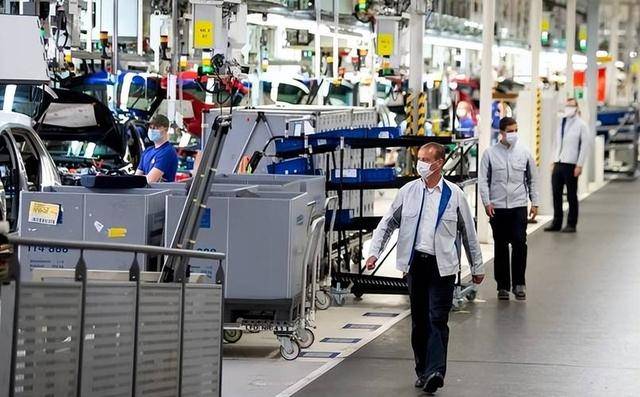
内蒙古移动呼和浩特分公司以卓越网络与服务擦亮“幸福底色”
Zhong Guo Jin Rong Xin Xi Wang· 2026-01-07 09:15
这份守护,尤其温暖着"银发族"。"蓝马甲"志愿服务队深入300多个社区,帮助1.2万余名老人从"用网难"迈向"会用网、用好网",享受每天与孙辈高清见面 的天伦之乐。 "移"路同行,品质专线赋能百业兴 在鸿盛高新技术产业开发区,一条移动双路由高可靠企业专线,助力智能仓储企业实现全流程实时联动,交付效率跃升30%;在内蒙古医科大学附属医院, 医疗专线全年稳定支撑超5000例远程诊疗,让生命数据畅通无阻;在呼和浩特职业学院,定制化校园网络成功承载万人在线考试的严峻考验。从重大工程到 街边小店,稳定高速的网络,正为各行各业夯实数字化转型的基石,让数据多跑路,让发展添速度。 转自:新华财经 当光纤如毛细血管般延伸至城市的每个角落,当稳定的信号成为空气般自然的存在,一种由"连接"带来的幸福感,正在呼和浩特悄然生长。这背后,是内蒙 古移动呼和浩特分公司(以下简称"呼和浩特移动")以匠心打造的精品网络与贴心服务,将"10分满意"的承诺,写进千家万户的日常生活,注入千行百业的 发展脉搏。 "移"路守护,全屋千兆点亮智慧家 "以前全家抢网,孩子上网课总卡顿,现在每个房间信号都满格。"呼和浩特市回民区新华园小区李女士的感慨道出了无 ...

深圳技校:中嘉打造“数字工匠”培养新范式
Sou Hu Cai Jing· 2026-01-07 09:13
Core Viewpoint - Shenzhen Zhongjia Vocational Technical School is innovatively adapting to the digital economy by training "digital craftsmen" to meet the demands of digital transformation [1] Group 1: Educational Innovation - The school has established a "Digital Technology +" professional cluster, integrating digital technology elements into traditional programs, resulting in six professional groups such as Intelligent Manufacturing + Industrial Internet and Electronic Information + Internet of Things [3] - Each professional group includes foundational digital technology modules, specialized digital application modules, and digital innovation practice modules, enabling students to acquire both traditional and new digital skills [3] Group 2: Teaching Methodology - The school has invested 20 million yuan to build a "Digital Twin Training Center," equipped with advanced technology such as high-performance graphic workstations and VR/AR devices, allowing students to engage in virtual training scenarios [3] - This innovative teaching model reduces training costs while enhancing efficiency and safety, as students can simulate complex operational conditions for fault diagnosis and troubleshooting [3] Group 3: Industry Collaboration - The school collaborates with major tech companies like Huawei, Tencent, and Baidu to co-establish the "Digital Craftsman Academy," which incorporates industry standards and certification systems into the curriculum [4] - Students can earn industry-recognized certificates after completing courses developed in partnership with these companies, and they participate in real project development through "enterprise studios" [4] Group 4: Faculty Development - The school has implemented a "Digital Capability Enhancement Plan" requiring all faculty to undergo digital technology training, with partnerships established for ongoing professional development [4] - Over the past three years, faculty members have won 28 awards in provincial-level information technology teaching competitions and developed 126 digital teaching resources [4] Group 5: Employment Outcomes - The employment rate for the 2023 graduates from the "Digital Technology +" programs reached 100%, with an average starting salary 25% higher than traditional programs [5] - Notably, 156 graduates secured positions in leading tech companies, and students excelled in national vocational skills competitions, showcasing their capabilities in digital technology innovation [5]

深化数字化转型成果 贝斯美全资子公司永安化工入选2025年江苏省先进级智能工厂名单
Quan Jing Wang· 2026-01-07 08:39
Core Insights - Jiangsu Yong'an Chemical Co., Ltd., a wholly-owned subsidiary of Beishimei, has been recognized as an "Advanced Intelligent Factory" in Jiangsu Province for 2025, highlighting the company's commitment to smart manufacturing and digital transformation [1] - Yong'an Chemical specializes in the research, production, and sales of pesticide products, particularly the herbicide Dimethenamid-P, which has successfully penetrated high-end markets in Europe and the United States [1][2] - The global herbicide market is projected to grow from 46.3 billion yuan in 2022 to over 60 billion yuan by 2028, with a CAGR of 4.6%, indicating a robust demand for herbicides like Dimethenamid-P [2] Group 1 - Yong'an Chemical has achieved a product purity of over 98% for Dimethenamid-P, surpassing the domestic industry average of 96%, and meets stringent global regulatory standards [2] - The company has established a complete industrial chain system, producing intermediates that are either sold externally or used for further processing into Dimethenamid-P for global distribution [2] - Beishimei and Yong'an Chemical have been recognized as "Specialized, Refined, Characteristic, and Innovative" small and medium-sized enterprises, reflecting their strong R&D capabilities and technological advantages [3] Group 2 - Yong'an Chemical has been listed among the top 100 pesticide sales companies in China, reinforcing its brand influence and market position within the industry [3] - The company aims to leverage smart manufacturing to drive the transformation and upgrading of the pesticide industry, focusing on green, efficient, and high-quality production [3] - Beishimei is committed to expanding its international market presence and becoming a leading provider of plant protection solutions globally [3]

2026年邮政工作怎么干?国家邮政局确定了这些着力点
Xin Hua Wang· 2026-01-07 07:59
Core Viewpoint - The National Postal Administration emphasizes the need for high-quality development in the postal and express delivery industry to support the "14th Five-Year Plan" effectively, focusing on eight key areas for improvement [1]. Group 1: Development Strategy - The postal sector will align with the national strategy for a strong transportation network, aiming to enhance the postal industry's role in the overall transportation system and complete the "14th Five-Year" planning [2]. - The industry will deepen the integration of artificial intelligence and postal services, promoting digital transformation and the application of automated technologies such as unmanned delivery vehicles and drones [3]. Group 2: Network Improvement - The focus will be on enhancing the modern delivery logistics system to support domestic economic circulation, including the construction of self-service terminals in urban areas and improving rural delivery logistics [4]. - The postal service will expand its universal service coverage, particularly in rural areas, and enhance international delivery logistics capabilities [4]. Group 3: Industry Collaboration - The postal sector will promote the integration of delivery services with e-commerce and agriculture, facilitating the development of rural e-commerce and logistics [5]. - There will be an emphasis on enhancing the collaboration between postal services and the tourism industry, promoting innovative business models [5]. Group 4: Regulatory Framework - The National Postal Administration will strengthen regulation of universal postal services to ensure equitable access and improve compliance among delivery companies [6]. - Measures will be taken to address unfair competition and protect the rights of workers in the industry [6]. Group 5: Governance and Safety - The governance system of the postal industry will be improved to enhance operational capabilities and ensure sustainable high-quality development [7]. - Safety management will be prioritized, with a focus on comprehensive governance of the delivery network and emergency response capabilities [9]. Group 6: Workforce Development - The industry will enhance the management and support for delivery personnel, promoting skills development and recognition of outstanding workers [10]. - Initiatives will be implemented to strengthen the role of delivery workers in social governance and community engagement [10].
机械设备行业周报:部分出口链公司发布年报预增公告-20260107
Donghai Securities· 2026-01-07 07:33
Investment Rating - The report assigns an "Overweight" rating to the mechanical equipment industry, indicating a positive outlook for the sector relative to the broader market [1]. Core Insights - The report highlights active mergers and acquisitions in the industry, focusing on global expansion and cutting-edge cooling technologies, particularly in the refrigeration equipment sector [3]. - Companies like Juxing Technology and Taotao Automotive are expected to see significant profit growth in 2025, driven by market demand and operational efficiency improvements [9][10]. - Siemens is undergoing a strategic transformation towards digitalization and industrial AI, with a strong performance forecast and an increased revenue growth target [12][13]. - The demand for cooling solutions in data centers is rising, with a focus on energy efficiency and advanced cooling technologies such as magnetic levitation compressors [23][25]. Summary by Sections 1. Annual Performance Forecast - Juxing Technology anticipates a net profit of 2.419 to 2.764 billion yuan for 2025, representing a year-on-year growth of 5% to 20% [9]. - Taotao Automotive expects a net profit of 800 to 850 million yuan, with a growth of 85.5% to 97.1% year-on-year, attributed to market focus and overseas capacity expansion [10]. - Ding Tai High-Tech forecasts a net profit of 410 to 460 million yuan, driven by the booming AI industry and high-end PCB market demand [11]. 2. Automation Leader Tracking - Siemens reported a record net income of 10.4 billion euros for the 2025 fiscal year, a 16% increase, and has raised its mid-term revenue growth target to 6%-9% [12]. - The company aims to double its digital business by 2030, with an expected annual growth rate of 15% [12][13]. 3. Refrigeration Equipment - The report emphasizes the growing cooling demand from data centers, highlighting the importance of energy efficiency and advanced cooling solutions [23]. - Magnetic levitation compressors are gaining traction due to their efficiency and low maintenance costs, particularly in data center applications [25][27]. - Companies like Danfoss and Hanzhong Precision are positioned to benefit from the increasing demand for advanced cooling technologies in the data center sector [28][29]. 4. Market Review - The mechanical equipment sector outperformed the broader market, with a 1.32% increase compared to a 0.59% decline in the CSI 300 index [32].
数智驱动 转型赋能——南方电网“十四五”新型电力系统建设综述
Zhong Guo Dian Li Bao· 2026-01-07 07:15
Core Viewpoint - During the "14th Five-Year Plan" period, China Southern Power Grid Co., Ltd. aims for a dual transformation of digitalization and greening, establishing itself as a pioneer in the energy revolution with significant achievements in building a new power system [1][2]. Group 1: Green Power Supply Enhancement - The company has improved the quality and efficiency of green power supply, achieving a 3.5 times increase in new energy installed capacity to over 257 million kilowatts since 2020 [3]. - Non-fossil energy generation in five provinces has reached 66% of installed capacity and 56% of total generation, positioning the company among the leaders globally [3]. - The "West-to-East Power Transmission" project has delivered over 950 billion kilowatt-hours of electricity, with over 80% being clean energy [3]. Group 2: Energy Transition Benefits - Since the "14th Five-Year Plan," the company has facilitated over 240 billion kilowatt-hours of electricity substitution, with electricity accounting for 34% of total energy consumption, surpassing the national average by 5 percentage points [4]. - More than 100,000 charging stations have been established, achieving full coverage in the Guangdong-Hong Kong-Macao Greater Bay Area [4]. - By 2025, green electricity trading volume is expected to reach 250 billion kilowatt-hours, exceeding the total of the previous three years [4]. Group 3: Collaborative Development - The company emphasizes the importance of coordinated development across generation, grid, load, and storage to enhance the efficiency of the new power system [5]. - During the "14th Five-Year Plan," the company has achieved over 10 million kilowatts in pumped storage capacity and over 15 million kilowatts in new storage installations [6]. - Demand response levels have reached 7.6%, with over 110 virtual power plants aggregating controllable loads of 15.8 million kilowatts [6]. Group 4: Technological Innovation - The company has implemented advanced technologies such as AI and big data to transform the power grid from traditional to intelligent systems [9]. - Over 99.5% of substations are now unmanned, and automation coverage for distribution networks has improved significantly [9]. - The company has established an AI alliance and released several standards and white papers to guide digital grid construction [10].
“好房子”需要好服务 如何提升物业服务质量?
Jing Ji Ri Bao· 2026-01-07 06:57
Group 1 - The demand for diverse living services is increasing due to an aging society, faster life pace, and growing needs for childcare and cleaning services [1] - Property service companies are entering communities to provide services, leveraging their proximity to residents and enhancing their potential to offer living services [1] - The "Quality Improvement Action for Property Services" aims to enhance service quality through coordination among community organizations and property service enterprises [1] Group 2 - Key areas for improving property service quality include maintenance of shared facilities, environmental upkeep, order maintenance, greening, and customer service response [2] - Digital and intelligent transformation is essential for property service enhancement, utilizing IoT and AI technologies to create smart property platforms [2] - There are ongoing issues in property services, such as failure to fulfill contracts and encroachment on public benefits, prompting the need for concentrated rectification efforts [2] Group 3 - Property service enterprises are encouraged to extend their services into areas like elderly care, childcare, housekeeping, culture, and health, promoting a "Property Service + Living Service" model [3] - The property service sector is expected to experience significant growth, with opportunities for integrating traditional management with daily resident needs [3] - There is a call for optimizing the development environment for property services, increasing policy support, and enhancing regulatory frameworks to improve service quality [3]
北京城市副中心,成绩单太亮眼
Xin Lang Cai Jing· 2026-01-07 06:54
供图/常鸣 副中心城市框架基本成型 通州区区长郑皓表示,"十四五"时期是城市副中心实现跨越式发展的五年。这五年,城市框架基本成 型。以每年超千亿投资规模筑基千年之城,"一带一轴多组团"空间格局加快构建。运河商务区启动区初 具规模,文化旅游区世界级旅游目的地加速崛起。三大文化设施成为首都文化新地标。大运河文化旅游 景区获评国家5A级文化旅游景区,广渠路东延等标志性工程梯次建成,"十一横九纵"骨干路网体系基 本形成。副中心建设的规划蓝图正逐步成为生动实景。 北京青年报记者了解到,"十四五"时期,城市副中心实现跨越式发展。地区生产总值年均增速超过 6%,增速居全市前列。规上工业总产值增长近2倍,文体娱乐业增加值增长10倍。"十五五"时期,城市 副中心聚焦经济能级、城市功能、治理效能、民生品质、绿色发展、协同发展明确六大目标。 经济总量再上台阶,以新质生产力为核心、具有城市副中心特色的现代化产业体系加快构建,具有竞争 力的开放型、创新型产业生态初步形成,市场化、法治化、便利化、国际化一流营商环境持续构建,展 现动力澎湃的高质量发展新气象。 年均投资规模保持千亿级,枢纽型、功能性、网络化、智能化的现代化基础设施体系加快 ...