资产配置

Search documents
Innodata Stock To $43?
Forbes· 2025-11-13 17:05
Core Insights - Innodata (INOD) stock has experienced a significant decline of 25.3% in less than a month, dropping from $82.98 on October 15, 2025, to $61.95 currently, with further declines anticipated due to its very high valuation [2] - A plausible price target for Innodata is $43, as the stock has previously reached this level at least once in the past five years [2] Historical Performance - Historically, the median return for the 12-month period following sharp dips (defined as a decline of 30% or more within 30 days) has been 59%, with a median peak return of 72% [3][7] - Innodata has experienced 13 instances of sharp dips since January 1, 2010, indicating a pattern of volatility [6] Investment Strategy - Strategic allocation and diversification are recommended to mitigate the risks associated with individual stock volatility [4] - The Trefis High Quality (HQ) Portfolio includes stocks with a proven history of outperforming benchmarks like the S&P 500, S&P mid-cap, and Russell 2000, yielding higher returns with reduced risk [6]



买下“大使馆”?马云的20亿海外豪宅版图
Sou Hu Cai Jing· 2025-11-13 14:16
Core Insights - The article discusses the recent purchase of a luxury property in London by Jack Ma's family, specifically by his wife, Cathy Ying Zhang, for £19.5 million, approximately 180 million RMB, marking it as one of the most expensive real estate transactions in the UK in 2024 [2][4]. Property Details - The property is located in a prestigious area of London, close to Buckingham Palace, Hyde Park, and Westminster Abbey, indicating its prime location [5]. - Originally built in 1900, the property served as the Italian embassy until 2006, featuring a large area of 738 square meters, six bedrooms, nine bathrooms, and various luxury amenities [7][9]. Previous Investments - This is not the first time Jack Ma has invested in former diplomatic properties; in 2015, he purchased a luxury residence in Hong Kong for HKD 1.5 billion, which was previously the Belgian consulate [10]. - Additionally, Ma's family has significant real estate holdings in Singapore, including a villa purchased for SGD 40 million in 2019 and three shophouses bought for approximately SGD 50 million during the Chinese New Year [11][13]. Investment Strategy - The article highlights that wealthy individuals often invest in real estate as a form of asset allocation, diversifying risks across different legal and currency environments [16][17]. - Luxury properties, especially in major financial cities like London, New York, Hong Kong, and Singapore, are seen as stable investments that retain value over time [18].

增幅超五成,ETF规模屡刷新高 新玩家、新产品持续入场
Cai Jing Wang· 2025-11-13 08:54
Group 1 - The core viewpoint of the articles highlights the rapid expansion of the ETF market in China, with total scale reaching approximately 5.74 trillion yuan, marking a year-on-year increase of over 53.96% [2][4][5] - The growth of ETFs is driven by a favorable market environment and increasing recognition of passive index investing among various investors, leading to significant inflows into thematic and industry-specific ETFs [2][3] - The number of newly launched ETFs in 2023 has reached a historical high, with 318 new products and nearly 2.5 billion units issued, contributing to the overall growth of the ETF market [4][5] Group 2 - The competition in the ETF industry is intensifying, with a shift from scale expansion to enhancing investor education and comprehensive service levels, focusing on improving investor experience [1][2][6] - Fund companies are encouraged to adopt a three-dimensional system that integrates product, service, and operation to build long-term competitive advantages and transition from homogeneous competition to differentiated value competition [1][8] - New players are entering the ETF market, with established firms like Changcheng Fund and Xingsheng Global Fund launching ETF products, indicating a dynamic and competitive landscape [8][9] Group 3 - The ETF market is witnessing a structural differentiation, with broad-based ETFs experiencing some redemptions while thematic products aligned with market trends are gaining popularity [2][4] - The industry is seeing a rise in innovative ETF products, including cross-market and multi-asset ETFs, to meet diverse investor needs and preferences [9] - The focus on educating investors about the nature of ETFs as asset allocation tools is crucial, emphasizing their risk diversification capabilities while also addressing the volatility associated with index tracking [3][6]
炒黄金一站式解决资产配置焦虑,领峰环球4步教你黄金投资
Sou Hu Cai Jing· 2025-11-13 07:55
Core Insights - The article emphasizes the growing appeal of gold investment as a low-cost, low-barrier entry point for new investors, particularly in the context of economic uncertainty and inflation [1][2][4]. Investment Appeal of Gold - Gold is presented as a reliable hedge against economic volatility and a safeguard for wealth during turbulent times, contrasting with the potential declines in stocks and funds [1][2]. - It is characterized as an effective counter to inflation, maintaining its value as currency purchasing power diminishes due to central bank policies [1][2]. Flexibility and Accessibility of Trading - The article highlights the flexibility of trading gold on platforms like LPM Global, which allows for 24-hour trading and T+0 transactions, enabling investors to capitalize on daily market movements [2][4]. - Unlike traditional investments such as real estate or stocks, gold trading requires minimal capital, making it accessible for younger investors [2][4]. Support for New Investors - LPM Global offers various resources to assist new investors, including live analysis from experienced analysts, educational content, and a user-friendly trading app [4][5]. - The platform provides a simulated trading environment with virtual funds, allowing users to practice without financial risk [8]. Steps to Start Investing - The article outlines a four-step process for new investors to begin trading gold, including quick account setup, risk-free practice, low initial investment, and the potential for daily earnings [7][9][10].

专业团队护航多元资产 民生加银FOF新基登场
Cai Fu Zai Xian· 2025-11-13 07:40
Core Viewpoint - The demand for professional asset allocation tools, particularly FOF products, is increasing due to a slowing global economy and heightened market volatility, as investors seek stable asset growth through specialized institutions [1][2] Group 1: FOF Product Growth - As of the end of Q3 this year, the number of public FOF products in China reached 518, with a total scale exceeding 193.49 billion, marking a 16.8% increase from the end of Q2 [1] - Nearly 99% of FOF products achieved positive returns in the past three quarters, demonstrating strong risk resistance and stable return characteristics in a volatile market [1] Group 2: Asset Allocation Advantages - FOF products provide diversified asset allocation, helping investors mitigate risks and smooth investment fluctuations by distributing funds across various asset classes such as stocks, bonds, commodities, and overseas assets [1] - The systematic scientific allocation of major asset classes enhances the investment perspective and significantly boosts the portfolio's risk resistance capabilities [1] Group 3: Professional Research Team - The successful operation of FOF products relies on a specialized and composite research team skilled in macro analysis, quantitative analysis, risk identification, and comprehensive process control [2] - Minsheng Jianyin Fund has established a diverse and experienced FOF research team, led by Liu Xin, integrating expertise from various fields to collaboratively tackle complex challenges in multi-asset allocation [2] Group 4: New Product Launch - The Minsheng Jianyin Multi-Dimensional Stable Allocation 3-Month Holding Period Mixed FOF (Class A: 025858, Class C: 025859) will be co-managed by Liu Xin and fund manager Kong Siwei, implementing a "localized all-weather" strategy [2] - The product is designed with a 3-month holding period to balance liquidity and investment discipline, aiding investors in navigating market cycles [2]
长期定存不香了?实探多家银行5年定存产品下架 利率倒挂成常态
Xin Jing Bao· 2025-11-13 07:27
Core Insights - The announcement from Inner Mongolia's Tongyu County Mengyin Village Bank regarding the cancellation of 5-year fixed deposits has drawn market attention, marking the first instance of such a move by a bank [1] - Many banks are suspending or have already removed 5-year specialty fixed deposit products, while 3-year specialty fixed deposits are becoming competitive and require prior reservation to secure [2][3] - The phenomenon of long-term deposit rates being lower than short-term rates has become commonplace, with several banks offering lower rates for 5-year deposits compared to 3-year deposits [4][5] Summary by Sections Deposit Rate Adjustments - Mengyin Village Bank has reduced its 5-year fixed deposit rate to 1.9%, which is only 0.5% higher than its 3-year fixed deposit rate before adjustments [1] - Other banks, including China Merchants Bank, have also suspended their 5-year specialty fixed deposit products, offering only standard fixed deposits at lower rates [2][3] Market Trends - The trend of long-term deposit rates being lower than short-term rates is evident, with banks like China Merchants Bank and SPDB offering 5-year fixed deposits at rates below 1.4% [4][5] - The average rate for 3-year specialty fixed deposits can reach up to 1.75%, making them more attractive compared to 5-year options [4] Future Outlook - Industry experts predict that deposit rates will continue to decline, leading banks to adjust their deposit products and strategies to manage costs effectively [6][7] - The narrowing of net interest margins across the banking sector is a significant concern, prompting banks to reconsider their long-term deposit offerings [8]




今天的100万,十年后值多少
第一财经· 2025-11-13 05:49
Core Viewpoint - The article discusses the evolution of wealth and investment strategies over the past decade in China, emphasizing the importance of asset allocation to maintain purchasing power and quality of life in the face of economic changes and inflation [5][18]. Historical Context - The past decade marked a transition in China's economy from high-speed growth to high-quality development, with significant asset differentiation [7]. - The Consumer Price Index (CPI) in China averaged an annual increase of approximately 2.2% from 2015 to 2024, while economic growth remained above 5% annually [7]. Real Estate Market - The real estate sector experienced a boom, particularly in first-tier cities, with prices doubling between 2015 and 2016, followed by significant increases in second-tier cities [8]. - However, by 2020, property prices began to decline, with an average correction of at least 40% from peak levels, leading to situations where homeowners could not sell properties for enough to cover their mortgages [9]. A-Share Market - The A-share market has seen significant volatility, with the Shanghai Composite Index rising from around 2000 points in 2014 to 5100 points in 2015, followed by a sharp decline [10]. - Despite this, structural opportunities emerged, particularly in sectors like consumption, pharmaceuticals, and technology, with notable stocks like Kweichow Moutai and CATL achieving substantial gains [11]. Fixed Income Assets - The domestic monetary policy has been persistently accommodative, leading to a decline in the yield on ten-year government bonds from approximately 4.5% in 2015 to around 1.8% currently [13]. - Bond funds have yielded annual returns of about 4% to 6%, while bank wealth management products have seen yields drop from around 5% to 2% [13]. Gold Market - Gold prices have surged from $1200 per ounce in 2015 to over $4000 per ounce, reflecting a more than 300% increase [14]. - The article raises questions about the sustainability of this upward trend in gold prices amid geopolitical risks and currency devaluation [15]. Future Economic Landscape - The next decade is expected to witness profound changes in China's economy and social structure, with GDP growth projected to average between 4% and 5% [20]. - Key trends include a shift from investment-driven to consumption and innovation-driven growth, alongside a rising service sector and advanced manufacturing [21]. Asset Allocation Strategies - Holding cash in a bank is projected to result in a significant loss of purchasing power, with estimates suggesting that 1 million yuan could be worth only 600,000 yuan in ten years due to inflation [28]. - Real estate investment is deemed risky, with only prime locations in first-tier cities likely to retain value, while other areas may not offer investment potential [24]. - The A-share market is expected to reflect economic quality more accurately, with sectors like high-end manufacturing and green energy seen as promising [25]. - Gold and REITs (Real Estate Investment Trusts) are suggested as potential hedges against inflation and as alternatives to traditional fixed-income investments [26]. Conclusion - The article concludes that the future value of today's 1 million yuan will heavily depend on strategic asset allocation decisions made now, emphasizing the need for financial literacy and informed investment choices to navigate economic fluctuations [30].
今天的100万,十年后值多少
Di Yi Cai Jing· 2025-11-13 03:37
Core Viewpoint - The article discusses the significant decline in purchasing power of wealth over the past decade and emphasizes the importance of strategic asset allocation to preserve and grow wealth in the future [2][10][20]. Group 1: Economic Context - The past decade has seen a transition in China's economy from high-speed growth to high-quality development, with an average annual GDP growth rate of over 5% [3][12]. - The Consumer Price Index (CPI) has averaged an annual increase of approximately 2.2% from 2015 to 2024, indicating inflationary pressures on purchasing power [3][10]. Group 2: Real Estate Market - The real estate market experienced a significant boom, particularly in first-tier cities, with prices doubling between 2015 and 2016, followed by substantial increases in second-tier cities [4][5]. - However, the rental yield in the real estate sector is generally below 2%, which is significantly lower than the global average, and many cities have seen property prices decline by at least 40% from their peak [5][16]. Group 3: A-share Market - The A-share market has undergone dramatic fluctuations, with the Shanghai Composite Index rising from around 2000 points in 2014 to 5100 points in 2015, followed by a sharp decline [6]. - Despite the volatility, there have been structural opportunities, particularly in sectors like consumption, healthcare, and technology, with some stocks experiencing significant growth [6][16]. Group 4: Fixed Income Assets - The yield on ten-year government bonds has decreased from approximately 4.5% in 2015 to around 1.8% currently, leading to a steady increase in bond prices [7]. - Bond funds have provided annualized returns of about 4% to 6%, while bank wealth management products have seen yields drop from around 5% to 2% [7]. Group 5: Gold Market - Gold prices have surged from $1200 per ounce in 2015 to over $4000 per ounce, reflecting a more than 300% increase, driven by geopolitical risks and inflation concerns [9][10]. Group 6: Future Economic Outlook - The next decade is expected to witness profound changes in China's economic and social structure, with GDP growth projected to stabilize between 4% and 5% [12]. - Key trends include a shift from investment-driven growth to consumption and innovation, alongside a rising elderly population and increasing demand for healthcare and quality services [13]. Group 7: Asset Allocation Strategies - Holding cash in a bank is projected to lead to a significant loss in purchasing power, with estimates suggesting that 1 million yuan could be worth only 600,000 yuan in ten years due to inflation [19]. - Diversified asset allocation strategies, including investments in equities, real estate, and alternative assets like REITs and gold, are recommended to preserve and grow wealth [16][17][20].
时至年末,回顾今年的投资,聊聊复盘与应对
Sou Hu Cai Jing· 2025-11-13 01:26
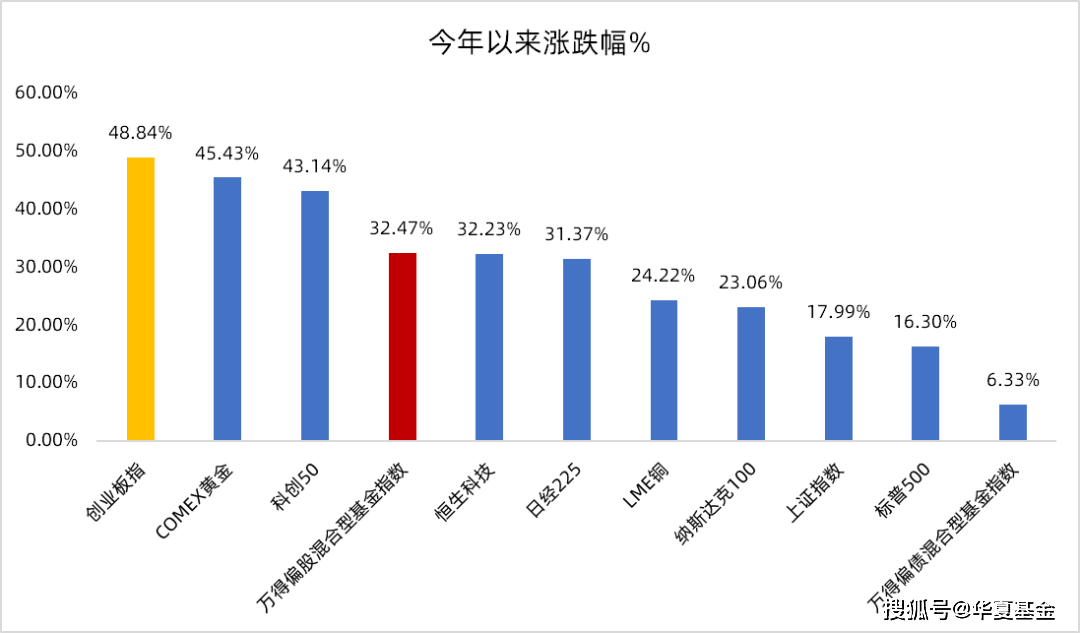
Core Insights - The year 2025 has been marked by significant market movements, with the Shanghai Composite Index reaching a nearly ten-year high, validating earlier bullish predictions [1] - Key themes for 2025 include the impact of Trump's new policies, domestic policy responses, and the challenges of asset allocation in a low-interest-rate environment [1] - The A-share market has seen a surge in investor participation, with nearly 250 million investors, indicating a robust market environment [2] Market Performance - A-shares and Hong Kong stocks have performed well, driven by sectors like AI and innovative pharmaceuticals, with the ChiNext Index outperforming gold [3] - Among 31 primary industries, 30 have reported positive returns, with a stark contrast between the leading materials sector and the declining food and beverage sector, showing an 80% difference [4] - Various fund types have achieved positive returns, with equity and mixed funds averaging 29.97% and 26.17% returns respectively [7] Fund Performance - Commodity funds have seen unprecedented gains, with returns nearing 40%, while QDII funds have also performed well with a 26.46% increase [8] - FOF funds have benefited from diversified asset allocation, achieving an average return of 15.84%, marking one of the best years historically [8] - Bond funds have lagged, with an average return of only 2.13%, although convertible bond funds have performed better, exceeding 20% returns [8] Investment Trends - The concept of "slow bull" has gained traction, with expectations for a sustainable market rally over the next two to three years, supported by technological innovation and policy backing [16] - Investors are increasingly favoring low-volatility products, with a focus on absolute returns and diversified strategies [14] - The market is characterized by alternating sentiments of fear and greed, with a need for disciplined investment approaches amidst volatility [12][19]
全球资配 | 周期洞察与战略布局
Sou Hu Cai Jing· 2025-11-12 17:49
Group 1 - The core viewpoint emphasizes the need for a new paradigm in asset allocation for residents due to the changing global macro environment, where traditional safe assets are losing their foundational stability [1] - The report suggests that the long-term perspective should embrace equity assets and industrial trends, utilizing a multi-cycle nested system for effective asset allocation [1] - It highlights that the recovery of corporate profits and the leadership of the AI industry by China and the US present significant investment opportunities, particularly in the technology sector [1] Group 2 - In the global asset allocation context, it recommends focusing on countries with favorable fundamentals and timing investments after technical corrections, particularly in the US, Japan, Eurozone, India, and Vietnam [1] - The report notes that the bond market's core logic has shifted from seeking yield to pursuing diversification, with expectations of monetary policy easing benefiting the bond market [2] - It indicates that gold remains in a long-term structural bull market despite recent healthy corrections, while oil supply surplus is a concern due to geopolitical factors [2]