
产业链协同

Search documents
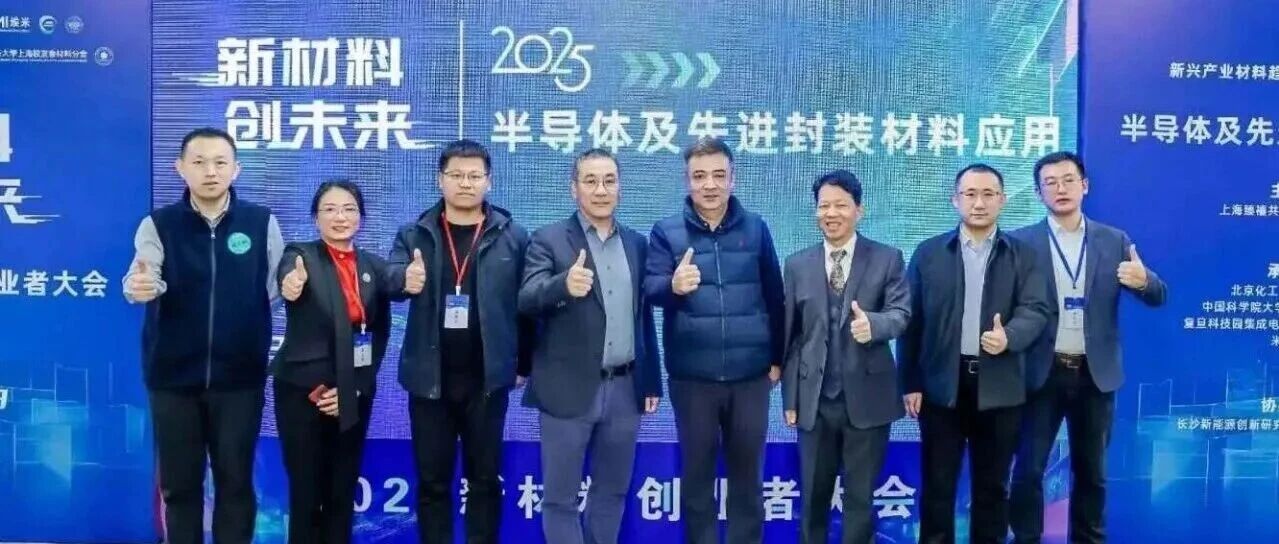
上海宝山•新材料创业者大会 | 臻禧共创汇:两个垂类细分平行论坛 14 位专家的产业趋势判断
AMI埃米空间· 2025-12-22 09:09
Core Viewpoint - The new materials sector is facing both opportunities and challenges, particularly in solid-state batteries and semiconductor materials, as highlighted during the 2025 New Materials Entrepreneurs Conference held in Shanghai [1][3]. Group 1: Solid-State Battery Materials - The solid-state battery industry is experiencing a "complex situation," with significant interest from capital markets but also facing safety concerns due to frequent electric vehicle accidents, leading to a challenging environment [3]. - High-nickel ternary and semi-solid/solid-state batteries are expected to see significant development opportunities due to automotive industry restructuring and new consumption tax policies [3]. - The cost of electrolyte materials in solid-state batteries is projected to rise to 20%-30%, indicating a shift in the industry's focus towards solid-state electrolytes [4]. - Innovations in high-performance polyimide materials are crucial for enhancing battery safety, with new designs showing excellent thermal stability and rapid electrolyte wetting capabilities [4]. - The scalability of MXene production has been achieved, showcasing its potential in next-generation high-energy solid-state battery anodes [5]. - The silicon-carbon anode is identified as essential for achieving high energy density in solid-state batteries, but challenges such as volume expansion and high costs must be addressed [6]. Group 2: Semiconductor and Advanced Packaging Materials - The semiconductor industry is at a critical juncture where material innovation is essential for upgrading technology as traditional limits are approached [9]. - The need for domestic alternatives in semiconductor packaging materials is emphasized, with collaborative innovation across the supply chain being vital [9]. - Key breakthroughs in photolithography resin technology are necessary to address current industry pain points [10]. - The integration of advanced packaging technologies with material innovation is crucial for meeting the evolving demands of the semiconductor industry [10][11]. - Quality control systems are increasingly important for driving upgrades in semiconductor materials and processes [10][11]. Group 3: Industry Trends and Insights - The discussions at the forums indicate a shift towards systematic solutions in material innovation, emphasizing the need for integration with process advancements and application demands [13]. - Collaborative innovation across the supply chain is essential for overcoming industrial bottlenecks in both solid-state batteries and semiconductor materials [13]. - Companies must balance specialization in specific fields with the ability to integrate across disciplines to seize innovation opportunities [13].

芯片股早盘走强 国家大基金三期布局IC载板领域
Zhi Tong Cai Jing· 2025-12-22 02:31
Group 1 - Chip stocks showed strength in early trading, with notable increases: SMIC (00981) up 4.23% to HKD 67.75, InnoCare (02577) up 3.31% to HKD 73.45, Hua Hong Semiconductor (01347) up 3.25% to HKD 69.95, and ASMPT (00522) up 2.82% to HKD 76.45 [1] - Recent changes in the ownership structure of Anji Liwei have attracted attention, with the original shareholder, Anji Electronics, officially exiting, while new shareholders including the National Integrated Circuit Industry Investment Fund (Phase III) and local investment groups have joined [1] - The entry of the National Fund Phase III is seen as a recognition of the company's technological capabilities in the field of packaging substrates, which are critical for connecting chips to PCBs, characterized by high technical barriers and low domestic production rates [1] Group 2 - The National Fund Phase III, established as a national capital platform for the semiconductor industry, focuses on advanced manufacturing, high-end chip design, critical materials/equipment, and third-generation semiconductors, emphasizing "strengthening the chain and supplementing the chain" and "industry chain collaboration" [1] - The investment from the National Fund and local state-owned assets in Anji Liwei is expected to accelerate the company's high-end substrate production capacity and technological iteration, addressing domestic gaps in the market [1]


如何锻造中国“链主”企业全球竞争力
Guo Ji Jin Rong Bao· 2025-12-22 01:44
Core Viewpoint - The article emphasizes the need for the government to play a guiding role in enhancing the leadership of "chain master" enterprises, improving the resilience and safety of industrial supply chains, and promoting industrial upgrades through collaboration with universities and research institutions [1][6]. Group 1: Current Issues in China's Industrial Chain - China's industrial chain, while complete, faces significant issues of being "large but not strong" and "broad but not deep," with high dependence on foreign core technologies and key components [2]. - The self-sufficiency rate of critical technologies is low, and many strategic industries still rely on imports for essential materials and equipment, weakening the control of "chain master" enterprises over the supply chain [2]. - The collaboration depth among upstream and downstream enterprises is insufficient, with "chain master" enterprises often unable to receive high-end support from small and medium-sized enterprises (SMEs) due to their low value-added roles [2]. - The relationship between "chain leader" (government) and "chain master" (enterprise) is not fully clarified, leading to inefficiencies in policy execution and a lack of effective communication between the government and enterprises [2]. Group 2: Financial Support Challenges - Financial support for "chain master" enterprises and SMEs is currently inadequate, with a heavy reliance on bank loans and low utilization of direct financing methods, resulting in high financing costs [3]. - SMEs face persistent financing difficulties due to a lack of collateral and low credit ratings, limiting their ability to innovate and expand [3]. - The development of supply chain finance is lagging, failing to effectively connect "chain master" enterprises with SMEs, which reduces the efficiency of capital flow within the industrial chain [3]. Group 3: International Experience and Recommendations - The U.S. government supports "invisible champion" enterprises through funding initiatives like the Small Business Innovation Research (SBIR) program, encouraging technological breakthroughs in niche areas [4]. - "Chain master" enterprises in the U.S. integrate SMEs into their ecosystems, enhancing their control over critical supply chain segments [4]. - Recommendations for strengthening China's "chain master" enterprises include establishing collaboration platforms between enterprises and research institutions, creating a cross-regional coordination mechanism, and promoting supply chain finance services [6][7]. - Encouraging "chain master" enterprises to globally allocate resources can lower costs and enhance efficiency, supported by government policies such as tax incentives and financial subsidies for overseas investments [7].

“山东首富”造车,千亿铝业帝国的赌局
汽车商业评论· 2025-12-21 23:04
Core Viewpoint - The Chinese automotive market in 2025 is characterized by a stark contrast between industry consolidation and the influx of new entrants, with companies like Weiqiao Group making significant moves into the electric vehicle sector amid challenges in their traditional businesses [4][5]. Group 1: Industry Challenges and New Entrants - Several established automotive companies, including Hozon Auto and GAC Fiat, have declared bankruptcy, indicating a harsh industry shakeout [5]. - New players, such as Chasing Technology and Weiqiao Group, are entering the market, driven by government support and the need for diversification from struggling core businesses [5][9]. Group 2: Weiqiao Group's Background and Strategy - Weiqiao Group, originally established in 1951, has diversified into various sectors, including textiles and aluminum, and has been listed among the Fortune Global 500 for 13 consecutive years [7]. - The company faced significant challenges in its textile and aluminum businesses, with textile profits dropping by 24.8% in 2022 and a major environmental crackdown affecting aluminum production [9][10]. - Following these setbacks, Weiqiao Group shifted its focus to the electric vehicle sector, motivated by favorable government policies and the need for new growth avenues [12][19]. Group 3: Leadership and Vision - Zhang Bo, the son of the founder, took over leadership in 2018 and has been pivotal in steering the company towards the automotive industry, emphasizing the importance of aligning new ventures with the company's core competencies [16][22]. - Under Zhang Bo's leadership, Weiqiao Group has made strategic partnerships and investments in the electric vehicle space, including collaborations with research institutions and other automotive companies [17][22]. Group 4: Automotive Brand Development - Weiqiao Group has established four automotive brands: 212, Jishi, Ruisheng, and Leichi, covering a wide range of market segments from commercial to passenger vehicles [32]. - The company has adopted a strategy of acquiring existing automotive assets and brands rather than starting from scratch, which allows for quicker market entry and leveraging existing capabilities [33]. - The 212 brand has been particularly notable, with a range of models priced between 139,900 to 188,800 yuan, although it has faced challenges such as product quality issues and trademark disputes [23][32]. Group 5: Future Outlook - Weiqiao Group's automotive ventures are seen as a new hope for the company, with significant revenue growth reported in 2024, but they also introduce new uncertainties and risks [22][32].
A股最大重组并购案出炉 中国神华1336亿收购控股股东旗下12家公司
2 1 Shi Ji Jing Ji Bao Dao· 2025-12-20 05:50
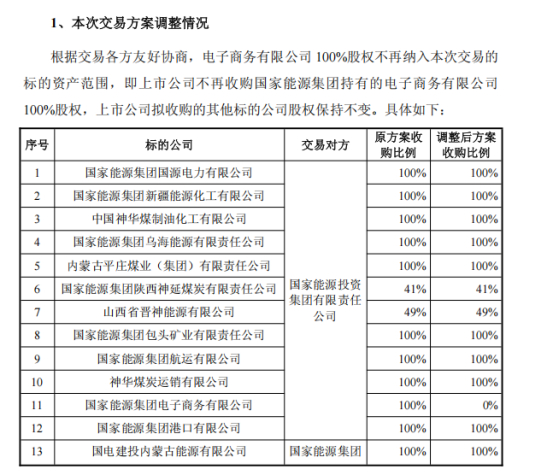
Core Viewpoint - China Shenhua (601088.SH/01088.HK) has announced a major acquisition plan involving the purchase of equity stakes in 12 target companies from its controlling shareholder, China Energy Group, with a total transaction value of 133.598 billion yuan, making it the largest acquisition in the A-share market to date [1][5]. Group 1: Transaction Details - The acquisition will be financed through a combination of 30% share issuance and 70% cash payment, with cash payment amounting to approximately 93.519 billion yuan [1][6]. - The target assets include key segments of the energy industry such as coal mining, coal power, coal chemical, and port shipping, with specific companies like Guoyuan Power and Xinjiang Energy being part of the acquisition [2][4]. - Compared to the previous proposal, the acquisition plan has removed an e-commerce company from the list of target assets [3]. Group 2: Asset and Financial Impact - Post-acquisition, China Shenhua's coal reserves will increase from 41.58 billion tons to 68.49 billion tons, a growth of 64.72%, while its recoverable coal reserves will nearly double from 17.45 billion tons to 34.50 billion tons, reflecting a 97.71% increase [7][8]. - The company's coal production capacity will rise to 512 million tons per year, marking a 56.57% increase, and its installed power generation capacity will grow by 27.82% to 60,881 MW [8]. - The acquisition will also enhance the company's chemical production capacity, with polyethylene output increasing from 600,000 tons to 1.88 million tons, a growth of over 213% [9]. Group 3: Financial Projections - Following the transaction, the total assets of China Shenhua are projected to increase from 635.909 billion yuan to 896.587 billion yuan, while total revenue is expected to rise from 162.266 billion yuan to 206.509 billion yuan [9]. - The net profit attributable to shareholders is forecasted to increase from 29.255 billion yuan to 32.637 billion yuan, indicating a positive impact on the company's profitability [9][10]. - The projected earnings per share for 2024 is expected to rise to 3.15 yuan, an increase of 6.10%, and for the first seven months of 2025, it is expected to reach 1.54 yuan, an increase of 4.40% [10].

A股最大收购案出炉
财联社· 2025-12-20 04:58
Core Viewpoint - The largest acquisition proposal in China's capital market has been unveiled, with China Shenhua (601088.SH/01088.HK) planning to acquire equity stakes in 12 target companies from its controlling shareholder, China Energy Group, for a total transaction value of 133.598 billion yuan [1] Group 1: Acquisition Details - The acquisition will be financed through a combination of 30% share issuance and 70% cash payment [1] - The target assets include key segments of the energy industry such as coal mining, coal power, coal chemical, and port shipping [2] - The acquisition plan has removed an e-commerce company from the original proposal [3] Group 2: Financial Aspects - The final transaction price is set at 133.598 billion yuan, with cash payment amounting to 93.519 billion yuan (approximately 70%) and share issuance at about 40.08 billion yuan (30%) [5] - To alleviate cash payment pressure, China Shenhua plans to issue shares to raise up to 20 billion yuan, which will be used for the cash payment and intermediary fees [5] Group 3: Resource and Capacity Enhancement - Post-acquisition, China Shenhua's coal reserves will increase from 41.58 billion tons to 68.49 billion tons, a growth of 64.72% [6] - The company's coal production capacity will rise to 512 million tons per year, reflecting a 56.57% increase [6] - The acquisition will also enhance the company's power generation capacity from 47.632 million kilowatts to 60.881 million kilowatts, an increase of approximately 27.82% [7] Group 4: Chemical and Logistics Improvements - The acquisition of a chemical company will boost China Shenhua's polyethylene production capacity from 600,000 tons to 1.88 million tons, an increase of over 213% [8] - The inclusion of shipping and port companies will enhance the logistics capabilities across the coal-electricity-transportation-port sectors [9] Group 5: Financial Performance Projections - Following the asset injection, total assets are projected to rise from 635.909 billion yuan to 896.587 billion yuan, while total revenue is expected to increase from 162.266 billion yuan to 206.509 billion yuan [9] - The projected earnings per share for 2024 will increase to 3.15 yuan, a growth of 6.10% [9]

全球感知|中企赴泰投资增速逾20% 需防范三大跨境风险
Xin Lang Cai Jing· 2025-12-20 03:36
Core Insights - The "Thailand-China Investment Forum" highlighted the deepening collaboration between Thailand and China, emphasizing the importance of cross-border risk management in areas such as equity structure, tax compliance, and human resource management [1] Group 1: Economic Cooperation - Thailand has been China's largest trading partner for 12 consecutive years and the biggest source of foreign investment [1] - In the first nine months of 2025, Thailand's investment promotion project applications reached 1.37 trillion Thai Baht (approximately 301.4 billion RMB), a 94% year-on-year increase, marking the highest record in 60 years [1] - Chinese investment applications accounted for 839 projects, with an investment amount of 142.9 billion Thai Baht (approximately 32 billion RMB), a 26% year-on-year increase, primarily in the electronics, metals, and automotive sectors [1] Group 2: Strategic Investment Policies - Thailand's "Future-Oriented Strategic Investment" aims to transform the economy from traditional to high-value modern industries, with foreign investment at its core [2] - The government has adjusted electric vehicle policies to accelerate market penetration through subsidies and aims to increase the share of clean energy from 22% to 50% by 2027 [2] - Thailand has signed 17 free trade agreements with 24 countries, enhancing its position as a pharmaceutical production and export hub [2] Group 3: Investment Facilitation - The "Thailand Fast Track" mechanism aims to expedite the approval process for high-value strategic projects, reducing approval times by 20% to 50% [2] - This mechanism applies to projects with a minimum investment of 1 billion Thai Baht and in targeted high-tech industries [2] Group 4: Talent Development - The Thai government plans to train 100,000 skilled professionals to meet the demands of new industries, supported by various training programs [3] - BOI encourages Chinese companies to assist in upgrading local industries, particularly in transitioning traditional automotive suppliers to electric vehicle components [3] Group 5: Compliance Risks - Companies investing in Thailand must pay attention to compliance risks related to equity structure, tax arrangements, and human resource management [5] - The Thai government has established a scrutiny committee focusing on high-risk sectors, and companies in restricted industries must apply for foreign business licenses [5] - Tax compliance is critical, as residing in Thailand for over 180 days may classify individuals as tax residents, requiring global income reporting [5]

七一二拟3.39亿元收购方州科技52.4596%股权并计划增资
Zhi Tong Cai Jing· 2025-12-19 12:17
七一二(603712)(603712.SH)发布公告,基于公司战略规划及业务发展需要,公司拟与车万方、吴 平、方州源动、方州睿图、方州共创、久科二号、久科三号、浙航产融、扬州天航、金石数经签署《股 权转让协议》,以3.39亿元收购上述股东合计持有的北京方州科技有限公司(简称"方州科技")52.4596% 股权。同时拟通过公开摘牌方式受让航证科创持有的方州科技5.7757%股权,该股权已在北京产权交易 中心挂牌。本次交易完成后,方州科技将成为公司的控股子公司,并纳入公司合并报表范围。 公司在上述股权转让交易完成后,计划向方州科技增资3000万元,增资完成后,公司持有方州科技60% 股权。本次交易通过深度整合双方在市场与技术方面的优势,产业链协同效应将巩固公司的综合实力和 市场地位,有效促进公司战略落地。 ...

七一二(603712.SH)拟3.39亿元收购方州科技52.4596%股权并计划增资
智通财经网· 2025-12-19 12:03
公司在上述股权转让交易完成后,计划向方州科技增资3000万元,增资完成后,公司持有方州科技60% 股权。本次交易通过深度整合双方在市场与技术方面的优势,产业链协同效应将巩固公司的综合实力和 市场地位,有效促进公司战略落地。 智通财经APP讯,七一二(603712.SH)发布公告,基于公司战略规划及业务发展需要,公司拟与车万 方、吴平、方州源动、方州睿图、方州共创、久科二号、久科三号、浙航产融、扬州天航、金石数经签 署《股权转让协议》,以3.39亿元收购上述股东合计持有的北京方州科技有限公司(简称"方州科 技")52.4596%股权。同时拟通过公开摘牌方式受让航证科创持有的方州科技5.7757%股权,该股权已在 北京产权交易中心挂牌。本次交易完成后,方州科技将成为公司的控股子公司,并纳入公司合并报表范 围。 ...
宁波方正:全资控股骏鹏通信后,可实现新能源业务板块的深度整合,形成更完整的产业链协同优势
Zheng Quan Ri Bao Wang· 2025-12-19 11:43
Core Viewpoint - The company is advancing its full acquisition of Fujian Junpeng Communication Technology Co., Ltd. as a strategic move aligned with the development trends in the new energy industry and its long-term strategic planning [1] Group 1: Strategic Considerations - The first strategic consideration is to strengthen the core competitiveness of the new energy business, as Junpeng Communication possesses mature technology and stable customer resources in the lithium battery structural components sector, particularly with a long-term strategic partnership with industry leader CATL [1] - The second consideration is to enhance the new energy industry chain layout, as the company has previously entered the lithium battery structural components and conductive connection components sectors through the establishment of Anhui Fangzheng New Energy Technology Co., Ltd. and the acquisition of Fujian Jiaxin Metal Technology Co., Ltd. The full acquisition of Junpeng Communication will enable deeper integration of the new energy business segment, forming a more complete industrial chain synergy advantage [1]