
多式联运

Search documents
长三角又多了一座新机场,但不是苏州
Di Yi Cai Jing· 2025-12-26 04:34
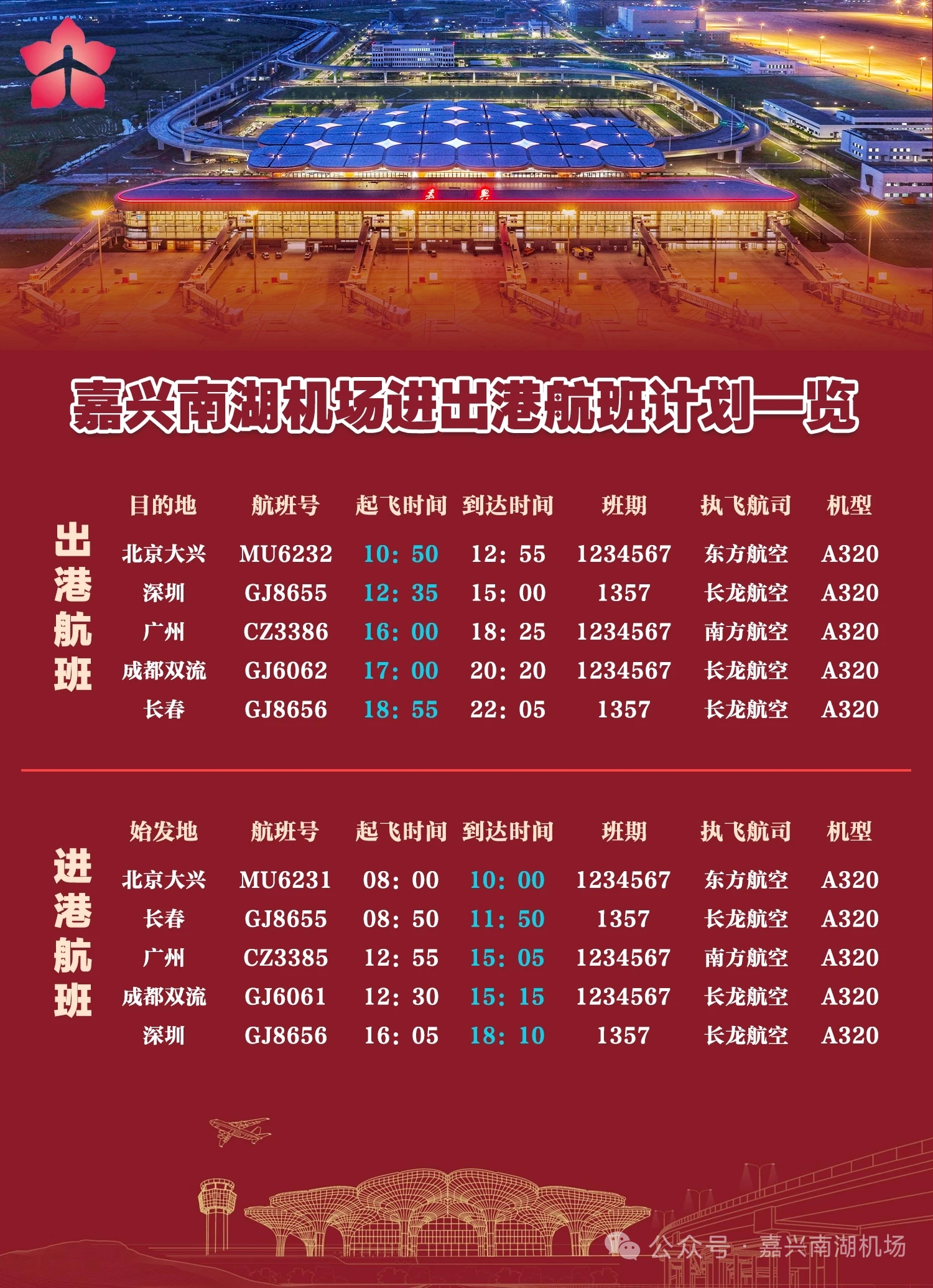
Core Viewpoint - The opening of Jiaxing Nanhu Airport marks the establishment of a new aviation hub in the Yangtze River Delta, enhancing connectivity and logistics capabilities in the region [1][5]. Group 1: Airport Operations - The first flight to Jiaxing Nanhu Airport was operated by Eastern Airlines from Beijing Daxing Airport, with additional flights from Southern Airlines and Changlong Airlines to Guangzhou, Shenzhen, Chengdu, and Changchun [1]. - The airport is designed to handle an annual passenger throughput of 1.8 million and a cargo throughput of 110,000 tons, featuring a terminal area of 25,900 square meters and 56 parking positions, of which 33 are dedicated to cargo [5]. Group 2: Strategic Importance - Jiaxing Nanhu Airport is positioned as the first specialized air cargo hub in the Yangtze River Delta and the second in the country, focusing on cargo operations while also accommodating passenger flights [5]. - The airport's strategic location allows for a one-hour connection to major cities in the Yangtze River Delta, enhancing its role in regional logistics and trade [6][8]. Group 3: Future Developments - The airport plans to open additional passenger routes to cities such as Kunming, Harbin, Chongqing, Xi'an, and Haikou before the Spring Festival [5]. - YTO Express has established a global logistics hub at Jiaxing Nanhu Airport, with plans for a comprehensive logistics center expected to be fully operational by 2026 [5]. Group 4: Regional Airport Landscape - Despite its economic significance, Suzhou lacks its own airport, with ongoing discussions and planning since 2018 failing to yield results, while other airports in the region, such as Nantong, are advancing [10][11]. - The Yangtze River Delta currently has seven major airports, with a high density of airports in Jiangsu province, indicating a competitive aviation landscape [10].

2025年酒泉(种子)西部陆海新通道铁海联运国际货运班列发车
Xin Lang Cai Jing· 2025-12-25 10:12
Core Viewpoint - The launch of the 2025 Jiuquan (Seed) Western Land-Sea New Corridor Iron-Sea Combined Transport International Freight Train marks a significant step in enhancing cross-border trade and logistics capabilities for Jiuquan, with a focus on exporting high-quality agricultural products to international markets [1] Group 1: Launch Event - The freight train was officially launched on December 24, 2025, at the Jiuquan Railway Freight Station [1] - The train is loaded with 24 containers of high-quality vegetables and flower seeds, totaling 450 tons, destined for Genoa, Italy via Qinzhou Port [1] Group 2: Trade and Logistics Development - Jiuquan has leveraged its advantages as a land port logistics hub to integrate deeply into the Belt and Road Initiative, expanding multi-modal transport channels [1] - The city has opened multiple cross-border freight routes to regions including the Americas, South Asia, and Central Asia, optimizing the cross-border trade business environment [1] Group 3: Export Performance - In the current year, Jiuquan has dispatched 6 international freight trains through iron-sea combined transport, carrying 101 containers with a total weight of 2,077.78 tons and a value of nearly 200 million yuan, exporting products to over 10 countries and regions including the Netherlands, Italy, and Uzbekistan [1] Group 4: Future Plans - The city plans to continue expanding export volumes, diversifying product categories, deepening multi-party collaboration, optimizing train operation models, and enhancing the corridor's radiating and driving capabilities to support high-quality development of the outward-oriented economy [1]
【好评中国】年终回望:交通强国书写流动中国新答卷
Xin Lang Cai Jing· 2025-12-25 09:09
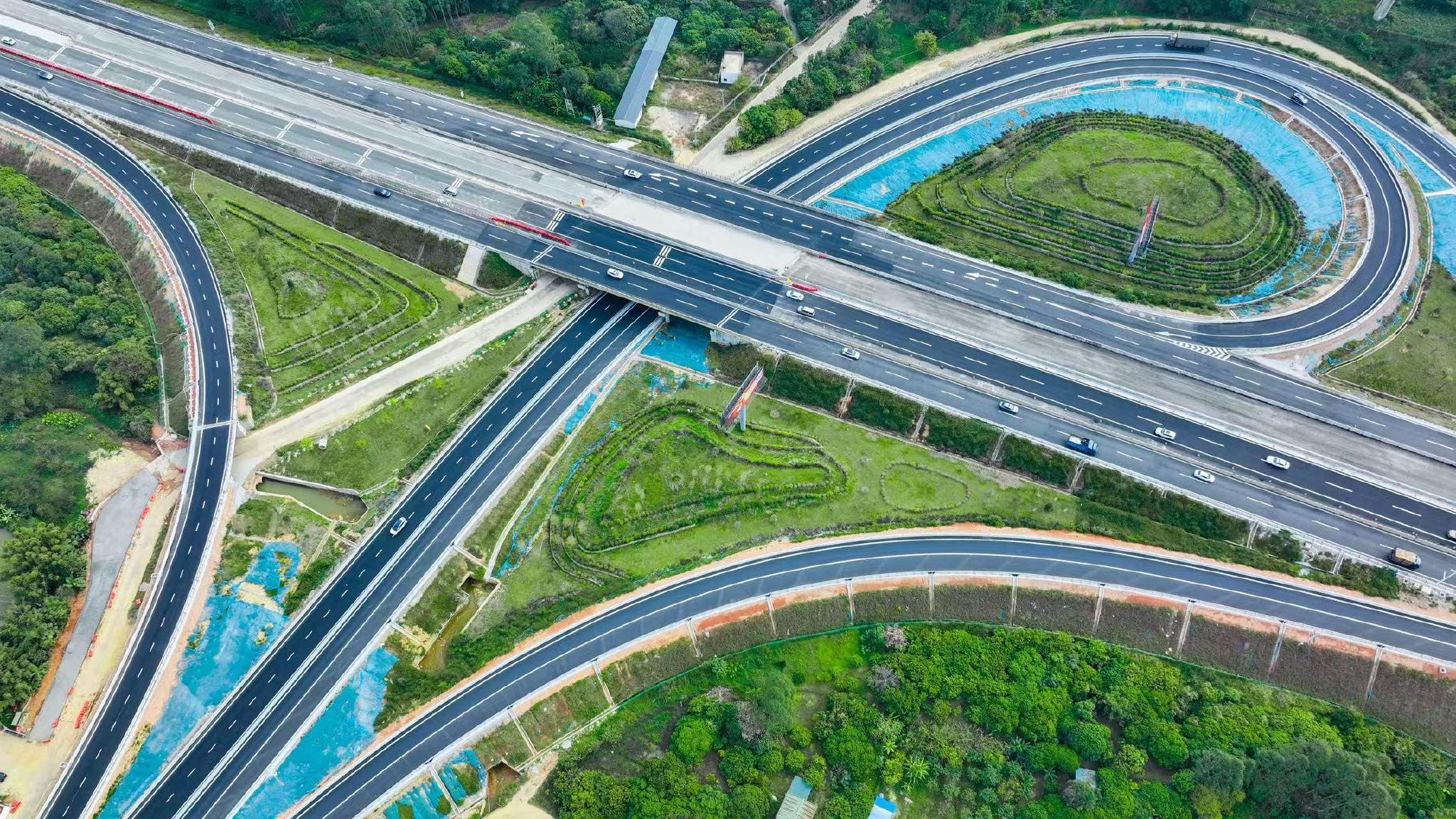
Core Insights - China's transportation development is evolving into a comprehensive network that integrates road, air, water, and rail, reflecting resilience and governance capabilities [2] - The evaluation criteria for transportation construction are shifting from quantity to accessibility, systematization, and operational efficiency, indicating a proactive role in shaping development space [2] - The construction of rural roads is focusing on completing the network and enhancing connectivity, which is crucial for urban-rural factor flow [2] Group 1: Road Development - The emphasis in rural road construction is on network completion rather than merely extending mileage, highlighting the importance of the "last mile" [2] - The overall network improvement approach exemplifies the logic of "big transportation" [2] Group 2: Air and Water Transport - The enhancement of the air transport system and port capabilities supports the overall transportation network, facilitating efficient cross-regional movement [3] - These developments are interlinked, contributing to the overall operational capacity of the transportation system [3] Group 3: Rail Transport - Railways are now viewed as part of a comprehensive transportation system, complementing other modes rather than being solely focused on speed [3] - The opening of the Guangzhan High-Speed Railway illustrates this shift, serving as a key component in the regional transportation network [3] Group 4: Systemic Transformation - The changes observed during the Spring Festival travel season reflect the maturity of the "big transportation" concept, with multiple transport modes working together [4] - The focus is shifting from fragmented construction to systematic advancement, integrating various transport modes into a unified development blueprint [4] - Future trends will emphasize smart transportation, green transformation, and multimodal transport, reinforcing collaboration among different transport methods [4]
河南内河航运迈入“百万标箱”时代 周口港新枢纽正式启航
Yang Shi Wang· 2025-12-25 06:22
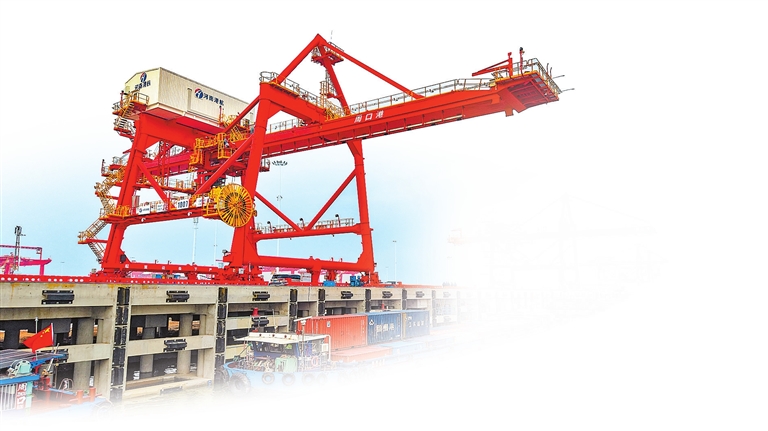
Core Insights - The establishment of the Zhoukou Port Central Operation Area marks the entry of Henan Province into the "one million TEU" era, with a designed annual throughput capacity of 1.075 million TEUs [1] - Zhoukou Port is the largest and most equipped inland container terminal in Henan, featuring 13 berths with a total length of 1,089 meters [1] - The port utilizes full-process automation with advanced technologies such as automated quay cranes and unmanned container trucks, significantly enhancing operational efficiency and safety [1] - A digital twin technology-based "port, shipping, and lock" joint scheduling platform has been developed to optimize the management of the Sha Ying River basin, improving navigation efficiency [1] Industry Developments - Henan Province has established two major waterways, the Sha Ying River and the Huai River, with a total of 228 port berths across multiple ports including Zhoukou, Xinyang, and others [2] - As of November, the total port throughput in Henan reached 60.676 million tons, reflecting a year-on-year growth of 20.2%, with 48 container shipping routes opened [2] - Future plans include the continued development of waterways and ports in four major river basins, aiming to expand the shipping network and enhance the economic benefits of inland shipping [2]
小集退场 大集扬帆 河南内河航运驶向新时代
He Nan Ri Bao· 2025-12-24 23:20
Core Viewpoint - The opening of the Zhoukou Port Central Operation Area marks a significant development in enhancing the logistics and transportation capabilities of Henan Province, transforming it into a modern economic hub and addressing the shortcomings in high-end inland container terminals [6][7][12]. Group 1: Port Development - The Zhoukou Port Central Operation Area is the first dedicated container terminal in Henan with a capacity of over one million TEUs, representing a major upgrade in regional logistics infrastructure [6][7]. - The port has achieved six records in Henan's inland ports, including the largest construction scale and highest automation level [7]. - Zhoukou Port has opened 43 domestic and international shipping routes, including 19 foreign trade routes, facilitating a seamless connection between inland and maritime transport [8][12]. Group 2: Economic Transformation - Zhoukou is transitioning from a traditional agricultural area to a modern port economy, leveraging the port as a catalyst for industrial growth and urban development [8][10]. - The port's operation is expected to attract over 70 logistics and trade enterprises, enhancing the local economy and creating a new urban landscape [8][10]. - The development of the port is part of a broader strategy to enhance Henan's logistics hub status and improve transportation efficiency by breaking water transport bottlenecks [11][12]. Group 3: Strategic Initiatives - The "11246" project aims to achieve an annual cargo throughput of over 100 million tons and invest 100 billion yuan in the next 3-5 years, establishing new transport corridors [12][13]. - The provincial government is consolidating port and shipping resources to create a unified operational framework for inland shipping, moving away from fragmented development [18]. - The collaboration between Henan and neighboring provinces is expected to enhance inter-provincial waterway construction and improve service capabilities [18].
从“秒筛”到“监护”航空物流装上智慧“加速器”
Yang Shi Wang· 2025-12-24 00:10
Core Insights - The overall situation of air cargo in China has been improving since 2025, with business scale expanding and international air cargo becoming the main driver for growth [2] Group 1: Air Cargo Growth - In the first 11 months of 2025, the total cargo and mail transport volume reached 924.3 thousand tons, a year-on-year increase of 13.6% [2] - Domestic routes accounted for 525.4 thousand tons, growing by 8.1%, while international routes saw a significant increase of 21.8%, totaling 398.8 thousand tons [2] - The number of cargo flights has been increasing, with an average of 1,767 flights per week, up 15.7% from 2024 [3] Group 2: Technological Advancements - New technologies are enhancing air logistics efficiency and safety, with innovations like the "large cargo weak magnetic material rapid screening system" improving inspection times to about 20 seconds [4][5] - This technology allows for the screening of entire pallets of cross-border e-commerce goods, significantly increasing efficiency compared to traditional methods [6][7] - The introduction of temperature monitoring solutions for perishable goods is addressing critical issues in cold chain logistics, ensuring the quality of high-value products during transport [8][9] Group 3: Multi-Modal Transportation - The "air-sea-land" multi-modal transport service is addressing diverse market demands, allowing for efficient logistics solutions that combine speed, cost, and flexibility [10] - The "truck flight" model enables rapid ground transport of goods, with a reported 95% year-on-year increase in cargo transport volume to Ningbo Airport [15][16] - By the end of November, 44 "truck flight" routes had been established across Zhejiang Province, connecting 26 cities, enhancing the logistics network [16][17]
济宁港成北方内河亿吨大港
Xin Lang Cai Jing· 2025-12-22 17:14
Core Insights - Jining Port has achieved a historic milestone by surpassing 100 million tons in cargo throughput, becoming the first inland port in northern China to reach this level, reflecting a significant transformation from a coal-centric hub to a diversified logistics center [13]. Infrastructure Development - Jining Port's success is rooted in decades of infrastructure development, with the Jining section of the Grand Canal accounting for 24% of the total navigation length and 58% of high-grade waterways in Shandong Province [2]. - Liangshan Port, as the largest bulk cargo hub in northern Jiangsu, supports this growth through a multimodal transport model that integrates road, rail, and water transport, significantly reducing transportation time from 5 days to 3 days for coal shipments [2]. Operational Efficiency - Liangshan Port has seen a remarkable increase in operational efficiency, with average loading rates for coal exceeding 780 tons per hour and container throughput surpassing 190,000 TEUs, marking a year-on-year growth of over 40% [2][3]. - The port's innovative "Fifteen Lines" management model has stabilized daily cargo handling at over 60,000 tons, with monthly throughput exceeding 4 million tons in June and August [3]. Cargo Diversification - The cargo composition at Jining Port has evolved from over 70% coal five years ago to a more diversified mix including steel, machinery, and food products, reflecting a shift towards a manufacturing-driven economy [6]. - The introduction of cold chain logistics at Longkong Port has enabled rapid delivery of agricultural products, such as garlic, to international markets, enhancing the port's role in global trade [6]. Economic Impact - The integration of port and industry has led to the establishment of seven industrial parks, with the potential for significant economic growth, including projected revenues exceeding 30 billion yuan from the second phase of Liangshan Port [3][9]. - Jining Port's logistics network now spans 20 provinces and 152 cities, with international logistics extending to 19 countries, demonstrating its role as a catalyst for regional economic development [11]. Future Prospects - Jining is committed to enhancing its position as a northern inland shipping center through ongoing projects aimed at upgrading waterways and developing new energy vessel manufacturing [12]. - The port's strategic initiatives are expected to further drive the integration of industry and urban development, fostering a robust economic environment along the Grand Canal [12].

新生力量破局多式联运——专访扬州市班列公司董事长刘冬宁
Sou Hu Cai Jing· 2025-12-22 09:54
Core Viewpoint - The rapid growth of Yangzhou Class Train Company reflects the high-quality development of multimodal transport in Jiangsu, significantly contributing to foreign trade and supply chain stability in the region [1][11]. Group 1: Company Development - Yangzhou Class Train Company officially launched the "Yangzhou-Suzhou-Moscow" China-Europe freight train, marking a significant milestone in its operational capabilities [1]. - The company was established in September 2024 and began operations in October 2024, leveraging its strategic location and modern facilities to enhance multimodal transport efficiency [1]. Group 2: Operational Model - The "Yangzhou-Suzhou-Moscow" train employs an innovative operational model that integrates the Suzhou train platform with mainline connections, addressing logistics pain points and achieving upgrades in efficiency, cost, and stability [4]. - The train's journey takes 10-15 days, saving approximately 40% compared to traditional sea transport, and reduces overall logistics costs by about 10% through optimized resource integration [4]. Group 3: Service Offerings - The company offers a "sea-rail combined + international train" service model, allowing direct delivery from factories to overseas warehouses, significantly reducing inventory pressure and transit times [5]. - Successful shipments of high-value products like photovoltaic panels and automotive components have enhanced the global competitiveness of regional manufacturers [5]. Group 4: Strategic Expansion - The company aims to expand its service network, with plans for stable operations to Shanghai and Ningbo by 2025, and to develop new international routes, including a "China-Kyrgyzstan-Uzbekistan" rail-road combined transport service [7][8]. - The long-term vision includes establishing a modern logistics hub in Jiangsu, focusing on multi-modal transport and comprehensive service platforms [8]. Group 5: Collaborative Efforts - Yangzhou Class Train Company is enhancing its logistics network within Jiangsu by increasing existing routes and developing new connections to major ports, aiming for daily operations to Shanghai and improved service frequency to other ports [10]. - The company plans to expand its reach to Central Asia and Europe through strategic partnerships with other regional hubs, creating a robust multimodal transport framework [10].
北方内河首破亿吨!济宁港“百货通江”以港产城融合绘就运河盛景
Qi Lu Wan Bao· 2025-12-22 06:55
Core Insights - Jining Port has achieved a historic milestone by surpassing a cargo throughput of 100 million tons, marking it as the first inland port in northern China to reach this level, with a year-on-year growth of 18.5% [1][2] - The transformation of Jining from a "coal transportation" hub to a "diversified logistics" center is driven by the integration of port and industry, creating new development momentum [1][2] Infrastructure Development - Jining Port's growth is supported by decades of investment in port and shipping infrastructure, with 210 kilometers of the main waterway accounting for 24% of the total length of the Grand Canal [2] - The port features 103 berths for 1,000-ton vessels, facilitating a multi-modal transport model that includes rail and water transport, significantly enhancing logistics efficiency [2][3] - The efficiency of coal loading at Liangshan Port has improved, with average loading rates exceeding 780 tons per hour, and container throughput has increased by over 40% year-on-year [2][3] Cargo Diversification - The cargo composition at Jining Port has evolved from over 70% coal five years ago to a more diverse mix including steel, machinery, and food products [5][6] - The introduction of a cold chain facility at Longgong Port has enabled rapid delivery of agricultural products, such as garlic, to international markets [5][6] Economic Impact - The integration of port and industry has led to the establishment of seven hundred billion-level industrial parks, enhancing regional economic development [8][10] - Jining Port's logistics network now covers 20 provinces and 152 cities, with international logistics extending to 19 countries, contributing to a projected revenue of nearly 100 billion yuan for the port industry this year [10] Future Prospects - The ongoing development of the second phase of Liangshan Port is expected to increase its cargo handling capacity to 80 million tons and container throughput to over 400,000 TEUs, further solidifying its role as a key inland port [3][4] - Jining is committed to enhancing its position as a northern inland shipping center through strategic projects aimed at upgrading waterways and manufacturing new energy vessels [10]
前11月国家铁路发送货物37.27亿吨 旅客发送量42.8亿人次创同期新高
Chang Jiang Shang Bao· 2025-12-21 23:12
Core Insights - The China National Railway Group reported a total freight volume of 3.727 billion tons from January to November 2025, marking a year-on-year increase of 2.7% [1] - The number of passengers transported by rail reached 4.28 billion, a 6.6% increase year-on-year, setting a historical record for the same period [4] Freight Transportation - The China-Europe (Asia) freight trains operated a total of 31,200 trains, reflecting a 9.0% year-on-year growth [1][3] - The railway sector signed logistics contracts totaling 1.4 billion tons, with a significant increase in intermodal transport, sending 15.78 million TEUs, up 15.4% year-on-year [2] - Key commodities transported included 1.064 million tons of cotton, up 31.8%, and increases in smelting materials and grain by 8.5% and 10.0%, respectively [1] Passenger Transportation - The average daily operation of passenger trains was 11,258, a 7.1% increase year-on-year [4] - New services were introduced to cater to group travel needs, including themed trains for events and tourism [4] - Cross-border passenger services were enhanced, with significant numbers of travelers on international routes, including 28.94 million on the Guangzhou-Shenzhen-Hong Kong high-speed rail [4] Infrastructure Investment - The railway sector completed fixed asset investments of 753.8 billion yuan, a 5.9% increase year-on-year, contributing to economic development [5]