
套息交易

Search documents
港元资金利率之谜:为何长期低于美元?鲁政委详解港美资金利差现象
Sou Hu Cai Jing· 2025-09-05 02:22
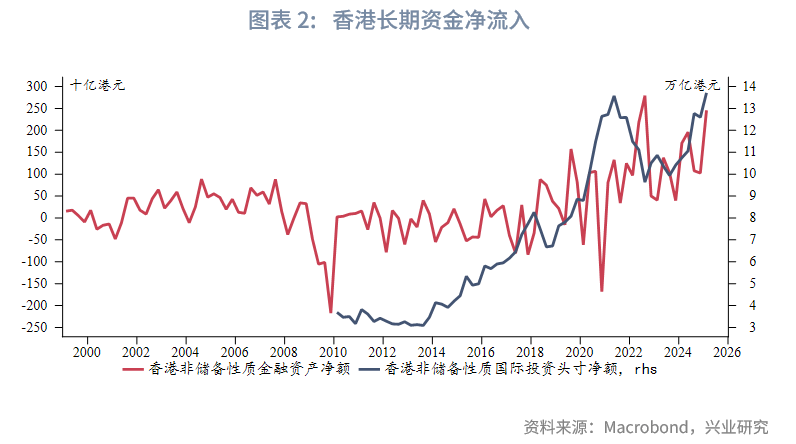
Core Insights - The phenomenon of Hong Kong dollar (HKD) interest rates being persistently lower than US dollar (USD) interest rates is primarily attributed to long-term net capital inflows leading to excess HKD liquidity [1][6] - The significant growth in HKD monetary base since 2000 is largely due to Hong Kong's status as a free trade port and a gateway between China and the world, resulting in substantial international capital inflows, particularly into the securities market [1] - The HKD/USD exchange rate has remained close to the strong-side guarantee level of 7.75, reflecting the impact of these capital inflows [1] Group 1 - The demand for short-term foreign exchange fund notes has surged as Hong Kong banks manage liquidity in the context of ongoing net capital inflows [2] - The Hong Kong Monetary Authority (HKMA) has increased the supply of high-quality foreign exchange fund notes, leading to an excess of HKD liquidity in the market [2] - The HKD swap market plays a crucial role in HKD funding, with active trading and strong liquidity, resulting in actual swap points being consistently lower than theoretical swap points [2] Group 2 - The carry trade between HKD and USD offers some opportunities, but the strategy is subject to significant short-term volatility, making it difficult to maintain a zero interest rate differential over the long term [6] - Market interventions by the HKMA can have a substantial impact, such as causing rapid widening of the HKD/USD interest rate spread following interventions [6] - The persistent lower interest rates of HKD compared to USD are influenced by multiple factors, including excess liquidity from long-term capital inflows, strong demand for HKD in the swap market, and the short-term volatility of carry trades [6]

土耳其政局动荡引发抛售 华尔街下调央行降息幅度预期
智通财经网· 2025-09-04 10:56
Group 1 - The Turkish court's confrontation with the main opposition party has escalated, leading to market sell-offs and prompting Wall Street banks to adjust their expectations regarding the Central Bank of Turkey's interest rate cuts [1] - Morgan Stanley and JPMorgan now predict a 200 basis point cut in the benchmark interest rate at the upcoming monetary policy meeting on September 11, down from a previous expectation of a 300 basis point cut [1] - The recent political turmoil is causing investors and financial institutions to reassess the outlook for Turkey's interest rate cut cycle, with the Central Bank having restarted rate cuts in July, lowering the benchmark rate to 43% [1] Group 2 - JPMorgan analyst Fatih Akcelik suggests that the Central Bank may maintain policy rates significantly above overall inflation to prevent further dollarization among the Turkish populace amid political instability [2] - Despite a strong domestic demand in Q2, Turkey's inflation rate remains high at 33%, with a recent court ruling prompting state banks to sell approximately $5 billion in foreign exchange to stabilize the lira [2] - Morgan Stanley analyst Hande Kucuk indicates that recent macro data and domestic uncertainty necessitate a reduction in the magnitude of interest rate cuts to keep market volatility manageable [2] Group 3 - Not all analysts have quickly adjusted their interest rate cut expectations; Barclays economist Ercan Erguzel maintains a forecast of a 250 basis point cut [3] - The recent political dynamics are being monitored for their impact on both non-resident and resident investor positions, with a reported withdrawal of approximately $3 billion from carry trade positions [3] - A previous market turmoil in March, linked to the arrest of Istanbul's mayor, led to a suspension of the interest rate cut cycle and significant foreign exchange sales by banks to support the lira [3]
人民币强势逼近“7”关口,A股再创新高迎外资
Sou Hu Cai Jing· 2025-09-03 05:47
Group 1 - The recent surge in the Chinese financial market is characterized by a strong appreciation of the Renminbi and the A-share market, attracting global attention [1][2] - Since August, the offshore Renminbi has appreciated nearly 1000 basis points against the US dollar, with a total increase of approximately 3000 basis points since early April [1] - The Renminbi's strength is supported by multiple internal and external factors, including a weakening US dollar and expectations of interest rate cuts by the Federal Reserve [1][2] Group 2 - China's economic resilience is a crucial foundation for the Renminbi's strength, with a cumulative export growth rate of 6.1% from January to July and a rebound in trade settlement [2] - The A-share market has seen significant activity, with margin trading balances exceeding historical highs, reaching approximately 2.3 trillion yuan [2] - Foreign capital inflows into the Chinese stock market have indirectly supported the Renminbi's appreciation from around 7.2 to 7.13 since early August [2] Group 3 - The market is focused on whether the Renminbi can break the psychological barrier of 7.0, with expectations of continued appreciation driven by a strong middle rate [3] - Analysts suggest that the Renminbi may experience a rapid convergence of onshore and offshore rates, with potential upward movement towards 7.1 [3] - Despite the positive outlook, challenges remain, particularly in the real estate market and private demand, which may limit the extent of the Renminbi's and A-share market's strength [3]
人民币汇率能否升破7
2025-09-02 00:42
Summary of Key Points from the Conference Call Industry Overview - The discussion revolves around the Chinese currency, Renminbi (RMB), and its exchange rate dynamics against the US dollar, particularly focusing on the implications of recent monetary policy adjustments by the People's Bank of China (PBOC) [2][3][5]. Core Insights and Arguments 1. **PBOC's Policy Adjustments**: The PBOC has raised the RMB's central parity rate by over 1,000 basis points to stabilize market expectations and prevent significant fluctuations in the exchange rate [2][3]. 2. **Stability in US-China Negotiations**: The PBOC aims to avoid large-scale depreciation or appreciation of the RMB to maintain stability during critical negotiations with the US, particularly ahead of the APEC meeting [2][3]. 3. **Market Reactions**: The market has responded to the PBOC's guidance, with the spot exchange rate aligning with the central parity, allowing exporters time to hedge against risks [2][3][4]. 4. **Carry Trade Resurgence**: A new wave of carry trades has emerged in the RMB market, driven by low volatility and favorable interest rate differentials, further supporting RMB appreciation [4][6]. 5. **Future Exchange Rate Trends**: The RMB's future trajectory will depend on the central parity adjustments. If it falls below 7.10, it may signal accelerated appreciation, although the process is expected to be gradual [5][12]. 6. **Impact of Exporters**: Exporters play a crucial role in the foreign exchange market, holding approximately $421.1 billion in pending settlements, which could influence RMB appreciation if they convert their dollar holdings [8][9][11]. 7. **Risk Management by Exporters**: Exporters have become more cautious in managing foreign exchange risks, with 30% of their pending settlements hedged against currency fluctuations, a significant improvement from previous years [10][11]. 8. **Potential for Exchange Rate Peaks**: If the spot exchange rate drops below 7.10, it could trigger a wave of conversions from dollars to RMB, leading to further appreciation [11][12]. 9. **Long-term Outlook**: The RMB is expected to appreciate gradually over the next few months, with market expectations aligning with a long-term upward trend against the backdrop of a depreciating dollar [12][13]. 10. **Cross-Border Capital Flows**: The RMB's appreciation may attract cross-border capital back into Chinese financial assets, despite short-term volatility [14][18]. Other Important but Overlooked Content - **Volatility Trends**: Recent increases in volatility (3.5% to 4%) could lead to forced unwinding of carry trades, potentially pushing the RMB higher [7][16]. - **Market Sentiment**: The sentiment around the RMB's appreciation is influenced by broader market conditions, including the performance of the US dollar and the PBOC's ongoing policy adjustments [5][17]. - **Technical Factors**: Technical aspects such as settlement and carry trades will also play a role in shaping the RMB's future exchange rate movements [5][12].
利好!人民币,突发!
中国基金报· 2025-09-01 10:23
Core Viewpoint - The article discusses the increasing bullish sentiment towards the Chinese Yuan (RMB) against the US Dollar, driven by hedge funds betting on RMB appreciation and expectations of supportive policies from China [2][3]. Group 1: Hedge Fund Activity - Hedge funds are increasing their positions in options markets, indicating a belief in further appreciation of the RMB against the USD [3]. - The demand for options that profit from RMB appreciation is rising, with targets set for the RMB to strengthen to 7 or better by year-end [3]. - Standard Chartered's Saurabh Tandon noted an increase in demand for bearish USD/RMB options, particularly from hedge fund clients, as the implied volatility of short-term options has decreased [5]. Group 2: Market Sentiment and Economic Indicators - HSBC's Chen Jingyang reported improved investor sentiment towards Chinese assets due to fiscal policy support and "moderate progress" in US-China trade negotiations [5]. - The most actively traded option on the Singapore Exchange was a put option for USD/RMB with a strike price of 6.94, indicating a bullish outlook on the RMB [5]. Group 3: RMB Exchange Rate Projections - Dongwu Securities analyzed that the onshore and offshore RMB rates have recently broken through key levels, with expectations for the RMB to accelerate towards 7.1 [8]. - The ability of the RMB to break the 7.0 mark will depend on further guidance from the central parity rate [8]. - The foreign exchange market is currently in a phase of expected realization of RMB "catch-up" gains, with the central parity rate being a crucial variable for future exchange rate movements [8].

人民币汇率走势分析:能否升破7.0?关注中间价与套息交易变化
Sou Hu Cai Jing· 2025-08-31 17:48
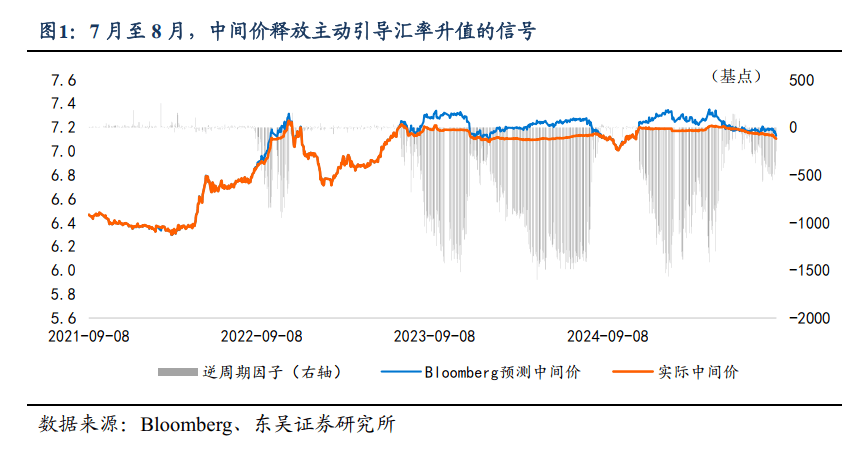
Core Viewpoint - The recent fluctuations in the RMB to USD exchange rate have drawn significant market attention, with the onshore and offshore RMB rates showing a trend towards convergence with the central parity rate [1][2]. Group 1: Exchange Rate Trends - On August 28, the onshore and offshore RMB against the USD broke through key levels of 7.15, 7.14, and 7.13, with the offshore rate (USDCNH) dipping below 7.12 [1]. - The central parity rate for USD to RMB on August 29 was reported at 7.1030, an increase of 33 basis points from the previous trading day, yet still 251 basis points lower than Bloomberg's forecast, indicating a signal for potential appreciation [2]. Group 2: Market Reactions and Expectations - The narrowing gap between the central parity and actual trading rates suggests active management of exchange rate expectations, potentially leading to RMB appreciation [2]. - Following the break of 7.15 in USDCNY and USDCNH, the market anticipates a quicker convergence of the spot rate towards the central parity [2]. Group 3: Impact on Trading Strategies - The recent increase in RMB exchange rate volatility may affect "carry trade" strategies, which have been popular due to low volatility and a significant interest rate differential of approximately 260 basis points since May [2]. - The rise in volatility on August 28 may indicate a shift in the carry trade environment, posing potential risks for traders [2]. Group 4: Export and Investment Implications - While the appreciation of the RMB against the USD may attract foreign investment in RMB-denominated assets, it could also impact exports [6]. - The RMB exchange rate index, such as the CFETS index, is more reflective of the export fundamentals, showing depreciation against a basket of currencies while appreciating against the USD, which helps mitigate risks from overseas tariffs [6]. Group 5: Uncertainties and Investor Considerations - The trajectory of the RMB exchange rate remains uncertain due to factors such as unclear Federal Reserve interest rate paths, delayed effects of China's easing policies, and fluctuations in non-USD currencies like the Euro and Yen [6]. - Investors are advised to closely monitor these factors to make more informed investment decisions [6].
芦哲:人民币汇率是否会升破7.0?
Sou Hu Cai Jing· 2025-08-30 13:46
Core Viewpoint - The recent appreciation of the Renminbi (RMB) against the US dollar is driven by a strong central parity rate, with onshore and offshore RMB exchange rates breaking through key levels, indicating a potential convergence towards the central rate [2][3] Group 1: RMB Exchange Rate Dynamics - Since late July, the central parity rate has consistently indicated a strong appreciation signal, leading to a rapid increase in the onshore and offshore RMB exchange rates, with expectations for the USD/CNY to move towards the 7.10-7.15 range [3][4] - As of August 29, the USD/CNY central parity rate was reported at 7.1030, up 33 basis points from the previous trading day, indicating a continued strong signal for appreciation [3][4] - The market is closely monitoring factors such as the reversal of "carry trade," the potential for "panic settlement," and the central parity's "bottom line thinking" to gauge future movements in the RMB exchange rate [2][4] Group 2: Market Reactions and Expectations - The RMB's appreciation trend is expected to accelerate, with the potential for the exchange rate to reach 7.1 in the short term, contingent on further guidance from the central parity rate [2][3] - The "carry trade" based on RMB has been re-attracted due to a significant interest rate differential of approximately 260 basis points between China and the US, although volatility may disrupt this trend [4][11] - The accumulated "pending settlement" amount as of July 2025 was approximately $421.1 billion, with an average holding cost around 7.05, indicating that a rapid depreciation below 7.10 could trigger some capital flight [10][11] Group 3: Implications for Exporters - The active settlement rate for export enterprises has shown a marginal increase, with July's rate at 48.24%, approaching the previous year's levels, which supports the RMB's appreciation [8][10] - The potential for "panic settlement" among exporters is lower than in 2024 due to increased hedging against exchange rate fluctuations, which may lead to a more orderly release of settlement funds [10][11] - The RMB's appreciation against the dollar may not adversely affect exports, as the RMB index against a basket of currencies has depreciated, helping to mitigate risks from overseas tariffs [24]

【广发策略港股&海外】HIBOR快速攀升对港股有何影响?
Xin Lang Cai Jing· 2025-08-24 23:17
Group 1 - The recent rise in HIBOR is attributed to a contraction in Hong Kong dollar supply and increased demand from southbound capital inflows, leading to a narrowing of the Hong Kong-US interest rate spread and triggering the unwinding of carry trades, which further pushed up HIBOR and the Hong Kong dollar [1][22][23] - Historical data shows that when HIBOR rises by 20 basis points, there is an 81% probability that the Hang Seng Index will decline on the same day, with an average drop of 1.9%, while the Hang Seng Tech Index has a 71% probability of decline with an average drop of 1.1% [4][26][27] - The impact of HIBOR on the Hong Kong stock market is indirect and short-term, primarily affecting financing rates linked to HIBOR, which influences market liquidity and investor behavior [12][39] Group 2 - The current macroeconomic environment, including expectations of US interest rate cuts and a weakening dollar, is favorable for Hong Kong stock market liquidity, supporting the market's performance [15][43] - A "barbell strategy" is recommended for asset allocation, focusing on stable value assets with high AH premium as a long-term base, while also considering growth assets with significant potential [15][47] - Recent trends indicate that southbound capital inflows remain strong, with notable net purchases in major stocks like Alibaba and Meituan, suggesting continued interest in Hong Kong equities [52]
港元五连升!汇率触及三月高位,南向资金单日涌入358亿
Sou Hu Cai Jing· 2025-08-19 23:48
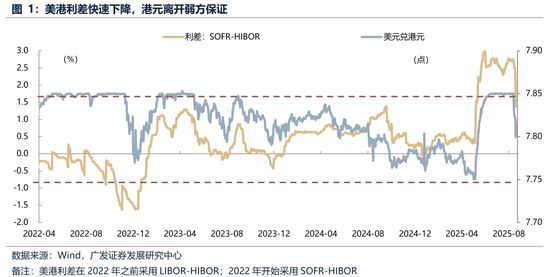
Core Viewpoint - The Hong Kong dollar (HKD) has experienced a significant appreciation against the US dollar, reaching a high of 7.7926 HKD per USD, marking the fifth consecutive trading day of strengthening [1]. Group 1: Exchange Rate Dynamics - The HKD has broken through multiple key levels, moving from a weak exchange guarantee level of 7.85 to 7.80, with the USD touching its lowest level in over three months at 7.7990 HKD [1]. - The recent appreciation follows a period of depreciation where the HKD fell to near the weak side of the peg, demonstrating the volatility inherent in the linked exchange rate system established in 1983 [3]. Group 2: Monetary Policy and Market Response - The Hong Kong Monetary Authority (HKMA) intervened by absorbing HKD 70.65 billion and HKD 33.76 billion on August 13 and 14, respectively, to stabilize the currency, resulting in a decrease in the banking system's aggregate balance from nearly HKD 175 billion to approximately HKD 53.7 billion [3]. - The tightening of HKD liquidity has led to a significant increase in the Hong Kong Interbank Offered Rate (HIBOR), with overnight rates rising from below 0.2% to nearly 3% [3]. Group 3: Impact of Southbound Capital Flows - The recent surge in the HKD is closely linked to a reversal in carry trade positions, as liquidity has tightened and the cost of HKD funding has increased [4]. - Southbound capital flows have created strong demand for HKD, with a record net inflow of nearly HKD 358.77 billion on August 15 and a total transaction volume of HKD 1,689.97 billion on August 19, further driving the appreciation of the currency [4].

时隔两月再现反转 港元对美元汇率“扶摇直上”
Sou Hu Cai Jing· 2025-08-19 23:39
Core Viewpoint - The Hong Kong dollar has experienced a significant appreciation against the US dollar, marking a reversal after two months of stability at the weak end of the peg, attributed to various market factors [1]. Group 1: Currency Performance - On August 19, the Hong Kong dollar rose sharply against the US dollar, reaching a high of 7.7926, with a daily increase of 0.35% [1]. - This marks the fifth consecutive trading day of appreciation for the Hong Kong dollar, breaking through multiple levels from 7.85 to 7.80 [1]. Group 2: Market Analysis - Analysts attribute the dramatic appreciation of the Hong Kong dollar to the Hong Kong Monetary Authority's interventions aimed at stabilizing the currency, leading to a qualitative change after a quantitative reduction in the currency's surplus [1]. - The narrowing interest rate differential between the Hong Kong dollar and the US dollar has prompted the unwinding of carry trades [1]. - The expectations of interest rate cuts by the Federal Reserve and a surge of capital inflows into Hong Kong stocks have also contributed to the strengthening of the Hong Kong dollar [1].