
种业振兴

Search documents
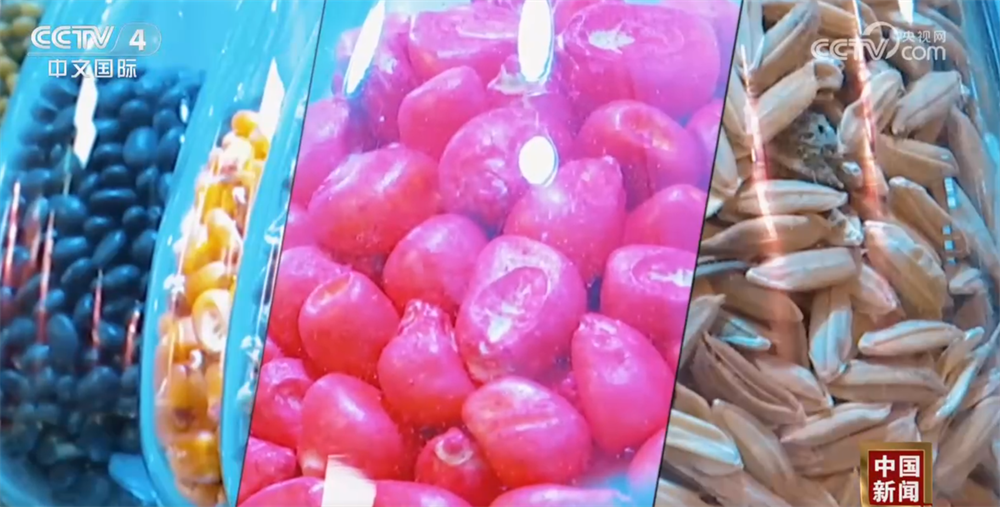
农业农村部登记特色农作物新品种1048个
Xin Lang Cai Jing· 2025-12-20 19:01
Core Insights - The Ministry of Agriculture and Rural Affairs has announced the registration of 1,048 new varieties of specialty crops while canceling 226 "imitation seed" varieties, enhancing dynamic management of crop variety registration [1][2] Group 1: New Crop Varieties - The newly registered varieties include high-yield and high-oil rapeseed (50 varieties with oil content ≥48%), high-oleic peanuts (21 varieties with oleic acid content ≥75%), and high-starch potatoes (6 varieties with dry matter content ≥25%) [1] - The new varieties reflect a diverse development, covering 76 types, including cherry tomatoes, fruit cucumbers, cabbage, sweet melons, gift watermelons, and wine grapes, which will enrich the public's food options [1] - The proportion of independently bred varieties has steadily increased, with 99% of the newly registered varieties being self-bred, and 98.5% of these being domestically developed, enhancing the self-sufficiency rate of seed for sugar beets [1] Group 2: Market Regulation - The Ministry is actively pursuing the "imitation seed" rectification initiative to purify the seed industry market, which involves the cancellation of 226 "imitation seed" varieties from crops such as cucumbers, melons, watermelons, tomatoes, and peas [2] - This initiative aims to protect the legitimate rights of breeders and boost confidence in research and development investments by companies [2]
一粒好麦种,种出丰收与幸福
Xin Lang Cai Jing· 2025-12-20 15:00
Core Viewpoint - The successful cultivation of the wheat variety "Yangmai 53" demonstrates significant advancements in agricultural biotechnology, particularly in disease resistance and yield improvement, benefiting both farmers and consumers [1][2][3]. Group 1: Agricultural Innovation - "Yangmai 53" has shown a yield increase of 100 jin per mu compared to ordinary varieties, resulting in an additional profit of 150 yuan per mu [1]. - The variety has proven to be resistant to Fusarium head blight, a major disease affecting wheat in the Yangtze River region, allowing farmers to save on pesticide costs and labor [2]. - The breeding process for "Yangmai 53" took 15 years, utilizing molecular marker-assisted breeding techniques to address challenges in disease resistance and high yield [2][3]. Group 2: Economic Impact - The total revenue increase from planting "Yangmai 53" across 2,000 mu exceeded 300,000 yuan due to higher yields and reduced costs [2]. - The expansion of planting area to 3,000 mu indicates growing recognition and trust in the "Yangmai 53" variety among farmers [2]. - The success of "Yangmai 53" reflects broader trends in wheat breeding in China, with new varieties like "Zhengmai 1860" and "Jimai 5198" also being developed to meet market demands for high-quality wheat [3]. Group 3: Future Prospects - The ongoing efforts in the seed industry revitalization are expected to yield more high-quality varieties, enhancing agricultural productivity and contributing to food security [4]. - The development of specialized wheat varieties for various food products is helping to meet the diverse quality demands of consumers [3].
巨野农商银行:金融赋能,绘就种业振兴新图景
Qi Lu Wan Bao· 2025-12-19 11:08
Core Viewpoint - The article highlights the significant role of Jiuye Rural Commercial Bank in supporting the agricultural sector, particularly in the breeding of high-quality seeds, which is crucial for the local economy in Jiuye County, Shandong Province [1] Group 1: Financial Support for Seed Breeding - Jiuye Rural Commercial Bank has achieved a 99% coverage rate for high-quality wheat seed breeding in the county, demonstrating its commitment to serving the agricultural sector [1] - The bank has designed targeted financial service plans to support the large-scale production of seeds, addressing the funding needs of seed breeding processes [2] Group 2: Comprehensive Financial Services - The bank provides a full range of financial support to various stakeholders in the seed industry, ensuring collaborative development across the entire industry chain [3] - Jiuye Rural Commercial Bank assists seed enterprises in signing order agreements with farmers, offering prices 15%-20% higher than the market rate to secure both farmer income and seed supply [3] Group 3: Innovative Financial Products - The bank promotes credit loans without collateral to facilitate quick approval and disbursement, catering to the high investment and risk nature of seed production [2] - It offers differentiated credit products tailored to various agricultural entities, including "Fulin Huimin Loan" for ordinary farmers and "Fulin Jinhua Loan" for women entrepreneurs [3]
走进“南繁硅谷”看向“种”图强 海南自贸港封关运作为种业振兴注入新动能
Yang Shi Wang· 2025-12-19 07:09
Core Viewpoint - Hainan is actively seeking optimal solutions for the revitalization of its seed industry, leveraging its unique geographical advantages and the operational framework of the Hainan Free Trade Port to enhance the potential of its agricultural seeds [1][3]. Group 1: Agricultural Advantages - Hainan's geographical location at 18 degrees north provides abundant sunlight, suitable temperatures, and ample rainfall, making it a "natural greenhouse" for crop growth [3]. - The region is accelerating the cultivation and development of new productive forces in the seed industry, utilizing its temperature advantages to allow crops to be bred one to two additional seasons [5]. Group 2: Technological Innovations - Technological innovations are pressing the "accelerator" for crop breeding, with the time required to develop new varieties reduced from 5-7 years to an expected 2-3 years due to the use of electronic accelerators for seed mutation [5]. - The introduction of international top-tier germplasm resources and research teams is anticipated to enhance the seed industry, alongside encouraging local enterprises to enter international markets [7]. Group 3: International Cooperation and Resource Management - A global plant and animal germplasm resource import and transit base is being established in the Moon Island of the Yazhou Bay Science and Technology City to facilitate the import and export of germplasm resources [9]. - Since 2018, approximately 1,030 batches of germplasm resources have been imported, with specific measures in place to facilitate the importation process unique to the Hainan Free Trade Port [9]. Group 4: Research and Development Enhancements - The implementation of new policies has significantly improved the survival rate of specific purpose seedlings during quarantine, increasing it to over 95% [11]. - The Hainan Free Trade Port is accelerating the gathering of research institutions, capital, and talent resources, with over 2,800 innovative seed enterprises now established in the Yazhou Bay Science and Technology City [13][15]. Group 5: Industry Upgrades and Opportunities - The integration of seed innovation, talent gathering, and the establishment of technology-driven seed companies is expected to drive the upgrade of the entire seed industry chain [19]. - The collaboration with international scientists and the application of advanced research equipment are anticipated to foster effective research cooperation and develop new technologies beneficial to agriculture, particularly in Africa [13].

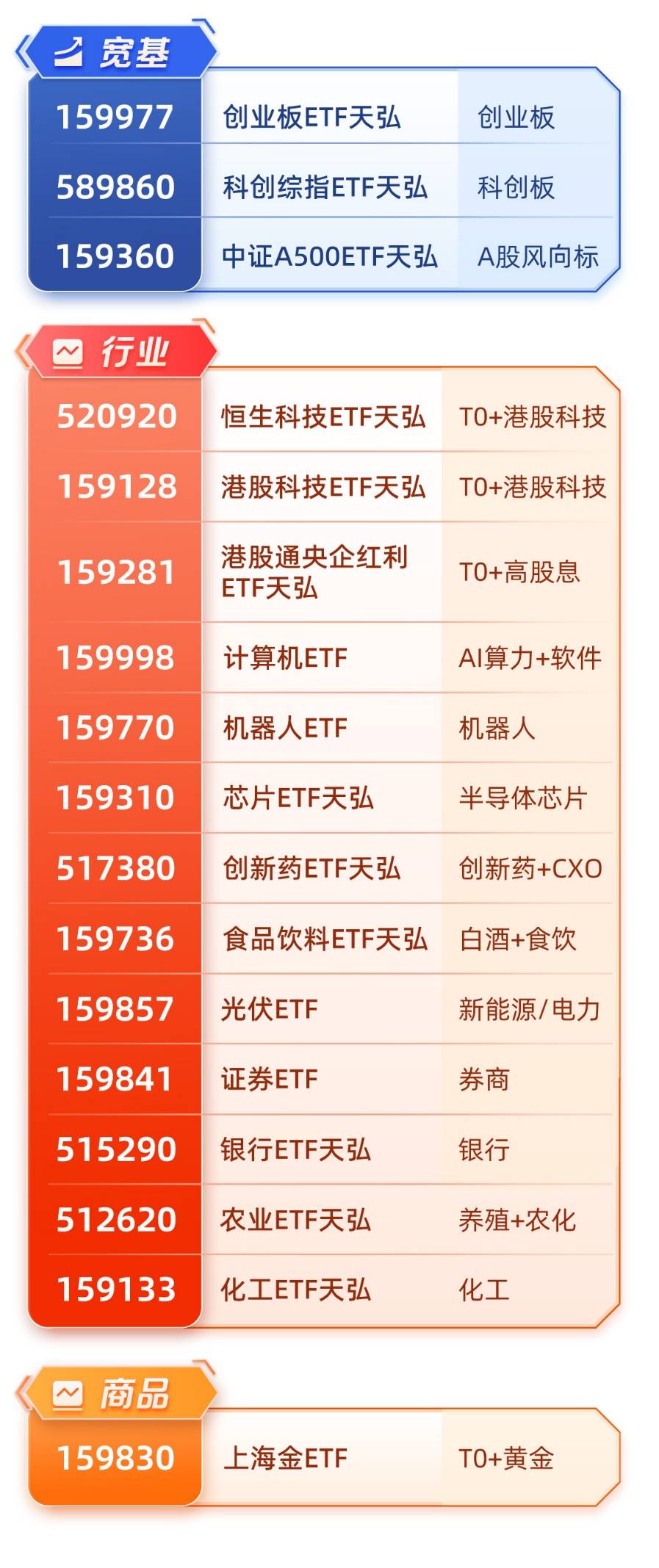
消费、农业布局窗口显现,食品饮料ETF天弘(159736)跟踪指数冲击四连阳,农业ETF天弘(512620)连续5日“吸金”近5000万元
Sou Hu Cai Jing· 2025-12-18 06:11
Core Viewpoint - The food and beverage ETF Tianhong (159736) and the agriculture ETF Tianhong (512620) are experiencing significant capital inflows, indicating investor interest in these sectors amid a mixed performance of underlying stocks [1][2][3]. Food and Beverage Sector - As of December 18, 2025, the food and beverage ETF Tianhong (159736) recorded a transaction volume of 13.79 million yuan, with the underlying index showing an upward trend and achieving four consecutive days of gains [1]. - The top-performing stocks within the food and beverage ETF include Laiyifen (603777) with a 10.01% increase, Xinnuowei (300765) up by 8.10%, and Liangpinpuzi (603719) rising by 4.48% [1]. - Over the past 10 trading days, the food and beverage ETF has attracted a total of 42.82 million yuan in capital [2]. - The ETF's portfolio is heavily weighted towards leading high-end and mid-range liquor stocks, with approximately 60% of its holdings in this category, while the remaining 40% includes leaders in beverages, dairy, condiments, and beer [4]. Agriculture Sector - The agriculture ETF Tianhong (512620) has seen a significant increase in scale, with a growth of 55.54 million yuan over the past week and an increase of 50 million shares [3]. - The agriculture ETF has also experienced continuous net inflows over the last four days, with a peak single-day net inflow of 30.62 million yuan, totaling 49.41 million yuan in capital [3]. - The agriculture ETF tracks the China Securities Agricultural Index, selecting 50 stocks that cover various sectors, including breeding (41.9%) and agricultural chemicals (17.7%), featuring leading companies like Muyuan and Haida [4]. Regulatory and Market Environment - The State Council's Food Safety Office has emphasized the importance of food safety management in preparation for the upcoming New Year, Spring Festival, and national meetings, aiming to ensure a safe environment for the public [7]. - China's agricultural seed autonomy has surpassed 95%, with significant achievements in domestic seed variety development, indicating a strong foundation for agricultural security [8]. - According to Zhongjin Company, the food and beverage industry is entering a new normal, with a weak overall consumption environment and a trend towards high quality-price ratios, functional products, and health-oriented consumption [9].
农业农村部:种业振兴行动取得积极成效
Xin Hua She· 2025-12-18 03:02
支持单位:农业农村部中国农垦经济发展中心 新华社音视频部制作 2025年,农业农村部会同有关部门扎实推进种业振兴各项任务落实落地,圆满完成"五年见成效"阶段性 目标任务,取得了一批重要标志性成果。目前,我国种源安全水平稳步提升,农作物自主选育品种占比 95%以上,畜禽、水产、蔬菜国产种源市场占有率分别超80%、85%和91%,农业用种安全总体有保 障、风险可管控的态势更加牢固。 记者:阮帅 胡璐 ...
自主选育品种占比超95% 我国农业用种安全有保障、风险可管控
Yang Shi Xin Wen· 2025-12-18 02:47
Core Insights - The agricultural sector in China is making significant progress in seed industry revitalization, with key milestones being achieved as part of a five-year effectiveness goal [1] Group 1: Seed Industry Development - The overall safety of agricultural seeds is well-ensured, with over 95% of crop varieties being independently bred [1] - Domestic market shares for livestock, aquatic products, and vegetable seed sources exceed 80%, 85%, and 91% respectively [1] - A new national-level genetic resource protection catalog for livestock has been established, and the identification rate of corn genetic resources has reached 70% [1] Group 2: Innovation and Resource Utilization - The core phenotype identification rate for corn resources has improved to 35%, with over 100,000 resource distributions made to support breeding innovation [1] - The seed industry enterprise cultivation system is being established, with over 60% of technology research tasks led by enterprises [1] - R&D investment in crop seed enterprises has doubled since 2020, enhancing competitive advantages in rice, wheat, and egg-laying hens [1] Group 3: Regulatory and Quality Improvements - The national seed supply guarantee rate has reached 80%, a 10 percentage point increase since 2020, with seed quality compliance rates stable at over 98% [2] - New plant variety protection regulations have been introduced, and a crackdown on illegal seed practices has led to a 20% decrease in related cases since 2020 [2]
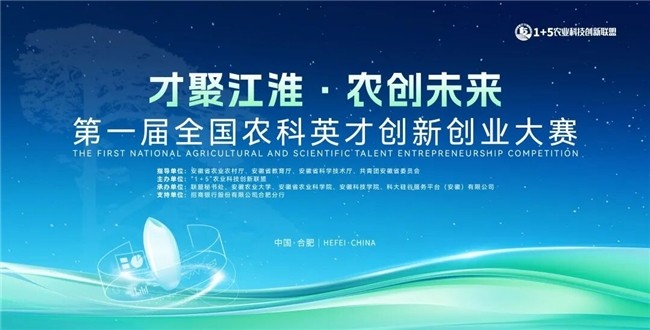
耕“新”不止!首届全国农科英才创新创业大赛圆满收官
Zhong Guo Jing Ji Wang· 2025-12-17 10:43
Group 1 - The first National Agricultural Science and Technology Talent Innovation and Entrepreneurship Competition was successfully held in Hefei, focusing on promoting rural revitalization and building a strong agricultural nation through a competitive platform for agricultural technology innovation [2] - The competition featured 32 teams from the creative and startup groups, evaluated by a panel of seven experts based on various criteria including technological barriers, market value, feasibility, team strength, and social benefits [3] - The projects presented were closely aligned with national strategies such as rural revitalization and smart agriculture, showcasing strong potential for regional economic activation, job creation, and industrial upgrading [3] Group 2 - During the award ceremony, gold, silver, and bronze awards were given to the best projects, with several high-quality projects signing agreements with local governments and investment institutions for technology cooperation and market expansion [4] - The launch of the Agricultural Technology Achievement Transformation Fund (Shennong Fund) provides robust financial support for agricultural technology projects, focusing on early-stage investments and project incubation [6] - The "1+5" Agricultural Technology Innovation Alliance aims to establish a mechanism for connecting technological achievements with market demands, offering comprehensive support for participating projects, including policy interpretation and resource integration [8] Group 3 - The competition has attracted high-level talents and research teams from across the country, contributing to a shift in the talent structure and technological ecosystem in the agricultural sector [9] - The innovation cycle of "talent aggregation - technological breakthroughs - achievement transformation - industrial upgrading" is gradually forming, enhancing the internal driving force for regional industrial innovation [9] - The competition will continue to play a pivotal role in facilitating the effective allocation of innovative resources, accelerating the transformation of technological achievements into productive forces, and supporting the construction of a strong agricultural nation [9]

第二十四届广东种业博览会在广州开幕 集中亮相6000多个新优奇特品种
Nan Fang Ri Bao Wang Luo Ban· 2025-12-15 07:44
Group 1 - The 24th Guangdong Seed Industry Expo aims to promote collaboration across the entire seed industry chain and facilitate the transformation of scientific achievements in major agricultural production areas in Guangdong [1][2] - The theme of the expo is "Strengthening Seed Industry, Promoting Agricultural Technology," aligning with national seed industry revitalization actions and provincial development strategies [1][2] - The expo showcases over 6,000 new and unique seed varieties, highlighting the increasing popularity of quality vegetables and the trend towards "fruitification" in vegetable breeding [2][3] Group 2 - The Guangdong Seed Industry Revitalization Action has achieved significant results, with the implementation of 11 national seed industry enhancement projects and the introduction of various new seed varieties [2][3] - The expo features a comprehensive display of agricultural technology advancements, including a potato industry chain exhibition and modern agricultural equipment, showcasing over 200 new machines and technologies [4][5] - A three-level collaborative mechanism has been established to promote agricultural technology services, creating a new efficient agricultural technology service framework in Guangdong [5][6] Group 3 - The expo has attracted over 1.3 million attendees since its inception, with more than 1,000 participating units each year, facilitating a comprehensive platform for seed selection, breeding, and sales [3] - Partnerships have been formed between local governments and enterprises to establish innovation bases for seed industry development, enhancing collaboration between academia, industry, and local authorities [6]
关注冬季动物疫病变化,看好牧业大周期
SINOLINK SECURITIES· 2025-12-14 12:39
Investment Rating - The report indicates a neutral investment rating for the agricultural sector, with expectations of limited price fluctuations in the near term [2][13]. Core Insights - The agricultural sector is currently experiencing a mixed performance, with the agricultural index underperforming compared to the Shanghai Composite Index [2][13]. - The pig farming industry is facing a downward price trend, with the average pig price at 11.48 yuan/kg, indicating a continued loss across the sector [21][22]. - Poultry farming shows signs of stabilization, with white feather chicken prices at 7.33 yuan/kg, reflecting a slight increase, while yellow feather chicken prices are improving due to better demand [28][31]. - The beef market is expected to see price increases as it enters the consumption peak season, with live cattle prices at 26.68 yuan/kg [33]. - The planting sector is experiencing tight supply conditions, with corn prices rising to 2238.57 yuan/ton, indicating potential for price increases if crop yields decline [37][38]. - Feed prices are stabilizing, with pig feed prices at 3.32 yuan/kg, while aquatic product prices are showing upward trends [51][55]. Summary by Sections 1. Swine Farming - The average weight of pigs at market is 129.63 kg, with prices expected to continue declining due to excess supply and ongoing losses in the industry [22][21]. - The report suggests focusing on low-cost, high-quality enterprises such as Muyuan Foods and Wens Foodstuffs [22][24]. 2. Poultry Farming - The white feather chicken market is under pressure, but yellow feather chicken prices are improving due to better demand and reduced supply [28][31]. - The overall profitability in poultry farming is expected to improve if consumer demand recovers [28][31]. 3. Livestock - The beef market is anticipated to rise as it enters the peak consumption season, with live cattle prices showing a year-on-year increase [33]. - The dairy sector is experiencing a reduction in stock, with raw milk prices expected to stabilize in the coming year [33]. 4. Planting Chain - Corn prices are on the rise, with a current price of 2238.57 yuan/ton, indicating a tightening supply situation [37][38]. - The planting sector is expected to improve if there are significant reductions in crop yields due to adverse weather conditions [37][38]. 5. Feed & Aquatic Products - Feed prices are stabilizing, with pig feed prices at 3.32 yuan/kg, while aquatic product prices are showing positive trends [51][55]. - The report highlights the importance of monitoring price movements in the feed and aquatic sectors for investment opportunities [51][55].

