资产多元化

Search documents
Innovative Industrial Properties(IIPR) - 2025 Q2 - Earnings Call Transcript
2025-08-07 17:00
Financial Data and Key Metrics Changes - For Q2 2025, total revenues were $62.9 million, a 12% decrease from Q1 2025, primarily due to tenant defaults [18] - Adjusted funds from operations (AFFO) for Q2 was $48.4 million or $1.71 per share, also a 12% decrease compared to Q1 2025 [18] - The company maintains a strong balance sheet with $2.6 billion in primarily unencumbered gross assets and a low debt to gross assets ratio of 11% [19] Business Line Data and Key Metrics Changes - The company is focused on optimizing occupancy across its cannabis portfolio while facing challenges from tenant defaults [7][8] - The investment in IQHQ, a life science REIT, is expected to be highly accretive to AFFO with a blended yield exceeding 14% [5][6] Market Data and Key Metrics Changes - The cannabis industry is forecasted to grow at a compounded annual growth rate of approximately 7% from 2024 to 2029, reaching $44 billion by 2029 [7] - The life science fundraising in 2025 is on track to be the highest since 2021, indicating strong investor confidence in the sector [5] Company Strategy and Development Direction - The company is diversifying its portfolio by investing in the life science sector through IQHQ, while continuing to evaluate opportunities in the cannabis industry [4][5] - The management team emphasizes the importance of maintaining a conservative financial profile and pursuing high-quality investments with attractive risk-adjusted returns [19][16] Management's Comments on Operating Environment and Future Outlook - Management acknowledges the persistent macroeconomic uncertainty and regulatory challenges in the cannabis industry but remains optimistic about long-term growth [7][12] - The company is actively pursuing legal remedies to enhance the performance of its real estate portfolio amid tenant defaults [8][10] Other Important Information - The company has closed on a $7.8 million acquisition in Maryland and completed two dispositions totaling $10.8 million in Michigan and California [15] - The company repurchased 367,000 shares of common stock at a weighted average price of $53.98 per share for a total cost of $19.8 million [19] Q&A Session Summary Question: Can you walk us through the real estate investment case specifically for IQHQ? - Management clarified that the investment is in an operating company within the life science sector, not directly in real estate, and highlighted the potential recovery in the life science industry [22][23] Question: What attracted you to IQHQ specifically? - The management noted that IQHQ's portfolio is well-positioned to capitalize on AI demand and the future growth of the life science industry [27][28] Question: How does the investment in IQHQ compare to share buybacks? - Management stated that the investment is expected to provide a higher return than the current dividend yield, emphasizing the importance of overall cost of capital [33][34] Question: How does the decision to diversify capital away from cannabis relate to dividends? - Management indicated that the investment in IQHQ was strategically evaluated to provide current income and yield while addressing underlying issues in the cannabis sector [41][44] Question: What is the current cash yield on the revolver investment? - The current cash yield on the investment is stated to be north of 10% [64]

美元资产偏好松动 中国台湾投资者转向欧洲市场
智通财经网· 2025-07-29 03:41
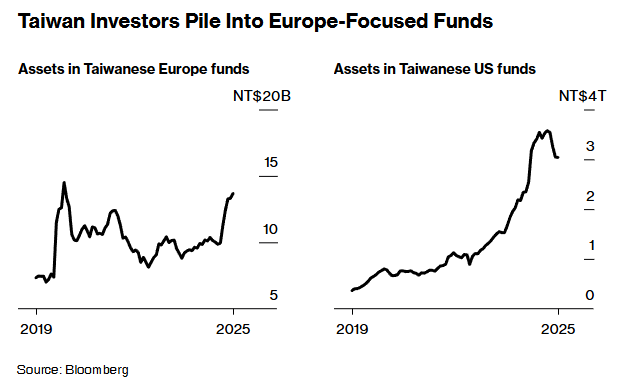
Group 1 - Taiwanese investors are reassessing their long-standing preference for US dollar assets and shifting focus towards European investments, with total assets in European funds reaching NT$13.7 billion (approximately US$463 million), the highest level since 2019 [1] - In the first half of 2025, Taiwanese investors are projected to invest NT$14.1 billion in overseas funds focused on Europe, marking the largest semi-annual investment scale since 2021 [1] Group 2 - The total assets of US-focused local funds in Taiwan decreased by NT$538 billion in the first half of 2025, the largest semi-annual decline since records began in 2003 [3] - The assets held by Taiwanese investors in US-focused overseas funds also dropped by NT$121.6 billion, representing the largest decline since records began in 2006 [3] - As of the end of May, Taiwan held US$292.9 billion in US Treasury bonds, a decrease of US$5.9 billion from April, marking the largest single-month decline since September 2022 [3] Group 3 - The shift in investment strategy among Taiwanese high-net-worth institutional investors reflects a broader trend among Asian export economies seeking to diversify away from US markets, driven by factors such as trade wars and increasing political polarization in the US [3] - Morgan Stanley's market strategist Agnes Lin noted that institutional investors are rapidly reallocating their assets, indicating a long-term diversification strategy [3] Group 4 - Over 90% of the NT$22 trillion in overseas investments by Taiwanese life insurance companies are in US dollar assets, exposing them to significant currency risk [4] - The New Taiwan Dollar has appreciated over 11% against the US dollar this year, leading to exchange losses exceeding NT$145 billion for local insurance companies [4] - Discussions are emerging in Taiwan regarding the need for broader asset diversification due to the volatility of the New Taiwan Dollar, with affluent families increasingly inquiring about diversifying into other currencies, particularly the euro [4]

债券通多项优化措施出台!推出八年成绩斐然,中国债市影响力吸引力显著提升
证券时报· 2025-07-09 00:02
Core Viewpoint - The Bond Connect has significantly enhanced the international appeal and influence of China's bond market, with over 80 of the world's top 100 asset management firms now investing in it, reflecting a strong demand for connectivity between global and onshore markets [1][3]. Group 1: Bond Connect Overview - The Bond Connect, launched in 2017, serves as a crucial mechanism for connecting the bond markets of Hong Kong and mainland China, facilitating trading for both domestic and international investors [3]. - As of May 2025, the onshore bond market has attracted 1,169 international investors from over 70 countries and regions, with foreign institutions holding onshore bonds worth 4.35 trillion yuan, reflecting a compound annual growth rate of approximately 12% over the past five years [3][4]. Group 2: Increasing Attractiveness for Foreign Investment - The bond market's appeal is rising amid a complex international landscape, with the Hong Kong Securities and Futures Commission emphasizing the importance of developing the RMB fixed income market [6][7]. - Factors contributing to the attractiveness of Chinese bonds include the market's size (second largest globally), low government debt-to-GDP ratio, low correlation with major global markets, and favorable risk-adjusted returns [7]. Group 3: Recent Optimizations and Measures - On July 8, new measures were announced to optimize and expand the Bond Connect, including broadening the scope of participants in the southbound channel to include non-bank institutions such as brokerages and funds [9][13]. - The People's Bank of China and the Hong Kong Monetary Authority introduced enhancements to the offshore RMB bond repurchase mechanism, allowing for greater liquidity management and operational convenience [14]. Group 4: Future Growth Potential - Despite the current low proportion of international investors in the Chinese bond market (approximately 3%), there is significant growth potential as global investors seek diversified asset allocations [10][12]. - The Bond Connect is expected to facilitate easier access for global investors to capitalize on China's growth opportunities, with ongoing developments in derivative products to enhance risk management [10][11].

债券通推出八年成绩斐然 中国债市影响力吸引力显著提升
Zheng Quan Shi Bao· 2025-07-08 18:48
Core Insights - The Bond Connect has significantly enhanced the connectivity between the Hong Kong and mainland China bond markets since its launch in 2017, with ongoing improvements leading to increased international participation [1][2] - As of May 2025, over 70 countries and regions have engaged with the Chinese interbank bond market, with foreign institutions holding approximately 4.35 trillion yuan in onshore bonds, reflecting a compound annual growth rate of about 12% over the past five years [2] - The recent measures announced by the People's Bank of China and the Hong Kong Monetary Authority aim to optimize and expand the Bond Connect, enhancing liquidity and competitiveness in the offshore RMB business [7][8] Group 1: Bond Connect Development - The Bond Connect has become the preferred channel for international investors to access the mainland interbank bond market, indicating a strong demand for deeper connectivity between global and onshore markets [2] - The total number of international investors participating in the Chinese interbank bond market has reached 1,169, with significant trading volumes recorded [2] - The Northbound Swap Connect has attracted 82 foreign institutions, with a total nominal principal amount of approximately 6.9 trillion yuan, showcasing substantial growth in trading activity [2] Group 2: Attractiveness of Chinese Bonds - The Chinese bond market is now the second largest globally, characterized by ample depth and liquidity, making it increasingly important in global asset allocation [4] - China's government debt-to-GDP ratio is relatively low compared to major developed economies, enhancing the appeal of its bonds [4] - The annualized volatility of onshore RMB bonds is approximately 1.3%, significantly lower than that of other developed markets, making them attractive for risk-adjusted returns [4] Group 3: Future Growth Potential - Over 30% of central banks surveyed plan to increase their holdings of RMB assets in the next five years, indicating a growing interest in Chinese bonds [5] - The expansion of the Southbound Connect is expected to facilitate greater overseas asset allocation by domestic investors, further driving growth in the bond market [5] - The current international investor participation in the Chinese bond market is only about 3%, suggesting significant room for growth as global investors seek diversification [8]

美股历史新高逼空“例外主义终结论“ 资金加速回流美国科技巨头
智通财经网· 2025-06-30 09:00
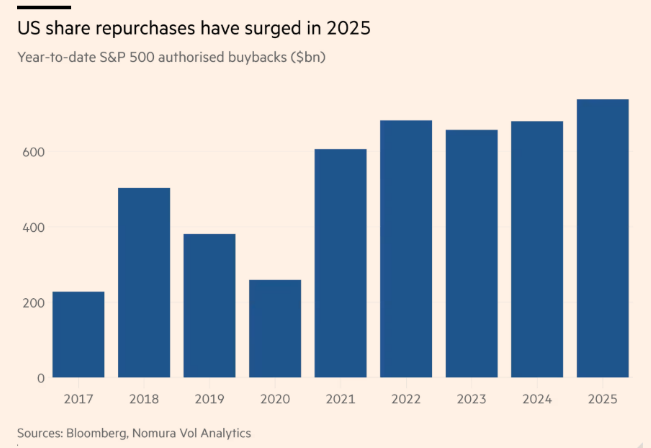
Group 1 - The U.S. stock market has rebounded strongly from tariff turmoil, with the S&P 500 index soaring 10% in Q2, significantly outperforming the European Stoxx 600 index, which rose less than 2% [1] - Despite a 7% increase in the Stoxx 600 index year-to-date, concerns are growing about the sustainability of Germany's trillion-euro defense and infrastructure plans, which are critical for European market performance [1] - U.S. economic data remains robust, with strong employment figures and stable unemployment rates, contrasting with declining business confidence in the EU and eurozone [1] Group 2 - Retail investors continue to buy on dips, while companies are engaging in record-scale stock buybacks, providing dual support for the U.S. stock market [3] - Tech stocks are leading the market rally, with companies like Nvidia reaching historical highs and Palantir's stock surging 50% in Q2, indicating ongoing investor interest in technology and crypto assets [4] - Despite the narrowing performance gap in Q2, the dollar remains 13% lower against the euro, and U.S. bonds are under pressure due to debt issues, leading analysts to caution about high valuations in the U.S. stock market [5]
超越欧元!黄金成为全球第二大储备资产
Di Yi Cai Jing· 2025-06-11 23:08
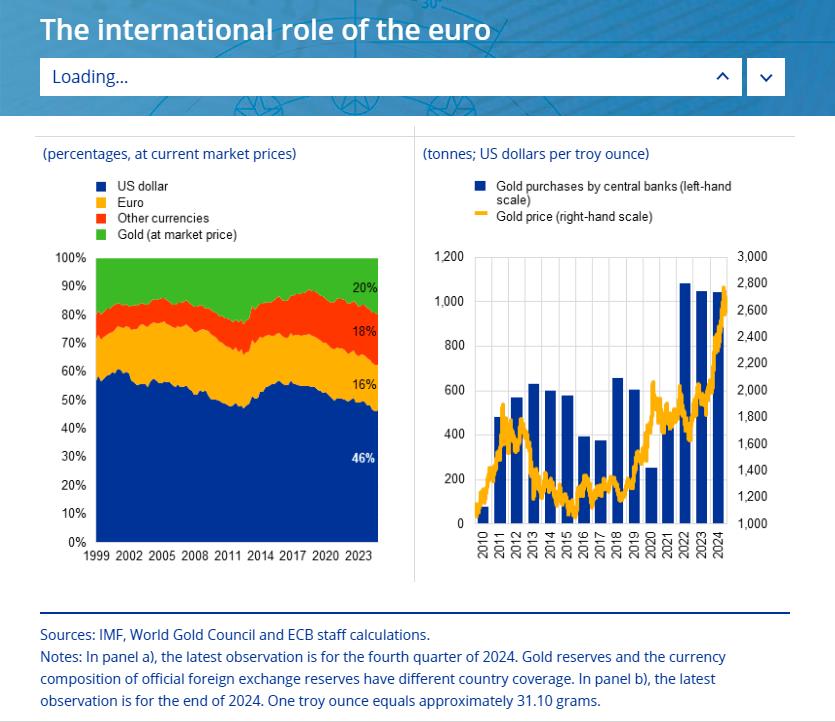
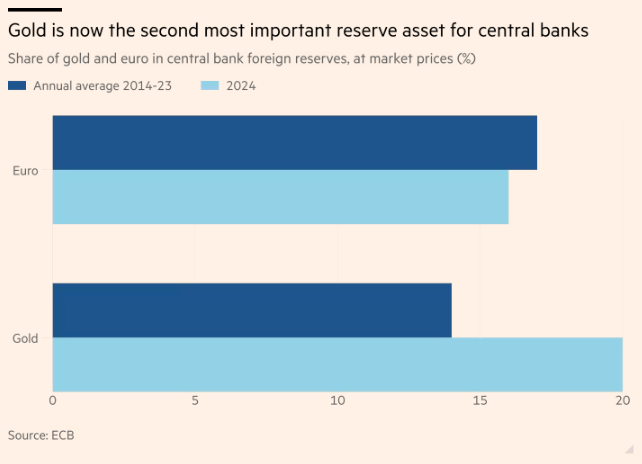
Group 1 - The European Central Bank (ECB) report indicates that gold has surpassed the euro to become the world's second-largest reserve asset, highlighting a trend of diversification in central bank assets [1][2] - As of the end of 2024, gold is projected to account for 20% of global official reserves, compared to the euro's 16%, driven by central bank purchases and record gold prices [2] - In 2024, central banks are expected to purchase over 1,000 tons of gold for the third consecutive year, with demand significantly influenced by geopolitical uncertainties and market volatility [2][3] Group 2 - The report reveals that approximately two-thirds of central banks invest in gold for asset diversification, while about 40% do so to hedge against geopolitical risks [3] - Countries affected by Western sanctions have seen a notable increase in gold's share of their official reserves, with these economies contributing to 50% of the largest annual growth in gold holdings since 1999 [3] - Several African nations are actively seeking to reduce reliance on the dollar by increasing gold purchases, with Tanzania investing $400 million in 6 tons of gold to stabilize its currency [3] Group 3 - The dollar's share of global foreign exchange reserves has declined by 2 percentage points in 2024, despite a slight increase in the euro's share, with the dollar now holding 46% of the market [4] - Over the past decade, the dollar's market share has decreased by 10 percentage points, indicating a sustained trend of de-dollarization [4] Group 4 - The ECB notes that since April, there are signs that euro assets may benefit from the declining confidence in the dollar, as U.S. Treasury yields rise while the dollar depreciates against the euro [9] - The instability of U.S. economic policy has led to accelerated sales of dollar assets, providing an opportunity for the euro, contingent on further integration steps within the Eurozone [9]
还得是黄金!全球第二大储备资产“易主”
Jin Shi Shu Ju· 2025-06-11 11:32
Group 1 - The European Central Bank (ECB) reports that gold has surpassed the euro to become the second-largest official reserve asset globally, accounting for approximately 20% of total official reserves by the end of 2024, compared to the euro's 16% [1] - The increase in gold's share is driven by significant gold purchases by central banks and record-high gold prices, with central banks buying over 1,000 tons of gold for the third consecutive year in 2024, which is double the average level of the 2010s [3][4] - Gold prices have surged nearly 62% since the beginning of 2024, reaching a historical high of over $3,500 per ounce in mid-April, surpassing the peak during the 1979 oil crisis when adjusted for inflation [3] Group 2 - Approximately two-thirds of central bank gold purchases are for asset diversification, while about 40% are to hedge against geopolitical risks, with demand for gold rising sharply since the onset of the Russia-Ukraine conflict in 2022 [3] - The total amount of gold held by global central banks is projected to be around 36,000 tons by the end of 2024, nearing the historical high of 38,000 tons set in 1965 [4] - Despite the increase in gold holdings, the US dollar remains the dominant global reserve asset, accounting for 46% of total reserves in 2024, while the euro's share in global foreign exchange reserves remains stable at 20% [3][5] Group 3 - The ECB notes a break in the historical correlation where gold becomes cheaper when the real yields of other assets rise, as investors increasingly view gold as a tool for hedging political risks rather than inflation [5] - The euro's international role remains stable, with a significant increase in euro-denominated bond and loan issuance, growing over 40% to approximately $900 billion, with bonds making up two-thirds of this issuance [5]
美国债务的雷是一定会爆的!08年中国的体量够接盘,中国不接盘
Sou Hu Cai Jing· 2025-06-05 09:11
Group 1 - The article discusses the growing belief in Bitcoin as a form of faith among its advocates, questioning their true motivations and the potential for market manipulation [1] - The total U.S. national debt has surpassed $34 trillion, with China significantly reducing its holdings of U.S. Treasury bonds to $816 billion, the lowest in 14 years, indicating a potential shift in the financial landscape [3] - U.S. politicians and financial influencers are promoting decentralization and cryptocurrency, but major financial figures like Ray Dalio, Jamie Dimon, and Warren Buffett are not supporting these views, suggesting a divide in the financial community [4][6] Group 2 - The article highlights the risk of ordinary investors being used as scapegoats in a potential market crash, as large holders of Bitcoin (whales) control the market and may sell off their assets, leading to a significant price drop [6][10] - Data shows that over 74% of Bitcoin is held in less than 2.5% of addresses, indicating a concentration of wealth and power among a small group, which undermines the notion of transparency and freedom in the cryptocurrency market [10] - There is a growing trend of cryptocurrency marketing targeting developing countries, which raises concerns about exploitation and manipulation rather than genuine financial empowerment [12][14]

反转的裁决与频现的“三杀”:特朗普关税乱象正重新定义权力与财富?
Sou Hu Cai Jing· 2025-05-30 04:36
Core Points - The U.S. International Trade Court ruled against several tariff executive orders from the Trump administration, marking a significant judicial setback for the former president [2][5] - Following the ruling, the Trump administration quickly appealed, and the Federal Circuit Court temporarily stayed the Trade Court's decision, allowing the tariffs to remain in effect during the appeal process [2][5] - The rapid reversal of the court's decision briefly boosted financial markets, but the dollar remained weak, indicating increased market volatility and a potential shift in the financial landscape [3][6] Tariff Policy Impact - Trump's significant tariff increases on various goods, including steel, aluminum, electronics, and agricultural products, aimed to protect U.S. industries and reduce trade deficits, but led to global market turmoil and criticism from major economies [4][5] - The tariffs have polarized domestic reactions, with some U.S. manufacturing and agricultural groups supporting them, while sectors like technology and retail warn of rising costs and diminished consumer confidence [4][5] - Economists predict that an escalation of the tariff conflict could slow global economic growth and potentially trigger a new recession [4] Market Reactions - The financial markets have experienced rare simultaneous declines in stocks, bonds, and the dollar, a phenomenon referred to as the "triple whammy," indicating structural vulnerabilities in the U.S. financial system [7][8] - The simultaneous downturn reflects a significant shock to investor confidence, with historical data showing that such occurrences are typically rare and indicative of severe underlying issues [7][8] Investor Sentiment - The uncertainty surrounding tariff policies and market volatility has eroded investor confidence, prompting a reassessment of the U.S. market's safe-haven status and accelerating a trend towards diversification in investment strategies [6][12] - Investors are increasingly shifting their focus to non-dollar assets, such as Japanese bonds, gold, and Chinese assets, as the appeal of traditional U.S. assets diminishes [12][13] Future Outlook - The long-term outlook for the U.S. financial markets will depend on several factors, including the continuation of Trump's policies, the Federal Reserve's monetary policy decisions, and investors' asset allocation choices [14] - The potential for a trade agreement with China could restore confidence in the dollar and U.S. assets, while aggressive monetary easing by the Fed could further undermine the dollar's global standing [14][15] - The ongoing challenges to the institutional framework supporting the dollar, including attacks on the Federal Reserve's independence, may lead to a reevaluation of the dollar's dominance in global finance [13][15]

债市风暴席卷全球 美日英长债收益率同步飙升
智通财经网· 2025-05-21 22:21
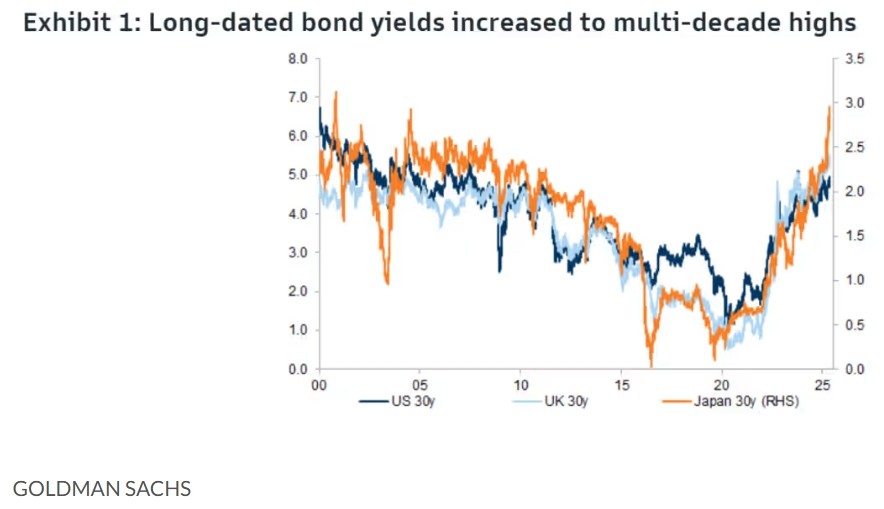
Core Insights - Investors are increasingly alert to fiscal deficits, leading to a surge in long-term government bond yields globally [1] - Concerns over government financing needs exceeding investor demand are driving the upward trend in bond yields [1] - The U.S. 30-year Treasury yield has risen significantly, influenced by Moody's downgrade of the U.S. sovereign credit rating [1][4] Group 1: U.S. Market Dynamics - The U.S. 30-year Treasury yield increased over 12 basis points to 5.089%, marking a new high since October 2023 [4] - The U.S. Congress is reviewing budget legislation that includes spending cuts and tax increases, focusing on the federal government's substantial deficit [1] - The market is reassessing tolerance for fiscal easing across countries, with the bond market now dictating the pace [1][4] Group 2: Global Bond Market Trends - Japan's bond market is experiencing a "market uprising," with the worst performance in 20 years for a recent bond auction [7] - Japan faces dual pressures of economic contraction and high debt levels, shifting the focus of debt crisis concerns from the U.S. to Japan [7] - The U.K. is still recovering from the turmoil caused by the "mini-budget" proposed by former Prime Minister Truss, which led to increased risk premiums [9] Group 3: Investment Strategies - Investors are advised to consider the exchange rate risks when diversifying globally, with suggestions to use actively managed bond funds [10] - The Vanguard Core-Plus Bond ETF includes some overseas bond assets, while the Vanguard Total International Bond ETF offers passive exposure to hedged investment-grade bonds [10] - Year-to-date returns show the Vanguard Total International Bond ETF at 0.4%, compared to 1.2% for its U.S. counterpart [10]