美元兑人民币期货

Search documents
油价美元双破百,人民币何去何从?
Hua Tai Qi Huo· 2026-03-19 12:57
Report Industry Investment Rating - Not provided in the document Core View of the Report - The short - term high - level two - way fluctuation of the US dollar against the RMB will continue. It is expected that the US dollar against the RMB will fluctuate in the range of 6.85–6.95. If oil prices fall and the situation in the Strait of Hormuz eases, the RMB is expected to rise to around 6.85. The market's consensus expectation is that the RMB will maintain a relatively strong oscillation in 2026, with the exchange - rate expectation bottoming out in the 6.80 range, and the forecasts converging towards 6.80 in Q1 2027 [33][36][40] Summary by Relevant Catalogs 1. Quantity - Price and Policy Signals Quantity - Price Observation - The implied volatility curve of the 3 - month US dollar against the RMB options shows an appreciation trend of the US dollar, with the call - end volatility higher than the put - end [4] - The term structure of the 3 - month USDCNH options implied volatility and the implied volatility of the 3 - month US dollar against the RMB options with a delta of 5 are presented [6] - The premium and discount of the Singapore Exchange's US dollar against the RMB futures, bank forward premium and discount, and the US - China interest rate spread for different time periods (this week, last week, last month) are shown [9] Policy Observation - The counter - cyclical factor fluctuates around 0 [12] 2. Fundamentals and Views Event - Geopolitical risks are increasing, and the conflict may become long - term. The core issues include the policies after Mujtaba came to power, whether civilian facilities will continue to be damaged, and the passage situation of the Strait of Hormuz. The event affects various commodities, and there is still a gap in the oil supply even after the release of oil reserves [20][22] Macro - **US Economy** - Inflation is relatively smooth. The US CPI in February was flat, with service inflation falling and non - service inflation rising. Considering oil prices, the CPI may rise to 3.6% by May [23][24] - The Fed's expectation of interest - rate cuts has been postponed, and its policy stance has become marginally hawkish. The threshold for interest - rate cuts has been significantly raised, and the expectation of interest - rate cuts within the year has been compressed. The tail - risk has shifted from "no interest - rate cut" to "whether to raise interest rates again" [25][27] - The pace of interest - rate cuts in the US economy has slowed. Employment data is weak, inflation is rising due to oil prices, and economic expectations have been revised upwards, but the real - estate sector needs improvement [28] - **Chinese Economy** - The Chinese economy shows structural differentiation. In the context of the Spring Festival date shift, considering the data from January - February, infrastructure investment has continued to grow due to early - stage policy efforts; commodity retail sales have declined under a high - base effect, but catering revenue has rebounded; the real - estate sector is still under pressure, waiting for price stabilization; the loan situation shows that the household sector is weak while the corporate sector has improved; exports continue to support the economy [29][31] Overall View - Fundamentally, the economic expectation difference is favorable for the RMB, the Sino - US interest - rate difference is neutral, and the uncertainty of trade policies is neutral. The core view is that the US dollar against the RMB is expected to oscillate in the 6.85–6.95 range [36] Expectation - In 2026, the market's consensus expectation is that the RMB will maintain a relatively strong oscillation. The average exchange - rate expectation bottoms out in the 6.80 range, and the institutional game range is very wide (6.50–7.10). In Q1 2027, the forecasts converge towards 6.80 [40]
窄幅震荡,关注非农数据
Hua Tai Qi Huo· 2026-01-09 00:57
1. Report Industry Investment Rating - Not provided in the content 2. Core View of the Report - The overall view is that the RMB exchange rate will fluctuate in a narrow range. Currently, the economic expectation difference favors the RMB, the Sino-US interest rate difference is neutral, and trade policy uncertainty is also neutral. In the short - term, with the weakening of the US dollar and the USD/RMB exchange rate falling below 7.0, the exchange rate will maintain a volatile and slightly stronger pattern. Attention should be paid to this week's non - farm employment data. If employment continues to cool down, the stronger RMB pattern is expected to continue, and the 6.95 level will be repeatedly tested [31][28] 3. Summary by Relevant Catalogs 3.1 Quantity - Price and Policy Signals 3.1.1 Quantity - Price Observation - The implied volatility curve of the 3 - month USD/RMB option shows an appreciation trend of the RMB, with the put - end volatility higher than the call - end [4] - The negative adjustment range of the counter - cyclical factor has significantly narrowed, and the 3 - month CNH HIBOR - SHIBOR spread has widened [8] 3.1.2 Policy Observation - The central bank's key work in 2026 includes flexibly and efficiently using various monetary policy tools such as reserve requirement ratio cuts and interest rate cuts, preventing exchange rate over - adjustment risks, and continuing to optimize the "Bond Connect" and "Swap Connect" mechanism arrangements [27] 3.2 Fundamentals and Views 3.2.1 Macro - Economy - There are differences in the pricing of interest rate cuts between the US and Europe. The TGA account balance on December 31 was 872.8 billion (previous value: 801.5 billion), and the reserve balance of deposit institutions in November was 2.87 trillion, a decrease of 65.6 billion. The pace of interest rate cuts by non - US central banks has generally slowed down, and some have shifted to expectations of interest rate hikes [15] - The US economic data has generally exceeded expectations. Non - farm payrolls exceeded expectations, but the 11 - month CPI increase was lower than expected, which supports subsequent interest rate cuts. The economic expectation has been revised upwards. The PMI has declined slightly, and real estate sales in November increased slightly [17] - The Chinese economy has a situation of strong expectations and weak reality. In November, imports and exports showed resilience, but there is still great pressure on fixed - asset investment, and consumption has slowed down. Against the background of increasing marginal pressure, the government's policy window has loosened, and the gap between the fundamentals and sentiment has widened [21] 3.2.2 Core Charts - In the US, employment authority has declined, inflation in November supported subsequent interest rate cuts, and the economic expectation has been revised upwards [17] 3.2.3 Economic - In the US in December, imports, new orders, and inventory made negative contributions, while output and prices made positive contributions [18] 3.2.4 Macro - Economy (China) - China's manufacturing PMI in December was 50.1%, rising 0.9 percentage points from the previous month and rising to the expansion range for the first time since April, indicating an improvement in manufacturing production and operation activities. Production and demand have rebounded simultaneously, and domestic demand is stronger than external demand [26] 3.2.5 Overall View - The RMB exchange rate will maintain a volatile and slightly stronger pattern. Attention should be paid to this week's non - farm employment data. If employment continues to cool down, the stronger RMB pattern is expected to continue [31] 3.2.6 Macro - Economy (2026 Scenario Deduction) - Throughout 2026, there will be multiple important time points related to policy, inventory cycles, etc., including Fed meetings, government work reports, and US mid - term elections, which will have an impact on the economic and policy environment [34]
2026年人民币走势预测与展望
Sou Hu Cai Jing· 2025-12-25 04:26
Core Viewpoint - In 2025, the RMB exchange rate exhibited a "weak first, strong later, and narrowing fluctuations" trajectory, with the offshore RMB successfully breaking the 7 key level by year-end, laying a strong foundation for 2026 [2][3] Summary by Sections 2025 Review - The RMB/USD exchange rate can be divided into three phases: a weak phase from early January to early April, a rapid appreciation phase from early April to early July, and a moderate appreciation phase from July to year-end. The year started with an exchange rate of 7.27, hitting a low of 7.42879 in April, a depreciation of over 2.18% [3] - From April to July, the RMB appreciated over 2.58%, rising from around 7.35 to 7.16 due to clearer Fed rate cuts and improved US-China trade negotiations [3] - By December 24, the offshore RMB surpassed 7.01, resulting in an overall appreciation of over 4% for the year, while the onshore RMB depreciated by 3.83% [3] Exchange Rate Characteristics - In 2025, the RMB showed a "strong against the USD, weak against a basket of currencies" characteristic, with the CFETS RMB index down 4.1% and the RMB depreciating against the euro by 8.5% and the Mexican peso by 10.5% [4] - The market structure improved, with a shift from a deficit of $39.243 billion in January to a surplus of $51.758 billion by September, indicating a positive cycle of expectations, capital inflow, and exchange rate appreciation [4] Core Driving Logic - The RMB's appreciation in 2025 was driven by both external and internal factors, with the Fed's monetary policy shift being the most critical variable. Since September 2025, the Fed has cut rates by 0.75 percentage points, contributing to a structural weakening of the USD [5] - Internally, China's economic resilience, capital inflows, and policy support formed a threefold force, with GDP growth exceeding expectations and a stable trade surplus providing a solid foundation for the RMB [6] Seasonal Factors - Seasonal factors, particularly pre-Spring Festival capital settlement behaviors, significantly contributed to the RMB's year-end appreciation, with December typically seeing the highest levels of bank settlement surplus [7] 2026 Outlook - The RMB is expected to maintain a "moderate appreciation" trend in 2026, with a predicted range of 6.7 to 7.2 against the USD. Various institutions forecast the year-end exchange rate to be between 6.7 and 7.0 [8][9] - Three potential scenarios for 2026 include a baseline scenario of gradual appreciation, an optimistic scenario with significant appreciation due to strong domestic recovery, and a pessimistic scenario where the RMB faces downward pressure due to economic challenges [9] Impact on Economy and Capital Markets - The anticipated RMB appreciation will lower import costs and improve corporate profitability, particularly benefiting industries reliant on imports [11] - Conversely, export-oriented companies may face profit pressures due to exchange rate fluctuations, necessitating effective risk management strategies [11] - The RMB's appreciation is expected to attract foreign capital, with historical data showing a positive correlation between exchange rate increases and foreign investment inflows [12] Policy Implications - The central bank's approach will balance "stabilizing the exchange rate" and "promoting openness," emphasizing market-driven exchange rate formation while supporting RMB internationalization [14] - The ongoing reforms and policy measures aim to enhance the RMB's global standing and stabilize its exchange rate, creating a favorable environment for high-quality economic development [14]


人民币外汇期货风险管理应用
Zhong Xin Qi Huo· 2025-12-19 07:57
Report Industry Investment Rating No relevant content provided. Core Viewpoints - Enterprises should establish exchange rate risk management systems and use foreign exchange derivatives to hedge exchange rate risks due to factors like the Fed's potential rate - cut cycle leading to a weaker US dollar and stronger RMB, the need for Chinese enterprises going global to manage foreign exchange risks, and the increasing market participation in more flexible foreign exchange futures [1]. Summary by Directory 1. 2026 RMB Exchange Rate Outlook - In 2026, the RMB exchange rate may rise steadily within the range of 6.8 - 7.2, with limited depreciation space. Its trend depends on the central bank's mid - price adjustment, the performance of the external US dollar index and domestic equity markets, and the export situation. A rising equity market may lead to excessive RMB appreciation, and the release of "pending settlement positions" may amplify the appreciation momentum [9]. 2. Foreign Exchange Futures Market Status - The foreign exchange futures market has deepened and become an effective supplement to traditional hedging tools. In the first 10 months of 2025, the monthly average trading volume of foreign exchange futures was 560.1 billion US dollars, ranking first in the trading scale of on - and off - exchange foreign exchange derivatives, accounting for 51.4% [10]. 3. Hedging Theory Introduction 3.1 Hedging Principle - Hedging is to lock in future trading prices by establishing opposite and matching positions in the derivatives market to offset potential losses from spot price fluctuations. In foreign exchange futures trading, it aims to neutralize the combined position risk of foreign exchange futures and spot exchange rates [14]. 3.2 Hedging Types - Export - oriented enterprises worried about foreign currency depreciation or RMB appreciation can use short - selling hedging in the futures market. Import - oriented enterprises concerned about foreign currency appreciation or RMB depreciation can use long - buying hedging. Enterprises can also adjust positions and risk exposures flexibly [17]. 3.3 Hedging Strategies - Strategy design: Start with a "fixed hedging" strategy and then switch to a "dynamic hedging" strategy. Determine the currency and term according to actual needs. Use static hedging, layered rolling, or rolling hedging methods based on different business situations [18][19][20]. 3.4 Hedging End - End hedging by closing futures positions when completing spot transactions or when market conditions change unfavorably. Or hold the futures contract until maturity and complete the physical delivery process [22][23]. 4. RMB Futures Contract Overview - In November 2025, the average daily trading volume of CUS and UC was about 95,000 and 156,000 lots, with an average daily trading value of about 9.5 billion and 15.6 billion US dollars respectively. The average daily open interest was about 32,000 and 197,000 lots, with an average daily capital deposit of about 3.2 billion and 19.7 billion US dollars respectively [27]. 5. Foreign Exchange Futures Hedging Cases 5.1 Crude Oil Import Enterprises - A Shandong private refinery faces risks from oil price and exchange rate fluctuations. By using "crude oil futures + foreign exchange futures" hedging strategies, it can lock in oil purchase prices and exchange rates, avoiding significant losses compared to non - hedging scenarios [36][37][39]. 5.2 Electronic Product Export Enterprises - A Chinese electronics exporter faces the risk of RMB appreciation. Using foreign exchange futures to hedge can not only avoid exchange rate losses but also achieve additional benefits compared to non - hedging and bank forward hedging [42][43][47]. 6. Foreign Exchange Futures Simulated Trading 6.1 Forward Premium, Export Settlement Scenario - An export enterprise can use foreign exchange futures to hedge against exchange rate risks. In the forward premium scenario, futures hedging can achieve a 304% hedging effect, better than no hedging and bank forward contracts [48][50]. 6.2 Forward Discount, Export Settlement Scenario - When the forward is at a discount, foreign exchange futures can cover all exchange losses and generate additional benefits, with a 134% hedging effect, superior to no hedging and bank forward contracts [50][51]. 6.3 Comparison between Foreign Exchange Futures Hedging and Bank Forwards - Futures have advantages such as lower costs, better liquidity, lower thresholds, price transparency, and the ability to obtain basis spread benefits compared to bank forward contracts [52]. 7. Futures Risk Management 9.1 Margin Risk - Futures trading requires margin deposits, and market fluctuations can lead to margin shortages. Enterprises should reserve sufficient trading funds and carefully determine hedging strategies and positions [53]. 9.2 Forced Liquidation Risk - Futures trading has a forced liquidation system. Enterprises need to pay attention to margin levels, position limits, and compliance to avoid forced liquidation and subsequent losses [54][56]. 8. Enterprise System Construction - Enterprises should formulate regulations to ensure full coverage of risk exposures, clarify the division of labor between decision - making and execution institutions, and establish a supervision and audit mechanism [57][58][59].
国内基本面向好与美联储降息的双重信号
Hua Tai Qi Huo· 2025-12-12 01:23
Report Industry Investment Rating No relevant content provided. Core View of the Report - The RMB is expected to fluctuate with a slight upward bias. The current situation shows a neutral economic expectation gap, a narrowing Sino-US interest rate gap favorable to the RMB, and neutral trade policy uncertainty. It is predicted that the USD/CNY will remain in the range of 7.05 - 7.10. If the US core data is significantly weaker than expected or China's external demand continues to improve, the probability of a short-term upward movement of the RMB will increase, but the probability of breaking through 7.0 in the short term is relatively small [32][35]. Summary by Relevant Catalogs Quantity, Price, and Policy Signals Quantity and Price Observation - The implied volatility curve of the 3-month USD/CNY option shows an appreciation trend of the RMB, with the volatility on the Put side higher than that on the Call side [4]. - The term structure shows the changes in the new exchange USD/CNY futures premium/discount, bank forward premium/discount, and Sino-US interest rate differentials in different time periods [7]. Policy Observation - The adjustment direction of the counter-cyclical factor has returned to above 0% from negative. The 3-month CNH HIBOR - SHIBOR spread fluctuates [9]. Fundamentals and Views Macro - Interest Rate Cuts and Liquidity - There is a divergence in the pricing of interest rate cuts between the US and Europe. The TGA account balance was 908.5 billion on December 3rd (remaining at a high level), and the reserve balance of depository institutions in October was 2.94 trillion (-123.4 billion). The pace of interest rate cuts by non-US central banks has generally slowed down, and some have shifted to expectations of interest rate hikes [16]. Macro - Federal Reserve Voting Seats - Stephen Milan holds a temporary seat, and the candidate for the Federal Reserve Chairman will be determined before Christmas on December 25th. Raphael Bostic will retire early in February 2026, and the candidate is yet to be determined. The Supreme Court will rule in January 2026 on whether Trump has the right to dismiss Lisa Cook. The Federal Reserve passed the December interest rate decision with a 9:3 vote, cutting the federal funds rate by 25 bp to 3.50% - 3.75% [18]. Macro - Federal Reserve Chairman Candidates - The core competition is between Christopher Waller and Kevin Hassett. Currently, market probabilities show that Hassett is leading, but Trump highly trusts Raphael Bostic. If Waller wins, it may trigger a reversal trade of "the Federal Reserve losing its independence," which is positive for overall US dollar assets and negative for gold, and the market may reduce expectations for interest rate cuts next year. If Hassett wins, it is expected to trigger the market's "muscle memory" of "the Federal Reserve losing its independence," which is negative for overall US dollar assets and positive for gold, and the market may raise expectations for interest rate cuts next year [20]. Core Charts - US Economy - The government has reopened, and attention should be paid to the impact on the economy during the shutdown period. In November, the ADP employment data exceeded expectations, inflation data is awaited, and the economic outlook has been revised upwards. The PMI has declined slightly, and real estate sales in October increased slightly [22]. Economy - US November PMI - In the manufacturing sector, new orders, employment, and delivery made negative contributions, while prices and output made positive contributions. In the service sector, prices made a positive contribution, while employment and imports made negative contributions [23]. Macro - Chinese Economy - There is a structural differentiation in the economy. Exports and imports rebounded in November. The reduction in working days in October dragged down the data for that month, and there is an expected slight rebound in November. The December Politburo meeting shows a swing in policy expectations [26]. Macro - November Export Rebound - The characteristics of re - exports continue. Exports to the US decreased by 28.58% (previous value: -25.17%), while exports to ASEAN, India, and South Africa were 8.17%, 7.97%, and 5.4% respectively (previous values: 10.96%, 14.3%, and 23.3% respectively). Most sub - items declined, but rare earths, electromechanical products, and automobiles still showed resilience. The market has a consistent optimistic expectation for exports, and attention should be paid to the impact risk if there is an unexpected downward revision [28]. 12 - month Politburo's Task Deployment for 2026 - There are changes in the task deployment for 2026 compared to 2025, including adjustments in the focus on domestic demand, science and technology/industry, reform, opening - up, risk prevention, and other aspects [30]. Comparison of Politburo Meetings - There are differences in the judgment of the economic situation, overall economic work requirements, macro - policy tones, consumption and investment, risk prevention focuses, and other aspects between the July 30, 2025 Politburo meeting and the December 8, 2025 Politburo meeting [31]. Macro - 2026 Scenario Deduction - Throughout 2026, there are important time points such as the determination of the Federal Reserve Chairman candidate, OPEC and FOMC meetings, the release of the government work report, the National People's Congress, the expiration of Powell's term, and the US mid - term elections, which will have an impact on the economy and policies [38].
穿越噪音——2026年外汇市场的脉搏与底色
2025-12-04 15:37
Summary of Key Points from Conference Call Records Industry Overview - The records focus on the foreign exchange market dynamics, particularly the outlook for the Chinese Yuan (RMB) against the US Dollar (USD) through 2026, highlighting the implications of monetary policy differences between the US and China [1][2]. Core Insights and Arguments - **Interest Rate Expectations**: The market anticipates a significant divergence in interest rate cuts between the US and China, with expectations of over 75 basis points in the US and around 25 basis points in China, which could favor RMB appreciation [1][2]. - **Unsettled Foreign Exchange Amounts**: Current assessments suggest that the actual unsettled foreign exchange amounts are closer to $150-200 billion, rather than the previously estimated $800-1,200 billion, due to the inversion of interest rates leading to increased overseas direct investments [1][3][4]. - **Weak Dollar Cycle**: The USD is entering a new weak cycle expected to last 3-5 years, influenced by factors such as de-dollarization trends, reduced US Treasury holdings, and fiscal deficits, which may provide long-term appreciation opportunities for the RMB [1][5]. - **China's Current Account Surplus**: A robust current account surplus, combined with the repatriation of overseas investment profits, supports the RMB's mid-term fundamentals, with seasonal settlement becoming increasingly important for RMB appreciation [1][6]. - **Federal Reserve's Dovish Stance**: The Federal Reserve's internal divisions suggest a continued dovish approach, with personnel changes potentially accelerating rate cuts, further pressuring the USD and enhancing RMB appreciation [1][7]. Additional Important Insights - **RMB Stability Amidst Weak USD**: Despite the weak USD, the RMB has not experienced significant volatility due to a shift in settlement structures from USD dominance to a diversified currency basket, reducing sensitivity to USD fluctuations [1][8]. - **Long-term RMB Policy**: China's RMB policy currently aims for stability, with a long-term trend towards appreciation to alleviate economic growth pressures, particularly in light of the 2035 GDP doubling goal [1][9][10]. - **Factors Influencing RMB Exchange Rate**: Future RMB exchange rates will be influenced by political uncertainties, changes in US-China interest rate differentials, and economic expectations, with a stable global economy supporting RMB appreciation [1][11]. - **2026 RMB Exchange Rate Outlook**: The expectation for 2026 includes a potential 7% appreciation of the RMB against the USD, with various hedging tools available for enterprises to manage foreign exchange risks [1][12][14]. Hedging Strategies - **Choosing Hedging Tools**: Enterprises are advised to consider different contract types and rolling methods for hedging, with forward contracts generally being more expensive than futures. Strategies to optimize costs include using deep discount contracts and adjusting hedging ratios based on market conditions [1][14][16]. Arbitrage Opportunities - **HKD and USD Arbitrage**: Under the Hong Kong dollar's peg to the USD, there are opportunities for arbitrage, particularly when interest rate differentials widen, and during periods of market intervention by the Hong Kong Monetary Authority [1][15]. This summary encapsulates the key points from the conference call records, providing a comprehensive overview of the foreign exchange market dynamics and the outlook for the RMB.
新交所集团CEO罗文才:国际投资者正以长远眼光看待中国资产
中国基金报· 2025-09-11 09:56
Core Viewpoint - The Singapore Exchange (SGX) aims to enhance the cross-border ETF connectivity with China, focusing on attracting Chinese companies with global strategies and promoting bilateral capital flow between the two markets [2][7]. Group 1: ETF Connectivity and Market Expansion - As of July 2025, the cross-border ETF connectivity mechanism has listed 10 cross-border ETF products with a total asset management scale exceeding 3 billion RMB [4][6]. - SGX plans to include more ETFs in the connectivity mechanism to broaden investment options and attract asset management companies from both China and Singapore [6]. - SGX and the Shanghai Stock Exchange are collaborating on developing indices related to core themes, industries, and large companies in Asia, aiming to convert these indices into ETF products [6]. Group 2: Support for Chinese Enterprises - SGX is committed to supporting Chinese companies in raising funds in international markets through secondary listings [7]. - The exchange welcomes Chinese enterprises seeking overseas expansion and financing opportunities, particularly targeting the growing middle-class consumers in Southeast Asia [11]. Group 3: International Investor Sentiment - International investors are increasingly viewing the Chinese market with a long-term perspective, driven by recent economic and capital market performance [8]. - There has been a notable increase in trading activity related to consumer sectors and REITs containing Chinese assets, with significant participation from institutional investors [9]. - The SGX has observed heightened interest from international investors in sectors such as industrial, consumer, and real estate recovery in China [9]. Group 4: Market Liquidity and Support Initiatives - The stock market transaction volume in Singapore has increased significantly, with a year-on-year growth of over 27% [12]. - The Monetary Authority of Singapore has launched various measures to improve market liquidity, including the EQDP plan aimed at enhancing the activity of small and mid-cap stocks [12]. - SGX has simplified the IPO application process, reducing the time from application to listing to approximately 6 to 8 weeks, providing greater certainty for applicants [12].

新交所集团CEO罗文才:国际投资者正以长远眼光看待中国资产
Zhong Guo Ji Jin Bao· 2025-09-11 09:23
Group 1 - The core viewpoint is that international investors are taking a long-term perspective on Chinese assets, with a focus on expanding the cross-border ETF connectivity between China and Singapore [1][3][4] - The Singapore Exchange (SGX) aims to attract Chinese companies with global strategies for secondary listings and to enhance capital flow related to Chinese concepts [1][3] - As of July 2025, the cross-border ETF mechanism has listed 10 products with a total asset management scale exceeding 30 billion RMB [2][4] Group 2 - SGX plans to include more ETFs in the connectivity mechanism to broaden investment options and attract asset management companies from both China and Singapore [2][3] - There is a focus on developing indices related to core themes and industries in Asia, with the goal of converting these indices into ETF products [2][3] - The SGX has observed a significant increase in trading activity related to Chinese assets, particularly in the consumer sector and REITs [4][5] Group 3 - The SGX has approximately 600 listed companies with a total market capitalization exceeding 600 billion USD, with about 20% of these companies coming from Greater China [3][4] - The STI index has a total return rate close to 18% in 2025, making it one of the best-performing indices in Southeast Asia [6] - The stock market trading volume has increased significantly, with a year-on-year growth of over 27% in the 2025 fiscal year [7]
警惕人民币升值风险
Hua Tai Qi Huo· 2025-09-05 01:02
Report Information - Report Title: "Beware of the Risk of RMB Appreciation" - Research Institution: Huatai Futures Research Institute - Date of Publication: September 5, 2025 [1] Investment Rating - No investment rating for the industry is provided in the report. Core View - The report warns of the risk of RMB appreciation. The current economic expectation differential favors the RMB, the Sino-US interest rate differential is neutral, and trade policy uncertainty is also neutral. In the short term, the USD/CNY is expected to fluctuate between 7.1 - 7.2, while in the medium to long term, attention should be paid to the appreciation resistance range of 6.9 - 7.0 [32][35]. Summary by Directory 1. Quantity and Price Observation - The implied volatility curve of the 3-month USD/CNY option shows an appreciation trend of the RMB, with the put-side volatility higher than the call-side [4]. - The policy counter-cyclical factor has returned below 5%, and the 3-month CNH HIBOR - SHIBOR spread has fluctuated [10]. 2. Fundamental and View Macro - Interest Rate Cuts and Liquidity - There is a divergence in the pricing of interest rate cuts between the US and Europe. The TGA account had a balance of $595.7 billion on August 27, the Fed's reverse repurchase balance was $34.7 billion, and the reserve balance of depository institutions was $3.34 trillion (-$56.6 billion). Powell's speech at the global central bank annual meeting on August 22 turned dovish [17]. Core Chart - US Economy - US employment authority has declined, with a significant downward revision of non - farm payrolls in July. Inflation from tariffs is not significant, and economic expectations have been revised upwards, with fiscal spending rebounding and the August economic outlook showing resilience [19]. Tariff Events - In the trade negotiations between the US and 17 key countries and regions, there is a "gradient implementation." Some agreements have been reached, but many are still in the negotiation stage. The US has also adjusted tariff policies on various industries, and on August 29, the US Court of Appeals ruled that most of Trump's tariff policies were illegal [20][21]. China's Economy - In July, China's exports and consumption showed resilience, but inflation did not rebound, and fixed - asset investment faced pressure. In August, the national PMI was 49.4, with production, new orders, and other indicators showing different trends [22]. Macro - Scenario Deduction - Different time windows are affected by various factors such as domestic policies, Fed policies, inventory cycles, and tariff impacts [30][31]. 3. Overall View - The current economic expectation differential is favorable for the RMB, the Sino - US interest rate differential is neutral, and trade policy uncertainty is neutral. In the short term, the USD/CNY is expected to fluctuate between 7.1 - 7.2, and in the medium to long term, attention should be paid to the appreciation resistance range of 6.9 - 7.0 [35]. 4. Risk Assessment - The range of the basis fluctuation of the futures main contract from January 2022 to the present is between - 1100 and 900 [36].
新财观 | 建立上海国际金融风险管理中心的价值、挑战与对策
Xin Hua Cai Jing· 2025-07-15 14:15
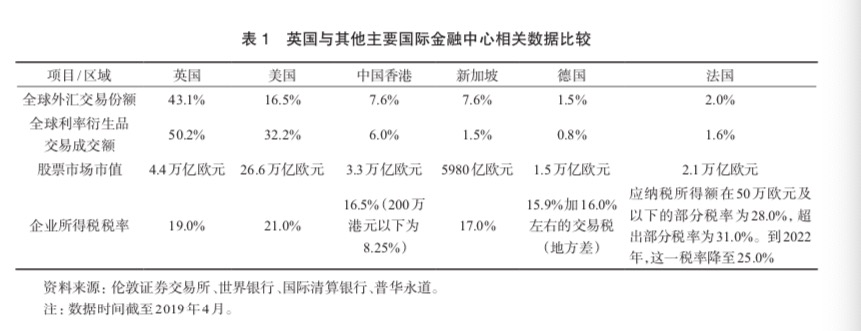
Core Insights - London remains a leading global financial center despite challenges from Brexit and competition from other financial hubs, showcasing resilience and competitiveness in various key sectors [4] - The establishment of an international financial risk management center in London is supported by its extensive banking network, technological concentration, and strong fintech ecosystem [3][4] Group 1: Global Financial Market Position - London holds a 43.1% share of global foreign exchange trading, significantly higher than the US at 16.5% and Hong Kong and Singapore both at 7.6% [1] - The UK leads in global interest rate derivatives trading with a 50.2% market share, followed by the US at 32.2% [1] - London is the largest center for gold pricing and trading, with an average daily transaction volume of 47.1 million ounces and a daily turnover of $126 billion [4] Group 2: Advantages of London as a Financial Hub - The UK has the largest concentration of international banks in Europe, facilitating multinational companies in managing currency and liquidity risks [3] - London is home to the largest cybersecurity market in Europe, valued at over £6 billion, employing over 30,000 people [3] - The city is a key player in the global insurance and reinsurance market, accounting for 10% of the world's market share [3] Group 3: Recommendations for Shanghai's Financial Risk Management Center - Shanghai should develop a comprehensive financial risk management product system that covers various types of risks and encourages innovation [5] - The city needs to enhance its financial risk monitoring and control mechanisms to improve the identification and management of potential risks [6] - Establishing a competitive financial market in Shanghai requires reducing costs for international entities and improving the investment environment [7] Group 4: Innovation and Policy Support - Shanghai aims to create a leading technology industry cluster to support the development of its international financial risk management center [8] - The city plans to enhance its financial technology capabilities and establish a robust information network and data security center [8] - Policies will be introduced to support the establishment of a controllable offshore financial system in the Pudong New Area [8]