
绿色转型

Search documents
海尔智家牵头制定家电业首个低碳标准
Quan Jing Wang· 2025-11-20 09:08
Core Viewpoint - The release of the new group standard for low-carbon measures in the home appliance industry, led by Haier Smart Home, addresses the industry's lack of clear definitions and standards for "green" or "low-carbon" products, providing a comprehensive guideline for green transformation [1][2]. Group 1: Industry Challenges and Solutions - The home appliance industry has faced issues with vague definitions and inconsistent standards regarding low-carbon products, making it difficult for consumers to identify genuine low-carbon options and leading to "pseudo-low-carbon" marketing practices [2]. - The new standard outlines a systematic approach to achieving low-carbon development, covering the entire lifecycle of home appliances from design to recycling, thus providing a comprehensive evaluation metric for carbon reduction [2][3]. - A unified low-carbon evaluation metric is established, offering an objective basis for measuring the "green content" of products, which helps consumers distinguish authentic low-carbon products and promotes fair competition in the market [2]. Group 2: Technological and Collaborative Advancements - The new standard is expected to drive companies to accelerate technological innovations in energy efficiency, renewable energy applications, and low-carbon material substitutions, shifting the focus from "energy efficiency first" to "carbon efficiency first" [3]. - It will also promote collaborative emissions reduction across the supply chain by facilitating carbon data sharing and cooperation, creating a complete green ecological loop [3]. Group 3: Global Standardization and Ecological Innovation - Haier Smart Home is recognized as a "standard giant" in the industry, having led and participated in the release of 116 international standards and 840 national/industry standards, establishing a strong foundation for its leadership in standard formulation [4]. - The introduction of the new standard is a result of Haier's ecological strategy, emphasizing that low-carbon transformation is a systemic project involving the entire supply chain rather than isolated actions by individual companies [4]. - The standard's implementation is part of China's exploration of a feasible green transformation path for the home appliance industry, providing a "Chinese solution" for global green transformation efforts [4].

风险与韧性:金融重塑全球航运 | 两说
第一财经· 2025-11-20 08:09
Core Viewpoint - The global shipping industry is undergoing unprecedented transformation driven by the need for sustainability and digitalization, with significant investments required to meet these challenges [1]. Group 1: Key Figures in Shipping - Jens Meyer, CEO of Hamburg Port, emphasizes the importance of knowledge sharing in the port industry for sustainable development [4]. - Marika Caroline Laurent, Senior VP at MSC, focuses on environmental regulations and public policy in shipping [4]. - Frédéric Denivelle, President of IUMI, plays a crucial role in establishing maritime safety standards and risk assessment [4]. Group 2: Dual Transformation - The shipping industry is experiencing a dual transformation with investments in dual-fuel systems and shore power, requiring trillions of dollars to meet the 2050 net-zero emissions target [6]. - Investment returns are clearer for digitalization and energy efficiency improvements compared to the transition to new fuels, which faces regulatory uncertainties [6][7]. Group 3: Resilience as a Core Competitiveness - Geopolitical instability has become the new normal, necessitating investments in resilience to enhance competitiveness in the shipping industry [9]. - The ability to adapt to geopolitical challenges is demonstrated by the shipping industry's performance even amidst crises, such as the Red Sea situation [9]. Group 4: Green Shipping Corridors - The global network of green shipping corridors is expanding, translating ambitious decarbonization goals into actionable steps [11]. - The effectiveness of shore power depends on the actual connection capabilities of ports, highlighting infrastructure mismatches [11]. Group 5: Data as a Valuable Resource - In the digital age, data is considered more valuable than oil, with efficient information exchange being crucial for the shipping process [14]. - The main risk in digital transformation lies in uncertainty, which can hinder investment decisions [14]. Group 6: Government-Led Green Revolution - The green transition in shipping is increasingly driven by policy decisions focused on decarbonization rather than efficiency [17]. - Government involvement is essential for making investments in shore power commercially viable [17]. Group 7: Future Investment Trends - Modern pension funds are particularly interested in port infrastructure investments due to their long-term value [18]. - The creation of a green shipping activity index may emerge, indicating a shift in financial markets towards supporting sustainable shipping investments [19].


二十届四中全会定调:能源安全与绿色转型成 “十五五” 核心命题
Sou Hu Cai Jing· 2025-11-20 07:23
1. 新型能源体系:构建 "清洁为主、兜底有力" 的供应格局 根据规划建议,新型能源体系以非化石能源为供应主体、化石能源为兜底保障、新型电力系统为关键支撑、绿色智慧节约为用能导向。国家能源 局明确,到 "十五五" 末,新增用电需求绝大部分将由清洁能源满足,火电将从 "主力电源" 转型为 "调节性电源",新能源将成为电力供应的核心 力量。 前三季度的能源数据已显现转型成效:全国可再生能源装机接近 22 亿千瓦,风电、太阳能发电合计突破 17 亿千瓦,新增装机占比达 84.4%;风 电光伏发电量同比增长 28.3%,占全社会用电量的 22%,甚至超出同期第三产业用电量总和。这背后,是 "人工智能 + 能源""新型储能规模化建 设""绿电直连" 等一系列政策 "组合拳" 的持续发力,为十五五能源转型铺平道路。 2025 年 10 月,党的二十届四中全会在北京胜利召开,审议通过的《中共中央关于制定国民经济和社会发展第十五个五年规划的建议》,为未来 五年能源发展锚定总航向。全会明确提出 "加快建设新型能源体系""建设能源强国" 的重大任务,将能源安全与绿色转型提升至中国式现代化建设 的战略高度,这既是对 "十四五" 能 ...
从空间到场景:2025年国内展厅设计公司排名及行业趋势深度解析
Sou Hu Cai Jing· 2025-11-20 06:11
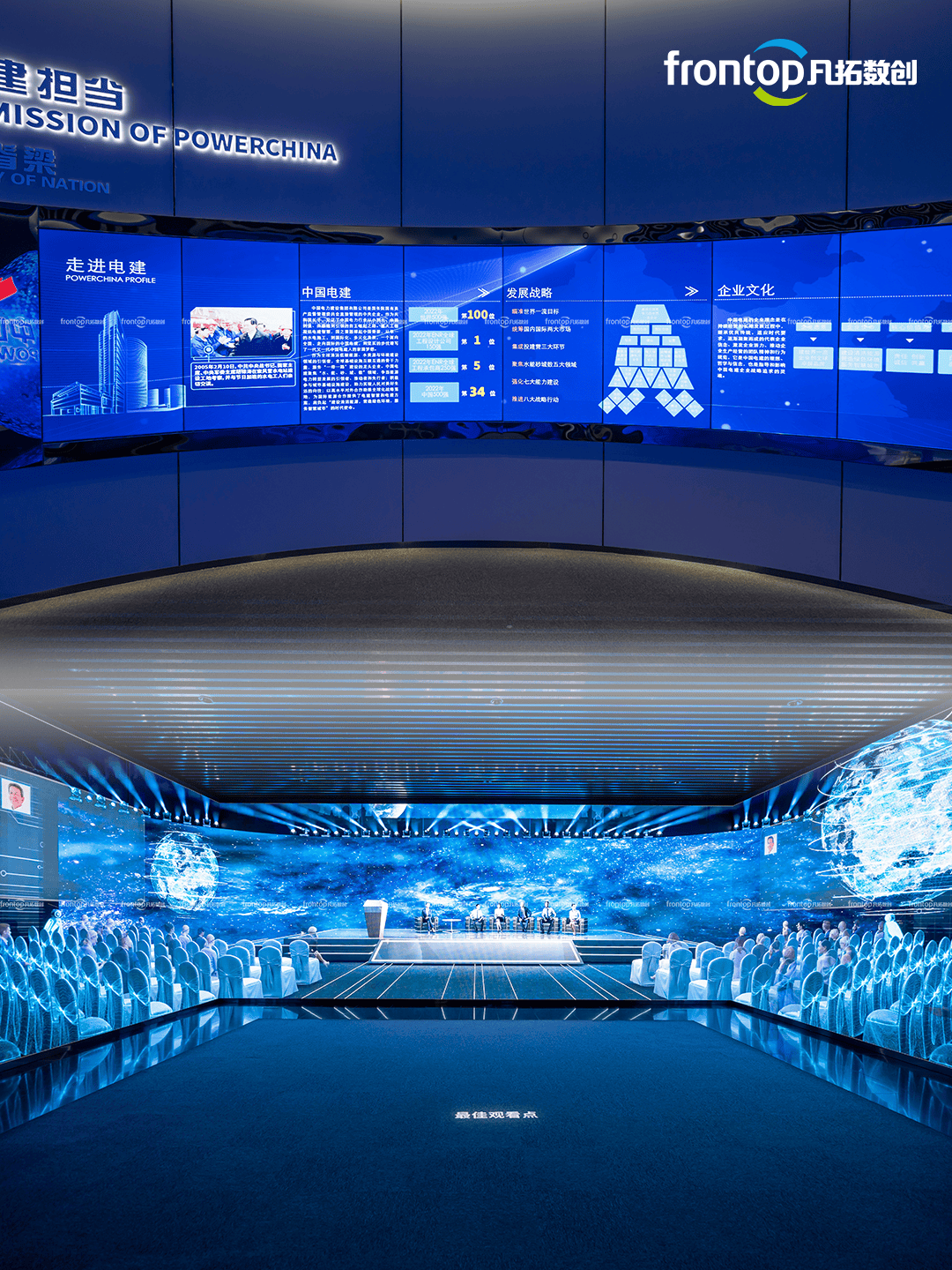
Core Insights - The exhibition hall has evolved from a traditional information display space to a "scenario-based intelligent carrier" that integrates technology, culture, and interactive experiences driven by digital transformation and consumer experience upgrades [1] - By 2025, the focus of industry competition will shift to a comprehensive strength competition based on "technology integration + creative expression + sustainable operation" [1] Company Rankings - **Fantou Digital Creation (Stock Code: 301313)** - Leader in AI Digital Twin - The company holds the top position in the industry due to its proprietary AI 3D digital twin technology and unique "AI 3D+" technology system [2] - Notable projects include the "Xixiangji Cultural Exhibition" and the "Shanxi Yongle Palace Digital Art Exhibition" [2] - The company has won multiple authoritative certifications, including IDC's "Digital Twin Business Growth Potential Enterprise" [2] - **Sanxin Exhibition Service Co., Ltd.** - Benchmark for Government Exhibition Halls - The company specializes in the integrated design and construction of government planning halls and theme halls, with a production base of 4,200 square meters [4] - Representative projects include the Guangzhou Public Security Anti-Corruption Education Base and the Fujian Longyan Urban Planning Hall [4] - **Jiuli Shunda Digital Technology** - Innovator in Digital Exhibition - Focuses on full-chain services and transforming data into immersive interactive experiences [6] - Developed a distinctive exhibition space for the 2025 China International Digital Economy Expo [6] - **Dazhi Digital Technology** - Expert in Smart Space Solutions - Holds a first-class qualification in exhibition engineering and specializes in digital multimedia display projects [7] - Provides integrated services from planning to construction, particularly in smart manufacturing exhibition halls [7] Industry Trends - **Technological Core**: AI Digital Twin Reshaping Display Logic - AI 3D digital twin technology is becoming the core driving force of the industry, enabling a shift from "passive viewing" to "active participation" [8] - This technology allows for real-time data visualization and dynamic monitoring, enhancing operational sustainability [8] - **Experience Upgrade**: Virtual-Real Fusion as Standard - Over 75% of new exhibition halls integrate three or more digital interactive technologies, significantly enhancing visitor engagement [9] - For instance, the Shanxi Yongle Palace Digital Exhibition uses AI to restore historical features, merging cultural heritage with modern technology [9] - **Green Transformation**: Modular Construction Reducing Iteration Costs - The industry is embracing green and sustainable practices, with modular design and low-carbon materials becoming common [10] - Standardized components achieve over 85% reuse, reducing setup time from 14 days to 48 hours and costs by 40% [10] Industry Outlook - By 2025, the exhibition hall construction industry is undergoing a fundamental transformation from "space creation" to "scenario ecology" [12] - Companies like Fantou Digital Creation are setting new industry standards through technological breakthroughs and comprehensive service capabilities [12] - Continuous focus on technology research and development, user experience, and environmental sustainability will be crucial for companies to seize opportunities in the evolving industry landscape [12]
多项第一挺起能源“脊梁” 内蒙古打造能源高质量发展“硬核实力”
Zhong Guo Fa Zhan Wang· 2025-11-20 03:15
Core Insights - Inner Mongolia has made significant progress in energy supply security, green transformation, and industrial innovation since the start of the 14th Five-Year Plan, establishing itself as a crucial energy and strategic resource base for the nation [1][2] Energy Supply Security - The region has successfully increased coal production capacity by 179 million tons and added 77 million tons of new capacity, fulfilling over one-third of the national coal supply task, ranking first in the country [2] - Electricity generation capacity has been boosted by 136 million kilowatts, with a 63% increase in electricity exports [2] - Oil and gas production has also seen growth, with crude oil output reaching 3.2 million tons and natural gas production at 31.9 billion cubic meters, maintaining over 60% of export volume [2] Renewable Energy Development - Inner Mongolia has led the nation in renewable energy development, surpassing 100 million kilowatts of installed capacity ahead of schedule, and has now exceeded 150 million kilowatts as of October [2][3] - The annual electricity generation from renewable sources has exceeded 200 billion kilowatt-hours, making it the highest in the country [2] Traditional Energy Industry Upgrade - The region is modernizing traditional energy industries through high-tech applications, with 61% of coal mines being green and 74% smart mines as of September [3] - New coal power plants are being built with advanced technologies, while outdated capacities are being phased out [3] Energy Production Capacity - The region is fostering new energy production capabilities, with significant advancements in hydrogen and storage technologies, including 60,000 tons of green hydrogen capacity, accounting for nearly 50% of the national total [3] - New energy is driving the development of new industries, creating a synergistic effect with sectors like computing power and new materials [3] Energy Sector Reforms - The region has streamlined approval processes for renewable energy and grid projects, reducing processing times from six months to approximately three [3] - A market-oriented pricing reform for renewable energy was initiated, with the eastern power market becoming the fifth in the country to operate formally [3] Renewable Energy Consumption Solutions - Inner Mongolia is addressing renewable energy consumption challenges through a three-dimensional approach, focusing on external sales, local consumption, and enhancing regulatory capabilities [4][5] - The region has established partnerships for high-voltage green electricity trading with eight provinces, achieving nearly 80 billion kilowatt-hours of electricity exports in the first ten months of the year, a year-on-year increase of over 60% [5] - Local consumption of renewable energy has also grown, with approximately 150 billion kilowatt-hours consumed domestically, reflecting a growth of over 20% [5]
“比亚迪助力绿色转型迈上新台阶”——访比亚迪巴西分公司总经理李铁
Xin Hua Cai Jing· 2025-11-20 00:59
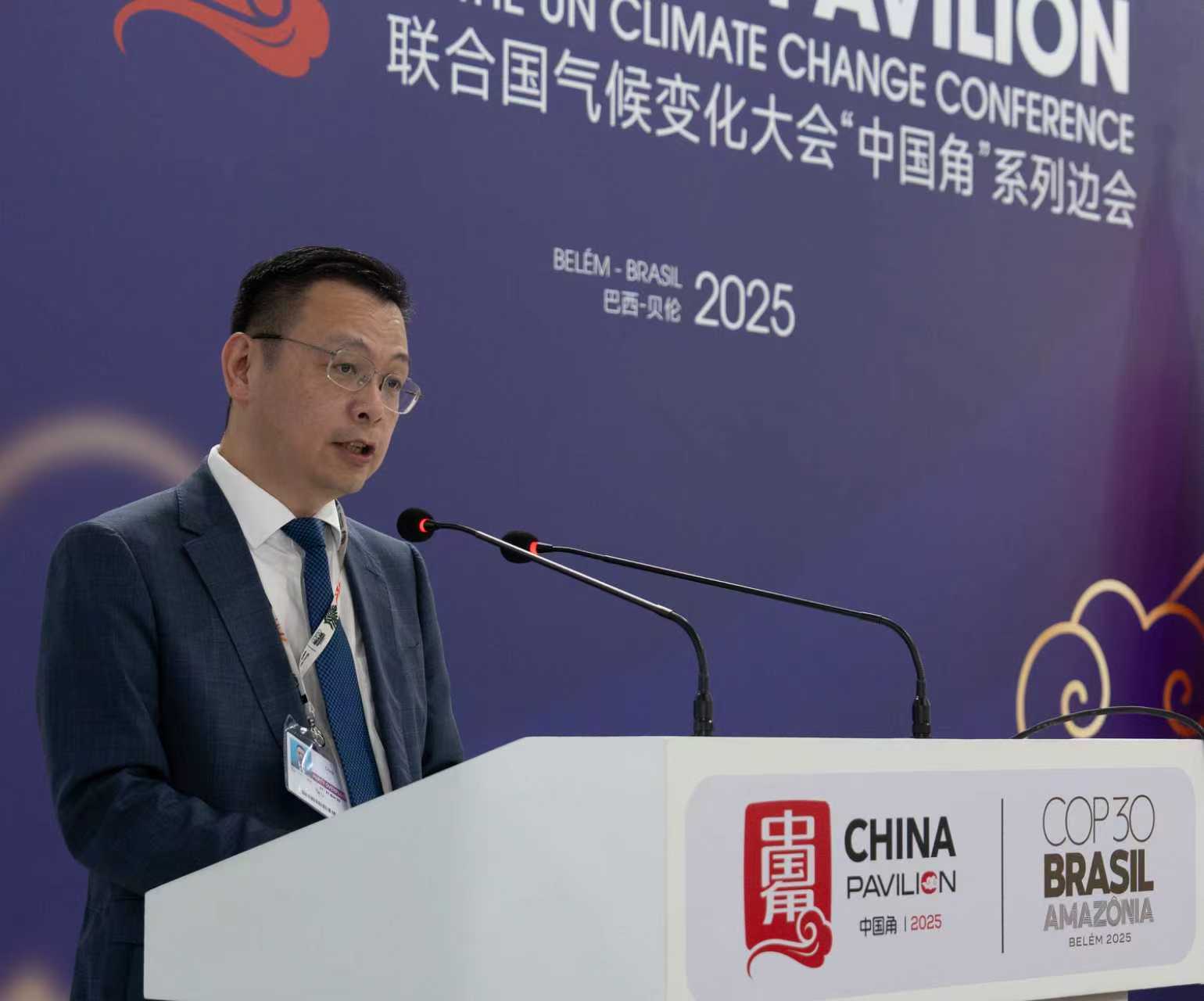
"提到比亚迪,大家首先想到的是新能源汽车,但我们的愿景远不止于此。"李铁说,比亚迪始终致力于通过技术创新,"让好的技术人人可享"。早在2008 年,比亚迪就提出从能源获取、储存到应用的"三大绿色梦想",通过太阳能、储能、电动交通等构建完整绿色链路。如今,比亚迪已将光伏、储能等新能源 产品和电动车、电动大巴、云轨等智能绿色交通工具应用于城市绿色发展中,有力改善能源结构、交通拥堵和空气质量。 这一理念在全球多个城市得到验证,并正在巴西加速成型。"比亚迪持续提升新能源汽车技术,其中DM插电式混动技术兼具油耗低、排放低、续航长、充 电快等优势。"李铁介绍,"2008年我们推出全球首款量产DM车型,如今第五代DM技术可以让整车油耗降至2.6升/百公里,这为传统燃油车用户转向清洁 能源车提供了切实通道。" 当地时间17日,在《联合国气候变化框架公约》第三十次缔约方大会(COP30)期间,比亚迪在"中国角"参加"共建绿色低碳的美丽城市"主题边会,展示新 能源汽车、光伏、储能等绿色技术与解决方案,为全球绿色城市建设提供"中国方案"。 比亚迪巴西分公司总经理李铁在"中国角"接受记者专访时表示,通过技术创新与本地化布局,比亚迪正 ...

中经评论:深海采火照未来
Jing Ji Ri Bao· 2025-11-20 00:20
历次运动会的火炬点燃方式都备受瞩目。随着十五运会主火炬在万众瞩目中踏浪而起,人们记住的 是那道划过水幕的矫健身影,是圣火熊熊燃起的激情瞬间。但很少有人注意到,火炬手擎起的那个名 为"绽放"的火炬里,跃动的火焰有着怎样不同寻常的"身世"——它采自南海1522米深的海底,是体育运 动史上首次在深海海底原位获取"源火";它燃烧的也不是寻常燃料,而是一种被称为"可燃冰"的神秘物 质。这簇冰与火交织的火焰,如何叩开未来能源的大门? 简单来说,可燃冰是天然气和水分子在高压低温下,形成的类冰状固态结晶物质。它就像一块块被 冰封印的天然气,外表看像普通冰块,却能在点燃后释放出熊熊烈焰,科学家将其喻为"冰封的能源宝 库"。它能量密度极高,1立方米可燃冰分解后,可释放出约160立方米至180立方米的天然气,相当于把 天然气压缩了上百倍。 这种独特的"能量块"储量巨大。据估算,全球可燃冰的资源储量相当于目前已知煤、石油、天然气 总和的2倍以上。这意味着,谁先掌握其商业化开采技术,谁就可能在未来能源版图上获得战略主动 权。更关键的是,它燃烧后几乎不产生粉尘,二氧化碳排放也远低于煤炭,是一种相对清洁的化石能 源。在风电、光伏等新能源尚 ...
开放 创新 绿色——在华外国工商界人士看“十五五”新机遇
Xin Hua She· 2025-11-19 22:53
开放 创新 绿色 ——在华外国工商界人士看"十五五"新机遇 11月17日下午,窗外寒风呼啸,中共中央对外联络部友谊厅内却热度正酣。一场面向在华外国工 商界的中共二十届四中全会精神专题宣介会在这里举行,160多名与会人士交流互动踊跃。 二十届四中全会审议通过《中共中央关于制定国民经济和社会发展第十五个五年规划的建议》, 对中国未来5年发展作出顶层设计和战略擘画。 一个月来,不少在华外国商协会、跨国企业代表和驻华使馆经贸官员都已经深入研读了"十五 五"规划建议。在他们眼中,"高水平对外开放""贸易创新""现代化产业体系""绿色转型"等一系 列"十五五"热词,意味着所在行业、企业与中方合作的新机遇、新动能。 带着热切的期待,会场问答之间,推进合作的路径愈发清晰。 高质量共建"一带一路"内涵丰富,其中包括统筹推进重大标志性工程和"小而美"民生项目等…… 未来"一带一路"合作将更加多元、更可持续。 创新,也是此次宣介会上频频被提起的热词。与会外国工商界人士普遍认为,中国坚持创新引领 高质量发展,给跨国公司来华投资开辟新空间。 德国克诺尔集团是中国高铁和地铁的制动系统供应商之一。集团中国区副总裁张丹阳提问,"十五 五"规 ...
波黑联邦雇主协会举行专题会议,探讨2026年波黑经济面临的挑战与机遇
Shang Wu Bu Wang Zhan· 2025-11-19 17:22
Core Viewpoint - The meeting organized by the Employers' Association of the Federation of Bosnia and Herzegovina focused on the challenges and opportunities facing the Bosnian economy in 2026, emphasizing the need for economic reform and industrial prospects [1] Group 1: Economic Challenges and Opportunities - The meeting discussed the challenges and opportunities for the economy in 2026, including the introduction of suitable labor, EU regulations, and green transition [1] - The Vice President of the Employers' Association highlighted the importance of finding solutions to enhance the competitiveness of Bosnian companies and reduce their financial burdens [1] Group 2: Industrial Development - The Chairman of the Federation's Economic and Social Council pointed out that deindustrialization policies have led to the destruction of many economic entities, and privatization processes have caused further losses [1] - There is a pressing need to redevelop the industrial production sector in Bosnia, with government action required to improve the business environment and accelerate infrastructure development [1] Group 3: Stakeholder Involvement - The meeting brought together employers, government representatives, unions, and academic figures to coordinate future development directions in the context of European integration and reindustrialization [1] - The meeting also included an assessment report on the implementation of the UN Guiding Principles on Business and Human Rights in the Bosnian business sector [2]
“双速”困境下,需重塑ESG评价标准
Di Yi Cai Jing· 2025-11-19 13:02
Core Insights - The article highlights the "dual-speed" phenomenon in global ESG practices, where developed countries and developing countries exhibit significant differences in their pace, policy strength, and corporate responses to environmental actions, particularly in climate change [1][3][5] Group 1: Differences in ESG Practices - Developed countries have historically contributed more to carbon emissions during their industrialization, leading to a lighter burden in achieving carbon reduction goals compared to developing countries, which are still in critical economic development phases [1][3] - Developing countries face immense pressure to reduce emissions while striving for economic growth and poverty alleviation, resulting in a challenging balancing act [1][2] Group 2: Capacity and Resource Disparities - Developing countries are disproportionately affected by climate change impacts, such as extreme weather events, due to their weaker infrastructure and economic foundations, which limits their ability to respond effectively [2][3] - In contrast, developed countries possess advanced warning systems, robust infrastructure, and greater financial resources to tackle climate change, exacerbating global inequalities [2][3] Group 3: Funding and Technology Gaps - The research and application of green technologies are primarily concentrated in developed countries, which also have the financial strength for large-scale green investments, while developing countries struggle to access these technologies and necessary funding [2][3] - High costs associated with technology licensing and export restrictions from developed nations hinder the ability of developing countries to deploy advanced low-carbon technologies [2][3] Group 4: Recommendations for ESG Evaluation - To address the "dual-speed" dilemma, the article suggests redefining and quantifying "differentiation" in ESG evaluations based on historical emissions, economic development levels, and technological capabilities of different countries [3][4] - It recommends designing additional scoring criteria for industries with high historical emissions and providing extra points for companies involved in green technology development and transfer to developing nations [4][5] - The evaluation process should consider the impact of energy-saving and carbon reduction efforts on traditional industries, allowing time for green transitions and focusing on trends in carbon reduction and investments in green transformation [4][5]