
量子计算

Search documents
多领域布局驱动业绩增长技术突破铸就发展新引擎
Zhong Guo Zheng Quan Bao· 2025-10-19 20:13
Core Viewpoint - The company, AVIC Fushida Technology Co., Ltd., is leading the self-innovation in the RF interconnect field, focusing on high-end manufacturing and aiming for a comprehensive upgrade from core technology breakthroughs to system-level solutions [1] Business Performance - In the first half of the year, the company achieved a revenue of 408 million yuan and a net profit of 37.18 million yuan, representing year-on-year growth of 7.86% and 10.5% respectively, with accelerated growth in the second quarter [1] - The sales revenue of the core product, RF coaxial connectors, increased by 24.41% year-on-year in the first half of the year [1] Order Recovery and Strategic Expansion - Core business orders have significantly increased, leading to high capacity utilization, with production lines operating at near full capacity [2] - The company has made strategic advancements in emerging fields such as commercial aerospace, high-end industrial equipment, precision instruments, low-altitude economy, quantum computing, and medical sectors, which are beginning to contribute to revenue growth [2] Internal Operations and Profitability - The company is enhancing profitability through a "cost efficiency project" aimed at optimizing production processes, reducing costs, and improving operational efficiency [3] - This diversified and balanced business structure strengthens the company's ability to withstand fluctuations in any single industry [3] Future Growth Areas - The HTCC (High-Temperature Co-fired Ceramic) business is expected to be a significant growth driver, with market demand projected to exceed 100 million yuan by 2025 [4] - The commercial satellite sector is another strategic focus, with the company collaborating on major satellite projects and providing comprehensive product support [4] International Market Expansion - The overseas market has become a crucial support for the company's growth, with strong performance in RF coaxial connectors and cable components, particularly in Europe and Southeast Asia [5] - Future plans include deepening cooperation with leading clients in the communication sector and expanding overseas through international exhibitions and local service systems [5] R&D and Innovation - The company is committed to high levels of R&D investment, focusing on "high frequency, integration, and systematization" to build core competitiveness in the RF interconnect field [6] - Future R&D will target four main areas: RF connectors and components, high-performance cables, advanced ceramics, and RF links [7]
天啊,细思极恐!美国抄走150亿比特币,根本没破解密钥!这事儿直接打了币圈“绝对安全”的脸
Sou Hu Cai Jing· 2025-10-19 17:03
Core Insights - The article discusses the recent developments in Bitcoin security, particularly the implications of quantum computing on its encryption methods [1][3][5] Group 1: Bitcoin Security and Quantum Computing - The U.S. Department of Justice announced it had recovered over $15 billion in Bitcoin from a hacking case, raising concerns about the security of decentralized currencies [3] - Current encryption methods, such as ECDSA used in Bitcoin, are deemed secure against existing technology, but advancements in quantum computing pose a future threat [5][9] - IBM aims to develop a quantum computer with 100,000 qubits by 2033, which could potentially break Bitcoin's encryption if sufficient stable qubits are achieved [5][11] Group 2: Vulnerabilities and Community Response - Approximately 30% of Bitcoin addresses have exposed public keys, making them vulnerable to future quantum attacks [7] - The Bitcoin community has been slow to respond to the potential threat of quantum computing, with little action taken towards adopting post-quantum cryptography standards [9] - The urgency of addressing these vulnerabilities is emphasized, as the timeline for quantum breakthroughs may be shorter than anticipated, potentially rendering Bitcoin's security obsolete [11]


量子科技深度报告讲解及国盾量子推荐
2025-10-19 15:58
Summary of Quantum Technology Conference Call Industry Overview - The quantum technology industry is divided into three main branches: quantum computing, quantum communication, and quantum measurement [2][3] - The development of quantum technology can be categorized into three stages: theoretical foundation (early 20th century to 1980), technological exploration (1990 to 2018), and product breakthroughs (2018 to present) [1][2] Key Companies and Developments - Major companies like Google and IBM have launched practical prototypes, including Google's 53-qubit superconducting chip and IBM's System One [3] - In 2024, significant breakthroughs are expected from technologies such as China's Long Number and Google Vivo chips [1][3] - GuoDun Quantum's products include the world's first quantum secure communication satellite "Mozi," ground networks, and miniaturized ground station equipment [2][24] Market Growth and Financials - GuoDun Quantum is projected to generate approximately 350 million RMB in revenue in 2025, with a net profit of over 20 million RMB [2][27] - The quantum computing market is expected to reach tens of billions of dollars by 2030 and potentially hundreds of billions by 2035, depending on technological advancements [18] Technological Insights - Quantum entanglement allows for strong correlations between multiple quantum systems, which is crucial for simulating complex interactions in new material and drug development [2][10] - Quantum superposition enables a quantum bit to exist in multiple states simultaneously, leading to exponential growth in computational capacity [9] Challenges and Future Directions - The transition from classical computing to quantum computing is driven by limitations in classical systems, such as the "quantum tunneling" effect that restricts performance [5][6] - Current challenges include the "decoherence" problem, which affects computational accuracy and efficiency due to environmental factors [15] - Companies are exploring specialized machines and hybrid algorithms to facilitate the practical application of quantum computing [16] Global Competitiveness - The U.S. and China are leading in quantum technology research, with the U.S. having a higher proportion of highly cited papers and patents [19] - China is investing heavily in quantum communication infrastructure, with significant resources allocated to build a secure quantum internet [20][22] Applications and Industry Impact - GuoDun Quantum is actively exploring applications in government, finance, and electricity sectors, with products aimed at secure communication and data encryption [28] - The company has developed various terminal products and partnered with China Telecom to offer encrypted office applications, reaching millions of users nationwide [28] Conclusion - The quantum technology industry is poised for significant growth, driven by advancements in quantum computing and communication, with companies like GuoDun Quantum at the forefront of innovation and application development [1][27]

薛定谔亲外孙创业量子计算,老黄早早就成了股东
量子位· 2025-10-19 04:10
Core Viewpoint - PsiQuantum, a quantum computing startup co-founded by the grandson of physicist Erwin Schrödinger, has raised $1 billion in a single funding round, setting a record for quantum computing startups. This funding aims to help the company build a million-qubit quantum computer by 2028, surpassing competitors like Google and IBM [10][11][12]. Company Overview - PsiQuantum was founded in 2016 with the goal of creating the first usable quantum computer. Initially based in the UK, the company relocated to Silicon Valley to better access funding [17][18]. - The company has established partnerships with major semiconductor manufacturers and has developed a new technology called Fusion-Based Quantum Computing (FBQC), which has been published in a leading scientific journal [21][22][24]. Funding and Growth - The recent $1 billion funding round was led by BlackRock, Temasek, and Baillie Gifford, marking a significant milestone in the quantum computing sector [10]. - PsiQuantum has secured various contracts, including a $22.5 million deal with the U.S. Air Force Research Laboratory and a $619 million order from the Australian government for a utility-scale quantum computer [27][29]. Technical Innovations - Unlike most quantum computers that use electrons or atoms, PsiQuantum's qubits are based on photons, allowing for easier integration with existing semiconductor manufacturing processes and operation at room temperature [32][33]. - The company has introduced the Omega chip set, designed for practical quantum computing, which includes components necessary for building a million-qubit quantum computer [36][38]. Leadership and Expertise - The founding team of PsiQuantum includes experts with strong academic backgrounds in quantum physics, such as CEO Jeremy O'Brien and CTO Mark Thompson, who have extensive experience in the field [43][44][55]. - The team is driven by a sense of social responsibility to bring quantum technology to fruition, reflecting their commitment to advancing the field [51][52].

中国稀土领跑欧美,美国军工雷达也得靠,西方砸3000亿难追赶
Sou Hu Cai Jing· 2025-10-18 23:16
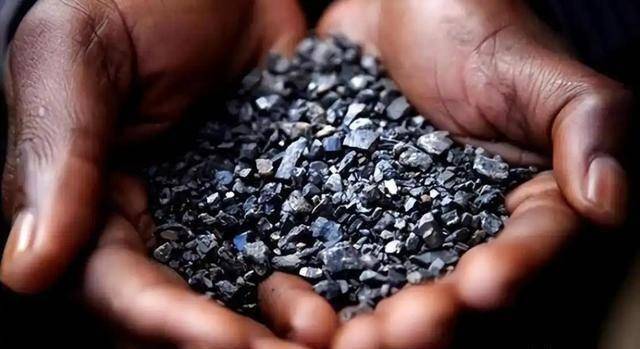
Core Insights - The global manufacturing industry increasingly relies on rare earth elements, often referred to as "industrial vitamins," essential for products like smartphones, chips, wind power, and electric vehicles [1][14] - Despite many countries' efforts to reduce dependence on China for rare earths, actual production capabilities remain limited, indicating a systemic issue rather than a mere lack of resources [1][3] Group 1: U.S. Rare Earth Production Challenges - The U.S. holds the world's third-largest rare earth reserves, primarily consisting of light rare earths, while heavy rare earths, crucial for advanced military equipment, account for less than 1% of global reserves [3][5] - Even with plans to produce 32,000 tons of REO concentrate by 2025, 70% of this will still need to be sent to China for processing, highlighting the U.S.'s inability to refine these materials domestically [5][6] - The U.S. produces only 1,000 tons of neodymium-iron-boron magnets annually, which is less than 1% of China's production in 2018, and the purity level is significantly lower than China's military-grade standards [5][6] Group 2: Talent and Regulatory Barriers - Since 2000, fewer than 200 graduates in relevant fields have emerged from U.S. universities, while China produces thousands annually, dominating the global talent pool [6][14] - Environmental regulations and community lawsuits pose significant hurdles, with new project development taking five to ten years and requiring investments exceeding $300 billion to rebuild a complete supply chain [6][16] Group 3: China's Historical and Current Position - China initially faced a disadvantage in the 1970s, possessing valuable resources but lacking core technologies, leading to the sale of raw materials at low prices [8][10] - The turning point came in the 1970s when Chinese researchers developed advanced extraction techniques, achieving a purity level of 99.9999%, significantly reducing costs and improving efficiency [10][12] - Currently, Chinese companies have mastered ultra-high purity refining capabilities, producing materials used in advanced technologies like the F-35 radar systems and Tesla motors [14][16] Group 4: Strategic Control and Future Outlook - Recent export control measures by China, including comprehensive restrictions on design documents and process parameters, aim to safeguard national interests and prevent proliferation [16][17] - The industry is witnessing a shift towards self-sufficiency, with a focus on building robust domestic capabilities while remaining open to international collaboration when needed [17] - Continuous innovation, including AI monitoring and environmentally friendly recycling methods, is enhancing the overall competitiveness of the industry, suggesting that long-term success will depend on sustained research and development efforts [17]

中国芯片技术取得多项突破性进展
Xin Lang Cai Jing· 2025-10-18 13:27
Core Progress in China's Chip Technology - China's chip technology has achieved multiple breakthroughs, marking a shift from "single-point breakthroughs" to "systematic innovation" in the domestic semiconductor industry [1] Disruptive Computing Chips: Breaking Physical Barriers - The world's first 24-bit precision analog matrix chip developed by Peking University enhances traditional analog computing precision from 8 bits to 24 bits with an error rate below 0.1% [1] - This chip achieves a computational throughput over 1000 times that of top GPUs when solving 128×128 matrix equations, with energy efficiency improved by over 100 times [2] - It provides new pathways for AI large model training and edge computing by overcoming the century-old problem of low precision and scalability in analog computing [3] Integrated Storage and Computing Chips - Tsinghua University has developed the world's first memristor chip that integrates storage, computing, and on-chip learning, achieving a 75-fold energy efficiency improvement over traditional ASICs [4] - This chip supports direct AI training on hardware, reducing reliance on cloud services [4] Core Processes and Materials: Breaking Monopolies - The launch of a 1nm ion beam etching machine by Guoguang Liangzuo achieves a precision of 0.02 nanometers, outperforming mainstream 2nm equipment by a factor of 100 [7] - Shanghai Microelectronics has achieved mass production of immersion lithography machines, with a domestic equipment matching rate exceeding 50% [7] - Fudan University has developed the world's first two-dimensional-silicon-based hybrid architecture flash memory chip, achieving read and write speeds a million times faster than traditional flash memory [7] High-End Chip Design and Manufacturing: Entering the First Tier - Xiaomi has launched the first self-developed 3nm mobile SoC in mainland China, integrating 19 billion transistors and achieving performance close to Apple's A18 Pro with a 30% energy efficiency improvement [8] - Huawei's Ascend 910B supports 8-card interconnection, significantly reducing dependence on imported AI computing power from 95% to 50% [9] - The Loongson 3C6000 chip, based on a fully autonomous architecture, surpasses Intel's Xeon 8380 in performance and has received the highest national security certification [10] Future Directions and Challenges - A joint research project between Peking University and Hong Kong City University has developed a full-band 6G chip with a speed of 120Gbps, supporting integrated networking [11] - The introduction of a 504-qubit superconducting quantum computer "Tianyan 504" by China Telecom is expected to enhance quantum chip yield [12] - The industry still relies on EUV lithography machines for processes below 7nm, with domestic EUV expected to be developed by 2027 [13] - There is a need to accelerate the development of GPU toolchains and EDA design software to enhance the software ecosystem [14] Summary - China's chip technology is achieving "leapfrog" advancements through multi-path innovation, with short-term goals focusing on a fully autonomous 28nm supply chain, mid-term goals on reshaping computing power with new architectures, and long-term goals on seizing high ground in quantum chips and two-dimensional materials [14][15]

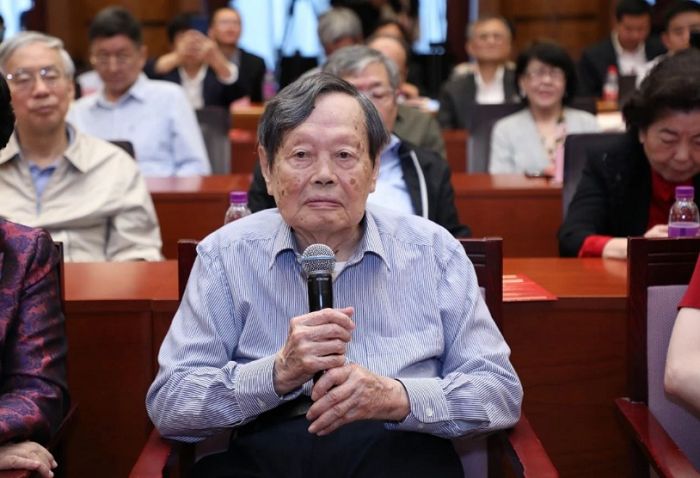
103岁杨振宁逝世:要做好物理,是要有品位和风格的
第一财经· 2025-10-18 13:26
Core Viewpoint - The article commemorates the life and contributions of Yang Zhenning, a renowned physicist and Nobel laureate, highlighting his impact on science and education in China, as well as his personal philosophy and dedication to his homeland [3][4][12]. Group 1: Life and Achievements - Yang Zhenning was born on October 1, 1922, in Hefei, Anhui, and showed exceptional mathematical talent from a young age, influenced by his father's academic background [5][6]. - He studied at National Southwestern Associated University during a tumultuous period, where he developed a deep appreciation for the works of prominent physicists like Einstein and Fermi [7]. - Yang Zhenning achieved significant academic milestones in the United States, including the development of the Yang-Mills theory in 1954 and the discovery of parity violation in 1956, which established him as a leading physicist [7][9]. Group 2: Contributions to China - After winning the Nobel Prize, Yang Zhenning returned to China in 1971, becoming a key figure in fostering academic exchanges and rebuilding the scientific community [10][11]. - He played a crucial role in establishing over 60 top physics laboratories in China, significantly enhancing the country's research capabilities and nurturing numerous scientific talents [12]. - Yang Zhenning's philanthropic efforts included founding the "Science Exploration Award" and supporting Chinese scholars to study abroad, demonstrating his commitment to advancing science in China [11][12]. Group 3: Personal Philosophy and Legacy - Yang Zhenning emphasized the importance of character and style in scientific work, believing that a scientist's personal qualities significantly influence their contributions [13][14]. - He maintained a rigorous work ethic well into his later years, dedicating time to teaching and research in fields like high-temperature superconductivity and quantum computing [14][16]. - His reflections on life and science reveal a deep appreciation for the mysteries of the universe and a humble acknowledgment of humanity's place within it [16].

103岁杨振宁逝世:要做好物理,是要有品位和风格的
Di Yi Cai Jing· 2025-10-18 11:13
Core Insights - The article highlights the life and contributions of Yang Zhenning, a renowned physicist and Nobel laureate, who passed away at the age of 103, emphasizing his role in boosting the confidence of Chinese people in science and education [1][3][10] Group 1: Personal Background and Achievements - Yang Zhenning was born on October 1, 1922, in Hefei, Anhui, and showed exceptional mathematical talent from a young age, influenced by his father, a mathematics PhD from the University of Chicago [3][4][6] - He graduated with a master's degree from the University of Chicago in 1945 and spent 17 years at the Institute for Advanced Study in Princeton, where he produced significant academic work, including the Yang-Mills theory and the concept of parity violation [6][7][9] - Yang Zhenning returned to China in 1971 after the normalization of Sino-American relations, becoming the first Chinese scientist to visit post-revolution China, and played a crucial role in rebuilding the country's scientific community [7][9] Group 2: Contributions to Science and Education - He established numerous top-tier physics laboratories in China, significantly reducing the gap in physical infrastructure between China and the West, and contributed to the training of many scientific talents [9][10] - Yang Zhenning initiated the "Science Exploration Prize" to foster scientific talent in China and donated his Nobel Prize winnings to support Chinese students studying abroad [7][9] - He maintained a rigorous work ethic even in his later years, dedicating ten hours a day to research in fields like high-temperature superconductivity and quantum computing [10][12] Group 3: Personal Philosophy and Legacy - Yang Zhenning viewed physics as an art form, emphasizing the importance of style and character in scientific work, and believed that a person's taste, ability, and circumstances shape their contributions [10][12] - His marriage to Weng Fan provided him with personal support, allowing him to continue his academic pursuits while also co-authoring works that reflect his thoughts on science and humanity [12][13] - In his final public speech at the age of 100, he expressed a profound understanding of the universe and humanity's place within it, highlighting his lifelong quest for knowledge [13]
数读“十四五”·产业新答卷 新型储能5年增30倍!这些“未来产业”引擎轰鸣
Ren Min Wang· 2025-10-18 03:23
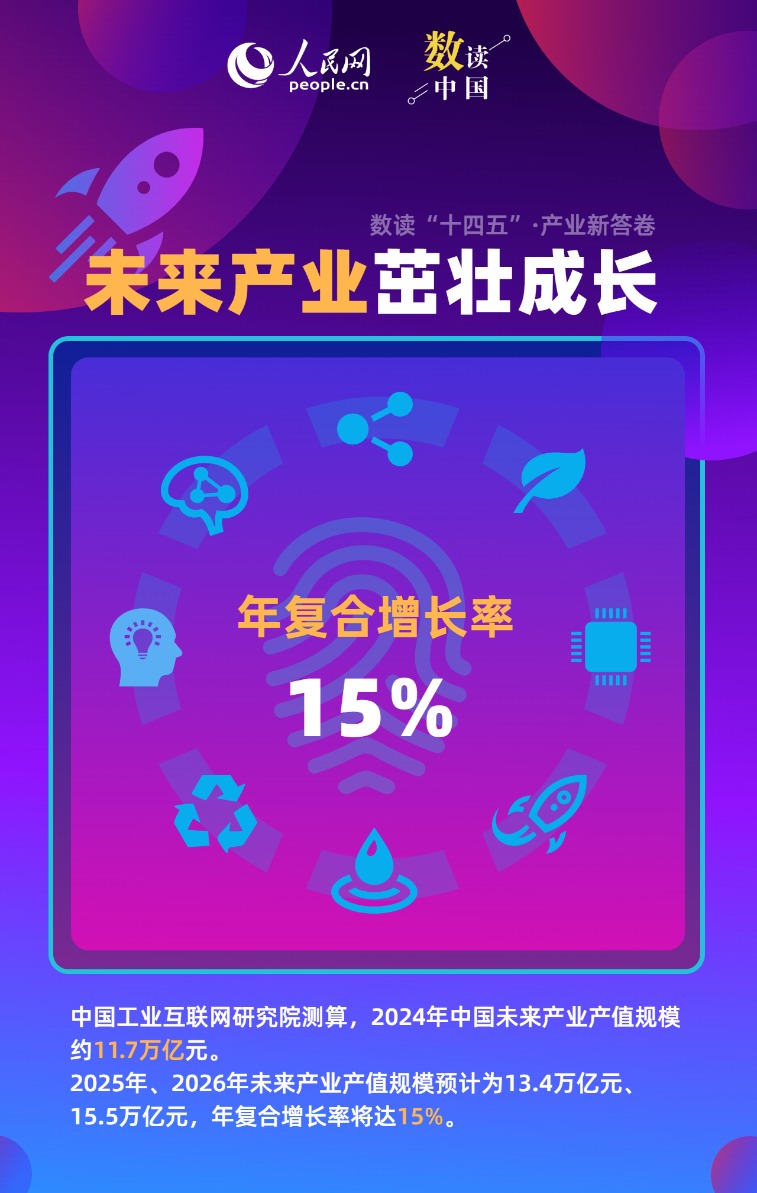
Core Insights - The "14th Five-Year Plan" marks a significant transformation in China's industrial landscape, with a focus on upgrading traditional industries and promoting emerging sectors [1] Group 1: Artificial Intelligence - By 2024, China's artificial intelligence industry is expected to exceed 700 billion yuan, maintaining a compound annual growth rate of 15% [3][6] - As of mid-2025, the total number of large model registrations in China reached 439, covering over 30 industries including healthcare, agriculture, education, smart manufacturing, and fintech [7] Group 2: Quantum Computing - China has established a leading position in quantum computing research, with superconducting and optical quantum computers achieving quantum superiority [10] - Sixteen key cities, including Hefei, Shanghai, Beijing, and Guangzhou, have developed quantum metropolitan networks [10] Group 3: Commercial Space - The number of commercial space enterprises in China has surpassed 500, with the market size expected to exceed 2.5 trillion yuan by 2025 [12] - The satellite internet sector is approaching a commercialization inflection point, with an anticipated market size of 45 billion yuan by 2025 [12] Group 4: Brain-Computer Interface - The brain-computer interface market in China is projected to reach 3.2 billion yuan by 2024, with expectations to grow to 6.14 billion yuan by 2028 [14] Group 5: Robotics - By the end of 2024, there will be approximately 451,700 smart robotics enterprises in China, with a registered capital totaling 6,444.557 billion yuan, reflecting a growth of 206.73% since the end of 2020 [17] Group 6: Biomanufacturing - China's biomanufacturing industry is nearing a total scale of 1 trillion yuan, with fermentation capacity accounting for over 70% of the global total [21] Group 7: Low-altitude Economy - The low-altitude economy market in China is projected to reach 1.5 trillion yuan by 2025, with expectations to grow to 3.5 trillion yuan by 2035 [24] Group 8: New Energy Storage - By mid-2025, China's new energy storage capacity is expected to reach approximately 95 million kilowatts, marking a nearly 30-fold increase over five years and accounting for over 40% of the global total [27] - In 2024, China's hydrogen production and consumption scale is anticipated to exceed 36 million tons, leading the world [27]
综述丨从日本高新技术博览会看AI如何变革生产生活
Xin Hua Wang· 2025-10-18 02:12
Core Insights - The 2025 Japan High-Tech Expo showcased the transformative impact of AI across various sectors, with approximately half of the exhibiting companies presenting AI-related technologies, products, and services [1][2][3] Group 1: AI in Manufacturing and Production - Mitsubishi Electric demonstrated cloud-based AI for visualizing factory assembly lines and edge AI for equipment monitoring, significantly enhancing operational efficiency by providing repair solutions and tracking orders [1] - Edge AI operates independently of cloud connectivity, maintaining functionality even during outages, and offers higher precision for specific tasks compared to general large language models [1] Group 2: AI in Healthcare and Pharmaceuticals - The National Institute of Advanced Industrial Science and Technology showcased next-generation drug development technology that integrates AI and quantum computing, improving molecular screening efficiency for challenging drug types like RNA aptamer drugs [2] - Murata Manufacturing presented a bio-acoustic sensor capable of detecting vibrations on object surfaces, potentially identifying diseases through continuous monitoring of vital signs [2] Group 3: AI in Consumer Products - Kao Corporation introduced a mobile application that uses AI to recommend skincare products based on objective skin classification from a facial photo, moving beyond traditional subjective methods [3] - Fujitsu developed a skeletal recognition AI for golf, which digitizes movements and provides real-time performance improvement suggestions [2] Group 4: Event Overview - The Japan High-Tech Expo, established in 2000, attracted over 800 companies and organizations from Japan and abroad, highlighting the growing interest in AI technologies [3]