绿色转型

Search documents
共筑一个更加繁荣、安全与绿色的地球(国际论坛)
Ren Min Ri Bao· 2025-11-14 22:03
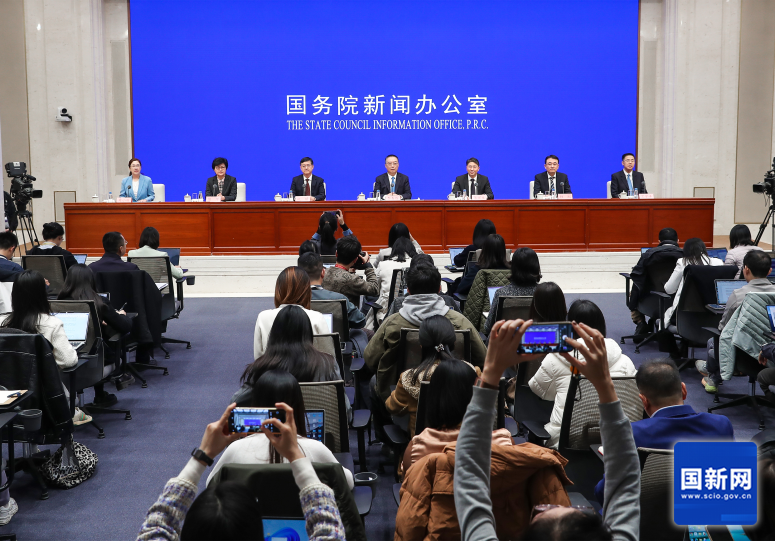
Group 1 - China's green transition serves as a practical example for global energy transformation, providing a viable path for developing countries to balance environmental protection and economic growth [2] - China has become one of the most influential countries in addressing climate change and promoting green transition, implementing long-term emission reduction plans and significantly increasing the share of clean energy in overall energy consumption [2] - China has built the world's largest installed capacity for wind and solar power, promoted electric and hybrid vehicles, and undertaken large-scale afforestation and desertification prevention projects, effectively reducing carbon emissions while creating new green industry chains and job opportunities [2] Group 2 - Brazil, committed to green development, has made long-term efforts in ecological civilization construction, possessing the world's largest tropical rainforest and significant freshwater reserves [3] - Approximately 88.2% of Brazil's electricity is expected to come from renewable sources in 2024, with hydropower accounting for over half, and rapid growth in wind and solar energy generation [3] - Brazil and China have formed a natural partnership in addressing climate change and promoting sustainable development, emphasizing that environmental protection and development rights are complementary rather than opposing [3] Group 3 - Both Brazil and China advocate for a development model supported by technological innovation and fair cooperation, aiming for a prosperous, safe, and green future for humanity [4]


欧洲能源在安全与自主间“徘徊”
Jing Ji Ri Bao· 2025-11-14 21:38
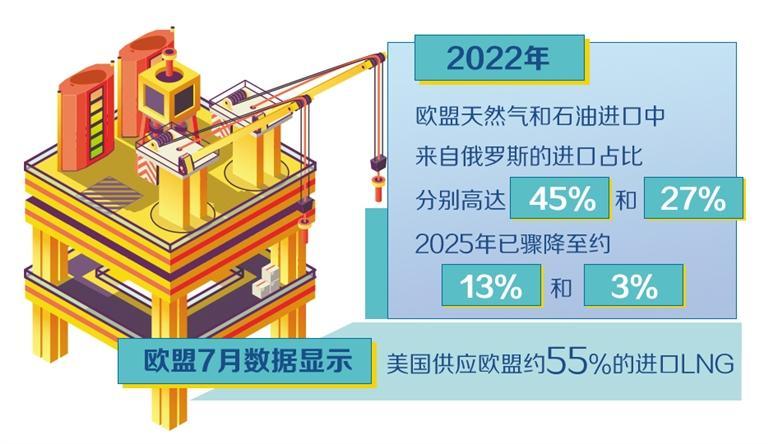
Core Insights - The sixth Transatlantic Energy Cooperation Partners Conference was held in Athens, Greece, focusing on energy security, affordability, and reliability in Europe, with significant participation from U.S. officials and international oil and gas executives [2][3] - The U.S. aims to replace Russian natural gas in Western Europe, with a commitment to supply LNG and other energy products worth $750 billion over three years, significantly increasing Europe's dependency on U.S. energy [3][5] - Europe is experiencing a shift in energy supply dynamics, with the U.S. becoming the largest LNG and oil supplier, accounting for approximately 55% of EU imports, while the EU aims to reduce its natural gas consumption by 7% by 2030 [3][4] Energy Supply Dynamics - The EU has drastically reduced its reliance on Russian energy, with imports from Russia dropping from 45% for gas and 27% for oil in 2022 to approximately 13% and 3% by 2025, respectively [2] - The EU's LNG imports have surged, with the U.S. replacing Russia as the primary supplier, raising concerns about the sustainability and cost-effectiveness of this shift [3][4] - A long-term LNG supply agreement was signed between Greece and the U.S., committing to import 700 million cubic meters of U.S. LNG annually starting in 2030 for 20 years, which has sparked debates about the environmental impact and the EU's green transition [5][6] Environmental and Geopolitical Concerns - The EU's increased dependency on U.S. LNG raises questions about the impact on its climate goals, as the extraction and transportation of shale gas have significant carbon footprints [5][6] - There are fears that the EU's commitment to purchasing U.S. energy could weaken its negotiating position and expose it to political leverage from the U.S., potentially compromising its climate policies [6] - The evolving energy relationship reflects broader tensions in U.S.-EU relations, with the EU needing to navigate its energy security while maintaining autonomy and addressing environmental concerns [6]
“新金砖”的山东选择
经济观察报· 2025-11-14 15:08
Group 1 - The BRICS countries account for nearly half of the world's population, approximately 30% of the global economy, and one-fifth of global trade, indicating significant cooperation potential [1][3] - The "Dialogue with BRICS" event in Shandong attracted over 400 guests from more than 30 countries and regions, highlighting Shandong's role as a key hub for global industrial factor flow [2][3] - Shandong's trade with BRICS countries reached 550.6 billion yuan in the first three quarters of 2025, accounting for 21% of the province's total imports and exports, with a year-on-year growth of 23% [3] Group 2 - The company Youbot is advancing its humanoid robot technology, focusing on core technology upgrades and expanding its applications in various fields, targeting emerging markets like BRICS countries for international expansion [5] - Fada Flour Group is shifting its overseas expansion focus to products like instant noodles and frozen foods due to export restrictions on flour, with current exports to ten countries [6][7] - The World Trade Center Association emphasizes the transformation of Chinese enterprises from merely exporting products to exporting entire industrial ecosystems, indicating a shift in global business strategies [7] Group 3 - Decathlon plans to deepen its market presence in Shandong, leveraging the province's industrial chain advantages and large consumer base to enhance its retail and supply chain collaboration [9] - Stora Enso, a leading environmental engineering company, has been active in Shandong for over 50 years, providing localized environmental solutions and participating in significant projects [10] - The Shandong government aims to strengthen cooperation with BRICS countries in various sectors, including modern agriculture, advanced manufacturing, and digital economy, while promoting green technology and sustainable development [11]
COP30“中国角”举行共建绿色丝绸之路高级别主题边会
人民网-国际频道 原创稿· 2025-11-14 09:09
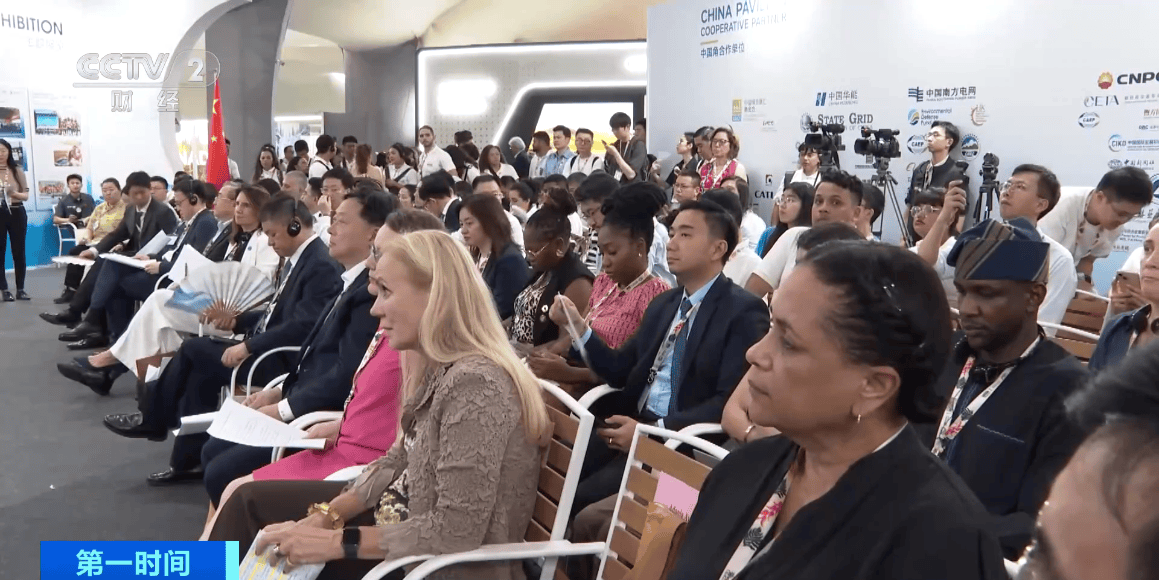
Core Viewpoint - The conference emphasizes the importance of green innovation cooperation and the establishment of a green Silk Road, showcasing China's commitment to comprehensive green transformation and sustainable development [1][2]. Group 1: China's Commitment to Green Development - China has achieved significant results in ecological civilization construction and renewable energy development, proposing a comprehensive national contribution target for 2035 [1][2]. - The country has built the world's largest clean power generation system and carbon trading market, indicating a robust growth in the green industry [2]. Group 2: International Cooperation and Opportunities - The "Belt and Road" initiative is highlighted as the largest South-South cooperation platform, with China willing to share opportunities and promote joint development through green cooperation [1]. - The conference participants stressed that innovation and open cooperation are crucial for building the green Silk Road, with a focus on enhancing energy efficiency and accelerating energy transition [2]. Group 3: Role of International Organizations - The UN and various international organizations recognize that green transformation relies not only on policies and funding but also on the ability to implement projects effectively [2]. - The "Belt and Road" Green Development International Alliance plays a positive role in facilitating these efforts, sharing research findings and practical experiences related to green transformation [2].
“中国再次走在了前列”!中国推动绿色创新合作获多国人士肯定
Sou Hu Cai Jing· 2025-11-14 08:36
Group 1 - The core event of the news is the "Green Innovation Cooperation to Build a Green Silk Road" activity held at COP30 in Brazil, which has garnered international attention and approval [1] - The Chinese delegation highlighted the green elements of the event, emphasizing China's commitment to green energy transition [1] - International guests acknowledged China's experience in green energy transition as a model for other countries to learn from [2] Group 2 - Simon Steele, the Executive Secretary of the UN Framework Convention on Climate Change, praised China's efforts in promoting green transformation and South-South cooperation, noting that initiatives like the "Belt and Road" green development international alliance are crucial for this transition [3] - The increasing number of participating countries and partnerships formed by the private sector and charitable organizations indicate the emergence of a new type of economy [3] - Laurence Tubiana, CEO of the European Climate Foundation, stated that China is leading discussions on integrating trade and investment to promote cooperation and support the sharing of benefits from the green economy [5]
国家统计局工业司首席统计师孙晓解读10月份工业生产数据
Guo Jia Tong Ji Ju· 2025-11-14 07:03
Core Insights - The overall industrial production in China is stable with significant growth in various sectors, indicating a solid advancement towards high-quality development [1] Group 1: Industrial Production Overview - In the first ten months of the year, the industrial added value for large-scale industries increased by 6.1% year-on-year, surpassing the previous year's growth by 0.3 percentage points [1] - In October, the industrial added value grew by 4.9% year-on-year, with a month-on-month increase of 0.17% after seasonal adjustments [1] - Among the three major sectors, manufacturing increased by 4.9%, while mining and electricity, heat, gas, and water production and supply grew by 4.5% and 5.4%, respectively [1] - Out of 41 major industrial categories, 29 experienced year-on-year growth, resulting in a growth coverage of 70.7% [1] - Of the 623 major industrial products tracked, 313 saw an increase in production, representing a growth coverage of 50.2% [1] Group 2: Equipment Manufacturing Sector - The added value of large-scale equipment manufacturing increased by 8.0% year-on-year, accounting for 36.1% of the total industrial output, which is an increase of 1.5 percentage points compared to the entire year of 2024 [2] - All eight industries within equipment manufacturing reported growth, with the automotive and electronics sectors leading at growth rates of 16.8% and 8.9%, contributing 22.8% and 19.3% to the overall industrial growth, respectively [2] - The railway, shipbuilding, and aerospace sectors have maintained double-digit growth since December 2024, with a growth rate of 15.2% in October [2] - High-end equipment products are steadily developing, with production increases of 71.3% for railway locomotives, 21.4% for civil steel ships, and 16.9% for generator sets [2] Group 3: Emerging Industries and Digital Integration - The integration of the real economy and digital economy is deepening, with high-tech manufacturing and digital product manufacturing increasing by 7.2% and 6.7% year-on-year, respectively, both exceeding the overall industrial growth by 2.3 and 1.8 percentage points [3] - Specific sectors such as electronic materials, integrated circuits, and smart vehicle equipment saw substantial growth rates of 35.5%, 33.7%, and 28.4%, respectively [3] - The rapid development of "artificial intelligence+" has led to production increases of 34.0% for servers and 17.7% for integrated circuits; the robotics sector is also thriving, with production of robot reducers and industrial robots increasing by 4.6 times and 17.9%, respectively [3] Group 4: Traditional Industries - The petroleum processing industry saw an 8.1% year-on-year increase in added value, with the biofuel processing sector growing by 19.1%, contributing 1.9 percentage points more than the same period in 2024 [4] - The chemical fiber industry grew by 7.3%, with bio-based materials manufacturing increasing by 26.3%, contributing 13.3 percentage points more than the same period in 2024 [4] - Other traditional industries also showed positive growth, with chemical and coal industries increasing by 7.1% and 6.5%, respectively; non-ferrous and ferrous metal mining grew by 6.2% and 5.9% [4] - The long-term positive conditions and trends for China's industrial economy remain unchanged, although challenges such as insufficient effective demand and pressure on corporate profits persist [4]
第十三届中欧论坛聚焦深化中欧对话与务实合作
Xin Hua She· 2025-11-14 06:11
Core Points - The 13th China-Europe Forum was held in Brussels, focusing on the 50th anniversary of China-Europe diplomatic relations and discussing future cooperation amidst global uncertainties [1][2] - Chinese and European leaders emphasized the importance of mutual respect for core interests and addressing economic and trade differences to promote healthy and stable development of China-Europe relations [1] - The forum highlighted the potential for collaboration in green technology and artificial intelligence, with a call for both sides to enhance understanding and trust [2] Group 1 - The forum serves as a platform to reflect on the strategic significance of China-Europe relations in the context of global challenges [1] - Chinese Ambassador to the EU, Cai Run, stressed the need for both sides to adhere to important consensus and multilateralism [1] - Belgian Ambassador to China, Anbo Ning, called for the elimination of misunderstandings and emphasized the complementary nature of China-Europe cooperation in sustainable development [1][2] Group 2 - Participants discussed expanding areas of cooperation, particularly in green transition and technology, to address global challenges [2] - Former WTO Director-General Pascal Lamy emphasized the necessity for China and Europe to work together to maintain global stability [2] - The forum was co-hosted by the Chinese Mission to the EU, the European think tank "Friends of Europe," and the China Public Diplomacy Association, with nearly 500 attendees [2]
国家统计局回应投资放缓:投资结构优化,制造业投资持续增长
Nan Fang Du Shi Bao· 2025-11-14 05:44
Core Viewpoint - The investment growth rate in China is slowing down, but the investment structure is optimizing, particularly in the manufacturing sector, which continues to see growth [1][4]. Investment Growth and Structure - Fixed asset investment decreased by 1.7% year-on-year in the first ten months of the year, but when excluding price factors, there was still a slight increase in the physical volume of investment [3]. - The slowdown in investment growth is attributed to multiple factors, including a complex external environment, intense domestic market competition, and declining investment returns, leading to cautious decision-making among market participants [3]. - Real estate investment saw a significant decline of 14.7% year-on-year, which negatively impacted overall investment growth by approximately 3 percentage points [3][4]. Manufacturing Sector Performance - Despite the overall slowdown, manufacturing investment grew by 2.7% year-on-year, accounting for 25.6% of total investment, an increase of 1.1 percentage points compared to the previous year [4]. - High-end industries are experiencing increased investment, with aerospace and equipment manufacturing up by 19.7% and information services by 32.7% year-on-year [4]. - Investments related to green transition are also on the rise, with clean energy investments (solar, wind, nuclear, and hydropower) growing by 10.4% year-on-year [4]. Future Investment Potential - China still has significant investment potential and space for growth, particularly in strengthening the real economy, promoting technological and industrial innovation, and addressing regional development imbalances [5]. - Continued investment is necessary to enhance public services in education, healthcare, housing, and other areas [5]. Foreign Trade Performance - In the first ten months, China's total goods import and export value increased by 3.6%, with exports growing by 6.2% [5]. - Despite challenges such as rising global trade protectionism, China's trade with ASEAN and the EU grew by 9.1% and 4.9%, respectively, outpacing overall trade growth [5]. - Private enterprises' imports and exports rose by 7.2%, significantly higher than the overall growth rate [6].
从融入到建构:全球绿色贸易体系的中国方案|专家热评
Di Yi Cai Jing· 2025-11-14 04:44
Core Viewpoint - The global trade system is undergoing an irreversible green restructuring, with sustainability becoming a core element of market access and competition, and China is actively contributing to the formation of a global green trade system [1][3][6]. Group 1: Global Green Trade Trends - The global green transition is shifting from conceptual consensus to institutional construction, recognizing that trade systems must support sustainable development alongside economic growth [3][4]. - Sustainability is being elevated to a normative goal equal to fairness and openness in international trade principles, as seen in discussions among WTO members [3][4]. - The integration of carbon emissions into trade considerations is increasing, with practices like the EU's Carbon Border Adjustment Mechanism (CBAM) becoming more common [4][5]. Group 2: China's Role in Green Trade - China is a steadfast practitioner of green transition, establishing competitive advantages in renewable energy, energy storage, and electric vehicles, thus providing key momentum for the global green supply chain [6][7]. - The country is actively participating in international rule-making, promoting cooperation in green standards, green finance, and green industrial chains [6][7]. Group 3: Implementation of Green Trade Policies - The issuance of the "Implementation Opinions" aligns with global green trade trends and China's strategic role, focusing on low-carbon transformation in foreign trade products [13][14]. - The policy emphasizes integrating carbon footprint management and product standards into international systems, enhancing China's global competitiveness in industries like photovoltaics and electric vehicles [14][15]. - Financial policies are shifting to support the green transformation of export-oriented enterprises, with the People's Bank of China including green trade in its green finance support scope [15][16]. Group 4: Market and Financial Mechanisms - The national carbon market has expanded to cover over 60% of total CO2 emissions, enhancing market support for green transition [11]. - The green electricity trading and green certificate systems provide flexible options for enterprises to meet emission reduction obligations, with significant growth in green electricity trading volumes [11][12]. - The government is building a comprehensive green support system across products, industries, finance, and markets, facilitating deeper integration of domestic actions with global green trade [12][13]. Group 5: Global Governance and Cooperation - The "Implementation Opinions" reflect China's strategic shift from domestic green manufacturing to shaping international green advantages, responding to the institutionalization of global green transition [13][17]. - China aims to participate in global carbon trade rule negotiations through multilateral mechanisms, promoting inclusive and fair international green trade rules [17]. - The formation of a global green trade system is seen as a critical step towards sustainable development, requiring cooperation and gradual advancement rather than confrontation [17].

事关消费、就业、物价……最新数据公布→
Jin Rong Shi Bao· 2025-11-14 04:35
Economic Overview - The national economy is generally stable with a trend of steady progress, characterized by stable production supply, overall employment stability, improved prices, and the cultivation of new growth drivers [1] Production and Supply - Agricultural production is favorable with an increase in autumn grain area and continuous improvement in yield, indicating a promising harvest for the year [3] - Industrial production remains stable, with a 4.9% year-on-year increase in the added value of industrial enterprises above designated size in October, supported significantly by an 8% increase in equipment manufacturing [3] - The service sector shows steady growth, with a 4.6% year-on-year increase in the service production index for October, influenced by the combined effect of the National Day and Mid-Autumn Festival [3] Market Sales - Retail sales continue to expand, with total retail sales of consumer goods reaching 46,291 billion yuan in October, a 2.9% year-on-year increase [4] - Notable growth in retail sales of communication equipment and cultural office supplies, with increases of 23.2% and 13.5% respectively [4] - Service retail sales from January to October grew by 5.3%, outpacing the growth of goods retail sales [4] Employment Situation - The urban survey unemployment rate decreased to 5.1% in October, down 0.1 percentage points from the previous month, marking two consecutive months of decline [5] - The unemployment rate for migrant agricultural workers is notably lower at 4.5%, down 0.2 percentage points from the previous month [5][6] Price Trends - Consumer prices have shifted from decline to increase, with a 0.2% year-on-year rise in October, compared to a 0.3% decline in the previous month [7] - The core Consumer Price Index (CPI), excluding food and energy, rose by 1.2%, with the increase rate expanding for six consecutive months [7] - The Producer Price Index (PPI) saw a narrowing decline of 2.1% year-on-year in October, indicating a positive trend [7] Transformation and Upgrading - High-tech manufacturing continues to grow, with a 7.2% year-on-year increase in added value for high-tech manufacturing enterprises above designated size in October [8] - The export of high-tech products increased by 7.3% in the first ten months [8] - The modern service industry is performing well, with significant growth in information transmission and software services, as well as leasing and business services [8] Investment and Foreign Trade - Fixed asset investment decreased by 1.7% year-on-year from January to October, but the investment structure is optimizing [9] - Manufacturing investment grew by 2.7%, accounting for 25.6% of total investment, an increase of 1.1 percentage points from the previous year [9] - Total import and export volume increased by 3.6% year-on-year in the first ten months, with exports growing by 6.2% [10] - In October, total import and export volume grew by 0.1% year-on-year, with imports increasing by 1.4% [10]