对等关税

Search documents
一周内三架退货 波音证实:中国已停止接收波音飞机
Sou Hu Cai Jing· 2025-04-24 06:15
Core Points - Boeing's delivery of new aircraft to Chinese airlines has been halted due to the ongoing US-China trade war, with the CEO confirming that Chinese customers have stopped accepting deliveries because of the tariff environment [1][3] - The company plans to deliver approximately 50 aircraft to China by 2025 but will not wait too long to reallocate these planes to other customers if necessary [1][3] Group 1 - A Boeing 737 Max aircraft, not yet delivered to Air China, was flown from the Zhoushan Boeing completion center to Seattle, indicating a pause in deliveries to Chinese airlines [1] - Several Chinese airlines, including Xiamen Airlines and Juneyao Airlines, have confirmed delays in accepting Boeing aircraft due to the trade tensions [1][3] - Indian Airlines is reportedly looking to acquire Boeing aircraft originally intended for Chinese airlines, as they are in urgent need of planes to expedite their recovery plans [3] Group 2 - The complexity of accepting already built or in-production Boeing aircraft arises from the fact that cabin configurations are set by the original customers, and some payments may have already been completed [3] - Two Boeing 737 MAX aircraft have been returned by Chinese customers, with details on whether this is a delay or cancellation of orders remaining unclear [3]



广场协议2.0将上演?特朗普设陷阱,韩国别无选择,主动往里面跳
Sou Hu Cai Jing· 2025-04-24 06:15
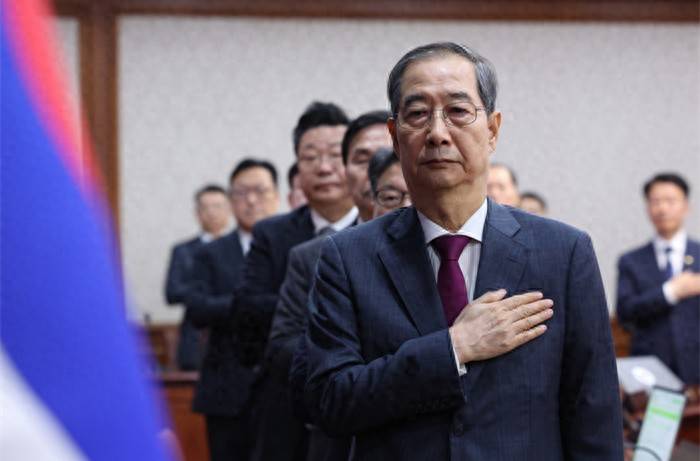
过了40年,相似的剧本似乎正在韩国上演。美国财长贝森特公开宣称,"率先达成协议者获益最大",要求韩国在汽车关税、液化天然气项目等领域让步,换 取"美国优先"框架下的贸易优惠。 贝森特给了韩国一个"相当优先"的位置,其在接受彭博社采访时宣称:"上周与越南进行了谈判,周三与日本,下周将与韩国展开磋商,进程会非常迅速。" 特朗普把关税"武器化"之后,韩国政坛开始为韩美谈判陷入激烈争论。美国特朗普政府宣布将韩国列为"优先谈判目标",要求其接受以"对等关税"为核心的 贸易规则重构。 面对美方步步紧逼,韩国代总统韩德洙高调宣称"推进谈判、寻求双赢",但韩媒《韩民族日报》发出警告,仓促妥协可能让韩国重蹈日本"广场协议"覆辙, 陷入"失去的二十年"的深渊。 1985年,日本在美国压力下签署《广场协议》,被迫让日元大幅升值,最终促使日本经济泡沫破裂,陷入长期停滞。 韩国如果想要破局,需加速与中国、东盟等国家和组织深化合作,减少对美依赖,但政治亲美惯性让这一转型举步维艰。 韩国执政党的"速战速决"策略,或许能换来短期选票,却可能将国家推向让渡经济主权的深渊。如果韩德洙在特朗普飘忽不定的政策下贸然推进谈判,可能 犯下战略错误。 美 ...
安粮期货豆粕日报-20250424
An Liang Qi Huo· 2025-04-24 02:21
Report Investment Ratings - No specific industry investment ratings are provided in the reports. Core Views - **Soybean Oil**: The Y2509 contract of soybean oil may experience short - term range - bound consolidation [1]. - **Soybean Meal**: Soybean meal may show a short - term oscillatory upward trend [1]. - **Corn**: In the short term, corn futures prices will be range - bound, and a range - trading strategy is recommended [1]. - **Copper**: Tactical defense should focus on the suppression of the 60 - day moving average and the shape of the monthly K - line [2]. - **Lithium Carbonate**: The Y2507 contract of lithium carbonate may be weakly oscillatory, and short - selling on rallies is advisable [3][4]. - **Steel**: After the macro - negative factors are digested, a long - position strategy at low prices for far - month contracts after May is recommended [5]. - **Coking Coal and Coke**: Due to ample supply, coking coal and coke will experience a weak oscillatory rebound at low levels, with limited upside [6][7]. - **Iron Ore**: The I2505 contract of iron ore will be oscillatory in the short term, and traders are advised to be cautious [8]. - **Crude Oil**: In the medium - to - long term, the price center of crude oil will move downward. Attention should be paid to the resistance at $65 per barrel for the WTI main contract [9]. - **Rubber**: Attention should be paid to the downstream operating rate of Shanghai rubber, and there is support around 14,000 yuan per ton for the main contract [10]. - **PVC**: Due to weak demand, PVC futures prices may oscillate at low levels [11]. - **Soda Ash**: The soda ash futures market is expected to be weakly oscillatory in the short term [12]. Market Analysis by Product Soybean Oil - **Spot Market**: The price of Grade 1 soybean oil at Rizhao Cargill is 8,160 yuan/ton, up 30 yuan/ton from the previous trading day [1]. - **Market Situation**: Currently, it is the U.S. soybean sowing season and the South American soybean harvesting and exporting season. The South American new crop is likely to have a bumper harvest. The medium - term supply and demand of soybean oil may remain neutral, and the medium - term inventory may be stable [1]. Soybean Meal - **Spot Market**: The spot prices of 43% soybean meal in Zhangjiagang, Tianjin, Rizhao, and Dongguan are 3,700 yuan/ton, 4,080 yuan/ton, 3,840 yuan/ton, and 3,620 yuan/ton respectively [1]. - **Market Situation**: The Sino - U.S. trade tariff issue remains unresolved. U.S. soybean sowing progress exceeds expectations, and the Brazilian soybean harvest is nearing completion. As Brazilian soybeans arrive in China, the supply of soybean meal is expected to become more abundant. The pre - May Day inventory build - up in the spot market and the oil mill's production are misaligned, leading to a low inventory of soybean meal [1]. Corn - **Spot Market**: The average purchase price of new corn in key deep - processing enterprises in the three northeastern provinces and Inner Mongolia is 2,105 yuan/ton; in North China and the Huang - Huai region, it is 2,313 yuan/ton. The purchase prices at Jinzhou Port and Bayuquan Port are in the range of 2,160 - 2,190 yuan/ton [1]. - **Market Situation**: The impact of U.S. tariff events on the U.S. corn market is weakening. The USDA report in April lowered the U.S. corn production and ending stocks, and the weakening U.S. dollar index supports the U.S. corn futures. In China, farmers have sold most of their corn, and the import of corn and substitute grains has decreased significantly. However, the downstream demand is weak due to factors such as slow pig production reduction, high feed inventory, wheat substitution, and the upcoming new wheat harvest [1]. Copper - **Spot Market**: The price of Shanghai 1 electrolytic copper is in the range of 77,060 - 77,330 yuan, up 645 yuan. The import copper concentrate index is - 34.71, down 3.82 [1]. - **Market Situation**: The global market is still affected by "irrational" tariffs, and overseas capital markets are highly volatile. The Fed's uncertain actions and domestic policy support co - exist. The raw material supply problem of copper has not been completely resolved, and the copper price is in a stage of resonance, with intensified games between reality and expectations [2]. Lithium Carbonate - **Spot Market**: The market price of battery - grade lithium carbonate (99.5%) is 69,500 yuan/ton (down 500 yuan/ton), and that of industrial - grade lithium carbonate (99.2%) is 68,100 yuan/ton (down 750 yuan/ton) [3]. - **Market Situation**: The forward price of spodumene concentrate is declining. The weekly operating rate is increasing but at a slower pace, and the salt lake production has resumed. The demand has improved but is not strong enough to drive the price up. The weekly inventory has been increasing [3][4]. Steel - **Spot Market**: The price of Shanghai 1 electrolytic copper is in the range of 77,060 - 77,330 yuan, up 645 yuan. The import copper concentrate index is - 34.71, down 3.82 [1]. - **Market Situation**: The fundamentals of the steel industry are gradually improving, with a weakened contango structure and a neutral - to - low valuation. Policy supports the real estate industry, the apparent demand for steel has decreased year - on - year, and raw material prices are oscillating weakly. Steel inventories are decreasing, and the market shows a pattern of strong supply and demand. Attention should be paid to the switching between macro - policy expectations and fundamental data [5]. Coking Coal and Coke - **Spot Market**: The price of Mongolian No. 5 coking coal is 1,205 yuan/ton, and the price of quasi - first - grade metallurgical coke at Rizhao Port is 1,340 yuan/ton. The port inventory of imported coking coal is 337.38 million tons, and the port inventory of coke is 246.10 million tons [6]. - **Market Situation**: The supply of coking coal and coke is relatively abundant. Domestic production capacity is recovering, and the utilization rate of coking plants is stable. The demand from steel mills is weak, and the inventory of independent coking enterprises is gradually increasing. The average profit per ton of coke is approaching the break - even point [6][7]. Iron Ore - **Spot Market**: The Platts Iron Ore Index is 99.3, the price of Qingdao PB (61.5%) powder is 777 yuan, and the price of Australian iron ore fines (62% Fe) is 768 yuan [8]. - **Market Situation**: The iron ore market has both positive and negative factors. The Australian iron ore shipment has decreased, while the Brazilian shipment has increased. The global total shipment has slightly decreased, and the port inventory has decreased. The domestic steel mill's iron production has increased, but the procurement is still cautious. Overseas demand is differentiated, and the U.S. tariff policy increases market volatility [8]. Crude Oil - **Market Situation**: The market sentiment has improved slightly, and the U.S. inventory has decreased. OPEC+ has announced compensation cuts for April - May, offsetting the planned increase in May. However, the impact of the U.S. "reciprocal tariff" policy still exists. In the medium - to - long term, the price center of crude oil will move downward. The demand in the second quarter may be severely affected by the trade war [9]. Rubber - **Spot Market**: Not provided in detail, but mentioned the impact on China's tire and automobile exports [10]. - **Market Situation**: The global rubber market is affected by the U.S. "reciprocal tariff" policy, showing a weak oscillatory trend. The supply in China is gradually recovering, and the supply in Thailand is abundant. The global rubber market has a situation of both loose supply and demand, and the U.S. automobile tariff may suppress the demand [10]. PVC - **Spot Market**: The mainstream price of East China Type 5 PVC is 4,780 yuan/ton, and that of ethylene - based PVC is 5,050 yuan/ton, both remaining unchanged [11]. - **Market Situation**: The operating rate of PVC production enterprises has increased. The demand from downstream enterprises has not improved significantly, and the inventory has decreased. The futures price may oscillate at low levels due to weak demand [11]. Soda Ash - **Spot Market**: The national mainstream price of heavy soda ash is 1,413.06 yuan/ton, remaining unchanged [12]. - **Market Situation**: The overall operating rate of soda ash production has increased, and the output has increased. The manufacturer's inventory has increased, while the social inventory has decreased. The demand is average, and the futures market may be weakly oscillatory in the short term [12].
关税战下“内销”变革:平台集体出招“中国解法”
21世纪经济报道· 2025-04-23 14:43
近日,商务部牵头推进内外贸一体化,一场由互联网平台、零售巨头和直播电商共同驱动 的"内销变革"正在展开。阿里巴巴、京东、美团等平台集体出手,为外贸企业铺就了一条"回 家"的快车道——平台们各显神通:简化入驻流程、流量扶持、托管运营,甚至教工厂老板学 直播带货。 本期《财经早察》来聊聊关税战下的"内销"变革,各大平台应对关税战都有哪些"中国解 法"? 出品: 财经早察工作室 总统筹:邓红辉 执行统筹:陈晨星 祝乃娟 主播:董静怡 编辑: 洪晓文 陆跃玲 曾婷芳 设计: 王冰 SFC 本期编辑 黎雨桐 关税漩涡中的苹果 6G要来了!下一个万亿赛道? 美债风波背后是美元信用危机 "对等关税"落锤,特朗普为何单挑全世界? 21君荐读 ...




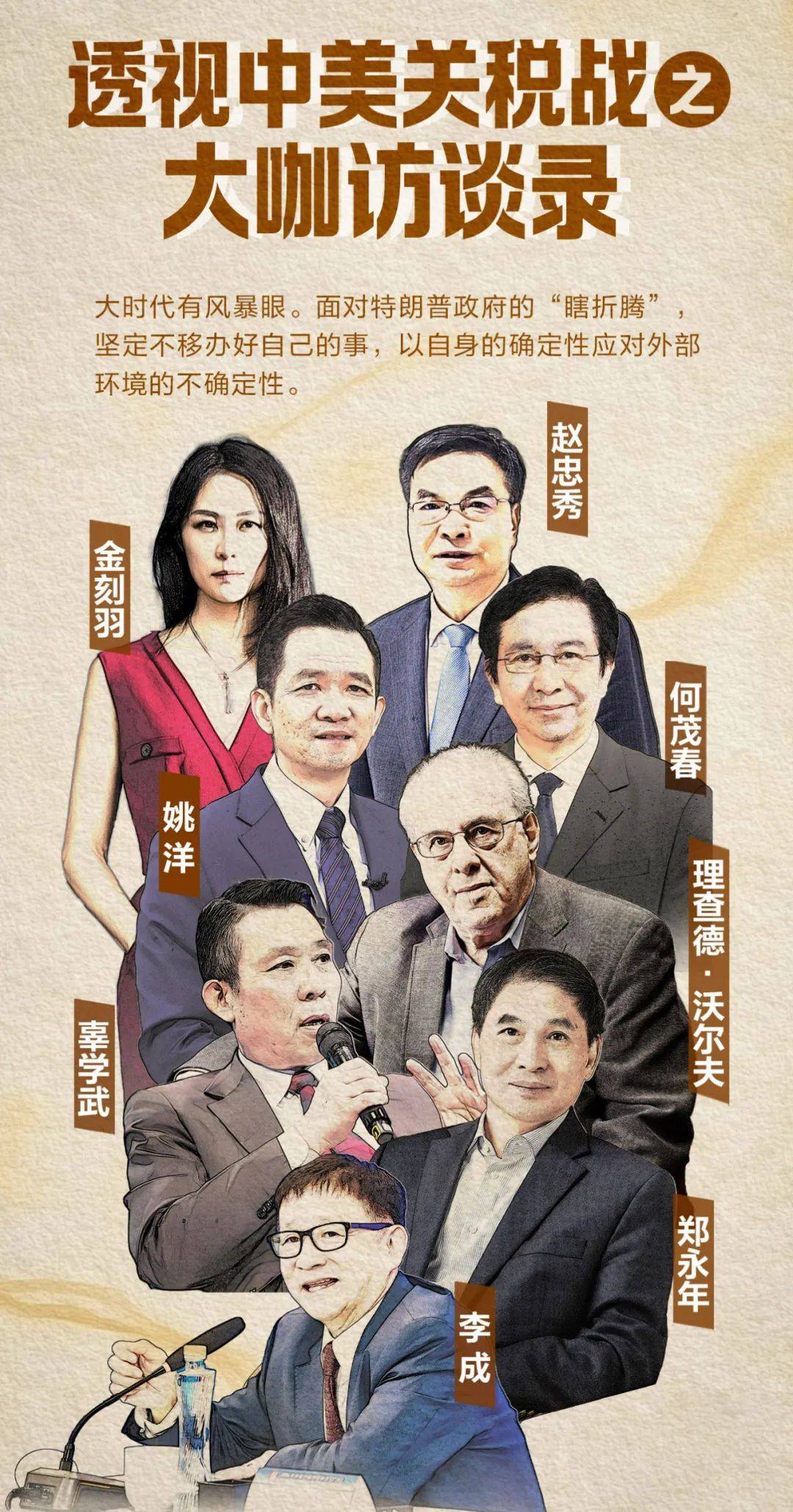
“别理会特朗普‘闹腾’”,聚焦美国“对等关税”,大咖们这样说——
Sou Hu Cai Jing· 2025-04-23 13:20
近期,特朗普的"对等关税"政策引发了广泛的关注和讨论。这一政策不仅对美国自身,还对中美关系、全球产业链以及金融市场等诸多方面都产生了深远 且复杂的影响。比如,全球资本市场因之而动荡,美国股债汇一度呈现"三杀"局面,一时间关于金融危机发生的讨论甚嚣尘上。聚焦于此,我们与各位大 咖进行了对谈。 对话 金刻羽 美国频繁加征关税的真实动机是什么?政策背后全球化逻辑发生了哪些改变?美债抛售潮的根本原因是什么?普通投资者应如何应对关税战?对此,新京 报贝壳财经专访了伦敦政治经济学院经济学教授金刻羽。 ▲伦敦政治经济学院经济学教授金刻羽。受访者供图 新京报贝壳财经:近期中美关税博弈升级,怎么理解特朗普打响的这场波及全球的关税战?美国频繁加征关税的真实动机是什么? 金刻羽:这一政策会大大削弱美国在国际上的名声和信誉,也会打破当前全球化的局势。 从特朗普的目的来看,一方面他想借此重振美国制造业,以减少美国与其他国家的贸易逆差;另一方面他将经贸问题武器化,将关税作为与其他国家在经 济、政治等多方面进行谈判的筹码。 但实际上,美国的经济问题并不能靠关税来解决,甚至会扩大问题,因为美国贸易逆差主要源于国内储蓄率过低、财政赤字高企等宏 ...
2月份欧盟对美国的出口激增22.4%
news flash· 2025-04-23 11:54
Core Insights - In February, EU exports to the US surged by 22.4% year-on-year, reaching a total of 51.8 billion euros, marking the highest export growth rate in 13 months [1] - Imports from the US increased by 2.4% year-on-year, totaling 28.2 billion euros [1] - The EU recorded a trade surplus of 23 billion euros in February, a significant improvement from a deficit of 5.6 billion euros in January [1] Trade Dynamics - The increase in EU exports to the US indicates a strong demand for European goods, potentially driven by favorable economic conditions or shifts in consumer preferences [1] - The modest growth in imports from the US suggests a more stable trade relationship, despite ongoing trade tensions and threats of tariffs from the US administration [1] - The overall trade balance improvement for the EU reflects a positive shift in trade dynamics, which could influence future trade policies and negotiations [1]
【笔记20250423— 上,每调买机;下,落袋为安】
债券笔记· 2025-04-23 11:26
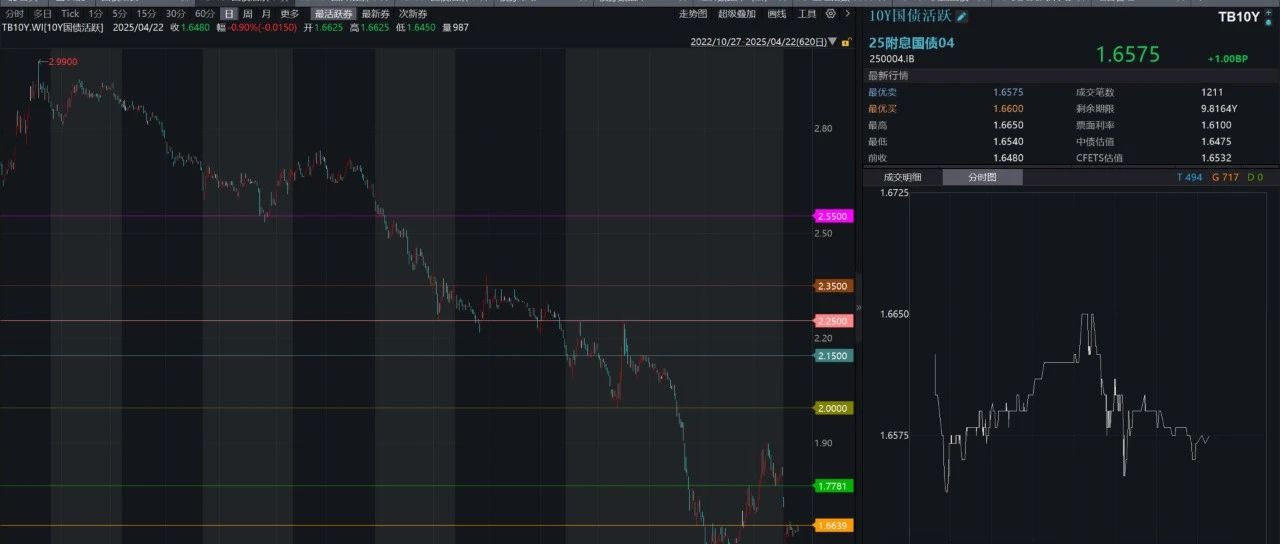
右侧,成功率更高,获利更为客观;同样的,与其主观预测行情结束,不如等行情盘整并开始反转后离 场,虽然这样会错过一部分利润,但相比起错失之后可能的行情延续,这些代价是值得的。 ——笔记哥《应对》 【笔记20250423— 上,每调买机;下,落袋为安(-特朗普称或将大幅降低对华关税-传央行调研久期错 配风险+资金面均衡偏松=小上)】 资金面均衡偏松,长债收益率小幅上行。 央行公开市场开展1080亿元7天期逆回购操作,今日有1045亿元逆回购到期,净投放35亿元。 资金面均衡偏松,DR001与DR007双降,前者下行近8个bp至1.63%附近。 | | | | 银行间资金 | (2025. 04. 23) | | | | | | --- | --- | --- | --- | --- | --- | --- | --- | --- | | 回购代码 | 加权利率 | 变化 | 利率走势 | 最高利率 | 变化 | 成交量 | 变化量 | 成交重占 | | | (%) | (bp) | (近30天) | (%) | (bp) | (亿元) | (亿元) | 比 (%) | | R001 | 1.66 | -7 | | ...
【笔记20250423— 上,每调买机;下,落袋为安】
债券笔记· 2025-04-23 11:26
右侧,成功率更高,获利更为客观;同样的,与其主观预测行情结束,不如等行情盘整并开始反转后离场,虽然这样会错过一部分利润,但相比起错失之 后可能的行情延续,这些代价是值得的。 ——笔记哥《应对》 【笔记20250423— 上,每调买机;下,落袋为安(-特朗普称或将大幅降低对华关税-传央行调研久期错配风险+资金面均衡偏松=小上)】 资金面均衡偏松,长债收益率小幅上行。 央行公开市场开展1080亿元7天期逆回购操作,今日有1045亿元逆回购到期,净投放35亿元。 资金面均衡偏松,DR001与DR007双降,前者下行近8个bp至1.63%附近。 | | | | 银行间资金 | (2025.04.23) | | | | | | --- | --- | --- | --- | --- | --- | --- | --- | --- | | 回购代码 | 加权利车 | 变化 | 利率走势 | 最高利率 | 变化 | 成交量 | 变化量 | 成交量占 | | | (%) | (bp) | (近30天) | (%) | (bp) | (亿元) | (亿元) | 比 (%) | | R001 | 1.66 | | | 2.50 ...
专访柬埔寨亚洲愿景研究院院长成金珑:东盟应加强对华合作,共同应对供应链风险
2 1 Shi Ji Jing Ji Bao Dao· 2025-04-23 09:30
Core Viewpoint - The political mutual trust between Cambodia and China has been further consolidated, indicating that small countries like Cambodia can collaborate with major powers like China to promote regional development and shared prosperity [1] Group 1: Economic Cooperation and Trade - ASEAN has become Guangdong's largest trading partner, with Guangdong's imports and exports to ASEAN reaching 349.43 billion yuan in the first quarter, a year-on-year increase of 6.9%, accounting for 16.3% of Guangdong's total trade [2][10] - The trade relationship between Guangdong and ASEAN is expected to enhance economic cooperation and bring more benefits to local residents [3][10] - Strengthening trade cooperation within ASEAN is crucial for enhancing the region's economic vitality and resilience, especially in response to the challenges posed by the U.S. "reciprocal tariffs" [5][6] Group 2: Regional Integration and Supply Chain - The U.S. "reciprocal tariffs" are expected to significantly impact ASEAN, making products from the region more expensive and reducing their competitiveness [6] - Cambodia and China can further support each other in building a comprehensive cooperative framework, focusing on six key areas: politics, capacity, agriculture, energy, security, and culture [7] - The Regional Comprehensive Economic Partnership (RCEP) provides a robust institutional framework that facilitates smoother economic cooperation between China and ASEAN [8][9] Group 3: Currency and Financial Cooperation - The cross-border RMB business between China and Cambodia reached 5 billion yuan in the first quarter, a year-on-year increase of 45%, indicating significant progress in currency settlement [7] - The use of local currency for trade and investment between Cambodia and China is expected to create a more favorable environment for cross-border commerce [7]
日本的美国同盟国“特权”正在失效
日经中文网· 2025-04-23 03:27
Core Viewpoint - Japan's special treatment as a U.S. ally is diminishing, highlighted by the recent imposition of tariffs without prior notification, indicating a shift in U.S. trade policy that does not differentiate between allies and adversaries [1][2]. Group 1: U.S.-Japan Relations - Historically, Japan has received special treatment from the U.S. as an ally, exemplified by prior notifications during military actions, such as the 1991 Iraq invasion [2]. - The recent announcement of a 24% tariff by President Trump was unexpected for Japanese officials, who learned about it through U.S. media rather than direct communication [1][2]. Group 2: Economic Implications - The imposition of tariffs signifies that Japan can no longer rely on its status as a U.S. ally for economic protection, marking a significant shift in the trade relationship [2]. - Japan's government had anticipated preferential treatment due to its status as the largest direct investor in the U.S., but this expectation has been shattered by the unilateral tariff actions [2]. Group 3: Future Trade Strategy - Experts suggest that Japan should consider legal action against the U.S. at the World Trade Organization (WTO) for violating trade rules with the new tariffs [3]. - There is a call for Japan to develop a diplomatic strategy that acknowledges the U.S. will no longer champion free trade, focusing instead on expanding trade partnerships with Southeast Asian nations and other regions [4]. - The need for Japan to create a free trade zone that includes countries outside of the U.S. is emphasized, as a response to the changing global trade landscape [4].