AIGC

Search documents
深信服的前世今生:2025年Q3营收51.25亿行业第四,净利润亏损但改善明显,机构看涨目标价119元
Xin Lang Zheng Quan· 2025-10-31 06:39
Core Viewpoint - Deepin Technology Co., Ltd. is a leading domestic player in network security and cloud computing, showcasing strong technical capabilities and market competitiveness in the information security sector [1] Group 1: Business Performance - In Q3 2025, Deepin reported revenue of 5.125 billion yuan, ranking 4th among 35 companies in the industry, with the top competitor, iFlytek, generating 16.989 billion yuan [2] - The net profit for the same period was -80.5638 million yuan, placing the company 22nd in the industry, while the leading company, Kingsoft Office, achieved a net profit of 1.164 billion yuan [2] - Revenue growth for the first three quarters of 2025 was 10.62%, while net profit showed a significant increase of 86.10% [6][7] Group 2: Financial Ratios - As of Q3 2025, Deepin's asset-liability ratio was 38.13%, higher than the industry average of 29.42% [3] - The company's gross profit margin was 60.94%, which is below the industry average of 63.59% [3] Group 3: Shareholder Information - As of September 30, 2025, the number of A-share shareholders increased by 11.92% to 30,900, while the average number of circulating A-shares held per shareholder decreased by 10.65% [5] Group 4: Management and Compensation - The chairman, He Chaoxi, received a salary of 398,000 yuan in 2024, reflecting a slight increase from 395,800 yuan in 2023 [4] Group 5: Market Position and Future Outlook - Deepin maintains a leading position in the domestic hyper-converged market with market shares of 15.9% and 26.5% in the overall and full-stack hyper-converged markets, respectively [7] - The company is expected to benefit from the growing demand for AI localization deployment, with projected revenues for 2025, 2026, and 2027 at 8.234 billion, 9.166 billion, and 10.340 billion yuan, respectively [6][7]



浙数文化(600633):第三季度主业稳健 关注数据运营和AI应用进展
Xin Lang Cai Jing· 2025-10-31 06:27
Core Viewpoint - The company demonstrates stable core operations with a 16% year-on-year increase in net profit after deducting non-recurring items in Q3 2025, despite a slight decline in revenue [1]. Group 1: Financial Performance - For the first three quarters of 2025, the company reported revenue of 2.15 billion, a year-on-year decrease of 0.8%, while net profit attributable to shareholders reached 530 million, reflecting a year-on-year increase of 12.7% [1]. - In Q3 alone, the company generated revenue of 740 million, down 2.5% year-on-year, and net profit attributable to shareholders was 160 million, a significant decline of 51.9% due to a high base from the previous year; however, net profit after deducting non-recurring items was 140 million, showing a year-on-year increase of 15.7% [1]. - The gross margin for Q3 was 52.9%, a decrease of 1.0 percentage points year-on-year, while the overall expense ratio saw a decline of 1.9 percentage points [1]. Group 2: Business Development - The company’s digital culture, IDC, AI applications, and data operations businesses are all developing robustly [2]. - In the digital culture sector, the company utilizes AI technology to enhance its gaming, sports, and cultural tourism strategies, with specific algorithms being optimized for game experience and cultural service platforms [2]. - The digital technology sector has achieved an 86.7% coverage rate for its integrated media network and is expected to see continued growth in AI governance due to policy support [2]. - The data operations sector has expanded significantly, with new zones launched in multiple cities and the establishment of the Zhejiang Data Business Alliance [2].

二创、弹幕、AI……正在给影视行业带来什么?
Zhong Guo Xin Wen Wang· 2025-10-31 06:13
Core Insights - The event "New Public Literature: UGC Empowering a New Ecosystem in Film and Television" highlighted the revolutionary changes in the film industry driven by User Generated Content (UGC) and technology [1][3] Group 1: UGC and Its Impact - UGC has evolved from a simple dissemination relationship to a profound mutual nurturing between professional creators and users [3] - The relationship between UGC and professional content creators is likened to that of a rhinoceros and a bird, indicating a symbiotic connection [3] - Creators are now proactively designing their works to invite audience interaction, transforming the creative process from merely telling stories to building a creative ecosystem [3][5] Group 2: AI's Role in the Industry - The influence of AI in the film industry is increasing, prompting creators to reflect on maintaining authenticity and originality in their work [5] - AI should be viewed as a partner in the filmmaking process rather than the sole creator, emphasizing the importance of human experience in storytelling [5] - Creators are encouraged to embrace AI as a tool to enhance their craft rather than resist its integration into the creative process [5]

影视院线板块活跃,影视ETF、文娱传媒ETF涨超3%
Ge Long Hui· 2025-10-31 05:51
Group 1: Industry Performance - In the first three quarters, cultural enterprises achieved a total profit of 909.3 billion yuan, a year-on-year increase of 14.2% [2] - The operating income profit margin for cultural enterprises was 8.30%, up by 0.45 percentage points compared to the same period last year [2] - By the end of the third quarter, the total assets of cultural enterprises reached 22,422.7 billion yuan, an increase of 8.4% year-on-year [2] - For every 100 yuan of assets, the operating income was 66.8 yuan, an increase of 0.3 yuan year-on-year [2] Group 2: Technological Advancements - The release of OpenAI's video generation model Sora2 in September 2025 marked three significant technological breakthroughs: realism in the physical world, multi-modal integration for simultaneous audio generation, and initial capabilities in narrative logic and shot scheduling [4] - The Sora APP allows users to create and publish derivative works from popular videos, integrating social attributes into the AI video creation process for rapid dissemination [4] Group 3: Content Innovation - The emergence of "AI comic dramas" has gained popularity, combining AI technology with original IPs like comics and novels, offering a full production process while retaining original storylines and artistic styles [4] - This new content form is expected to capture a significant share of internet time among young users, creating various opportunities across the industry chain [4] Group 4: Future Trends in AI Video - The next phase of AI video applications is expected to focus on three directions: deep integration with social interactions for consumer applications, evolution of ChatGPT into a comprehensive ecosystem, and the combination of video generation with AIAgent for a one-stop solution to video creation needs [5] - The integration of generative video tools into a platform will facilitate a full cycle from generation to distribution and monetization [5] Group 5: Industry Disruption - The advancements in AIGC tools like Sora are set to disrupt traditional film and television content production, activating new dynamics within the industry [6] - AI is now capable of handling most production processes for comic dramas and short films, leading to the emergence of innovative content forms and new opportunities for the industry chain [6]


招商证券:文生视频颠覆传统影视内容生产 加速IP可视化有望重塑行业价值
智通财经网· 2025-10-31 03:57
Core Insights - The report from China Merchants Securities highlights that generative video technology is revolutionizing traditional film and television content production, activating new dynamics within the industry [1] - AI tools like Sora are capable of handling most production processes for various video formats, leading to innovative content supply and new opportunities across the industry chain [1] Group 1: Technological Advancements - OpenAI's release of the generative video model Sora2 marks significant technological breakthroughs, including realistic physical world simulation, multi-modal integration for simultaneous audio generation, and initial capabilities for narrative logic and editing akin to real filming [2] - The Sora APP allows users to creatively rework popular videos and integrate virtual characters, embedding social attributes into the AI video creation process for rapid dissemination [2] Group 2: Emerging Content Forms - The rise of "AI comic dramas" represents a new content form that merges AI technology with anime short dramas, retaining original storylines and artistic styles while incorporating the quick and diverse characteristics of short videos [2] - This new form is expected to capture a significant share of internet time among younger audiences, creating numerous opportunities across the industry chain [2] Group 3: Commercialization Trends - The next phase of AI video applications is anticipated to focus on deep integration with social interactions, accelerating the commercialization of consumer applications [3] - The evolution of ChatGPT into a comprehensive ecosystem will enhance the platformization of generative video tools, facilitating a broader user reach and transforming from simple tools to a full-cycle platform for generation, distribution, and monetization [3] - The integration of generative video with AIAgent aims to address the challenges of supporting all video production processes, thereby reconstructing the video production paradigm for a one-stop solution [3]

2025中国播客行业现状与发展趋势报告-嘉世咨询
Sou Hu Cai Jing· 2025-10-31 03:15
Core Insights - The report indicates that the Chinese podcast industry is in a "revival period," with the audience size reaching 120-140 million in 2023 and expected to exceed 170 million by 2025, with a market size projected to surpass 5 billion RMB [11][12][13]. Group 1: Market Overview - The podcast market in China is characterized by a unique positioning within the "ear economy," capturing a high-value audience that is well-educated and affluent [11][12]. - The audience demographics show that over 80% are from Generation Z and Millennials, with more than 60% located in first-tier and new first-tier cities [11][12]. - The listening scenarios are primarily commuting (65.8%), household chores (48.2%), and before sleep (42.5%), with an average listening duration exceeding 30 minutes and a completion rate of 60%-80% [11][12]. Group 2: Industry Structure - The podcast ecosystem is thriving, with active podcast programs increasing from less than 10,000 in 2019 to over 50,000 in 2023, supported by MCNs like JustPod and PodFest China [11][12]. - The distribution platforms are characterized by a "one strong, many strong" model, with platforms like Ximalaya holding significant traffic advantages, while niche platforms like Xiaoyuzhou create high-engagement communities [11][12]. - The content categories have expanded from general culture and talk shows to include technology, finance, psychology, and podcast dramas, with talk shows accounting for 30.5% of listening time [11][12]. Group 3: Commercialization and Revenue - Advertising is the primary revenue model, accounting for over 70% of income, with host-read ads showing high conversion rates due to trust [11][12]. - The podcast market's total revenue was approximately 1-1.5 billion RMB in 2021, with expectations to exceed 5 billion RMB by 2025, driven mainly by advertising revenue [11][12]. - The industry faces challenges in monetization, including the "data black box" issue, balancing creator commercialization with content quality, and platform revenue-sharing disputes [11][12]. Group 4: Future Trends - The report predicts four major trends: AIGC technology will enhance content production and distribution; video podcasts will lower listening barriers; smart devices will create new listening scenarios; and improved data monitoring standards will accelerate commercialization [11][12][13].


润泽科技(300442):公司信息更新报告:REIT上市助力盘活资产,积极推进各AIDC项目
KAIYUAN SECURITIES· 2025-10-31 02:21
Investment Rating - The investment rating for the company is "Buy" (maintained) [1] Core Views - The company reported a revenue of 39.77 billion yuan for the first three quarters of 2025, representing a year-on-year growth of 15.05%. The net profit attributable to shareholders reached 47.04 billion yuan, a significant increase of 210.74%, primarily due to equity disposal gains from the transfer of a wholly-owned subsidiary to the Southern Runze Technology Data Center REIT [4][5] - The company is positioned as a leader in liquid cooling AIDC and is expected to benefit from the ongoing demand for high-power cabinets and large-scale clusters driven by AIGC development. The successful listing of the REIT project has led to an upward revision of profit forecasts for 2025 and maintained forecasts for 2026 and 2027 [4][5] - The company has established a significant presence in six major regions across China, with a total of 61 intelligent computing centers and 320,000 cabinets, showcasing substantial scale advantages [6] Financial Summary and Valuation Metrics - For 2025, the expected revenue is 61.96 billion yuan, with a year-on-year growth of 41.9%. The net profit attributable to shareholders is projected to be 5.38 billion yuan, reflecting a year-on-year increase of 200.5% [8] - The company's P/E ratios for 2025, 2026, and 2027 are estimated at 15.1, 26.5, and 21.6 times, respectively, indicating a favorable valuation compared to historical performance [8]

Sora 2上线之后,我却发现了AIGC的另一种可能性
3 6 Ke· 2025-10-31 00:25
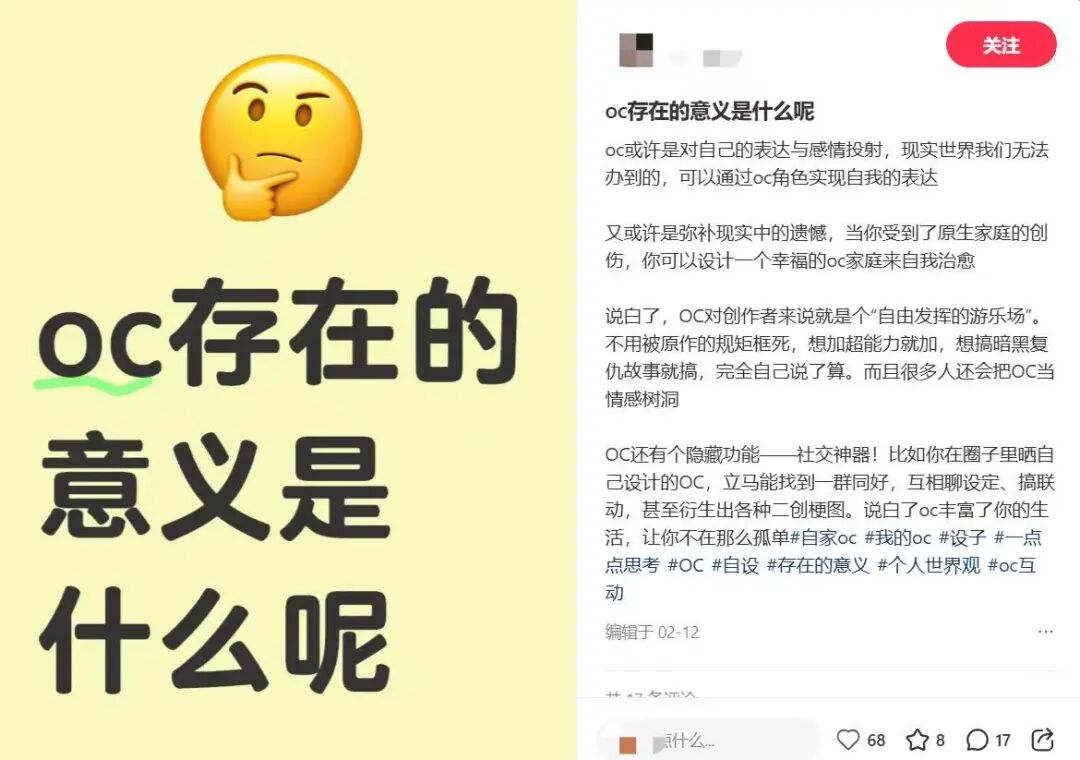
Core Insights - Sora 2 has generated significant initial excitement, likened to a "ChatGPT moment" for AI-generated video, but its popularity has quickly waned, indicating a typical hype cycle [1] - The true potential of Sora 2 lies not just in its features but in its ability to elevate AI-generated video to mainstream functionality, suggesting a transformative impact on the video creation landscape [1][2] Group 1: Market Potential - The emergence of Sora 2 is expected to trigger a rapid expansion in the AI-generated video application market, potentially rivaling the scale of AI-generated text and images [2] - The functionality of Sora 2, particularly the Cameo feature, allows users to upload their likenesses, but the broader potential may lie in enabling users to create entirely new characters, thus expanding creative possibilities [2] Group 2: Character Creation and Community - The concept of Original Characters (OC) has gained traction, with millions of users investing time and resources into character creation, indicating a robust community and market for such creative endeavors [2][7] - The OC community has evolved from traditional role-playing formats to more sophisticated forms of character creation, with AI tools like Sora 2 poised to further enhance this trend [7][22] Group 3: AI's Role in Character Creation - The debate surrounding AI's impact on character creation is shifting, with AI becoming an essential tool for video creation, thereby diminishing the divide between human and AI contributions [23] - As video becomes the dominant medium for character creation, AI-generated content is expected to become the norm, similar to the historical acceptance of photography in storytelling [23] Group 4: Emotional Value and User Engagement - The emotional value derived from character creation is significant, as users find fulfillment in crafting and interacting with their characters, which can serve various psychological needs [24][26] - The rise of character creation tools is likely to attract a broader audience, as the barriers to entry for engaging in this creative process are lowered, similar to the democratization of video editing tools [22][26] Group 5: Future Outlook - The maturation of the cultural environment and technological tools surrounding character creation suggests that a tipping point is approaching, which could lead to rapid growth in this sector [27] - As users engage with platforms like Sora 2, they may inadvertently enter the character creation space, setting the stage for a significant market expansion in the near future [27][28]
智微智能的前世今生:2025年三季度营收29.73亿元行业排第9,净利润2.42亿元行业排第10
Xin Lang Cai Jing· 2025-10-31 00:00
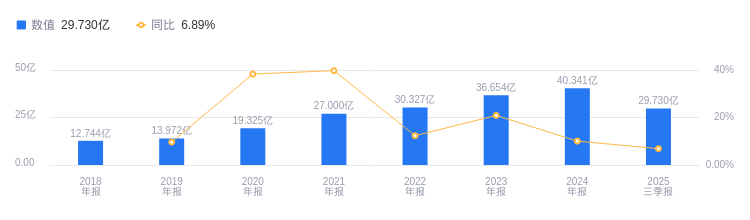
Core Viewpoint - Zhimi Intelligent, established in 2011 and listed in 2022, focuses on AI infrastructure, edge computing, and IoT, with applications in education, finance, and healthcare [1] Financial Performance - For Q3 2025, Zhimi Intelligent reported revenue of 2.973 billion yuan, ranking 9th in the industry, with a year-on-year growth of 6.89% [2][6][7] - The net profit for the same period was 242 million yuan, ranking 10th in the industry, with a year-on-year increase of 59.3% [2][6][7] - The main business segments include terminal products (1.043 billion yuan, 53.57%), ICT infrastructure (307 million yuan, 15.78%), intelligent computing (298 million yuan, 15.31%), and industrial IoT (145 million yuan, 7.46%) [2] Profitability and Debt - As of Q3 2025, the asset-liability ratio was 57.49%, higher than the industry average of 34.38% [3] - The gross profit margin was 22.32%, which is below the industry average of 34.46% but improved from 17.76% in the previous year [3] Shareholder Information - As of September 30, 2025, the number of A-share shareholders increased by 27.30% to 48,800, with an average holding of 2,442.64 shares [5] - Major shareholders include Hong Kong Central Clearing Limited and various mutual funds, with some changes in holdings compared to the previous period [5] Business Highlights - The subsidiary Tengyun Zhican achieved revenue of 298 million yuan in H1 2025, focusing on AIGC lifecycle services [6] - New product launches include the HAT computing rental cloud platform and the Edge AI Box product series [6][7] - Significant progress was made in humanoid robotics with key clients [6][7] Future Projections - Revenue projections for 2025 to 2027 are 4.735 billion, 5.565 billion, and 6.454 billion yuan, respectively, with net profits expected to be 254 million, 483 million, and 716 million yuan [6][7]
【阅文集团(0772.HK)】加码漫剧创作,关注新丽储备剧集上线进展——更新点评(付天姿/杨朋沛)
光大证券研究· 2025-10-30 23:07
Industry Overview - The short drama industry has gained significant attention, with the market for animated dramas (漫剧) expected to exceed 20 billion yuan by 2025, driven by a compound annual growth rate of 83% in supply volume during the first half of 2025 [4] - The number of companies in the animated drama sector is projected to expand exponentially, potentially surpassing hundreds of thousands [4] - AI technology is enhancing production efficiency, reducing the production cycle of dynamic animations from 90 days to 10-13 days, achieving a nearly 90% reduction in time [4] Company Initiatives - On October 25, the Reading Group announced an upgrade to its "Creative Partner Program," focusing on the animated drama sector with four major initiatives: 1. Opening access to 100,000 premium IPs, including popular works like "National Forensic Doctor" [5] 2. Establishing a 100 million yuan special fund to support writers and quality teams in cross-domain development [5] 3. Launching AIGC tools like "Animated Drama Assistant" to improve adaptation efficiency [5] 4. Building a comprehensive support system across the production, distribution, and IP industry chain [5] - As of October 2025, 30 animated drama works from the Reading Group have surpassed 10 million views, with several exceeding 100 million views [5] Product Performance - The derivative product business of the Reading Group showed strong performance, with GMV reaching 480 million yuan in the first half of 2025, nearing the total for the entire year of 2024 [6] - The company continues to explore new product categories, launching plush products related to popular IPs [6][7] - The strategic focus of the derivative product business is on GMV growth, with a significant increase in product output in the first half of 2025 compared to the same period in 2024 [7]