新消费

Search documents
百亿股票私募仓位指数达83.26% 创年内新高
Zheng Quan Shi Bao Wang· 2025-07-11 04:26
Group 1 - The stock private equity position index has risen to 77.36% as of July 4, 2025, indicating a 2.07 percentage point increase from the previous week, approaching a new high for the year [1] - The position index for billion-level stock private equity has reached 83.26%, a significant increase of 3.3 percentage points, marking a new high for the year [1] - Over 60.66% of stock private equity positions are at full capacity, with 21.73% at moderate levels, indicating that more than 80% of stock private equity is at half capacity or above [1] Group 2 - Recent active accumulation by stock private equity, especially billion-level private equity, reflects a strong confidence in the long-term positive outlook of the capital market [2] - The supportive logic for private equity accumulation includes favorable policy environments, with recent policies improving market expectations and investor confidence [2] - Current A-share market valuations are below historical averages, providing valuable investment opportunities for value investors [2] Group 3 - The overall risk premium in the stock market remains high, with total market value/residential deposits at historical lows, indicating potential for long-term revaluation of A-shares [3] - Certain sectors, such as consumption and technology, show strong driving forces, creating structural investment opportunities [3]
新消费蔚然成风,传统盘踵事增华——轻工行业2025年度中期投资策略
2025-07-11 01:13
Summary of Key Points from Conference Call Records Industry Overview - The traditional light industry investment logic is diverse, categorized into three main directions: stable growth with high dividends (e.g., Yutong Technology, Yongxin Co.), growth potential (export chain companies like Jiangxin Home), and cyclical (paper and metal packaging) [1][3][4] - The new consumption industry is currently in a high prosperity and growth phase, with opportunities particularly in information tobacco, trendy toys, and personal care sectors [2] Core Insights and Arguments - **IP Derivative Market Potential**: The market is driven by rising GDP per capita and increasing demand for spiritual consumption, with emotional, social, and collectible values propelling industry growth [1][5] - **Bubble Mart's Growth**: Expected revenue of 30 billion yuan and profit of 10 billion yuan this year, with projections of 45 to 50 billion yuan in revenue and 15 to 17 billion yuan in profit in the coming years. The company is expanding its product matrix and global market presence [1][7] - **Blucor's Short-term Decline**: The recent drop in Blucor's stock price presents a buying opportunity, with a focus on expanding its IP offerings to girls and adults, potentially increasing revenue to 8 to 10 billion yuan [1][8][9] - **Tobacco Industry Shift**: The global tobacco industry is transitioning to new tobacco products due to the decline of traditional cigarettes, with major companies like Philip Morris and British American Tobacco increasing investments in this area [1][12][13] Additional Important Insights - **Export Sector**: Companies like Jiangxin Home have significant growth potential in the U.S. market, with a focus on brand recognition and global market expansion [1][24] - **Packaging Industry**: Yutong Technology and Yongxin Co. are highlighted for their high dividend yields and international expansion strategies, with Yutong aiming for a balanced domestic and international sales ratio [1][22] - **Paper Industry Outlook**: The paper industry is currently at a historical low in pricing, with expectations for demand recovery in the coming years, particularly for companies like Sun Paper [1][21] - **Environmental Packaging**: New companies in the environmental packaging sector, such as Zhongxin Co., are emerging, with potential for significant growth if new production capacities are realized [1][25] This summary encapsulates the key points from the conference call records, providing insights into the light industry, new consumption trends, and specific company performances and strategies.
港股融资持续火热 “科技+消费”成为主力
Zheng Quan Shi Bao· 2025-07-10 22:04
Core Insights - The Hong Kong stock market has seen a significant surge in equity financing this year, with total financing reaching 2879.82 billion HKD, a year-on-year increase of 350.56% [1][2] - The IPO market has been particularly strong, with 42 IPOs completed in the first half of the year, raising over 1070 billion HKD, which is approximately 22% more than the total for the previous year, making it the largest globally [1][2] Financing Scale - In 2023 and 2024, the Hong Kong market experienced relatively weak financing, with IPOs raising 463.34 billion HKD and 881.47 billion HKD respectively, both under 1 billion HKD [2] - Since the second half of 2024, the market has become active again due to several key policies, with 2025 seeing a total equity financing of 2879.82 billion HKD, surpassing the total for 2023 and 2024 combined [2] - The rapid growth in financing is attributed to a significant increase in placement issuance, which has reached 1569.85 billion HKD in 2025, exceeding the combined total of 1206 billion HKD from 2023 and 2024 [2] Leading Companies Driving Growth - Major companies have played a crucial role in boosting the equity financing scale, with three companies in the top 10 IPO projects raising over 100 billion HKD each, including Ningde Times at 410 billion HKD [3] - The top 10 fundraising projects include seven A-share companies, indicating strong participation from A+H companies in the IPO market [3] - In the top 10 refinancing projects, BYD and Xiaomi have raised over 400 billion HKD each, accounting for more than 50% of the total refinancing amount in 2025 [3][4] Industry Trends - A notable trend in the Hong Kong financing landscape is the urgent need for capital in thriving industries, particularly in technology hardware, capital goods, and automotive sectors [5] - The financing activities are heavily driven by emerging sectors such as new energy, artificial intelligence, and biomedicine, reflecting a dual focus on technology and consumer markets [5][6] - These industries are facing intense competition and pressures to expand internationally, prompting a strategic move to accumulate more capital through the market [6]

港股股权融资规模创三年新高!这三大特征或贯穿全年
Zheng Quan Shi Bao· 2025-07-10 14:49
Group 1 - The core viewpoint of the article highlights the explosive growth of the Hong Kong stock market in terms of IPOs and refinancing since 2025, with a significant increase in equity financing scale [2][5][7] - The total equity financing scale in the Hong Kong market has reached 2879.82 billion HKD, a year-on-year increase of 350.56%, surpassing the total for 2023 and 2024 combined [2][5][6] - The number of IPOs in the first half of 2025 reached 42, raising over 1070 billion HKD, which is approximately 22% more than the total for the entire previous year, making it the largest globally [2][5] Group 2 - The article identifies three key characteristics that may define the equity financing market in Hong Kong throughout the year, including continuous record-high financing scales [3][4] - The financing scale has significantly rebounded after a period of weakness in 2023 and 2024, where IPOs raised 463.34 billion HKD and 881.47 billion HKD respectively [4][5] - The surge in financing is attributed to several leading companies, with notable IPO projects including CATL, which raised 410 billion HKD, accounting for over 30% of the total IPO fundraising [8][10] Group 3 - The article notes that leading companies have played a crucial role in driving the increase in financing scale, with major players like BYD and Xiaomi raising over 400 billion HKD in refinancing [10][12] - The financing activities are concentrated in high-demand industries, particularly in technology hardware, capital goods, and automotive sectors, which are among the top three in fundraising scale [13][14] - The "technology + consumption" dual-driven characteristic is evident in the current equity financing landscape, focusing on emerging consumer sectors and advanced technology fields [15]


【7月11日预告】思辨·致胜 2025下半年投研会暨“壹评级”首次发布
第一财经· 2025-07-10 12:16
Core Viewpoint - The upcoming investment research conference on July 11 will introduce the "One Rating" series, a new professional stock evaluation system by Yicai, providing investors with a fresh reference dimension [2]. Group 1 - The event will be live-streamed from 18:10 to 19:20, featuring various investment research experts analyzing market trends and investment directions [3][7]. - The conference will focus on current investment hotspots and discuss several key topics, including the balance between change and stability in investments, the dynamics of old and new consumer markets, and the future of high-dividend stocks [8][9]. - Specific discussions will include the rapid rise of Chinese innovative pharmaceuticals and the core driving forces behind this trend, as well as opportunities in technology stocks [9].

25年二季报高景气赛道前瞻:产业赛道与主题投资风向标
Tianfeng Securities· 2025-07-10 10:45
Market Review - The A-share market rose by 1.22% during the week of June 30 to July 4, with strong performance in the glass and innovative drug sectors [2] - The average daily trading volume for the A-share market was 1.4384 trillion yuan, a decrease of 45 billion yuan from the previous week, indicating high market activity [2] - The average number of rising stocks decreased to 2,610, down by 1,012 from the previous week, reflecting a weakening profit effect [2] High Prosperity Sectors Outlook for Q2 2025 - High-growth potential sectors identified for Q2 2025 include optical modules, diesel generators, innovative drugs, and deep-sea technology [2] - The optical module sector is expected to maintain high growth due to increased data transmission rate requirements [29] - The diesel generator market is anticipated to see a rise in both volume and price as AIDC construction accelerates [37] - The innovative drug sector is benefiting from BD transactions and supportive policies, which are expected to enhance growth opportunities [39] - Deep-sea technology is showing high prosperity trends supported by policy initiatives [43] Key Themes - The "anti-involution" policy aims to promote the orderly exit of backward production capacity, facilitating high-quality industry development [3][47] - Deep-sea technology is positioned as a critical pillar of the marine economy, driving economic acceleration [3][54] - The global regulatory framework for stablecoins is rapidly taking shape, providing new opportunities for the internationalization of the renminbi [3][50] Policy Dynamics - The central bank is enhancing financial support for the real economy, with a focus on emerging industries and technology standards [4] - Recent policies emphasize the importance of high-quality development in the marine economy and the establishment of a unified national market [4][59] Industry Trends - The artificial intelligence sector is advancing with initiatives like the global multi-center plan for AI pathology models [5] - The TMT sector is seeing the introduction of the first national 6G industry policy in Beijing [5] - The biopharmaceutical sector is experiencing growth with increased clinical trials and innovations in brain-machine interfaces [5] - The deep-sea economy is being reinforced by the establishment of leadership groups to enhance industry coordination [5] - The high-end manufacturing sector is benefiting from the lifting of EDA export restrictions to China [5]


沪指持续上攻!中证2000ETF华夏(562660)近4日连续获得资金加仓!
Mei Ri Jing Ji Xin Wen· 2025-07-10 06:50
Group 1 - The core viewpoint of the news highlights the performance of the CSI 2000 Index and its ETF, indicating a positive trend in small-cap stocks with significant gains in specific constituent stocks [1][2] - As of July 10, 2025, the CSI 2000 Index rose by 0.10%, with notable stocks such as Puyuan Software and New City hitting the daily limit, and others like Houpus and Silicon Treasure showing substantial increases of 19.07% and 17.46% respectively [1] - The CSI 2000 ETF (Hua Xia) has seen a recent increase of 1.72% over the past week, with a current price of 1.43 yuan and a daily average net inflow of 493.48 thousand yuan over the last four days [1][2] Group 2 - Western Securities notes that China's economy is facing internal and external imbalances, with recent discussions on addressing the "involution" phenomenon, suggesting that supply-side reforms are likely to advance [2] - The CSI 2000 Index focuses on small-cap stocks with high liquidity, emphasizing sectors such as machinery, electronics, and biomedicine, which are expected to have significant growth potential [2] - The top ten constituent stocks of the CSI 2000 Index account for less than 2% of the total weight, indicating a strong risk diversification advantage [2]
新鸿基公司(00086)投资组合与基金管理协同发力,另类投资平台优势凸显
智通财经网· 2025-07-10 06:07
Core Viewpoint - The company has demonstrated strong performance across its three core business lines—credit, investment management, and fund management—capitalizing on structural opportunities in the market, leading to significant stock price appreciation and recognition in the investment community [1][2][4]. Group 1: Market Performance - The Hang Seng Index has rebounded from a low of approximately 18,600 points, achieving a year-to-date increase of 19.07%, with a total fluctuation of nearly 30% between its lowest and highest points [1]. - The company's stock price has risen approximately 30% year-to-date, aligning with structural opportunities in the Hong Kong stock market and global capital allocation trends [1]. Group 2: Investment Management - The investment management segment has shown resilience, with alternative investments making up 74.2% of the segment by the end of 2024, indicating a strong focus on high-quality investment opportunities [1]. - The company is expected to realize value in both the Hong Kong and U.S. stock markets by 2025, reflecting its strategic positioning [1]. Group 3: Fund Management - The total assets under management in the fund management business reached a record of $2 billion in 2024, representing a 109.3% increase, which contributed to a 191.7% year-on-year revenue growth to HKD 49 million [4]. - The company's hedge fund, SHK Latitude Alpha, received a nomination for the HFM Asia-Pacific Performance Awards, highlighting its strong performance metrics and enhancing investor confidence [5]. Group 4: Credit Business - The credit business has been a stable revenue source, with the company successfully managing a $100 million residential mortgage loan portfolio and recently being appointed to manage a second $70 million portfolio [6]. - The company has leveraged insights into the real estate sector's challenges to expand its credit services, allowing developers to focus on project sales and development [6]. Group 5: Strategic Investments - The investment in Jefferson Capital, a leader in U.S. distressed consumer debt management, showcases the company's ability to identify opportunities in the credit market, with Jefferson Capital set to go public in June 2025 [3]. - The company's strategic investments reflect a deep understanding of the credit industry and an international perspective, enabling it to discover undervalued companies [3].

每日市场观察-20250710
Caida Securities· 2025-07-10 05:35
每日市场观察 2025 年 7 月 10 日 【今日关注】 周三指数微幅调整,成交额 1.53 万亿,比上一交易日增加约 600 亿。 行业涨跌各半,传媒、农业、银行等行业涨幅居前,有色、化工、电 子、军工等行业跌幅居前。 指数窄幅震荡,成交量保持在较高水平,多数行业的涨跌幅不大,但 盘中医药、军工、算力产业链等表现出较高的活跃度。指数已运行到 半年多以来形成的大箱体上沿。当前政策层面对市场稳定性更为重视, 市场预期层面对贸易战的影响正在脱敏,而中报季对行业景气度的关 注得到提升,而从成交量持续在较高水平,同时行业上涨范围较以往 扩大这些现象来看,资金层面也正在改善,技术层面,指数正面临对 前期高点的突破。综合来看,指数突破半年多以来箱体上沿的概率大 为增加。 银行板块指数再创新高,尤其大型国有银行非常强势,反应了长线资 金对这一板块的青睐。军工、玻纤、医药研发等多个板块虽有冲高回 落,但调整幅度有限,整体上保持了较高活跃度。PCB 板块有所调整, 但这一板块近期的上涨,主要是基于行业景气度的基本面变化,应该 有较高的其持续性,PCB 上游材料行业仍然处在强势上涨趋势当中,逢 回调可关注。 【市场回顾】 市场 ...
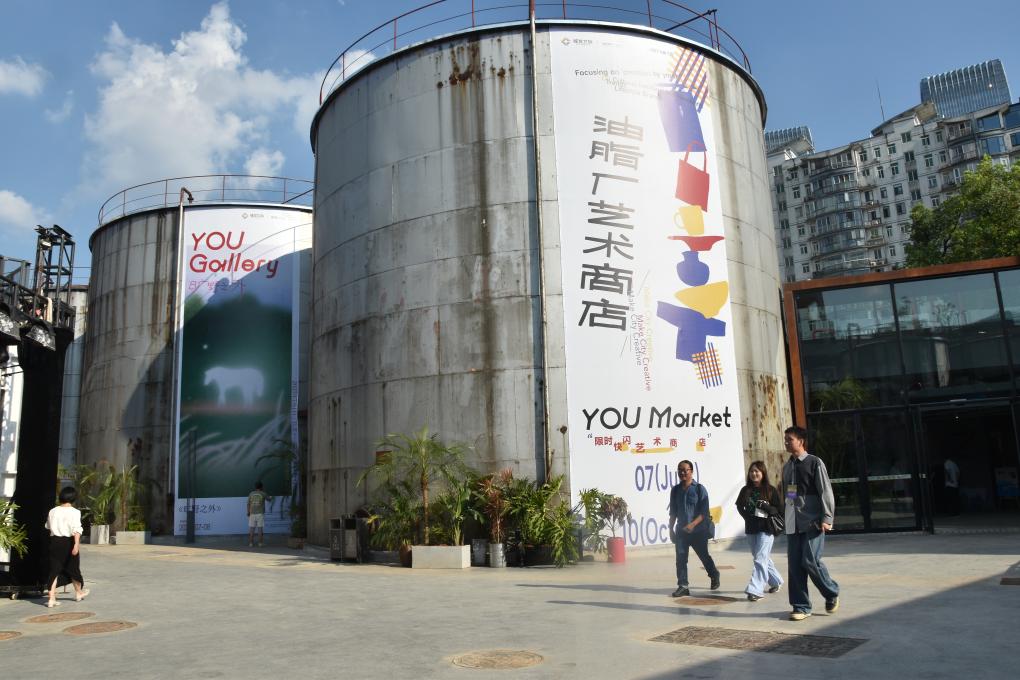
夏日消费来了“新物种”
Xin Hua Wang· 2025-07-10 05:16
Core Viewpoint - The transformation of the Changsha Oil Factory into a new consumption landmark reflects a blend of historical culture and modern consumer trends, attracting both locals and tourists [1][3][5]. Group 1: Project Overview - The Changsha Oil Factory, once a grain and oil warehouse, has been revitalized to include coffee shops, beer houses, exhibition halls, and art stores, creating a new cultural and commercial hub [1][3]. - The project aims to establish the factory as an "experimental center" for new consumption patterns, attracting niche brand owners and young artists [5][7]. Group 2: Consumer Experience - Visitors can enjoy unique experiences such as a rooftop garden for craft beer tasting and small music events, enhancing the overall appeal of the site [3][5]. - The factory features a pop-up art store showcasing over ten types of creative products, appealing to both nostalgia and modern aesthetics [3][5]. Group 3: Economic Impact - The initiative is part of a broader strategy to integrate cultural tourism with local economic development, leveraging old industrial sites to create diverse consumer experiences [7][8]. - The revitalization of the oil factory and other old factories in Changsha is expected to generate significant economic benefits while preserving the city's cultural heritage [7].