
万物互联

Search documents
技术与政策助力传感器行业加速发展
Zheng Quan Ri Bao· 2025-09-19 16:07
Group 1: Industry Overview - The global sensor industry market size is projected to grow from 3.7 trillion yuan in 2020 to 5.5 trillion yuan in 2024, with a compound annual growth rate (CAGR) of 10.1% [2] - China's sensor industry market size is expected to increase from 0.8 trillion yuan in 2020 to 1.3 trillion yuan in 2024, achieving a CAGR of 13.3% [2] - The rise of artificial intelligence and robotics has injected strong momentum into China's sensor industry, particularly in the robotics sector where sensor performance is crucial for interaction precision and operational capability [2] Group 2: Technological Advancements - The development of NeuroWorm, a flexible and stretchable neural electrode, represents a significant breakthrough in bioelectronics, enabling active control and intelligent response in neural interfaces [1] - Future trends in the sensor industry include miniaturization, intelligence, and integration, with applications expanding into smart healthcare, autonomous driving, and robotic interaction [4] Group 3: Market Dynamics - Recent data indicates that 35 sensor-related listed companies have undergone institutional research in the past month, highlighting the market's focus on application implementation, mass production progress, and order status [5] - Companies like Zhejiang Fulai New Materials and Xiamen Guangpu Electronics are actively engaging in the development and application of flexible sensors in robotics, indicating a growing interest in this segment [5][6] Group 4: Policy and Collaboration - The establishment of the "Optics Valley Sensor Industry Innovation Alliance" aims to create a globally influential smart sensor industry hub by 2030, reflecting local government support for sensor technology development [3] - Policies from the Ministry of Industry and Information Technology and other agencies are promoting the application of smart sensors and digital transformation in various industries [2]
机器人产业指数本周涨超4%,机器人ETF易方达(159530)连续“吸金”
Sou Hu Cai Jing· 2025-09-19 12:45
Group 1 - The robotics sector experienced fluctuations this week, with the China Securities Intelligent Electric Vehicle Index rising by 5.2%, the National Securities Robotics Industry Index increasing by 4%, the China Securities Consumer Electronics Theme Index up by 2.7%, and the China Securities Internet of Things Theme Index gaining 1.7% [1] - The E Fund Robotics ETF (159530) saw a net inflow of over 2.3 billion yuan over four consecutive days, reaching a record high of 11.8 billion yuan in total assets [1] Group 2 - The China Securities Intelligent Electric Vehicle Index focuses on smart electric vehicles, which are expected to represent a significant direction for embodied intelligence, covering various segments of the industry chain including power systems, perception systems, decision-making systems, execution systems, communication systems, and vehicle production [3] - The China Securities Consumer Electronics Theme Index centers on AI hardware, which is currently a major category of smart terminals, comprising stocks of companies involved in component production and complete brand design and manufacturing [5] - The China Securities Internet of Things Theme Index emphasizes the Internet of Things as a crucial foundation for achieving connectivity among smart terminals, including stocks of companies engaged in information collection, transmission, and IoT applications [6] Group 3 - The cumulative performance of various indices over different time frames shows significant growth, with the National Securities Robotics Industry Index up by 102.9% over the past year and 175.6% since its inception [9] - The rolling price-to-earnings (P/E) and price-to-sales (P/S) ratios for the indices indicate varying levels of valuation, with the National Securities Robotics Industry Index having a historical valuation that is relatively low compared to its current metrics [17]



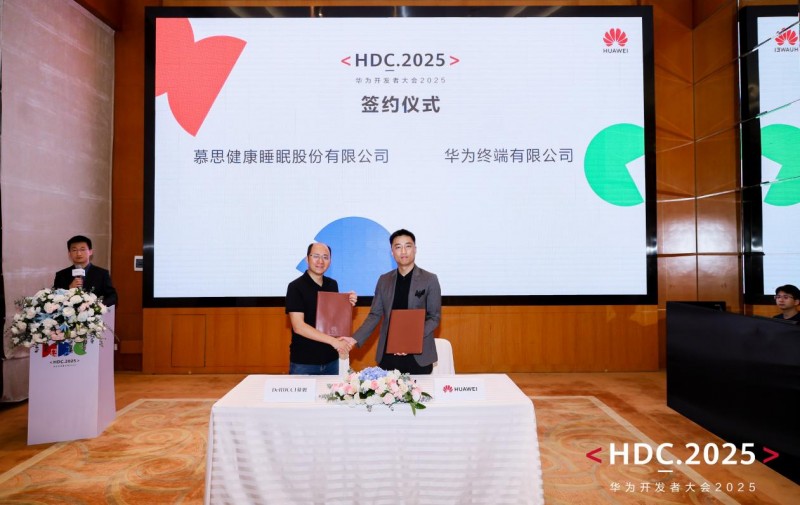
当睡眠科技遇见鸿蒙 慕思IPO助力产业智慧化升级
Cai Fu Zai Xian· 2025-09-16 03:12
Group 1 - The core viewpoint of the articles highlights a significant transformation in the sleep technology sector, marked by the strategic partnership between Mousse Health Sleep Co., Ltd. and Huawei HarmonyOS, aiming to create a comprehensive smart sleep ecosystem [1][3][4] - This collaboration represents Mousse's strategic move into the smart sleep domain, leveraging its 20 years of experience in sleep technology and the open, compatible nature of the Harmony ecosystem to build an intelligent health ecosystem [1][3] - The partnership aims to break down device barriers, enabling seamless connectivity and collaboration among smart bedroom devices, thus enhancing the user experience from sleep products to a holistic smart sleep lifestyle [1][3] Group 2 - HarmonyOS, as a leader in the smart terminal field, seeks to inject new vitality into the health sleep sector through this collaboration, expanding its application scenarios within the smart home ecosystem [3] - Mousse, with over 1,800 patents and copyrights, has achieved a revolutionary shift from "bed adapting to people" to "people adapting to bed," and this partnership will enhance its competitive edge in the smart sleep field [3] - The integration of Mousse's sleep technology algorithms with the Harmony ecosystem is expected to transform the technological framework of the sleep industry, providing users with a warm and caring sleep environment [3][4]
孤岛必沉:宠物智能化的终局在哪?
新财富· 2025-09-15 09:30
Core Viewpoint - The current pet smart market is facing challenges such as "data islands," leading to a fragmented user experience despite the growth in market size and innovation in hardware [1][4][5]. Market Overview - The pet smart products market is valued at approximately 10.2 billion, accounting for about 20% of the overall pet products market [4]. - Since 2025, the focus has shifted from hardware innovation to exploring ecosystem collaboration within the industry [2]. Challenges in the Market - Intense homogenization in product offerings has not addressed core user pain points, leading to price wars and compressed profit margins [5]. - The "data island" phenomenon is prevalent, with small and medium enterprises struggling to connect data across devices, resulting in user inconvenience [5]. Competitive Landscape - A "three-way battle" is emerging among traditional giants and tech newcomers in the pet smart market [7]. - The "Xiaopei PETKIT" alliance exemplifies a strategy that integrates smart hardware with a comprehensive service ecosystem, achieving over 1 billion RMB in annual sales [8]. - "New Ruipeng" medical group focuses on creating a "medical + ecosystem" platform, aiming for cost reductions and service enhancements, but faces challenges in profitability and compliance [9]. - Xiaomi leverages its IoT platform to empower ecosystem companies rather than producing saturated smart hardware, achieving significant sales growth in Southeast Asia [10][11]. Future Outlook - The ongoing struggle among these factions centers on defining the core of the ecosystem, with no clear winner yet [12]. - The ultimate victor will likely be the company that successfully breaks down data barriers and builds a comprehensive service ecosystem [14]. - The evaluation criteria for pet smart companies have shifted from product functionality to integration and ecosystem capabilities [15]. - The last winner in the pet smart market will be the leader in creating a unified data and business alliance [16].


走近能源电力 万物互联新底座电鸿
Ren Min Wang· 2025-09-14 01:31
Core Insights - The article discusses the recent developments in the energy sector, highlighting the increasing demand for renewable energy sources and the shift in investment strategies towards sustainable projects [2] Group 1: Industry Trends - There is a notable increase in the investment in renewable energy, with a reported growth of 20% year-on-year in 2023 [2] - The government policies are increasingly favoring green energy initiatives, which is expected to drive further investments in the sector [2] - Traditional energy companies are diversifying their portfolios to include more renewable energy projects, reflecting a significant shift in industry dynamics [2] Group 2: Company Strategies - Major energy companies are allocating a larger portion of their capital expenditures to renewable projects, with some companies reporting up to 50% of their budgets directed towards green initiatives [2] - Collaborations between traditional energy firms and technology companies are on the rise, aimed at enhancing efficiency and innovation in renewable energy solutions [2] - The competitive landscape is evolving, with new entrants focusing solely on renewable energy, challenging established players to adapt their business models [2]
光谷传感器产业创新联盟成立 合力做强信息技术的“神经末梢”
Chang Jiang Ri Bao· 2025-09-14 00:38
Core Insights - The establishment of the Optics Valley Sensor Industry Innovation Alliance was announced during the conference held in Wuhan on September 13, led by Huazhong University of Science and Technology [1] - The alliance aims to create an innovative ecosystem covering all elements of "government, industry, academia, research, application, and finance" by collaborating with 45 leading companies and several universities [1] - The goal is to build a globally influential smart sensor industry hub by 2030, focusing on key areas such as design, manufacturing, packaging, testing, and system integration [1] Industry Overview - The sensor industry in Wuhan has surpassed 20 billion yuan, forming a complete industrial chain that includes design, manufacturing, packaging, testing, and system integration [1] - Optics Valley has attracted over 100 companies in the sensor industry chain, creating an industrial cluster worth nearly 10 billion yuan [1] - Leading companies in the sector include GaoDe Infrared, Huagong Technology, and Sifang Optoelectronics, which are recognized nationally and globally in specific fields such as infrared, gas, and pressure sensors [1]


机器人板块回调,机器人ETF易方达(159530)本周“吸金”超6亿元
Sou Hu Cai Jing· 2025-09-05 14:14
Market Performance - The Guozheng Robotics Industry Index decreased by 1.9%, while the CSI Smart Electric Vehicle Index increased by 3% this week [1] - The CSI Consumer Electronics Theme Index fell by 3.7%, and the CSI Internet of Things Theme Index also dropped by 1.9% [1] - The E Fund Robotics ETF (159530) attracted over 600 million yuan this week, bringing its total size to approximately 6.3 billion yuan [1] Company Developments - UBTECH announced a new record contract worth 250 million yuan for humanoid robot products and solutions with a well-known domestic company, following a previous major order of nearly 100 million yuan in July [1] - The contract focuses on the Walker S2 humanoid robot, with delivery set to commence within this year [1] Industry Insights - The CSI Smart Electric Vehicle Index is expected to represent a significant direction for embodied intelligence, covering various segments of the industry chain including power systems, perception systems, decision-making systems, execution systems, communication systems, and vehicle production [3] - The CSI Consumer Electronics Theme Index focuses on AI hardware, which is currently a major category of smart terminal products, involving companies engaged in component production and complete machine brand design and manufacturing [4] - The CSI Internet of Things Theme Index emphasizes the importance of IoT as a foundational element for achieving connectivity among smart terminals, comprising stocks from companies involved in information collection, transmission, and IoT applications [5]

亨通光电20250829
2025-08-31 16:21
Summary of Hengtong Optic-Electric Conference Call Company Overview - **Company**: Hengtong Optic-Electric - **Date**: August 30, 2025 Key Industry and Company Insights Industry: Optical Fiber and Energy 1. **Product Structure Optimization**: Hengtong has made significant breakthroughs in high-end and specialty optical fibers, including ultra-low loss, marine, multimode, and hollow fibers, achieving international advanced levels in hollow anti-resonant fiber loss values [1][3] 2. **Investment in AI**: The company is investing in an advanced optical fiber materials R&D and manufacturing center to enhance the delivery capacity of specialty fibers [1] 3. **Energy Sector Progress**: Hengtong has made notable advancements in marine energy and smart grid sectors, with over 20GW of projects approved or competitively bid since Q4 2024, and nearly 3 billion yuan in marine energy projects won in 2025 [1][5] Financial Performance 1. **Revenue Growth**: In H1 2025, Hengtong achieved a revenue increase of 20% year-on-year, with a net profit of 1.613 billion yuan, marking a historical high [2] 2. **Business Segment Contributions**: By H1 2025, the smart grid and industrial new energy segments accounted for approximately 50% of total business, while marine energy and communication segments made up 10%, and traditional optical communication accounted for 20% [7][30] Optical Communication Developments 1. **High-End Product Revenue**: The revenue share of high-quality specialty products, such as ultra-low loss and marine fibers, increased from about 10% to nearly 20% in H1 2025, with plans to reach 30% or higher in the future [3][13] 2. **Profit Margins**: The gross margin for optical communication business is approximately 25%, with improvements driven by product structure optimization [8][30] 3. **Response to Cost Pressures**: Despite rising prices of silicone, Hengtong successfully increased its gross margin by enhancing the proportion of high-end products [9] Marine Communication Sector 1. **Cable Delivery Milestones**: As of the reporting period, Hengtong's global submarine cable delivery exceeded 108,000 kilometers, with an order backlog of about 7.5 billion yuan [6][19] 2. **PEACE Project Expansion**: The company plans to construct the Gulf extension of the PEACE project, expected to reach the UAE and Oman by Q3 2026 [6] Energy Sector Highlights 1. **Marine Energy Orders**: In the marine energy sector, over 30% of the 20 billion yuan in energy orders are related to submarine cables, with minimal contributions from engineering projects [24] 2. **Smart Grid Growth**: The smart grid segment's gross margin improved to over 14%, while the industrial new energy segment's gross margin rose to over 15% [30] Market Outlook 1. **Future Growth Potential**: Hengtong's various business sectors, including optical communication, marine energy, and smart grids, are expected to benefit from increasing demand driven by AI, cloud computing, and data center developments [31] 2. **International Market Expansion**: The company has seen strong performance in overseas fiber optic cable exports, with significant demand from regions such as South Africa, Brazil, Germany, and India [18] Additional Insights 1. **Order Confirmation Method**: Hengtong uses the percentage of completion method for revenue recognition, allowing for a clearer understanding of future revenue growth based on order progress [21] 2. **Optimistic Market Sentiment**: The company maintains a cautiously optimistic outlook for the second half of 2025 and 2026, despite slight declines in bidding volumes from major clients like China Mobile [15][16] This summary encapsulates the key points from the conference call, highlighting Hengtong Optic-Electric's strategic advancements, financial performance, and market outlook across its various business segments.

越过千万生死线,鸿蒙直面商业化考验
3 6 Ke· 2025-08-27 04:42
Core Insights - Huawei's HarmonyOS 5 has surpassed 12 million terminal devices, indicating a significant milestone in the commercialization of domestic operating systems [1][6] - The rapid growth of HarmonyOS reflects innovations in its underlying architecture, industry alliances, and software-hardware integration [1][2] - The operating system aims to break the long-standing dominance of foreign brands in the operating system market, particularly in smartphones and PCs [1][3] Group 1: Development and Challenges - HarmonyOS's development faced challenges due to the late start of the domestic software industry and reliance on open-source Linux, which hindered the formation of a self-controlled technology system [3][4] - Huawei initiated the development of HarmonyOS in 2015, aiming for a 10-20 year vision for the Internet of Things [3][4] - The system's architecture allows for distributed computing, enabling developers to create applications that can run across multiple devices, thus simplifying the development process [4][5] Group 2: Market Position and Ecosystem - As of October 2022, the number of devices supporting HarmonyOS exceeded 1 billion, with 6.75 million registered developers [7][8] - HarmonyOS is expected to enhance Huawei's competitive edge in the smartphone market, with projections indicating a return to the top position in market share by Q2 2025 [8][10] - The Chinese operating system market is projected to reach 25 billion yuan by 2025, with the software industry expected to exceed 3.5 trillion yuan by 2030, indicating significant growth potential for HarmonyOS [10][11] Group 3: Adaptability and Future Prospects - Despite its growth, HarmonyOS faces challenges in application compatibility, particularly with popular apps like WeChat and Douyin, which affects user experience [12][15] - Huawei is actively working to improve the ecosystem by lowering development barriers and providing incentives for developers to create applications for HarmonyOS [13][14] - The operating system is positioned to potentially become the third-largest globally, leveraging its advantages in domestic replacement and full-scene interconnectivity [13][15]
中国屏何以大“显”身手
Zheng Quan Ri Bao· 2025-08-25 16:15
Core Insights - The Chinese display industry has significantly evolved, leading to a drastic reduction in the prices of large-screen televisions, with a 50% drop in the price of 75-inch TVs over the past two years [6][7]. - The industry is supported by government policies that promote technological advancements and self-sufficiency in the supply chain, enabling companies like BOE Technology Group and TCL to establish a strong manufacturing base [2][3][4]. - The rise of new technologies such as Mini-LED has improved display quality and reduced costs, further driving the adoption of large-screen products across various sectors [7][8]. Industry Development - The Chinese display industry has become a global leader in television shipments and advanced technologies, overcoming previous challenges related to supply chain constraints [1][2]. - The government has implemented a comprehensive support system for the display industry, focusing on key materials and new display technologies, which has facilitated the growth of domestic manufacturers [2][4]. - Major companies have made significant investments in high-generation production lines to enhance their manufacturing capabilities, establishing a robust LCD manufacturing cluster [3][4]. Technological Advancements - The introduction of Mini-LED technology has not only enhanced picture quality but also made large-screen televisions more affordable, contributing to their widespread adoption [7][8]. - Companies are leveraging advanced cutting techniques to optimize production efficiency and reduce costs, which is crucial for maintaining competitiveness in the market [7][8]. - The industry is exploring new frontiers in OLED and Micro-LED technologies, aiming to capture market share in emerging applications such as smart glasses and flexible displays [8][9]. Market Trends - The demand for large-screen televisions is driven by consumer preferences for immersive experiences and the increasing need for large displays in corporate settings [7][8]. - The display industry is witnessing a shift towards high-end applications, with products expanding into sectors like smart healthcare and cultural heritage display [7][8]. - As the industry matures, companies are focusing on diversifying their product offerings to include various display technologies tailored to different market needs [9].