
扩大内需

Search documents
扩容口岸免税店,释放消费新活力
Sou Hu Cai Jing· 2026-02-10 01:38
Core Insights - The recent policy by the Ministry of Finance and other departments to expand duty-free shops at ports is a structural optimization of the duty-free retail system and a significant measure to boost consumption in the new development pattern, reflecting China's commitment to high-level opening-up [1][4] Group 1: Policy and Structural Changes - The establishment of 41 new duty-free shops at ports addresses the uneven geographical distribution and insufficient supply of duty-free services, particularly in central and western regions of China [1][2] - The new duty-free shops will complement the existing 11 shops, creating a network that better matches resources with passenger flow and demand [1][3] Group 2: Consumer Behavior and Market Dynamics - The expansion of duty-free shops enhances the accessibility and convenience of duty-free shopping for inbound travelers, effectively redirecting consumption that would have occurred overseas back to domestic ports [2][3] - This initiative aims to reduce reliance on overseas shopping and promote domestic consumption, thereby transforming international purchasing power into a driving force for the domestic market [2][3] Group 3: Economic Impact and Development - The strategic layout and expansion of duty-free shops are expected to activate specific consumption scenarios, release consumer potential, and promote the mutual reinforcement of domestic and international dual circulation [3][4] - Duty-free shops, as key nodes in the airport and port economy, can stimulate the development of related industries such as aviation, logistics, tourism, and hospitality, injecting new vitality into the regional economy [3][4] Group 4: International Trade and Cooperation - The optimization and expansion of the duty-free sector exemplify China's commitment to high-level opening-up and alignment with international trade standards, enhancing the convenience of trade and investment [4] - This initiative provides a more efficient platform for high-quality goods from various countries to enter the Chinese market, meeting consumer demand and showcasing China's willingness to share development opportunities with the world [4]
不断增强高质量发展的确定性
Xin Lang Cai Jing· 2026-02-09 20:19
●新华社记者 安蓓 王雨萧 张晓洁 2026年开年,全国31个省区市地方两会密集召开。各地深入学习贯彻党的二十届四中全会精神,扎实落 实中央经济工作会议部署,结合实际、因地制宜,筹划经济社会发展各项工作,推动出台地方"十五 五"规划纲要,为"十五五"开局之年谋篇布局。 立春刚过,气象正新。在以习近平同志为核心的党中央坚强领导下,全国一盘棋凝聚发展合力,神州大 地处处涌动奋发热潮,中国式现代化征程迎来新的出发。 推动经济实现质的有效提升和量的合理增长 2025年,中国经济总量跨越140万亿元关口。基本实现社会主义现代化,中国经济必须在提高质量效益 的前提下,保持合理的经济增长。 记者梳理发现,大多数省份都设置了2%左右的居民消费价格增长目标。国家发展改革委经济研究所副 所长郭丽岩说,设定温和上涨的物价目标,体现了多措并举推动消费价格合理回升的信心,有利于促进 经济良性循环,实现企业增效、居民和财政增收。 此外,各地政府工作报告普遍对一般公共预算收入增长、城镇调查失业率以及节能减排降碳等指标作出 设置。 "这些指标统筹考虑经济质的有效提升和量的合理增长。'十五五'开局之年,保持经济运行在合理区 间,将为中国经济应 ...
信号明确决心很大!国常会部署稳投资,这些领域谋划一批重大工程
2 1 Shi Ji Jing Ji Bao Dao· 2026-02-09 10:36
Core Viewpoint - The State Council's recent meetings emphasize the need to stabilize and promote effective investment in 2026, focusing on innovative policy measures and significant projects in key sectors to support economic growth [1][2]. Investment Tools - The State Council has outlined several investment tools for 2026, including central budget investments, ultra-long-term special bonds, local government special bonds, and new policy financial instruments, with a focus on enhancing their effectiveness [2][3]. Investment Scale and Trends - In 2025, China's fixed asset investment was 48.5 trillion yuan, a decrease of 3.8% year-on-year. The government aims to reverse this trend in 2026, with expectations for more investment stabilization policies to be implemented [1][3]. Major Projects Planning - The State Council plans to initiate significant projects in infrastructure, urban renewal, public services, and emerging industries, aligning with long-term development needs and competitive advantages [1][7]. Role of State-Owned Enterprises and Private Investment - The government aims to leverage state-owned enterprises to expand investment and support private investment development, recognizing the importance of private sector confidence in driving overall investment [10][12]. Economic Growth Potential - Despite a decline in private investment by 6.4% in 2025, there remains substantial potential for growth in investment, particularly in infrastructure and technology sectors, as the government seeks to enhance the investment environment [12][8].


2026年预算草案解读三:重点支出方向① | 落实更加积极的财政政策
Xin Lang Cai Jing· 2026-02-09 10:10
(来源:乌兰察布财政) 争取中央竞争性评审项目。 坚定不移支持扩大内需 加大力度争取中央转移支付和超长期特别 国债资金,支持"两重"建设,落实"两新" 政策。支持开展提振消费专项行动,鼓励大宗 消费、刺激常规消费,支持假日、赛事、演出、 冰雪、银发等经济发展和餐饮、康养等服务消 费。积极扩大有效投资,安排自治区预算内投 资建设资金14亿元,支持水利、电力、城乡 基础设施等项目建设。 着力补齐基础设施短板 安排交通运输支出136.3亿元,支持公路、 铁路、航道等重点项目建设,推进农村公路和 村内道路建设。安排资金65.7亿元,强化水网、 铁路网、公路网、管网等基础设施体系建设。 安排商务和口岸发展、重点开发开放试验 区等资金7.7亿元,加快推进中国(内蒙古) 自贸区等开放平台建设,支持口岸基础设施建 设、智能化改造和进境资源加工,持续增加二 手车、特色农畜产品等出口。 编 辑:郭晓雪 张 珂 (来源:乌兰察布财政) 加快推动产业转型升级 安排内蒙古重点产业引导基金30亿元、制 造业高质量发展资金14.9亿元、战略性新兴产 业发展资金1.8亿元,做优农畜产品精深加工, 推动传统产业延链补链强链,培育发展新兴产 业 ...

千品热销、购销两旺,齐鲁农超新春年货会撬动春节消费新热潮
Qi Lu Wan Bao· 2026-02-09 06:48
Core Insights - The 2026 Qilu Agricultural Supermarket Spring Festival Commodity Fair successfully attracted a large number of visitors and achieved strong sales, reflecting the vitality of the agricultural product consumption market in Shandong province [1][2][7] Group 1: Sales Performance - The fair showcased over a thousand specialty products from 16 cities, with significant sales in dairy products, ready-to-eat foods, and gift boxes, indicating a shift towards quality consumption [1][2] - Health-oriented products such as honey, organic grains, and fresh fruits gained popularity, with notable sales figures including over 5,000 pounds of apples sold from Yantai and 1,000 pounds of pears from Zibo [2][6] - The event served as a platform for not only sales but also for establishing long-term partnerships between exhibitors and buyers, enhancing the agricultural supply chain [2][8] Group 2: Consumer Engagement - The fair implemented various consumer-friendly initiatives, including substantial discounts and promotional activities, which effectively lowered the cost of purchases and stimulated consumer spending [3][4] - Special gifts and rewards were offered to consumers, such as shopping incentives for purchases over certain amounts, enhancing the overall shopping experience [4][5] Group 3: Policy Support - The success of the fair was supported by national and local policies aimed at boosting domestic demand and promoting agricultural product consumption, providing a framework for the event [5][6] - Recent government initiatives have focused on enhancing rural consumption and supporting e-commerce platforms, which align with the fair's objectives [5][6] Group 4: Innovative Model - The fair adopted a unique model combining government guidance, enterprise hosting, media support, and e-commerce empowerment, which facilitated effective resource integration and improved operational efficiency [7][8] - This model not only enhanced the visibility of local agricultural products but also helped in establishing long-term business relationships, contributing to the overall growth of the agricultural sector [7][8]
政策研究报告:中国提振消费的战略选择与国际经验,提振消费、扩大内需
Sou Hu Cai Jing· 2026-02-09 05:45
Group 1 - The core strategy for China's economic high-quality development is to boost consumption and expand domestic demand, driven by top-level design, external demand uncertainties, and the need to resolve structural contradictions in domestic consumption [1][5][6] - Over the past decade, China's consumption market has seen significant growth and structural upgrades, with consumption becoming the primary driver of economic growth, service consumption accounting for 46.15%, and a gradual narrowing of the urban-rural consumption gap [6][24][42] - There is still a notable gap in household consumption rates and service consumption proportions compared to international economies, indicating substantial room for improvement [6][59] Group 2 - The report identifies four key pillars for boosting consumption based on international experiences: institutional guarantees, income foundations, supply innovation, and expectation management, while also warning against excessive debt and asset bubbles [7][11] - Japan's high cost-performance and emotional value consumption, Germany's stable employment and social security system, and South Korea's cultural strategy driving consumption upgrades provide valuable references for China, while the financialization risks of the US's advanced consumption model should be approached with caution [7][11] - The report outlines a four-dimensional policy framework to enhance consumption, focusing on income security, innovative consumption supply scenarios, optimizing the consumption institutional environment, and promoting regional collaborative openness [2][8][14] Group 3 - Six new growth areas for consumption are identified: service consumption, "AI + consumption," green consumption, cultural and emotional consumption, digital consumption, and bulk consumption, with specific development directions and policy breakthroughs proposed for each area [2][8][14] - The report emphasizes the need to implement a resident income doubling plan, reform the service consumption supply side, eliminate unreasonable consumption restrictions, and create a matrix of international consumption center cities to fully unleash the potential of China's consumption market [2][8][14]

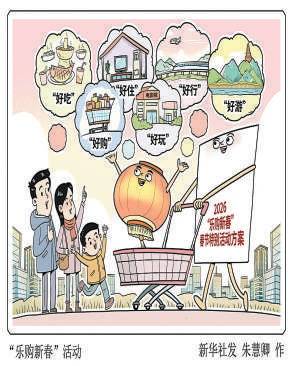
在惠民生中激发消费活力
Sou Hu Cai Jing· 2026-02-08 21:22
Core Viewpoint - The emphasis is on the close relationship between improving people's livelihoods and boosting consumption, highlighting the need for a combined approach to stimulate domestic demand and enhance economic development [1] Group 1: Importance of Livelihood Improvement - Increasing residents' income and broadening income channels are fundamental to enhancing consumption capacity and willingness, which in turn supports market growth [2] - Addressing practical issues such as education, healthcare, and elderly care is crucial for improving consumer confidence and reducing savings inclination, thereby stabilizing the foundation for consumption growth [2] Group 2: Consumption as a Driver for Livelihood Improvement - Consumption plays a vital role in economic activity, serving as both the ultimate goal and driving force of production, thus stimulating market demand and facilitating industrial upgrades [3] - Policies such as "trade-in programs," "subsidies for consumption zones," and "consumer vouchers" are suggested to better meet diverse consumer needs and enhance consumption [3] Group 3: Employment as a Key Link - Implementing an employment-first strategy is essential, with a focus on supporting key groups and sectors, particularly small and medium enterprises, to stabilize and expand job opportunities [4] - Enhancing the income distribution system and increasing the proportion of labor remuneration in national income distribution are necessary to build a solid income foundation for consumption growth [4] Group 4: Optimizing the Consumption Environment - A safe and reliable consumption environment is critical for enhancing consumer experience and willingness, necessitating stronger regulatory measures and consumer rights protection [5] - Expanding high-quality consumption supply and innovating diverse consumption scenarios are essential to meet the evolving demands of consumers [5] Group 5: Strengthening Social Security Systems - Improving social security systems can effectively reduce residents' expenditure risks in healthcare, education, and housing, thereby enhancing their consumption capacity and confidence [6] - Strengthening macro policies with a focus on people's livelihoods and expanding social security coverage are vital for releasing consumer demand, particularly among low- and middle-income groups [6]
2026年地方两会有哪些关键信息?
Western Securities· 2026-02-08 13:26
1. Report Industry Investment Rating No relevant content provided in the report. 2. Core Viewpoints of the Report - As of February 5, 2026, provincial - level two sessions have been held. The average GDP growth target of 31 provinces in 2026 is 5.12%, a slight decrease of 0.24 percentage points from 2025. Most provinces set their GDP growth targets in the range of 5% - 5.5% [1][11]. - The key tasks of local governments in 2026 focus on expanding domestic demand and accelerating the development of new - quality productivity, including tapping effective demand potential, strengthening scientific and technological innovation, and building a modern industrial system. Debt - alleviation key provinces also focus on these areas while making differentiated arrangements based on provincial conditions [1][16][18]. - In terms of finance, some provinces have lowered their general public budget revenue growth targets, with the average target growth rate dropping from 3.3% to 2.5%. Local governments will continue to resolve local debt risks, and the transformation and exit tasks of financing platforms will be further strengthened [2][21]. - Looking ahead, the 10Y Treasury bond has fallen to the resistance level around 1.8%, and the bond market may remain volatile in the short term. Attention should be paid to the inflation data in January and the possible disturbances caused by re - inflation expectations [2][27]. 3. Summary of Each Section 3.1 Review and Outlook of the Bond Market - This week, the precious metal market fluctuated, and the central bank maintained cross - festival liquidity. The bond market oscillated, with the ultra - long - end leading the rise. The yields of 10Y and 30Y Treasury bonds decreased by 0.1bp and 4bp respectively [10]. - The GDP growth targets of most provinces in 2026 have been adjusted. 21 provinces lowered their targets, and only Jiangxi raised its target. The average growth target decreased slightly compared to 2025 [11][14]. - The key tasks of economic powerhouse provinces and debt - alleviation key provinces in 2026 mainly include expanding domestic demand, strengthening innovation, and promoting industrial development, with some provinces also emphasizing reform and regional construction [16][18]. - In terms of finance, some provinces have lowered their revenue growth targets, and local governments will continue to resolve debt risks and strengthen the transformation of financing platforms [21][24]. 3.2 Bond Market Review 3.2.1 Capital Situation - This week, the central bank conducted a net withdrawal of 7560 billion yuan in the open market. From February 2 to 6, the central bank injected 10055 billion yuan, and reverse repurchases worth 17615 billion yuan matured. Next week, 1500 billion yuan of treasury cash fixed deposits will be issued, and reverse repurchases worth 4055 billion yuan will mature [28]. - Capital interest rates declined. From February 2 to 6, R007 and DR007 dropped by 11bp and 13bp respectively compared to January 30. The 3M certificate of deposit issuance rate first decreased and then increased, and the FR007 - 1Y swap rate declined after narrow - range fluctuations [31]. 3.2.2 Secondary Market Trends - This week, bond yields oscillated within a range and then declined. Except for the 1Y Treasury bond, the yields of other key - term Treasury bonds decreased. Except for the 7Y - 5Y, 10Y - 7Y, and 50Y - 30Y Treasury bond term spreads, other key - term spreads narrowed [38][40]. 3.2.3 Bond Market Sentiment - This week, the weekly turnover rate of 30Y Treasury bonds slightly decreased to 39%. As of February 6, the 50Y - 30Y Treasury bond spread widened by 0.7bp compared to January 30, and the 30Y - 10Y spread narrowed by 3.7bp to 44bp. The inter - bank leverage ratio rose to 108.0%, and the exchange leverage ratio slightly decreased to 122.9%. The median duration of medium - and long - term pure bond funds increased by 0.01 years to 2.61 years, and the implied tax rate of 10 - year CDB bonds narrowed [45]. 3.2.4 Bond Supply - This week, the net financing of interest - rate bonds increased. From February 2 to 6, the net financing of interest - rate bonds was 8834 billion yuan, a week - on - week increase of 4229 billion yuan. The net financing of Treasury bonds and local government bonds increased, while that of policy - financial bonds decreased [60]. - The issuance scale of Treasury bonds increased this week. A total of 6 Treasury bonds were issued from February 2 to 6, with a total issuance scale of 3970 billion yuan. Next week, the 7Y Treasury bond 250025.IB will be re - issued, with an issuance scale of 1300 billion yuan [63][64]. - The issuance scale of local bonds will decrease next week. This week, 90 local government bonds were issued, with a total issuance scale of 5797 billion yuan. Next week, the planned issuance scale of local government bonds is 3221 billion yuan, a decrease of 2575 billion yuan compared to this week [64]. - This week, inter - bank certificates of deposit changed from net repayment to net financing, and the average issuance rate remained flat. The total issuance of inter - bank certificates of deposit from February 2 to 6 was 5066 billion yuan, and the net financing was 3751 billion yuan [65]. 3.3 Economic Data - Since February, port throughput has been strong, while industrial production has shown a marginal weakening trend. In the real estate sector, new - home sales decreased month - on - month but increased year - on - year, and second - hand home sales in 13 cities decreased less month - on - month and increased more year - on - year. In the consumption sector, movie consumption decreased month - on - month and was weaker than the seasonal level year - on - year, subway travel was basically in line with the seasonal level, and flight travel was slightly weaker than the seasonal level. In the export sector, port throughput increased month - on - month and year - on - year, while the CCFI and SCFI indices decreased [69]. - Industrial production showed a marginal weakening trend. The PTA operating rate increased month - on - month, while other operating rate indicators decreased month - on - month. In terms of infrastructure and price high - frequency data, production indicators decreased month - on - month, and the prices of asphalt, crude oil, and non - ferrous metals turned down [69][73]. 3.4 Overseas Bond Market - The US non - farm payrolls report was postponed. Due to the "technical shutdown" of the US federal government, the release time of multiple economic data reports by the US Bureau of Labor Statistics was adjusted. The original January non - farm payrolls report scheduled for February 6 was rescheduled to February 11, and the January CPI report was adjusted to 8:30 am on February 13, Eastern Time [78]. - Fed's Daly warned of the vulnerability of the labor market and said that one or two more interest rate cuts might be needed. In the overseas bond market, US bonds rose, while emerging markets mostly declined. The 2Y and 10Y US Treasury bond yields decreased by 2bp and 4bp respectively, and the 10Y - 2Y spread narrowed from 74bp on January 30 to 72bp [78][79]. 3.5 Performance of Major Asset Classes - The CSI 300 index adjusted this week. As of February 6, 2026, it closed at 4643.6 points, a decrease of 1.33% compared to January 30. The US dollar index rose slightly this week, and both Shanghai gold and Shanghai copper significantly adjusted. The performance of major asset classes this week was: US dollar > convertible bonds > Chinese - funded US dollar bonds > Chinese bonds > live pigs > crude oil > CSI 300 > rebar > CSI 1000 > Shanghai copper > Shanghai gold [84]. 3.6 Next Week's Bond Market Calendar - In terms of liquidity, there will be reverse repurchase maturities and the issuance of treasury cash fixed deposits. In terms of government bond supply, there will be the issuance of Treasury bonds and local government bonds. In terms of fundamental data, there will be the release of economic data from China, the US, and other countries, as well as reports from EIA, OPEC, and IEA [88].
扬帆2026!首都发展改革工作再启新程~
Bei Jing Ri Bao Ke Hu Duan· 2026-02-07 07:26
2月5日下午,2026年度北京市发展改革系统工作会召开,总结2025年发展改革工作成效,部署2026年重 点工作任务。 北京市发展改革委党组书记、主任杨秀玲作工作报告,委领导班子成员、二级巡视员,各处室、设在机 构、直属(管理)单位主要负责同志,市粮食和储备局、市投资促进中心相关负责同志,各区发展改革 委主任、经济技术开发区经济发展局局长及综合、规划、投资科室负责同志参会。 顶压前行、攻坚克难 充分肯定发展改革工作取得的新成效 2025年是"十四五"规划收官之年,也是很不平凡的一年,在市委、市政府坚强领导下,全市发展改革系 统充分发挥综合经济部门牵头抓总作用,坚持深化协同服务首都功能,坚持扩大内需稳定经济运行,坚 持改革创新增强发展动能,坚持以人为本提升城市品质,全力推动"十四五"实现圆满收官,为"十五 五"良好开局奠定坚实基础。 一是坚持以高质量党建引领高质量发展 抓好"第一政治要件"落实,开展"第一议题"学习,做好党的二十届四中全会精神学习宣传,抓好中央和 市委巡视问题整改。扎实开展深入贯彻中央八项规定精神学习教育,持续为基层减负赋能,加强廉政警 示教育,从严监督执纪。 二是合力攻坚,推动经济向新向优发展 ...
多地力推“中小学春秋假”,惠民生与促消费如何双向奔赴?
Xin Hua Wang· 2026-02-07 02:09
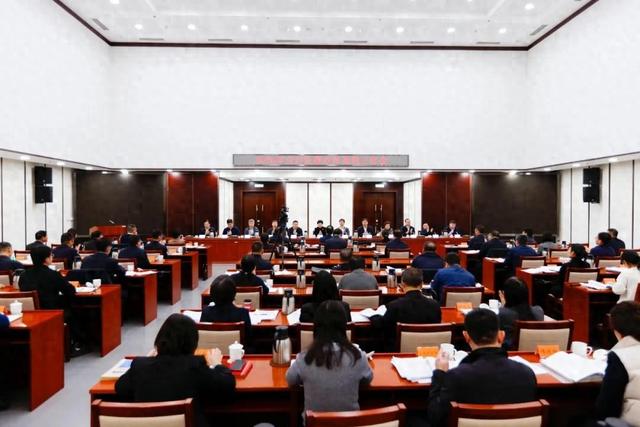
Core Viewpoint - The implementation of spring and autumn breaks in primary and secondary schools, along with paid staggered leave, is seen as a potential driver for expanding domestic demand and enhancing consumer spending in Anhui Province [1][2]. Group 1: Policy Implementation - Anhui Province's government work report emphasizes the importance of implementing paid staggered leave and establishing spring and autumn breaks for students as key initiatives for the year [1]. - This initiative aligns with national policies aimed at expanding service consumption, as outlined in a document from the Ministry of Commerce and other departments [1]. Group 2: Consumer Behavior and Market Impact - The introduction of spring and autumn breaks has already shown positive effects in other provinces, such as Zhejiang, where travel during these breaks significantly increased, with a reported 22.1% year-on-year growth in passenger numbers during the autumn break [1]. - Public sentiment is largely positive, with many families expressing excitement about the potential for enhanced travel experiences and opportunities for outdoor activities [2]. Group 3: Tourism and Education Synergy - The spring and autumn breaks are expected to alleviate pressure on tourist destinations during peak seasons, improving service quality and overall travel experiences [2]. - The initiative is also seen as a way to address issues related to insufficient outdoor activity time for students and the challenges parents face during school holidays [2]. Group 4: Economic Growth and Cultural Promotion - The government report suggests that the spring and autumn breaks could stimulate cultural and tourism consumption, with proposals for creating educational travel programs that enhance students' cultural experiences [3]. - Recommendations include leveraging local cultural resources and designing new products and services that cater to students, thereby achieving a dual goal of enhancing consumer spending and improving quality of life [3].