
智改数转

Search documents
宿迁新增1家省级院士专家创新中心
Yang Zi Wan Bao Wang· 2025-09-28 13:45
Core Insights - The Jiangsu Academy of Sciences has established an innovation center to promote collaboration between industry, academia, and research, focusing on key technological breakthroughs and talent development [1] Group 1: Innovation Center Overview - The Jiangsu Academy of Sciences innovation center is led by the provincial science and technology association and aims to leverage academic resources to drive technological advancements and industry integration [1] - The center has been approved as one of three provincial-level innovation centers in Suqian, indicating a growing emphasis on technological innovation in the region [1] Group 2: Focus Areas and Achievements - The center, led by Academician Zhang Yu-kui from the Chinese Academy of Sciences, specializes in synthetic biology equipment development and has achieved breakthroughs in smart control of bioreactors and precision manufacturing of peptide synthesizers [1] - The center collaborates with East China University of Science and Technology to establish an experimental verification center, facilitating digital transformation in the biopharmaceutical sector and enhancing the pharmaceutical and diagnostic industry chains [1]
“智改数转”+就近配套 遂宁食品饮料业“风生水起”
Si Chuan Ri Bao· 2025-09-28 06:25
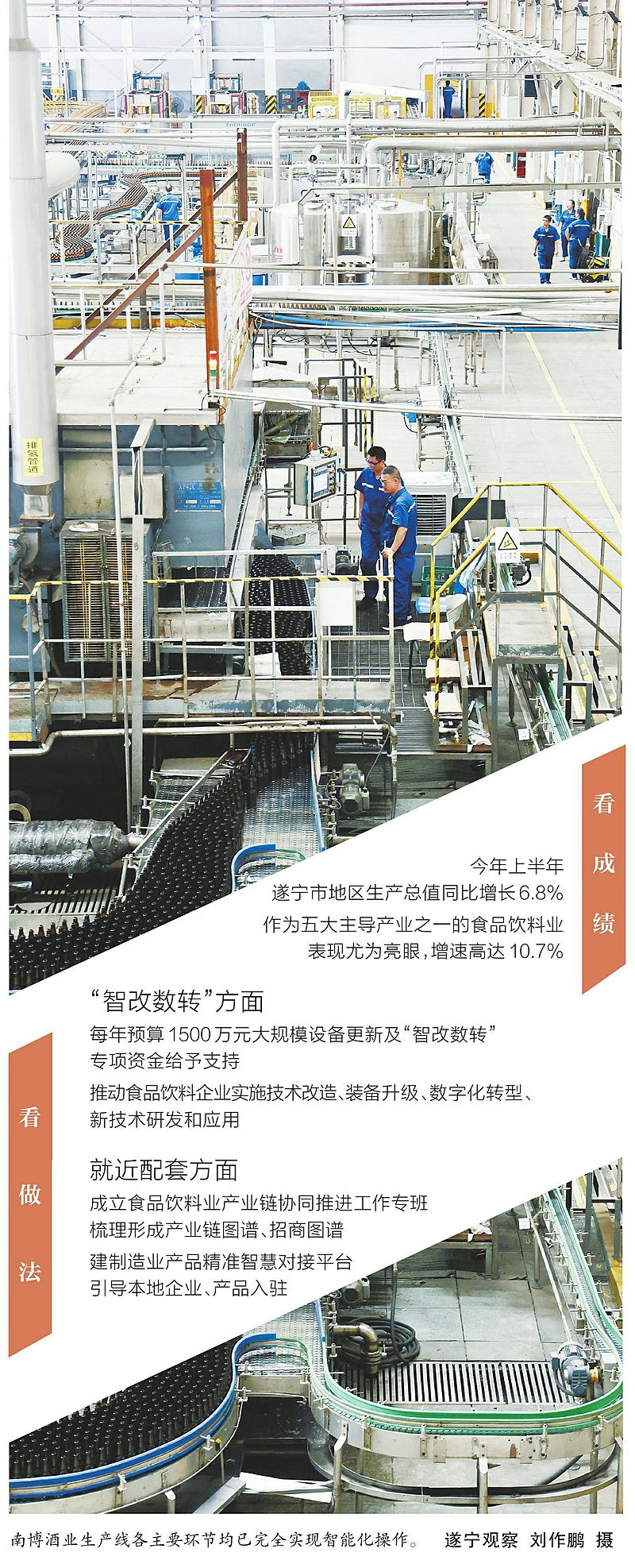
Core Viewpoint - The food and beverage industry in Suining is experiencing significant growth, with a GDP increase of 6.8% in the first half of the year and a remarkable 10.7% growth rate in the food and beverage sector [3][5]. Group 1: Industry Growth and Development - Suining's GDP reached 921.8 billion yuan in the first half of the year, reflecting a year-on-year growth of 6.8% [3]. - The food and beverage industry, one of the five main industries in Suining, has shown a strong performance with a growth rate of 10.7% [3]. - The construction of a new beer production base by Sichuan Nanbo Brewery, which will increase annual beer production capacity to 300,000 tons, exemplifies the rapid development in the sector [3]. Group 2: Technological Advancements - The beer production process has undergone significant automation, reducing the workforce needed from 100-150 workers to about 10 due to smart technology implementation [4]. - The introduction of advanced technologies in meat processing, such as robotic arms and smart quality inspection systems, has led to over 30% savings in labor costs [4]. - AI quality inspection systems in food production have reduced error rates to one in ten thousand, achieving nearly 60% savings in labor costs [4]. Group 3: Policy Support and Investment - The Suining government has launched initiatives to support the digital transformation and technological upgrades in the manufacturing sector, including a budget of 15 million yuan annually for equipment updates [5]. - The 2025 Suining Food and Beverage Industry Promotion Plan aims to enhance production efficiency through technology upgrades and research collaborations [5]. - In the past year, the food and beverage industry in Suining achieved a technological transformation investment of 97 million yuan [5]. Group 4: Local Collaboration and Supply Chain - A recent industry networking event in Suining facilitated connections between over 40 local food and beverage companies, promoting local sourcing and cost-sharing [6]. - Local companies have reported significant reductions in inventory costs and improvements in production efficiency through partnerships with nearby suppliers [6]. - The establishment of a collaborative working group by the Suining government aims to enhance local supply chain integration and support the growth of key enterprises [7].

激活“未来工厂”新质态
Xin Hua Ri Bao· 2025-09-26 20:31
Core Viewpoint - The transformation of traditional industries in Jiangsu Province is centered around intelligent upgrades and digital transformation, creating a replicable "Jiangsu model" for national industrial digitalization [1][2]. Group 1: Industrial Reconstruction - Jiangsu's three-year action plan for intelligent transformation signifies a fundamental shift in manufacturing logic, aiming for 50% of large-scale industrial enterprises to achieve basic-level smart factory standards by 2027 [2][3]. - The province has established a three-dimensional promotion system of "policy guidance + platform empowerment + benchmark demonstration" to support this transformation [2][3]. - The integration of 5G technology with the Internet of Things in Wuxi has led to a 37% reduction in product defect rates and a 45% increase in order response speed [2][4]. Group 2: Key Dimensions of Transformation - The transformation involves three key dimensions: intelligent production methods, digital value chain extension, and green ecological reconstruction [3][4]. - The shift from traditional manufacturing to service-oriented manufacturing is emphasized, alongside the integration of carbon neutrality goals into the smart manufacturing system [3][4]. Group 3: Exemplary Cases - Nanjing Konne's project showcases a 30% reduction in R&D cycles through data platform construction, breaking down departmental data barriers [4][5]. - Zhongke Su Valve's application of 5G and industrial internet has improved equipment utilization by 40% and reduced energy consumption by 25% [4][5]. - Changzhou Times New Energy's "zero-carbon factory" has achieved 100% green electricity supply and a 35% reduction in energy consumption per unit of output [4][5]. Group 4: Strategic Actions for Intelligent Transformation - Five strategic actions are proposed: mechanism construction, technical support, ecological cultivation, green transformation, and talent-driven initiatives [6][7]. - A dynamic cultivation system covering the entire lifecycle of enterprises is to be established, with differentiated policy support based on the classification of smart factories [7][8]. Group 5: Future Directions - Jiangsu's "smart transformation" practice is evolving into a comprehensive system encompassing technological innovation, ecological co-construction, and institutional innovation [10]. - Future efforts should focus on overcoming key technological challenges, building cross-industry industrial internet platforms, and establishing a regulatory framework suitable for the digital economy [10].

华光环能:驶好清洁能源“远洋号”,海外携手开新局谱新篇
Xin Hua Ri Bao· 2025-09-24 21:48
Group 1 - The core viewpoint of the articles highlights the successful international expansion and technological advancements of Huaguang Huaneng, particularly in clean energy projects and innovative equipment [1][2][3] Group 2 - Huaguang Huaneng's recent project in Mexico has created numerous job opportunities and contributed to regional economic development, showcasing the company's role in energy transition along the Belt and Road Initiative [1] - The company has actively participated in overseas projects, with contracts exceeding 360 million yuan this year, including significant projects in Cambodia and Iraq, and is advancing in multiple countries such as Kazakhstan and Guinea [1] - Huaguang Huaneng's self-developed CFB boiler has been recognized for its superior performance in energy saving and emission reduction, and is being adopted in various international projects [2] - The company is focusing on integrating technological innovation with industrial development, having received multiple patents for its low-emission waste disposal equipment [2] - Huaguang Huaneng is committed to enhancing its capabilities in high-end equipment manufacturing and has invested over 100 million yuan in building a smart factory utilizing 5G and AI technologies, improving production efficiency by 30% [3] - The company aims to expand its international presence and contribute to global energy transition and regional economic growth through innovative solutions [3]

云天化天安化工:这样推进“智改数转”
Zheng Quan Shi Bao Wang· 2025-09-19 11:26
Core Viewpoint - The company is advancing its transformation towards high-quality development by integrating intelligent and digital technologies while maintaining its traditional industrial base, in line with the directives of General Secretary Xi Jinping [1] Group 1: Intelligent Diagnosis and Preventive Maintenance - The company has implemented an online monitoring and diagnostic system for over 1,000 devices, reducing alarm frequency by 61% and operational frequency by 80%, while decreasing total equipment defect failures by over 50% [2] - This system allows for automatic data collection and remote alerts, enabling proactive maintenance and minimizing production downtime [2] Group 2: Advanced Process Control (APC) Technology - The company has adopted APC technology across 17 units, enhancing operational efficiency and energy efficiency [4] - The sulfuric acid unit has optimized steam usage, generating an annual benefit of 1.28 million yuan, while the boiler's self-control rate and stability exceed 98% [4] - The implementation of APC has led to a 30% reduction in parameter fluctuation and a 50% decrease in operational frequency for gasification and ammonia synthesis processes [4] Group 3: Equipment Monitoring and Intelligent Operation - The company has established a comprehensive intelligent operation and maintenance system covering dynamic, static, electrical, and instrumentation equipment [6] - A-class equipment is fully monitored, while B-class equipment coverage is at 40%, significantly reducing unplanned downtime [6] - The DCS fault handling time has decreased by 60% due to real-time monitoring systems [6] Group 4: Automation and Digital Management - The company is advancing "unmanned" operations, improving efficiency by 50% in vehicle weighing and enhancing safety and efficiency in fertilizer packaging [7] - A digital management platform has been developed, saving approximately 2 million yuan in external development costs, transitioning from application tools to system construction [7] Group 5: Future Goals and Contributions - The company aims to create a national-level intelligent manufacturing demonstration factory, contributing to national food security and promoting high-quality development in the manufacturing sector [7]

打通产业链卡点堵点,东莞人大建立专题台账“问诊”制造业
2 1 Shi Ji Jing Ji Bao Dao· 2025-09-16 05:18
Core Viewpoint - Dongguan is accelerating the construction of a modern industrial system, focusing on the integration of artificial intelligence and traditional industries, while addressing existing challenges through systematic analysis and targeted recommendations [1][2][3]. Group 1: Industrial Development Strategy - Dongguan has developed a structured "8+8+4" modern industrial system, transitioning from a "world factory" to a "strong city in scientific and technological manufacturing" [2][3]. - The city is promoting the deep integration of technological and industrial innovation, enhancing traditional industries' transformation and fostering the development of strategic emerging industries [2][3]. Group 2: Economic Performance and Challenges - Since the beginning of the 14th Five-Year Plan, Dongguan's industrial scale has significantly increased, with projected industrial output value and added value exceeding 2.5 trillion and 500 billion respectively by 2024 [3]. - Despite progress, challenges remain, including an incomplete industrial system, unbalanced industrial structure, and difficulties in transitioning from old to new growth drivers [3][4]. Group 3: Focus Areas for Improvement - The Dongguan Municipal People's Congress has identified six key areas for development: artificial intelligence and robotics, traditional industry integration, emerging industry growth, service industry enhancement, deep integration of technology and industry, and optimizing the business environment [4][5]. - Recommendations include promoting intelligent transformation, strengthening key industries, and enhancing the integration of AI with manufacturing processes [4][5].
聚优成势育集群 链式突围探新路
Xin Hua Ri Bao· 2025-09-15 03:15
Group 1: Brain-Computer Interface Development - The establishment of the Brain-Computer Interface Standardization Technical Committee by the Ministry of Industry and Information Technology aims to promote the rapid transformation of research achievements into clinical and industrial applications [1] - Danyang Huichuang Medical, recognized as a national-level specialized and innovative "little giant" enterprise, is committed to participating in the formulation and implementation of national standards in the brain-computer interface field [1] Group 2: Industrial Growth and Innovation - Jiangsu Lianbo Precision Technology has developed multiple electric motor rotor core products for new energy vehicles, with orders scheduled until 2033 [2] - The city of Zhenjiang has established a cultivation plan for "little giant" enterprises, resulting in the recognition of 14 new provincial-level specialized and innovative small enterprises and 796 innovative small enterprises [2] - Zhenjiang's intelligent agricultural machinery equipment industry chain sales increased by 32.2%, while the shipbuilding and automotive parts industries saw sales growth of 24% and 14.6%, respectively, from January to August this year [3] Group 3: Traditional Industry Transformation - Jiangsu Sop Group is investing 3.2 billion yuan in an integrated project to produce high-purity, low-energy acetic acid derivatives, aiming to upgrade its product line towards high-end new materials [4] - Zhenjiang is focusing on six traditional industries, implementing actions to eliminate outdated practices and promote green transformation, with 60 projects generating an investment of 7.19 billion yuan [4] Group 4: Digital Transformation in Industry - Zhenjiang has launched a three-year action plan for intelligent manufacturing and digital transformation, resulting in the establishment of 4 national-level intelligent factories and 6 national-level 5G factories this year [6] - The Jiangsu New Electric Power Equipment Manufacturing Innovation Alliance has been formed, comprising 129 key enterprises and institutions to promote technological innovation and results transformation in the electric power equipment sector [6] Group 5: Resource Integration for Industrial Upgrading - Zhenjiang is focusing on gathering innovation resources to address weak links in industrial chains, aiming for breakthroughs in key common technologies to support industrial upgrading [7]

让“济阳造”美味香飘全国走向世界
Qi Lu Wan Bao· 2025-09-12 11:10
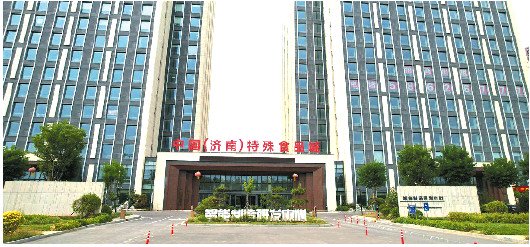
Core Viewpoint - Jiyang District has successfully developed its food and beverage industry into a key driver of regional economic growth, leveraging its traditional strengths and modern innovations to enhance its market presence and competitiveness on both national and international stages [2][5][10] Group 1: Industry Development - Jiyang District has established itself as a significant player in the national food industry, attracting over 160 well-known food companies, including Wangwang and Uni-President, which have contributed to a robust industrial cluster [2][3] - The district's food and beverage industry has evolved from a single-point development model to a collaborative cluster model, characterized by leading enterprises, supporting industries, and brand aggregation [2][4] - The region has seen a notable increase in production value, with 25 large-scale food and beverage enterprises achieving a total output value of 8.095 billion yuan, reflecting a year-on-year growth of 10.4% [8] Group 2: Technological Innovation - Jiyang District is embracing technological advancements, transitioning from traditional manufacturing to smart production through the introduction of automated production lines and digital management systems [6][7] - The implementation of smart production lines has significantly increased production efficiency while ensuring product quality, with some lines capable of producing tens of thousands of bottles per hour [6] - The district has fostered a culture of innovation, with numerous companies obtaining patents and achieving recognition for their technological advancements, thereby enhancing the overall competitiveness of the food industry [7] Group 3: Strategic Planning - Jiyang District is strategically positioning itself in the high-value special food sector, with initiatives such as the establishment of the China (Jinan) Special Medical Food City and the formation of a special food industry alliance [5] - The dual-engine strategy of combining traditional industries with future potential sectors aims to solidify the existing foundation while capturing new growth opportunities [5][10] Group 4: Government Support and Services - The local government has created a favorable business environment through consistent policies and support, which has encouraged long-term investments from major food companies [8][9] - Jiyang District has implemented a service-oriented approach to address the needs of enterprises, ensuring that businesses can focus on production without concerns about operational challenges [9][10] - The district promotes a culture that values and supports businesses, enhancing its attractiveness for both new and existing companies [10]
吉林市政府主要负责同志赴专精特新企业调研并开展安全生产检查
Sou Hu Cai Jing· 2025-09-11 03:24
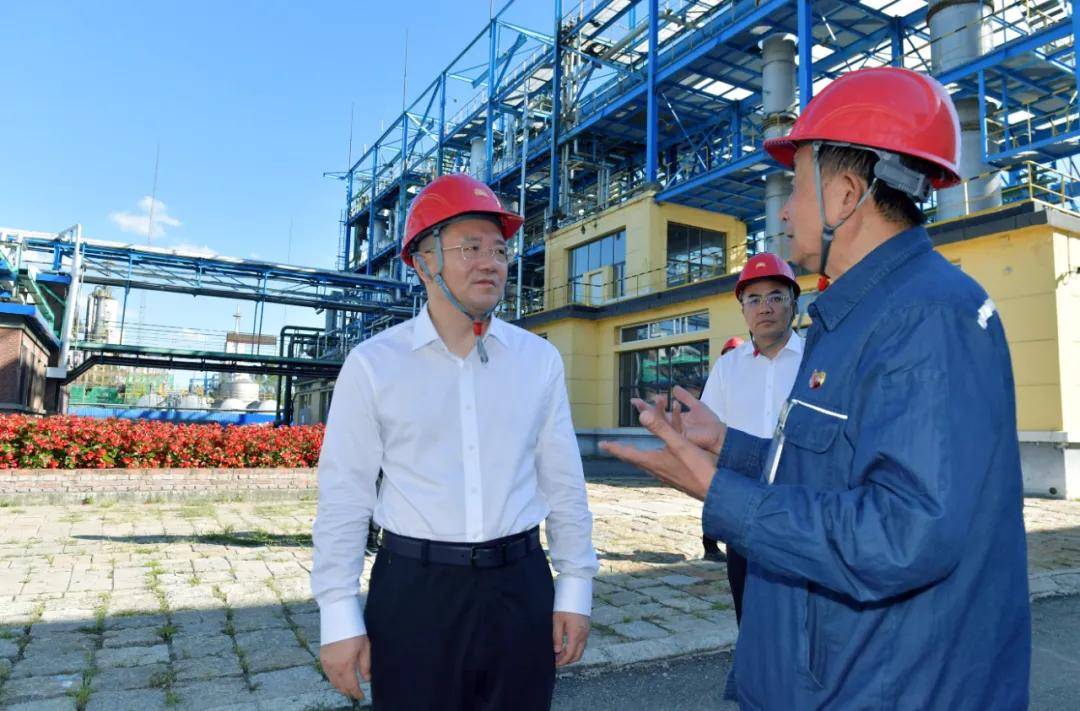
Group 1 - The mayor of Jilin City, Wang Ji, conducted research on key specialized and innovative enterprises, focusing on their operations and safety production [1][3] - Wang Ji visited the Songtai Chemical Co., Ltd., which produces 30,000 tons of 2-butanal annually, supplying products to Shandong, Zhejiang, and Jiangsu [3] - At Huatu Chemical (Jilin) Co., Ltd., which has a production capacity of 50,000 tons of automotive coatings and antifreeze, Wang Ji emphasized the importance of specialized innovation for small and medium-sized enterprises [5] Group 2 - Wang Ji highlighted the significance of increasing R&D investment and technological innovation to become "invisible champions" in the industry [5] - The mayor urged enterprises to enhance their core competitiveness by advancing digital transformation and updating equipment [5] - Local governments and relevant departments are encouraged to provide support for market development, talent services, and policy backing to create a favorable environment for high-quality enterprise development [5]
广西柳州:一座西南工业重镇的 “智变”转型
Zhong Guo Qing Nian Bao· 2025-09-07 15:18
Group 1: Strategic Partnerships and Collaborations - SAIC-GM-Wuling and Huawei have upgraded their strategic partnership to enhance cooperation in areas such as assisted driving, smart cockpits, and smart manufacturing [1] - The collaboration aims to develop new models equipped with Huawei's advanced intelligent technologies, promoting high-quality development in the automotive industry's intelligence and connectivity [1] Group 2: Digital Transformation in Traditional Manufacturing - Liuzhou is promoting the deep integration of artificial intelligence and manufacturing, with 435 small and medium-sized enterprises in sectors like automotive and steel undergoing digital transformation [2] - SAIC-GM-Wuling has been exploring key technologies in smart electric vehicles for 15 years, achieving significant innovations and receiving over 200 million yuan in technology funding [2] Group 3: Economic Impact and Government Support - Since 2021, Liuzhou has allocated over 100 million yuan in financial support for technological advancements in smart connected vehicles, resulting in economic benefits exceeding 47.8 billion yuan [3] - The automotive sales of SAIC-GM-Wuling have surpassed one million units this year, with plans to enhance core competitiveness through new energy technologies and smart manufacturing [3] Group 4: Advancements in Smart Manufacturing - Liugong Group is implementing a comprehensive smart manufacturing strategy, achieving a production capacity of 20,000 excavators annually with a 13-minute production cycle per unit [4] - The introduction of AI-driven platforms in steel production has enabled real-time cost tracking and settlement, contributing to high-quality development [3][4] Group 5: Growth of the AI Industry - Liuzhou's AI industry generated a value of 5.7 billion yuan in the first seven months of the year, marking a year-on-year growth of 23.7% [6] - The city plans to open over 100 demonstration application scenarios for emerging industries within five years, aiming to facilitate the integration of products and markets [6]