汽车电动化转型

Search documents
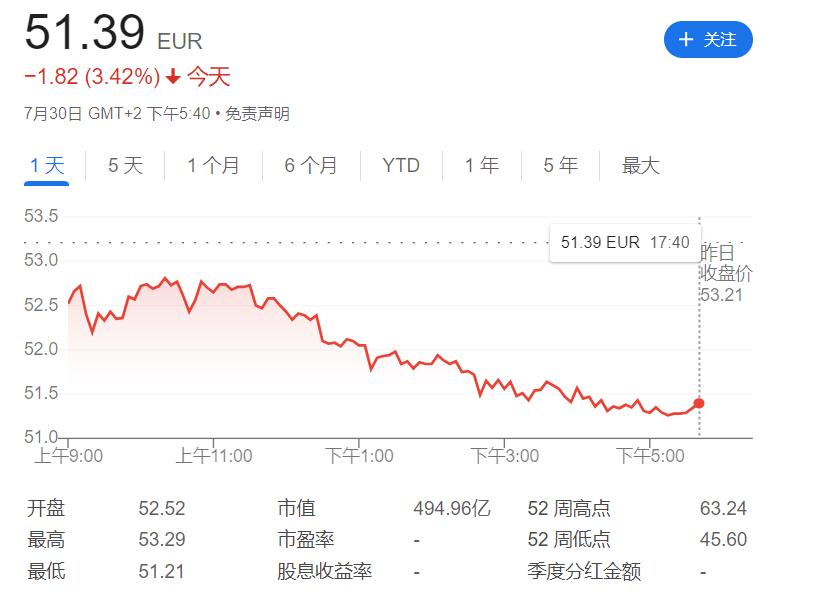
奔驰崩了,业绩新低利润暴跌68%,经销商转卖华为了
3 6 Ke· 2025-07-31 09:01
Core Viewpoint - Mercedes-Benz's stock price dropped over 3% in one night, with its market value falling below 50 billion euros, resulting in a loss of approximately 20 billion RMB due to disappointing financial results [1][3]. Financial Performance - In the first half of the year, Mercedes-Benz reported revenue of 66.377 billion euros, a year-on-year decline of 8% [4]. - The net profit for the same period was 2.688 billion euros, a staggering 55.8% decrease compared to the previous year [12]. - The second quarter saw revenue drop to 33.153 billion euros, marking a 9.8% year-on-year decline and the lowest quarterly revenue in four years [4][9]. Sales and Market Challenges - Global vehicle sales for Mercedes-Benz in the first half totaled 1.0763 million units, down 8% year-on-year, with electric vehicle sales declining by 14% [15]. - The Asian market contributed 23% of total revenue, but this was a decrease of 2.3 percentage points from the previous year, with revenue from Asia dropping 16.68% [7]. - The company faced significant sales declines across its major markets: Asia down 16%, Europe down 3%, and North America down 6% [21]. Strategic Adjustments - Mercedes-Benz is experiencing a retreat in its dealership network, with many 4S stores closing or being taken over by other brands, indicating a potential shift in market strategy [27][29]. - The company is implementing cost-cutting measures, including a plan to lay off 20,000 employees and relocate some production to lower-cost countries [31]. - Despite the challenges, Mercedes-Benz is still focusing on electric vehicle development, with plans to launch a new electric GLC model [37].

稳住下半年,沃尔沃选择彻底中国化
3 6 Ke· 2025-07-29 01:06
Core Viewpoint - The automotive market in China is undergoing intense competition and transformation, with traditional car manufacturers facing significant challenges and needing to adapt quickly to survive by implementing comprehensive solutions rather than short-term fixes [1][4]. Group 1: Market Dynamics - The automotive consumption environment has become less vibrant, leading to a fierce price war among manufacturers [1]. - Major global car brands, including Volkswagen, Toyota, and luxury brands like BMW, are feeling the pressure to adapt to the changing market landscape [1][4]. - The shift towards electric vehicles is critical, as companies that do not embrace this transition risk being marginalized in the Chinese market [4]. Group 2: Volvo's Strategy - Volvo has positioned itself as a "luxury new energy leader" and plans to launch seven key models covering various powertrains, including fuel, pure electric, and hybrid [6]. - The company has accelerated its new product launches in response to market pressures, with several models already introduced [6][8]. - Volvo's sales in China reached 70,298 units by June, with the XC60 being the primary contributor to its SUV market performance [14]. Group 3: Product Development and Challenges - The XC70 is highlighted as a crucial upcoming model for Volvo, aimed at revitalizing its product lineup and addressing market demands [9][11]. - The company is focusing on pricing strategies to compete effectively against local Chinese brands that have gained traction in the new energy vehicle sector [8][12]. - Volvo's ability to innovate and adapt its product offerings to meet local consumer preferences is essential for its success in the competitive landscape [11][14].

这家零部件“百年老店”为何要出售汽车业务,将带来怎样的影响?
Zhong Guo Qi Che Bao Wang· 2025-07-18 08:08
Core Viewpoint - Rheinmetall is planning to divest its automotive business as part of a strategic transformation, indicating a significant shift in the company's focus and operations [1][6]. Group 1: Business Performance and Challenges - The automotive components division has been experiencing continuous losses, with sales in the automotive power systems segment dropping to €1.543 billion in the first three quarters of 2024, reflecting a 3.8% year-on-year decline in profit [4]. - The automotive business, which accounts for approximately 20% of the company's total sales, has faced challenges in sales growth and profitability, with a profit margin of only 4.2%, which is not competitive within the industry [2][4]. - The shift towards electric vehicles has led to a shrinking market for traditional internal combustion engine components, prompting the company to reassess its strategic priorities [2][4]. Group 2: Strategic Decisions and Market Impact - Rheinmetall has received inquiries from potential buyers and is engaging in competitive discussions with multiple bidders regarding the sale of its automotive business [2][3]. - The divestiture is seen as a way to alleviate financial burdens and could potentially reshape the European automotive components industry landscape [3][5]. - The company has previously sold parts of its automotive components business, including the sale of large and small caliber piston operations in 2022 and 2024, respectively [2][4]. Group 3: Future Outlook and Industry Implications - The decision to divest the automotive business is viewed as a deep strategic adjustment driven by financial data, industry transformation, and market challenges, which may present both opportunities and uncertainties for the company [8]. - Regardless of the outcome of the sale, the company must continue to innovate and maintain a technological edge to adapt to the rapidly changing automotive market [7][8].

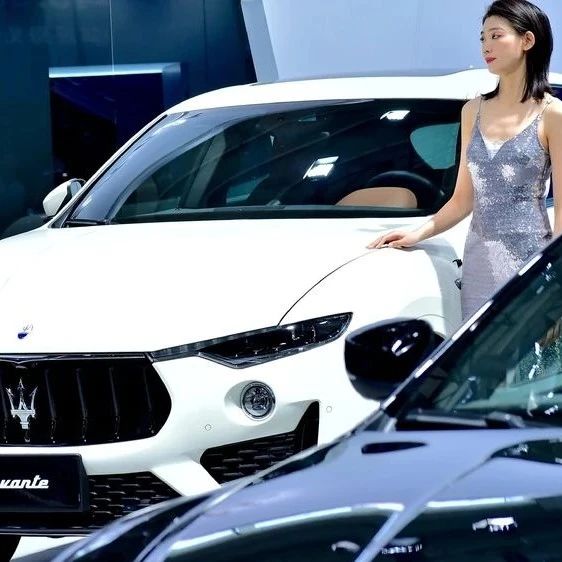
玛莎拉蒂为何沦落到被7次贱卖?
虎嗅APP· 2025-07-16 10:41
Core Viewpoint - Maserati is facing a significant decline in sales and brand value, leading to speculation about its potential sale by Stellantis, the parent company, as it struggles to maintain its position in the luxury automotive market [5][37][56]. Group 1: Historical Context - Maserati was once a prestigious Italian car brand, alongside Ferrari and Lamborghini, known for its romantic design and racing heritage [10][12]. - The brand has experienced multiple ownership changes and financial crises since its inception, including a significant acquisition by the Orsi family in 1937 and later by Citroën in the 1960s [13][18][25]. - Maserati was integrated into the Fiat Group in 1993, where it saw a revival under Ferrari's management, producing iconic models like the 3200 GT and MC12 [29][32]. Group 2: Current Market Position - Maserati entered the Chinese market in 2004, initially achieving decent sales, but its brand image suffered due to aggressive marketing strategies and the rise of micro-businesses [38][44]. - In 2017, Maserati's sales peaked at 14,498 units in China, accounting for about 30% of its global sales, but this was followed by a drastic decline [44]. - By 2024, Maserati's sales in China plummeted to 1,228 units, a 71% decrease year-on-year, highlighting a severe loss of market relevance [45][46]. Group 3: Brand Identity Challenges - Maserati's brand identity has become muddled, struggling to define its unique selling proposition amidst frequent ownership changes and market pressures [49][51]. - The brand's luxury image has been compromised, leading to comparisons with lower-tier brands, and it is now perceived as a less desirable option in the luxury segment [51][59]. - The current management under Stellantis is considering selling Maserati due to its ongoing financial losses and the need for a strategic overhaul [53][56]. Group 4: Future Outlook - The future of Maserati may hinge on a potential acquisition by a Chinese company, which could either seek to leverage the brand or its technology [57][58]. - A complete rebranding and product overhaul may be necessary for Maserati to regain its status in the luxury automotive market [57][59].
30多万买玛莎拉蒂,3亿中产沸腾了
36氪· 2025-07-16 10:19
Core Viewpoint - The luxury car market, particularly brands like Maserati, is facing significant challenges due to the shift towards electric vehicles and changing consumer perceptions of luxury, leading to drastic price reductions and declining sales figures [5][10][30]. Group 1: Maserati's Market Position - Maserati's recent price drop for the Grecale SUV, originally priced at 650,000 yuan, has seen discounts of over 280,000 yuan, with some dealers offering it for as low as 369,600 yuan [8][10]. - The brand's sales in China have plummeted, with 2024 projected sales at only 1,228 units, a 71% decline year-on-year, and a mere 384 units sold in the first five months of the year, down 44% [17][19]. - Maserati's global sales are also suffering, with a forecast of only 11,300 units sold in 2024, a 57% drop compared to previous years [19]. Group 2: Consumer Perception and Brand Image - The brand's association with micro-businesses has negatively impacted its luxury image, as many affluent consumers are reluctant to be linked with the micro-business label [25][26]. - Quality issues and frequent recalls have further tarnished Maserati's reputation, leading to a loss of consumer trust and a decline in brand prestige [27][28]. - The shift in consumer preferences towards more affordable luxury options has left Maserati struggling to maintain its market position [21][30]. Group 3: Competitive Landscape - Domestic brands like BYD and its luxury sub-brand Yangwang are emerging as strong competitors, with significant sales figures and a focus on electric vehicles [33][40]. - New entrants such as the Jianghuai-Huawei collaboration and Xiaomi's SU7 Ultra have quickly gained traction, with impressive pre-order numbers, indicating a shift in consumer interest away from traditional luxury brands [37][38]. - The overall luxury car market is experiencing a downturn, with major brands like Bentley, Rolls-Royce, and Ferrari also reporting declining sales, highlighting a broader industry challenge [30][31].

捷尼赛思中国CEO离职?官方暂无回应,韩系豪华车品牌在华发展再陷迷局
Mei Ri Jing Ji Xin Wen· 2025-07-14 13:24
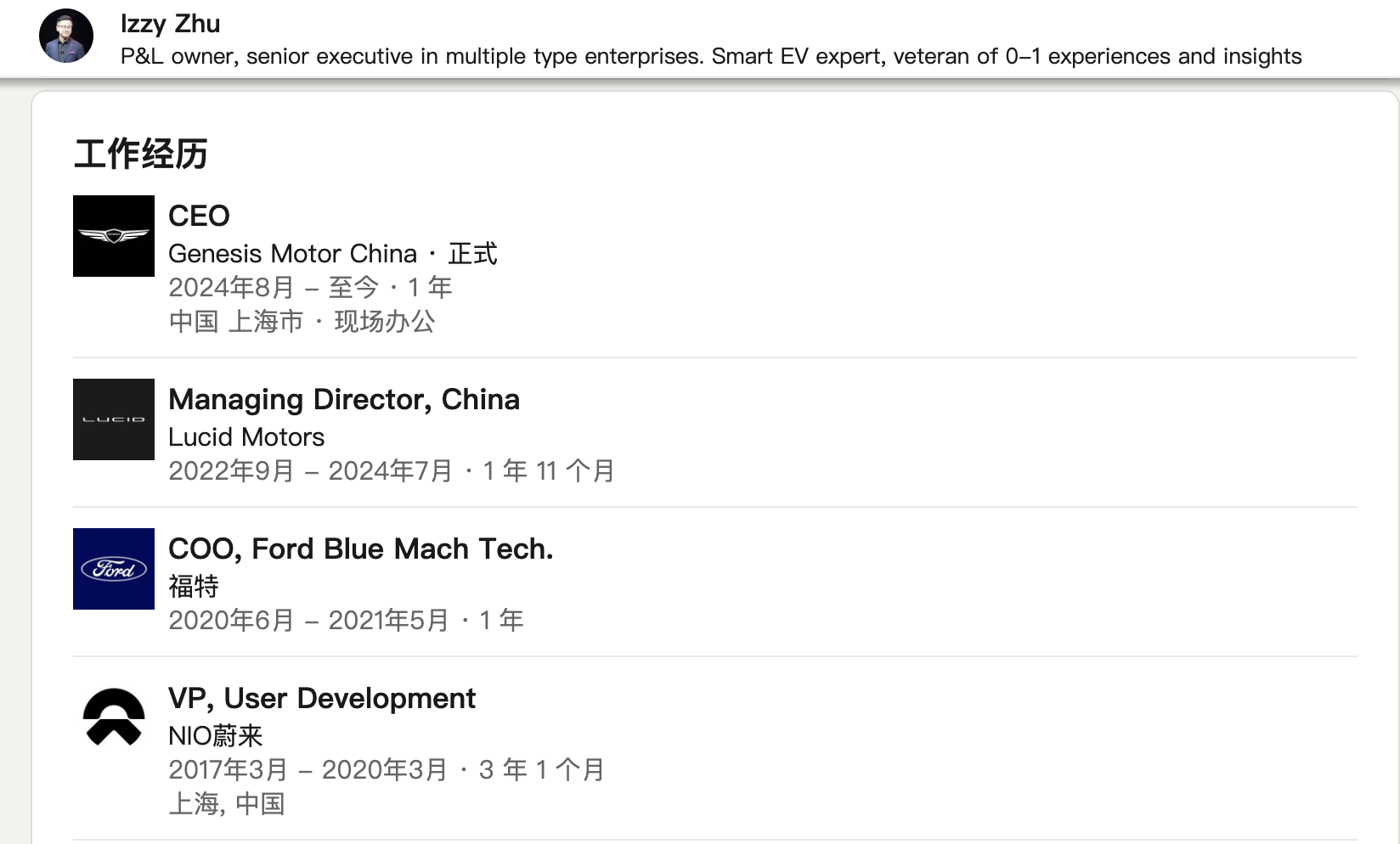
Core Viewpoint - The departure of Genesis China CEO Zhu Jiang highlights ongoing challenges for the luxury brand in the Chinese market, which has seen fluctuating sales and frequent executive changes since its re-entry in 2021 [1][3]. Group 1: Executive Changes - Zhu Jiang, the CEO of Genesis China, reportedly left the company at the end of June 2023, with no further updates shared on his social media since then [1]. - Zhu Jiang has a rich background in the automotive industry, having held senior positions at various international car manufacturers, including NIO and Lucid Motors, before joining Genesis [2]. - Genesis has experienced a series of leadership changes, with its previous CEO, He Ruisi, leaving in October 2023 after nearly four years, and a temporary Korean leader transitioning for nine months before Zhu Jiang's appointment [2]. Group 2: Market Performance - Genesis has struggled in the Chinese market, with sales figures showing significant volatility: 367 units in 2021, 1,457 in 2022, 1,558 in 2023, and a projected decline to 1,328 units in 2024, representing a 24.8% year-on-year drop [3]. - The brand's market entry attempts have been met with challenges, leading to a third re-entry in 2021 after two previous exits due to poor performance [2]. Group 3: Strategic Initiatives - In response to its market challenges, Genesis announced a plan to localize the production of its new energy vehicles by March 2025, aiming to reduce manufacturing costs and leverage local supply chains [3]. - The brand's current lineup includes six models, predominantly fuel-powered, with only two electric models, GV60 and pure electric G80, indicating a lag in adapting to the rapidly electrifying luxury car market in China [4]. - Genesis has introduced various purchase incentives to stimulate sales, although these promotions have raised concerns about inventory clearance and the brand's future in China [7]. Group 4: Future Outlook - Genesis aims to transition to 100% electric vehicles by 2030, with plans to launch eight new electric models starting in 2025, but faces significant competition from both domestic brands and traditional luxury automakers [7]. - The success of Genesis in the competitive Chinese market will depend on the effectiveness of its localization and electrification strategies [7].
【环球问策—链博系列】赛迪专家张业佳:趋势未变,产业界需要理性面对新能源汽车“过渡时间”
Huan Qiu Wang· 2025-07-14 02:21
Core Viewpoint - The development of the new energy vehicle (NEV) industry in China is experiencing fluctuations due to technological upgrades and changes in overseas market demand, but the long-term trend towards electrification remains unchanged [2][3]. Group 1: Industry Trends - The upcoming China International Supply Chain Promotion Expo (Chain Expo) is expected to be a significant platform for promoting the development of the NEV supply chain, attracting over 650 companies from 75 countries, with more than 65% being global top 500 companies [1]. - The NEV market is influenced by short-term factors such as the temporary recovery of fuel vehicles in some regions of Europe and the U.S., driven by policy adjustments and energy price fluctuations [2][3]. - Emerging markets in Southeast Asia, Latin America, and Africa are identified as new growth engines for the NEV sector, with low penetration rates and improving infrastructure [3]. Group 2: Supply Chain Dynamics - China's NEV supply chain plays a dual role as a "stabilizer" and "accelerator," ensuring stable growth trends through domestic production and innovation [3][4]. - The supply chain includes upstream resource allocation for materials like lithium, cobalt, and nickel, and midstream production of key components such as batteries and electric drive systems, with major players like CATL and BYD leading the market [4]. - The supply chain's high responsiveness and flexible manufacturing capabilities allow it to adapt quickly to evolving demands for range, safety, and intelligence in vehicles [4]. Group 3: Future Development and Challenges - The NEV industry needs to shift from "scale expansion" to "quality improvement," focusing on sustainable growth through policy guidance and market mechanisms [5]. - The transition to solid-state batteries is anticipated to revolutionize the industry, with significant advantages in energy density, safety, and charging speed, although mass production is not expected until 2028 [6][7]. - Companies are encouraged to optimize existing liquid battery technologies while preparing for solid-state battery development, balancing short-term competitiveness with long-term technological reserves [7].
中国瞄准EV经济圈的最后一块拼图
日经中文网· 2025-07-01 03:04
Core Viewpoint - The article emphasizes that China's automotive industry is evolving to create a "wealth triangle" consisting of vehicle manufacturing, software, and financial services, particularly insurance and payment systems, which could significantly impact the global automotive economy [1][5]. Group 1: Automotive Industry Developments - China has become the world's largest automobile exporter, surpassing Japan, and is nearing top-tier competitiveness in vehicle manufacturing and software [1]. - BYD, a leading Chinese electric vehicle (EV) manufacturer, plans to enter the automotive insurance market in 2024, marking a significant step in its long-term strategy [1]. - Other Chinese automakers are also announcing plans to enter the automotive insurance sector, leveraging their domestic experience to expand into EV-exporting countries [1]. Group 2: EV Insurance Market Dynamics - The share of EVs in new car sales in China has exceeded 40%, necessitating a redesign of insurance products to accommodate the unique characteristics of EVs [2]. - BYD's insurance subsidiary reported a net loss of 169 million RMB in its first year, with net premium income around 1.3 billion RMB, indicating challenges in achieving profitability [2]. - The combined loss ratio for the insurance business exceeded 300%, highlighting the need for a reassessment of risk management and pricing strategies [2]. Group 3: Challenges and Opportunities - EVs have a 30% higher accident rate compared to traditional fuel vehicles, with the usage of insurance claims due to faults being more than double that of fuel vehicles [3]. - The ability of manufacturers to access driving data from EVs presents a competitive advantage over traditional insurers, potentially reshaping the insurance landscape [3]. - The current losses in the EV insurance sector could provide an opportunity for industry restructuring and innovation [3]. Group 4: Global Implications - The entry of Chinese companies like BYD into the insurance market poses a threat to Japan's insurance industry, which heavily relies on automotive insurance for revenue [4]. - The automotive insurance sector in Japan accounts for about 50% of net premium income for large enterprises, making it vulnerable to increased competition from Chinese firms [4]. - The construction of a "golden triangle" encompassing vehicle manufacturing, software, and financial services by China could have far-reaching implications beyond current perceptions [5].

“刹停”全面电动化,奥迪中国回应:明年后继续投放燃油车
Bei Jing Shang Bao· 2025-06-19 08:25
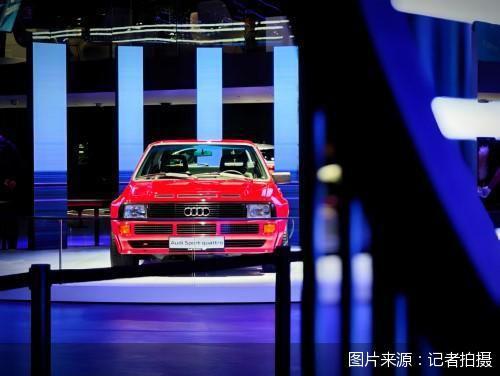
Core Viewpoint - Audi has retracted its plan to stop the development and sale of internal combustion engine (ICE) vehicles by 2033, indicating a shift towards a more flexible product strategy that includes ICE, plug-in hybrid, and electric vehicles [2][3] Group 1: Audi's Strategy - Audi China emphasizes its commitment to electric mobility while maintaining the appeal of ICE models beyond 2026, reflecting the need for a diverse product lineup due to market volatility [2] - The global CEO of Audi confirmed that the company will continue to launch new ICE and plug-in hybrid models from 2024 to 2026, enhancing flexibility for the next decade [2][3] - Audi plans to lead the development of large vehicle platforms and software systems within the Volkswagen Group, covering all models from the A5 level upwards [2] Group 2: Market Context - The initial plan for Audi to release its last ICE vehicles in 2026 and achieve full electrification by 2033 has been adjusted due to uneven market development and varying rates of electric vehicle adoption globally [3] - Other automakers, such as Volvo and Mercedes-Benz, have also revised their electrification timelines, opting for a dual approach of maintaining ICE alongside electric vehicles [3] - Industry experts highlight the high upfront costs of electrification and the ongoing profitability of ICE vehicles, prompting automakers to strategically adjust their plans to ensure steady growth [3] Group 3: Financial Performance - For the fiscal year 2024, Audi Group reported revenues of €64.532 billion, a decrease of 7.6% year-on-year, with operating profit dropping to €3.903 billion, down by €2.377 billion [4] - Audi China acknowledges significant differences in global market development, noting that while North America has delayed its "turning point," the Chinese market has already surpassed it [4] Group 4: Electric Vehicle Initiatives - In China, Audi is accelerating its electrification efforts and collaborating with local supply chains to enhance competitiveness [5] - The Q6L e-tron family, based on the PPE luxury electric platform, has officially begun pre-sales in the Chinese market, marking a significant step in Audi's electric vehicle strategy [5] - Audi's first mass-produced model, the AUDI E5 Sportback, was unveiled at the Shanghai International Auto Show, showcasing the brand's commitment to electric mobility [5]
裁员计划逼近 10 万,海外车企集中 “瘦身”
创业邦· 2025-05-29 03:09
Core Viewpoint - The global automotive industry is facing significant challenges, including a slowdown in electrification trends, shrinking demand, intensified market competition, and an unstable international trade environment. In response, many overseas automotive brands are implementing layoffs and business contractions to reduce costs and improve efficiency while awaiting a new cycle of industry expansion [4][9]. Group 1: Layoff Plans and Reasons - Major overseas automotive companies and suppliers have announced layoffs affecting nearly 100,000 employees across key markets such as China, North America, Europe, and Japan [4]. - Volkswagen plans to lay off 35,000 employees by 2030, with 7,000 already laid off, primarily in Germany, to reduce costs and address competitive pressures [5][6]. - Ford is set to cut 4,000 jobs in Europe and 350 positions in its connected vehicle software team due to market tensions and cost-cutting measures [8]. - General Motors will lay off 2,200 employees across various locations in response to U.S. tariffs and trade changes [5]. - Nissan plans to cut 20,000 jobs over two rounds due to weak sales and trade uncertainties, with a significant portion from manufacturing [5][7]. Group 2: Financial Implications - Volkswagen's CFO reported a 37% decline in operating profit to €2.9 billion despite a slight increase in revenue, highlighting ongoing financial challenges [6]. - Volvo aims to cut costs by 18 billion Swedish Krona (approximately 136 billion RMB), primarily affecting white-collar positions [7]. - Bosch announced a global layoff of 5,500 employees, including 3,800 in Germany, due to slow electrification trends [8]. Group 3: Market Dynamics - The automotive industry is undergoing a deep adjustment, with layoffs reflecting a phase of contraction following high investments in electrification amid rising competition from Chinese brands [9]. - Chinese automotive brands, such as BYD and Geely, continue to expand, contrasting with the contraction seen in many overseas companies [9].