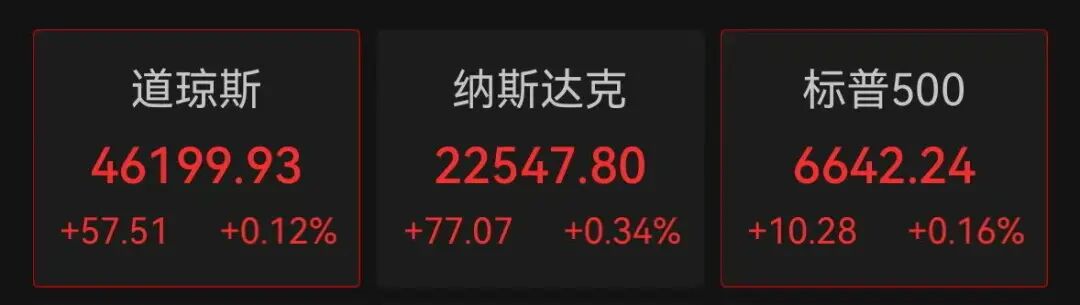
港股市场

Search documents
港股速报 | 港股低开 轩竹生物今起招股
Sou Hu Cai Jing· 2025-10-06 02:09
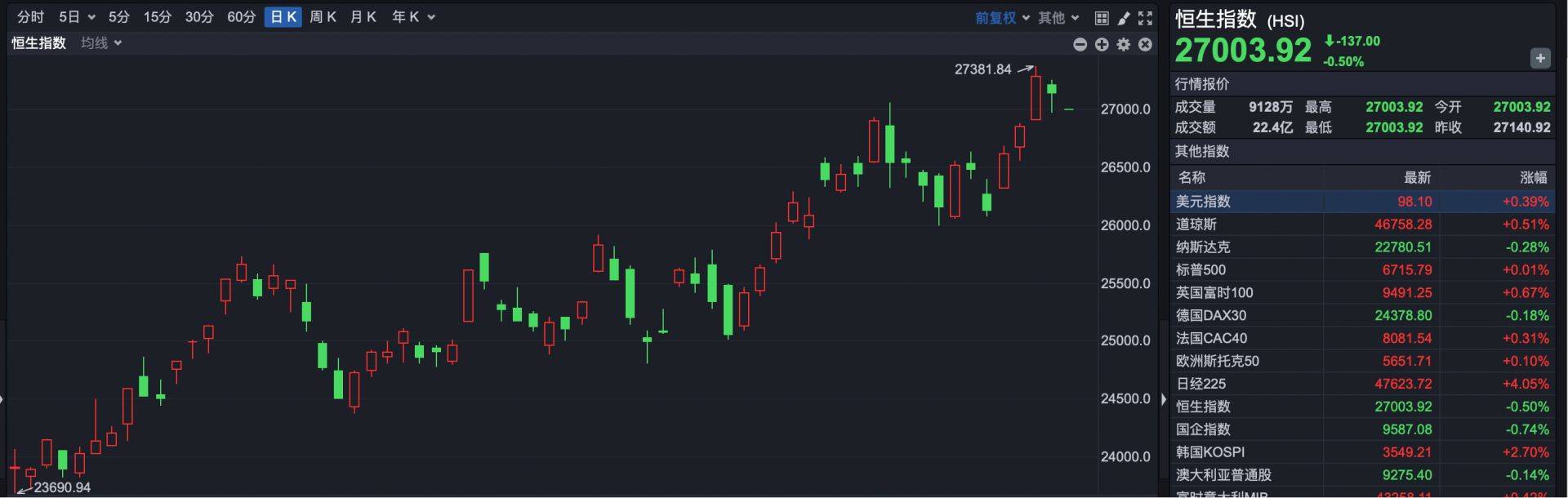
Market Overview - The Hong Kong stock market opened slightly lower on October 6, with the Hang Seng Index at 27,003 points, down 137 points, a decline of 0.50% [1] - The Hang Seng Technology Index reported 6,548.80 points, down 74.05 points, a decrease of 1.12% [4] New IPO - Xuan Bamboo Biotechnology-B (02575.HK) is conducting an IPO from October 6 to October 10, planning to globally offer 67.335 million shares, with 10% allocated for Hong Kong and 90% for international sales, plus a 15% over-allotment option, at a price of HKD 11.6 per share [3] - The stock is expected to start trading on the Hong Kong Stock Exchange on October 15 [3] - Xuan Bamboo is an innovative Chinese biopharmaceutical company with over ten drug assets in active development, targeting digestive diseases, tumors, and non-alcoholic fatty liver disease (NASH) [3] Sector Performance - Technology stocks generally declined, with NetEase opening down over 2% but later recovering; Bilibili, Lenovo, Alibaba, JD.com, and Baidu all fell over 1%, while Tencent saw a rise of over 1% [3] - Gold stocks experienced gains, with China Silver Group up over 10% and Zifeng Gold up over 5% [3] - Semiconductor stocks were active, with Hongguang Semiconductor rising over 1% [3] - Automotive stocks weakened, with Xpeng Motors down over 4% [3] Market Sentiment and Forecast - According to Industrial Securities, the current Hong Kong market is driven by three favorable factors: rising policy expectations, bottoming earnings recovery, and a loose liquidity environment, which may enhance market risk appetite [5] - The Federal Reserve has entered a rate-cutting cycle, with expectations for further cuts in October, creating a more favorable external environment for Hong Kong stocks [5] - Guosen Securities noted that the Fed's dovish stance improves overseas liquidity, and the unusual rise in Hong Kong stocks amid earnings downgrades in August and September indicates a systematic change in risk premium, opening up further upside potential for the market [5] - The weighted risk premium assessment has led to an upward revision of the 2025 Hang Seng Index target to 29,000 points [5]

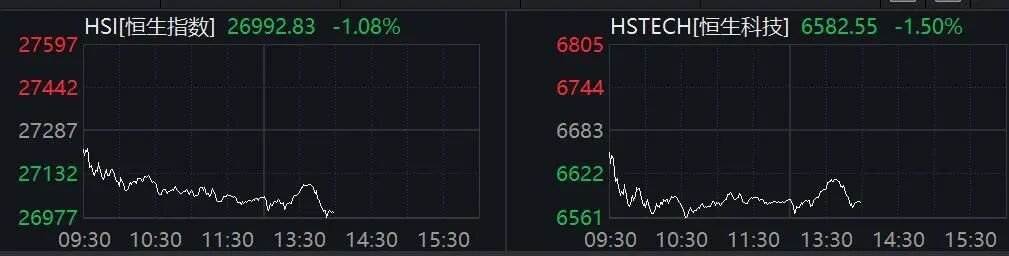
午后,港股跌幅扩大,小米集团跌近2%
Zheng Quan Shi Bao· 2025-10-03 06:57
Market Overview - The Hong Kong stock market experienced a decline, with the Hang Seng Index dropping over 1% and the Hang Seng Tech Index falling more than 1.7% [1][4]. Economic Analysis - According to a report from CMB International, the Hong Kong stock market continued its fluctuating upward trend in September, supported by the resumption of US-China negotiations and expectations of overseas interest rate cuts. The technology sector's rotation also provided significant support to the market [2]. - The resumption of US-China trade talks has led to increased market optimism regarding progress on key issues such as tariff reductions and export controls. Additionally, the stability of macroeconomic policies in mainland China, particularly the "stabilizing growth" measures, has provided fundamental support for the Hong Kong stock market [2]. - The report anticipates a temporary "off-season" for the Hong Kong market due to the National Day and Mid-Autumn Festival holidays, compounded by uncertainties surrounding the US government's short-term financing bill. This could amplify external disturbances [2]. - There remains a divergence in market expectations regarding the timing and extent of potential interest rate cuts by the Federal Reserve, which may lead to continued market volatility in the short term. Some quality sectors in the Hong Kong market are approaching historical high valuations, indicating potential profit-taking pressure [2]. Company Specifics - Xiaomi Group's stock fell nearly 2% during the trading session [4][6]. - A recent incident involving a Xiaomi vehicle reportedly driving away without human operation has gained significant attention on social media. The company responded that the vehicle's movement was due to mobile phone operation, although the car owner disputed this claim, stating that it was unlikely to have been a result of accidental phone interaction [5].

博时基金王萌:优质资产集聚,港股市场投资机会丰富
Shang Hai Zheng Quan Bao· 2025-09-28 15:12
Core Viewpoint - The trend of net inflow of southbound funds into Hong Kong stocks is expected to continue long-term, although the intensity and pace may fluctuate due to market conditions [1] Group 1: Southbound Funds and Market Dynamics - Professional institutional investors in southbound funds provide liquidity support and enhance the vitality of sectors like technology and innovative pharmaceuticals [1] - The listing of high-quality A-share companies in Hong Kong increases the diversity of listed companies, attracting long-term international capital and enhancing mainland investors' willingness to allocate to Hong Kong stocks [1] - The initial high attention and trading enthusiasm for new listings can boost market activity, creating a positive cycle of liquidity recovery, valuation rebound, and improved investment sentiment [1] Group 2: Sector Performance and Drivers - The technology sector has shown strong performance, driven by the demand for high-end AI servers and GPUs due to the requirements of AI model training and inference [2] - Internet giants with strong R&D capabilities are competing to develop large models, playing dual roles as "computing power providers" and "model developers" in the AI wave [2] - AI applications are creating new business models and optimizing existing operations across various industries, including advertising, smart electric vehicles, and healthcare [2] Group 3: Innovative Pharmaceuticals - The innovative pharmaceutical sector has surged due to three main drivers: increasing medical spending from an aging population, policy changes accelerating drug approvals, and the introduction of a new medical insurance directory to support high-quality innovative drugs [2] - The approval timeline for innovative drugs has been shortened from 60 to 30 working days, facilitating faster market entry [2] Group 4: Global Liquidity and Capital Flows - With the Federal Reserve entering a rate-cutting cycle, global liquidity is improving, and lower funding costs may attract international capital to Hong Kong stocks, particularly benefiting the AI and internet sectors [3] - A low-interest-rate environment is also favorable for commodity prices, potentially benefiting cyclical sectors [3]
重磅来了!坚定看好A股市场
中国基金报· 2025-09-28 13:47
Core Viewpoint - The article emphasizes a positive outlook for the A-share market in the fourth quarter, driven by strong economic fundamentals and a focus on new productivity sectors such as technology and "anti-involution" strategies [2][3]. Group 1: Market Performance and Drivers - The A-share market has shown a "slow bull" trend, rising from around 3300 to above 3800 points this year, with sectors like innovative drugs, humanoid robots, and computing power leading the way [2]. - The strong performance of the A-share market since April is attributed to multiple supportive factors, including favorable policies, industrial advancements, and increased capital participation [8][19]. - Key drivers of the current market rally include systematic improvements in innovation capabilities, strong policy support, and the trend of technology companies expanding globally [19][20]. Group 2: Investment Focus and Sector Trends - The investment focus for the fourth quarter includes technology growth sectors and "anti-involution" strategies, reflecting a shift of capital towards industries supported by national strategies [21][22]. - The structural differentiation in market styles indicates a transition from traditional growth models to sectors with clear industrial trends, particularly in hard technology fields like AI and semiconductors [22][23]. - The article suggests that the market is likely to see a new round of main rising trends, with a focus on policy and industrial developments [24][25]. Group 3: Future Market Outlook - The economic fundamentals in China exhibit strong resilience, and the market is expected to maintain upward potential, particularly in new productivity sectors like AI [25][26]. - The fourth quarter is anticipated to witness a more balanced market style, with growth and value sectors both receiving attention from investors [28][29]. - The article highlights the importance of monitoring policy developments and industry progress, particularly in the context of the "14th Five-Year Plan" and its implications for investment opportunities [27][30]. Group 4: Hong Kong Market Insights - The Hong Kong market has shown a strong upward trend this year, outperforming major global indices, and is expected to continue benefiting from favorable liquidity conditions and asset revaluation [34][35]. - Key sectors to watch in the Hong Kong market include technology, healthcare, and consumer services, which are poised for recovery and growth [36][37]. - The article notes that the increasing number of A-share companies listing in Hong Kong will enhance liquidity and investment opportunities in the region [37][38].

港股市场震荡调整,关注AI产业投资机遇
Sou Hu Cai Jing· 2025-09-23 23:35
Core Viewpoint - The Hong Kong stock market is experiencing fluctuations, with major indices showing a trend of decline after an initial rise, but the losses narrowed towards the end of the trading session. The market is expected to maintain a trend of gradual upward movement in the future [1] Group 1: Market Liquidity and Fund Flows - The liquidity in the Hong Kong stock market has significantly increased this year, with the scale of refinancing doubling compared to last year [1] - Cumulative net inflows from southbound funds have exceeded 1.1 trillion Hong Kong dollars [1] Group 2: Economic Outlook and Sector Focus - Multiple institutions believe that a potential interest rate cut by the Federal Reserve will release more accommodative liquidity into the market [1] - The AI industry remains a core focus for the Hong Kong stock market, with the Hang Seng Technology sector showing significant potential [1]
最新资本市场报告:今年A股市场将稳步成长
Yang Zi Wan Bao Wang· 2025-09-23 11:49
Group 1 - The global IPO market is slowing down entering the third quarter, with the financing scale of the top ten global IPOs expected to be lower compared to the same period last year [1] - Hong Kong Stock Exchange is projected to maintain its position as the global leader in IPO financing due to six large IPOs during the period [1] - The A-share market in China is showing steady growth in new stock numbers and financing amounts, with expectations for this trend to continue until the end of the year, driven by government support for technology and innovation sectors [1] Group 2 - It is anticipated that 78 new stocks will be listed in the mainland A-share market by September 30, 2025, raising 77.1 billion RMB, marking a 13% increase in the number of new stocks and a 61% increase in financing compared to the same period last year [1] - The ChiNext board leads in the number of new stocks, while the Shanghai main board has the highest total financing among various boards, with 25 new stocks expected to raise 45.4 billion RMB [1] - In Hong Kong, 66 new stocks are expected to be listed, raising 182.3 billion HKD, a 47% increase in the number of new stocks and a 228% increase in financing compared to the same period last year [2]
沪指险守3800!高盛:只有这一种情况能终结牛市行情
天天基金网· 2025-09-23 10:28
Group 1 - The core viewpoint of the article highlights the recent significant market correction, with the Shanghai Composite Index falling below 3800, and a notable decline in the brokerage sector, indicating a bearish sentiment in the market [2]. - Goldman Sachs suggests that the end of the bull market in China's stock market is typically not due to high valuations but rather sudden policy shocks, and unless there is a clear speculative bubble, the likelihood of policy actively suppressing the market is low [3][8]. - The article discusses the reasons behind the recent rise in the Chinese stock market, including expectations of economic recovery and advancements in AI, as well as improved Sino-U.S. relations and a rebound in Hong Kong IPOs [5]. Group 2 - The current bull market in China is characterized as different from other markets, with the Chinese stock market still below its 2021 highs, suggesting room for valuation increases [6]. - The foundation for a "slow bull" market in A-shares appears stronger than ever, driven by market reforms, the introduction of long-term capital, and stricter leverage regulations [7]. - Historical analysis indicates that valuation changes have been the primary driver of returns in bull markets, contributing approximately 80% of realized gains, with current valuations still below historical bull market peaks [7]. Group 3 - Goldman Sachs has developed a new "stock market policy barometer" to monitor policy risks, which currently indicates low levels of policy tightening risk for the stock market [8]. - There is significant potential for incremental capital inflow into the Chinese stock market, as household asset allocation is heavily skewed towards real estate and cash, with only 11% in stocks [9][10]. - The article notes that since 2020, households have accumulated substantial savings, with over 80 trillion yuan in new deposits, and a shift in asset allocation could lead to trillions flowing into the stock market [10]. Group 4 - The article emphasizes the importance of the brokerage sector as a leverage amplifier for the market, suggesting that investors should consider accumulating shares during market corrections to benefit from future rallies [12].

港股市场策略周报-20250923
Zhe Shang Guo Ji Jin Rong Kong Gu· 2025-09-23 03:07
Market Performance Review - The Hong Kong stock market experienced a slight increase this week, with the Hang Seng Index rising by 0.43%, the Hang Seng Composite Index by 0.59%, and the Hang Seng Tech Index by 5.09%, driven primarily by technology stocks [3][13] - The performance of major industry sectors was mixed, with consumer discretionary and information technology sectors leading the gains, reflecting the strong performance of the Hang Seng Tech Index [3][13] - The financial and real estate sectors saw declines of approximately 3% each, while other sectors such as materials and utilities also experienced declines of over 2% [3][13] Valuation Levels - As of the end of this week, the 5-year PE (TTM) valuation percentile for the Hang Seng Composite Index stands at 82.82%, indicating that the valuation level is above the 5-year average [3] Buyback Statistics - The total buyback amount for the week was HKD 3.89 billion, remaining stable compared to the previous week's HKD 3.81 billion [27] - Tencent Holdings (0700.HK) led the buybacks with an amount of HKD 2.75 billion, followed by HSBC Holdings (0005.HK) with HKD 640 million, and Hang Seng Bank (0011.HK) with HKD 100 million [27][30] Southbound Fund Flow - The top net buy companies this week included Alibaba (9988.HK) with a net buy amount of HKD 22.25 billion, BeiGene (6160.HK) with HKD 2.02 billion, and Meituan (3690.HK) with HKD 1.66 billion [34] - The top net sell companies included Xiaomi Group (1810.HK) with a net sell amount of HKD 1.95 billion, Tencent Holdings (0700.HK) with HKD 1.29 billion, and Great Wall Motor (2333.HK) with HKD 768 million [35] Macroeconomic Environment - The overall economic activity data for August continued to weaken compared to the previous month, influenced by high base effects, internal competition, the decline of national subsidies, and cooling real estate activity [44] - The National Bureau of Statistics reported that fixed asset investment from January to August reached CNY 3.26 trillion, a year-on-year increase of 0.5%, while real estate development investment decreased by 12.9% [39][44] - The macro policies aimed at stabilizing growth and promoting consumption are still being advanced, with expectations of further monetary easing from the Federal Reserve [44] Sector Outlook - The report favors sectors that are relatively prosperous and benefit from policy support, including automotive, new consumption, innovative pharmaceuticals, and technology [3][44] - Low-valuation state-owned enterprises that are stable in performance and stock price are also seen as favorable, along with local Hong Kong banks, telecommunications, and utility dividend stocks that are relatively independent and benefit from the interest rate cut cycle [3][44]
胡捷:美联储再次进入宽松周期,对全球资产都是利好
Feng Huang Wang Cai Jing· 2025-09-21 04:27
Core Insights - The Federal Reserve's entry into a period of monetary easing is generally beneficial for global financial assets, leading to increased liquidity and price support in the market [1] - The U.S. stock market is expected to experience enhanced long-term liquidity as a result of this easing [1] - Other markets, such as A-shares and Hong Kong stocks, are also anticipated to be positively influenced by the influx of capital [1] - A more accommodative liquidity environment is encouraging investors worldwide to allocate more funds into investment markets [1]
热门中概股集体上涨 蔚来涨3% 小鹏京东涨1.7% 黄金拉升
2 1 Shi Ji Jing Ji Bao Dao· 2025-09-19 15:59
Group 1: Apple - Apple shares rose over 1.7% following Morgan Stanley's target price increase from $255 to $280 [2] - The domestic launch of the iPhone 17 on September 19 was highly successful, with significant demand observed [2] - Popular models included the 256GB silver and orange iPhone Pro Max, with scalpers willing to pay a premium of 400 to 500 yuan for them [2] Group 2: Tesla - Tesla shares increased nearly 3% after Baird upgraded its stock rating to "outperform" [4] - Baird raised Tesla's target price from $320 to $548, citing the company's potential role in the upcoming "physical AI" era [4] Group 3: Chinese Tech Stocks - Alibaba shares rose by 1.31%, while JD.com saw an increase of over 1.6%, with JD's beauty segment expected to achieve double-digit growth in the first half of 2025 [6] - NIO's stock rose nearly 3% ahead of its 2025 NIO Day event, where it will unveil a special edition of its ET9 flagship sedan and the third-generation ES8 SUV [8] - XPeng's shares increased over 1.7%, reporting over 24,702 vehicle deliveries in 46 countries from January to August 2025, a year-on-year growth of over 137% [9] Group 4: Autonomous Driving and AI - Pony.ai shares surged nearly 8% after the CFO announced expectations to achieve key profitability targets by early 2026 [10] - Pony.ai plans to launch 1,000 autonomous taxis globally by the end of the year [10] Group 5: Gold Market - Gold prices rose, with spot gold reaching $3,670 per ounce, an increase of 0.85% [11] Group 6: Federal Reserve Rate Cut - The Federal Reserve announced a 25 basis point rate cut, lowering the target range for the federal funds rate to 4.00%-4.25% [13] - This rate cut is expected to positively impact Chinese assets, with institutions suggesting a focus on A-shares and H-shares [15][16] - The improved liquidity environment is seen as a key reason for optimism regarding Chinese assets [17]