
能源结构转型

Search documents
报告:未来十年中国能源结构呈“煤减、油气稳、非化石升”特征
Zhong Guo Xin Wen Wang· 2025-12-11 12:14
2025国际能源发展高峰论坛11日在北京召开。开幕式上发布的《2060世界和中国能源展望报告(2025 版)》指出,未来十年,中国能源消费结构将呈现"煤减、油气稳、非化石升"的特征,也即煤炭占比不 断下降,油气占比总体保持稳定,非化石能源占比持续提升。 就天然气而言,报告预计天然气在补位煤炭退出、支撑新型电力系统中扮演关键角色。未来10年,天然 气需求保持较快增长,新增需求约2000亿立方米。2035年至2040年进入峰值平台期,需求规模约6200至 6500亿立方米,并在远期保持约5000亿立方米的较高水平。 报告提到,如技术突破推升国产气增长空间,跨境能源贸易合作更趋紧密,中国用气需求增长潜能将进 一步释放,天然气需求仍有望在2040年达到7000亿立方米峰值。 (责任编辑:朱赫) 中国石油集团经济技术研究院副院长吴谋远发布该报告时指出,到2035年中国能源领域将初步形成"三 足鼎立"格局,油气需求占一次消费的比超过25%。到2060年,预计整个能源结构将更加多元均衡,而 且非化石能源将取代化石能源,成为中国能源消费主体。 报告指出,石油需求加速转向化工品、新材料制造领域,成为支撑能源转型关键原料。到20 ...
中国风电纤维织物行业发展深度研究与投资前景分析报告(2025-2032年)
Sou Hu Cai Jing· 2025-12-10 05:13
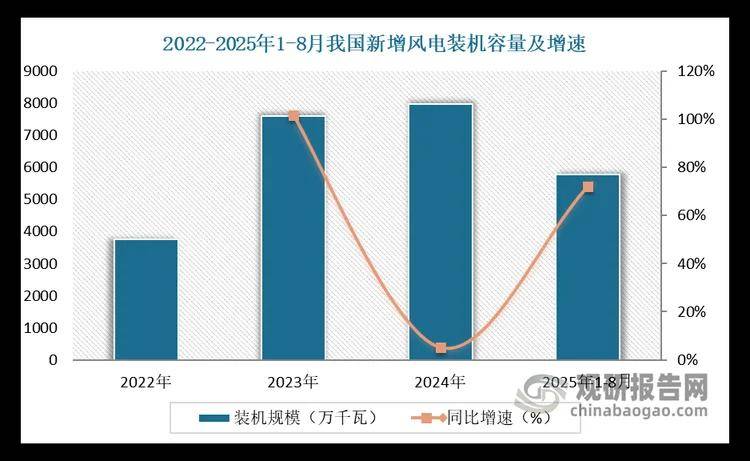
Group 1 - The wind power market is experiencing rapid growth, leading to increased demand for wind power fiber fabrics, which are essential materials in the manufacturing of wind turbine blades [1][5] - As of August 2025, China's installed wind power capacity reached 579 million kilowatts, a year-on-year increase of 22.1%, with new installations in the first eight months of 2025 growing by 72.1% [1] - The "Beijing Wind Energy Declaration 2.0" sets ambitious targets for wind power capacity, aiming for an annual increase of no less than 120 million kilowatts from 2025 onwards, with a cumulative target of 1.3 billion kilowatts by 2030 [5] Group 2 - The offshore wind power market is gaining momentum, creating new demand for wind power fiber fabrics due to its unique operational conditions [6][10] - Offshore wind power has significant advantages, including an equivalent full-load hour of over 4,000 hours and resource reserves three times that of onshore, which positions it as a core growth area for the wind power industry [6] - By 2024, China's offshore wind power capacity is expected to reach 43.31 million kilowatts, with new installations projected to be 5.4 GW in 2024 and 15 GW by 2027 [6][10] Group 3 - The trend of larger wind turbines is driving the demand for high-end wind power fiber fabrics, as larger blades require materials with superior strength and fatigue resistance [11][13] - The diameter of mainstream onshore wind turbine rotors in China has reached 193 meters, while offshore turbine blades have exceeded 153 meters in length [11] - Carbon fiber fabrics are increasingly preferred over traditional glass fiber due to their lower density (30%-35% lighter) and higher tensile modulus (3-8 times greater), which allows for a weight reduction of over 20% in blade manufacturing [13][15] Group 4 - The wind power fiber fabric market is characterized by high concentration, with leading companies like Zhenhua Co., Taishan Glass Fiber, and Hongfa New Materials dominating the market [18][19] - Zhenhua Co. holds over 35% of the global market share in wind power fiber fabrics as of 2024, maintaining its position as the largest supplier for three consecutive years [18] - The company has established production bases globally and serves major clients, including top ten wind turbine manufacturers, enhancing its competitive advantage [19]


贵州电网统调可再生能源发电量突破900亿千瓦时
Zhong Guo Dian Li Bao· 2025-12-10 03:04
从南方电网贵州电网有限责任公司获悉,截至12月5日,贵州电网统调可再生能源年发电量达910亿千瓦 时,同比增长26.5%,首次突破900亿千瓦时,占全网发电量的45.4%,相当于每发2.2千瓦时电,就有1 千瓦时来自绿电。这标志着贵州能源结构转型进入新阶段,以水电、风电、光伏为代表的可再生能源已 成为贵州电力供应的主力军。 前沿探索也在同步进行。今年11月,贵州电网电力科创园近零碳示范区光储直柔示范工程成功并网投 运。该工程集成光伏发电、储能系统、直流配电和柔性用电等模块,通过直流方式整合分布式能源与用 电设备,形成自洽闭环电力网络,实现建筑能源自给自足与高效利用,将建筑从"能源消耗者"转变 为"产储调碳汇者"。 从新能源装机容量突破3000万千瓦到可再生能源发电量跨越900亿千瓦时,贵州的能源转型之路已从"水 火互济"的传统模式,成功转向"火水风光储"多元协同的新格局。随着技术创新不断推进和外送通道持 续完善,贵州正成为西南地区重要的绿色能源基地,为区域经济发展注入源源不断的绿色动力。 贵州电网积极应对新能源发电的波动性挑战,于今年4月实现集中式新能源AGC(自动发电控制)系统 的全覆盖,成为南方电网首个实 ...
能源电力风口下,潍柴的突围与领跑
Sou Hu Cai Jing· 2025-12-09 12:28
当前,全球能源结构加速向清洁化、多元化转型,电力保障的刚性需求与技术革新的浪潮碰撞出巨大市场空间。在近日召开的山东重工潍柴集团2026年商务 大会能源电力分会上,来自全国各地的合作伙伴与行业专家齐聚一堂,剖析市场动态、细数成长亮点、解码行业风口、共话价值共生。 从行业数据的精准研判到亮眼业绩的持续兑现,从产品矩阵的全面布局到服务生态的深度构建,潍柴正以全链条优势,在能源变革的赛道上领跑前行。 行业风口下的业绩突围:数据见证增长韧性 生态赋能:营销+服务+技术的三位一体支撑 如果说产品是潍柴的核心竞争力,那么"营销+服务+技术"三位一体的客户支持模式,便是其筑牢客户粘性、实现持续发展的重要支撑。潍柴主动突破传统 设备供应商的角色定位,以全生命周期服务为核心,构建起与客户共生共荣的生态体系。 当前,全球能源电力市场正处于格局重构期,在复杂国际形势与技术迭代升级的双重作用下,市场呈现"挑战与机遇并存"的鲜明特征。大会发布的行业数据 显示,全球范围内发电用途、25kVA以上的柴油、天然气及双燃料高速发动机市场稳中有增,中国市场增幅高于全球平均水平。其中,大缸径发电市场成为 核心增长引擎,全球行业容量同比增长8%;中国 ...

电投产融购买约554亿元资产,拟转型为核电巨头
Xin Lang Cai Jing· 2025-12-09 01:44
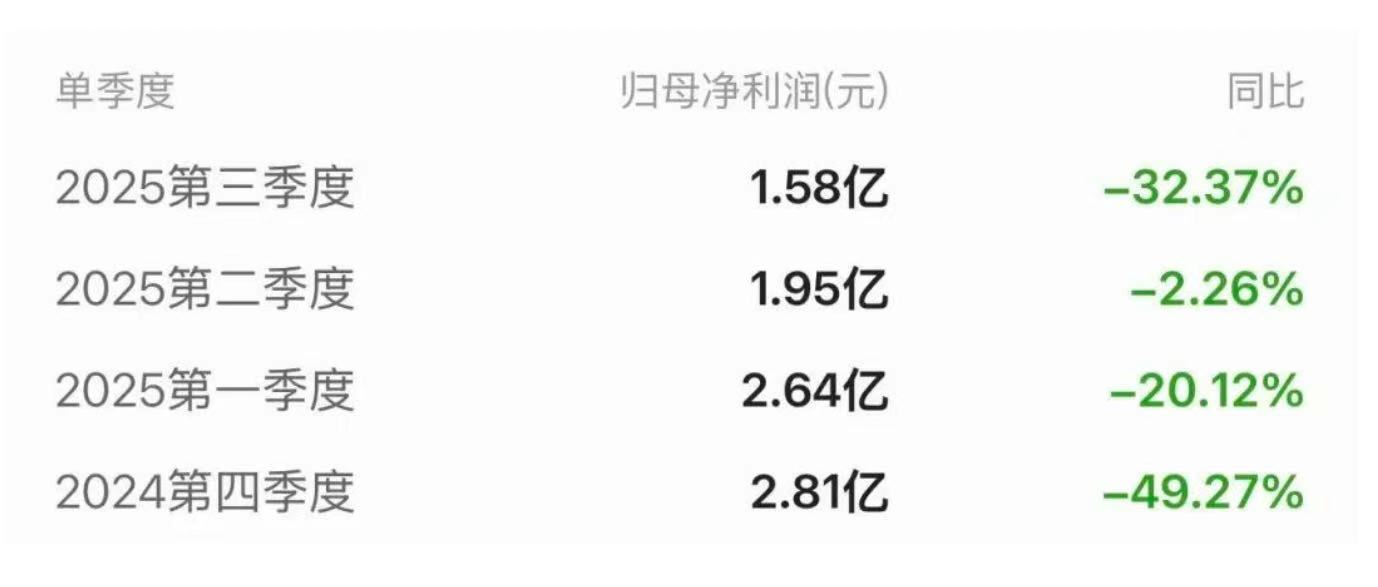
Group 1 - The core point of the article is that State Power Investment Corporation's subsidiary, Electric Power Investment and Financing Co., Ltd. (referred to as "Electric Power Financing"), is undergoing a significant asset swap and share issuance to transform its business focus from a dual model of finance and energy to a single focus on nuclear power generation [1][2] - The proposed transaction involves the acquisition of 100% equity of State Nuclear Power Technology Company and China Life's stake in State Power Investment Nuclear Co., Ltd. for a total valuation of 55.394 billion yuan, while divesting 100% equity of State Power Investment Capital Holdings for 15.108 billion yuan [1] - The difference of 40.285 billion yuan will be settled through share issuance to State Nuclear and China Life, along with a fundraising of up to 5 billion yuan from no more than 35 specific investors, aimed at financing the construction of Units 3 and 4 of the Shandong Haiyang Nuclear Power Plant [1] Group 2 - Following the transaction, State Nuclear will hold a 43.62% stake in Electric Power Financing, making it the controlling shareholder, while China Life will become the second-largest shareholder with a 25.40% stake [2] - The performance commitment for the acquired assets includes a minimum net profit of 3.375 billion yuan in 2025, 3 billion yuan in 2026, and 3.587 billion yuan in 2027, with provisions for compensation if actual profits fall short [3] - The restructuring is seen as a dual example of state-owned enterprise reform and energy structure transformation, aligning with national clean energy goals and addressing previous inefficiencies in the dual business model [3] Group 3 - For the first three quarters of the year, Electric Power Financing reported total revenue of 3.65 billion yuan, a year-on-year decrease of 7.66%, and a net profit attributable to shareholders of 617 million yuan, down 19.20% [3] - The company has experienced a continuous decline in net profit for four consecutive quarters, with a negative cash flow from operating activities of 38.5629 million yuan [3] - As of December 9, the stock price of Electric Power Financing was 6.75 yuan per share, with a total market capitalization of approximately 36.338 billion yuan [5]

重大资产重组新进展!A股将添“国字号”核电巨头
Zheng Quan Ri Bao Wang· 2025-12-08 14:06
业绩承诺方面,国家核电承诺,若交易于2025年实施完毕,业绩承诺资产2025年至2027年归母净利润分 别不低于33.75亿元、30.00亿元、35.87亿元;若2026年完成交割,则承诺期顺延至2026年至2028年,对 应承诺净利润分别为30.00亿元、35.87亿元、49.08亿元。同时约定,若实际净利润未达承诺,国家核电 将以股份或现金方式进行补偿,且业绩承诺期届满后需进行减值测试,确保上市公司及中小股东利益。 "此次重组是国企改革与能源结构转型的双重典型案例。"中国企业联合会特约研究员胡麒牧在接受《证 券日报》记者采访时表示,"电投产融通过剥离金融业务、聚焦核电主业,既响应了国家'双碳'目标下 清洁能源发展的战略导向,也解决了原有'能源+金融'双主业协同不足的问题。国家电投将优质核电资 产注入上市公司,不仅提升了国有资产证券化率,也为资本市场提供了稀缺的核电运营标的,有助于优 化能源类上市公司估值体系。" 12月8日晚间,国家电投集团产融控股股份有限公司(下称"电投产融(000958)")披露重大资产置换 及发行股份购买资产并募集配套资金暨关联交易报告书(草案),拟通过资产置换、发行股份购买资产 及 ...

【榆林】全链布局氢能产业 探索城市转型升级新路
Shan Xi Ri Bao· 2025-12-07 00:19
Core Viewpoint - Hydrogen energy is recognized as a clean and efficient secondary energy source, playing a crucial role in national energy security, achieving carbon neutrality goals, and promoting the dual replacement of fossil fuels and raw materials [1] Group 1: Industry Development - Yulin is actively cultivating the hydrogen energy industry, accelerating the construction of key hydrogen projects, and establishing a comprehensive "production-storage-transportation-refueling-usage" industrial chain [1] - The first fully automated production line for solid oxide fuel cell (SOC) stacks in China has been established, capable of completing the main processes of stack production automatically [1][2] - The solid oxide electrolysis water hydrogen production system features a fully solid-state structure, ensuring system stability and efficiency, with energy consumption significantly lower than other hydrogen production methods [2] Group 2: Project Implementation - The Yuheng Industrial Park's zero-carbon hydrogen demonstration project is under construction, with a main building area of 15,000 square meters already topped out [3] - The first phase of the project aims to produce 3,000 tons of green hydrogen annually, generating an output value of 75 million yuan and reducing carbon dioxide emissions by approximately 60,000 tons per year [3] - The second phase is planned to start construction in 2026, targeting an annual production of 100,000 tons of green hydrogen, with an estimated output value of 2.5 billion yuan and a reduction of about 2 million tons of carbon dioxide emissions [3] Group 3: Strategic Goals - Yulin aims to establish itself as the "Hydrogen Energy Capital of the West," leveraging green hydrogen to replace traditional energy sources and promote the upgrade and green transformation of the traditional energy and chemical industries [3][4] - The development strategy emphasizes technological innovation to enhance the energy and chemical industry chain, optimize traditional industries, and create a modern industrial system characterized by clean, low-carbon, and integrated development [5]
电力出海:燃气轮机+HRSG行情持续发酵
傅里叶的猫· 2025-12-05 03:48
Core Viewpoint - The article discusses the significant growth and investment opportunities in the gas turbine and HRSG (Heat Recovery Steam Generator) sectors, particularly focusing on Siemens Energy and its market dynamics driven by increasing electricity demand and structural changes in the energy sector [1][3]. Group 1: Gas Turbine Market Dynamics - The core challenge in gas turbine production lies in the main engine, which must withstand high temperatures and pressures, with only Siemens Energy, GE, and Mitsubishi Heavy Industries capable of manufacturing them [3]. - Siemens Energy has a backlog of orders totaling €138 billion, a 42% increase from 2022, with €65 billion coming from service-related orders, indicating strong demand in the gas services and grid technology sectors [3]. - Global electricity demand is expected to grow nearly 50% over the next decade, with AI and data centers projected to double their electricity consumption in the same period [3]. Group 2: Growth in Gas Services - The gas services segment is identified as the primary growth driver for Siemens Energy, as gas-fired power generation emits half the carbon of coal, making it a viable alternative [4]. - From 2025 to 2035, the global annual increase in gas-fired power generation capacity is expected to reach 90-100 GW, nearly double the average of the past decades, with data centers contributing 15%-20% to this demand [4]. Group 3: Capacity Expansion and Market Demand - Siemens Energy is accelerating capacity expansion, with plans to increase large gas turbine production in Berlin from 35 units per year to 50 by 2027, and to double the medium gas turbine capacity in Sweden to 100 units by 2028 [5]. - The current production capacity is fully booked, with a delivery cycle of 2-3 years, highlighting a tight market supply situation [5]. - Siemens Energy has achieved a 100% attachment rate for long-term service agreements for large gas turbines, with profit margins on new agreements expected to increase by over 500 basis points compared to existing contracts [5]. Group 4: Domestic HRSG Companies' Outlook - The outlook for domestic HRSG companies in international markets appears optimistic, with BYTH's Vietnam project planning four HRSG production lines in phase one and eight in phase two, targeting North American gas turbine contractors [7]. - HRSG units account for only 7-8% of value but represent 30-40% of power generation capacity, with expectations of price increases exceeding 30-40% due to a 50% supply-demand gap [7]. - Xizi Clean Energy has established a strong position in the global high-end HRSG market through successful projects in Pakistan and Nigeria, with products exported to over 50 countries [7].
摩洛哥磷酸盐集团启用摩规模最大光伏电站
Shang Wu Bu Wang Zhan· 2025-12-05 03:25
目前,OCP集团正加快推进能源结构转型,力争在2027年前实现能源需求全部由可再生能源提供。此次 光伏项目投运是集团能源战略的重要里程碑,OCP将以更低成本生产清洁电力,为集团矿区和工业园区 提供稳定、安全、低价的能源保障。据估算,新光伏项目的发电成本约为每兆瓦时36.8美元,较传统能 源更具优势,并已直接为胡里卜卡和本盖里尔的采矿及矿石加工设施供电。 摩洛哥《晨报》12月2日报道,摩洛哥磷酸盐集团(OCP)宣布启用位于本盖里尔(Benguérir)、富姆提兹 (Foum Tizi)和乌拉德法雷斯(Oulad Farès)的三座光伏电站,总装机容量达202兆瓦。其中,乌拉德法雷斯 电站以105兆瓦的规模成为目前摩洛哥已投运的最大光伏电站。上述电站均由OCP绿能公司(OGE)负责 运营,并已获得摩政府主管部门批准接入国家电网。 此外,OCP在本盖里尔同步开展电力储能试点项目,以提升电网灵活性,保障非日照时段的电力供应, 并计划在2027年后将储能能力扩大至2吉瓦时。 ...
华明装备(002270) - 002270华明装备投资者关系管理信息20251204
2025-12-04 09:18
Group 1: Overseas Business Growth - The company has experienced relatively high overseas growth in the past two years, primarily due to a low base and slight market share increase, but this growth is not sustainable long-term [2][3] - The overseas revenue growth is influenced by demand changes, market share, and base effects, and does not necessarily reflect the overall industry development level [2][3] - The company aims to accelerate its market share in overseas markets, leveraging historical opportunities and improving brand influence [4] Group 2: Market Demand and Sustainability - Different regions exhibit varying growth drivers; for instance, the U.S. market is driven by energy structure transformation and AI, while Europe is influenced by reduced reliance on natural gas due to geopolitical factors [3] - Southeast Asia has significant development needs due to previously weak infrastructure, while the Middle East is focusing on reducing oil dependency and increasing industrialization [3] - The company acknowledges the complexity of overseas market demands and the need for a nuanced understanding of each region's development status [3] Group 3: Sales and Distribution - The company has established local sales teams in key overseas regions and will expand its workforce based on regional business volume [6] - Currently, the company’s overseas sales are largest in Europe, followed by Asia, with growth coming from multiple countries [7] - The ratio of direct to indirect exports is approximately 1:1, with indirect exports growing faster due to overseas transformer capacity constraints [18] Group 4: Competitive Landscape and Product Offering - The company does not see significant differences in product stability and technical parameters compared to competitors, but it has advantages in delivery speed and self-sufficiency of components [23] - The company is focused on maintaining a stable pricing strategy for its products, which aids in long-term business development [16] Group 5: Financial Performance and Future Outlook - The company expects to maintain stable profitability in its switchgear business, contingent on revenue growth and business structure [36] - The company has committed to a cash dividend of no less than 60% of distributable profits annually from 2023 to 2025 [36] - Future capital expenditures will focus on gradual investments in sales and service centers rather than large-scale production capacity expansions [36]
