
自主可控

Search documents
A股超500家公司年报预亏
第一财经· 2026-01-28 04:01
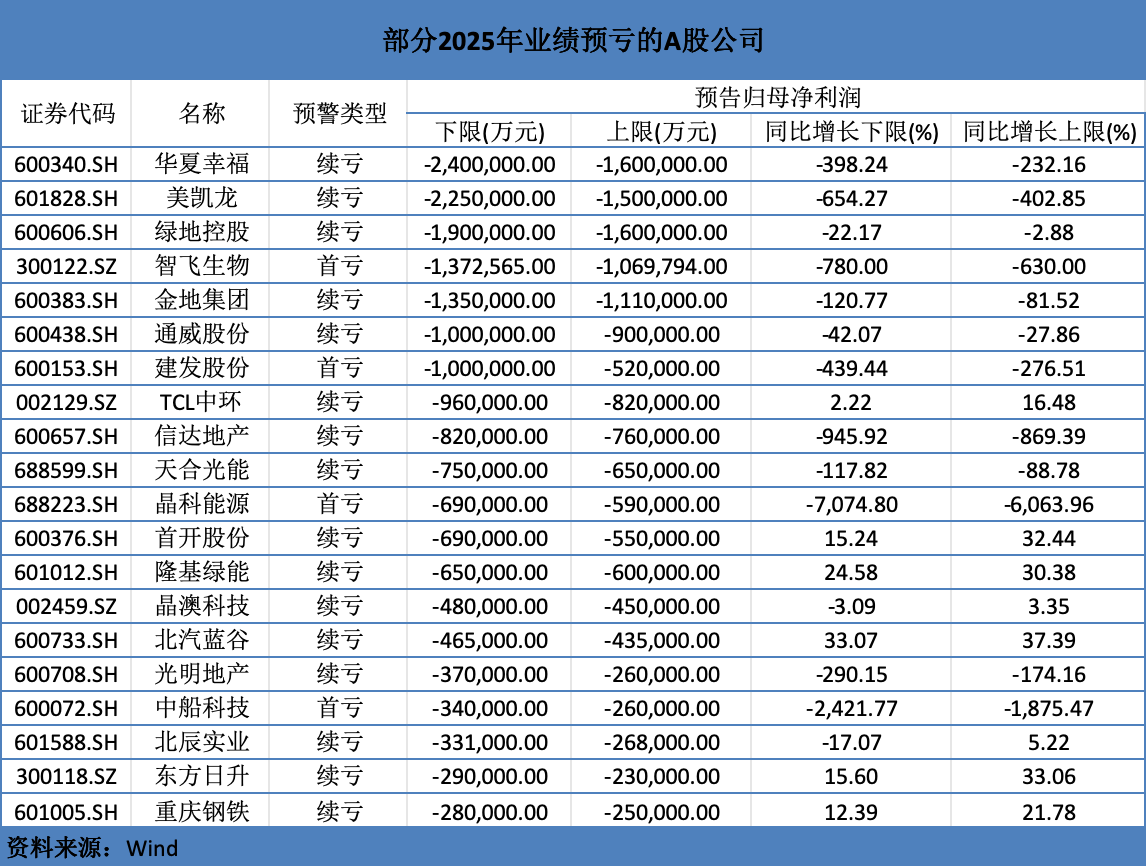
2026.01. 28 本文字数:2709,阅读时长大约4.5分钟 作者 | 第一财经 周楠 当前正值上市公司年报预告披露期,不同于以往的绩优股抢先发布业绩,今年财报季里,一批亏损公司正在 密集"交卷"。 1 月 26 日 晚 间 , 百 余 家 A 股 公 司 披 露 了 2025 年 业 绩 预 告 , 多 家 亏 损 公 司 在 列 。 其 中 , 大 禹 生 物 (920970.BJ)、ST英飞拓(002528.SZ)等续亏;二六三(002467.SZ)、恒基达鑫(002492.SZ)等首 亏。 另据Wind统计,截至1月26日,共计1165家A股公司已披露2025年业绩预告,业绩下滑的有709家,占比约 六成,当期预计亏损的有500多家。从行业来看,预亏幅度较大的企业扎堆房地产、建筑行业,涉及华夏幸 福(600340.SH)、绿地控股(600606.SH)等。华夏幸福预计去年亏损160亿元至240亿元,暂时成为"亏 损王"。 一些业绩"滑坡"的公司,遭遇投资者"用脚投票"。至纯科技(603690.SH)预计去年亏损3亿元至4.5亿元, 或出现上市以来的首次归母净利润亏损,消息披露后公司股票一度跌停。 ...



王强:警惕“星链”的国际垄断风险
Xin Lang Cai Jing· 2026-01-27 23:08
Core Viewpoint - Elon Musk's SpaceX has announced free access to its Starlink satellite internet service for Iranian users amid political turmoil, raising international concerns about the implications of commercial satellite constellations on global security and governance [1] Group 1: Impact of Starlink on Warfare - The Starlink system, initially designed for commercial satellite internet, has evolved into a quasi-military tool for the U.S., significantly influencing modern warfare dynamics, as evidenced by its rapid deployment to support Ukrainian forces during the Russia-Ukraine conflict [1] - The U.S. military has integrated Starlink with various operational units, enhancing its combat capabilities and creating a closed-loop information system for military operations [2] Group 2: Strategic Dependency and National Security - The reliance on Starlink technology by smaller nations creates a strategic dependency, posing risks to national sovereignty and security, as seen in past instances where the U.S. leveraged Starlink to exert pressure on countries like Ukraine [3] - The trend of countries, particularly in Europe and Japan, developing their own low-Earth orbit satellite constellations reflects a response to the vulnerabilities associated with dependency on foreign technology [3] Group 3: Challenges of Space Resource Management - Starlink's rapid expansion, with over 10,000 satellites in orbit, has led to monopolistic control over near-Earth orbital resources, increasing the risk of satellite collisions and space debris [4] - The lack of regulatory frameworks allows entities like Starlink to operate with impunity, potentially leading to a new arms race in outer space, as existing international laws struggle to address these emerging challenges [4] Group 4: Call for International Cooperation - There is a pressing need for the international community to establish binding guidelines for space activities to prevent militarization and ensure that space technology serves humanity's welfare [5] - Developing countries are encouraged to pursue autonomous technological paths and strengthen collaboration to build a secure space community [5]
A股“绩差生”扎堆交卷:超500家公司年报预亏,53家亏损超10亿元
Di Yi Cai Jing· 2026-01-27 12:43
Group 1 - A significant number of loss-making companies are disclosing their performance forecasts during the annual report season, contrasting with previous years where profitable companies led the announcements [1][2] - As of January 26, 1165 A-share companies have disclosed their performance forecasts, with approximately 60% (709 companies) reporting a decline in performance, and over 500 companies expected to incur losses [1][3] - The real estate and construction sectors are particularly affected, with companies like Huaxia Happiness expected to report losses between 16 billion to 24 billion yuan, making it the "loss king" [1][5] Group 2 - The trend of loss-making companies proactively disclosing their forecasts reflects a transformation in the A-share market, indicating a more rational market behavior [2][15] - The majority of companies facing performance declines are concentrated in the real estate, construction, and pharmaceutical sectors, with 53 companies expected to report losses exceeding 1 billion yuan [4][6] - The solar energy sector is also experiencing significant losses, with leading companies like Tongwei Co. and Longi Green Energy projecting substantial net profit losses [7][18] Group 3 - Following the disclosure of poor performance forecasts, stock prices of several companies have dropped significantly, with Yanghe Co. and Zhichun Technology experiencing notable declines [10][11] - The termination of acquisitions and restructuring efforts has further compounded the challenges for some companies, leading to sharp declines in their stock prices [14] - Investors are urged to adjust their stock selection logic, focusing on the quality of earnings and cash flow, as well as aligning investments with high-growth sectors [16][17]




信创ETF(159537)收涨超1.7%,市场关注AI浪潮与产业趋势
Mei Ri Jing Ji Xin Wen· 2026-01-27 07:43
Group 1 - The core viewpoint of the article highlights the significant impact of AI innovation on market structure, particularly emphasizing the increasing demand for storage as a critical resource in AI infrastructure [1] - The storage industry is projected to experience a 134% year-on-year growth in value by 2026, driven by the expanding data storage requirements due to AI [1] - The demand for computing power is surging, leading to increased value across various segments including servers, AI chips, optical chips, storage, and PCB boards [1] Group 2 - ASM International, a chip equipment manufacturer, reported that its order volume for Q4 2025 exceeded expectations, primarily due to a rebound in Chinese orders and stable growth in advanced logic/foundry business [1] - The next three years will focus on "advanced process expansion" as a key strategy for self-controlled development, with CoWoS and HBM becoming crucial in the AI industry trend [1] - There is a positive outlook for the recovery of upstream sectors represented by passive components, digital SoC, RF, storage, packaging, and panels [1] Group 3 - The 信创ETF (159537) tracks the 国证信创指数 (CN5075), which selects listed companies in the semiconductor, software development, and computer equipment sectors from the Shanghai and Shenzhen markets to reflect the overall performance of the information technology innovation sector [2]
恒立液压涨2.01%,成交额5.64亿元,主力资金净流出1766.54万元
Xin Lang Cai Jing· 2026-01-27 02:42
Core Viewpoint - Hengli Hydraulic's stock performance shows a slight increase in the short term, with a notable rise in revenue and net profit year-on-year, indicating a positive financial trajectory for the company [1][2]. Group 1: Stock Performance - On January 27, Hengli Hydraulic's stock rose by 2.01%, reaching 113.74 CNY per share, with a trading volume of 564 million CNY and a turnover rate of 0.38%, resulting in a total market capitalization of 152.5 billion CNY [1]. - Year-to-date, Hengli Hydraulic's stock price has increased by 3.48%, with a 0.99% decline over the last five trading days, a 4.72% increase over the last 20 days, and an 18.75% increase over the last 60 days [1]. Group 2: Financial Performance - For the period from January to September 2025, Hengli Hydraulic achieved a revenue of 7.79 billion CNY, representing a year-on-year growth of 12.31%, and a net profit attributable to shareholders of 2.09 billion CNY, which is a 16.49% increase compared to the previous year [2]. - Since its A-share listing, Hengli Hydraulic has distributed a total of 6.18 billion CNY in dividends, with 3.11 billion CNY distributed over the last three years [3]. Group 3: Shareholder Information - As of September 30, 2025, the number of shareholders for Hengli Hydraulic is 36,900, a decrease of 15.76% from the previous period, while the average number of circulating shares per person increased by 18.70% to 36,379 shares [2]. - Among the top ten circulating shareholders, Hong Kong Central Clearing Limited is the fourth largest, holding 118 million shares, an increase of 15.19 million shares from the previous period [3].

电科芯片涨停!低轨卫星芯片实现量产,携手荣耀布局卫星通信,半导体景气度提升预期强化
Jin Rong Jie· 2026-01-27 02:29
Group 1 - The latest price of Electric Science Chip is 24.78 yuan, with a price increase of 9.99%, and a trading volume of 294,500 hands, resulting in a transaction amount of 714 million yuan [1] - Electric Science Chip focuses on the design and development of wireless RF chips, with mass production achieved for Ka-band phased array T/R chip sets used in low Earth orbit satellite constellations [1] - The company is a key partner for Honor in the development of satellite communication SoC chips, providing support for dual-mode voice satellite communication and Beidou short message SoC chips [1] Group 2 - The global low Earth orbit satellite network is entering a phase of intensive construction, drawing attention to the satellite communication industry chain, with several companies achieving technological breakthroughs and large-scale shipments in low Earth orbit satellite chips [1] - Microsoft has launched the next-generation AI chip, Maia 200, which utilizes TSMC's 3nm process technology, offering 30% higher performance than competing products at the same price point [1] - The global PCB market is expected to exceed 100 billion USD by 2026, driven by the increasing demand for AI servers and high-performance computing, pushing the PCB industry towards higher value and advanced development [1]

中信证券:业绩预期稳健、创新加速兑现 医药政策优化趋势延续
智通财经网· 2026-01-27 01:53
Core Viewpoint - The medical and healthcare industry in China is expected to experience stable and continuous growth driven by innovation and supportive policies, leading to a return to a market pricing system based on clinical value and demand [1] Group 1: Investment Trends - The pharmaceutical industry is projected to maintain an overweight status, with key investment lines focusing on innovation-driven and internationalization strategies, self-sufficiency in core components, and benefits from new policies [1] - The report predicts that 64 out of 76 covered pharmaceutical companies will achieve year-on-year positive growth or remain stable in their performance for Q4 2025/H2, while 12 companies may face negative growth or losses [1] - The acceleration of innovation in pharmaceutical and medical enterprises is expected to translate into performance growth, driven by external business development (BD) and commercialization [1] Group 2: Innovation and Licensing - 2025 is anticipated to be a significant year for the licensing of Chinese innovative drugs, with upfront payments and potential milestones contributing to substantial growth in the financial reports of various pharmaceutical companies [2] - Many biotech firms are expected to realize the global value of their core products through licensing, which will enhance their financial performance and support new rounds of research and development investments [2] - The demand for asset acquisition remains strong among multinational pharmaceutical companies, indicating a sustainable wave of outbound licensing for Chinese innovative drugs [2] Group 3: Industry Chain Insights - The geopolitical influences are diminishing, and the funding structure for domestic pharmaceutical companies is improving, leading to signs of recovery in biopharmaceutical investment and financing [3] - The early-stage research demand for large molecule antibodies and ADCs is recovering, with expectations for increased IPO activity in Hong Kong and a rebound in clinical CRO segments in 2026 [3] - Domestic CDMO companies are expected to stabilize and recover in new order signings, driven by the ongoing demand for new molecules such as ADCs and peptides [3] Group 4: Medical Industry Chain - The medical industry chain is showing signs of recovery, with expectations for continued growth in Q4 2025 and into 2026, particularly in sectors like medical devices, IVD, and OTC traditional Chinese medicine [4][5] - Three main investment lines for 2026 include an improved domestic payment environment for innovative drugs and devices, a harvest period for overseas expansion, and the emergence of new business models such as brain-computer interfaces and AI in healthcare [4][5]

科技主题观点综述:全球算力多点突破,AI驱动端侧应用渗透(更正)
Shanghai Securities· 2026-01-27 00:45
Investment Rating - The report maintains an "Overweight" rating for the electronics industry [1] Core Insights - The "hard technology" sector is expected to perform well under the influence of AI, with domestic computing chips, AI-PCB, AIDC supporting facilities, and AI edge SoC chip design/testing showing rapid growth in 2024 and maintaining high growth in Q1-Q3 of 2025 [4] - The valuation system of the technology industry is likely to be restructured due to the ongoing competition between major powers, particularly in semiconductor manufacturing, equipment, and design, which are areas of low domestic production [4] - Computing power remains the most important theme for the year, with a focus on AI-PCB and AI optical modules, suggesting investment in companies like Shenghong Technology, Huitian Technology, and others [4] - Some consumer electronics stocks, particularly those in the "Apple supply chain," are seen as having good value due to recent price corrections, with potential for performance and valuation recovery driven by AIoT and automotive electronics [4] Summary by Sections AI and Computing Power - The demand for AI computing technology is increasing, with PCB manufacturers achieving significant breakthroughs in AI server applications [22] - The market for AI chips is expected to grow, with the Chinese market projected to reach approximately 342.46 billion yuan by 2024, reflecting a 10.7% year-on-year growth [44] Semiconductor and PCB Industry - The semiconductor industry is experiencing a shift towards more diverse application scenarios, with automotive electronics and IoT driving growth [18] - The PCB equipment market is expected to reach 29.025 billion yuan in 2024, growing by 11.89% year-on-year, and is projected to reach 34.709 billion yuan by 2026 [27] Consumer Electronics - The CIS market is recovering, driven by demand from smartphones, security, and automotive sectors, with a focus on high-end products [46] - AI is providing new growth potential for consumer electronics, with ODM companies gaining competitive advantages [47]





科技主题观点综述:全球算力多点突破,AI驱动端侧应用渗透(更正)-20260126
Shanghai Securities· 2026-01-26 13:03
Investment Rating - The report maintains an "Overweight" rating for the electronics industry [1] Core Insights - The "hard technology" sector is expected to perform well under the influence of AI, with domestic computing chips, AI-PCB, AIDC supporting facilities, and AI edge SoC chip design/testing showing rapid growth in 2024 and maintaining high growth in Q1-Q3 of 2025. This sector is projected to benefit from continued growth in domestic computing capital investment and increasing penetration of edge applications, becoming one of the fastest-growing areas in the electronics and technology industries [4] - The valuation system of the technology industry is likely to be restructured due to the ongoing competition between major powers, particularly in the semiconductor manufacturing and equipment sectors, where the domestic production ratio is currently low. Companies such as Cambricon, SMIC, North Huachuang, Haiguang Information, and Zhongwei Company are recommended for attention [4] - Computing power remains the most important theme for the year, with a focus on AI-PCB (semiconductors) and AI optical modules. Companies like Shenghong Technology, Huitian Technology, and others are highlighted for their potential [4] - Some consumer electronics stocks, particularly those in the "Apple supply chain," have become more cost-effective due to macroeconomic impacts on stock prices. Leading companies in the fruit chain and ODM sectors are expected to leverage demand in AIoT, humanoid robots, and automotive electronics to achieve performance and valuation improvements in the second half of the year [4] Summary by Sections AI and Computing Power - The demand for AI computing technology is increasing, leading to significant breakthroughs for PCB manufacturers in the AI server field. The overall market for AI chips is expected to grow, with China being a major consumer market [18][22] - The AI-driven demand for computing power is pushing the development of various applications, including automotive electronics and IoT, which are expected to drive growth in the chip industry [18] Semiconductor and Equipment - The semiconductor manufacturing sector is projected to see substantial growth, with companies like SMIC and North Huachuang showing promising revenue and profit growth rates [17] - The PCB equipment market is expected to grow significantly, with a projected market size of 290.25 billion yuan in 2024, increasing to 347.09 billion yuan by 2026 [27] Consumer Electronics - The CIS market is experiencing a recovery, driven by demand from smartphones, security, and automotive applications. Domestic manufacturers are increasing their market presence with high-end products [46] - The SoC market is expected to grow, with AI technology becoming a crucial component for various applications, including smart home devices and automotive electronics [44]
20cm速递|科创综指ETF国泰(589630)涨超1.8%,技术演进与产业链需求引关注
Mei Ri Jing Ji Xin Wen· 2026-01-26 13:01
Group 1 - The core viewpoint highlights that the AI innovation is driving structural changes in the market, with the demand for data storage increasing significantly, making memory a critical resource in AI infrastructure [1] - The storage industry is projected to see a 134% year-on-year growth in value by 2026 due to the limited capacity and increasing demand driven by AI [1] - The demand for computing power is surging, leading to significant value increases in servers, AI chips, optical chips, storage, and PCB boards [1] Group 2 - ASM International, a chip equipment manufacturer, is experiencing a rebound in orders from China, with Q4 2025 orders exceeding expectations [1] - The next three years will focus on "advanced process expansion" as a key theme for self-controlled development in the industry [1] - The importance of advanced packaging, such as CoWoS and HBM, is highlighted in relation to the AI industry trends [1] Group 3 - The potential for edge AI is significant, with headphones and glasses expected to become important carriers for edge AI agents [1] - There is a positive outlook for the recovery trend in upstream sectors represented by passive components, digital SoC, RF, storage, packaging, and panels [1]