
降息降准

Search documents
宝城期货国债期货早报-20250508
Bao Cheng Qi Huo· 2025-05-07 23:43
Report Summary 1. Report Industry Investment Rating - Not provided in the given content 2. Core Viewpoints - The short - term view of TL2506 is to oscillate, the medium - term view is to oscillate, and the intraday view is to oscillate strongly, with an overall view of range - bound oscillation. The core logic is that the expectation of interest rate cuts has been fulfilled, and it will mainly be in short - term oscillatory consolidation [1]. - For varieties such as TL, T, TF, and TS, the intraday view is to oscillate strongly, the medium - term view is to oscillate, and the reference view is range - bound oscillation. After the implementation of interest rate cuts and reserve requirement ratio cuts, the policy expectation is fulfilled in the short term, and it is expected that treasury bond futures will remain in oscillatory consolidation in the short term [4]. 3. Summary by Relevant Catalogs Variety Viewpoint Reference - Financial Futures Stock Index Sector - For TL2506, short - term: oscillate; medium - term: oscillate; intraday: oscillate strongly; view reference: range - bound oscillation; core logic: the expectation of interest rate cuts has been fulfilled, and short - term oscillatory consolidation is the main trend [1]. Main Variety Price Market Driving Logic - Financial Futures Stock Index Sector - The varieties include TL, T, TF, and TS. The intraday view is to oscillate strongly, the medium - term view is to oscillate, and the reference view is range - bound oscillation. The core logic is that treasury bond futures have been in narrow - range oscillatory consolidation in the past two days. The central bank announced a series of policies such as interest rate cuts and reserve requirement ratio cuts. It lowered the deposit reserve ratio by 0.5 percentage points, releasing 1 trillion in long - term liquidity, and lowered the 7 - day reverse repurchase rate by 10BP, which is expected to drive the LPR down by 10BP. Due to the weakening of the domestic manufacturing PMI in April and the strong performance of the RMB exchange rate, the conditions for interest rate cuts and reserve requirement ratio cuts were met. The price of treasury bond futures has already implied an expected interest rate cut of about 10BP since early April. With the implementation of interest rate cuts and reserve requirement ratio cuts, the policy expectation is fulfilled in the short term, and short - term oscillatory consolidation is expected [4].
降息降准落地,国债期货震荡整理
Bao Cheng Qi Huo· 2025-05-07 13:30
投资咨询业务资格:证监许可【2011】1778 号 国债期货 | 日报 2025 年 5 月 7 日 国债期货 专业研究·创造价值 降息降准落地,国债期货震荡整理 核心观点 今日国债期货均窄幅震荡整理。今日国新办召开新闻发布会,央行宣 布降息降准等一系列重磅政策。央行宣布降低存款准备金率 0.5 个百分点, 预计向市场释放 1 万亿长期流动性;央行宣布下调 7 日逆回购利率 10BP, 预计带动 LPR 下调 10BP。在外部经贸环境错综复杂的背景下,4 月国内制造 业 PMI 出现走弱的情况,急需政策端靠前发力,稳定经济需求,加上近期人 民币汇率表现偏强,降息降准的条件已具备,因此政策面如期实施降息降准 政策。此前 4 月初以来国债期货价格震荡上涨,已经隐含了在外部环境扰动 下国内降息稳定经济需求的预期,隐含降息预期在 10BP 左右。总的来说, 随着降息降准落地,短期内政策预期兑现,预计国债期货短期内保持震荡整 理。 (仅供参考,不构成任何投资建议) 姓名:龙奥明 邮箱:longaoming@bcqhgs.com 作者声明:本人具有中国期货 业协会授予的期货从业资格证 书,期货投资咨询资格证书, 本人承诺 ...
降息降准正式落地,为何选在这个时候?跟中美经贸谈判有何关系?
Sou Hu Cai Jing· 2025-05-07 13:06
Core Viewpoint - The article discusses the implications of China's decision to lower interest rates and reserve requirements ahead of the U.S. Federal Reserve, highlighting the need to stimulate liquidity in the market and the potential impact on global capital flows [1][3][4]. Group 1: Economic Context - China's early interest rate cuts are primarily driven by insufficient market liquidity and signs of deflation, necessitating the release of liquidity [4]. - The increase in bank deposits, with over 9 trillion yuan added in the first quarter, indicates that a significant amount of capital is not circulating in the market, leading to a widening gap between M1 and M2 [4]. - The rising U.S. Treasury yields and declining Chinese bond yields suggest a potential widening of the interest rate differential between China and the U.S. following the rate cuts [4]. Group 2: Market Reactions - The performance of the Hong Kong stock market has been notably strong, with the Hang Seng Index rising over 20% this year, reflecting the positive impact of China's policy measures and the influx of global capital [6]. - The shift in investor focus from risk-free assets to riskier assets indicates a growing confidence in the potential for economic recovery in China, which could attract more global investment [6]. Group 3: Strategic Implications - The upcoming high-level economic dialogue between China and the U.S. is crucial, as it may address tariff issues that have strained relations since the trade war began [3]. - The proactive approach of China in adjusting monetary policy, rather than waiting for the U.S. to act, signifies a strategic shift aimed at enhancing economic growth and attracting foreign investment [6].


【期货热点追踪】大商所铁矿期货一度攀升至近两周高点,中国央行降息降准与贸易谈判双重利好,铁矿价格能否迎来新一轮上涨?
news flash· 2025-05-07 04:28
Group 1 - The core viewpoint of the article highlights the rise of Dalian Commodity Exchange iron ore futures to a near two-week high, driven by the dual benefits of the People's Bank of China lowering interest rates and reserve requirements, alongside trade negotiations [1] Group 2 - The article raises the question of whether iron ore prices can enter a new round of increases due to these favorable conditions [1]
一揽子金融政策重磅发布!港股、A股、A50全沸腾,人民币突发跳水
Ge Long Hui· 2025-05-07 03:10
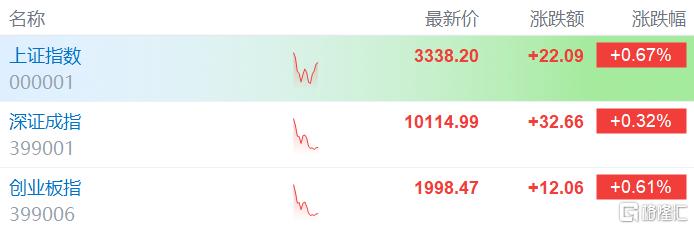
早间迎多重重磅消息,中国央行宣布降息降准、优化两项支持资本市场的货币政策工具,商务部称中方决定同意与美方进行接触。 今日开盘,港A股主要指数集体高开,不过随后有所回落。 A股方面,截止发稿,沪指涨0.67%,深证成指涨0.32%,创业板指涨0.61%。全市场超3000只个股上涨,多元金融、证券、房地产、航天军工等行业板块表 现亮眼。 | 名称 | | 最新价 | 涨跌额 | 涨跌幅 | | --- | --- | --- | --- | --- | | 上证指数 | | 3338.20 | +22.09 | +0.67% | | 000001 | W | | | | | 深证成指 | | 10114.99 | +32.66 | +0.32% | | 399001 | W | | | | | 创业板指 | | 1998.47 | +12.06 | +0.61% | | 399006 | W | | | cinel | 港股方面,截止发稿,恒生指数、国企指数、恒生科技指数均涨逾1%。, | 名称 | 最新价 | 涨跌额 | 涨跌幅 | | --- | --- | --- | --- | | 恒生指数 | 2298 ...
【中国央行宣布降息降准】中国人民银行行长潘功胜5月7日在国新办发布会上宣布,降准0.5个百分点,向市场提供长期流动性约1万亿元。并降低政策利率0.1个百分点。
news flash· 2025-05-07 01:13
中国央行宣布降息降准 中国人民银行行长潘功胜5月7日在国新办发布会上宣布,降准0.5个百分点,向市场提供长期流动性约1 万亿元。并降低政策利率0.1个百分点。 (新华财经) ...
中泰证券首席策略分析师徐驰:政策托底稳市场 A股分化中孕育机遇
第一财经· 2025-04-11 13:08
2025.04. 11 作者 | 第一财经 下午市场零距离 第一财经《市场零距离》节目与中泰证券首席策略分析师徐驰就A股市场现状、板块投资机遇及出口 企业挑战进行了深入讨论。 在当下复杂的全球经济形势下,特朗普关税政策引发的市场动荡备受瞩目,A股市场的走向成为各方 关注焦点。为此,第一财经《市场零距离》节目就相关市场问题,与中泰证券首席策略分析师徐驰在 4月7日当天展开了深度对话,全面剖析A股市场现状、板块投资机遇以及出口企业面临的挑战与前 景。 徐驰指出,当前市场波动显著,从全球范围来看,A股市场展现出了一定韧性。尽管今日盘面呈现大 幅低开且整体走势较弱的态势,但对比全球主要市场,A股部分指数表现相对突出。例如,近期纳斯 本文字数:1484,阅读时长大约3分钟 达克连续三天大幅下跌,累计跌幅近15%,若从今年年初至今计算,在特朗普关税政策实施前就已有 近20%的跌幅,整体跌幅超30%。而A股指数的下跌幅度在全球市场中处于相对较好的水平。 综合来看,受全球经济形势的影响,A股市场目前处于调整阶段。特朗普关税政策不仅引发了全球流 动性风险,导致包括黄金在内的避险资产价格下跌,还对过去40年的全球贸易秩序造成冲击 ...
中泰证券首席策略分析师徐驰:政策托底稳市场 A股分化中孕育机遇
Di Yi Cai Jing· 2025-04-09 10:33
Market Overview - The A-share market is currently experiencing significant volatility, but it shows resilience compared to global markets, with some indices performing relatively well despite a weak overall trend [1][2] - The market is in an adjustment phase due to the impact of global economic conditions and the Trump tariff policy, which has led to liquidity risks and a contraction in global trade [2] Investment Opportunities - The consumer sector is highlighted as a key area of interest, particularly value blue-chip and essential consumer goods, which have low valuations after recent market adjustments [3] - The seed agriculture sector is noted for its potential absolute return elasticity, benefiting from China's countermeasures against the U.S. and having solid fundamental support [3] Export Challenges - The export chain is expected to experience differentiation, with risks already priced in for direct exports to the U.S., while concerns arise for transshipment trade due to new tariffs on ASEAN countries [4] - Manufacturing companies with strong overseas layouts may benefit from the current trade dynamics, presenting investment opportunities for value reassessment [4]

宏观点评:从2月社融,看降息降准前景-2025-03-17
GOLDEN SUN SECURITIES· 2025-03-17 07:23
Investment Rating - The report indicates a shift towards "moderate easing" in monetary policy, suggesting that interest rate cuts and reserve requirement ratio reductions are likely to occur, with a higher probability of a reserve requirement cut in the short term [3][10]. Core Insights - In February 2025, new RMB loans amounted to 1.01 trillion, significantly lower than the expected 1.24 trillion and the previous month's 5.13 trillion, indicating a substantial month-on-month decline [1][7]. - New social financing (社融) totaled 2.23 trillion, which was below expectations but showed a year-on-year increase of 737.4 billion, primarily supported by the accelerated issuance of government bonds and special refinancing bonds [10][11]. - The overall structure of financing has deteriorated, with both household and corporate credit weakening, and M1 growth slowing down [2][9]. Summary by Sections Credit and Social Financing - New credit in February was 1.01 trillion, down 440 billion year-on-year and 4.12 trillion month-on-month, indicating a significant drop below seasonal norms [2][7]. - New social financing was 2.23 trillion, up 737.4 billion year-on-year but down 4.82 trillion month-on-month, showing a mixed performance against seasonal expectations [10][11]. Structural Analysis - Household short-term loans decreased by 2.74 trillion, reflecting weak consumption, while medium to long-term loans fell by 1.15 trillion, diverging from real estate sales data [8][9]. - Corporate medium to long-term loans saw a significant decline, attributed to overshooting demand from previous months and slow issuance of special bonds [9][10]. Monetary Policy Outlook - The report emphasizes that monetary easing remains the overarching direction for 2025, with potential reserve requirement cuts expected within the next 1-2 months [3][10]. - Key indicators to monitor include government bond issuance, the pace of fiscal stimulus, and the actual performance of real estate sales [3][10].