
AI科技

Search documents
瑞银证券董事长:中国资产并未“过热”,AI科技公司发展潜力巨大,出现万亿美元级公司只是时间问题
Jin Rong Jie· 2026-01-08 06:54
Group 1 - UBS Securities Chairman Hu Zhizhe stated that the performance of China's capital market in 2025 is expected to exceed expectations, but currently, Chinese assets are not "overheated" [1] - The IPO boom in Hong Kong may continue into 2026, according to UBS Securities Global Investment Banking Co-Head Chen Ge [1] - There is strong interest from international investors in Chinese AI technology companies, indicating significant growth potential in this sector [1] - Hu Zhizhe believes that the emergence of trillion-dollar companies in China's AI technology sector is only a matter of time [1]
Metal Futures Daily Strategy:有色金属月度策略-20260108
Fang Zheng Zhong Qi Qi Huo· 2026-01-08 02:50
Report Industry Investment Rating The report does not provide an overall industry investment rating. However, it gives specific investment suggestions for each metal variety: - Copper: Buy on dips, with a recommended strength of +1 [13] - Zinc: Buy on dips, with a recommended strength of +1 [15] - Aluminum Industry Chain: Buy on dips, with a recommended strength of +0.5/-0.5/+0.5 [15] - Tin: Buy on dips, with a recommended strength of +0.5 [15] - Lead: Sell both call and put options, with a recommended strength of +0.5 [16] - Nickel: Consider covered call options on rallies, with a recommended strength of +1 [16] - Stainless Steel: Reduce positions on rallies, with a recommended strength of +1 [16] Core Viewpoints - The non - ferrous metal market is generally in a strong position, with low - priced metals showing strong supplementary gains after the general increase. The overall market is supported by factors such as a relatively loose monetary environment, AI technological development, increased emphasis on the supply chain of critical minerals, and enhanced uncertainty in resource supply due to geopolitical disturbances [11]. - In the short term, the market should be cautious about the possible disturbances caused by phased profit - taking of funds. Different metals have different supply - demand situations and price trends, and corresponding investment strategies should be formulated according to their characteristics [11]. Summary of Each Section Part One: Non - ferrous Metal Operation Logic and Investment Recommendations - **Macro Logic**: In 2026, the non - ferrous metal market is supported by a loose monetary environment, AI development, increased emphasis on critical mineral supply chains, and geopolitical disturbances. China's December manufacturing PMI returned to the expansion range, while the US December ISM manufacturing index unexpectedly shrank to the lowest level since 2024 [11]. - **Geopolitical Disturbance**: The US military action against Venezuela and discussions about obtaining Greenland have raised concerns about resource supply stability. There are also trade - related policies between China and Japan, and differences within the Federal Reserve regarding interest rate cuts [12]. - **Investment Strategies**: Different strategies are proposed for each metal variety, considering factors such as supply, demand, cost, and market sentiment [13][15][16] Part Two: Non - ferrous Metal Market Review - The table shows the closing prices and price changes of various non - ferrous metal futures, including copper, zinc, aluminum, alumina, tin, lead, nickel, stainless steel, and cast aluminum alloy [17]. Part Three: Non - ferrous Metal Position Analysis - The table presents the latest position analysis of the non - ferrous metal sector, including the price change, net long - short strength comparison, net long - short position difference, changes in net long and net short positions, and influencing factors for each variety [19]. Part Four: Non - ferrous Metal Spot Market - The table shows the spot prices and price changes of various non - ferrous metals, including copper, zinc, aluminum, alumina, nickel, stainless steel, tin, lead, cast aluminum alloy, etc. [20] Part Five: Non - ferrous Metal Industry Chain - For each metal (copper, zinc, aluminum, alumina, tin, cast aluminum alloy, lead, nickel, stainless steel), relevant industry chain charts are provided, including inventory changes, processing fees, price trends, etc. [21][23][27][34][43][47][53] Part Six: Non - ferrous Metal Arbitrage - For each metal, relevant arbitrage charts are provided, such as the ratio of domestic to international prices, basis, and spreads between different contracts [57][58][61][64][68][70] Part Seven: Non - ferrous Metal Options - For each metal, relevant option charts are provided, including historical volatility, implied volatility, trading volume, and open interest ratio [74][76][79]
大盘震荡休整,沪指微涨录得14连阳
Dongguan Securities· 2026-01-08 00:55
Market Overview - The Shanghai Composite Index closed at 4085.77, with a slight increase of 0.05%, marking a 14-day consecutive rise [1] - The Shenzhen Component Index rose by 0.06% to 14030.56, while the CSI 300 Index decreased by 0.29% to 4776.67 [1] - The ChiNext Index increased by 0.31% to 3329.69, and the STAR 50 Index rose by 0.99% to 1443.39 [1] Sector Performance - The top-performing sectors included Comprehensive (+3.86%), Coal (+2.47%), and Electronics (+1.25%) [2] - The worst-performing sectors were Oil & Petrochemicals (-1.73%), Non-bank Financials (-1.13%), and Beauty & Personal Care (-1.03%) [2] - Concept sectors showing strong performance included Photoresist (+6.05%), New Sci-tech Stocks (+5.82%), and Storage Chips (+3.30%) [2] Market Outlook - The market is expected to continue its upward trend, supported by a favorable external environment and positive policy expectations [5] - The People's Bank of China emphasized the need for a moderately loose monetary policy to support economic growth and stabilize prices [4] - The report suggests focusing on AI technology sectors, price-increasing sectors like storage chips and rare earths, and large financial sectors [5]
有色金属月度策略-20260106
Fang Zheng Zhong Qi Qi Huo· 2026-01-06 05:32
Report Industry Investment Rating No relevant information provided. Core Viewpoints of the Report - After the holiday, non-ferrous metals generally rose, with copper, aluminum, and aluminum alloys showing strength, while zinc, tin, etc. followed the upward trend, and nickel and lead were consolidating. The macro environment is positive, and the supply side of non-ferrous metals is strongly supported. Valuation-lagging varieties also showed a rotational recovery in the strong sector. The report suggests paying attention to whether there will be fluctuations and differentiation due to fundamental differences after the positive start. [12][13] - The report provides specific operation suggestions and market outlooks for various non-ferrous metal varieties, including copper, zinc, aluminum, tin, lead, nickel, and stainless steel. [14][15][16] Summary by Relevant Catalogs First Part: Non-ferrous Metal Operation Logic and Investment Recommendations - **Macro Logic**: The non-ferrous metal sector had a positive start after the holiday, and it is expected that in 2026, factors such as a relatively loose monetary environment, the development direction of AI technology, increased attention to the critical mineral supply chain, and the rise of resource nationalism in resource-rich countries will continue to support non-ferrous metals. China's December official manufacturing PMI and non-manufacturing PMI both returned to the expansion range, and the US economic data also showed certain positive signs. [12] - **Operation Suggestions for Each Variety**: - **Copper**: Try to gradually buy on dips. The short-term upper pressure range is around 105,000 - 110,000 yuan/ton, and the lower support range is around 95,000 - 96,000 yuan/ton. Consider buying deep out-of-the-money long-term call options. [3][14] - **Zinc**: It is expected to continue the relatively strong consolidation pattern. The upper pressure is around 23,800 - 24,000, and the short-term lower support is around 22,800 - 23,000. Hold long positions and wait and see. [4][15] - **Aluminum Industry Chain**: - **Aluminum**: Temporarily wait and see to prevent a callback after a short-term over - rise. The upper pressure range is 24,000 - 24,500, and the lower support range is 22,000 - 22,300. Buy out-of-the-money put options for protection. - **Alumina**: Sell on rallies. The upper pressure range is 2,800 - 3,000, and the lower support range is 2,000 - 2,200. Buy out-of-the-money call options for protection. - **Recycled Aluminum Alloy**: Temporarily wait and see. The upper pressure range is 23,000 - 23,500, and the lower support range is 21,000 - 21,500. Buy out-of-the-money put options for protection. [5][15] - **Tin**: Adopt a bullish mindset. Pay attention to the influence of other non-ferrous metal varieties, as well as the situation of the ore end and policy regulation. The upper pressure range is 350,000 - 355,000, and the lower support range is 310,000 - 320,000. Consider buying out-of-the-money put options for protection. [6][7][15] - **Lead**: It is expected to continue the consolidation pattern after the holiday. The short-term lower support is around 16,700 - 16,800, and the upper resistance is around 17,500 - 17,700. Consider the double - selling strategy. [8][16] - **Nickel and Stainless Steel**: - **Nickel**: It may continue the relatively strong fluctuation after the holiday. The upper resistance is around 135,000 - 136,000 yuan, and the lower support is around 126,000 - 128,000 yuan. Buy on dips. - **Stainless Steel**: It is currently consolidating. The lower support is around 12,800 - 13,000, and the upper resistance is around 13,400 - 13,600. Wait and see until the Indonesian policy becomes clear. [9][16] Second Part: Non-ferrous Metal Market Review - The closing prices and price changes of various non-ferrous metal futures are provided, including copper, zinc, aluminum, aluminum oxide, tin, lead, nickel, stainless steel, and cast aluminum alloy. For example, the closing price of copper futures was 101,350, with a price increase of 3.17%. [17][18] Third Part: Non-ferrous Metal Position Analysis - The latest position analysis of the non-ferrous metal sector is presented, including the price change, net long - short strength comparison, net long - short position difference, changes in net long and net short positions, influencing factors, and the sector for each variety. For example, for Shanghai Nickel (NI2602), the price change was 2.44%, with a strong short position by the main force, a net long - short position difference of - 19,690, an increase of 568 in net long positions, a decrease of 2,947 in net short positions, and the influencing factor was the reduction of short positions by the main force. [20] Fourth Part: Non-ferrous Metal Spot Market - The spot prices and price changes of various non-ferrous metals are provided, including copper, zinc, aluminum, aluminum oxide, nickel, stainless steel, tin, lead, and cast aluminum alloy. For example, the Yangtze River Non - ferrous copper spot price was 100,750 yuan/ton, with a price increase of 1.33%. [22] Fifth Part: Non-ferrous Metal Industry Chain - Various industry chain - related charts are presented for different non-ferrous metal varieties, such as the exchange copper inventory change, LME copper inventory, copper concentrate smelting fee, zinc inventory change, zinc concentrate processing fee change, etc. [24][26][28] Sixth Part: Non-ferrous Metal Arbitrage - Arbitrage - related charts for different non-ferrous metal varieties are provided, such as the copper Shanghai - London ratio change, Shanghai copper and London copper basis, zinc Shanghai - London ratio change, etc. [58][60] Seventh Part: Non-ferrous Metal Options - Option - related charts for different non-ferrous metal varieties are provided, such as the historical volatility of copper options, the weighted implied volatility of copper options, the historical volatility of zinc options, etc. [78][81]
中金:从“被忽略”的牛市到“被延后”的修复
Xin Lang Cai Jing· 2026-01-06 00:35
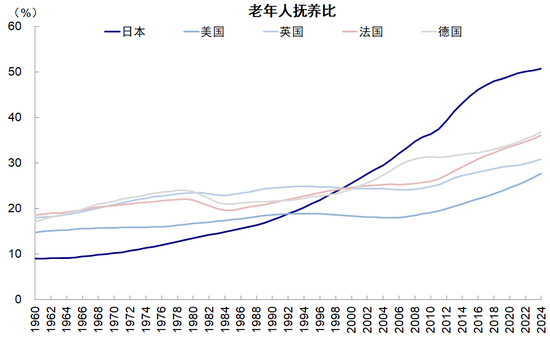
Core Insights - The article discusses the lessons learned from Japan's economic experience in the 1990s, emphasizing that despite facing multiple pressures such as deflation, real estate downturns, and debt issues, a bull market can still be stimulated through policy measures and capital inflows. However, unresolved structural problems can lead to interruptions in market recovery, as seen in Japan's case, which experienced three bull markets that were ultimately short-lived due to these underlying issues [1][7]. Group 1: Structural Issues in Japan in the 1990s - Japan faced significant structural issues during the 1990s, including a declining birth rate leading to an aging population, which increased the elderly dependency ratio from 17.4% in 1990 to 25.6% in 2000, a rise of 8.2 percentage points [9][10]. - The public pension system was under pressure due to aging demographics, with pension expenditures as a percentage of GDP increasing by 2.1 percentage points during the 1990s, raising concerns about sustainability [12][13]. - The real estate bubble burst after rapid interest rate hikes by the Bank of Japan, leading to a prolonged decline in housing prices, with national residential land prices dropping by approximately 52.8% over two decades [16][19]. - Employment challenges emerged as a result of a surplus in the labor market, with university graduate employment rates falling from 81.3% in 1991 to 55.1% in 2003, creating a competitive environment for public sector jobs [21][24]. - The financial system was strained as the real estate bubble's collapse weakened cash flows for real estate companies, increasing non-performing assets in banks [29]. Group 2: Policy Shortcomings in the 1990s - Japan's policies in the 1990s were inadequate, with a misalignment between technological investments and market realities, causing the country to miss the internet wave and lose competitiveness in the semiconductor industry [34][35]. - The government overly relied on short-term infrastructure investments, which constituted nearly 20% of fiscal spending at times, failing to address structural issues and leading to a decline in consumer demand [3][43]. - Real estate policies were slow and insufficient, with mortgage interest rates declining only marginally, resulting in prolonged downward pressure on housing prices and damage to household balance sheets [50][51]. - The slow pace of debt resolution and a lenient regulatory approach to non-performing assets weakened the financial system's resilience, leading to higher costs when external shocks occurred [54][59]. Group 3: Policy Awakening Post-2000 - After 2000, Japan shifted its policy focus towards social welfare, with public spending on social security rising from 21.4% in 2000 to 32.7% in 2015-2019, contributing to sustained income growth for residents [62][64]. - The government implemented large-scale institutional measures to address non-performing assets, significantly reducing the non-performing loan ratio from 8.4% in 2001 to 2.9% by 2004 [71][72]. - Technological policies became more aligned with market needs, with a focus on key sectors and direct support for corporate R&D, enhancing the effectiveness of government incentives [75][76]. Group 4: Implications for Current Economic Context - China currently faces challenges similar to Japan's past, with old economic drivers still weighing down growth. The fourth quarter has seen a slowdown in real estate and domestic demand, indicating potential market volatility [5][84]. - While new economic drivers and capital inflows can provide short-term boosts, addressing old economic drivers is equally crucial for sustainable recovery. Policies aimed at enhancing consumer welfare and stabilizing the real estate market are essential [5][82]. - China's economic advantages include strong government investment in AI and technology, a resilient export sector, and manageable government debt levels, providing a foundation for addressing structural challenges [80][81].

中金:“被延后”的修复
中金点睛· 2026-01-05 23:50
Core Viewpoint - The experience of Japan's three bull markets in the 1990s illustrates that even in a deflationary environment with real estate downturns and debt issues, policy stimulus and capital inflows can create bull markets. However, if structural problems remain unresolved, the effects of short-term stimulus will diminish, leading to recurring economic interruptions [2][9][10]. Group 1: Structural Issues in Japan in the 1990s - Japan faced several structural issues, including a declining birth rate leading to an aging population, which increased the elderly dependency ratio from 17.4% in 1990 to 25.6% in 2000, an increase of 8.2 percentage points [12][14]. - The public pension system faced significant fiscal pressure due to aging, with pension expenditures as a percentage of GDP rising by 2.1 percentage points during the 1990s, leading to increased public concern about sustainability [14]. - The real estate bubble burst in the early 1990s, with residential land prices declining by approximately 52.8% nationwide and 49.2% in the Tokyo area over more than 20 years [16][22]. - Employment challenges arose as the labor market faced oversupply, with the employment rate for university graduates dropping from 81.3% in 1991 to 55.1% in 2003 [24][25]. - The financial system was strained as the real estate bubble's collapse weakened cash flows for real estate companies, increasing non-performing assets in banks [30]. Group 2: Policy Shortcomings in the 1990s - Japan's policies in the 1990s were insufficient, with a misalignment in technology direction and a reliance on short-term infrastructure investments, which constituted nearly 20% of fiscal spending at one point, failing to generate sustainable long-term growth [4][36]. - The slow response to real estate policy, including gradual reductions in mortgage rates and taxes, prolonged the decline in property prices and damaged household balance sheets [4][53]. - The slow pace of debt resolution and a lenient regulatory approach to non-performing assets weakened the financial system's resilience, leading to higher costs when external shocks occurred [4][57]. Group 3: Policy Awakening After 2000 - Post-2000, Japan shifted its policy focus towards social welfare, with spending on social security rising from 21.4% in 2000 to 32.7% in 2015-2019, contributing to sustained income growth for residents [63]. - The government began to systematically address non-performing assets, with the introduction of the Financial Revitalization Law in 1998, which allowed for significant public funding to tackle the issue [70]. - Technological policies became more aligned with market realities, focusing on key sectors and enhancing direct support for corporate R&D through revised tax incentives [72]. Group 4: Implications for Current Economic Context - Current challenges in China mirror those faced by Japan, with old economic drivers still weighing down growth. The recent slowdown in real estate and domestic demand highlights the need for effective policy measures [6][76]. - The importance of addressing old economic drivers is emphasized, as policies aimed at boosting consumption and stabilizing the real estate market are crucial for long-term recovery [6][77]. - China possesses advantages such as strong government investment in AI technology and a resilient traditional manufacturing sector, which can support exports [76]. - The need for timely debt resolution is critical to avoid escalating costs and to enhance resilience against external shocks, as seen in Japan's experience [78].

2026上海国际家电及消费电子展AWE
Sou Hu Cai Jing· 2026-01-04 13:10
Group 1 - The AWE2026 (China Household Appliances and Consumer Electronics Expo) will take place from March 12 to 15, 2026, in Shanghai, featuring a new "one exhibition, dual zones" model [4] - The theme of AWE2026 is "AI Technology, Enjoying the Future," focusing on the innovative applications of artificial intelligence in the home appliance and consumer electronics sectors [6][10] - Over 1,500 exhibitors from more than 70 countries and regions are expected, with anticipated attendance exceeding 400,000, showcasing thousands of smart living products and solutions [6] Group 2 - Major Chinese brands such as Haier, Midea, Changhong, TCL, and Hisense will showcase their latest AI technologies and scenario-based products, highlighting China's technological leadership in manufacturing [6] - International brands like Bosch, Panasonic, Samsung, and LG will also participate, adding a global dimension to the expo [6] - The event will emphasize "full-domain interconnection," "proactive intelligence," and "personalized adaptation," marking a shift from focusing solely on product functionality to integrating advanced technologies [8] Group 3 - AWE2026 will introduce a new exhibition area in the Shanghai Oriental Hub International Business Cooperation Zone, aimed at showcasing advanced technologies in the consumer electronics industry [10] - This expo is positioned as a significant international event following the operational launch of the business cooperation zone, leveraging its unique advantages for global brand aggregation and technological innovation [10]

老牌私募近5年业绩出炉!复胜、前海博普、神农领跑!君之健、龙旗居前!
私募排排网· 2026-01-04 03:33
本文首发于公众号"私募排排网"。 (点击↑↑ 上图查看详情 ) 过去五年,A股市场以强烈的风格切换和复杂的周期演进,完成了一次完整的压力测试。从2021年"宁组合"与"茅指数"的极致分化对决,到随后 长达三年的估值磨底与信心重构,再到2024年"9·24"后以改革预期和产业升级为内核的慢牛初现,市场不仅经历了从"β盛宴"到"α博弈"再到"新 共识"的范式转移,更对资产管理机构的生存能力与进化能力提出了系统性拷问。 在这一宏大的市场叙事中,经历多轮市场周期的老牌私募(通常指成立十年以上的私募,即2016年1月1日前成立的私募,下同)又带来了怎么 样的业绩?为更清晰了解老牌私募业绩,笔者按照公司规模分类,梳理出各规模组收益十强的私募名单,供读者参考。 0 1 100亿以上:复胜领跑!君之健、龙旗科技居前! 截至2025年12月26日,百亿规模组中,在私募排排网上至少有3只产品符合排名规则且有近5年业绩展示的老牌私募共有19家,近5年收益均值十 强的上榜"门槛"超 *** %。( 点此查看收益 ) [应监管要求,私募基金不能公开展示业绩,文中涉及收益数据用***替代,合格投资者可扫描图中二维码或点击文末阅读原文,查 ...


2025年“冠军基”出炉!永赢科技智选狂赚240%,打破18年纪录
Huan Qiu Lao Hu Cai Jing· 2025-12-31 11:53
Core Insights - The A-share market in 2025 has been vibrant, with technology sectors like AI and semiconductors leading the gains, resulting in significant profits for investors [1] - The fund managed by Ren Jie, Yongying Technology Smart Selection A, achieved nearly 240% annual returns, breaking an 18-year record and becoming the most profitable fund in public offering history [2] - The Guotai CSI All-Share Communication Equipment ETF also performed well, with close to 129% growth, making it the champion among index funds [1][5] Active Equity Funds - 2025 is marked as a comeback year for active equity funds, with approximately 80% outperforming their benchmarks, averaging over 30% returns [2] - A total of 84 funds doubled their returns, with 4 exceeding 150% and 13 between 130%-150% [2] - The success of active equity funds is attributed to fund managers' precise grasp of structural market trends, particularly in AI and technology sectors [2][4] Fund Manager Performance - Ren Jie, a relatively new fund manager with only 1.17 years of experience, has led Yongying Technology Smart Selection A to exceptional performance, significantly outperforming other technology-themed funds [2][4] - His strategic investments in key stocks like Alibaba and AoFei Data contributed to the fund's high annual performance [4] Passive Funds - Passive funds are also thriving, with an overall market return of 22.56% among over 3,200 passive index funds, and 15 funds achieving doubled returns [5][6] - The Guotai CSI All-Share Communication Equipment ETF, managed by Ai Xiaojun, led the passive fund category with nearly 129% growth, benefiting from a strong index performance [6][7] Bond Funds - In the bond market, convertible bond funds have outperformed, with an average return of nearly 24%, while pure bond funds struggled with average returns below 1% [8] - The South Fund Changyuan Convertible Bond A achieved close to 50% returns, becoming the top performer among bond funds [8][9] Private Equity Funds - In the private equity sector, the Derun Yangfan No.1 fund emerged as a standout, achieving 173.50% annual returns, making it the top performer among private funds [10] - The fund focuses on high-growth sectors like AI infrastructure and smart robotics, attracting significant capital and partnerships with distribution agencies [10]
市场情绪高涨,铜价延续上行
Tong Guan Jin Yuan Qi Huo· 2025-12-29 02:10
1. Report Industry Investment Rating No relevant content provided. 2. Core Views of the Report - Last week, copper prices continued to rise. The main reasons were that the GDP growth rate in the third quarter of the US was better than expected, the next Fed chairperson might be announced soon, Trump stated that the new chair must be a dovish supporter of interest - rate cuts, and Powell might resign as a governor ahead of schedule after his term ends in May next year. The weakening US dollar index boosted the metal market. On the other hand, the central bank continued to increase the volume of MLF for the 10th consecutive month to keep market liquidity abundant, and the property market policy will be further relaxed next year. Fundamentally, overseas concentrate supply remained tight, non - US supplies were low, domestic social inventories declined to a low level, spot consumption was suppressed, domestic trade spot discounts widened, and the C - structure of the near - month contract narrowed [2][7]. - Overall, the strong US economic growth strengthened the market's confidence in the increasing demand for metals. The Trump administration will announce the new Fed chairperson soon, which may lay the foundation for a continued loose policy next year. The continuous weakening of the US dollar provides strong support for copper prices. Fundamentally, the overseas concentrate shortage remains, non - US inventories continue to decline, and new trends are replacing old drivers to provide consumption growth. It is expected that copper prices will maintain a strong and volatile trend in the short term [2][9]. 3. Summary According to Related Catalogs Market Data - **Price Changes**: LME copper rose from $11,870.50 to $12,133.00 per ton, a 2.21% increase; COMEX copper rose from 548.35 cents to 585.15 cents per pound, a 6.71% increase; SHFE copper fell from 94,080 yuan to 93,180 yuan per ton, a 0.96% decrease; international copper rose from 84,900 yuan to 91,350 yuan per ton, a 7.60% increase. The Shanghai - London ratio decreased from 7.93 to 7.68. The LME spot premium increased from $4.73 to $19.69 per ton, a 316.28% increase, and the Shanghai spot discount increased from - 195 yuan to - 340 yuan per ton [3]. - **Inventory Changes**: As of December 26, the total inventory of LME, COMEX, SHFE, and Shanghai bonded area increased to 851,252 tons, a 4.21% increase. LME copper inventory decreased by 3,375 tons (- 2.10%), COMEX inventory increased by 20,738 short tons (4.49%), SHFE inventory increased by 15,898 tons (16.60%), and Shanghai bonded area inventory increased by 1,100 tons (1.12%) [6]. Market Analysis and Outlook - **Price - Rising Reasons**: The main reasons for the rise in copper prices last week were the better - than - expected US GDP growth in the third quarter, the possible announcement of the new Fed chairperson, the weakening US dollar index, the central bank's continuous increase in MLF volume, and the expected relaxation of the property market policy. Fundamentally, overseas concentrate supply was tight, non - US supplies were low, domestic social inventories declined, spot consumption was suppressed, and the C - structure of the near - month contract narrowed [2][7]. - **Macro - aspects**: The stability of the FOMC voting committee makes it possible for Powell to retire in 2026. Trump hopes the new Fed chair will support interest - rate cuts. The Bank of Japan may further raise interest rates next year. The US third - quarter GDP growth was better than expected, but government intervention may break the central bank's independence. In China, the central bank maintained the one - year and five - year LPR rates in December. In 2026, the moderately loose monetary policy may have two main focuses: total - volume policy (possible interest - rate cuts of 0.2 - 0.3 percentage points and reserve - requirement ratio cuts of 1 percentage point) and structural policy (increasing the quota of structural monetary policy tools and lowering the operating interest rate) [8]. - **Supply - and - Demand Aspects**: Overseas major mines' production increase next year is expected to be limited, with the global concentrate supply growth rate less than 1.5%. The long - term TC benchmark price for 2026 is at a record low of $0 per ton, indicating a tight global copper concentrate supply. Overseas deliverable supplies are flowing into North America, and non - US supply is tight. In terms of demand, traditional industries' demand is cooling, while emerging industries such as new - energy vehicles, AI data centers, and robots provide new consumption growth. The spot discount has widened, and domestic inventories have declined [9]. Industry News - **M&A News**: Gold and copper miner SolGold agreed to be acquired by Jiangxi Copper for £867 million ($1.17 billion). The deal gives Jiangxi Copper control of SolGold's Cascabel project in Ecuador, which has one of South America's largest undeveloped copper - gold deposits [10]. - **Labor Dispute News**: Workers at Capstone Copper's Mantoverde copper - gold mine in Chile are ready to strike. If the new labor - contract mediation fails, the strike may start on December 29. The strike may cause the company to lose over $100 million in monthly revenue, and the mine's 2025 cathode - copper production plan is 29,000 - 32,000 tons [11]. - **Policy News**: The National Development and Reform Commission released an article on promoting the optimization and upgrading of traditional industries. For resource - constrained industries such as copper smelting, it is necessary to strengthen management, optimize the layout, prevent blind investment, encourage mergers and acquisitions, support technological research, and improve the recycling system [12].