银发经济

Search documents
从“外出务工”到“就近就业” 农民工就业渠道更加多元
Yang Shi Xin Wen Ke Hu Duan· 2025-11-17 02:06
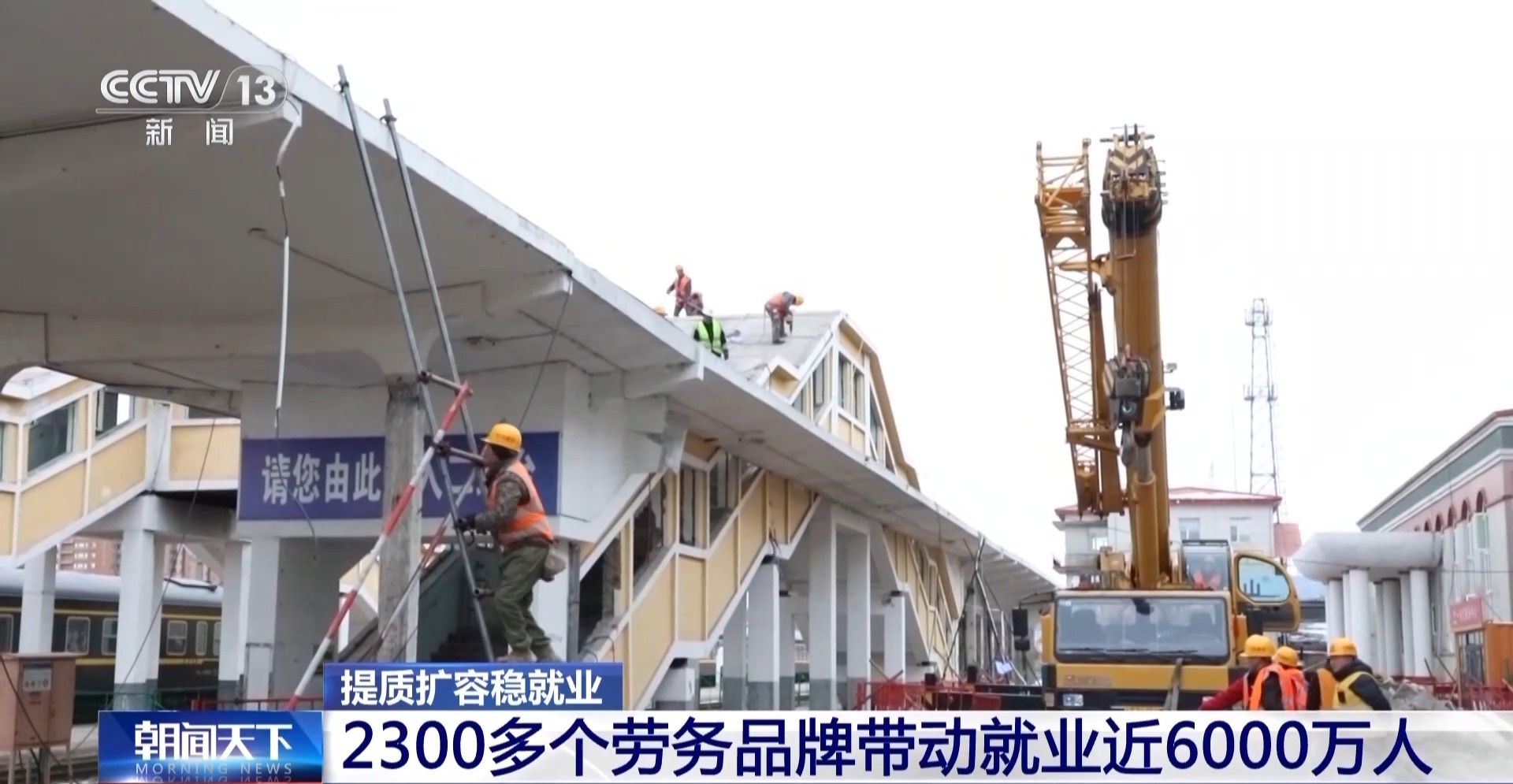
Core Insights - The government has expanded employment channels for migrant workers through order-based training, resulting in over 2,300 labor brands and nearly 60 million job placements this year [1] - The integration of primary, secondary, and tertiary industries has led to the development of rural specialty industries, providing new job opportunities close to home for many rural residents [3][7] Employment Initiatives - The Ministry of Human Resources and Social Security has reported that over 31 million migrant workers have received subsidized vocational training during the 14th Five-Year Plan period [3] - Local governments are focusing on industries that can absorb skilled migrant workers, such as construction, maintenance, housekeeping, catering, logistics, and new occupations [3] Local Employment Development - In Wanyuan City, approximately 96,000 rural residents are unable to work outside due to family responsibilities, prompting the establishment of processing workshops for local agricultural products [7] - The local food processing company employs over 100 villagers, offering monthly incomes between 3,000 to 4,000 yuan [9] Support for Employment - Wanyuan City has transformed old factories into employment workshops to assist disadvantaged groups, including the disabled, in finding local jobs [11] - The city has implemented policies to encourage businesses to hire more workers, distributing 12.68 million yuan in support funds [13] Service Industry Growth - The demand for labor in the service sector has increased significantly, particularly in elder care and housekeeping, with job openings in these areas growing by 29.2% year-on-year [15] - The pet service industry has seen a remarkable increase in job openings, with a 43.7% rise in the third quarter, particularly for pet doctors and groomers [17]

发展银发经济,守护稳稳幸福
Ren Min Ri Bao· 2025-11-17 01:47
Group 1 - The core of the silver economy includes "for the elderly economy," "preparation for the elderly economy," and "utilizing the elderly economy," which helps to better explore the potential of the silver economy [1][2] - By 2050, the market size for the consumption of the elderly population aged 60 and above in China is expected to exceed 100 trillion yuan [1] - The "14th Five-Year Plan" emphasizes the development of the silver economy and the active utilization of elderly human resources, providing direction for industrial innovation and market development [1] Group 2 - The silver economy must focus on "age-friendly" initiatives, enhancing the rights and interests of the elderly as a foundational aspect [2] - There is a significant demand for elderly care workers, with a reported need for 6 million positions, while only 500,000 are currently filled, highlighting a skills gap in the workforce [2] - The development of the silver economy requires a user-oriented approach, integrating "elderly care+" cross-industry collaboration to meet new demands [2] Group 3 - Elderly individuals are often targets of commercial fraud and misleading consumption due to their slower information acquisition and weaker rights protection [3] - Establishing protective measures such as "green channels" for elderly consumer rights and regular monitoring of market practices is essential for maintaining market order [3] - A collaborative effort is needed to create a "Protect the Elderly Alliance," ensuring the well-being of the elderly and revitalizing the silver economy [3]
国常会部署“促消费稳投资” 新一轮降准降息有望实施
Di Yi Cai Jing· 2025-11-17 01:43
Economic Overview - The slowdown in external demand, weakened domestic demand, and high base effects from the previous year have led to fluctuations in major economic indicators since the fourth quarter, necessitating an increase in macroeconomic policy support [1] - In October, the industrial added value above designated size grew by 4.9% year-on-year, a decrease of 1.6 percentage points from September; retail sales of consumer goods increased by 2.9%, slightly down by 0.1 percentage points from September [1] - From January to October, fixed asset investment (excluding rural households) totaled 408.914 billion yuan, a year-on-year decline of 1.7% [1] Government Policy and Economic Measures - The State Council, led by Premier Li Qiang, held a meeting to discuss the implementation of "two major" constructions, focusing on enhancing the adaptability of supply and demand in consumer goods and promoting consumption policies [1][6] - The government aims to rationally arrange project construction and fund disbursement, strengthen project and fund matching, and encourage more private capital participation [1][6] - The "two major" constructions involve significant national strategic implementations and key area safety capability enhancements, with 800 billion yuan allocated for 1,459 projects by 2025 [6][7] Consumption Trends - Despite a decline in industrial, consumption, and investment data, structural highlights remain, with service consumption becoming an important growth point [3] - From January to October, retail sales of consumer goods increased by 4.3%, with service retail sales growing by 5.3% [3] - Digital and green consumption are expanding, significantly boosting overall consumption growth, with online retail sales rising by 9.6% year-on-year [4] Investment Dynamics - Fixed asset investment has shown a rare cumulative year-on-year negative value for two consecutive months, primarily due to a slowdown in infrastructure, manufacturing, and real estate investments [5] - The investment growth slowdown is attributed to various factors, including a complex external environment, fierce domestic market competition, and weak corporate profitability [4][5] - The government has introduced measures to stimulate private investment and has accelerated the deployment of new policy financial tools to support effective investment [7] Supply and Demand Adaptability - Enhancing supply and demand adaptability is seen as a key measure to release consumption potential and facilitate economic circulation [8][10] - The government emphasizes the need for consumption upgrades to lead industrial upgrades, aiming for a dynamic balance between supply and demand [9][10] - The interaction between new supply and new demand is expected to promote a virtuous cycle of potential consumption and effective investment, enhancing the reliability of domestic circulation [10]

涟水县服务业赋能县域经济高质量发展
Xin Hua Ri Bao· 2025-11-16 22:14
Core Insights - The modern service industry in Lianshui has shown a stable and positive development trend since the "14th Five-Year Plan," with steady expansion in total scale and continuous improvement in service supply capacity [1][7] Economic Growth and Service Industry Performance - The added value of the service industry in Lianshui has steadily increased from 25.356 billion to 34.725 billion by 2024, with an average annual growth rate of 8.18% [2] - The total retail sales of consumer goods are projected to reach 24.949 billion in 2024, reflecting a year-on-year growth of 5.1%, which has driven rapid revenue growth in the regulated service industry, with a projected revenue of 2.774 billion, up 25.7% year-on-year [2] Infrastructure and Market Dynamics - Lianshui's strategic location and integrated transportation network have effectively reduced operational costs and improved supply chain efficiency, fostering the development of modern commerce and service industries [3] - As of July 2025, the number of service enterprises in Lianshui reached 14,003, an increase of 115 from 2020, with significant growth in key sectors such as information transmission and technology services [3] Logistics and Financial Services - By the end of 2024, Lianshui established a comprehensive logistics service system with 4 county-level logistics centers and 366 village-level logistics points, achieving 100% coverage [4] - Financial services have been tailored to meet the needs of production service enterprises, with loans to the liquor industry reaching 354 million by June 2025, alleviating financial pressures [4] Quality of Life and Service Upgrades - Lianshui has successfully developed tourism attractions, enhancing visitor appeal and promoting cultural activities, which contribute to the local economy [6] - The elderly care services have been innovated to provide convenient dining and community support, with 20 mutual aid points and 5 community dining points established [6] Future Development Focus - Moving forward, Lianshui aims to leverage its geographical advantages and industrial foundation to enhance the digitalization, high-end, and integrated transformation of the service industry, continuously stimulating market vitality and development potential [7]


发展银发经济,守护稳稳幸福(人民时评)
Ren Min Ri Bao· 2025-11-16 22:10
Group 1 - The core of the silver economy includes "for the elderly economy," "preparation for the elderly economy," and "utilizing the elderly economy," which helps to better explore the potential of the silver economy [1][2] - By 2050, the market size for the consumption of the elderly population aged 60 and above in China is expected to exceed 100 trillion yuan [1] - The "14th Five-Year Plan" emphasizes the development of the silver economy and the active utilization of elderly human resources, providing direction for industrial innovation and market development [1] Group 2 - The silver economy must focus on "age-appropriate" services, enhancing the rights and interests of the elderly, and ensuring their sense of gain, happiness, and security [2] - There is a significant demand for elderly care workers, with a reported need for 6 million positions, while only 500,000 are currently filled, highlighting a skills gap in the workforce [2] - The development of the silver economy requires a deep integration of industry and education to attract more talent and address the challenges in the elderly care sector [2] Group 3 - The elderly are vulnerable to commercial fraud and misleading consumption, facing challenges such as high-priced health products and deceptive investment schemes [3] - Establishing protective measures, such as "green channels" for consumer rights and consumer warning lists, is essential to maintain market order and consumer confidence [3] - A collaborative effort is needed to create a "Protect the Elderly Alliance" to ensure the well-being of the elderly and promote a thriving silver economy [3]
90后攒的养老金,三十年后怎么花?
3 6 Ke· 2025-11-16 22:05
Group 1: Aging Population Trends - As of the end of 2024, China's population aged 60 and above is projected to reach 310 million, with those aged 65 and above at 220 million, accounting for 22% and 15.6% of the total population respectively, indicating a moderate aging stage [1] - By 2035, the elderly population in China is expected to exceed 400 million, with an annual net increase of over 10 million people aged 60 and above in the next decade [1][2] - The aging process in China is characterized by its large scale, rapid pace, and prolonged duration, affecting every family and necessitating a rethinking of life after retirement [1][2] Group 2: Technological Innovations in Elderly Care - The concept of "cyber nursing" is gaining traction, with suggestions to incorporate the development of elderly care robots into strategic planning, aiming to enhance community and home care [4][5] - Various types of robots are already being utilized in elderly care settings across China, including bathing robots, exoskeletons for rehabilitation, and companion robots that assist with daily activities [5] - While technological innovations are promising, they are not seen as the ultimate solution to elderly care challenges; rather, they are viewed as tools to alleviate the physical burdens on caregivers [10] Group 3: Silver Economy Insights - The "new silver population" aged 50-65, particularly in high-tier cities, is characterized by economic affluence, high home ownership, and significant leisure time, leading to diverse social and consumption needs [11] - The silver economy in China is projected to have an annual output value of 7 trillion yuan, although the overall consumption power of the elderly remains relatively low compared to younger demographics [14][16] - There is a growing trend among the elderly to prioritize personal spending and quality of life over traditional notions of filial piety, indicating a shift in consumption behavior [11][12] Group 4: Challenges and Opportunities in Elderly Care - Despite the potential of the silver economy, many elderly individuals face financial constraints, with average annual incomes significantly lower in rural areas compared to urban settings [16] - The market is also plagued by low-quality products and scams targeting the elderly, highlighting the need for better consumer protection and quality assurance in the silver economy [16] - Addressing the challenges of aging requires a multifaceted approach, including improved public services and community support systems to ensure the well-being of the elderly [17]

发展银发经济 守护稳稳幸福(人民时评)
Ren Min Ri Bao· 2025-11-16 21:59
Group 1 - The core concept of the silver economy includes "for the elderly economy," "preparation for the elderly economy," and "utilization of the elderly economy," which helps to better explore the potential of the silver economy [1][2] - By 2050, the market size for the consumption of the elderly population aged 60 and above in China is expected to exceed 100 trillion yuan [1] - The "14th Five-Year Plan" emphasizes the development of the silver economy and the active utilization of elderly human resources, providing direction for industrial innovation and market development [1] Group 2 - The foundation of a prosperous and sustainable silver economy is the enhancement of elderly people's sense of gain, happiness, and security, with a focus on user-oriented design and development of products and services [2] - There is a significant demand for elderly care workers, with a reported need for 6 million positions, while only 500,000 are currently filled, highlighting the challenges in the talent pool for the silver economy [2] - The integration of education and industry is crucial for attracting more talent to the silver economy, which presents unlimited future opportunities and space for growth [2] Group 3 - Elderly individuals are often targets of commercial fraud and misleading consumption due to their slower information acquisition and weaker rights protection [3] - Establishing protective measures such as "green channels" for elderly consumer rights and regular crackdowns on fraud is essential for maintaining market order and consumer confidence [3] - A collaborative effort to create a "Protect the Elderly Alliance" is necessary to ensure the well-being of the elderly population and to invigorate the silver economy [3]
增强供需适配性 进一步释放消费潜力
Zheng Quan Ri Bao· 2025-11-16 16:46
Core Insights - The State Council meeting on November 14 emphasized enhancing the adaptability of supply and demand as a means to unleash consumption potential and facilitate economic circulation [1][3] - The focus is on aligning supply with diverse and personalized consumer demands through high-quality offerings, creating a virtuous cycle of "demand driving supply and supply creating demand" [1][2] Group 1: Policy Measures - The meeting proposed leading industrial upgrades through consumption upgrades, aiming for a dynamic balance between supply and demand at a higher level [1] - There is a strong emphasis on innovation in new technologies and models, particularly the integration of artificial intelligence to develop new products and value-added services [1][2] - Support for enterprises to expand the supply of high-quality consumer goods, with an emphasis on updating safety, performance, and environmental standards [1][2] Group 2: Market Dynamics - The policies reflect a shift from "incremental pull" to "structural adaptation," focusing on precise matching of diverse consumer needs rather than broad-based support [3] - The current phase of consumption structure upgrade presents significant opportunities in sectors like cultural tourism and healthcare, with emerging trends such as the silver economy and first-time economy injecting new momentum into consumption [2] - The transformation aims to reposition consumers at the center of the production chain, allowing for personalized responses to consumer demands and enabling companies to achieve higher profits through premium pricing [2][3]
国常会部署“促消费稳投资” 财政及货币政策有望加力
Sou Hu Cai Jing· 2025-11-16 16:36
Economic Overview - The slowdown in external demand, weakened domestic momentum, and high base effects from the previous year have led to fluctuations in major economic indicators since the fourth quarter, necessitating an increase in macroeconomic policy support [1] - In October, the industrial added value above designated size grew by 4.9% year-on-year, a decrease of 1.6 percentage points from September; retail sales of consumer goods increased by 2.9%, slightly down by 0.1 percentage points from September; fixed asset investment (excluding rural households) totaled 408.914 billion yuan, down 1.7% year-on-year [1] Policy Measures - The State Council, led by Premier Li Qiang, held a meeting to discuss the implementation of "two major" constructions, focusing on enhancing the adaptability of supply and demand in consumer goods and promoting consumption policies [1][6] - The meeting emphasized the need to rationally arrange project construction and fund disbursement, strengthen project and fund matching, and encourage more private capital participation [1][6] Consumption Trends - Despite a decline in industrial, consumption, and investment data in October, there are structural highlights, particularly in service consumption, which has become an important growth point [3] - From January to October, retail sales of consumer goods increased by 4.3%, with service retail sales growing by 5.3% [3] Investment Insights - Fixed asset investment (excluding rural households) saw a year-on-year decline of 1.7%, with private fixed asset investment down by 4.5% [4] - The slowdown in investment growth is attributed to various factors, including a complex external environment, fierce domestic market competition, and weak corporate profitability [4][5] - Investment in infrastructure, manufacturing, and real estate has decelerated significantly, leading to a rare cumulative year-on-year negative value for two consecutive months [4][7] Emerging Consumption - Digital and green consumption are expanding, significantly contributing to consumption growth, with online retail sales increasing by 9.6% year-on-year [4] - The ongoing upgrade in consumption structure is creating new opportunities in sectors like cultural tourism and healthcare, alongside the rapid development of the silver economy and first-time economy [4] "Two Major" Construction - The "two major" construction initiative is positioned as a key driver for effective investment and the cultivation of new productive forces, with a planned investment of 800 billion yuan for 1,459 projects by 2025 [6][7] - This initiative aims to enhance strategic and safety capabilities in key areas, including ecological restoration and major infrastructure projects [6][7] Supply and Demand Adaptability - Enhancing supply and demand adaptability is crucial for releasing consumption potential and facilitating economic circulation [8] - The focus is shifting from merely stimulating consumption to achieving a dynamic balance and positive interaction between supply and demand [8][9]
我国明确未来十年养老服务改革发展两大战略任务
Xin Hua Cai Jing· 2025-11-16 13:41
Core Insights - The Chinese Ministry of Civil Affairs aims to establish a mature and suitable elderly care service system by 2035, ensuring all elderly individuals have access to basic elderly care services [1] - The current elderly care services in China have seen significant transformations, but challenges such as supply-demand mismatch, inadequate networks, inconsistent quality, insufficient technological integration, and lack of comprehensive systems remain [1] - The aging population presents both challenges and opportunities, with a focus on ensuring elderly individuals can enjoy a fulfilling life and share in the benefits of development [2] Summary by Sections Strategic Goals - By 2035, the two strategic tasks for elderly care reform in China are: 1) the establishment of a mature elderly care service system suitable for national conditions, and 2) ensuring all elderly individuals receive basic elderly care services [1] Current Challenges - The elderly care sector is facing urgent issues including supply-demand mismatches, underdeveloped networks, varying service quality, insufficient technological empowerment, and inadequate system integration [1] Future Trends - The elderly care industry is expected to transition towards a "silver economy," with artificial intelligence reshaping the value chain from a labor-intensive model to a data and intelligence-driven model [3] - Experts are discussing key topics such as aging policies, technological innovation, industry integration, and service practices to support high-quality development in the elderly care sector during the "14th Five-Year Plan" period [3]