智能驾驶

Search documents
ETF及指数产品网格策略周报(2025/12/2)
华宝财富魔方· 2025-12-02 10:18
Core Viewpoint - The article emphasizes the significant advancements in AI applications across various sectors, particularly in internet services, automotive, military, and robotics, highlighting the potential for investment opportunities in related ETFs as these technologies scale up and become more integrated into core business operations [3][4][10][13]. Group 1: Internet Sector - The Chinese internet sector is witnessing a surge in AI product launches, with Alibaba's AI assistant achieving over 10 million downloads within a week of its public testing [3]. - The integration of AI into core products enhances user engagement and service capabilities, thereby solidifying traffic advantages and creating new revenue streams for internet companies [4]. Group 2: Automotive Sector - Recent government policies, such as vehicle purchase tax exemptions and subsidies for new energy vehicles, have effectively boosted domestic demand for electric vehicles [6][7]. - China's cumulative sales of new energy vehicles reached 9.47 million units by September 2025, marking a year-on-year growth of 28.1%, while exports surged to 1.758 million units, up 89.4% [7]. Group 3: Military Sector - China's defense budget for 2025 is set at 1.81 trillion yuan, a 7.2% increase, indicating a focus on modernizing military capabilities [10]. - The military ETF tracks the aerospace and defense sectors, which are expected to benefit from a new procurement cycle and improved industry fundamentals [10]. Group 4: Robotics Sector - The Chinese government is actively promoting the development of intelligent robots and advanced manufacturing equipment, with significant investments in the robotics sector exceeding 24 billion yuan by mid-2025 [13]. - The country is transitioning from concept validation to large-scale application of robotics, supported by a complete supply chain and strong commercialization capabilities [13].


硅基革命重构竞争格局:中国智驾的攻与守
Mei Ri Jing Ji Xin Wen· 2025-12-02 09:00
Group 1 - The global automotive industry is facing unprecedented challenges, with over 55,000 jobs lost in the past two years in Germany alone, and more than 100,000 layoffs reported worldwide in the last year [1][2] - In contrast, China's automotive sector is thriving, with significant advancements in smart electric vehicles and a robust supply chain, positioning itself as a global leader in the industry [1][3] Group 2 - 2025 is seen as a critical year for automotive manufacturers, with a focus on survival in the face of electrification and the need for innovation in smart technologies [2][10] - China's automotive industry has rapidly evolved, achieving over 30 million annual vehicle sales and over 50% penetration of new energy vehicles, showcasing its ability to catch up and lead in the electric transformation [3][10] Group 3 - Major automotive companies are balancing tradition and innovation, with firms like Mercedes-Benz adapting to local markets while maintaining high safety and quality standards [4][5] - The innovation paths of foreign and Chinese companies are converging, with a blend of cautious planning and agile execution becoming the norm in the industry [5][6] Group 4 - A significant debate is ongoing regarding the technical routes for intelligent driving, with different approaches such as Tesla's vision-based system and Huawei's lidar-based system highlighting diverse innovation strategies [6][7] - The introduction of mandatory safety standards for L2-level driving assistance in China marks a shift towards a more regulated and safety-focused industry [8][9] Group 5 - The Chinese government is facilitating the development of L3-level autonomous driving, with expectations for standards to be established soon, indicating a strong push towards advanced automated driving technologies [10][11] - The competitive landscape in China's smart driving sector is characterized by a diverse ecosystem of companies, fostering innovation and adaptability across various scenarios [10][11]




智驾时代驾考重磅升级!人机共驾催生千亿驾培新蓝海
Qi Lu Wan Bao· 2025-12-02 08:18
Group 1 - The core viewpoint of the article emphasizes the transformation of driving education in China, integrating intelligent driving systems into the driving examination process to enhance road safety [1][2][3] - The Ministry of Public Security indicates that as of June 2025, the number of new energy vehicles in China is expected to reach 36.89 million, accounting for 10.27% of the total vehicle population, with a record high of 5.622 million new registrations in the first half of the year, reflecting a year-on-year growth of 27.86% [2] - The article highlights that the current intelligent driving systems in vehicles are still in the assisted driving phase, requiring human intervention, and emphasizes that drivers remain the primary responsible party for driving actions [2][3] Group 2 - The integration of intelligent driving education into the driving test aims to improve road safety, as over-reliance on intelligent systems without the ability to take control has become a major cause of new types of traffic accidents [3] - The driving examination reform is not intended to increase difficulty but to adapt to technological advancements, requiring future drivers to learn how to collaborate with intelligent systems [3][4] - The company, Mucang Technology, which operates the driving test app "Driving Test Bible," is leveraging its technological expertise to develop smart driving training products, including immersive training experiences using AR technology to simulate various driving scenarios [3][4][5] Group 3 - The policy to include intelligent driving in driving tests is expected to create new growth opportunities for the driving training industry, with "Driving Test Bible" already collaborating with driving schools to offer comprehensive intelligent driving teaching solutions [4] - The "Alpha Phantom" intelligent simulator, available in various versions, is being utilized in smart driving schools to cater to diverse training needs, reflecting the industry's shift towards integrating technology in driving education [4][5] - The upcoming changes in the driving examination system align with the automotive industry's trend towards intelligence, positioning "Driving Test Bible" to capitalize on this historical transition and lead the market in smart driving education [5]
腾讯、小米大手笔回购!中概互联ETF(513220)、港股科技50ETF(159750)双双上涨
2 1 Shi Ji Jing Ji Bao Dao· 2025-12-02 02:25
12月2日,港股三大指数开盘延续上涨。中概互联ETF(513220)开盘上涨0.69%,冲击三连涨!港股 科技50ETF(159750)截至发稿上涨0.47%。成分股中,快手涨超4%,阿里巴巴-W涨超2%,网易-S涨 超1%,腾讯控股、小米集团翻红。 海外方面,美东时间12月1日,美股三大股指均收跌,中概股逆势上涨,阿里巴巴收涨4.42%、百度涨 2.41%、拼多多涨1.89%。 近期,港股科技公司陆续公布了2025年第三季度财报。其中,阿里巴巴对AI+云、消费两大战略领域的 投入持续收获成效,核心业务强劲增长:阿里云季度收入同比加速增长34%,再创新高。 港股科技50ETF(159750)追踪港股科技指数(931574.CSI),前十大成分股包含阿里巴巴、腾讯控 股、美团、小米、比亚迪、京东、网易、百度、吉利汽车、中芯国际,覆盖了新能源汽车、智能驾驶、 人工智能、半导体等多个科技赛道。 据中国基金报,阿里巴巴集团CEO吴泳铭表示,旺盛的AI需求推动云智能集团收入进一步加速,季度 收入同比增长34%,其中AI相关产品收入连续第九个季度实现三位数增长。 中概互联ETF(513220)跟踪全球中国互联网指数(93 ...




全球智能驾驶大会在苏州举办
Su Zhou Ri Bao· 2025-12-02 00:31
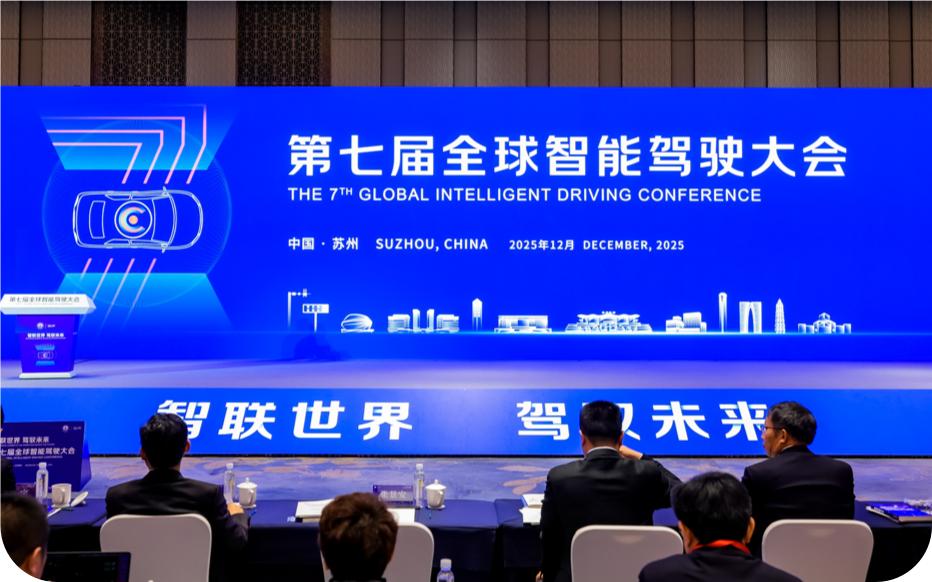
Core Insights - The seventh Global Intelligent Driving Conference was held in Suzhou, highlighting the integration of the automotive industry with AI, information communication, cloud computing, big data, and smart transportation [1] Industry Overview - The intelligent vehicle networking industry is emerging from the deep integration of various technologies, including AI and big data [1] - Suzhou has established a comprehensive industrial chain covering new energy vehicles, components, automotive electronics, and intelligent networking, with an industry scale exceeding 110 billion yuan [1] Policy and Initiatives - The conference provided insights into the "Guidelines for the Commercial Demonstration Application of Unmanned Driving Equipment in Jiangsu Province (Trial)" [1] - The Jiangsu Province Intelligent Driving Technology Key Laboratory was inaugurated, and projects for interconnectivity of cloud control platforms in pilot cities were launched [1]
苏州全面推动“车路云一体化”场景应用
Su Zhou Ri Bao· 2025-12-02 00:31
Core Insights - The article highlights the advancements in autonomous driving technology showcased at the 7th Global Intelligent Driving Conference in Suzhou, emphasizing the city's ambition to develop a fully integrated "Smart Driving City" [1] Group 1: Scene Implementation and Technology - Suzhou has implemented remote driving technology that allows one operator to control multiple cleaning vehicles, significantly reducing operational costs [2] - The city has established over 100 intelligent vehicle networking application scenarios, including smart transportation, logistics, and autonomous parking, with more than 1,200 vehicles involved in road testing and demonstration [2] - The release of the "Guidelines for Commercial Demonstration Applications of Autonomous Driving Equipment" has increased expectations for the commercialization of these scenarios [2] Group 2: Industrial Development and Innovation - Suzhou has a solid foundation in autonomous driving, chip development, and software, with over 150 innovative achievements in the past year and the emergence of several unicorn companies [3] - The city has strengthened collaborations with top universities and research institutions, establishing the Jiangsu Province Intelligent Driving Technology Key Laboratory and a public service platform for new energy vehicles [3] - Suzhou is advancing the integration of artificial intelligence with the automotive industry, having received approvals for multiple national pilot projects related to intelligent connected vehicles [3] Group 3: Regional and Global Collaboration - The launch of the cloud control platform for the Suzhou-Nanjing-Wuxi intelligent driving pilot cities marks a significant step towards regional collaboration in the Yangtze River Delta [5] - Suzhou is actively engaging in global markets, leveraging its industrial strength and export-oriented economy to enhance its position in the intelligent industry chain [5] Group 4: Policy Support and Future Outlook - The city has introduced over 30 policies to support the healthy development of the intelligent vehicle networking industry, including 20 new measures aimed at promoting the new energy vehicle sector [6] - Suzhou's strategic planning focuses on scene implementation, technological breakthroughs, regional collaboration, and global outreach to foster high-quality development in the intelligent driving sector [6]
21独家|速腾聚创起诉灵明光子,后者称“未收到任何法律函件”
2 1 Shi Ji Jing Ji Bao Dao· 2025-12-02 00:12
Core Viewpoint - The legal dispute between Suoteng Juchuang and Lingming Guangzi over alleged infringement of self-developed SPAD chip technology has garnered significant industry attention, with Suoteng seeking legal recourse to protect its technological achievements and market position [1]. Group 1: Company Overview - Suoteng Juchuang specializes in digital lidar technology, focusing on the development of digital lidar that utilizes single-photon avalanche diode (SPAD) technology, allowing each detection pixel to independently receive single photons and generate digital pulse signals [1]. - The company achieved a breakthrough in 2022 by integrating lidar reception and signal processing into a single chip, becoming the first in the industry to mass-produce self-developed SPAD-SoC technology [2]. - Lingming Guangzi, founded in May 2018 by several PhD graduates from Stanford and Delft University of Technology, has over 100 employees, with more than 80% in R&D, and is recognized as a national-level specialized and innovative "little giant" enterprise by the Ministry of Industry and Information Technology [2]. Group 2: Industry Context - The digital lidar produced by Suoteng Juchuang is characterized by its solid-state electronic scanning, which eliminates most macro-moving parts, making the system more compact and durable, thus meeting significant demand in scenarios such as blind spot detection [1].
速腾聚创起诉灵明光子 后者称“未收到任何法律函件”
2 1 Shi Ji Jing Ji Bao Dao· 2025-12-02 00:09
Core Viewpoint - The legal dispute between Suoteng Juchuang and Lingming Guangzi over alleged infringement of proprietary SPAD chip technology has garnered significant industry attention, with Suoteng seeking legal recourse to protect its technological advancements and market position [2]. Company Overview - Suoteng Juchuang specializes in digital lidar technology, particularly focusing on SPAD (Single-Photon Avalanche Diode) chips, which allow each detection pixel to independently receive single photons and generate digital pulse signals [2]. - The company achieved a breakthrough in 2022 by integrating lidar reception and signal processing into a single chip, becoming the first in the industry to mass-produce self-developed SPAD-SoC technology [3]. - Lingming Guangzi, founded in May 2018 by several PhD graduates from Stanford and Delft University of Technology, also offers SPAD-related products and has a strong focus on SPAD technology with over 80% of its workforce in R&D [3]. Industry Context - The digital lidar produced by Suoteng Juchuang is characterized by its solid-state electronic scanning, which eliminates most macro-moving parts, making the system more compact and durable, thus meeting the high demand in blind-spot detection scenarios in smart driving [2]. - Lingming Guangzi is recognized as a national-level specialized and innovative "little giant" enterprise by the Ministry of Industry and Information Technology in China, holding multiple domestic and international patents in SPAD technology [3].
明年开始,你的刹车会迎来一波史诗级更新
36氪· 2025-12-01 14:12
Core Viewpoint - The article discusses the advancements in brake technology, specifically focusing on the transition from traditional hydraulic braking systems to electronic mechanical braking (EMB) systems, highlighting the benefits and challenges associated with this shift [4][30]. Group 1: Technology Overview - The article introduces the concept of line control braking technology, which has recently received approval from national standards, paving the way for its implementation in vehicles [6][27]. - Current systems like EHB (Electronic Hydraulic Brake) still rely on hydraulic components, while EMB aims to eliminate these, using electric motors at each wheel for direct control [9][12]. - EMB technology promises faster response times, potentially reducing braking distances significantly compared to traditional systems [12][13]. Group 2: Benefits of EMB - EMB offers three main advantages: speed, precision, and efficiency. It can reduce response times to under 100ms, which is crucial for advanced driving assistance systems [12][14]. - The precision of EMB allows for individual wheel control, enhancing vehicle stability and safety, especially in adverse conditions [18]. - By eliminating the hydraulic system, EMB reduces vehicle weight and maintenance costs, contributing to better fuel efficiency and longevity of components [20][21]. Group 3: Market Readiness and Challenges - Despite the technological readiness, EMB has seen limited adoption in the market, with only a few models currently utilizing this system [23][24]. - Safety concerns remain a significant barrier to widespread implementation, as the automotive industry prioritizes reliability in braking systems [25]. - The introduction of national standards (GB 21670-2025) aims to address safety and redundancy requirements for EMB, but this may increase production costs by 30%-50% compared to existing systems [29][30]. Group 4: Future Outlook - The article suggests that while EMB technology is not yet fully mature, it is at a critical juncture for potential market expansion, with major suppliers preparing to launch products [31][34]. - Domestic suppliers are also advancing in this field, indicating a competitive landscape for EMB technology development [32][34]. - The expectation is that major automotive manufacturers will begin to adopt EMB systems in the near future, signaling a shift in braking technology [35].

第七届全球智能驾驶大会,曹操出行(02643)宣布近期将推出Robotaxi 2.0
智通财经网· 2025-12-01 13:20
Core Insights - The seventh Global Intelligent Driving Conference was held in Suzhou, focusing on technology trends, regional policies, and cooperation paths to build a new global development pattern for intelligent driving [1] - Cao Cao Mobility's CEO, Gong Xin, announced the upcoming launch of Robotaxi 2.0, emphasizing the arrival of the Robotaxi era and the opportunities it presents [1][10] Market Potential - By 2035, it is expected that there will be 1.9 million Robotaxis operating in China, with a market size exceeding 320 billion RMB [3] - The development of multi-sensor fusion, BEV architecture, end-to-end systems, and large models will significantly enhance the reliability of intelligent driving technology [3] Future Mobility Landscape - The future of shared mobility will involve a mixed operation model of human-driven and autonomous vehicles, leading to a highly centralized ride-hailing platform [5] - Intelligent cabins will evolve into mobile living spaces and personal assistants for users, creating new employment opportunities within the Robotaxi industry [5] Technological Advancements - As of February 28, 2023, Cao Cao Mobility launched the "Cao Cao Zhixing" platform in Suzhou and Hangzhou, marking the pilot phase of Robotaxi 1.0 with over 38,000 kilometers of autonomous driving road tests completed [7] - The company is transitioning from strategic leadership to tactical leadership in the Robotaxi sector, leveraging its partnership with Geely Holding Group [7] Future Outlook - The upcoming Robotaxi 2.0 aims to advance towards automation, scalability, commercialization, and globalization [10] - The company plans to respond to the global intelligent driving conference's initiative for intelligent connected vehicles while creating a safer, smarter, more efficient, and greener future mobility paradigm [10]