
中美关系

Search documents
表面示好,实则换招!开除反华专家,解禁H200,美国在盘算什么
Sou Hu Cai Jing· 2026-01-03 09:30
Group 1 - The core viewpoint of the article highlights a significant shift in U.S.-China relations, marked by a series of actions including the suspension of the tariff war and the allowance of H200 chip exports, indicating a complex and strategic recalibration rather than a straightforward concession [1][3][9] - The U.S. has extended exemptions on 178 tariffs related to China until November 2026, signaling a deliberate effort to stabilize the situation before negotiations [5] - A major restructuring within the U.S. State Department has led to the dismissal of approximately 3,000 employees, including key experts in technology and policy towards China, which raises questions about the U.S.'s capacity in the ongoing geopolitical competition [5][7][11] Group 2 - The decision to allow the export of H200 high-performance computing chips to China represents a significant relaxation of previous restrictions, indicating a reassessment of the costs associated with a hardline approach [9][14] - Despite the apparent softening of rhetoric from the Trump administration, military actions in the Asia-Pacific region continue to escalate, suggesting that the U.S. strategy remains focused on long-term competition rather than outright concession [11][14] - The restructuring and layoffs are seen as a tactical adjustment to reduce costs and improve negotiation leverage, rather than a fundamental shift in the U.S. strategy towards China [7][14][16]

中外对话丨2026年,世界为何更需要中国?
Xin Lang Cai Jing· 2026-01-02 04:04
Group 1 - The year 2026 marks the beginning of China's "14th Five-Year Plan," with expectations for China to play a significant role in global high-quality development amidst a changing world landscape [1][2] - China's economic growth is projected to provide critical support for the global economy, with a contribution rate exceeding 30% for several consecutive years [2][3] - The "14th Five-Year Plan" emphasizes the importance of technological advancement and economic development, which is expected to have significant implications for both China and the global community [2][3] Group 2 - China is recognized as a leader in green energy technology, contributing to global efforts to reduce reliance on fossil fuels and lower carbon emissions [3][4] - The stability of China-U.S. relations is anticipated to continue, with high-level diplomatic interactions playing a crucial role in maintaining a cooperative atmosphere [4][5] - Experts express concerns about the potential impact of U.S. domestic politics on bilateral relations, particularly regarding trade policies and tariffs [4][5] Group 3 - The rise of unilateralism and protectionism is seen as a source of uncertainty in the global landscape, which may persist into 2026 [5][6] - China is expected to continue its efforts to strengthen relationships with developing countries in Asia, Africa, and Latin America, promoting a multipolar international system [5][6] - The country aims to implement four major global initiatives to foster mutual development and contribute positively to global governance and peace [6]
新加坡前外长:中方在台湾问题上划定了明确红线,美方若不想“自找麻烦”就会远离这条红线
Huan Qiu Wang· 2025-12-30 10:34
30日,针对美方领导人关于中国人民解放军东部战区"正义使命-2025"演习的言论,外交部发言人林剑 在例行记者会上表示,台湾是中国领土不可分割的一部分。中国人民解放军开展有关军事演习,是 对"台独"分裂势力"以武谋独"的严厉惩戒,是捍卫国家主权和领土完整的必要行动。 杨荣文同时表示,美国总统特朗普不想让台湾地区成为问题,因为他与中国之间有着"重大议程",他希 望在剩余任期内与中国保持稳定关系,不希望与中国之间再添上别的问题。 谈及日本首相高市早苗涉台错误言论,杨荣文表示,高市被目前的处境"困住了",中国大陆民众对台湾 的情感之深不容低估,"他们怎能忘记当初正是日本的侵略才将台湾与大陆分离的呢?" 针对高市早苗涉台错误言论,外交部发言人郭嘉昆在12月16日的例行记者会上表示,日本曾侵略并殖民 统治台湾50年,犯下罄竹难书的罪行,在台湾问题上负有历史罪责。台湾是中国领土不可分割的一部 分,如何解决台湾问题完全是中国自己的事,日本没有任何资格置喙。我们要再次敦促日方恪守中日四 个政治文件精神,切实反思纠错,撤回高市首相错误言论。 12月29日开始,中国人民解放军东部战区组织开展"正义使命-2025"演习。国防部新闻 ...

成交破两万亿,沪指九连阳
Hua Tai Qi Huo· 2025-12-30 05:41
Report Summary 1. Report Industry Investment Rating No information provided. 2. Core Viewpoints - In the pre - holiday market, the scale of ETFs shows a continuous expansion trend, while the stock positions decline. The two effects offset each other, and the market is expected to mainly experience oscillatory recovery before the holiday [2]. 3. Summary by Relevant Catalogs Market Analysis - **Macro**: The State Council Tariff Commission will implement the "2026 Tariff Adjustment Plan" on January 1, 2026. Next year, China will apply temporary import tariff rates lower than the most - favored - nation tariff rates to 935 commodities. The total number of tariff items will increase to 8,972. Overseas, US President Trump said he will announce the nominee for Federal Reserve Chairman at an appropriate time, criticized Fed Chairman Powell and the Fed's building renovation, and is considering suing Powell for incompetence [1]. - **Spot Market**: A - share indices closed with mixed results. The Shanghai Composite Index had a nine - day winning streak, rising 0.04% to close at 3,965.28 points, while the ChiNext Index fell 0.66%. Most sector indices declined, with the petroleum and petrochemical, national defense and military industry, and banking sectors leading the gains, and the non - ferrous metals, public utilities, and power equipment sectors leading the losses. The trading volume of the Shanghai and Shenzhen stock markets exceeded 2 trillion yuan. Overseas, the three major US stock indices all closed down, with the Dow Jones Industrial Average falling 0.51% to 48,461.93 points [1]. - **Futures Market**: In terms of basis, the basis of stock index futures declined. In terms of trading volume and open interest, both the trading volume and open interest of stock index futures decreased [1]. Macro Economic Charts - Charts include the relationship between the US dollar index and A - share trends, the US Treasury yield and A - share trends, the RMB exchange rate and A - share trends, and the US Treasury yield and A - share style trends [6][7] Spot Market Tracking Charts - **Stock Index Performance**: On December 29, 2025, the Shanghai Composite Index rose 0.04% to 3,965.28, the Shenzhen Component Index fell 0.49% to 13,537.10, the ChiNext Index fell 0.66% to 3,222.61, the CSI 300 Index fell 0.38% to 4,639.37, the SSE 50 Index fell 0.35% to 3,034.63, the CSI 500 Index fell 0.38% to 7,430.61, and the CSI 1000 Index fell 0.15% to 7,594.16 [13]. - **Other Indicators**: Charts show the trading volume of the Shanghai and Shenzhen stock markets and the margin trading balance [14]. Futures Market Tracking Charts - **Trading Volume and Open Interest**: The trading volume and open interest of IF, IH, IC, and IM contracts all decreased. For example, the trading volume of IF was 96,159 (down 22,687), and the open interest was 275,855 (down 12,050) [15]. - **Basis**: The basis of stock index futures showed different changes. For example, the current - month contract basis of IF was - 8.57 (down 8.33) [40]. - **Inter - delivery Spread**: The inter - delivery spreads of different contracts also changed. For example, the spread between the next - month and current - month contracts of IF was - 10.00, with a change of + 5.00 [44].
股指期货:成交破两万亿,沪指九连阳
Xin Lang Cai Jing· 2025-12-30 02:36
热点栏目 自选股 数据中心 行情中心 资金流向 模拟交易 客户端 来源:华泰期货 作者: 汪雅航 市场分析 关注中美关系。宏观方面,国务院关税税则委员会发布《2026年关税调整方案》,将自2026年1月1日起 实施。根据方案,为增强国内国际两个市场两种资源的联动效应,扩大优质商品供给,明年我国将对 935项商品实施低于最惠国税率的进口暂定税率。优化关税税目及本国子目注释,税则税目总数增加至 8972个。海外方面,美国总统特朗普表示,将在适当的时机宣布美联储主席人选,时间很充裕;批评美 联储主席鲍威尔及美联储翻修大楼的做法;正考虑起诉鲍威尔,指控他无法胜任工作。 沪指收红。现货市场,A股三大指数收盘涨跌不一,沪指九连阳,当日涨0.04%收于3965.28点,创业板 指跌0.66%。行业方面,板块指数跌多涨少,石油石化、国防军工、银行行业涨幅居前,有色金属、公 用事业、电力设备行业跌幅居前。当日沪深两市成交额突破2万亿元。海外方面,美国三大股指全线收 跌,道指跌0.51%报48461.93点 期指减仓。期货市场,基差方面,股指期货基差回落。成交持仓方面,股指期货成交量和持仓量同步下 降。 策略 节前市场中,ETF ...

中美元首会晤 为世界经济注入确定性
Zheng Quan Shi Bao· 2025-12-29 19:01
Core Viewpoint - The meeting between Chinese President Xi Jinping and U.S. President Donald Trump in Busan, South Korea, emphasizes the overall stability of China-U.S. relations, which is crucial for both nations and the global economy [1] Group 1 - The meeting aims to provide new guidance and inject new momentum for the stable development of China-U.S. relations [1] - The consensus reached during the meeting is expected to contribute positively to the current turbulent global environment by providing certainty and positive energy [1]

马光远:未来决定全球格局的是这四个力量
Feng Huang Wang Cai Jing· 2025-12-29 06:26
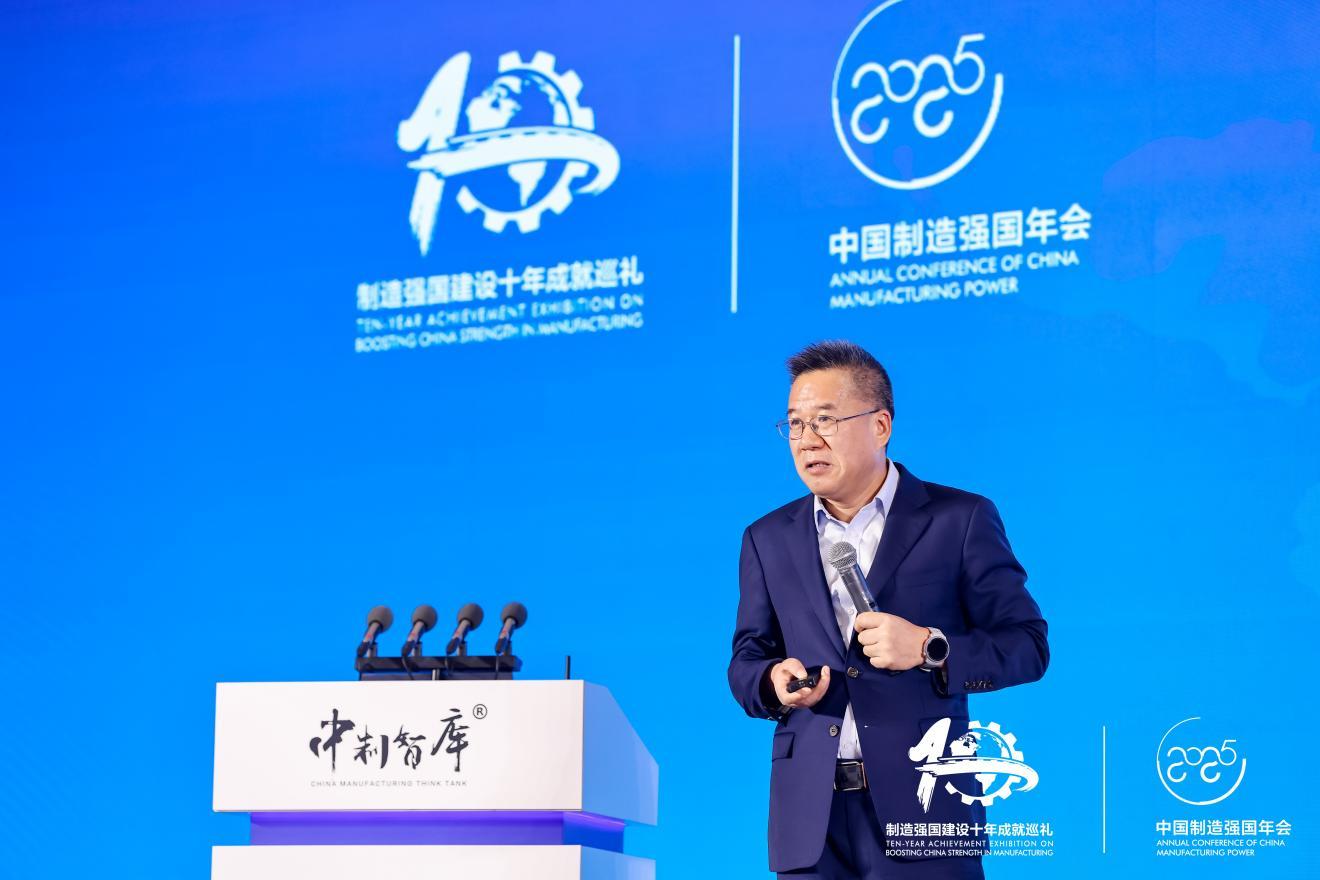
Core Viewpoint - The 10th China Manufacturing Power Conference emphasizes the theme "Rooted in Reality, Moving Towards Innovation," focusing on the high-quality development path of China's manufacturing industry during the 14th and 15th Five-Year Plans, marking a critical juncture in the "Made in China 2025" initiative [1] Group 1 - The conference was successfully held on December 28, 2025, at the Wanda Vista Hotel in Beijing, organized by the China Manufacturing Power Conference Committee and the China Manufacturing Think Tank [1] - The event aims to explore the high-quality development of China's manufacturing industry in the context of the 14th and 15th Five-Year Plans, as well as the conclusion of the "Made in China 2025" action plan [1] Group 2 - Renowned economist Ma Guangyuan delivered a keynote speech titled "The Future of Chinese Manufacturing and Supply Chains under the Super Cycle," highlighting that the Chinese economy should be viewed within a larger super cycle rather than just annual performance [3] - Ma pointed out that the Chinese economy is entering a new super cycle influenced by factors such as the "Trump 2.0 tariff war," artificial intelligence, and the wave of de-globalization [3] - He identified four key forces that will shape the future global landscape: US-China relations, Chinese manufacturing, the restructuring of global supply chains, and artificial intelligence [3] - Over the next five years, China needs to undergo five major transformations: shifting from investment-driven to innovation-driven growth, transitioning from a manufacturing powerhouse to a consumer powerhouse, upgrading from low-end to high-end manufacturing, moving from an export-oriented economy to one focused on domestic demand, and addressing social security gaps to build a welfare state [3]
电解铜2026年报:供弱需强格局逐步巩固,铜价将不断挑战新高
Fo Shan Jin Kong Qi Huo· 2025-12-29 03:01
1. Report Industry Investment Rating No relevant content provided. 2. Core Viewpoints - In 2026, the price of electrolytic copper may show an inverted "V" trend throughout the year. It may fluctuate strongly in the first half of the year, challenging new highs, and weakly in the second half. The volatility of copper prices is expected to converge to a limited extent, and call options remain highly suitable. The main influencing factors include the Fed's monetary policy, Sino - US relations, changes in copper concentrate TC, and energy storage demand [4]. 3. Summary by Directory 3.1 2025 Copper Market Review - In 2025, copper prices showed a generally strong and fluctuating trend. By December 10, the Shanghai copper main - continuous contract had risen by nearly 25% during the year. The copper futures market went through four stages: in the first stage (January - March), the first wave of price increase was driven by the tightening supply of copper concentrate and the market's expectation of rising US inflation. In the second stage (April - mid - September), after hitting bottom, the price rebounded and then consolidated for a long time, affected by trade wars, Fed rate - cut expectations, and other factors. In the third stage (late September - mid - November), the second wave of price increase occurred due to the supply shortage of copper concentrate and positive market news. In the fourth stage (mid - November - present), the price repeatedly broke through historical highs, driven by market concerns about the Fed's future policies [7]. 3.2 Macroeconomic Environment Outlook 3.2.1 Fed Policy May Remain Loose - In 2025, the Fed's policy experienced multiple adjustments, including rate cuts and the end of the balance - sheet reduction plan. Looking ahead, according to the dot - plot after the December meeting, there is still one rate cut expected in 2026 and 2027. The market is concerned about whether the Fed will continue to expand its balance sheet and the independence of the Fed after Powell's term ends [11][12]. 3.2.2 Sino - US Game Will Continue - In 2025, Sino - US tariff disputes went through several rounds of escalation and mitigation. The US used tariff hikes as a bargaining chip. In the future, Sino - US tariff disputes are expected to continue, and the US may focus on issues such as fentanyl and rare - earth exports [13][15]. 3.3 Demand Side: Emerging Demands Show Obvious Increases and May Explode in 2026 3.3.1 Traditional Industries Have Limited Growth - **Real Estate Remains in a Downturn**: In 2025, despite a series of policies, real - estate investment, new construction, and completion data continued to decline. In 2026, although the government will continue to promote real - estate stability policies, the real - estate market is expected to continue to drag down copper demand in the short term [16][19]. - **White Goods Production and Sales First Strong Then Weak**: In 2025, with the support of the "trade - in" policy, white - goods production and sales were strong in the first half of the year but weakened later. In 2026, with the possible continuation of the policy and the replacement cycle, the year - on - year growth rate of production and sales of three major white goods is expected to be higher than in 2025. However, the year - on - year growth rate of exports of white goods has declined overall compared to last year, and its contribution to copper demand growth has weakened [23][24]. 3.3.2 Emerging Demands Will Gradually Become the Main Force of Copper Demand - **AI and Computing Power May Boost Future Power Grid Demand**: In 2025, power and grid infrastructure investment showed a trend of first increasing and then decreasing. In the future, AI and computing - power industries will become important demand drivers for power and grid infrastructure [29]. - **New - energy Vehicles Provide Stable Increases Despite Slower Growth**: In 2025, new - energy vehicle production and sales maintained a relatively high year - on - year growth rate, providing stable copper demand. In 2026, although the subsidy for new - energy vehicle purchase tax will be halved, the year - on - year growth rate of production and sales is still expected to remain at a relatively high level [32][34]. - **Photovoltaic Installation in China Has Stable Increases and Exports Are Impressive**: In 2025, due to policy changes, there was a "rush - to - install" phenomenon in the first five months, and the year - on - year growth rate of cumulative new installations and cumulative installations showed an inverted "V" trend. In 2026, the year - on - year growth rate of photovoltaic installation may be lower than in 2025 but will still be high. Photovoltaic cell exports are expected to maintain a high growth rate [35][37]. - **Energy Storage Demand May Explode**: In 2025, the new energy - storage installation volume in China is expected to increase by 24% year - on - year. In 2026, it is expected to reach 230GWh, with a year - on - year growth rate close to 70%. Globally, the new energy - storage installation volume in 2026 is expected to reach 480GWh, with a year - on - year growth rate of 60%, providing significant copper demand growth [44][47]. 3.4 Supply Side: Mine - end Shortage Persists, and Smelter Production Cuts May Expand 3.4.1 Frequent Overseas Mine Incidents Lead to Continuous Decline in Copper Concentrate TC - In 2025, overseas copper mines experienced many incidents, causing copper concentrate TC to decline continuously. CSPT called on domestic smelters to jointly cut production in the fourth quarter. In 2026, the global copper concentrate increment is expected to be 45 - 56 tons, mainly concentrated in the second half of the year. The shortage of copper concentrate will persist in the first half of 2026, and TC may remain at a very low level [49][62]. 3.4.2 Copper Mine Shortage Has Limited Impact on the Smelting End - In 2025, although copper concentrate was in short supply, the global and Chinese electrolytic copper production basically maintained the highest level in the same period of the past five years. In 2026, the shortage of copper concentrate may be difficult to ease in the first half of the year, and the domestic smelting industry may have a larger - scale joint production cut than in Q4 2025 [63]. 3.4.3 The Siphon Effect of US Copper Continues, and Spot Supplies of Shanghai and London Copper Are Tight - In 2025, due to factors such as tariffs, COMEX copper was at a significant premium, leading to a change in the global copper trade pattern. Copper flowed into the US, causing the inventory of COMEX copper to rise continuously, while the inventory of Shanghai and London copper decreased, resulting in a long - term tight spot supply and high prices [68][70]. 3.4.4 High Copper Prices Pressure Downstream Demand, and Social Inventory Remains at a High Level - In 2025, electrolytic copper social inventory increased to a high level in September, but it had little pressure on copper prices, which were mainly driven by macro factors and low copper concentrate TC [77]. 3.5 Future Outlook and Supply - Demand Balance Sheet 3.5.1 Global Copper Concentrate Supply - Demand Balance Remains Tight - In 2025, the global copper concentrate supply - demand balance was expected to be - 35 tons. In 2026, it is expected to be - 40 tons, with the supply gap widening compared to 2025. The shortage will persist in Q1 2026 and gradually ease in the later quarters [79][80]. 3.5.2 Electrolytic Copper Supply - Demand Balance - **Global**: In 2025, the global electrolytic copper supply - demand balance was in a tight state at - 5 tons. In 2026, it is expected to be - 21 tons, with the gap widening. - **China**: In 2025, the supply - demand balance of Chinese electrolytic copper was - 20.04 tons, with the gap nearly doubling compared to 2024. In 2026, it may decline slightly to - 30 tons, with the gap widening slightly compared to 2025 [81][83].
作为一个普通美国消费者,为什么中美关系对我如此重要?
Guan Cha Zhe Wang· 2025-12-28 06:00
但今天回头看,这段旅程远不止是"避难"。如果说最初我还带着"难民"的忐忑,那么现在,我感觉自己 更像是一个逐渐融入社区的"原住民"。 是的,我依然会闹笑话,发笔记时还是会犯些中文错误,可那种格格不入的感觉已经消失了。小红书给 了我一种罕见的接纳感,这里不是战场,而是一个我可以安心分享生活、结识朋友的地方。 我来到这里的初衷很简单:不是赚钱,而是搭建一座桥。一座能让中美普通人互相看见、互相理解的桥 梁。 为了能和更多人交流,我在小红书建了四个群。说实话,对我而言,要管理这些群是一个不小的工作, 尤其考虑到16小时的时差。幸运的是,群里的中国朋友们给了我巨大的帮助,他们自发地帮我维护社群 秩序。 从这些最初的"管理员"开始,我们渐渐从网友变成了朋友,我们在微信也建了群。我们会聊孩子沉迷游 戏的头疼,会分享工作的压力与家庭的温暖。我发现,尽管我们的政府结构不同、文化背景迥异,但作 为父亲、作为职场人、作为在生活中奋斗的个体,我们所面临的喜悦、烦恼与渴望是如此相似。 【文/观察者网专栏作者 木林】 从"TikTok难民"到"小红书原住民"的一年,我学到了什么? 2025年初,因为大家都知道的原因,我像很多内容创作者一 ...

被中方最新制裁的美国军工企业和个人,都是什么来头?
Huan Qiu Wang· 2025-12-26 15:27
Group 1: Overview of Sanctions - The Chinese government announced countermeasures against 20 U.S. military companies and 10 senior executives in response to the U.S. arms sales to Taiwan, which is the largest single arms sale to Taiwan to date, valued at $11.1 billion [1][5] - The sanctions include freezing all assets held by these companies and individuals within China and prohibiting any commercial transactions with them by Chinese organizations and individuals [1] Group 2: Companies Involved - Northrop Grumman is a major defense contractor known for developing stealth bombers and advanced missile systems, with significant involvement in Taiwan's military acquisitions, including the F-16V fighter jets and E-2D early warning aircraft [2] - Boeing's St. Louis division produces F-15 and F/A-18 fighter jets, and has supplied Taiwan with Harpoon anti-ship missiles, indicating its critical role in U.S. arms sales to Taiwan [2] - L3 Harris Maritime Services provides complex technical services and logistics support to the U.S. Navy, including unmanned systems and command control integration, highlighting its importance in military operations [3] Group 3: Implications of Sanctions - The sanctions are expected to impact the global operations and business interests of the sanctioned companies, as China holds a significant share in key strategic resources related to the military industry [4] - The sanctions serve as a reminder to the U.S. regarding the importance of adhering to the One China principle and maintaining stable U.S.-China relations [6] - Experts suggest that the U.S. should reconsider its arms sales to Taiwan, as these actions do not enhance Taiwan's defense capabilities and may lead to further deterioration of U.S.-China relations [5][6]
