
中美贸易博弈

Search documents
贸易战2.0系列三:从黄金走向人民币资产
Hua Tai Qi Huo· 2025-05-13 06:39
Report Investment Rating - No information about the industry investment rating is provided in the report. Core Views - The current stage represents the "beginning of the end" of the Sino-US game, with a "temporary easing of external pressure" as the macro - background, preparing for the 2.0 game in the future [3]. - The May 12th joint statement signals that the Sino - US trade game since 2018 has ended, and a new stage of competition and cooperation will begin. Market uncertainty pricing will shift from the trade field to other economic and financial fields [5]. - In an optimistic scenario, the end of the current inventory cycle decline may be seen in 2025. Attention should be paid to the real risks to the capital market due to the accelerated bottom - hitting of the cycle and the switch of macro - assets within the year, such as the peak of gold and the steepening of the yield curve [5]. - Regarding strategies, as the economic cycle shifts from the inventory cycle decline to the capacity cycle rise, attention should be paid to the annual inflection point of gold. For Chinese bonds, with the phased improvement of risk assets, attention should be paid to the space for RMB asset allocation provided by the accelerated decline of the inventory cycle, and the yield curve will switch to steep, maintaining a strategic steepening position (+2s10s) [6]. Summary by Directory Why is it now - The macro - background of China's package of financial policies on May 7th is the "temporary easing of external pressure", reaching a window for "easing" to prepare for the future 2.0 game [11]. Review 4 - month pressure events - In April, the global economy released a pessimistic outlook. The US announced the implementation of "reciprocal tariffs" on April 2nd, deteriorating the global trade environment. Direct exports to the US in April began to decline, and spot freight rates also continued to fall [12]. - The US financial market faced pressure in April. With the impact of the US "reciprocal tariffs" and China's "reciprocal counter - measures", the instability of the US financial market increased, and the US stocks, bonds, and the US dollar showed short - term downward pressure. Asian currencies appreciated rapidly during the May Day holiday due to the hedging of currency mismatch pressure by a Taiwanese insurance company [12]. - Under the influence of uncertainty, monetary policies gradually turned loose. The ECB cut three key interest rates by 25 basis points on April 17th, and the Bank of Japan postponed the interest rate hike for the second time on May 1st and lowered GDP and inflation forecasts [12]. Performance 1: Market pressure - Gold prices reflect the "damage" to the US dollar credit. Since the US launched "reciprocal tariffs" in April, the US dollar, bonds, and stocks have fluctuated significantly, increasing market concerns about the US dollar credit. Although US stocks rebounded at the end of April, the loosening of financial conditions driven by the rising volatility of US stocks is significantly converging, and attention should be paid to the evolution of internal contradictions in the US [17]. - The Fed's balance - sheet policy needs to cooperate. The large refinancing scale of US bonds in the middle of this year has shocked the market. The current benchmark interest rate of 4.50 - 4.75% still poses pressure on fiscal refinancing. Before the final implementation of policy games, US stocks still face the risk of a second adjustment [18]. Performance 2: Economic pressure - The global economy will face downward pressure due to the trade war. In April, the global manufacturing prosperity declined significantly, with the global manufacturing PMI dropping to 49.8, China's to 49.0, and the US's to 48.7. Structurally, it shows a decline in Chinese demand and a rise in US prices [21]. What are the incremental information - On May 12th, the Sino - US joint statement was released. In terms of the background, it was a "talk" rather than a "negotiation". In the tariff aspect, the current tariff policy will be adjusted to "one cancellation, one suspension, and one retention" before May 14th, canceling tariffs imposed after April 8th, suspending 24% tariffs for 90 days, and retaining 10% tariffs. The statement did not mention "fentanyl tariffs". In the non - tariff aspect, a mechanism will be established to negotiate economic and trade relations [25][26]. About tariffs - The 90 - day tariff suspension provides a time window for Sino - US negotiations, boosting market risk appetite. The US still needs to impose about 49% tariffs on China, and China's corresponding counter - measures still need to implement about 40% tariffs, which will cause inflationary pressure on US enterprises and consumers [31][34]. About non - tariffs - The Sino - US joint statement mentioned establishing a mechanism to continue negotiating economic and trade relations. The establishment of the communication mechanism may provide space for Trump's domestic policies before the mid - term elections. In different fields, such as trade, geopolitics, regulation, and tax cuts, corresponding developments are expected [35][37]. How to view the macro - market - The May 12th joint statement signals that the Sino - US trade game since 2018 has ended, and a new stage of competition and cooperation will begin. Market uncertainty pricing will shift from the trade field to other economic and financial fields [39]. Risks in the current downward stage - The cycle is in a downward phase in 2025. The Trump tariff war and the May 12th joint statement will accelerate the cycle to "bottom out", and attention should be paid to the real risks to the capital market [40]. Outlook for the future upward stage - The "beginning of the end" of the Sino - US game is expected to accelerate the global cycle's shift from the current downward stage (global central bank interest rate cuts) to the upward stage (global fiscal expansion). Optimistically, the "low point" of this cycle will be reached within the year, and attention should be paid to the switch of macro - assets [44][45].
中国出口大增9.3%!美国出口遭重击?贝森特:“不要做空美国”
Sou Hu Cai Jing· 2025-05-12 23:34
Core Viewpoint - China's exports surged by 9.3% in April, reaching 2.27 trillion yuan, despite a widening trade deficit with the U.S. by 20% [1][3] Group 1: China's Export Performance - Exports to ASEAN reached 1.48 trillion yuan, contributing significantly to the overall growth [3] - Exports to Africa increased by 15.1%, while Latin America saw an 11.5% rise [3] - High-tech product exports, such as industrial robots, soared by 58.3%, indicating a strong demand for advanced manufacturing [3] Group 2: U.S. Export Challenges - U.S. exports to China plummeted by 21% in April, with significant declines in agricultural and aerospace sectors [5][12] - The semiconductor exports to China rebounded to $10.5 billion, but mainly consisted of low-end chips [5] - The U.S. faces a severe downturn in education exports, down by 25%, and a halving of tourism revenue compared to pre-pandemic levels [12] Group 3: Trade Dynamics and Supply Chain Adjustments - The trade war has led to a significant shift in supply chains, with companies relocating production to countries like Mexico and Thailand [10] - China's exports to the U.S. have decreased by 35%, yet its global market share has increased by 0.8% [10] - The trade strategies employed by China and the U.S. reflect a complex interplay, with China adapting quickly to new market conditions [14]

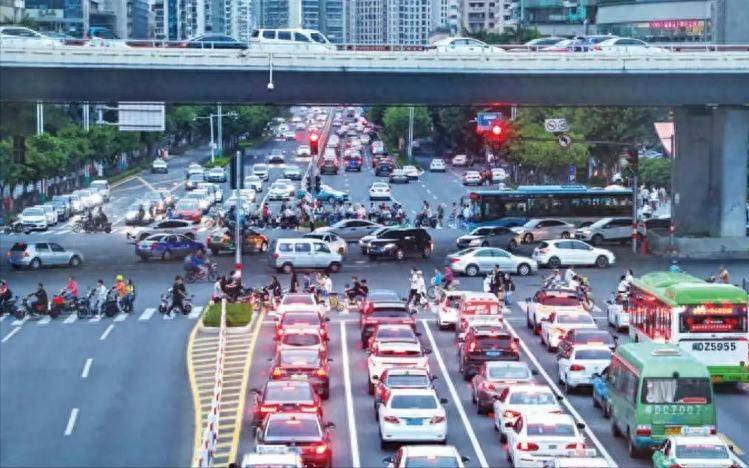
中美谈了,美国没赢中国没输,关税战打了个寂寞!
Sou Hu Cai Jing· 2025-05-12 14:31
中美在瑞士谈出了初步结果,基本上回到了4月2日之前,当时特朗普宣布搞对等关税,给中国加了34%的关税,然后其中的24%暂缓90天,相当于只加了 10%的关税,中国也对等加了10%的关税。 美国目前对中国的额外加的关税应该是54%,由于其中24%暂缓90天,所以实际加了30%;中国目前对美国额外加的关税应该是34%,由于其中24%暂缓 90天,所以实际加了10%。 为啥说额外加的呢,因为从2018年开始就打贸易战,就对不同的产品加了不少关税,比如说电动汽车就是加了100%关税,这次居然只谈4月2日加的,也 没完全取消,还是加了10%,还留了24%的暂缓尾巴。 只不过这样一来其他国家就被摆上了台面,他们肯定顶不住美国的压力的,搞到最后还是中美博弈,只不过有了这次的经验,后续对等反制已经是正常招 数了,美国出什么招也不好使。 美国非要说赢也有道理,毕竟关税确实比中国高,中国说赢也有道理,毕竟一杆子打回到4月2日,在这个基础上对等反制加了10%的关税,就看你从那个 角度去看了。 美国先发起关税战,现在还给他机会缓口气,其实加到145%索性大家断了念想也好,如今搞的不高不低的最难受,30%-50%的关税正好卡在中间,让 ...
股指期货策略早餐-20250507
Guang Jin Qi Huo· 2025-05-07 08:06
Report Summary 1. Investment Ratings - Not provided in the report. 2. Core Views - **Stock Index Futures**: The intraday view is oscillating with a slight upward bias, with IC and IM being relatively stronger. The medium - term view is bullish. The core logic includes the expected marginal improvement in Sino - US trade relations, the implementation of domestic positive policies, and a healthy chip structure in the AI industry chain [1][2]. - **Treasury Bond Futures**: The intraday and medium - term views are high - level oscillations, and there is a need to be cautious about the adjustment risk of long - term bonds. The core logic is that the fundamental situation has fulfilled the tariff shock expectation, and loose policy expectations support the bond market, but there are also risks of repeated Sino - US tariff games [3][4]. - **Commodity Futures (Black and Building Materials)**: The intraday view is a gradual decline in steel prices, and the medium - term view is that steel prices will be under pressure. The core logic is the large inventory pressure of steel raw materials and the general downstream demand for steel [5]. 3. Summary by Category Stock Index Futures - **Varieties**: IF, IH, IC, IM [1] - **Intraday View**: Oscillating with a slight upward bias, IC and IM are relatively stronger [1] - **Medium - term View**: Bullish [1] - **Reference Strategy**: Hold IM2505 long positions, buy 1 lot of MO2506 - C - 5900 call options and sell 2 lots of MO2506 - P - 5200 put option combinations [1] - **Core Logic**: Sino - US trade relations are expected to improve, domestic positive policies are being implemented, and the AI industry chain has a healthy chip structure [1][2] Treasury Bond Futures - **Varieties**: TS, TF, T, TL [3] - **Intraday View**: High - level oscillations, be cautious about the adjustment risk of long - term bonds [3] - **Medium - term View**: High - level oscillations [3] - **Reference Strategy**: Cautiously operate the long TF2506 and short TL2506 hedging combination [3] - **Core Logic**: The fundamental situation has fulfilled the tariff shock expectation, loose policy expectations support the bond market, but there are risks of repeated Sino - US tariff games [4] Commodity Futures (Black and Building Materials) - **Varieties**: Rebar, Hot - rolled coil [5] - **Intraday View**: Gradual decline in steel prices [5] - **Medium - term View**: Steel prices will be under pressure [5] - **Reference Strategy**: Hold short rebar call option RB2510 - C - 3450, hold long rebar in - the - money put option RB2510 - P - 3150 [5] - **Core Logic**: Large inventory pressure of steel raw materials and general downstream demand for steel [5]
全部“叛变”了!2国传出消息,美国坐不住了,中国不愿再付钱
Sou Hu Cai Jing· 2025-05-07 07:04
Core Viewpoint - The cancellation of approximately 12,000 tons of U.S. pork orders by China reflects a broader shift in the U.S.-China trade landscape, highlighting issues with U.S. trade policies and China's firm stance in trade negotiations [1] Group 1: U.S.-China Trade Dynamics - China was a significant buyer of U.S. pork, importing about 475,000 tons in the first four months of 2024, which accounted for 22% of total U.S. pork exports, down from 35% before the trade war in 2018 [1] - The increase in tariffs, with China imposing a 172% tariff on U.S. pork, has drastically reduced the price competitiveness of U.S. pork in the Chinese market, leading to decreased purchases [1] Group 2: Energy Sector Developments - China has reduced its dependence on U.S. energy imports, with reports indicating that up to seven ships carrying U.S. liquefied petroleum gas (LPG) have redirected to India and Southeast Asia [3] - In 2024, China's LPG imports reached 35.68 million tons, with over half coming from the U.S., but China has not imported U.S. liquefied natural gas (LNG) for nearly 80 days [3][5] Group 3: U.S. Trade Policy Impact - The U.S. trade policies have not only harmed its own agricultural sector, with American farmers facing unsold products due to reduced Chinese imports, but have also led to a crisis in the U.S. natural gas industry [3][5] - Trump's trade policies have inadvertently united many countries with China, as they seek alternatives to U.S. markets [5] Group 4: China's Strategic Response - China has initiated legal actions through the WTO against U.S. tariffs, claiming they violate trade agreements, while also adjusting its economic structure to boost domestic demand, which contributed over 65% to economic growth in 2024 [7] - The "dual circulation" strategy aims to reduce reliance on U.S. technology by increasing investments in sectors like semiconductors and artificial intelligence [7] Group 5: Global Trade Position - China is becoming increasingly significant in global trade, being the largest goods trader and the second-largest service trader, contributing to global economic recovery [7] - In the first quarter of 2024, China's GDP grew by 5.4%, with record high import and export volumes, showcasing its economic resilience [7] Group 6: Future Trade Relations - For the U.S. to alter the current trade situation, it must abandon unilateralism and unreasonable tariff policies, while China will continue to protect its trade rights and pursue high-level openness [8]
中美贸易战,醉翁之意不在酒!几大消息来袭
Sou Hu Cai Jing· 2025-05-06 15:00
半夜,几个行业群炸了。Temu突然宣布暂停所有直邮美国的服务,没留一点余地,直接掐断。这消息一传出来,美国电商圈像被扔进冰水,一瞬间安静得 让人发毛。 有人说是物流问题,有人说是市场调整。但真相,远不止这些。 Temu不是普通电商。三年时间,它从无到有,从边缘跑到了亚马逊鼻尖。去年黑五,一场促销让美国消费者疯狂下单,亚马逊仓库一度空了半壁江山。便 宜、好用、速度快,不是谁都能做得到的。背后靠的,是中国制造的强大体系,还有数以万计的中小商户顶着汇率压力,把货一件件送出国门。 但Temu太快了,快到美国政府坐不住了。 最近几个月,美国官方开始频频提"数据安全",看起来像是出于保护,但说白了,就是不想中国平台在他们家门口跑赢。借口摆在那儿,刀子却砍向产业 链。关税、审查、封堵,一招接一招。这次直接断了Temu的直邮,受伤的不止是平台——商户的仓库货压着,物流的单量没了,美国那边快递公司先扛不 住了。 中国非但没动美债,还在悄悄加码黄金储备。2024年4月,中国央行黄金储备达7280万盎司,连续18个月增加,这是自2002年以来最长的增持周期。不动声 色,却处处关键。 美债,是人民币稳汇率的重要工具。动它,相当于自断 ...
货架马上就空,沃尔玛对华退了一大步,再多的关税也让美国人买单
Sou Hu Cai Jing· 2025-05-01 10:21
(中国制造出口海外多国) 为何中国商品如此出色呢?答案无非是完整而庞大的工业体系。中国是全世界唯一一个拥有联合国定义 的所有41个工业大类的国家,这不仅意味着技术储备和生产能力,更是全球产业链上难得的稳定角色。 多年来,中国凭借其规模效应和过硬的质量赢得了世界市场的信任。 在特朗普对华加税的大背景下,沃尔玛的心路历程相当复杂,既然对中国强硬不起来,那就服软好了。 (沃尔玛) 随着特朗普的这场关税大戏持续上演,美国的零售商们,特别是沃尔玛,开始意识到自己玩砸了。经过 一番内部计算和外部压力,沃尔玛通知中国供应商:继续发货!至于那糟心的关税?则由美方自己承 担。 这一消息出现的很突然,也暴露出了美国在国际贸易中的窘迫。 当谈到中国制造时,不得不提到它的精良工艺、广泛的种类和超高的性价比。作为全球最大的制造业国 家,中国在许多领域,都几乎占据了主导地位。 中国制造业产值占全球30%以上,造船、无人机、钢铁等多个领域的产量,更是超过全球的一半。有这 样的背景,谁能说轻易替代就能替代? 反观一些欧美国家,却常因产业链单一而不得不面临高成本。例如,真正的"欧洲制造"可能质量不错, 但价格却让人望而却步。在一场全球化的商业 ...

730万桶!中国转头把石油大单给美盟友,特朗普急了,想跟中方和解
Sou Hu Cai Jing· 2025-04-30 14:04
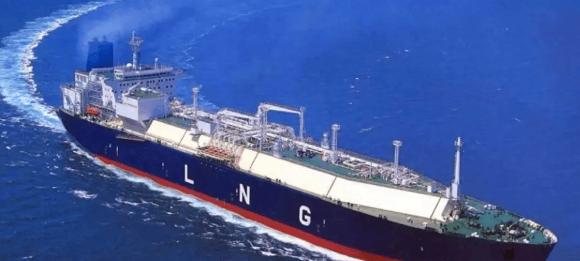
Core Viewpoint - China's record import of 7.3 million barrels of crude oil from Canada in March reflects a significant shift in energy trade dynamics amid the US-China trade war, impacting both countries' economies [1][3]. Group 1: Energy Trade Dynamics - The US has imposed a 125% additional tariff on Chinese imports, aiming to suppress China's energy demand, which led to a drastic reduction in China's imports of US crude oil and LNG, with LNG imports dropping to zero and crude oil imports plummeting by 90% from 29 million barrels per month in 2024 to 3 million barrels in March 2025 [1][3]. - Canada has become a new key supplier for China, with the expansion of the Trans Mountain pipeline facilitating increased crude oil exports, resulting in a significant rise in imports from Canada [3]. - The US is facing substantial losses in oil orders, estimated at several billion dollars monthly, as well as negative impacts on related supply chains and employment [3]. Group 2: Agricultural Trade Changes - The trade war has also affected agricultural exports, with US exports of soybeans to China dropping by 54% year-on-year, while Australia and Brazil have seen significant increases in their beef and poultry exports to China [3]. Group 3: Political and Economic Implications - President Trump has shown signs of softening his stance on tariffs, indicating a desire to lower them to prevent further trade stagnation with China [4]. - Canada is navigating a complex situation, benefiting economically from Chinese orders while politically aligning with the US, creating a contradictory stance [6]. - China has signed a 15-year LNG agreement with the UAE worth approximately 700 billion RMB, marking a significant step in energy cooperation and challenging the dominance of the US dollar [6]. Group 4: Strategic Energy Positioning - China's actions demonstrate a robust capability in energy strategic planning, reducing reliance on US energy and diversifying supply sources, thereby enhancing its energy security [8][9]. - The shift in energy trade dynamics is contributing to a more multipolar global energy market, diminishing the US's previous dominance in LNG exports [9].
中国突然换将,特朗普赌输了!信号很不一般,美国算盘注定落空
Sou Hu Cai Jing· 2025-04-29 08:09
据上观新闻报道,近日,商务部官网更新信息显示,李成钢现已担任商务部党组副书记、国际贸易谈判 代表(正部长级)兼副部长。当天稍早前,人社部网站发布国务院任免国家工作人员信息。其中,任命 李成钢为商务部国际贸易谈判代表(正部长级)兼副部长。 特朗普(资料图) 这一人事变动发生的时机极为微妙,正值中美"关税大战"进入新阶段。特朗普政府在贸易战中手段频 出,先是威胁对中国商品征收最高达245%的关税,试图以这种"数字游戏"和高压手段压垮中方谈判意 志;另一方面,又秘密游说七十多个国家,妄图禁止中国企业在这些国家建厂、转口、设点,将中国商 品从全球供应链中剔除,以此孤立中国。然而,现实却给了特朗普政府沉重一击。欧洲松口,计划取消 对中国电动车的惩罚性关税,连"最低价销售线"也可能放宽;韩国迅速派出高规格代表团赴华磋商自贸 协定;日本和东南亚也重新评估与中国的投资依赖度。特朗普精心策划的"外部孤立"策略,还未真正实 施便已走向崩溃。 贸易局势剑拔弩张之际,李成钢的走马上任蕴含着深远战略布局。外国媒体纷纷解读,这一任命折射出 中方的两大关键态度。李成钢履历丰富,处事风格硬朗果决,未来一旦开启中美贸易谈判,他必将成为 令美方 ...
特朗普对华关税立场软化背后:想谈判但诚意不足
Xin Lang Cai Jing· 2025-04-28 12:27
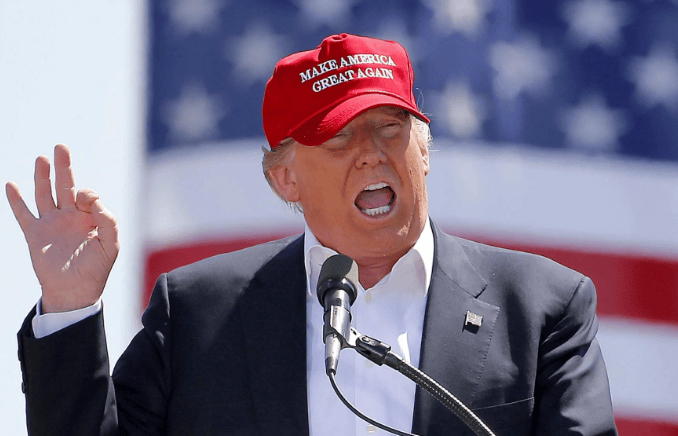
Core Viewpoint - The U.S. government is signaling a softening stance on tariffs against China, indicating a potential shift from "maximum pressure" to "intermittent easing" in trade negotiations [1][2][3] Group 1: U.S. Government's Tariff Position - Multiple U.S. officials have indicated a willingness to lower tariffs on China, with President Trump expressing optimism about reaching an agreement [1][2] - The current effective tariff rate on Chinese goods is at 145%, with discussions about potentially reducing it to 50%-65% [1][2] - Analysts suggest that the softening stance is influenced by negative market feedback and stalled negotiations with other countries [2][5] Group 2: Economic Impact and Market Reactions - The financial markets have reacted negatively to the tariff policies, with the S&P 500 index dropping by 1.9% from April 1 to April 25, and the dollar index falling by 4.5% [4] - The U.S. economy is facing pressure from domestic interest groups, including retailers and manufacturers, which has prompted the government to reconsider its tariff strategy [3][4] Group 3: China's Response and Negotiation Dynamics - China has denied any ongoing negotiations with the U.S., emphasizing that any claims of progress are unfounded [6] - The negotiation power appears to be in China's hands, as the U.S. struggles to find alternatives to Chinese goods in the short term [7][9] - Analysts predict that the U.S. may ultimately adopt a strategy of exemptions rather than complete tariff removal, given the complexities of the trade relationship [7][9] Group 4: Long-term Trade Strategy - The distinction between "counter tariffs" and "base tariffs" is crucial, as high counter tariffs are seen as temporary leverage rather than a sustainable policy [8][9] - The average tariff rate on Chinese goods is expected to stabilize around 60%, with most countries facing a 10% base tariff [9] - The U.S. is under pressure to reach a trade agreement before the 2026 midterm elections to mitigate potential economic downturns [10]