产学研融合

Search documents
陈李济:以陈皮为媒 老字号激活发展新动能
Ren Min Wang· 2025-11-25 09:50
Core Insights - The company launched the "Chenpi Culture Festival" in Guangzhou, themed "Sailing Against the Wind, Living Forever," and released the "Chenpi Health '14th Five-Year' Strategic Plan" [1] - The company has established a solid industrial barrier by leveraging authentic resources from the core production area in Jiangmen, Guangdong [1] - The company has developed a variety of products around the Chenpi health industry, including aged Chenpi, Chenpi tea, medicinal pastes, and health foods to meet diverse consumer needs [1] Group 1 - The company has created a GAP demonstration planting base in the core production area, ensuring the authenticity and quality stability of raw materials through standardized management [2] - The company combines traditional aging techniques with modern technology, establishing a digital platform for the Chenpi industry park in collaboration with China Telecom, enabling real-time data access via blockchain [2] - The company aims to transform "data elements" into "gold elements" for farmers' income through blockchain traceability and AI identification of aging levels [2] Group 2 - The company has introduced the "Changsheng" cultural IP to engage young people with traditional Chinese medicine through immersive activities [2] - The Chen Li Ji Traditional Chinese Medicine Museum in Guangzhou serves as a cultural hub, offering innovative products like Chenpi coffee and health teas [2] - The company actively promotes the integration of the Chenpi industry with cultural tourism, enhancing local dining and accommodation sectors through events at the Chenpi Culture Festival [2]
专访香港理工大学谭华耀:深耕光纤研究32年,孵化7家公司
2 1 Shi Ji Jing Ji Bao Dao· 2025-11-25 00:08
Core Insights - The article highlights the journey of Professor Tan Huayao, a prominent figure in the field of fiber optic technology, emphasizing his contributions to both academia and industry over the past 30 years [2][3]. Group 1: Academic and Professional Background - Tan Huayao's academic journey began with a shift from physics to electronic engineering due to better job prospects in the 1980s [4]. - He completed his PhD in fiber optic communication and subsequently worked at GEC-Marconi in London, focusing on fiber optic amplifiers [11]. - In 1993, he returned to Hong Kong to teach at the Hong Kong Polytechnic University, seeking a balance between career and family [4]. Group 2: Innovations in Fiber Optic Technology - Under Tan's leadership, Hong Kong established the world's first city-level fiber optic sensing network in 2014, covering over 90% of the city's railway lines [3][6]. - The technology has been successfully implemented in other countries, including Singapore, the Netherlands, and Australia [3]. - Recently, Tan's team has developed a plastic fiber optic sensor for medical applications, specifically for cochlear implant surgeries, which is currently in clinical trials [3][7]. Group 3: Educational Initiatives and Industry Collaboration - Tan founded the "Engineering and Entrepreneurship Club" in 2017 to provide students with practical experience and foster interdisciplinary collaboration [9][17]. - The club has attracted around 200 students from various disciplines, allowing them to engage in real-world projects and competitions [9][18]. - Tan emphasizes the importance of bridging the gap between academia and industry, advocating for a focus on practical applications of research [10].


中意高校共议:如何培育更多新时代的“马可·波罗”
Zhong Guo Qing Nian Bao· 2025-11-23 22:39
Core Viewpoint - The dialogue between Chinese and Italian universities aims to cultivate a new generation of "Marco Polos" to enhance global governance and cross-cultural cooperation through educational collaboration [1][5]. Group 1: Educational Collaboration - The 2025 Sino-Italian University Presidents Dialogue held in Beijing focused on themes such as interdisciplinary integration, collaborative innovation, and global governance talent cultivation [1]. - Chinese universities, such as Renmin University, are exploring diverse educational pathways, including a tri-degree management program with Italy and the establishment of platforms for youth engagement in global governance [2]. - The collaboration has led to the establishment of 11 new cooperative educational institutions and projects, nearly 200 student exchange programs, and five joint research laboratories over the past year [5]. Group 2: Interdisciplinary Integration - Beijing University collaborates with Italian institutions on projects like the International Thermonuclear Experimental Reactor and digital humanities research, emphasizing the importance of interdisciplinary integration in higher education [3]. - South China University of Technology is deepening cooperation with Italian universities in urban design and business management, focusing on green manufacturing and digital transformation [3]. - The need for universities to adapt to the demands of the knowledge-based society is highlighted, with a focus on creating innovative research and educational models that cater to the new generation [3]. Group 3: Global Governance and Skills Development - Italian universities are emphasizing the importance of soft skills such as cross-cultural communication and leadership in their curricula to prepare students for global governance challenges [2]. - The establishment of Confucius Classrooms and global governance training programs aims to enhance students' capabilities in soft skills and global awareness [2]. - The integration of humanities into engineering education is seen as a way to equip students with a comprehensive understanding of global issues [3]. Group 4: Industry and Academia Integration - The need to break down barriers between academia and industry is emphasized, with initiatives like the Sino-Italian Engineering Innovation Academy focusing on sustainable development and interdisciplinary knowledge [4]. - Shanghai International Studies University is leveraging language as a strategic resource to support the development of language intelligence applications, directly addressing industry needs [4]. - The collaboration between universities and industries aims to create a fusion ecosystem that connects innovation chains with industrial chains [5].
未来科学城能源谷高质量发展大会在北京昌平召开
Zhong Guo Xin Wen Wang· 2025-11-23 13:29
Core Insights - The 2025 Future Science City Energy Valley High-Quality Development Conference was held in Beijing, focusing on central-local integration, collaborative innovation, and the active development of the Future Science City [1][2] - The conference attracted over 400 representatives from enterprises, industry experts, and investment institutions, emphasizing the importance of building an international scientific and educational platform for cutting-edge energy technologies [1][2] Group 1: Agreements and Collaborations - The Changping District government signed strategic cooperation agreements with representative enterprises, including projects with state-owned enterprises and high-quality private enterprises, to enhance regional industrial development [2][3] - A collaborative innovation platform between central enterprises and universities was established, aiming to facilitate organized technology transfer and deepen the integration of technological and industrial innovation [3] - The Future Science City Huanneng New Energy Fund was launched, with government investment leading the establishment of a mother fund to promote energy technology innovation and industry clustering [3][4] Group 2: Technological Innovations and Initiatives - The launch of the Future Science City Carbon Monitoring and Management Platform, which utilizes Tsinghua University's "electric-carbon coupling" theory and machine learning algorithms, aims to provide precise carbon emission calculations and support regional green development [4] - The 2025 "Central Enterprise Strong Youth Scientist" initiative was introduced to identify and invite 50 young scientists from central enterprises to foster a high-level talent gathering platform [4][5] - The second phase of the National Electric Power Investment Central Research Institute's innovation base was inaugurated, focusing on advanced energy technology and supporting the integration of large, medium, and small enterprises [5][6] Group 3: Institutional Developments - The establishment of the Future Science City Central Enterprise Research Institute "Dean Alliance" aims to enhance collaborative innovation and resource sharing among research institutes [5][6] - The alliance will facilitate various levels of communication and cooperation, including technical seminars and roundtable meetings, to promote efficient gathering and optimization of innovation elements [6]
海南自贸港综合交通场景创新中心揭牌
Hai Nan Ri Bao· 2025-11-23 00:53
Core Viewpoint - The establishment of the Hainan Free Trade Port Comprehensive Transportation Scene Innovation Center aims to enhance the integration of industry, academia, and research, facilitating the transition from laboratory innovations to market applications in smart transportation [1][2] Group 1: Innovation Center Establishment - The innovation center was officially unveiled during the 2025 20th China Intelligent Transportation Conference, focusing on bridging the gap between transportation technology innovation and real-world applications [1] - It is a joint initiative between Hainan Transportation Group and Hainan University, aimed at collaborative technological breakthroughs in transportation [1] Group 2: Focus Areas and Collaborative Efforts - The center will concentrate on three main areas: smart transportation technology suitable for tropical island conditions, low-altitude transportation applications, and green low-carbon technologies to support carbon reduction goals [1][2] - Hainan Transportation Group has formed a "Comprehensive Three-Dimensional Transportation Collaborative Innovation Alliance" with institutions like Beihang University and Chang'an University to drive digital transformation in transportation [1] Group 3: Industry Application and Talent Development - The establishment of a technology innovation enterprise incubation center will provide pilot testing and market validation opportunities for technological achievements [2] - A "dual talent attraction and cultivation" plan will be implemented, involving collaboration with Hainan University to build a team of chief scientists and promote knowledge exchange between academia and industry [2]
这3位民营企业专家,当选中国工程院院士!
Mei Ri Jing Ji Xin Wen· 2025-11-22 02:48
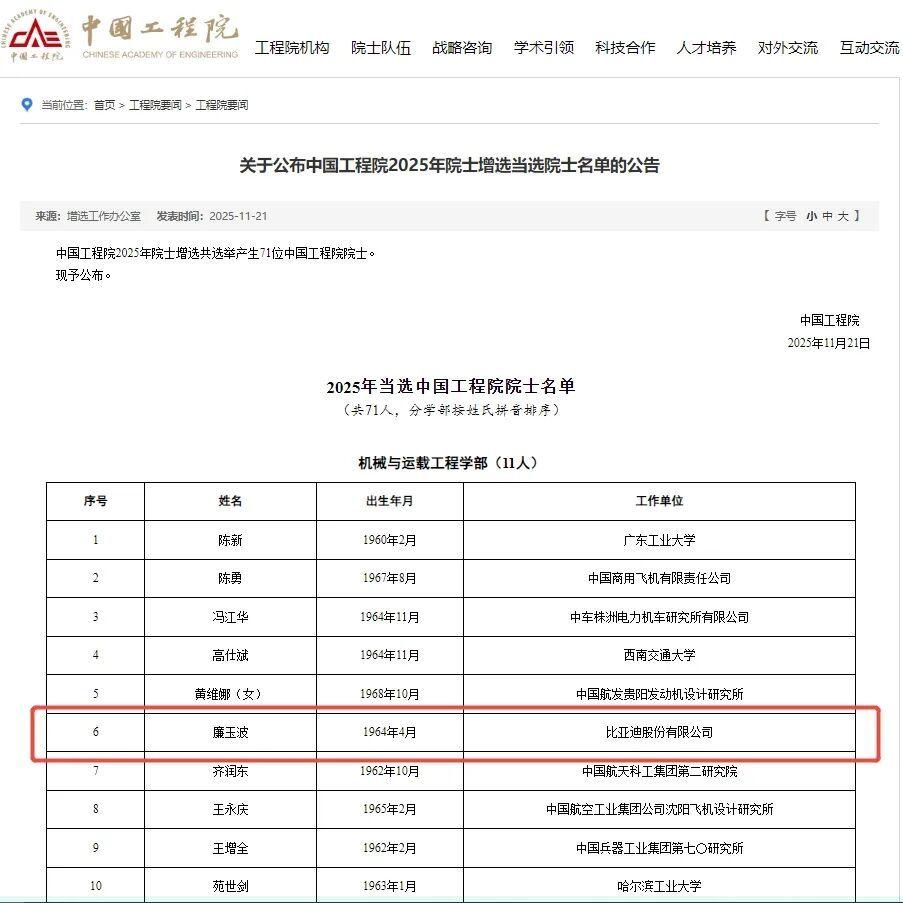
Group 1 - Three experts from private enterprises were elected as academicians of the Chinese Academy of Engineering, including Lian Yubo from BYD, Huang Xianbo from Kingfa Technology, and Wu Kai from CATL [1][4][8] - Lian Yubo, the chief scientist and automotive chief engineer at BYD, has led the development of over 20 fuel and new energy vehicle models, contributing to BYD's strong position in the new energy vehicle sales rankings since 2016 [2][4] - Huang Xianbo, the chief technology officer at Kingfa Technology, has focused on high-performance automotive materials and has contributed significantly to the development of functional polymer materials in China [5][4] Group 2 - Wu Kai, who has served as the chief scientist at CATL, has a background in electrochemical energy storage technology and continues to lead research in this area after resigning from his position as vice president [8][9] - Kingfa Technology operates 64 subsidiaries and has established R&D and production bases in regions such as South Asia, North America, and Europe, providing services to over 1,000 well-known enterprises globally [5][7] - BYD's core technologies, including blade batteries and DM hybrid technology, are attributed to Lian Yubo's leadership and innovation efforts [2][4]



新增院士向产线聚集 企业界院士大幅增加 武汉两大产业各新增一位院士
Chang Jiang Ri Bao· 2025-11-22 01:12
Group 1 - The core viewpoint of the article highlights the significant increase in the number of academicians from enterprises in Wuhan, with a rise from 3 in 2023 to 14 in the current year, indicating a trend towards industry-academia collaboration [8][9] - Academician Yin Zhouping, recognized for his contributions to the optoelectronic industry, emphasizes the importance of aligning research with national needs, showcasing a project that revolutionizes the new display industry through OLED inkjet printing technology [1][3] - Academician Jiang Weiping has made groundbreaking contributions to high-precision satellite navigation technology, significantly impacting the Beidou system and its applications across various sectors, with recognition from 138 countries [6][7] Group 2 - The Beidou industry in Wuhan, centered around the Beidou satellite navigation system, is experiencing rapid growth, with an expected scale exceeding 80 billion yuan in 2025, reflecting a 31% year-on-year increase [8] - The recent election of academicians demonstrates a diverse representation from high-level universities, research institutes, and enterprises, indicating a deep integration of industry and academia in the development of scientific research [8][9] - Hubei province has seen a total of 11 experts elected as academicians this year, ranking among the top provinces in China, with a focus on a wide range of disciplines and a strong emphasis on the integration of technology and industry [9]
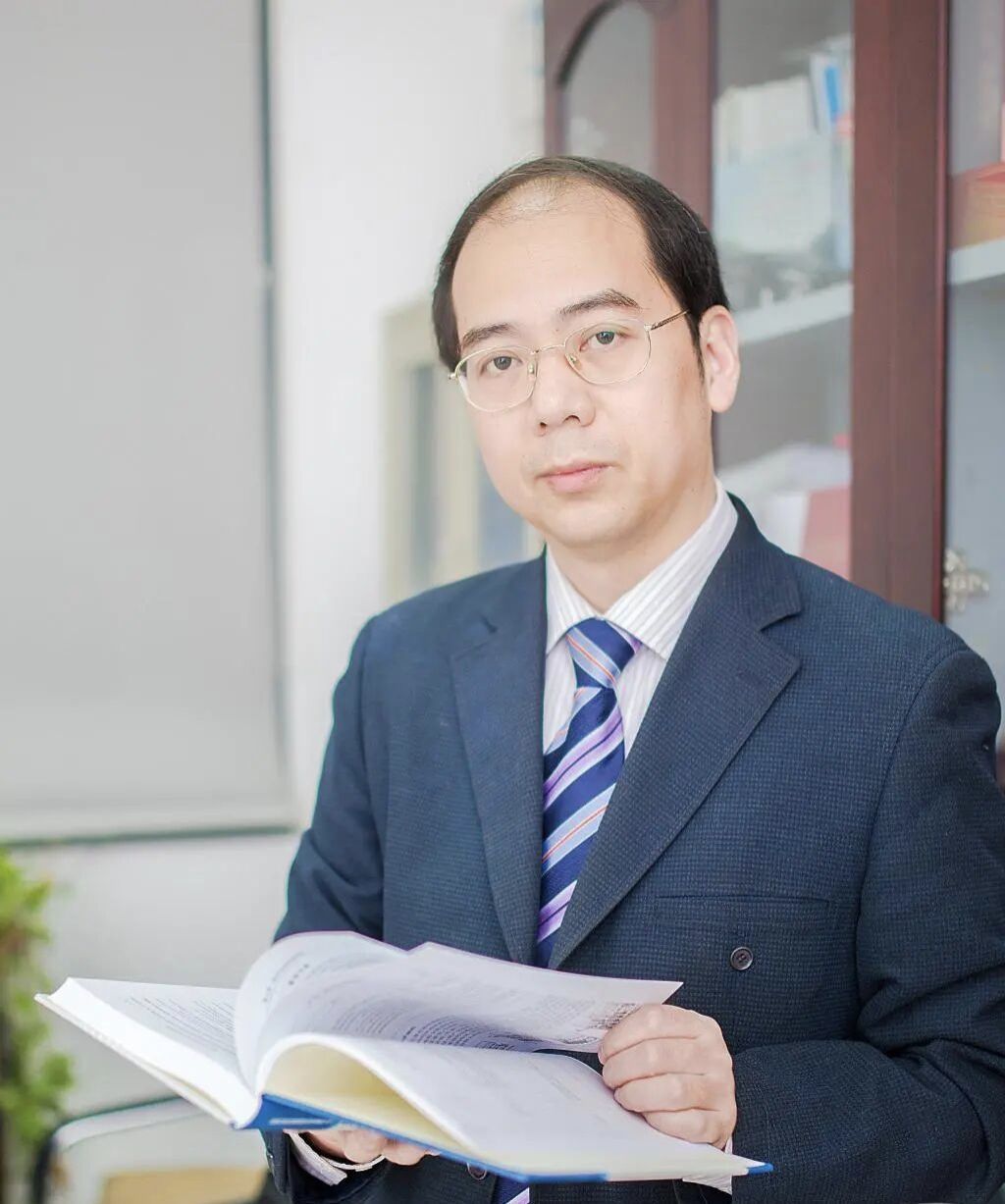
民企工程师当选院士人数创纪录
Xin Jing Bao· 2025-11-21 14:35
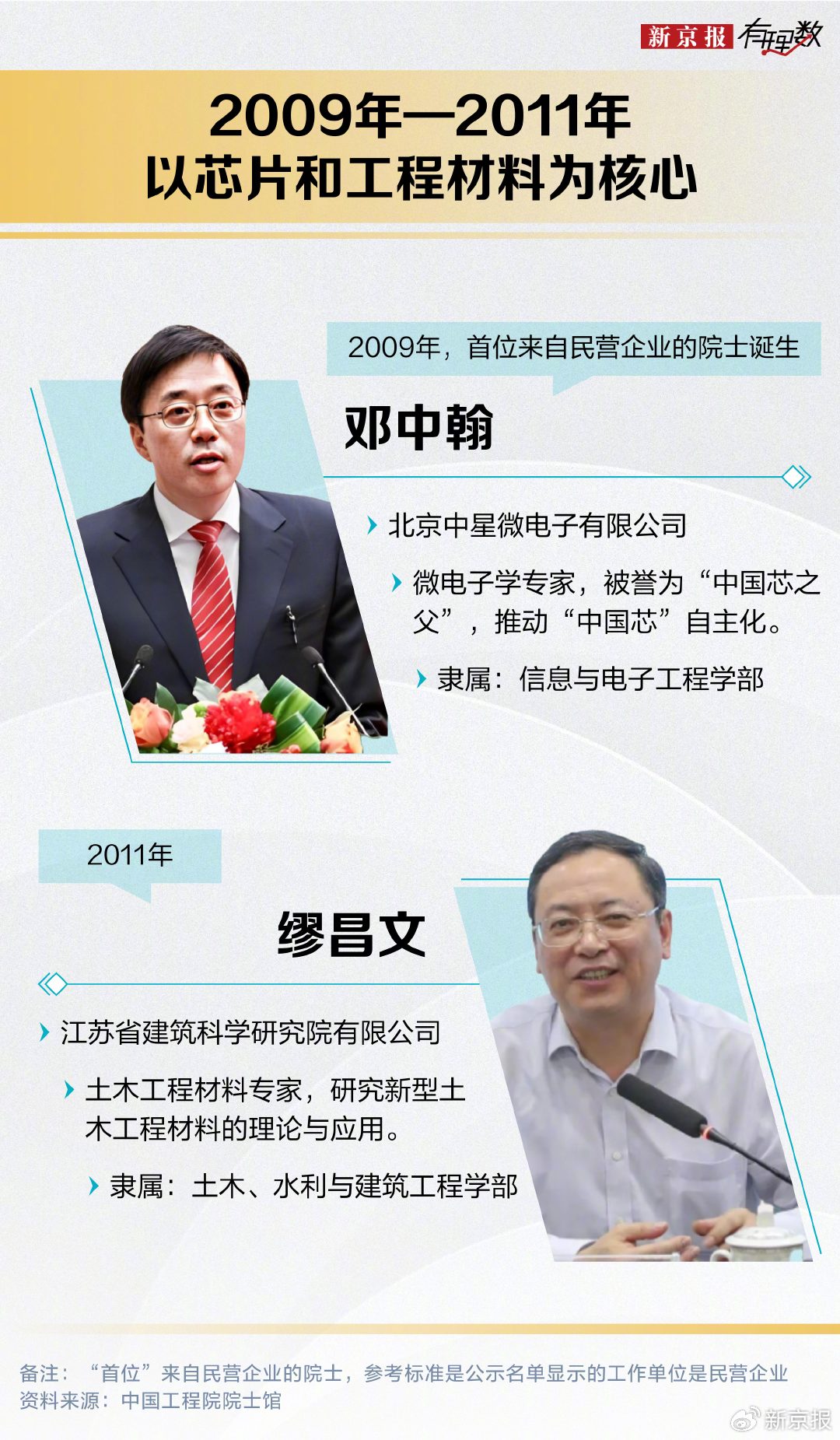
Core Insights - The 2025 academician election emphasizes long-term contributions from researchers and engineers in the frontlines of scientific and engineering fields, with a notable increase in academicians from private enterprises [1][21] - This year's election saw three engineers from private companies, marking the highest number of private enterprise engineers elected in a single session [1][21] - The total number of academicians from private enterprises has now reached nine, with the 2025 election contributing significantly to this figure [1] Summary by Sections Election Highlights - The election of three engineers from private enterprises in 2025 is a significant milestone, reflecting a structural trend in the recognition of private sector contributions to technology and innovation [19][21] - The first academician from a private enterprise was elected in 2009, with a total of six academicians from private enterprises elected over the past decade [1][2] Industry Impact - The election aligns with China's strategic focus on technological innovation and industrial upgrading, particularly in sectors where private enterprises are becoming increasingly competitive [13][21] - The three elected academicians represent companies that are at the forefront of China's most competitive strategic industrial chains, including new energy vehicles, lithium batteries, and advanced materials [19][20] Notable Companies - BYD has achieved a cumulative sales volume of 3.7019 million vehicles in the first ten months of the year, with a year-on-year growth of 13.9%, positioning itself as a leader in the new energy vehicle sector [19] - CATL holds a dominant position in the global battery market, with one in three electric vehicles worldwide using its batteries, maintaining the largest market share for seven consecutive years [19] - Kingfa Technology is recognized as a leading polymer modification materials company, providing critical materials for intelligent robotics and low-altitude economy applications [19][20] Future Implications - The increase in academicians from private enterprises signals a shift towards a market-oriented innovation evaluation system, promoting the integration of industry, academia, and research [21] - This trend may reshape the landscape of technological innovation in China, as more leading talents from private enterprises gain recognition on the national stage [21]
观察:当机器人跳起英歌舞,“人机共生”的城市实验已然开场
Nan Fang Du Shi Bao· 2025-11-20 00:56
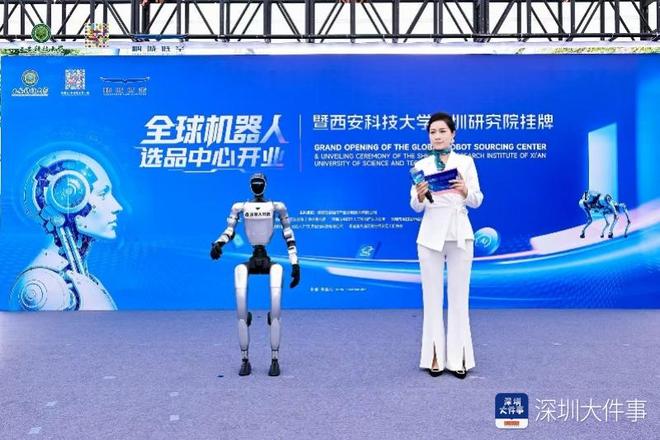
Core Insights - The article highlights the transformation of Huaqiangbei into a "Human-Machine Symbiosis First Street," showcasing the integration of traditional culture with cutting-edge technology through the opening of the Global Robot Selection Center and the establishment of the Xi'an University of Science and Technology (Shenzhen) Research Institute [1][9] Group 1: Transformation of Huaqiangbei - Huaqiangbei has evolved from a place known for electronic components to a vibrant hub where robots are integral to the urban ecosystem, marking a shift from cold industrial parts to interactive partners in daily life [3][4] - The Global Robot Selection Center redefines "display" by allowing robots to interact with the public, transforming Huaqiangbei into a real-world laboratory for human-robot interaction [3][4] Group 2: Industrial Evolution - The phrase "buy robots in Huaqiangbei" signifies a shift in the local economy, supported by a robust industrial foundation that integrates various resources from chips to complete robotic systems [5][7] - The center's establishment represents a significant evolution in Huaqiangbei's industrial DNA, transitioning from a hardware supply chain to an intelligent ecosystem, enhancing its competitive edge in the robotics sector [7][9] Group 3: Academic and Practical Integration - The entry of the Xi'an University of Science and Technology Research Institute provides a crucial academic backbone to Huaqiangbei, facilitating the transformation of theoretical research into practical applications in robotics [8][9] - This collaboration exemplifies the integration of higher education and engineering practice, addressing the challenges of innovation and commercialization in the robotics field [8] Group 4: Future Implications - The developments in Huaqiangbei reflect broader trends in China's industrial upgrade, illustrating how technology can be defined through application and experience rather than mere manufacturing [9] - The ongoing transformation in Huaqiangbei serves as a model for future urban living, where robots play significant roles in daily life, indicating a shift in societal roles and technological interaction [9]

一周之内,北大、复旦、西科大相继“落子”深圳
2 1 Shi Ji Jing Ji Bao Dao· 2025-11-19 13:53
近一周,北京大学、复旦大学、西安科技大学相继"南下",在深圳布局新的学院或机构。 分别来看,北京大学国际知识产权学院于11月15日成立,旨在培养知识产权领域青年领军人才,建设国际化、复合型、实务型 人才队伍,打造知识产权领域高精尖人才培养高地、前沿理论和政策研究重镇、高水平国际交流合作平台。 21世纪经济报道记者陈思琦深圳报道 11月16日,深圳市人民政府与复旦大学签订战略合作框架协议,明确在河套深圳园区建设新型研发机构"深圳复旦研究院",加 快人工智能、医学研究等前沿领域拔尖创新人才培养。 11月19日,西安科技大学(深圳)研究院在华强北揭牌,将在人工智能、人形机器人传动、智能控制、安全科技、嵌入式大模型等 方向开展前沿研究。 作为高等教育"后发城市",深圳现有各类高校17所,包括深大、南科大、深理工等本土高校,港中大(深圳)、深圳北理莫斯科等 中外合办高校,以及北大、清华、哈工大等内地高校分支校区。 另一方面,深圳以市场为导向、企业为主体的"6个90%"独特创新生态,吸引了越来越多外部高校以新型研发机构的形式来深布 局。据21世纪经济报道记者不完全统计,仅近两年,就有中国海洋大学深圳研究院、电子科技大学深 ...