南向资金
Search documents
南向资金今日净卖出35.21亿港元
Zheng Quan Shi Bao· 2025-11-13 09:51
Core Viewpoint - On November 13, southbound funds recorded a total trading volume of 124.97 billion HKD, with a net sell of 3.52 billion HKD [1] Trading Overview - The Hang Seng Index increased by 0.56% on November 13 [1] - Total buy transactions for southbound funds amounted to 60.72 billion HKD, while total sell transactions reached 64.25 billion HKD, resulting in a net sell of 3.52 billion HKD [1] - Breakdown of trading through Stock Connect: - Shanghai Stock Connect: Buy transactions were 36.93 billion HKD, sell transactions were 39.06 billion HKD, leading to a net sell of 2.13 billion HKD [1] - Shenzhen Stock Connect: Buy transactions were 23.79 billion HKD, sell transactions were 25.18 billion HKD, resulting in a net sell of 1.39 billion HKD [1]
解码南向资金首破“5万亿”!背后两大趋势:港股定价权增强、正循环效应显现!
Zheng Quan Shi Bao· 2025-11-13 08:06
Core Viewpoint - The continuous inflow of southbound funds into the Hong Kong stock market has reached a record high, indicating a significant transformation in market liquidity and activity, driven by strategic allocation needs from mainland investors seeking undervalued assets and high-quality stocks [1][2][4]. Group 1: Market Performance - As of November 10, southbound funds have net inflows of 66.54 billion HKD, bringing the total for the year to 1.305 trillion HKD, and cumulative inflows since the launch of the Hong Kong Stock Connect have surpassed 5 trillion HKD [2][3]. - Major indices in the Hong Kong market, including the Hang Seng Index, Hang Seng Tech Index, and Hang Seng China Enterprises Index, have all seen year-to-date increases of over 30%, ranking among the top global markets [2]. Group 2: Factors Driving Inflows - The influx of southbound funds is driven by five key factors: valuation discounts compared to A-shares, ongoing demand for technology leaders and high-dividend assets in a declining domestic interest rate environment, improved connectivity mechanisms, long-term investment needs from domestic insurance and public funds, and global liquidity easing expectations [3][4]. - The phenomenon of "asset scarcity" is also noted, where abundant funds are seeking quality assets, leading to increased southbound investments in the Hong Kong market [4]. Group 3: Market Dynamics and Trends - Southbound funds accounted for approximately 34.64% of the total trading volume in the Hong Kong market in 2024, a significant increase from previous years [5]. - The market capitalization held by southbound funds is around 6.21 trillion HKD, representing 12.93% of the total market value, with insurance and public funds making up over 40% of this capital [6]. Group 4: Future Outlook - The Hong Kong stock market is expected to benefit from a "positive cycle" as more mainland companies list in Hong Kong, attracting further capital inflows and enhancing liquidity [7]. - Despite significant gains this year, the valuation of the Hong Kong market remains attractive compared to global peers, providing further incentives for mainland investors to allocate capital southward [8].
解码南向资金首破“5万亿”!背后两大趋势:港股定价权增强、正循环效应显现!
证券时报· 2025-11-13 07:52
Core Viewpoint - The Hong Kong stock market has reached a new milestone with significant inflows of southbound capital, indicating a transformation in market liquidity and activity, driven by strategic allocations from mainland investors seeking undervalued assets and high-quality stocks [2][4]. Group 1: Southbound Capital Inflows - On November 10, southbound capital through the Stock Connect net inflow reached 6.654 billion HKD, bringing the year-to-date net purchase amount to over 1.3 trillion HKD, and the cumulative net inflow since the launch of Stock Connect surpassed 5 trillion HKD [2][4]. - The major indices in the Hong Kong market, including the Hang Seng Index, Hang Seng Tech Index, and Hang Seng China Enterprises Index, have all seen year-to-date increases of over 30%, positioning them among the top performers globally [4]. - In 2023, southbound capital showed a significant acceleration in inflows, with 57 trading days recording net inflows exceeding 10 billion HKD, primarily concentrated in the first half of the year [4][5]. Group 2: Factors Driving Inflows - The increase in southbound capital is driven by five main factors: valuation discounts compared to A-shares, ongoing demand for tech leaders and high-dividend assets in a declining domestic interest rate environment, optimized connectivity mechanisms, inherent demand from long-term domestic funds, and enhanced liquidity expectations due to global interest rate cuts [5][6]. - The phenomenon of "asset scarcity" is also noted, where abundant capital is seeking quality assets, leading to increased southbound capital inflows as domestic funds look for effective allocation opportunities [6]. Group 3: Pricing Power and Market Dynamics - The continuous inflow of southbound capital has improved liquidity in the Hong Kong market and enhanced the pricing power of mainland funds, which accounted for approximately 34.64% of the market's trading volume in 2024 [8]. - As of now, the market value held by southbound capital is about 6.21 trillion HKD, representing 12.93% of the total market capitalization [8]. - Insurance and public funds constitute over 40% of the southbound capital, with public funds showing a compound annual growth rate of 23.5% in their holdings from 2020 to 2025 [8][9]. Group 4: Valuation and Future Outlook - The Hong Kong stock market remains attractive in terms of valuation compared to global markets, with the forward P/E ratio of the Hang Seng Tech Index at 20.4, lower than its five-year average and significantly below the Nasdaq's 30.9 [12]. - The influx of mainland capital and the listing of more unique enterprises in Hong Kong are expected to create a positive feedback loop, enhancing liquidity and profitability in the market [11]. - Despite the high gains in 2023, the Hong Kong market's valuation still presents a compelling case for further investment from mainland funds [12].
港股IPO冷热博弈:6天6家上市,“明星”药企缘何临门停步?
2 1 Shi Ji Jing Ji Bao Dao· 2025-11-13 05:40
Core Viewpoint - The Hong Kong stock market is experiencing a surge in biotech IPO applications, with companies eager to capitalize on the favorable listing environment, despite some unexpected delays in the process [1][2]. Group 1: IPO Activity - Six biotech companies, including major players like Mindray Medical and innovative firms like Insilico Medicine and Anxuyuan Technology, have submitted IPO applications to the Hong Kong Stock Exchange within a short span, indicating a strong demand for capital [2][3]. - The Hong Kong Stock Exchange's 18A listing rule, introduced in 2018, allows unprofitable biotech companies to raise funds, which has attracted many innovative firms to the market [2]. Group 2: Company Strategies - Mindray Medical, a leader in the medical device sector, aims to enhance its international strategy through its IPO, with plans to increase its global revenue share and invest in R&D and sales networks [3]. - Smaller biotech firms like Sinovac Biotech and Real Bio are also seeking to expand internationally through their IPOs, with specific plans to fund product development and market expansion [4]. Group 3: Market Environment - The influx of southbound capital into the Hong Kong market has reached a historic high, with net inflows exceeding HKD 5 trillion, providing a solid foundation for biotech IPOs [5][6]. - Recent market dynamics show a shift in investor strategy from aggressive tech investments to defensive high-dividend stocks, impacting the appetite for biotech IPOs [5]. Group 4: Valuation Concerns - The delay in the IPO of Baillie Gifford is notable, as it highlights valuation challenges in the biotech sector, with concerns over high entry barriers and insufficient valuation discounts compared to A-shares [7][8]. - Baillie Gifford's fluctuating performance raises questions about its long-term profitability, as its recent revenue surge is tied to a one-time transaction rather than sustainable growth [9][10]. Group 5: Industry Outlook - The case of Baillie Gifford serves as a warning for other biotech firms, emphasizing the importance of clear market positioning, valuation strategies, and stable performance to succeed in the Hong Kong IPO landscape [10][11]. - The market is becoming more discerning, favoring companies with genuine technological advantages and commercialization potential, signaling a return to rationality in the biotech sector [11].
哑铃、哑铃,缺一不行
Xin Lang Ji Jin· 2025-11-13 00:54
Core Viewpoint - The Hong Kong dividend assets have shown strong performance, rivaling the technology sector, with significant increases in key dividend indices over the past year [1][4]. Performance of Dividend Indices - The Hong Kong Stock Connect High Dividend (CNY) and the Hang Seng High Dividend Low Volatility indices have reached historical highs, with annual increases of 31.65% and 33.57% respectively, outperforming the Hang Seng Technology Total Return Index, which rose by 28.02% during the same period [1][4]. Market Dynamics - The divergence between the technology and dividend sectors began in October 2025, influenced by external factors such as the escalating US-China tariff disputes and government shutdown risks, leading to a shift in investor sentiment towards more defensive dividend assets [4][5]. - The technology sector's high valuations and lack of new catalysts during a policy and earnings vacuum have prompted funds to move towards more reasonably valued dividend stocks [4]. Southbound Capital Inflows - Despite market volatility, southbound capital has consistently flowed into Hong Kong stocks, with net inflows exceeding 1.3 trillion HKD in 2025, marking a record high since the launch of the Stock Connect [6][7]. - The financial, energy, consumer discretionary, and telecommunications sectors have attracted the most southbound capital, indicating a growing interest in dividend assets [7]. Institutional Investment Trends - Insurance capital has increasingly targeted dividend assets, with 36 instances of stake acquisitions in 2025, surpassing previous highs and focusing on stable, high-dividend sectors such as banking and utilities [8][9]. - The dividend yields of the Hong Kong Stock Connect High Dividend (CNY) and the Hang Seng High Dividend Low Volatility indices stand at 5.53% and 5.69%, significantly higher than comparable A-share indices [9]. Investment Strategy - In the current low-interest-rate environment, the dividend yields from Hong Kong stocks present a compelling alternative to domestic bonds, which yield only 1.81% [9]. - The Hong Kong dividend ETFs have shown strong performance, with the Hong Kong Stock Connect High Dividend ETF achieving a 69.51% return since its inception, outperforming its benchmark [15][16].
解码南向资金累计净买入首破5万亿港元 港股定价权增强 市场正循环显现
Zheng Quan Shi Bao· 2025-11-12 18:58
Core Viewpoint - The continuous inflow of southbound funds into the Hong Kong stock market has reached a record high, indicating a significant transformation in market liquidity and activity, driven by strategic allocation needs from mainland investors seeking undervalued assets and high-quality stocks [1][2][4]. Group 1: Market Performance - As of November 10, southbound funds have net inflows of 66.54 billion HKD, bringing the total for the year to 1.305 trillion HKD, and cumulative inflows since the launch of the Hong Kong Stock Connect have surpassed 5 trillion HKD [2][3]. - Major indices in the Hong Kong market, including the Hang Seng Index, Hang Seng Tech Index, and Hang Seng China Enterprises Index, have all seen year-to-date increases of over 30%, ranking among the top global markets [2]. Group 2: Factors Driving Inflows - The influx of southbound funds is driven by five key factors: valuation discounts compared to A-shares, demand for technology leaders and high-dividend assets in a declining domestic interest rate environment, improved connectivity mechanisms, long-term investment needs from insurance and public funds, and global liquidity easing expectations [3][4]. - The phenomenon of "asset scarcity" is also noted, where abundant funds are seeking quality assets, leading to increased southbound investments in the Hong Kong market [4]. Group 3: Market Dynamics and Trends - Southbound funds accounted for approximately 34.64% of the total trading volume in the Hong Kong market in 2024, a significant increase from previous years [5]. - The market capitalization held by southbound funds is around 6.21 trillion HKD, representing 12.93% of the total market, with insurance and public funds making up over 40% of this capital [6]. Group 4: Future Outlook - The Hong Kong market is expected to benefit from a "positive cycle" as more mainland companies list in Hong Kong, attracting further capital inflows and enhancing liquidity [7]. - Despite significant gains this year, the valuation of the Hong Kong market remains attractive compared to global peers, providing further incentives for mainland investors to allocate capital southward [8].
万亿港元南向资金爆买港股,重点板块、个股曝光
2 1 Shi Ji Jing Ji Bao Dao· 2025-11-12 15:06
Core Viewpoint - The Hong Kong stock market has reached a milestone with cumulative net purchases from southbound funds exceeding 5 trillion HKD, reflecting unprecedented enthusiasm from mainland investors [1][4][5]. Group 1: Southbound Fund Inflows - As of November 11, southbound funds have recorded a net inflow of 1.31 trillion HKD in 2023, marking a historical high for the year [4][5]. - The inflow of southbound funds has accelerated, with 16 consecutive trading days of net purchases, and only 3 out of 23 trading days in October showing net outflows [5][9]. - The Hong Kong stock market has demonstrated significant profitability, with major indices like the Hang Seng Index and Hang Seng Tech Index rising over 30% this year [3]. Group 2: Investment Strategy Shift - There has been a notable shift in investment strategy among southbound funds, moving from a growth-oriented "offensive" approach to a focus on high-dividend "defensive" stocks [9][10]. - Financials have become the core asset for southbound funds, accounting for 39% of net purchases since 2025, with the top three sectors being financials, information technology, and consumer discretionary [9][10]. - The recent trend shows a significant reduction in holdings of high-growth, high-valuation sectors like pharmaceuticals and technology, while increasing investments in traditional sectors such as banking and oil, which offer low valuations and high dividend yields [10][11]. Group 3: Market Dynamics and Future Outlook - Analysts attribute the continued inflow of southbound funds to the low valuations and high dividend yields in the Hong Kong market, making it an attractive investment destination [6][7]. - The market is witnessing a rotation towards high-dividend sectors, with stocks like China National Offshore Oil Corporation gaining favor due to their strong dividend attributes [10]. - Despite the current defensive posture, there is potential for growth in undervalued quality stocks, suggesting future opportunities for a shift back to an offensive strategy [11].
万亿港元南向资金爆买港股,重点板块、个股曝光
21世纪经济报道· 2025-11-12 14:48
Core Viewpoint - The Hong Kong stock market has reached a milestone with cumulative net purchases from southbound funds exceeding 50 billion HKD, reflecting unprecedented enthusiasm from mainland investors for Hong Kong stocks [1][3]. Group 1: Southbound Fund Inflows - Southbound funds have recorded a net inflow of 1.31 trillion HKD in 2023, marking a historical high for the year, which is over 60% higher than the previous record of 810 billion HKD in 2024 [3]. - The Hang Seng Index and Hang Seng Tech Index have both seen gains exceeding 30% this year, with the Hong Kong Stock Connect Innovative Drug Index rising over 80% [3]. - The low valuation and high dividend yield of Hong Kong stocks are key factors driving the inflow of southbound funds [3][4]. Group 2: Investment Strategy Shift - There has been a notable shift in the investment strategy of southbound funds from a growth-oriented "offensive" approach to a more defensive strategy emphasizing high dividend yields [5][6]. - Financials have become the core asset for southbound funds, accounting for 39% of net purchases since 2025, with the top three sectors being financials, information technology, and consumer discretionary [6]. - A significant example of this shift is the movement of funds from Alibaba to China National Offshore Oil Corporation, with Alibaba experiencing a net sell-off of approximately 11 billion HKD in market value over the past month [6][7]. Group 3: Sector Rotation - Southbound funds are increasingly favoring high dividend sectors while reducing exposure to high-growth, high-valuation sectors such as pharmaceuticals, electronics, media, and computing [7]. - Traditional industries like banking, oil and gas, telecommunications, and coal are attracting significant inflows due to their low valuations and high dividend yields, becoming a "safe haven" for investors [7][8]. - The market's risk appetite appears to be shifting towards a more conservative stance, focusing on high dividend stocks rather than technology stocks [7].
南向资金年内净买入1.3万亿港元
Shen Zhen Shang Bao· 2025-11-12 00:34
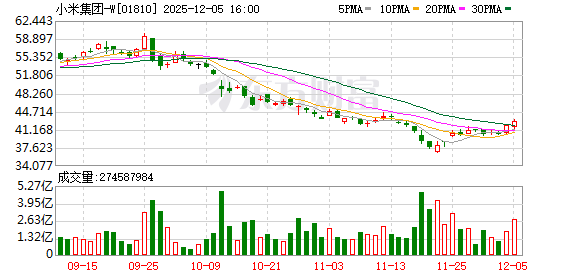
Core Insights - Southbound funds have significantly increased their investment in Hong Kong stocks, with a cumulative net purchase amount exceeding 50 billion HKD since the launch of the Hong Kong Stock Connect program [1][2] Group 1: Investment Trends - As of November 11, southbound funds recorded a net inflow of 44.67 billion HKD, marking the 15th consecutive trading day of net buying [1] - Year-to-date, the net purchase amount by southbound funds has surpassed 1.3 trillion HKD, reaching 1,309.82 billion HKD, setting a new annual record since the program's inception in 2014 [1][2] Group 2: Market Performance - The strong performance of the Hong Kong stock market, with the Hang Seng Index and Hang Seng Tech Index both rising over 30% this year, has positively influenced the continuous net buying by southbound funds [2] - The IPO market in Hong Kong has attracted high-quality new listings, including secondary listings from U.S. and A-share companies, which have expanded the pool of attractive investment targets for southbound funds [2] Group 3: Stock Holdings - Major holdings by southbound funds include Tencent Holdings with a market value of 651.23 billion HKD, Alibaba-W at 344.21 billion HKD, and China Construction Bank at 273.32 billion HKD [2] - In the past month, the top ten net purchases by southbound funds included Xiaomi Group-W, China National Offshore Oil Corporation, and Meituan-W, with net purchase amounts ranging from 8.89 billion HKD to 1.68 billion HKD [3] Group 4: Valuation Insights - Industry experts believe that the current valuation levels of Hong Kong stocks remain attractive, suggesting that the trend of increased investment from southbound funds is likely to continue [4] - The market is seen as having many undervalued stocks with resilient earnings, indicating significant long-term investment value [4]
南向资金累计净流入规模突破5万亿港元
Zhong Guo Zheng Quan Bao· 2025-11-11 23:08
自港股通开通以来,南向资金累计净流入规模突破5万亿港元,刷新香港-内地互联互通机制开通以来的 最高纪录。 (文章来源:中国证券报) ...