产业升级

Search documents
59502.9亿元、1.9%,增长!透过数据看工业新增长点多 企业效益结构优化
Yang Shi Wang· 2025-11-27 07:34
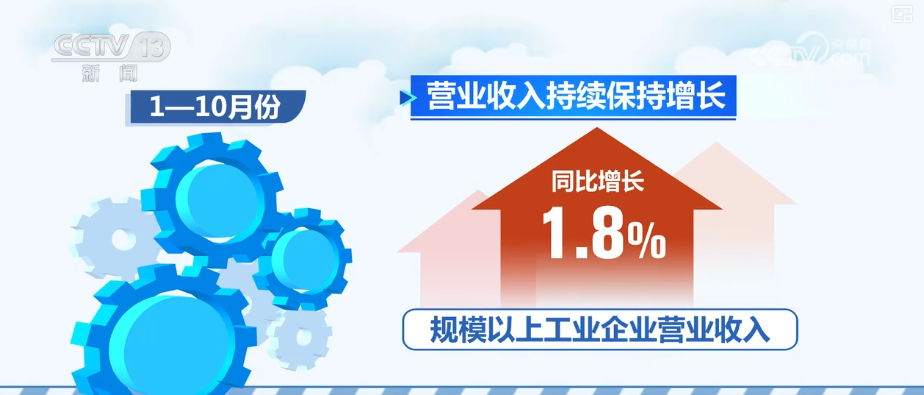
Core Insights - The overall profit of industrial enterprises above designated size in China showed stable growth from January to October, with a total profit of 59,502.9 billion yuan, representing a year-on-year increase of 1.9% [3][7] - The equipment manufacturing industry experienced a significant profit increase of 7.8%, contributing 2.8 percentage points to the overall profit growth of industrial enterprises [5][7] - High-tech manufacturing also performed well, with profits rising by 8.0%, surpassing the average growth rate of all industrial enterprises by 6.1 percentage points [8][11] Group 1 - From January to October, the total profit of industrial enterprises above designated size reached 59,502.9 billion yuan, with a year-on-year growth of 1.9% [3] - The revenue of these enterprises also saw a year-on-year increase of 1.8%, indicating sustained growth [3] - The profit growth of the equipment manufacturing sector was a key driver for the overall industrial profit increase, highlighting the sector's importance in the industrial economy [7] Group 2 - The high-tech manufacturing sector demonstrated robust performance, with an 8.0% increase in profits, indicating a positive trend in this area [8][11] - The structural optimization of industrial enterprise efficiency is evident, with traditional industries showing signs of improved productivity and profitability [11] - The ongoing integration of technological and industrial innovation is supporting the stability and recovery of industrial profits, with macroeconomic policies expected to further enhance enterprise performance [14]

西北小县有了汽车产业园
Zhong Guo Qing Nian Bao· 2025-11-27 05:34
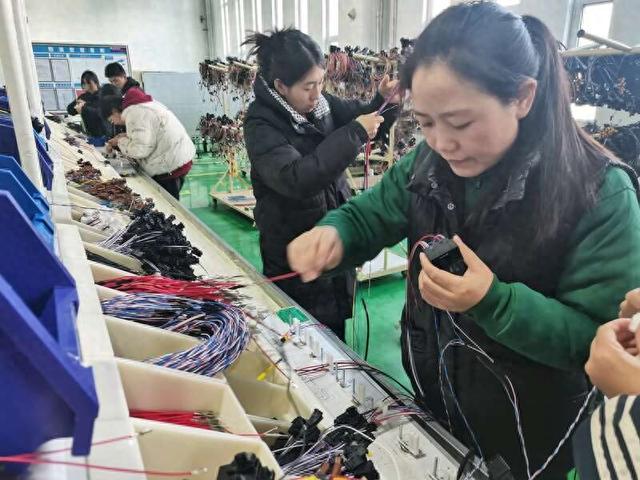
Group 1 - The automotive industry park in Jingning, Gansu, is transforming the local economy by providing job opportunities for over 300 residents, with an average monthly salary exceeding 3,000 yuan [2][3] - The company Hu Youzheng Tong Electric System Co., Ltd. has become a core supplier of seat wiring harnesses for multiple automotive manufacturers, achieving an eightfold increase in output compared to the previous year [2] - The introduction of 10 new fully automated crimping machines has improved wiring harness testing efficiency by 40%, with a target annual production capacity of 600,000 sets [2] Group 2 - The local government is actively collaborating with companies to attract investments, exemplified by the partnership with Geely Group, which has led to increased orders and the establishment of a seat component procurement center [2] - The automotive industry park is not only providing stable employment for women and older workers but also attracting young talent, such as high school students seeking internships [5] - Future projects, including a high-voltage wiring harness initiative, are expected to generate an annual output value of 350 million yuan, further integrating the local industry into the broader automotive supply chain [5]
股市即将变盘的逻辑,财富洗牌的前夜
Sou Hu Cai Jing· 2025-11-27 05:11
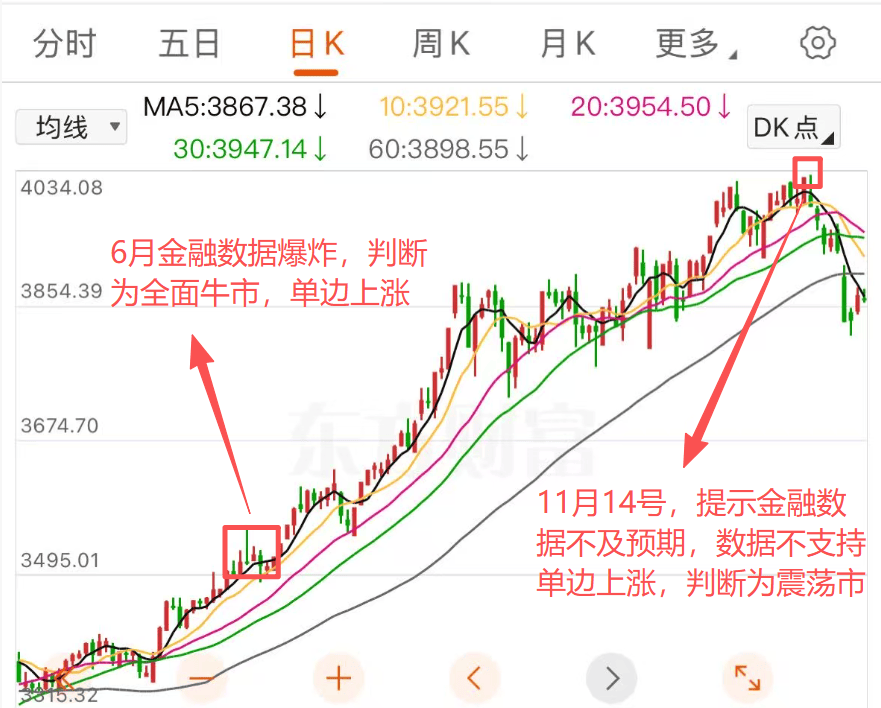
Core Viewpoint - The stock market began a downward trend starting November 14, triggered by the release of disappointing financial data for October on November 13, which did not meet expectations [1][3]. Financial Data Analysis - On July 14, the central bank released June financial data that significantly exceeded expectations, leading to a bullish market trend [3]. - The October financial data released on November 13 was below expectations, resulting in a noticeable decline in the stock market starting November 14 [3][4]. - The primary reason for the explosive data in July was the unexpected increase in money supply driven by bond purchases, while the October data reflected a downturn in bond issuance, impacting money supply growth [5][12]. Monetary Mechanism Explanation - The central bank is the issuer of currency, and the total money supply (M2) is determined by the base currency and the reserve requirement ratio [5][7]. - Commercial banks can create money through asset expansion, which includes buying bonds, but they must first attract deposits [6][9]. - The difference between commercial banks and the central bank in money creation lies in the need for deposits and the type of money created (derived vs. base money) [9][10]. Market Outlook - The recent data indicated a turning point for both M1 and M2, primarily due to a decline in bond issuance [13]. - Despite the downward pressure, the market is expected to stabilize rather than enter a prolonged decline, as the bond market can be adjusted by issuers in response to economic conditions [13]. - The long-term outlook remains optimistic, with confidence in the market's potential for recovery driven by bond issuance mechanisms [13][14]. Sector Focus - Future national development priorities include technology, new productive forces, and industrial upgrades, which may lead to high valuations in tech sectors [15]. - Traditional sectors, while not the focus of future growth, have lower valuations and may present safer investment opportunities [15][16].
六部门部署2027年形成3个万亿级消费领域
Chang Jiang Shang Bao· 2025-11-27 04:25
Core Viewpoint - The implementation plan aims to enhance the adaptability of supply and demand in the consumer sector, promoting consumption potential and economic growth through structural reforms and targeted initiatives [1] Group 1: Key Tasks and Goals - The plan outlines 19 key tasks across five areas, focusing on balancing supply and demand while leading industrial upgrades through consumption upgrades [1] - By 2027, the supply structure of consumer goods is expected to be significantly optimized, creating three trillion-level consumption sectors and ten hundred-billion-level consumption hotspots [1] - By 2030, a high-quality development pattern characterized by positive interaction between supply and consumption is anticipated, with a steady increase in consumption's contribution to economic growth [1] Group 2: Innovation and New Product Supply - The plan emphasizes accelerating the application of new technologies and models, particularly in sectors like smart connected vehicles, smart home products, and green building materials [2] - It promotes flexible and customized production models, establishing a digital system that integrates user demand, intelligent design, and flexible manufacturing [2] - Specific measures include enhancing the supply of green products, upgrading rural consumer goods, and expanding the influence of historical classic products [2] Group 3: Targeted Consumer Needs - The plan aims to enrich the supply of products for different demographics, including children, students, and the elderly, focusing on quality and intelligent development [3] - It encourages the development of new consumption scenarios and business models, such as flagship stores and live e-commerce, to stimulate consumer engagement [3] - The initiative also includes promoting shared consumption models in public spaces, enhancing accessibility for various consumer groups [3] Group 4: Supportive Environment - The plan calls for strengthened financial support and the organization of special events to foster a conducive environment for consumption growth [3] - It highlights the importance of utilizing policies for equipment upgrades and trade-in programs to stimulate consumer spending [3] - The initiative aims to leverage policy funding to support the quality upgrade of the consumer goods industry [3]
盘前机会前瞻|多部门联合印发!大消费再赢政策利好,这几家大消费细分领域企业值得关注(覆概念股)
Sou Hu Cai Jing· 2025-11-27 01:36
Core Viewpoint - The implementation plan aims to enhance the adaptability of supply and demand for consumer goods, promoting consumption upgrades to lead industrial upgrades and ensuring high-level dynamic balance between supply and demand, marking the first consumer promotion policy document issued after the 20th National Congress of the Communist Party of China [2][5]. Group 1: Key Tasks - The plan outlines 19 key tasks across five areas: expanding new technologies and innovative applications, deepening the supply of unique and new products, segmenting markets to match diverse consumer needs, empowering new consumption scenarios and business formats, and optimizing the development environment [3][6]. Group 2: Goals and Targets - By 2027, the structure of consumer goods supply is expected to be significantly optimized, forming three trillion-level consumption fields and ten hundred-billion-level consumption hotspots, while creating a number of high-quality consumer goods with cultural connotations and global recognition [3][6]. - By 2030, a high-quality development pattern characterized by positive interaction and mutual promotion between supply and consumption is anticipated to be basically formed, with a steady increase in the contribution rate of consumption to economic growth [3][6].
以消费升级引领产业升级,专家建议开展AI典型场景应用
Huan Qiu Wang· 2025-11-27 01:23
工业和信息化部赛迪研究院消费品工业研究所副所长代晓霞认为,增强供需适配性,旨在打通"需求牵 引供给"与"供给创造需求"的双向通道,不仅是应对当前消费结构性矛盾的精准施策,更是推动经济迈 向高质量、可持续发展的重要一环。 【环球网财经综合报道】工业和信息化部11月26日消息,日前,经国务院同意,工信部、国家发改委等 六部门联合印发《关于增强消费品供需适配性进一步促进消费的实施方案》,以消费升级引领产业升 级,以优质供给更好满足多元需求,实现供需更高水平动态平衡。 《实施方案》从拓展增量、深挖存量、场景赋能等5方面部署19项重点任务,目标是到2027年,消费品 供给结构明显优化,形成3个万亿级消费领域和10个千亿级消费热点,打造一批富有文化内涵、享誉全 球的高品质消费品;到2030年,供给与消费良性互动、相互促进的高质量发展格局基本形成,消费对经 济增长的贡献率稳步提升。 代晓霞还提出:"人工智能、大数据、柔性制造等新技术新模式的广泛渗透应用,正重塑产业生态和消 费形态,是增强消费品供需适配性的重要途径。人工智能的融合赋能,关键在于场景的深耕与链条的打 通,尤其在汽车、家居、消费电子、纺织服装、化妆品、医疗等重点 ...
2027年我国将形成3个万亿级消费领域
Bei Jing Shang Bao· 2025-11-27 00:24
Core Viewpoint - The implementation plan aims to enhance the adaptability of consumer goods supply and demand, promoting consumption as a driver of economic growth by optimizing supply structures and creating new consumption scenarios [1][6]. Group 1: Supply and Demand Adaptability - The plan outlines 19 key tasks focusing on expanding new consumption, tapping into existing markets, and targeting niche markets [1][7]. - It emphasizes the importance of new technologies and innovative models in industries such as smart vehicles, smart home products, and consumer electronics [2][6]. Group 2: New Consumption Scenarios - The plan encourages the development of new consumption scenarios, including interest-based products like pet supplies and anime merchandise, while also promoting low-altitude tourism and automotive aftermarket services [4][6]. - It supports the establishment of flagship stores and new concept stores to enhance consumer experience and engagement [4][6]. Group 3: Targeted Product Development - The plan aims to enhance product offerings for specific demographics, including children and the elderly, by promoting high-quality, intelligent, and customized products [7][8]. - It encourages the development of health-related products and services, integrating traditional medicine with modern health management [3][7]. Group 4: Shared Consumption - The plan outlines directions for shared consumption, including the promotion of shared bicycles and other mobility solutions in public spaces [5][6]. - It emphasizes the need for quality certification systems for shared products to ensure safety and reliability [5][6].

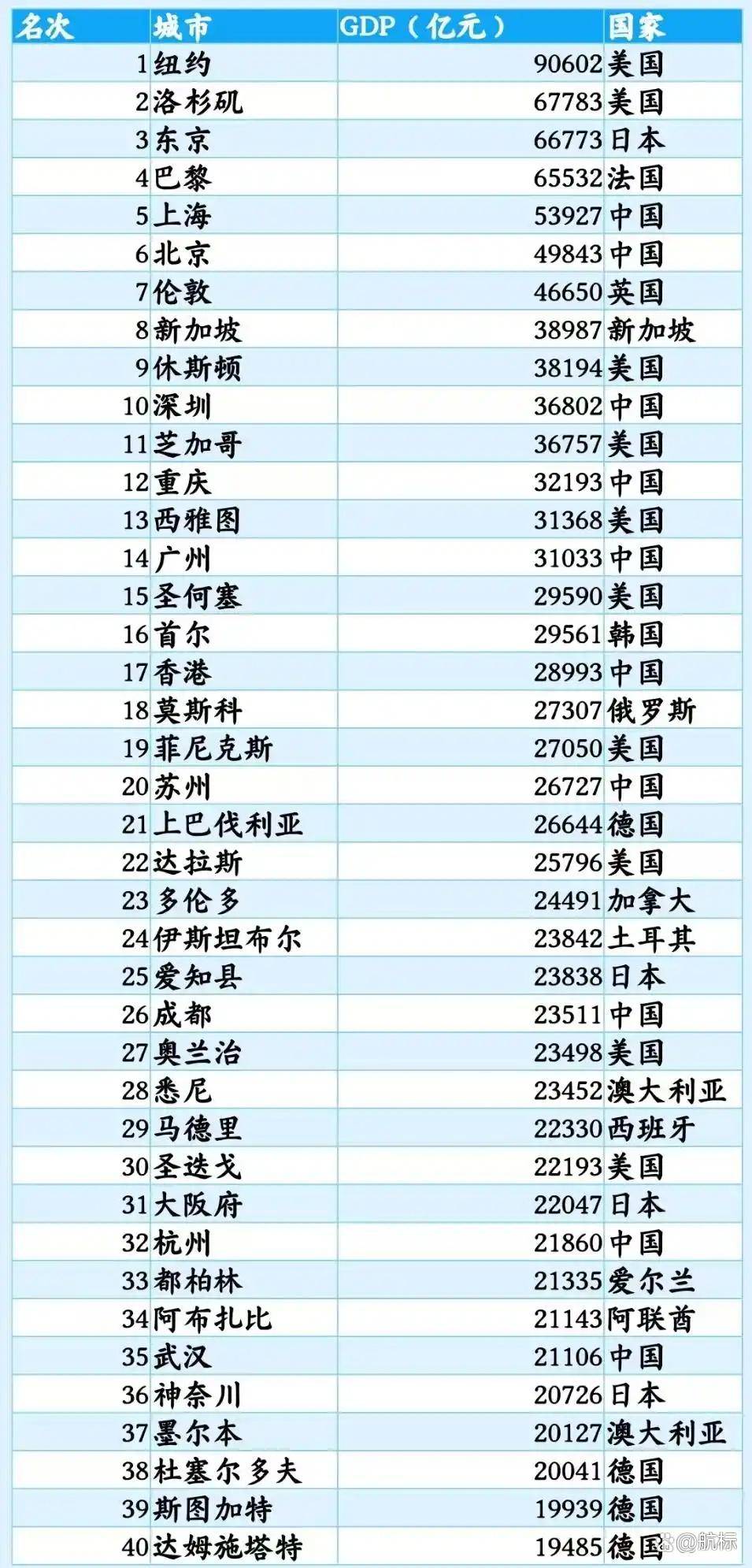
全球GDP40强城市洗牌:巴黎首破6.5万亿,苏州逼近香港,武汉远超墨尔本!
Sou Hu Cai Jing· 2025-11-26 19:10
Core Insights - The 2024 Global City GDP Top 40 list reveals significant economic advancements in major cities, driven by national strategic benefits, with U.S. cities leading in technology clusters, Chinese cities accelerating through regional development policies, and European cities solidifying their positions via industrial upgrades [1] Group 1: Key City Performances - Paris has surpassed a GDP of 65.5 trillion yuan, marking a significant milestone as Europe's economic "ballast" [1][3] - Suzhou's GDP gap with Hong Kong has narrowed to 220 billion yuan, showcasing the city's rapid manufacturing growth against Hong Kong's financial hub status [1][5] - Wuhan's GDP of 21,106 billion yuan has overtaken Melbourne's 20,127 billion yuan, highlighting the release of potential in regional hubs [1][7] Group 2: Growth Drivers - Paris's economic strength is supported by its strategic location as a European transport and financial hub, alongside the digital transformation of luxury brands like LVMH, which has seen online revenue reach 35% [3] - Suzhou's industrial upgrades, driven by the "smart transformation" policy, have led to a 20% increase in annual patent applications in semiconductor firms, with its logistics efficiency enhancing foreign trade resilience [5] - Wuhan's growth is attributed to its status as a national central city, with significant advancements in the optoelectronics sector, where it holds 35% of national fiber optic communication patents [7] Group 3: Economic Restructuring - The reshuffling of global city GDP rankings reflects a precise alignment of self-positioning and national strategies, with cities leveraging their geographical advantages, industrial innovations, and supportive policies [9]
中国制造改写全球规则!霸榜15年的它,到底有多硬核?
Sou Hu Cai Jing· 2025-11-26 17:42
Core Insights - Chinese manufacturing has maintained its dominance globally for 15 consecutive years, significantly contributing to the national economy and reshaping global trade rules [1][4]. Economic Performance - In the first three quarters, China's GDP reached 101.5036 trillion yuan, with a year-on-year growth rate of 5.2%, and a 6.2% increase in industrial value added for large-scale enterprises, showcasing the robust strength of Chinese manufacturing [4]. - The manufacturing sector covers over 50% of global market share in various categories, including steel, home appliances, and new energy vehicles, indicating a comprehensive industrial base [4]. Unique Industrial Ecosystem - China is the only country with all industrial categories recognized by the United Nations, creating a unique industrial ecosystem. In 2024, only 26.6% of the manufacturing output valued at 94 trillion yuan is expected to be for export, highlighting the strength of domestic demand [6]. - The closed-loop capability of responding to demand, iterating technology, and implementing production is a key competitive advantage for Chinese manufacturing, allowing it to maintain its leading position [6]. Trade Dynamics - By August 2025, China's goods trade surplus is projected to reach $785.34 billion, with an annual estimate exceeding $1.2 trillion, driven by the inability of many countries to meet the market demand in terms of cost-effectiveness and technological content [7]. - Emerging manufacturing countries like India and Vietnam show significant trade deficits with China, indicating their reliance on Chinese intermediate goods for assembly, which underscores China's central role in global supply chains [9]. Financial Restructuring - The financial landscape is undergoing changes, with the CIPS system processing 175 trillion yuan in 2024 and reducing overlap with SWIFT to 30% by 2025, indicating the establishment of an independent RMB payment system [12]. - The rigid demand for Chinese goods globally is facilitating the natural progression towards RMB settlements [14]. Challenges and Opportunities - The domestic market is experiencing shifts, with top 100 real estate companies' sales in the first half of 2025 only reaching 26% of the same period in 2021, and the white liquor industry facing oversupply [16]. - Despite challenges, the manufacturing sector's ability to quickly respond to market changes and the willingness to expand production even at short-term losses are driving rapid technological advancements [16]. - The continuous negative PPI for 35 months reflects a process of industrial reshuffling, concentrating resources on high-quality enterprises, while the focus on balancing supply chain improvements, domestic demand expansion, and stable exports remains crucial [18]. Future Outlook - The surplus from foreign trade is gradually being transformed into innovation momentum, with increasing collaboration from various countries, indicating that the journey of Chinese manufacturing is not just about industrial upgrades but also about restructuring the global economic landscape [20]. - Future strategies will focus on not only achieving the largest scale but also on technological innovation, green transformation, and ecological collaboration, which will redefine the new rules of global manufacturing [22].