
AI大模型

Search documents
IDC:2025年第二季度中国智能眼镜市场出货量66.4万台 同比增长145.5%
智通财经网· 2025-09-17 05:44
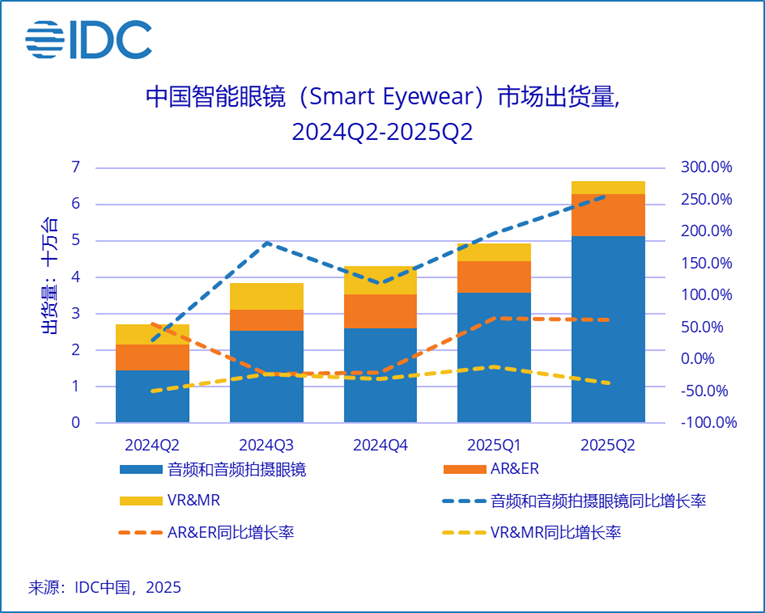
Core Insights - The global smart eyewear market is projected to ship 2.555 million units in Q2 2025, representing a year-on-year growth of 54.9% [1] - The audio and audio capture glasses segment is expected to see significant growth, with shipments reaching 1.618 million units, a remarkable increase of 256.8% [1] - The AR/VR market is experiencing a decline, with shipments of 937,000 units, down 21.6% year-on-year [1] Smart Eyewear Market Overview - In Q2 2025, China's smart eyewear market is expected to ship 664,000 units, marking a year-on-year growth of 145.5% [1] - The overall smart eyewear market in China is projected to reach 2.846 million units in 2025, reflecting a growth of 116.4% [5] Audio and Audio Capture Glasses Market - China's audio and audio capture glasses market is anticipated to ship 514,000 units in Q2 2025, with a year-on-year increase of 256.6% [2] - The launch of new products from Xiaomi, including AI glasses, has significantly contributed to market growth, increasing the market share to 19.7% [2] AR/VR Market Dynamics - China's AR/VR market is expected to ship 150,000 units in Q2 2025, showing a year-on-year growth of 18.7% [3] - The AR&ER category is driving growth, with a market share of 76.4%, up 61.8% year-on-year, while the VR&MR segment continues to decline [3] Market Channel Development - The smart eyewear market is shifting towards accelerated offline channel development, with retail channel shipments increasing by 4.0% year-on-year [7] - Major manufacturers are focusing on partnerships with traditional eyewear chains to enhance product availability in offline stores [7] International Expansion of Domestic Manufacturers - Domestic smart eyewear manufacturers are increasing their overseas market presence, with significant growth in North America, Europe, and Asia-Pacific [8] - Companies like Xreal and Xiaomi are forming strategic partnerships to enhance their global footprint and product offerings [8] Integration of AI Models - The adoption rate of smart eyewear products with AI model integration is expected to rise, with a year-on-year increase of 14.4% in Q2 2025 [9] - The market is entering a phase of deeper exploration and optimization in AI model adaptation and software collaboration [9][10]


刚刚阿里出手 布局万亿美元赛道!
Zhong Guo Ji Jin Bao· 2025-09-17 04:41
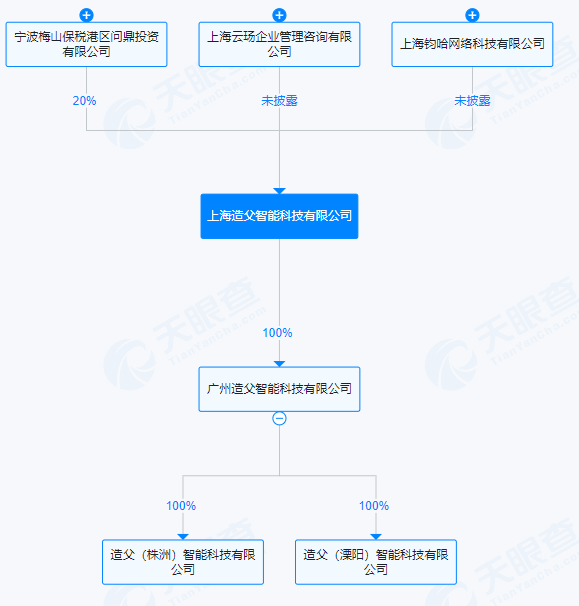
Core Insights - Haolo's Robotaxi business has received strategic investment from Alibaba, aiming to deepen collaboration in autonomous driving and AI technologies [1][3] - The partnership will focus on accelerating the commercialization and scaling of the Robotaxi industry, leveraging Alibaba's strengths in AI and cloud computing [3][4] Group 1: Investment and Collaboration - Haolo announced a strategic investment from Alibaba for its Robotaxi business, enhancing previous collaborations [1] - The two companies will work together on large model development, computing platforms, and Robotaxi commercialization [1][3] Group 2: Technology Development and Talent Acquisition - Haolo aims to become a leading AI company, having built a team of over 200 experts in AI models and autonomous driving technology [5] - The company plans to continue attracting top global AI talent to achieve large-scale deployment of autonomous driving technology [5] Group 3: Business Goals and Market Expansion - Haolo targets to achieve large-scale Robotaxi operations within two years, actively engaging with local governments for support [5] - The establishment of Zhaofu Technology, with a registered capital of 1.288 billion yuan, serves as a key vehicle for the commercialization of Haolo's Robotaxi business [5]

刚刚,阿里出手,布局万亿美元赛道!
中国基金报· 2025-09-17 04:36
Core Viewpoint - Haolo's Robotaxi business has received strategic investment from Alibaba, aiming to accelerate commercialization and scaling in the Robotaxi industry [2][4]. Group 1: Partnership and Collaboration - Haolo and Alibaba will deepen their collaboration in areas such as intelligent driving models, computing platforms, and Robotaxi, building on their previous partnership [2][4]. - The partnership will leverage Alibaba's strengths in AI and cloud computing to enhance the application of large models and autonomous driving technology [4][5]. Group 2: Technological Development and Talent Acquisition - Haolo aims to become a global leader in AI, having built a team of over 200 experts in AI large models and autonomous driving technology from top global institutions [7]. - The company plans to continue attracting top AI talent to achieve large-scale implementation of autonomous driving technology [7]. Group 3: Business Structure and Investment - Haolo has established Zhaofu Technology, a subsidiary focused on L4-level autonomous driving technology, with a registered capital of 1.288 billion yuan [8]. - Zhaofu Technology serves as a key vehicle for the commercialization of Haolo's Robotaxi business [8]. Group 4: Market Expansion Goals - Haolo aims to achieve large-scale Robotaxi operations within two years and is actively engaging with local governments to facilitate this process [7]. - The company plans to gradually expand into international markets, bringing advanced autonomous driving products and services from China to other countries [7].

港股午评|恒生指数早盘涨1.41% 百度集团大涨超15%
智通财经网· 2025-09-17 04:14
Group 1: Market Performance - The Hang Seng Index rose by 1.41%, gaining 373 points to close at 26,812 points, while the Hang Seng Tech Index increased by 3.49% [1] - The early trading volume in the Hong Kong stock market reached HKD 192.4 billion [1] Group 2: Company Highlights - Baidu Group-SW (09888) surged by 15.9%, leading the gains among Hang Seng Tech Index constituents [1] - Alibaba-W (09988) saw a rise of 5% [1] - NIO-SW (09866) increased by over 8%, reaching a nearly one-year high ahead of the new ES8 launch [3] - China Tobacco Hong Kong (06055) rose by over 7%, achieving a new high after signing exclusive agency agreements for global markets [4] - Shandong High-Tech Holdings (00412) jumped by 14% following the announcement of a USD 100 million stock buyback plan [5] - Lens Technology (06613) increased by 6.8%, attributed to strong pre-order demand for the iPhone 17 [6] - China Education Holdings (00839) surged by over 16%, with expectations of significant valuation recovery in the private higher education sector [7] - Youzan (08083) rose by over 14%, as the company announced it is exploring the possibility of transferring to the main board for listing [8] Group 3: Industry Insights - The AI large model security assessment results indicated that major products from Tencent, Baidu, Alibaba, and Zhiyuan Huazhang exhibited fewer vulnerabilities, reflecting a high level of security protection [1] - CATL (宁德时代) shares rose over 5%, with the stock price surpassing HKD 500, marking a new high since its listing, while the company highlighted five major challenges in the energy storage industry [2]


恒生指数早盘涨1.41% 百度集团大涨超15%
Zhi Tong Cai Jing· 2025-09-17 04:10
Group 1: Market Performance - The Hang Seng Index rose by 1.41%, gaining 373 points to close at 26,812 points, while the Hang Seng Tech Index increased by 3.49% [1] - The early trading volume in Hong Kong stocks reached HKD 192.4 billion [1] Group 2: Company Highlights - Baidu Group-SW (09888) surged by 15.9%, leading the gains among Hang Seng Tech Index constituents [1] - Alibaba-W (09988) saw a rise of 5% [1] - NIO-SW (09866) increased by over 8%, reaching a nearly one-year high ahead of the new ES8 launch [2] - China Tobacco Hong Kong (06055) rose by over 7%, setting a new high after signing exclusive agency agreements for global markets [3] - Shandong High-Speed Holdings (00412) jumped by 14% following the announcement of a USD 100 million stock buyback plan [4] - Lens Technology (300433) (06613) increased by 6.8% due to strong pre-order demand for iPhone 17 [5] - China Education Holdings (00839) surged over 16% as private higher education sector shows signs of significant valuation recovery [6] - Youzan (08083) rose over 14% as the company explores the possibility of transferring to the main board for listing [6] Group 3: Industry Insights - The AI large model security assessment results indicate that major products from Tencent, Baidu, Alibaba, and others have shown fewer vulnerabilities, reflecting a high level of security [1] - Contemporary Amperex Technology Co., Ltd. (300750) (03750) saw its stock price exceed HKD 500, reaching a new high since its listing, while the CEO pointed out five major challenges in the energy storage industry [1]

国内首次AI大模型众测结果揭晓
Ren Min Ri Bao· 2025-09-16 21:54
Core Insights - The first real-world testing results for AI large models in China were revealed at the 22nd China Cybersecurity Annual Conference, highlighting the importance of balancing high-quality development with high-level security in AI [1] Group 1: Event Overview - The event took place in Kunming on September 16, focusing on collaborative defense in cybersecurity [1] - The testing involved 15 domestic large models and application products, including both foundational and specialized models, as well as intelligent agents and model development platforms [1] Group 2: Testing Results - A total of 281 security vulnerabilities were discovered during the testing, with 177 of these being specific to large models [1] - The testing covered a wide range of models, including both single-modal and multi-modal large models, indicating a comprehensive assessment of the current landscape [1] Group 3: Organizational Support - The event was guided by the Central Cyberspace Administration of China and organized by the National Computer Network Emergency Response Technical Team [1] - Technical and environmental support was provided by the Cybersecurity Crowdsourcing Platform and the National Cybersecurity Talent and Innovation Base [1]
中国信通院云大所所长何宝宏:数字原生,点亮未来智能化社会
Sou Hu Cai Jing· 2025-09-16 20:44
Core Insights - The article emphasizes the transition from passive digital transformation to proactive digital-native approaches, aiming to fully unleash the potential of AI technologies [2][16] - It discusses the challenges and breakthroughs in the application of AI large models and AI agents in industrial digital transformation [2][3] Group 1: Digital Transformation and AI - The forum highlighted the need for industries to escape homogenized competition and low-level replication, focusing on how AI can create real business and social value [2][3] - Dr. He Baohong proposed a "digital-native" framework to guide industries in overcoming traditional transformation paradigms and unlocking the value of AI technologies [2][16] Group 2: Historical Context and Evolution - The article draws parallels between the current AI era and the past internet era, noting that just as TCP/IP established the foundation for the internet, the Transformer architecture is now central to AI infrastructure [3][4] - The evolution from the internet's initial text interactions to multimedia and specialized networks is mirrored in AI's progression from general models to domain-specific applications [4][12] Group 3: AI Model Implementation - The implementation of large models involves three core stages: model preparation, application, and operational maintenance, with a focus on continuous iteration to adapt to business changes [6][8] - Data processing has evolved from simple purification to a systematic data strategy, emphasizing the need for specialized data annotation in high-value industries [8][9] Group 4: Agent Development and Market Potential - Agents are identified as the key to transitioning from a scale-first approach to an efficiency-first model in AI, enhancing reasoning capabilities and multi-modal integration [12][13] - The agent market is projected to grow significantly, reaching $216.8 billion by 2035, with a compound annual growth rate of 40.15%, indicating its role as a major driver of digital economic growth [13][18] Group 5: Challenges and Future Directions - The article outlines challenges faced by agents, including the complexity of goal transmission and the inherent limitations of AI models, which may lead to misunderstandings in user interactions [14][18] - The concept of "digital-native" is proposed as a guiding principle for future intelligent societies, advocating for a shift from traditional digital transformation to a more innovative and integrated approach [16][18]
东材科技(601208):新产能放量推动1H25业绩稳健增长,看好公司电子材料领域布局
Great Wall Securities· 2025-09-16 12:15
Investment Rating - The report maintains a "Buy" rating for the company, indicating an expected stock price increase of over 15% relative to the industry index in the next six months [6][21]. Core Viewpoints - The company's performance is driven by the gradual ramp-up of new production capacity, particularly in electronic materials and optical film products, leading to stable overall growth [2][12]. - The demand for high-value products such as high-speed electronic resins and optical polyester films is strong, supported by the successful expansion into downstream markets [3][11]. - The company is expected to see significant revenue and profit growth in the coming years, with projected revenues of 52.06 billion, 66.77 billion, and 82.68 billion yuan for 2025, 2026, and 2027 respectively, and net profits of 4.42 billion, 6.22 billion, and 8.20 billion yuan [12]. Financial Summary - For the first half of 2025, the company reported a revenue of 2.431 billion yuan, a year-on-year increase of 14.57%, and a net profit of 190 million yuan, up 19.09% year-on-year [1][2]. - The company's revenue is projected to grow at a compound annual growth rate (CAGR) of 16.5% from 2025 to 2027, while net profit is expected to grow at a CAGR of 40.6% during the same period [12]. - The company's gross margin for various product segments shows a mixed performance, with electronic materials achieving a gross margin of 19.96%, reflecting a year-on-year increase of 7.97 percentage points [2][3]. Production and Sales - The company has seen a notable increase in production and sales volumes across several product categories, with electronic materials and optical films showing significant growth [2][3]. - The production volumes for the first half of 2025 were reported as follows: electrical insulation materials at 24,700 tons, new energy materials at 27,700 tons, and optical film materials at 60,000 tons, with respective year-on-year growth rates of 9.02%, 26.83%, and 38.23% [3]. Market Position and Future Prospects - The company is well-positioned in the electronic materials sector, with strong relationships established with major global manufacturers, enhancing its competitive advantage [11][12]. - The ongoing construction of new projects, such as the 20,000 tons per year electronic materials project, is expected to further strengthen the company's market position and financial performance [12].

腾讯云加码国际化 海外客户数同比翻番
Zhong Guo Xin Wen Wang· 2025-09-16 10:00
Group 1 - Tencent Cloud's overseas customer base has doubled year-on-year, indicating strong growth in international markets [2] - Over 90% of Chinese internet companies and over 95% of leading gaming companies have chosen Tencent Cloud for their international expansion [2] - Tencent Cloud has supported well-known international companies like GoTo Group and Orange in enhancing operational efficiency [2] Group 2 - Tencent plans to invest $150 million to build its first data center in the Middle East, located in Saudi Arabia [3] - A new data center will be established in Osaka, Japan, along with a new office in the same city [3] - By mid-2025, Tencent Cloud will have deployed nine global technical support centers across various cities including Jakarta, Manila, and Frankfurt [3]

自动驾驶:万亿赛道的终极博弈,下一个十年谁主沉浮?
Ge Long Hui A P P· 2025-09-16 09:53
若说过去十年是移动互联网重塑生活的黄金期,未来十年,自动驾驶必将成为改写人类出行逻辑的核心 力量。 从科技巨头到传统车企,再到资本市场的敏锐玩家,都清楚这不仅是技术革新,更是对万亿级市场蛋糕 的激烈角逐。 如今FSDV12已实现"端到端决策",无需依赖预设规则,直接输出驾驶指令,复杂场景应对能力显著提 升。但短板也突出:暴雨、大雾、强光等场景下,摄像头感知精度易受影响。 技术路线之争:两条路径的较量与进化 如今试驾主流新能源车,L2+级辅助驾驶已不新鲜:自动跟车、车道保持、高速领航,部分车型甚至能 实现城市道路自主变道。 2023年起,城市NOA快速落地,标志着自动驾驶从"简单高速场景"迈向"复杂城市环境",但这只是行业 序幕。 按国际汽车工程师学会(SAE)标准,自动驾驶分L0至L5六级。目前量产车型多处于L2向L3过渡阶 段,真正的"无人驾驶"(L4/L5)仍局限于特定场景——如Waymo在旧金山的全无人出租车、封闭园区 的自动驾驶物流车。 即便头部企业有局部突破,L4级大规模落地仍面临技术可靠性、法规适配性与成本控制三重考验,而 行业在技术路线选择上已形成两大阵营: 1.纯视觉派:特斯拉的"数据驱动"之 ...
